
 “Make everything as simple as possible, but not simpler.” What I love most about this quote (Einstein) is it encourages the belief that beauty can be born from simplicity. We often pressure ourselves to go to extremes to write the perfect narrative, create a superb presentation, or cook an amazing meal. If there is one thing that life has taught me, it’s the joy you get from achieving something wonderful without stress or hardship. Cooking is the perfect example – we often forget that food is food, and mother nature knows what she’s doing when it comes to flavoring natural ingredients. So you can imagine how I excited I was to share this Mediterranean Baked Salmon: it is the definition of simple, but is far from being “simple” in taste.
 This is one of my favorite methods for preparing fish – the culinary term is en papillote, but it’s basically a foil or parchment “pocket” into which you can pack any number of vegetables or aromatics. It’s a popular method for cooking fish since the pocket locks in moisture along with all of those great flavors. As a result, the process is more akin to steaming than baking. I wanted a dish with Mediterranean flair, and so I included kalamata olives, tomatoes, fresh herbs, and lemon with the salmon.
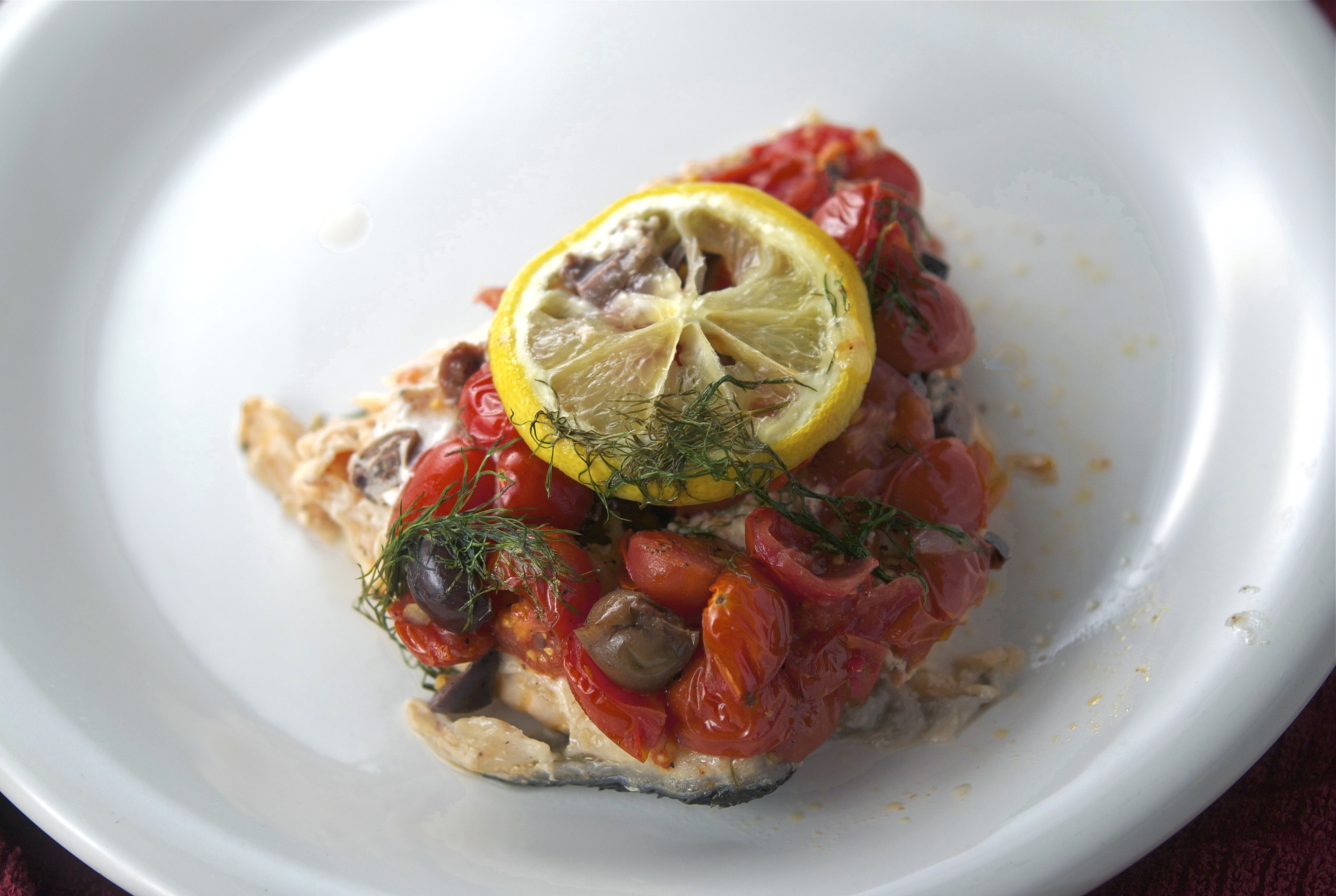 The result was a to-die-for combination of flavors, and yet it came together in less than 30 minutes! Right towards the end, I opened the foil packet to allow some of the liquids to cook down. This also gave the toppings a crisper finish, while still maintaining the beautiful texture of the overall dish. You can cook individual packets for each guest, but we ended up cooking the entire portion of salmon in a single pan. It was fantastic, and is the perfect recipe for a weekday meal or fancier occasion – click HERE to see the recipe!
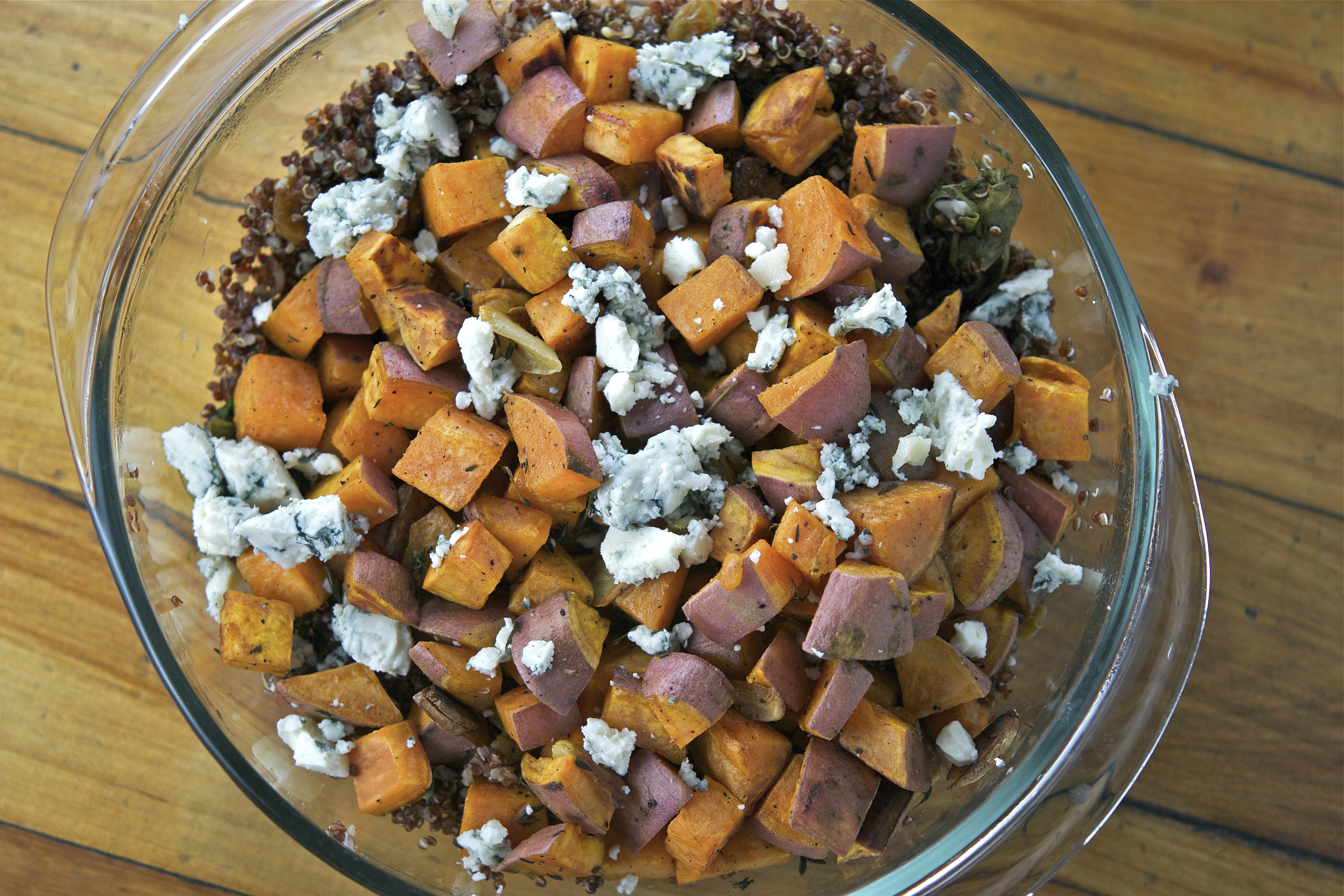
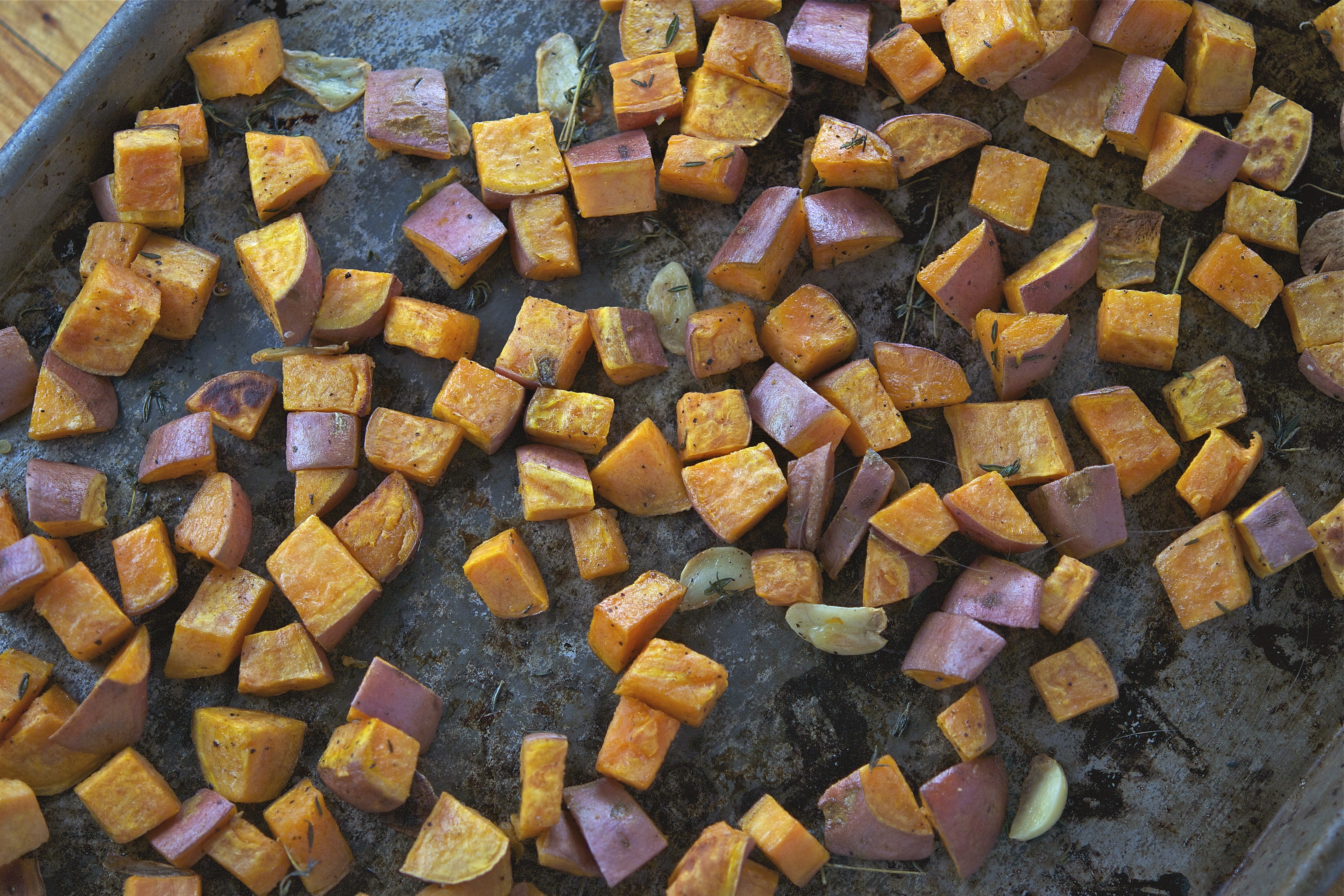 As a side dish, I roasted some sweet potatoes with thyme and garlic, and then tossed them with quinoa, arugula and blue cheese. Tom has called me out on this…I think I might have a minor addiction to sweet potatoes. He’ll ask me about a vegetable or carb, and I always say sweet potatoes. I know they don’t qualify as a vegetable…but why not?? They are orange and versatile and highly addictive and OH MY GOD you see what I mean?? Anyways, this was a quick side that could easily make for an amazing lunch or vegetarian main. I will be making it again, mostly for the sweet potatoes. Click HERE to see the recipe!
 Beauty is by and large defined by its evocative and provocative outcomes – whether it be a person, an item, a piece of music…we see beauty as something that has the ability to move us. Sometimes, it is the simple things that are truly beautiful, where the weight of added embellishment would seem folly. In music, a great example of a simple masterpiece is Ravel’s Pavane pour une infante dèfunte (“Pavane for a dead princess”). Written in 1899, the solo piano work is based on the pavane: a slow traditional dance that was popular during the European Renaissance. Though the title alludes to such, the work is not an homage to any one person or “princess”, but rather “an evocation of a pavane that a little princess might, in former times, have danced at the Spanish court” (Ravel’s own description). Its beauty lies in the juxtaposition of pure innocence and emotional depth. It is quite unlike the Ravel many of us know and love, as confirmed by concert critic Samuel Langford
“The piece is hardly representative of the composer, with whom elusive harmonies woven in rapid figuration are the usual medium of expression. In the Pavane we get normal, almost archaic harmonies, subdued expression, and a somewhat remote beauty of melody.”
Of course, this piece has since become ridiculously famous and overplayed. I scoured YouTube for a recording of solo piano (you can only imagine how many interpretations there are…) I finally found the below video, with Laura Mikkola. Her interpretation is one of patience, giving full attention to the delicate melody and unique coloration of each harmony.
In 1910, Ravel published an orchestrated edition of the piece – the opening melody is played by solo horn, which I believe is one of the most beautiful artistic choices in a piano-to-orchestra transcription. The piece’s gentle charm is by no means overwhelmed in the reproduction – rather, its subtle harmonies are given a richer and more vibrant coloring.
Sources Cited:
“Pavane pour une infante défunte,” Wikipedia.com




 THE CLASSICAL KITCHEN