Revival of a Prodigy

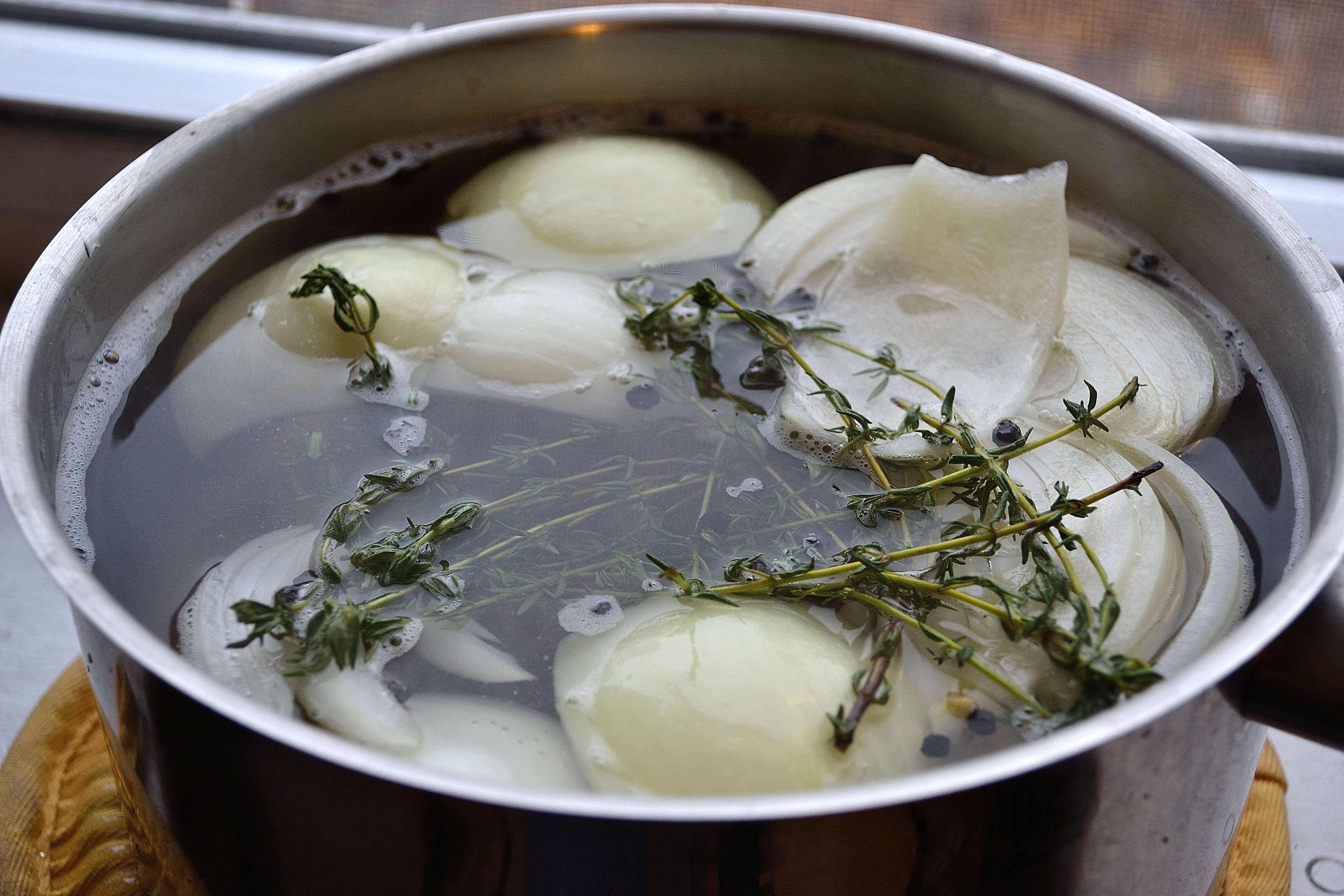
Leftovers, for many, are some of the most treasured meals post-Thanksgiving. My refrigerator was stocked to the fullest for several days with tupperware, extra ingredients, etc. In normal circumstances, this would be a very welcome scenario. Unfortunately, my energy was entirely drained after hosting Thanksgiving for a sizable crowd. That being said, there was no way I wasn’t about to indulge in a leftover party with friends. Remarkably, there was hardly a shred of leftover turkey meat; yet I still had a huge turkey carcass to deal with…which of course led me to making a delicious, filling stock for leftover Turkey Soup.
As I mentioned, we had NO turkey meat left – you can certainly make turkey soup with nothing more than vegetables and noodles, but the thought of a meatless turkey soup seemed silly. If you also happen to find yourself in this predicament, there are a few options. The first is to go with the obvious substitute, chicken – though it won’t have (quite) the same taste as turkey, the broth will still be plenty flavorful. You can also buy cheap turkey parts – the day after Thanksgiving, stores are desperate to shed all those extra “turkey pounds,” and will have pretty good sales on wings, legs, etc. (just talk to your butcher). I went with the latter and bought turkey wings that I roasted for about 45 minutes at 375 degrees.
Turkey soup has the same basic principles as chicken soup – the only difference being that, while chicken soup can be prepared with a fresh or leftover chicken carcass, turkey soup is far more practical as a post-turkey meal option. You can certainly go purchase individual turkey parts to create your own stock, but it makes much more sense (and yields way more flavor) if you use an entire carcass. It’s also a lighter follow-up to all the indulgent Thanksgiving dishes you had two (or three) servings of the day before. To see how I made this delicious, heartwarming soup, click HERE.
For this musical pairing, I wanted to bring the attention back to my Mahler pairing from the Roast Turkey post. Mahler’s music was relatively obscure until the 20th century, and part of this revival was thanks to the conductor Leonard Bernstein. He recorded the first full cycle of Mahler’s nine symphonies, placing the music of Mahler back in the limelight. So with that, I thought it would be nice to showcase a piece by the conductor (also a composer) who helped “bring back” Mahler, and went with Bernstein’s Symphonic Suite from “On the Waterfront.” Composed in 1955, this suite is based on the film score for the Marlon Brando classic. Bernstein would commence a Mahler Festival with the New York Philharmonic 5 years later – enjoy!

http://www.youtube.com/watch?v=3_AYzvs3rYI

Sources Cited:
“Leonard Bernstein,” Wikipedia.com

A Heavenly Slice of Tradition

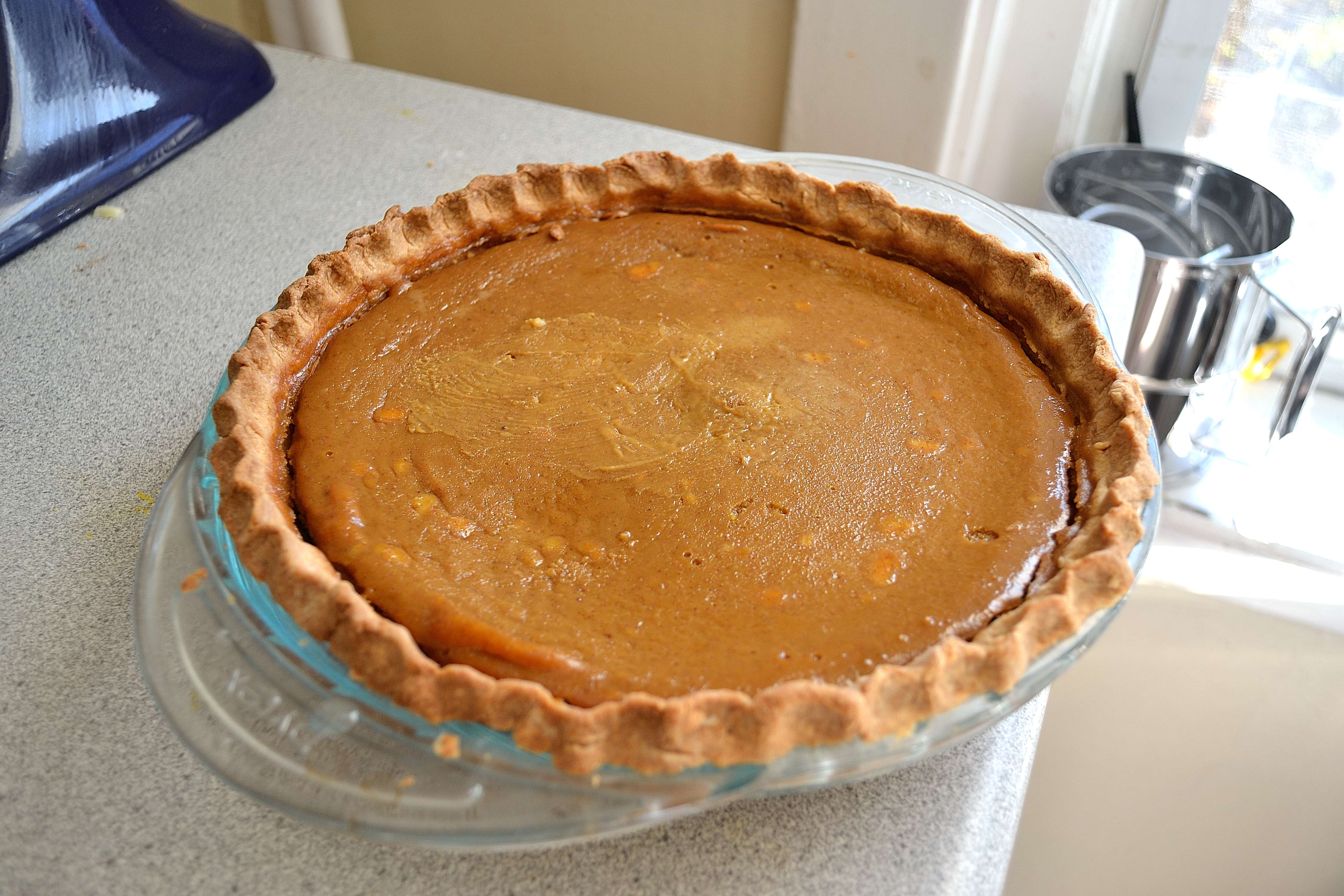
A Thanksgiving dinner is never complete without pie; they are practically as revered as the main turkey itself! The promise of these desserts at the end of the big meal compels guests to find their second (or fourth) wind before satiety kicks in. I chose to take full advantage of this tradition, and made not one, not two, but three pies! If you recall from my previous post, I had 15 friends over for dinner, so my ambition to bake this many wasn’t too far-fetched. So for this post, It is only all too appropriate to start with a classic: Maple Pumpkin Pie.
Pumpkins, native to North America, were central to the lifestyles of the Native Americans, providing both nutritional sustenance as well as raw materials for everyday items (hollowed vessels, floor mats, etc). When the colonists first arrived, they quickly adopted this readily available squash to their own diets. Over time, they began to add milk and honey in an effort to enhance its flavor (a precedent to the beloved classic). Yet it was French chef Francoise Pierre la Varrene (once pumpkin began to be exported abroad) who created the first pumpkin custard with a pastry crust. The recipe was then sent to England, and subsequently back to the Americas.
This pie uses a fresh pumpkin rather than the canned variety. Though the latter is easily substituted, I highly recommend sticking with fresh – it gives the custard a pure taste that adds a new depth to this classic. It also uses maple syrup as a sweetener, giving this pie a more authentic sweet (rather than using an absurd amount of processed sugar). The funny thing with this pie (and the pie below) was that I accidentally purchased whole wheat pastry flour (a lighter alternative to whole wheat flour) for the crusts. It gave these pies more of a “harvest” appeal, yet still managed to create a beautifully flaky crust. That being said, I’d probably go for the plain ol’ pastry flour next time – click HERE to see the recipe for this Thanksgiving classic!
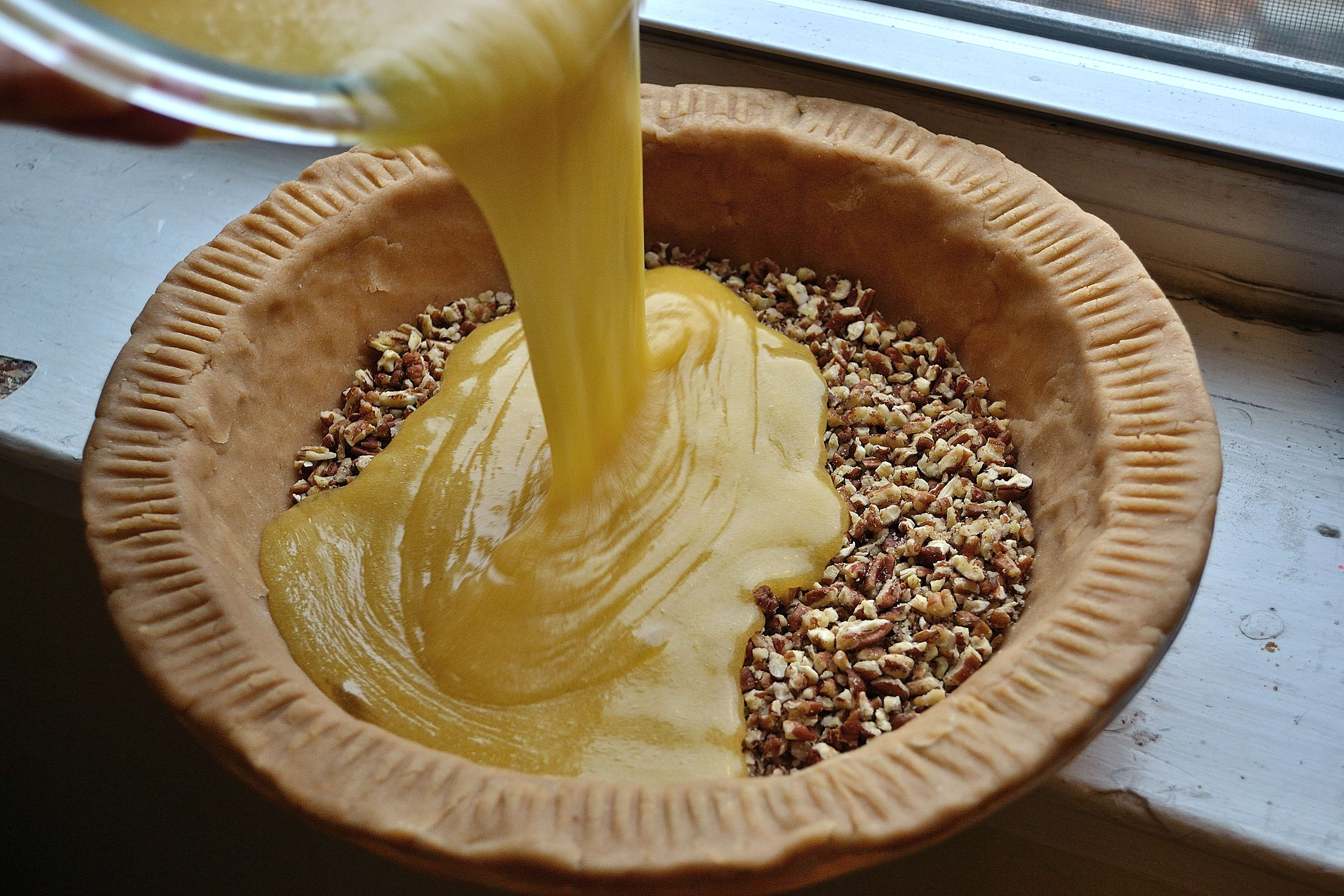
This second pie we all know and love – the beloved Pecan Pie. Though rumor holds this pie as a creation of French settlers introduced to the pecan by Native Americans while in New Orleans, the earliest record of this pie only dates back to the (very) late 19th century.  Karo® Syrup, founded in 1902, popularized the recipe in an effort to promote its product. Almost all recipes in practice today rely on the syrup (preferably Karo), with some establishments in the South even naming this dish the “Karo Pie.”
This recipe definitely makes one heck of a pie – it is from the Pioneer Woman, and she claims it is a “Pie that Will Make You Cry.” Fortunately, none of my guests were in tears while eating this, but there was a wave of silence during the dessert course (a good sign, I take it). Most pies use halved pecans, but this recipe calls for chopped nuts. I now prefer this method as it creates a beautifully even topping that still looks stunning, without all the hassle. Click HERE to see how to make this fabulous holiday pie!
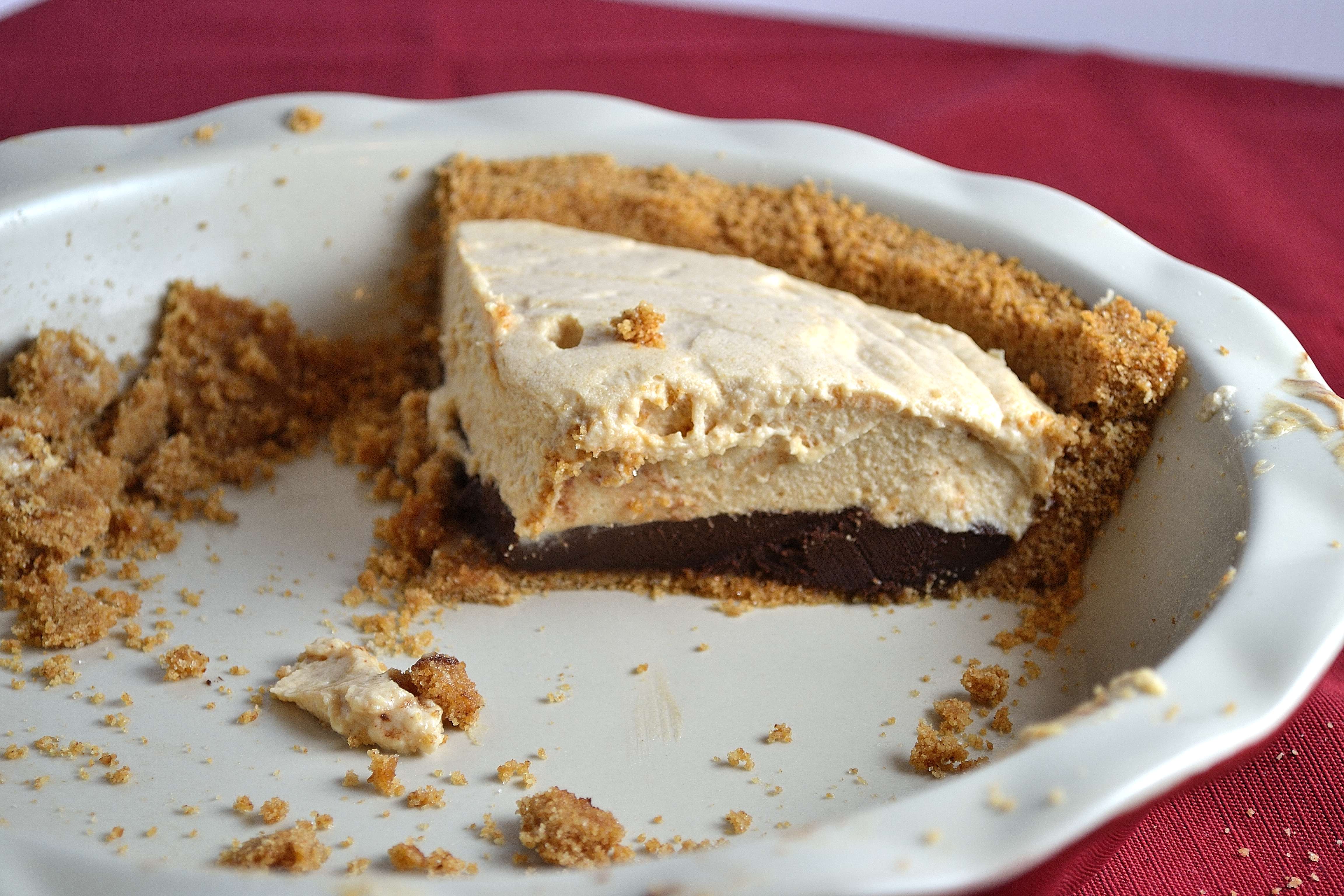
I’ve saved the best for last (yet pictured it first as a teaser) – Black-Bottom Peanut Butter Mousse Pie. Granted, this is not a “Thanksgiving tradition,” but this is an extraordinary pie! A buttery graham cracker crust filled with a creamy, peanut butter mousse atop a rich layer of dark chocolate ganache – just typing that makes my mouth water. The combination of the dark chocolate with the whipped peanut butter results in a decadent yet refreshing taste that is all-too irresistible (my friend TJ swears it tasted like mint, hence the inclusion of “refreshing” – even though there is NO mint in this recipe, I’ll let you be the judge on this).  I can guarantee this pie will quickly become a Thanksgiving tradition for you and your family – click HERE to see how to make this mouth-watering pie!
For the musical pairing, I thought it only appropriate to go with an American composer: Charles Ives. As I’ve shared before on this blog, his music was the first of American composers to achieve international renown. Wanting a work that was ambitious yet not overly so, I chose his Symphony No. 2. Though his music is filled with experimental techniques, such as polytonality and tone clusters, he weaves recognizable themes throughout his works as musical quotations. His most discernible quotations are famous American folk songs, taking inspiration from his father’s work as an Army bandleader. I thought this work would especially be appropriate given its diversity of cultural quotations: Dvorak, Tchaikovsky, and Brahms are all cited along with folk melodies. These pies, though arguably an American tradition, find origins in a number of cultures, from Native American staples to French pâtisseries. It’s also worth mentioning I performed this work with my roomie sitting next to me as first oboe! – enjoy!

http://www.youtube.com/watch?v=AZyVlRk6hG4&feature=related

Sources Cited:
“This History of Thanksgiving and Pumpkin Pie.” Gourmet.com
“Pie & Pastry,” FoodTimeline.com
“Symphony No. 2: Notes,” A Charles Ives Website

An Evening to Be Thankful For

Yesterday I hosted my first Thanksgiving dinner, and it was a terrific success! Originally expecting to have only 8 friends over, the list quickly blossomed to 15! For those of you who know my place, fitting that many people at a dinner table was not an easy feat. Yet there we were, 15 friends gathering for the year’s most thankful (and indulgent) dinner. It couldn’t have been a more perfect evening.
This was also my first time making a Roast Turkey (commence panic mode). I probably considered over 20 different recipes while planning this, but the biggest question I had was on brining. There was a 50/50 take on this – some say it works wonder, others say it’s a complete waste of time. Having never cooked a turkey, I of course had no idea which to trust. At the end, I went with the brine; I am so happy I did!
Brining may seem scary, but it’s not actually that intimidating (though finding the space in your refrigerator might be). The basic components of a brine are salt and water – meats immersed in this solution . Brining works through diffusion and osmosis – the brining water, which has a high concentration of salt, moves to where there is a lower concentration in the meat. In permeating the meat’s cells, the water becomes “locked” into the meat, creating a perfectly moist roast as result. Seasoning are often added to brines to give the meat more flavor.
That being said, brining takes time – I left mine in the fridge for about 18 hours. I bought a brining bag to place the turkey in…and I highly suggest having a second hand to help lift the turkey into the bag (this coming from the near catastrophe I had trying to do this myself). I chose an 18-lb fresh turkey – fresh is key, as frozen turkeys often have higher sodium content (unless you go organic).
The stock for the gravy is made in the pan while the turkey roasts – it’s an added step, but creates one of the most flavorful gravies you will ever make! Unfortunately, I was unable to snap a photo of the finished product in the dinner rush. It makes a lot of gravy, which your friends will be extremely grateful for. If you are looking to impress, go with this recipe – you’ll be extremely please (and so will your friends!) Click HERE to learn how to make this perfect centerpiece to your Thanksgiving meal!
Seeing how this was my first-ever Roast Turkey (and that first Thanksgiving I’ve hosted), I felt it only appropriate to (finally) showcase a work by Gustav Mahler. Though he was primarily known as a conductor during his own lifetime, Mahler’s symphonies are among the most prominent of the orchestral repertoire. These large-scale works utilize the full orchestral force, and are lush with rich musical content. In spirit of this being my first Thanksgiving, I chose his Symphony No. 1. in D Major.  The symphony took him nearly two years to complete, and was premiered with the orchestra he was the conductor of at that time. Though it is a lengthy work (just under an hour), it is extremely beautiful and difficult to not enjoy, like our Thanksgiving: though the dinner was a lot of effort and quite demanding, it too became an occasion of wonderful friends and great food that was meant to be enjoyed.

http://www.youtube.com/watch?v=UskC4VILUeg

Sources Cited:
“Symphony No. 1 (Mahler),” Wikipedia.com.

A Jazzed Up Favorite

I love to experiment – when you hand me a vegetable, I try to find a recipe that has a unique approach yet still relies on the natural flavor of that particular vegetable. From purees to roulades, I’ve always been drawn to finding interesting contexts for otherwise plain ingredients (though there really is nothing more beautiful than plain ol’ roasted cauliflower, a personal favorite). You’ve heard me rant about my admiration of Middle Eastern dishes (hummus!), but I’ve always shied away from the infamous deep-fried dish: falafel. Yet then I found a fall-inspired version that takes a healthier route (baked), and knew I had to give these Sweet Potato Falafel a try.
I am seriously obsessed with sweet potatoes…more than your average person probably should be. There is something about their slightly nutty and sweet taste that renders me helpless. I can eat these basically any day…all day. Anyways, sweet potatoes (often mislabeled “yams,” an African crop to which they have no relation) receive their beautiful orange flesh from beta cerotene. It’s also an excellent source of vitamin A, B6, and C, packs a healthy serving of dietary fiber, and is believed to help stabilize blood sugar (and yes, this list is my personal justification for being obsessed with sweet potatoes).
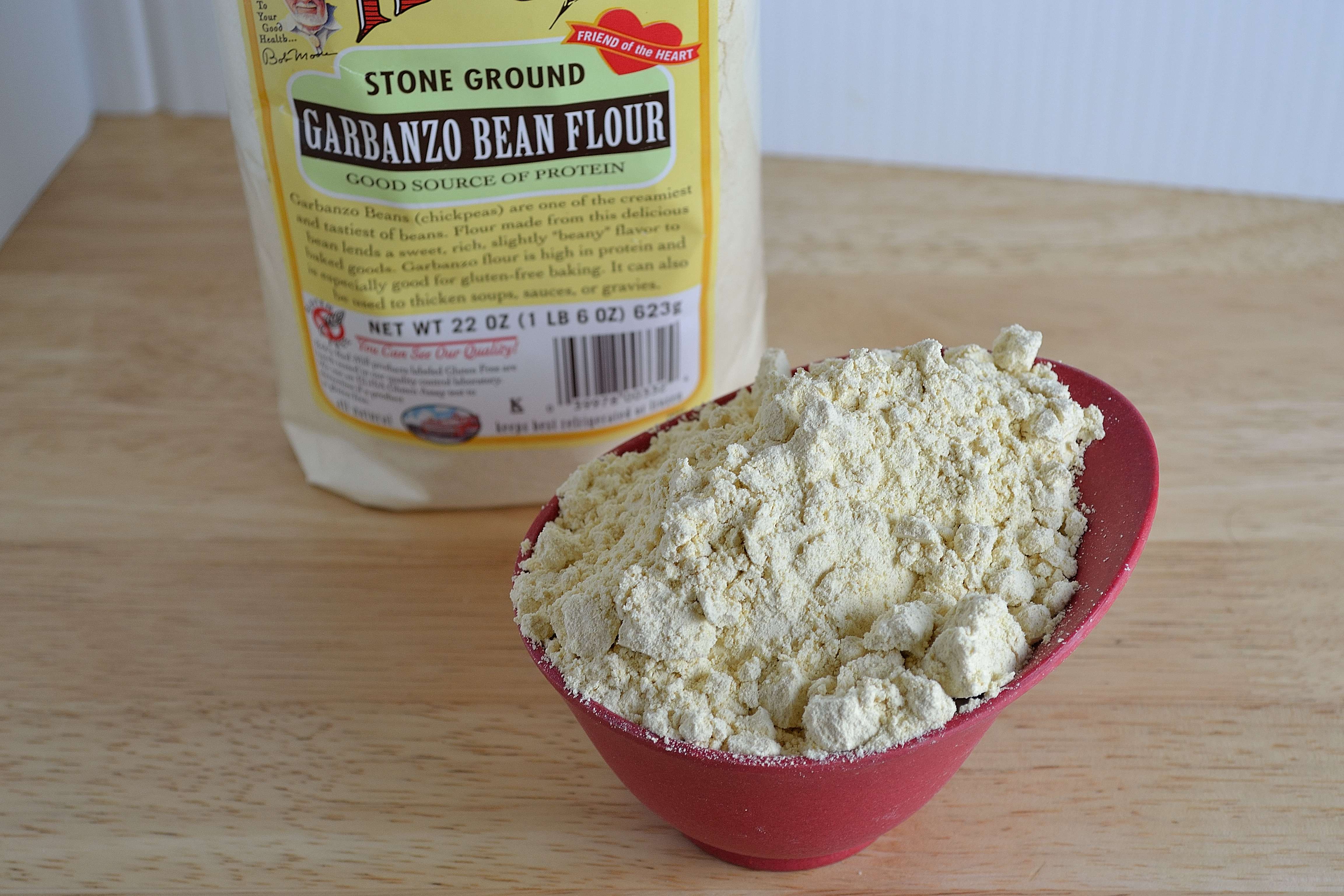
Falafel is conventionally made with chickpea flour, aromatics, and spices – the flour is just basically finely ground chickpeas, which can easily be accommodated using a food processor. Yet I thought it could be nice to have this stuff on hand, so I went on ahead an purchased a package. These are essentially a piece of cake once you have all the add-ins assembled – no mincing required! And for such minimal effort, they are unbelievably delicious (and nutritious)! If you like sweet potatoes as much as I do, I highly recommend trying this delicious twist on the Middle Eastern standard – click HERE for the recipe.
For the musical pairing, I wanted to showcase a piece that reflected my love for sweet potatoes as well as the unique approach of these falafel – that led me to Ian Clarke’s Zoom Tube (for solo flute). This piece is inspired by rhythmic blues and relies on a number of extended flute techniques, from semi-tones to percussive vocalizations. Though these techniques can take a while to perfect, it’s ridiculously fun to play. This jazzy piece felt all too perfect for these jazzed up falafel – enjoy!

http://www.youtube.com/watch?v=GA3Ri2maYpo

A Refreshing Trip

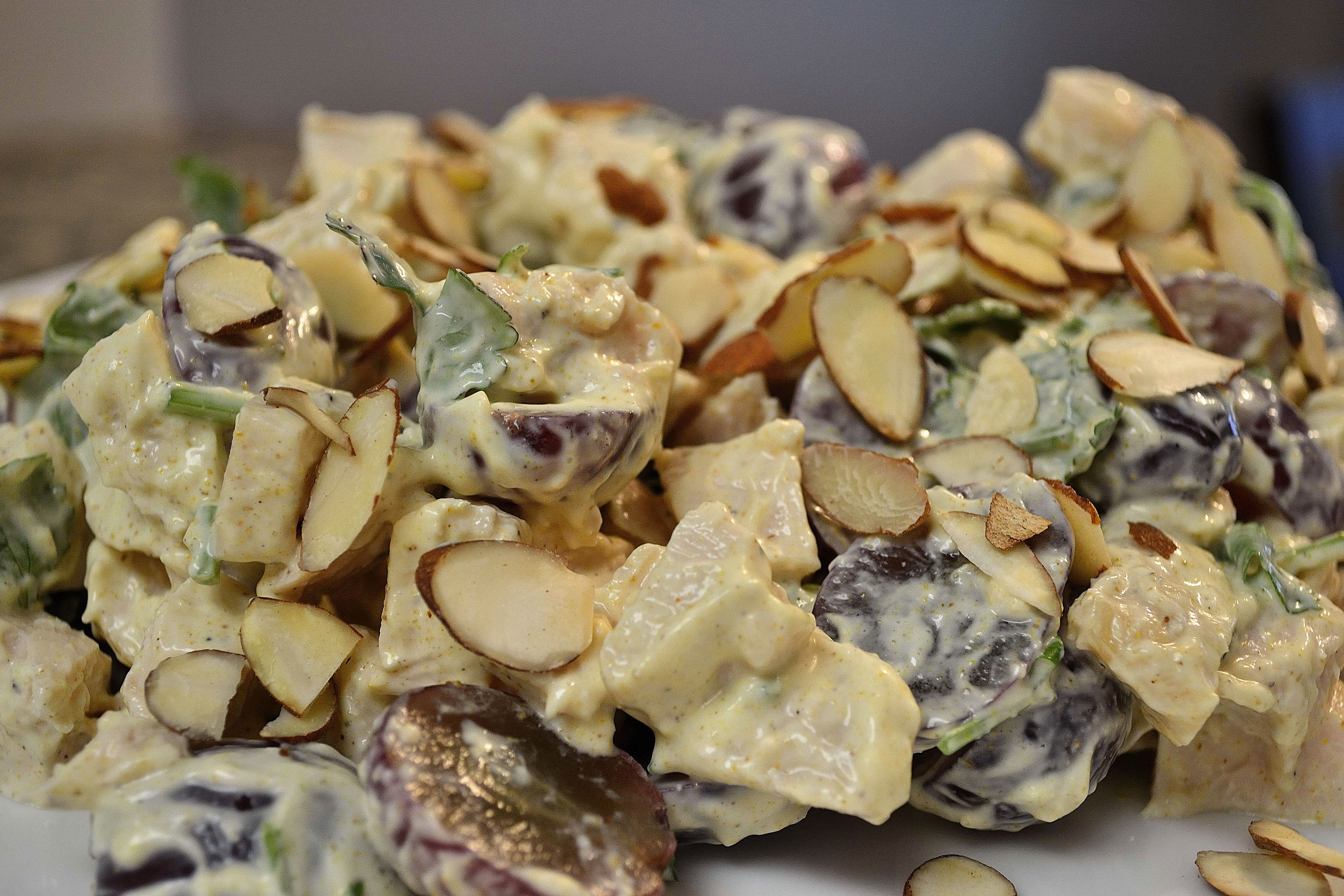
I spent this past weekend visiting with my mom in Philadelphia – she just moved there from Atlanta, and is still getting acclimated to a whole new city. We did all of the tourist-y things, from Reading Terminal Market (a foodie’s paradise) to Independence Hall. Having never spent much time in Philadelphia, I can officially say I’m enamored with that city – it’s similar to Boston (both epicenters of American history/tons of cultural opportunities), and has a great energy. Before leaving for the airport, we had a quick, healthy lunch of Curried Chicken Salad.
Rather than being the bland, mayonnaise-laden salad that you encountered at every family picnic, this salad has way more to offer with half the guilt. The recipe is courtesy of Food Network’s health guru, Ellie Krieger. With degrees in nutrition and public health, she creates dishes that are both flavorful and wholesome. For this salad, she replaces  mayonnaise with Greek yogurt.
She adds grapes for a touch of sweetness and color, cilantro to liven it up, and almonds for the added texture. That’s it! After one bite, my mom was hooked. It can be served atop a bed of greens, in a sandwich, or on crackers. So if you’ve got a rough week ahead, whip up a batch of this to give you a boost – click HERE to see how.
For the musical pairing, I wanted to choose a composer my mother truly adores – Mozart. His style beautifully complements the lightness of this dish. As there were only four major components in this salad (aside from the dressing), I thought a quartet would be suitable for this. So I chose his String Quartet No.4 in C major KV 157. This was one of the six quartets Mozart composed while in Milan (called the Milanese Quartets) – he was only sixteen at the time. The recording I’ve included is by the Jerusalem String Quartet. Thanks for a wonderful weekend in Philly, Mom – enjoy!

http://www.youtube.com/watch?v=FKzc4LMe8oU&feature=related

Sources Cited:
“Milanese Quartets (Mozart),” Wikipedia.com

Spicing Things Up

Cauliflower and squash – these seasonal crops can be rather uninspiring when taken at face value. Yet it is this very insipidity that provides a perfect blank canvas for some truly amazing dishes. The other night I hosted a “girl’s night in” with two very close friends of mine – these evenings are often characterized by simple eats, bubbly drinks and thoughtful conversations (with the occasional touch of meaningless gossip, of course). While the latter two require minimal effort, I focus the majority of my planning energy on the first. Simple doesn’t meaning flavorless, in my world, so I tried to showcase dishes that give the most bang for the buck. With the right amount of spice, these two did not fail to please – Curried Butternut Squash Soup and Cumin Seed Roasted Cauliflower with Salted Yogurt and Pomegranate Seeds.
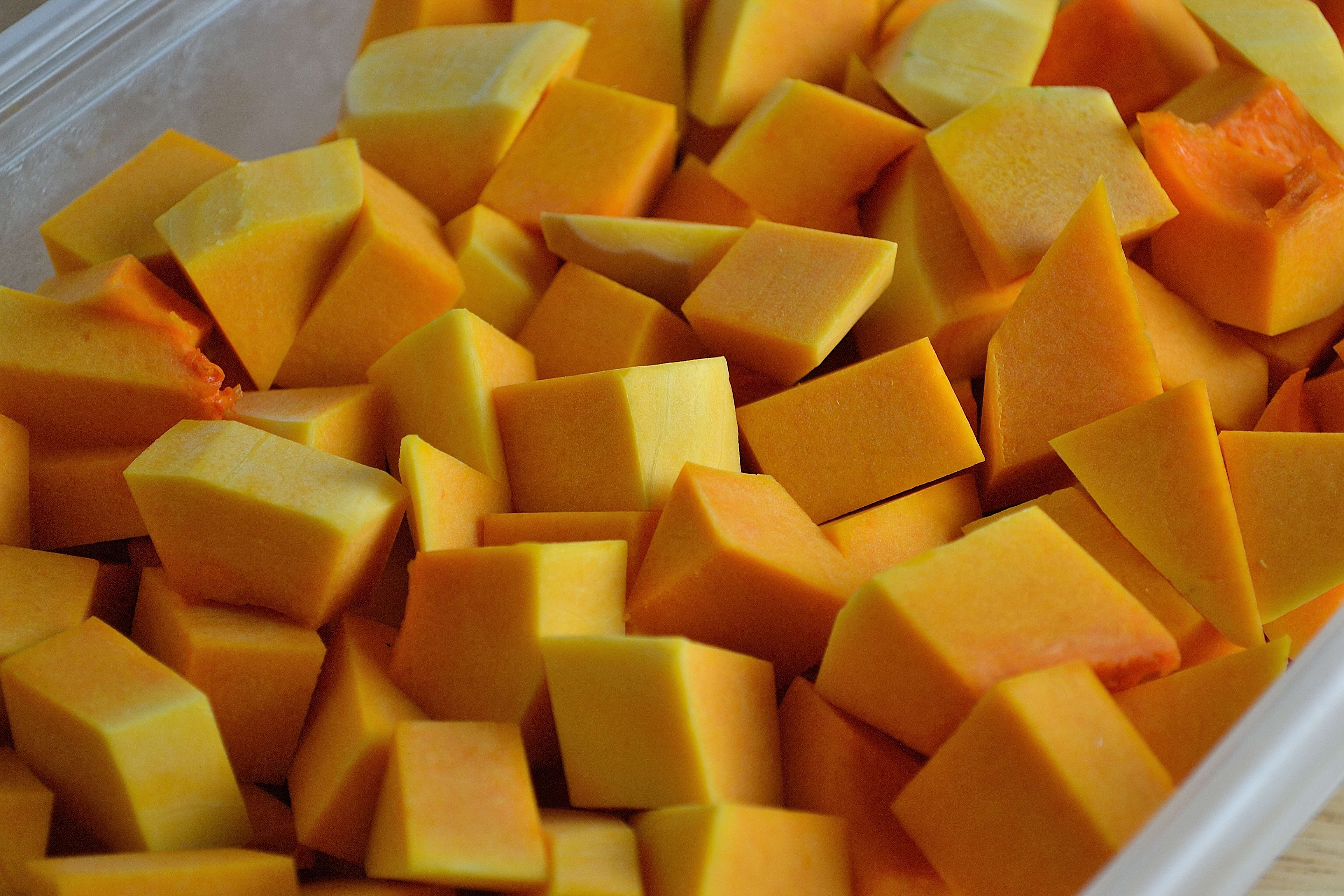
I should give butternut squash more credit, perhaps – it is one of my favorite winter squashes. it achieves a taste that’s somewhere between a sweet potato and pumpkin. Roasting is the most common preparation, which helps deepen its natural sweetness.  The term “winter squash” pertains not to its growing season, but to its ability to withstand storage (post-harvest) during colder climates. This is thanks to a tough outer skin (as opposed to the thinner skin of summer squash), allowing us to enjoy this hearty squash year-round.
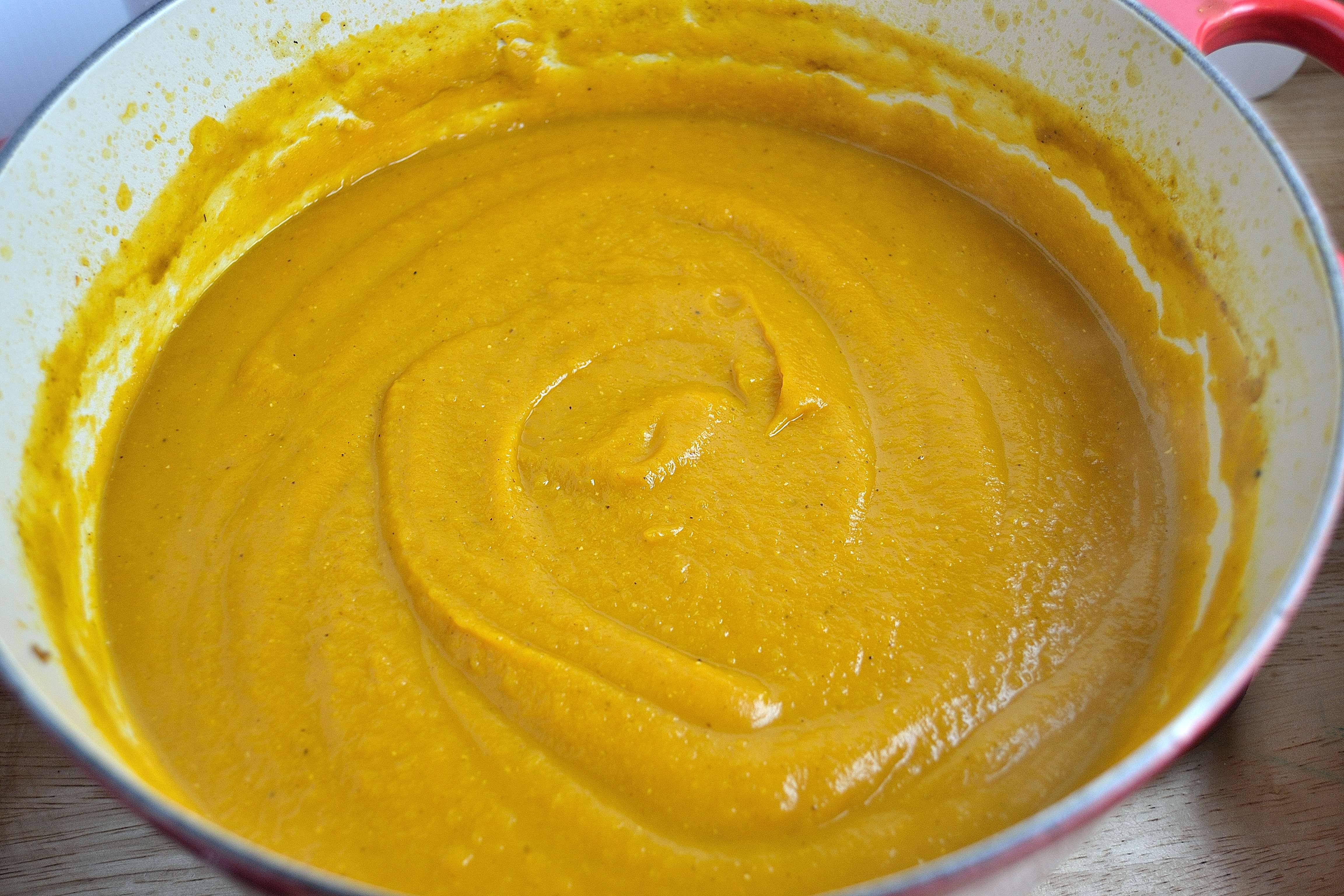
This soup gets a boost from a potpourri of spices – a potent mix of curry, cumin and mustard seeds. What I like about this recipe is that its creaminess relies on the squash (rather than cream). Using a blender or processor works great, but I am a personal fan of immersion blenders (less mess = happy Anne). Any who, this soup is wonderfully simple yet beautifully flavorful. If you are looking for a quick dish that packs a LOT of flavor, this is it – click HERE to learn how to make this flavorful dish.
The pomegranate – as beautiful as it is sweet, this fruit has held symbolic relevance in a number of cultures. Whether signifying authority, death, or fertility, this fruit has a number of connotations. Aside from its aesthetic (and suggestive) references, the pomegranate is also endorsed for its health benefits. That being said, it’s no picnic to peel – I suggest opening the fruit in a bowl filled with cold water (prevents stains AND assists with peel removal).
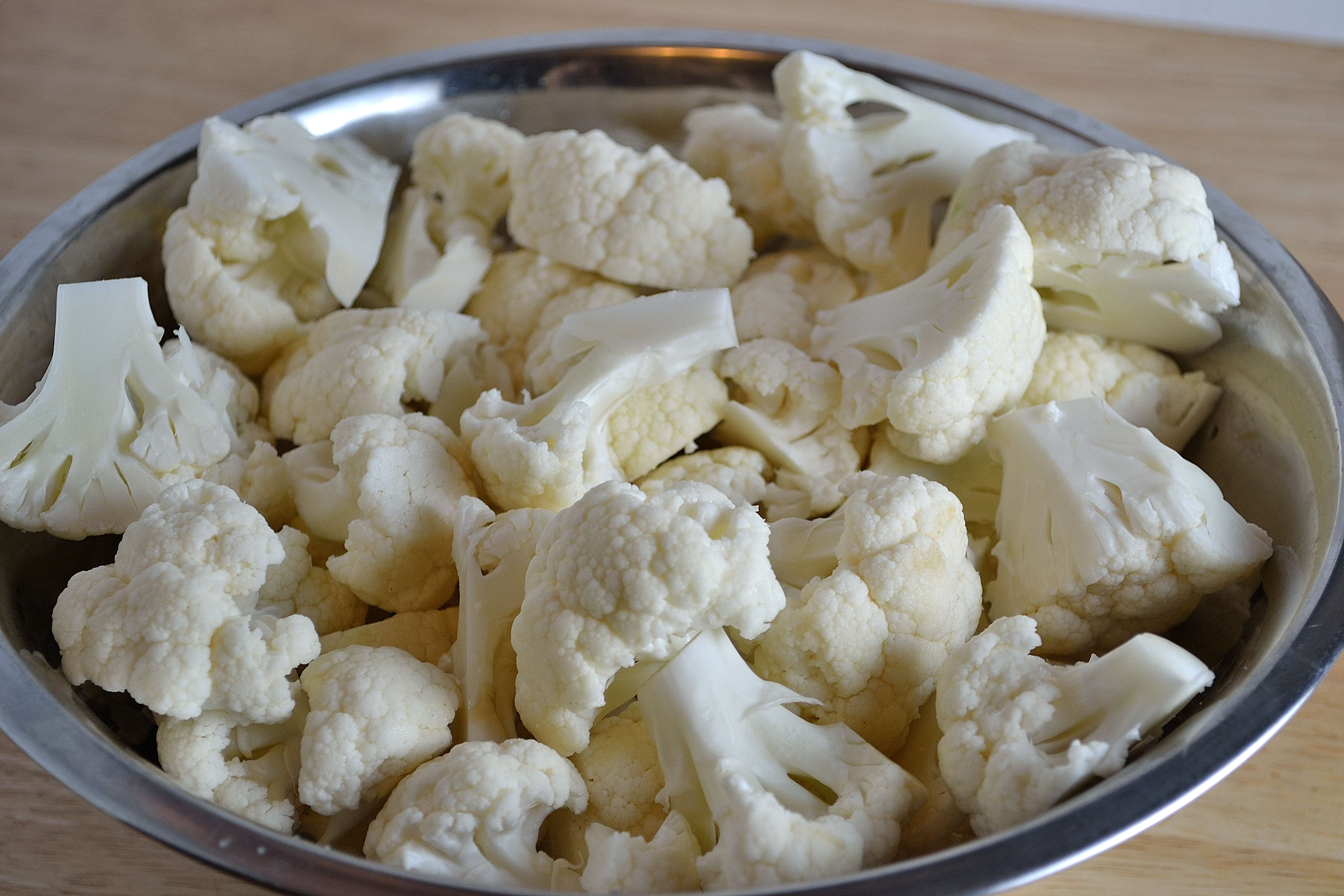
This dish was beyond amazing – it was fantastic! Roasted cauliflower on its own is one thing, but paired with cumin, pomegranates, and yogurt?? Well, let’s just say you’ve found your new side dish “candy.” With a spicy edge and sweet touch, this dish has it all. The yogurt is a creamy (yet healthy) garnish, and the pomegranate seeds add a beautiful finish. Don’t hesitate on making this fabulous recipe – click HERE to learn how. 
In researching the ingredients of these two dishes, I discovered a shared trait between them – both have ingredients that are commended “aphrodisiacs,” being the curry and pomegranate. This led me to a very obvious selection: Danse Bacchanale, a fiery dance from the opera Samson et Dalila, by Camille Saint-Saëns. While I’m not necessarily affiliating love with the blatancy of the bacchanalian character, the passion of this work certainly lives up to the spices and flavor of these dishes – enjoy!

http://www.youtube.com/watch?v=-4TrxDKsMHI&feature=related 

Eagerly Welcoming the Day

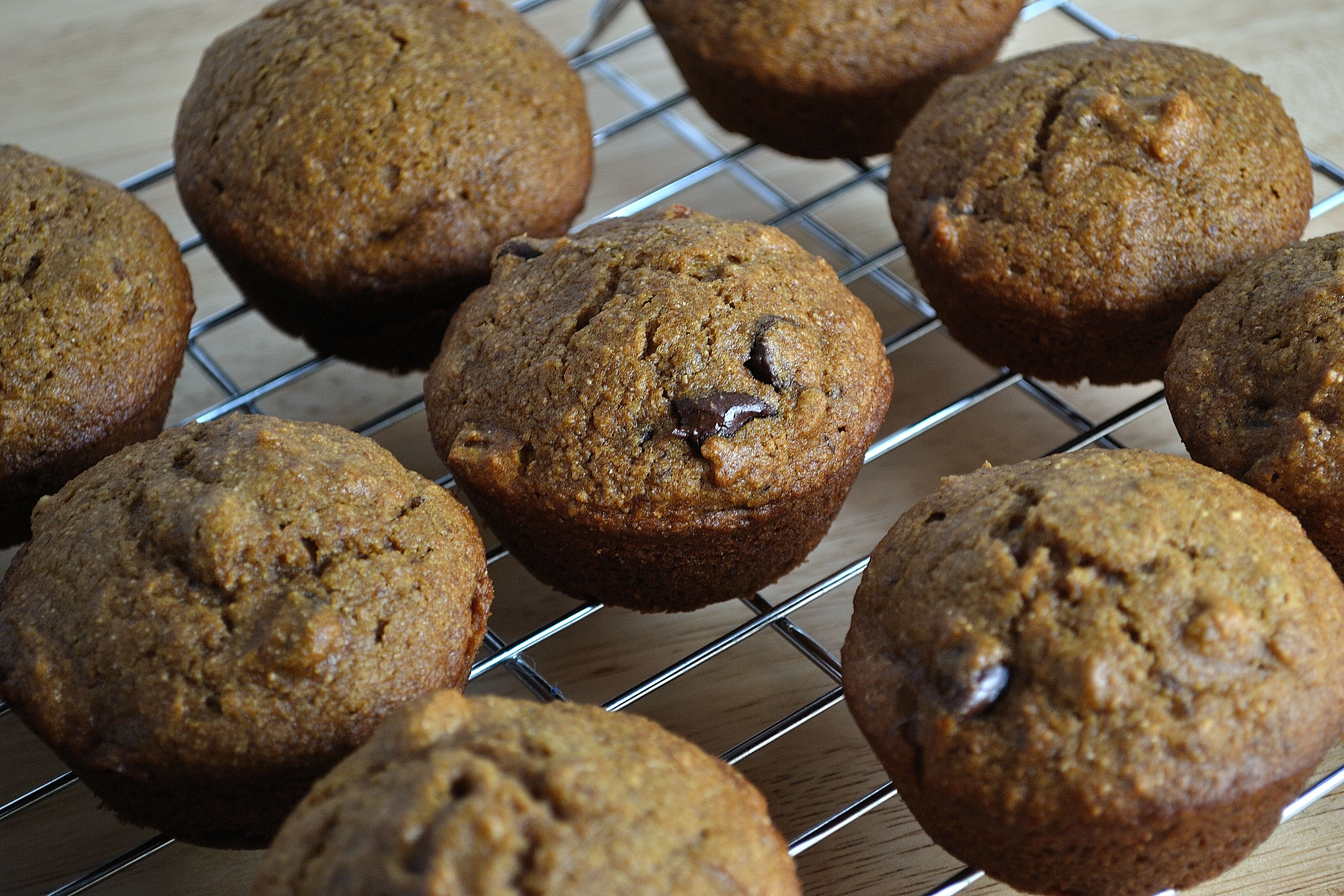
I have a confession to make: I am obsessed with winter squash. Pumpkin, sweet potatoes, acorn, butternut – there are just SO many wonderful varieties to choose from! Fall and squash are synonymous in my book, and I love finding new ways to cook them. Wanting to bake a simple gesture for the office that everyone could enjoy (including my vegan friend Rosena!), I decided to make Vegan Pumpkin Chocolate Chip  Muffins.
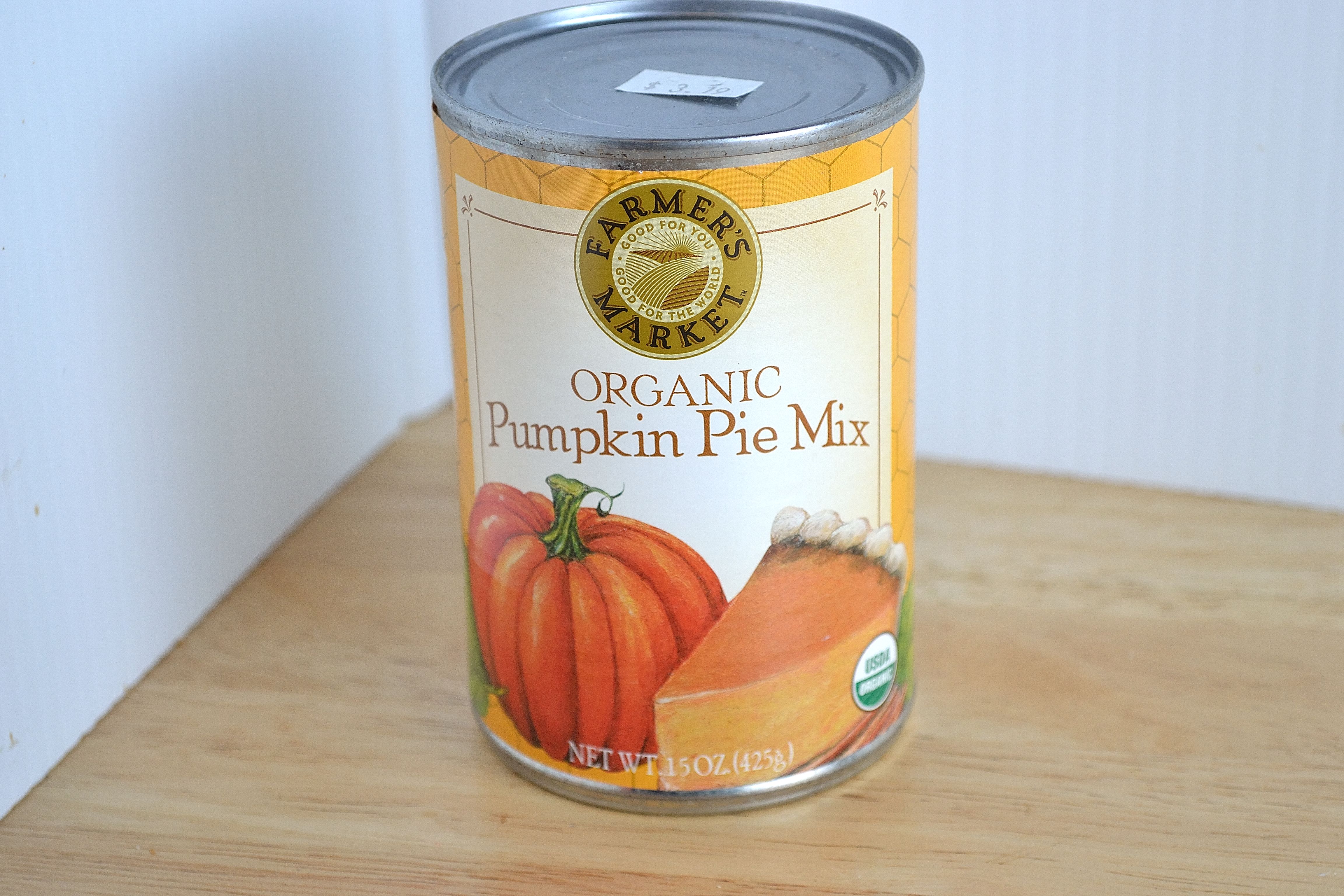
When buying the ingredients for last week’s Pumpkin Cake, I accidentally purchased a can of pumpkin pie mix rather than pure canned pumpkin. I was able to buy the pure variety in time for the cake, but was still stuck with the mix (I’d lost the receipt, and trying to convince the cashier at Whole Foods that pre-seasoned mixes are against my beliefs would be way too complicated). This muffin recipe, though, had just the right context for (hiding) the added flavors in the canned mix. I adjusted the sugars and spices accordingly to mask it.
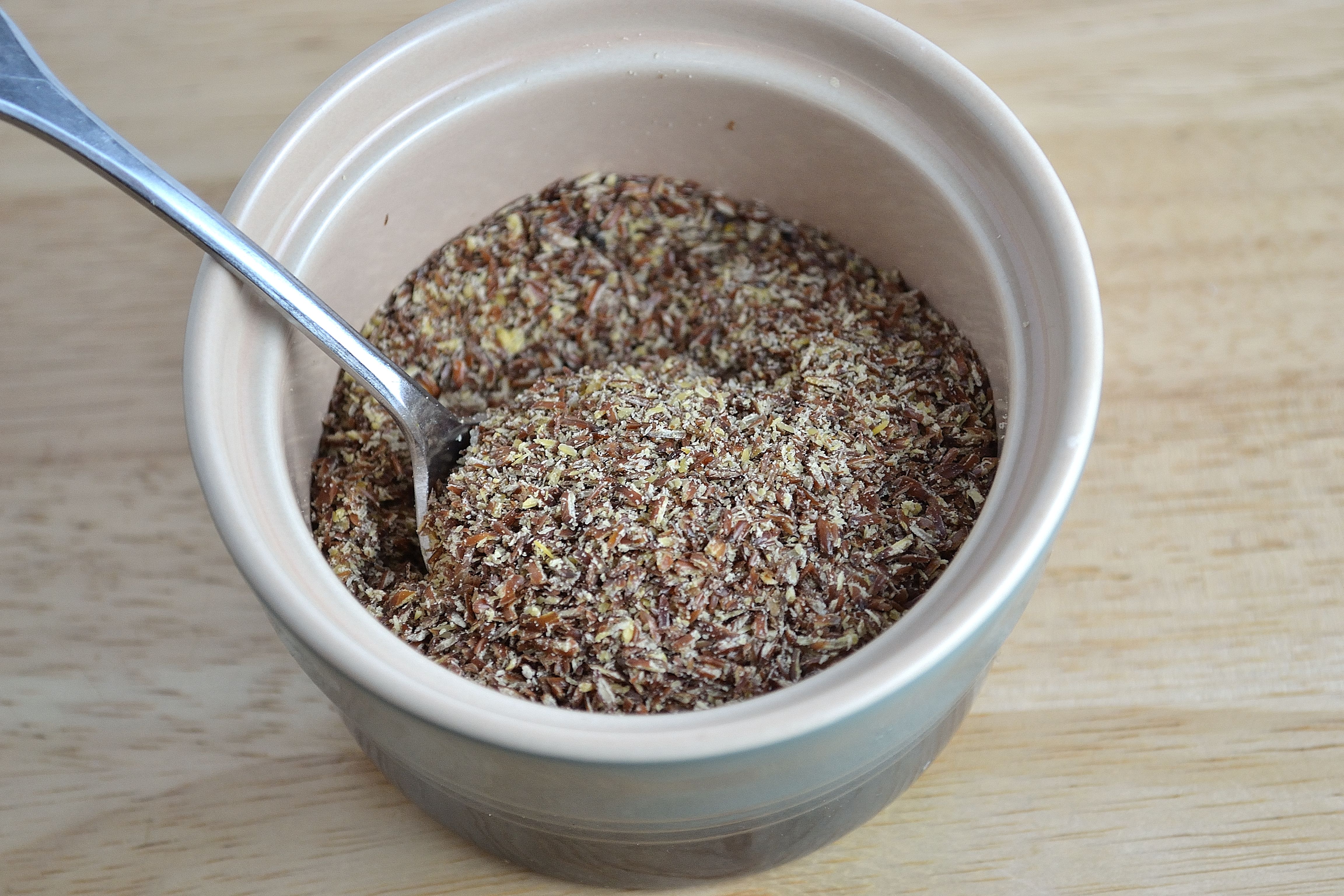
Vegan baking may seem like an anomaly, but the results can be surprisingly similar to their non-vegan counterparts. The eggs in this recipe are replaced by ground flaxseed – when combined with water, flax acts as a binding agent. It also imparts a nutty taste to the final product, making it ideals for muffins and breads. These muffins had a wonderful texture, with a nice balance of flavors. So the next time waking up feels like an impossible task, consider having a batch of these on call – click HERE to see how to make these delicious fall treats!
To pair with these breakfast beauties, I wanted a piece that evoked images of dawn and sunrise. That led me to Edvard Grieg’s Peer Gynt Suite no 1, Op. 46: No 1, Prelude “Morning.” The work was written as incidental music to the play by Henrik Ibsen of the same na,e. While it may be a literal pairing, the muffins are remarkably akin to the style of this beautiful movement. Grieg paints a colorful daybreak using rich harmonies and gentle melodies. These muffins are filled with flavor while still having a light, airy crumb. Enjoy!

http://www.youtube.com/watch?v=qAMLCDnCLzs

Sources Cited:
“Peer Gynt (Grieg),” Wikipedia.com

A Treat for a Texan

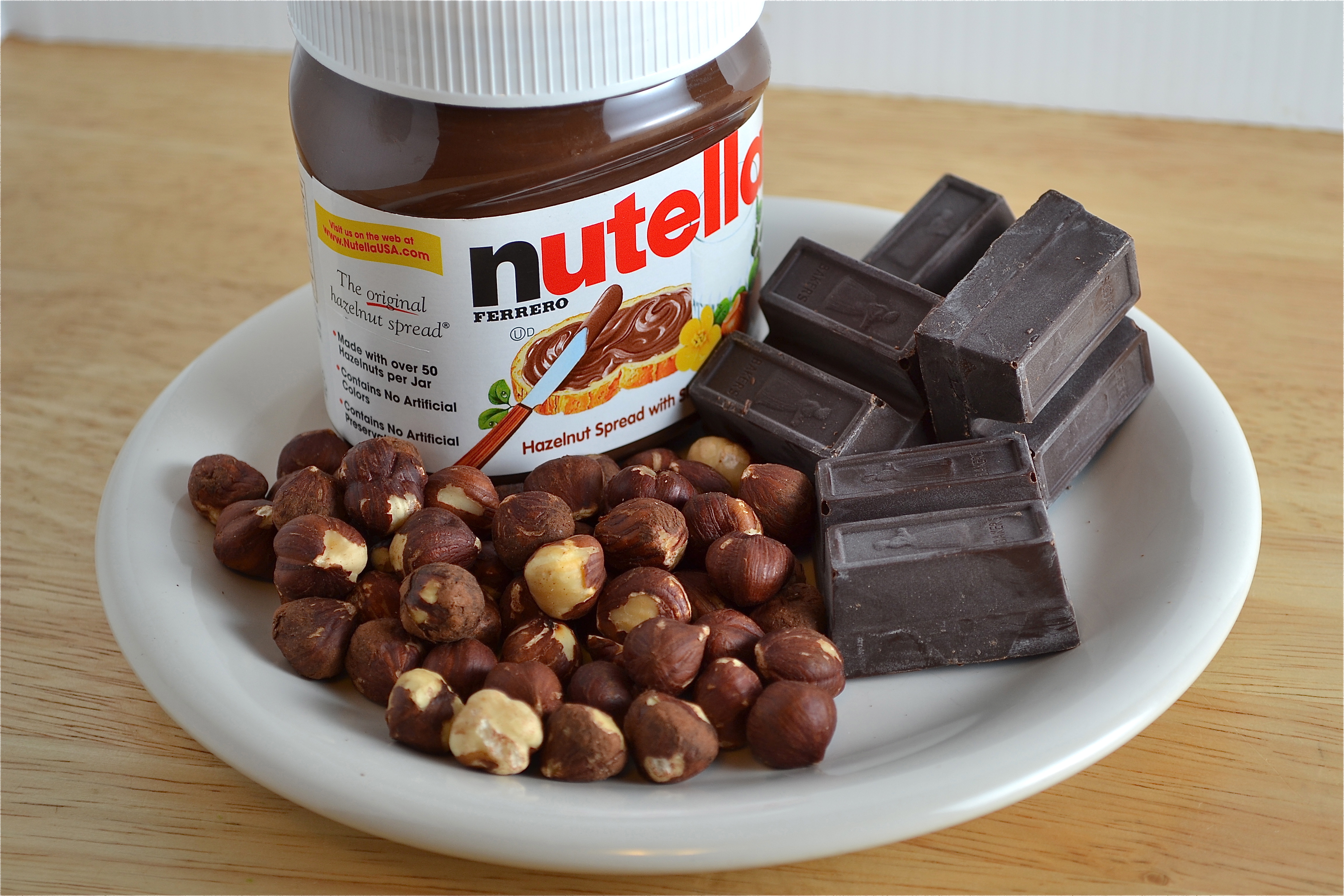
Planning a surprise party is like organizing an elaborate meal – there’s prep work to ensure that everything goes smoothly, you have to know when and where the moving parts will be throughout, and you have to be prepared for anything that might happen. Ultimately, the true purpose of both is to bring  family and friends together. The other night I threw a surprise party for my roommate Jenn Berg – the turnout was great, the spread was epic, the champagne was flowing, and the look of sheer happiness on her face made it all worthwhile. Since she loves nutella, I decided to make this gorgeous Nutella Cake with Chocolate Ganache.
Nutella is a work of art, and there are very few who would say otherwise. In fact it’s so popular that they created a World Nutella Day to showcase the potential of this decadent spread! The original recipe was created by an Italian pastry maker named Pietro Ferrero. In the 1940s, his patisserie was limited on chocolate due to WWII rationing. Northern Italy has an abundant supply of hazelnuts, so Ferrero decided to create a mixture with cocoa to help extend his chocolate supply. The result was so successful that Ferrero created the company Ferrero SpA to market and sell the spread.
This isn’t your average flourless cake – the egg whites are whipped separately from the batter, while the ground hazelnuts act as a “flour” substitute. The result is a soufflé-like cake with a rich flavor contrast (from the nutella and hazelnuts). I wouldn’t say serve bigger slices as a result, though – you will still find it to be plenty rich. The recipe originally calls for Frangelico, but rum works just as well. It also originally calls for a garnish of hazelnuts, but I ended up using Ferrero Rocher balls instead (another favorite of Ferrero SpA). Click HERE to see the recipe for this gorgeous cake!
In homage to Jenn, an oboist, I chose a musical piece that I’ve heard her practicing many, many times: Ravel’s Le tombeau de Couperin. Originally a suite composed for piano, Ravel later orchestrated four of the seven movements for orchestra. Each movement of the work is dedicated to friends Ravel lost in WWI. Filled with dance-like melodies and pastoral reflections, the work is more a celebration of life rather than a lamentation (making it a wonderful complement to our evening!) This piece places a number of demands on the oboe, making it a staple of their excerpt repertoire (especially for auditions!) I hope that one day I’ll have the chance to hear my extremely talented roomie to perform this with an orchestra – enjoy!

http://www.youtube.com/watch?v=Lc8ugWM5tB0&feature=related

Sources Cited:
“Nutella,” Wikipedia.com
“Le tombeau de Couperin,” Wikipedia.com
Just Can’t Get Enough

Beets – a true “gem” of a vegetable. As beautiful as they are nutritious, these ruby-red root vegetables have made a comeback in the culinary world. From impressive garnishes to hearty soups, beets have the ability to liven up any dish. There are a number of ways to enjoy them, from boiled to raw. When trying to find a recipe for a dinner with my close friend Maya Jacobs, I chose to make a Roasted Beet Salad.
Those who have cooked beets are all too familiar of their notorious staining quality. Beets get their color from betalain pigments, producing hues that range from sunny golds to dark crimsons. The cells containing these pigments are very unstable, causing their color to bleed when handled (cut, scrubbed, basically anything). They leave a nasty stain, so I recommend NOT wearing your favorite white shirt while preparing them.
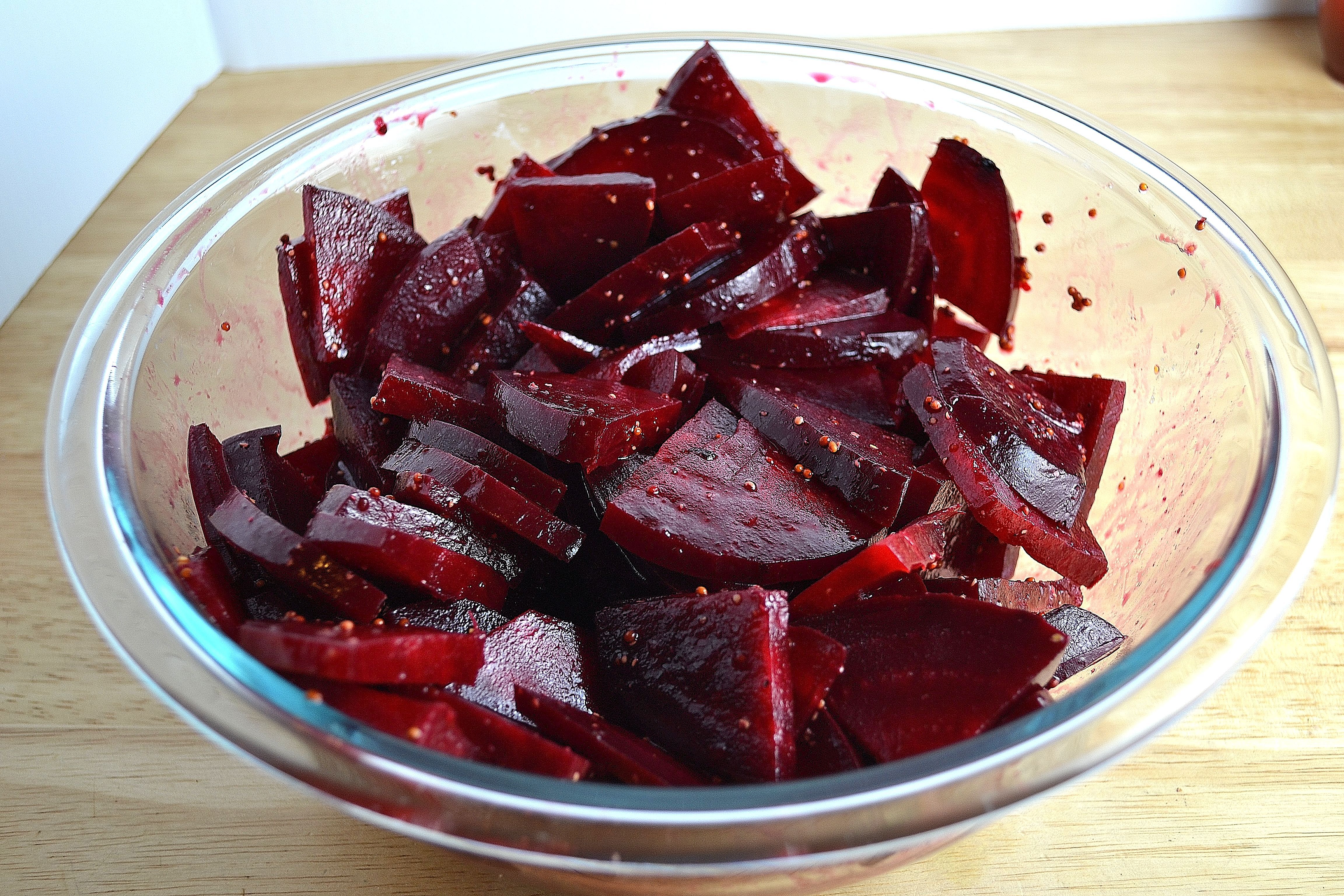
These beets are cooked skins-on, which allows them to retain the majority of their juices during the cooking process. Be sure to allow them to cool to a reasonable temperature before removing the skins – trying to handle scalding beets will inevitably leave you covered in beet juice. While this is a very simple salad, it is packed with flavor – the vinaigrette helps balance the sweetness of the beets, with the whole-grain mustard providing a nice visual contrast. This is superb recipe, and remarkably easy to make – click HERE to see how to make this colorful dish!
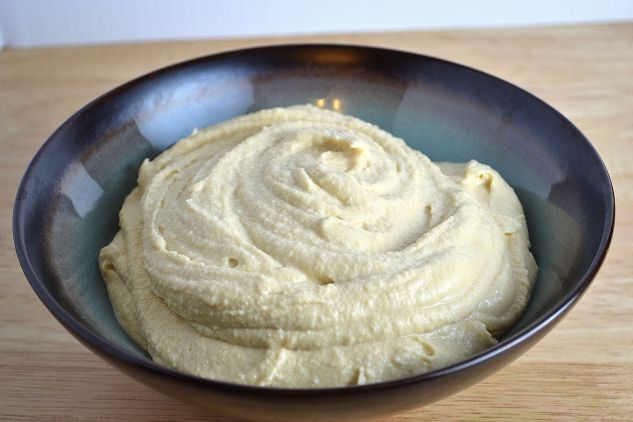
I mentioned this was a dinner with my friend Maya…and I am FINALLY getting to blog about her famous hummus! The trick here is really basing things on sight and taste, rather than precise measurements – Maya knows what makes a solid hummus, so it definitely takes practice. The ingredients are simple, and I encourage all my readers to give this a shot – click HERE to see Maya’s acclaimed recipe!
Both hummus and beets have a rich history in Middle Eastern cultures, which led me to the arabesque – an Islamic art form known for its vegetal, flowing design. The term found its way into Western classical music as a way for composers to evoke an Arabic ambiance. One of the more famous examples is Claude Debussy’s Deux Arabesques. One of Debussy’s earlier works, this work (for solo piano) was composed when he was still in his 20’s. Both movements are filled with embellishments, the first more serene and the second more lively. I hope you enjoy!

http://www.youtube.com/watch?v=28Qi4jLtigc

Sources Cited:
“Arabesques (Debussy),” Wikipedia.com