Beating the Summer Heat

Several weeks ago, I went camping in New Hampshire with two great guy friends. While I was willing to rough it out with the no shower/bed situation, there are certain things I can’t sacrifice; cooking is (obviously) one of them. This led me to buy a Coleman propane grill – fast forward to being back in Boston. It was miserably hot on the night I was supposed to have friends for dinner, and the oven was the last thing I wanted to have on. This little grill came to my rescue, and gave me the perfect opportunity to create Grilled Chicken with Dijon-Thyme Marinade, with which I paired a colorful Panzanella Salad.
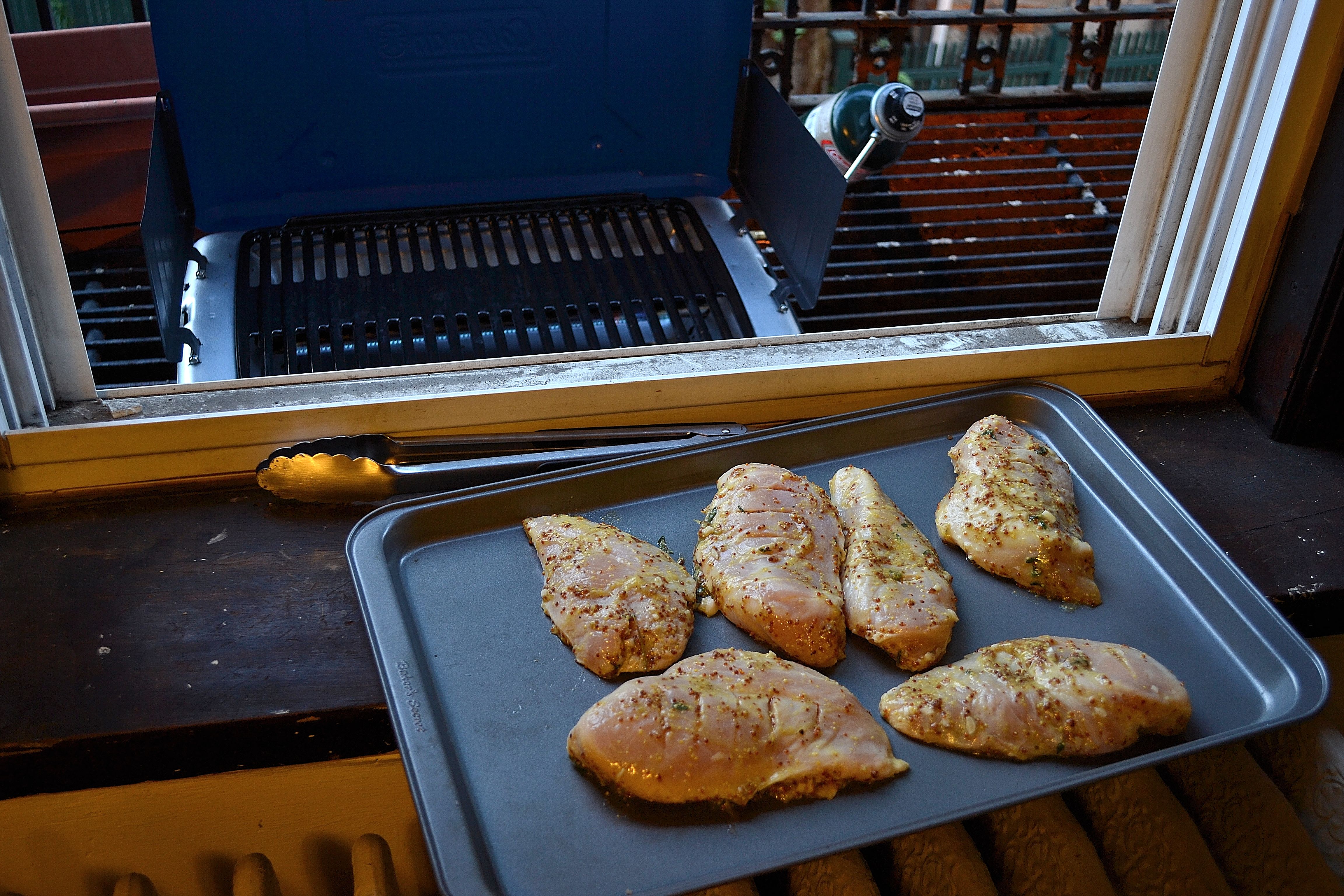
The marinade was sort of a creation I made up. I have researched countless recipes in the past, so I had a pretty good idea about proportions and such. I love the look of whole grain mustard, so I highly recommend using it if you can. While dried thyme can be used, the depth of flavor fresh provides make it worth the purchase. The marinade bag-in-bowl trick is one I’ve used for other recipes (like this flank steak). It’s great given it fully coats the meat  with the marinade, and makes for extremely simple cleanup. Click HERE to see why this chicken has become a staple in my cooking repertoire.  
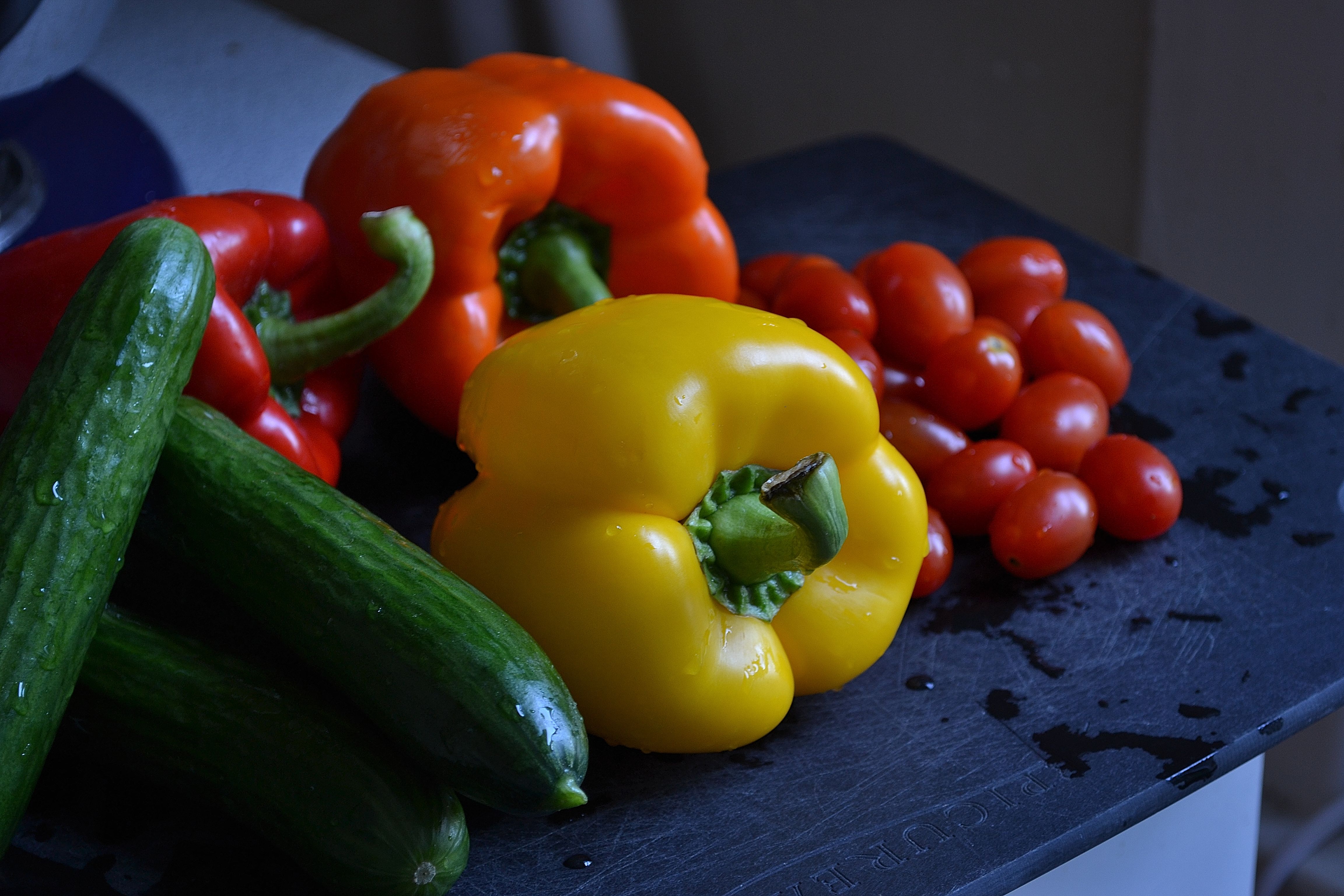
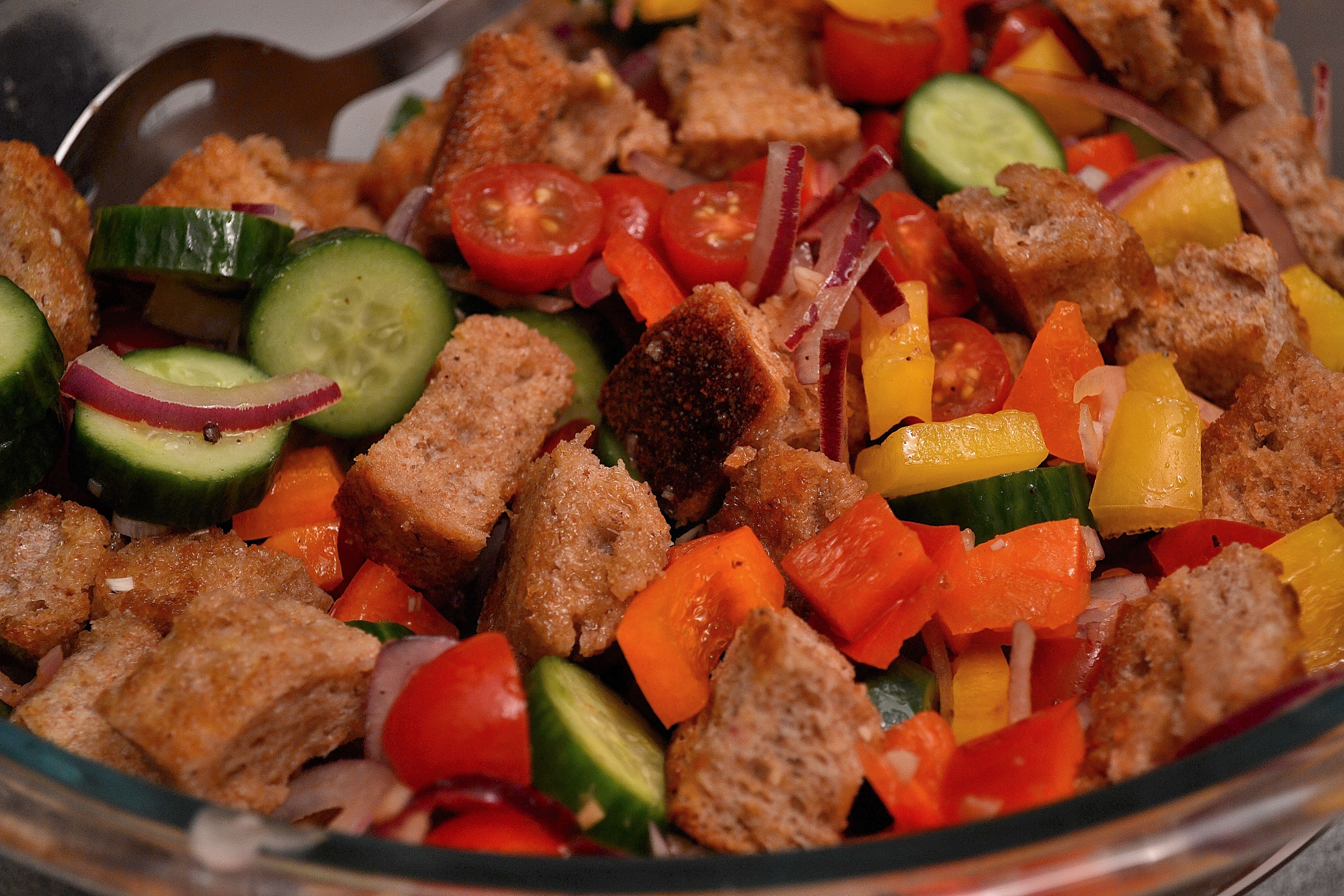
This Panzanella Salad was a random experiment. Having already made countless salads this summer, I wanted to try something different. Needing my “starch” component for this menu, it seemed like the perfect opportunity. What I love about this recipe is the colorful assembly of fresh vegetables – bell peppers, tomatoes, onions, cucumbers, and more! There’s no limit to what vegetables can be used, making it perfect for any season.
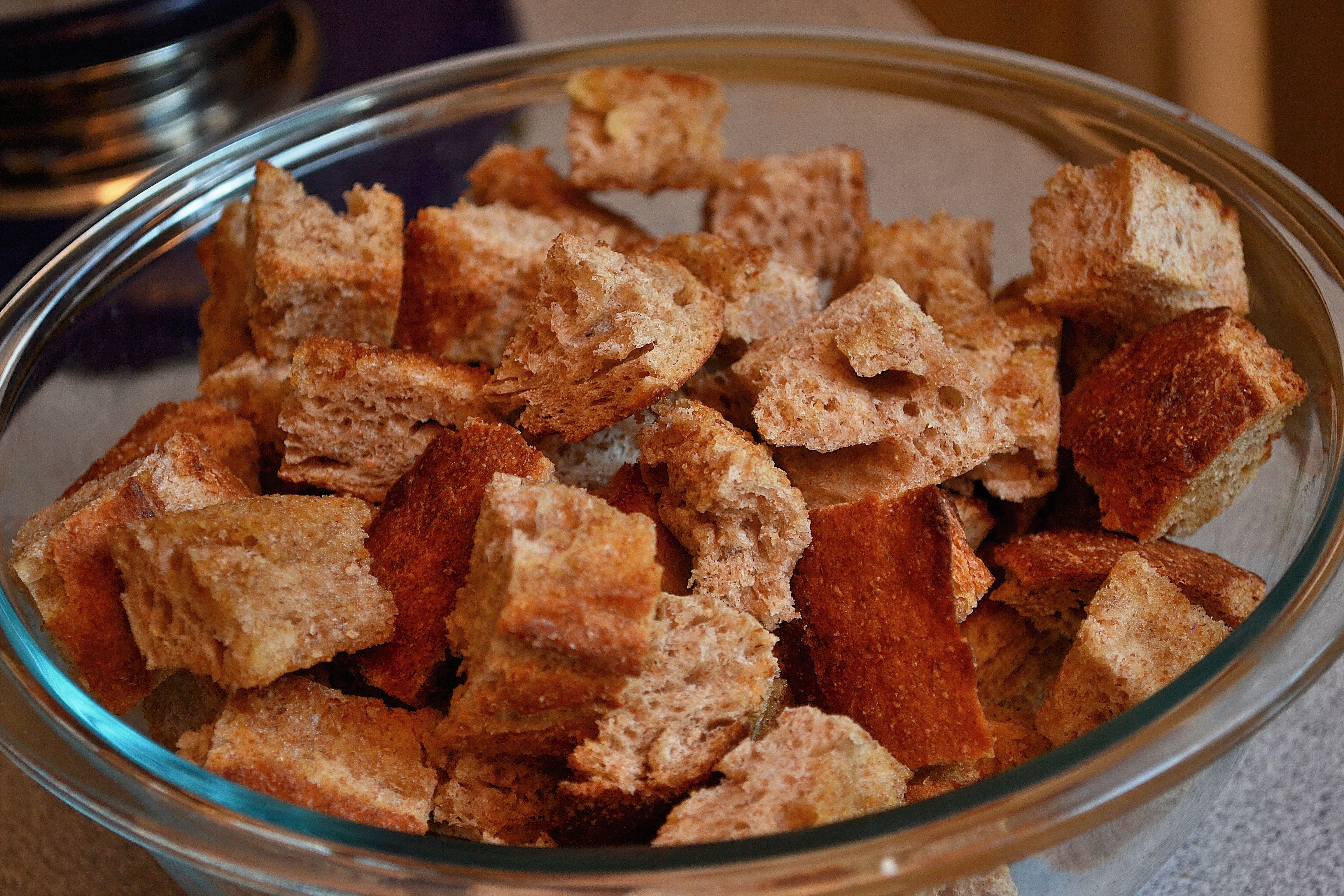
The fresh, bright taste of this salad is phenomenal! While traditional Panzanella uses stale bread that has been soaked in water, I prefer the crisp freshness this recipe provides. By toasting the bread, it doesn’t become too soggy or fall apart. That being said, I should warn that this salad may not be for everyone – while I loved the novelty of it, there were those who weren’t quite as keen on the bread + salad component. Nonetheless, I recommend giving this a try – you might be surprised at how addicting this salad can be. Click HERE to learn how to make this cool, summery dish.  
For pairing these dishes, I decided to choose a recording that my friend Luke Reed (who was visiting) actually showed to us later that evening: ‘Ciaccona di Paradiso e dell’Inferno‘ (composer anonymous). All of the performers are wonderul, yet my main draw to this was the STUNNING countertenor Philippe Jaroussky. His voice is beyond words, with a crystal clarity that can melt your heart. Yet the video itself also contains a bit of comic flair, which in my eyes was perfect considering this dinner was an evening of laughter and silly YouTube videos. The recording is from a concert series with the early music ensemble L’Arpeggiata, led by Christina Theorbo. Their are some fascinating instruments, including the theorbo (played by Pluhar) and a wooden cornetto. I’ve included another recording from the concert, ‘Ciaccona‘ by Maurizio Cazzati, to showcase more of the musicians with the group. Enjoy!

http://www.youtube.com/watch?v=M9A-EbjwPhQ&feature=related
http://www.youtube.com/watch?v=8r4GM_VGVZ8&feature=related


Some Like it Hot

If there is one truth about the food I love, it is spicy – crushed red peppers and/or tabasco are two items that are always available in my apartment. I don’t always cook elegant fare for myself, but a dash of heat can bring almost any dish to life; there are exceptions, of course (like breakfast cereal – NEVER try this). I was cooking a meal for two of my girlfriends and wanted to put a little extra kick in the meal. It was then I remembered my upstairs neighbor Tim Wilfong had given me a bag full of Thai chilies – perfect. After endless internet queries and comparisons, I decided to make the following dishes: Asian Chicken Lettuce Wraps with a side of Spicy Asian Roasted Broccoli & Green Beans
Let’s talk about chili peppers briefly – they are classified as fruit, though are obviously not utilized for their sweetness (the bell pepper is the one exception, and certain spicier cultivars do have a tangible sweetness). That spicy kick we get from peppers comes from the compound Capsaicin – when ingested, capsaicin will cling to our oral pain receptors, thus increasing our heartrate and causing perspiration. The amount of caspaicin present in a pepper is measured in Scoville heat units, or SHU. To give you some context: a bell pepper has 0 SHU, the jalapeño has 2,500 – 5,000 SHU, and the habanero has 300,000 SHU. The Thai chili peppers I used stand at 50,00-100,000 SHU – while it’s no habanero, it still packs some serious heat.*
These lettuce wraps were inspired from the P.F. Chang’s classic – though I adore the original, I wanted something a little less “heavy.” I found FoodNetwork’s “Almost Famous” edition of the wraps, and made a few adjustments to create a slightly healthier version. Of course, I swapped the jalapeño called for with a Thai chili. The stir-fry sauce is simple, yet gives this dish its “authentic” taste. It originally called for a tablespoon of hoisin, but I swapped that with ketchup (not the same I know, but it was the next best thing to get the sweet, tangy factor I wanted); I also used dry sherry in place of the rice wine.
These wraps are quite messy, but I can guarantee you’ll be dredging up every last ounce of it(even if you’re stuck using tiny pieces of lettuce to do so!) I omitted the shiitake mushrooms given their exorbitant cost, and even though I love mushrooms, they were not missed. The water chestnuts, though, are crucial – they are the “texture factor” of this dish. The recipe says it serves four to six, but I’d safely say no more than four given that three small women practically killed the entire thing ourselves. To see how to make these addiciting wraps, click HERE.
This dish…oh my GOD was it good! I mean, these vegetables would have any stickler coming back for seconds. I wouldn’t omit a thing from the recipe (maybe the cilantro, but still). I was caught by surprise on the day of with the miso paste. My initial reaction was to forget it, but I just so happened to have a packet for miso soup mix in my pantry. Granted, that’s miso powder and also has pieces of dried seaweed and scallions; but I figured that a simple sift and addition of water would be a great substitute for the paste; it worked almost perfectly. The Thai chilies are a must, but if you choose to leave them in for color (which I did), then DON’T let your guests eat them…unless they’ve eaten a habanero by itself before, but then I’d question your friend’s sanity. Click HERE to see how to make this showstopping side.   
In considering the Thai pepper, I began to think about pieces that could create the similar affect of increased heartrate and adrenaline. That brought me to the composer who can send any performer’s heartrate soaring: J.S. Bach. Though many consider Baroque to be “old-fashioned”, Bach’s music is in fact some of the most challenging of the classical repertoire. His works require a thorough understanding of the complex harmonies, innate phrasing, and technical demands. Whenever I stood on a stage to perform Bach, you could guarantee my heart was pounding – thus I chose a piece from my own repertoire: the Corrente from Partita in A minor for Flute Solo, BWV 1013. I chose this movement (second of four total) given its adrenaline-like pace; the title literally means “running.” The performer here is Emmanuel Pahud (man of my dreams), and as always it is a stunning performance. Enjoy!

http://www.youtube.com/watch?v=w6HEn0Zu5tI

Sources Cited:
*http://en.wikipedia.org/wiki/Chili_pepper

The Compelling Lightness of Tuscany

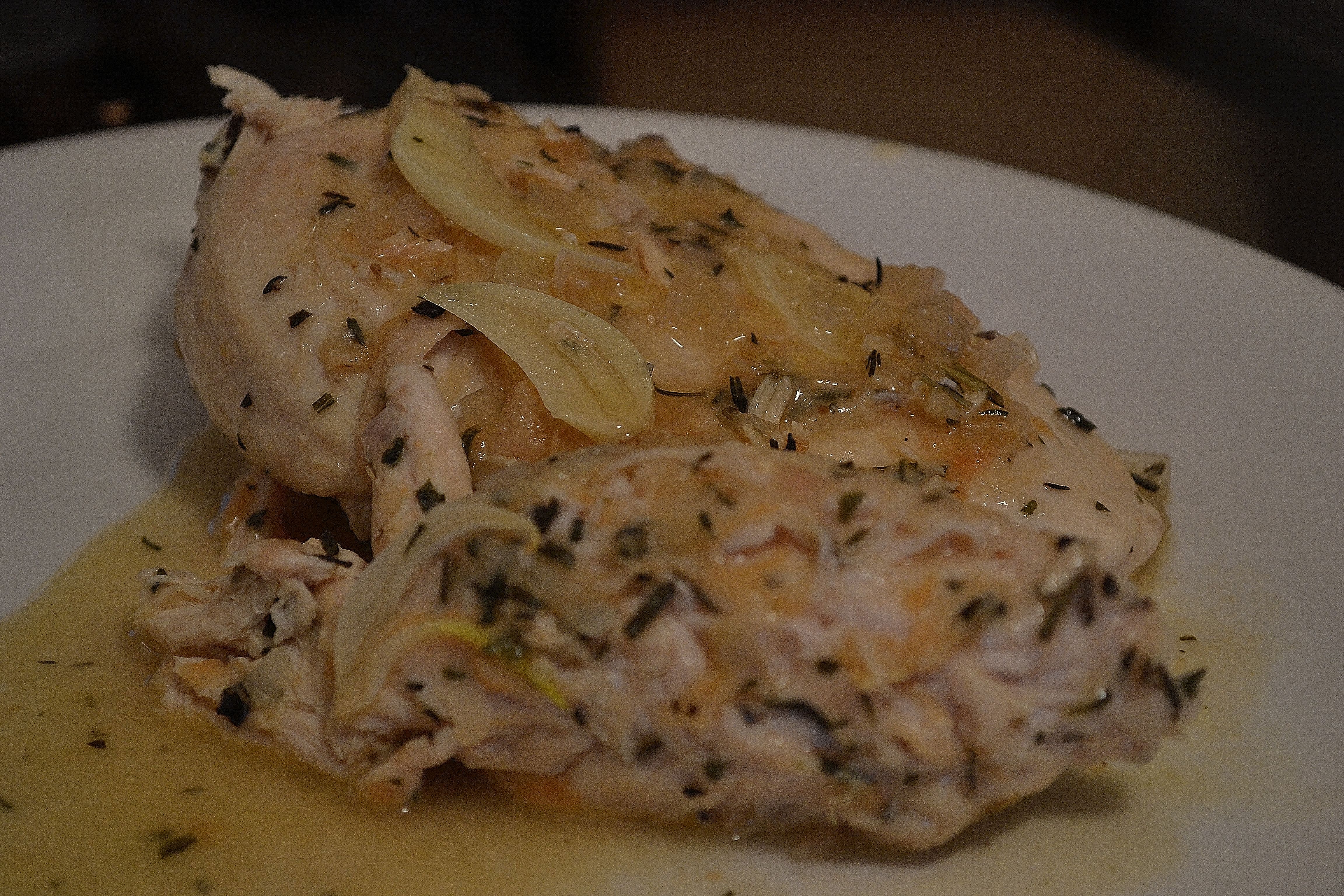
When one hears the term Monte Cristo, they think of either the classic tale by Alexandre Dumas or of the devilishly attractive James Caviezel (who starred in the 2002 rendition of the novel…I admittedly think of the latter) When placed in a culinary context, it is often in reference to a ham (or other variety of meat) and cheese sandwich that is then dipped in an egg batter and fried (a variation on the classic French sandwich Croque Monsieur). So when I found a chicken breast recipe titled “Monte Cristo Chicken,” you can imagine my surprise that it has no relation to either one of these precedents. As it turns out, this is one of my favorite chicken dishes to date, and just so happens to be extremely simple to make! Though there is no attractive count involved (unfortunately) and no deep-frying (thankfully), this Monte Cristo Chicken recipe has certainly lived up to its name.
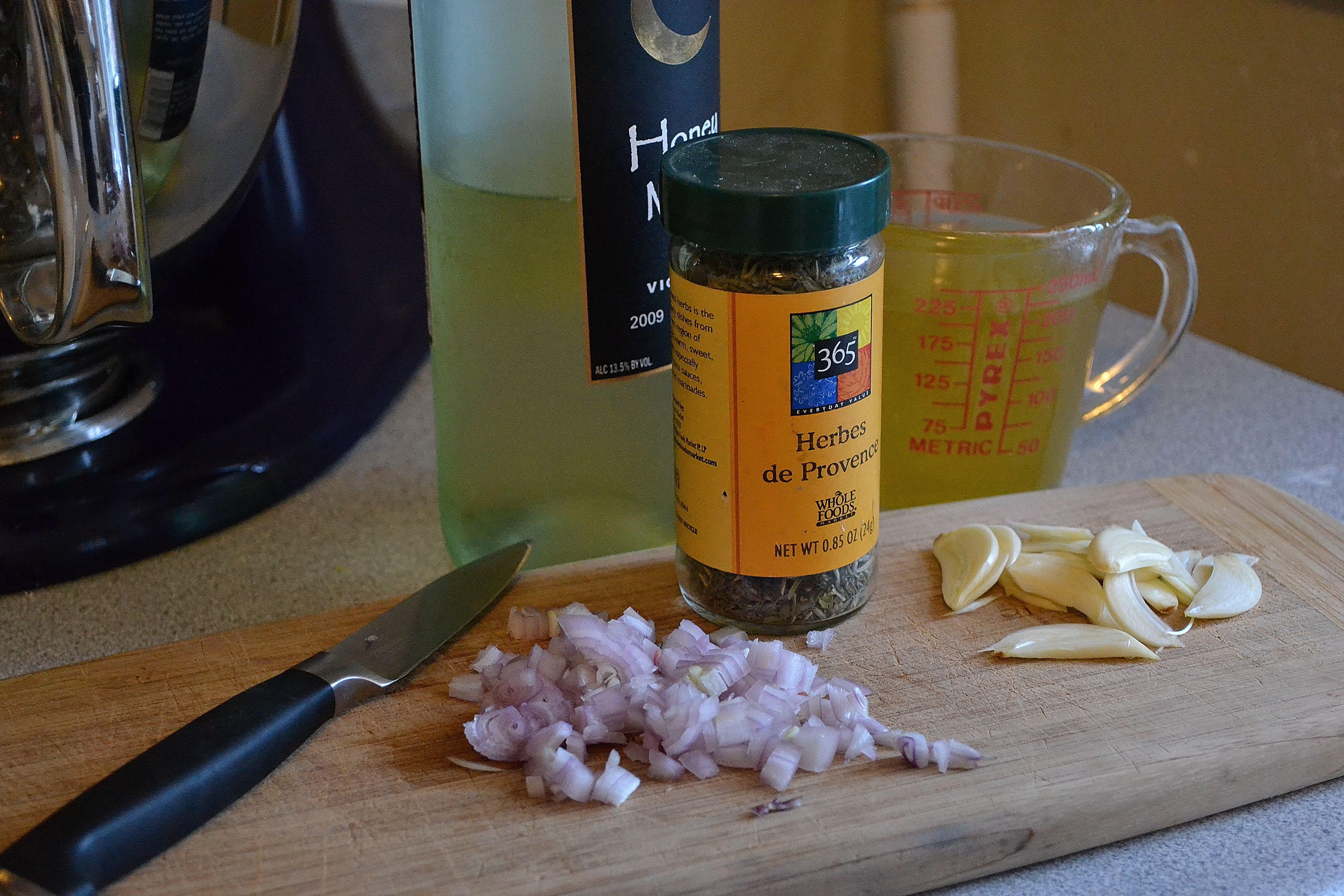
The actual “Montecristo” is a very small island off the coast of Italy, it’s literal translation being “Mountain of Christ.”* In trying to determing the connection to this dish, my best bet is its allusion to the flavors of Tuscany: Montecristo is within the Tuscan Archipelago*, and the majority of Tuscan food (I’ve experienced) has been notable for its simplicity. This dish most certainly is: lemon, wine, Herbes de Provence, shallot, garlic, and chicken stock are the flavors involved. The result is some of the most tender, flavorful chicken breasts I’ve ever tried. Herbes de Provence is a dried mixture of French herbs, including thyme, rosemary, savory, basil. etc. This is what truly puts this dish over the top. I imagine you can use any number of fresh or dried herbs its place, but it won’t have nearly the same effect.
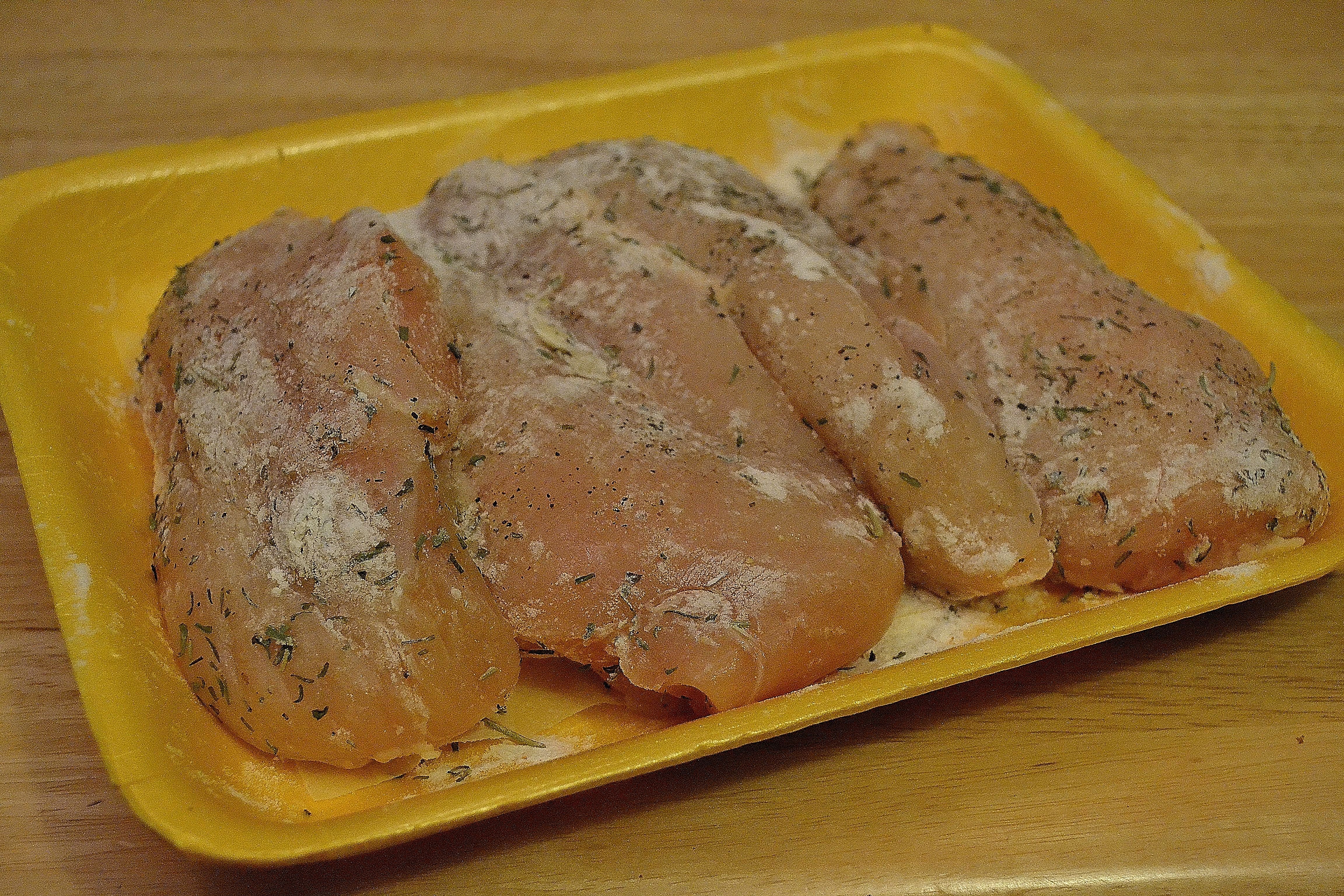
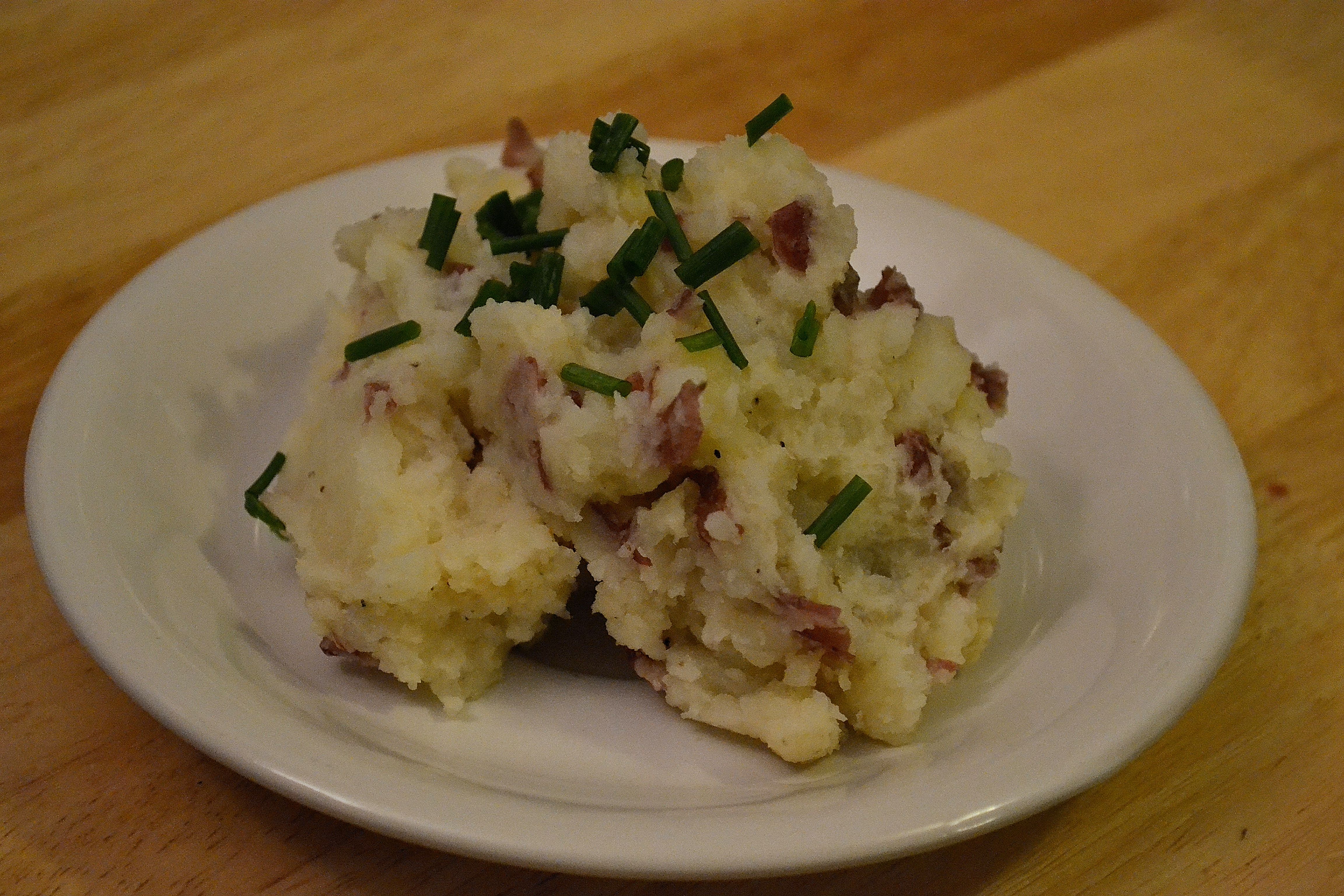
In terms of preparation, I make much more of the sauce than what the recipe creates – it’s an amazing sauce! I nearly quadruple the original recipe. Rather than sprinkling the flour and herbs, I mixed them all together on a small dish and coated the chicken accordingly. I omit the lemon zest, but it would make a pretty presentation no doubt. Click HERE to see my rendition of this delicious recipe. In addition to spinach, I also made a very simple yet delicious side of Roasted Garlic Mashed Potatoes. Click HERE to check out this recipe. 
Given the Tuscan heritage of this dish, I decided to focus on one of Tuscany’s most celebrated composers: Giacomo Puccini. His operas have become standards of performance repertoire, with classics such as La bohème, Tosca, and Turandot. While these works are true masterpieces, their breadth of emotional intensity is too overwhelming for this dish. A meal that takes under 20 minutes and has only 10 ingredients won’t do justice to a work that can bring even the strongest of men to tears. That was when I remembered another gem of Puccini’s that would be perfect: the one-act opera Gianni Schicchi. This work, based on the Dante’s Divine Comedy, is much lighter in character and shorter in length. It is the third and final installment of the series “Il Trittico.” Gianni Schicchi is the most famous of the three, and has one of the most famous soprano arias: “O mio babbino caro.” The aria is sung by Lauretta (daughter of Gianni Schicchi) imploring her father to approve of the man she loves.* Here is a great recording of the aria, with soprano Montserrat Caballé (thanks Tim Wilfong!) Enjoy!

http://www.youtube.com/watch?v=dI17VdRfCek

Sources Cited:
* “Montecristo.” Wikipeda.com 
** “Gianni Schicchi.” Wikipedia.com

A Taste for Small Gatherings

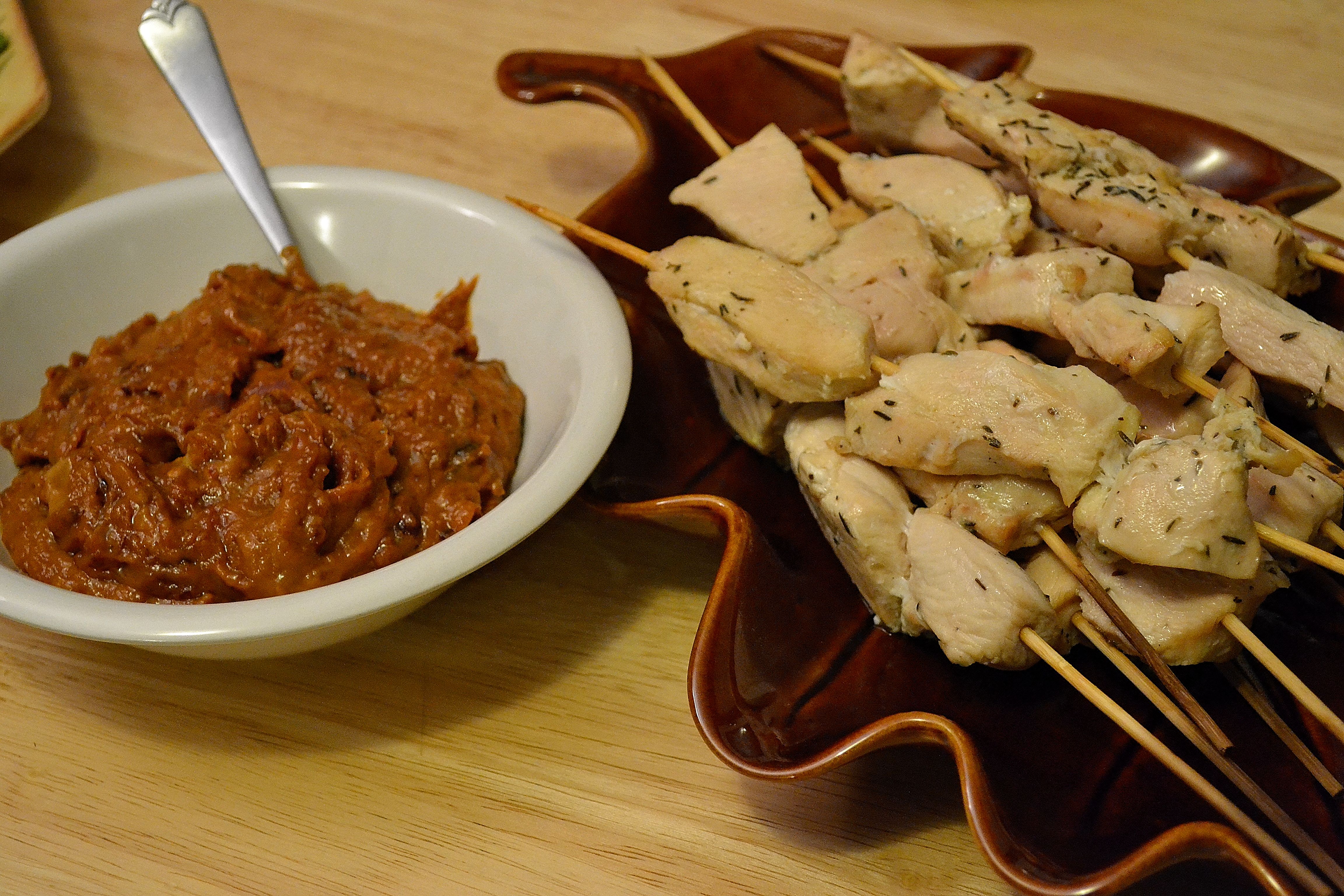
If there is one true weakness of mine, it is hosting: dinner events, cocktail parties, game nights, the list goes on. There is something inherently gratifying in welcoming others to your place with delicious food and good drink. While these may sound like the musings of a 1930’s housewife, I can guarantee that my hosting addiction has both economic and personal benefits. For those familiar with Boston’s social scene, it is well known that affordable options tend to be an anomaly. Why spend $10 for one hamburger when I could spend that same amount to buy the ground beef it takes to make 6 or 7?? As for the personal benefits, just think of how much more you can hear, see, and experience your friends when you are NOT having to deal with extraneous ambiance (loud music, weak lighting, unruly children, etc). Top that with the hassles of splitting a three-digit bill seven ways, and your night of fun has turned into a night of panic. This isn’t to suggest that I never leave my apartment – Boston certainly has its pick of choice restaurants and bars. Yet for the aspiring cook, at-home functions are the most valuable resource. This past weekend, I had several friends over for a night of Apples to Apples (a game that never gets old). I prepared several of my “famous” hors’doevres for the occasion, with a few new experiments as well. I’ve only included two in this post, but given my weakness I expect hors’doevres to be a recurrent theme – Lemon Chicken Skewers with Satay Dip and Creamy Sage Dip with Crudités.
As aforementioned, the Barefoot Contessa is a huge inspiration to me, with practically all of her recipes producing flawless results. I had made this recipe of hers several times before, and it is always the first dish to go. The original recipe calls for grilling the chicken, but as is the case with city apartments, I am limited to the conventions of indoor cooking. Broiling is an effective substitute – just be sure to soak the wooden skewers for at least 30 minutes (unless you have metal) and to have a window cracked to let out the smoke that will (most likely) result from the broiling. Don’t be afraid about the whole “lemon juice cooks chicken” myth – according to the USDA*, chicken can safely be marinated for up to two days in the refrigerator. The lemon’s acidity breaks up the poultry tissue, creating a more tender meat – but too much time can create a tougher meat. So, I wouldn’t suggest marinating this chicken for more than 4 hours.
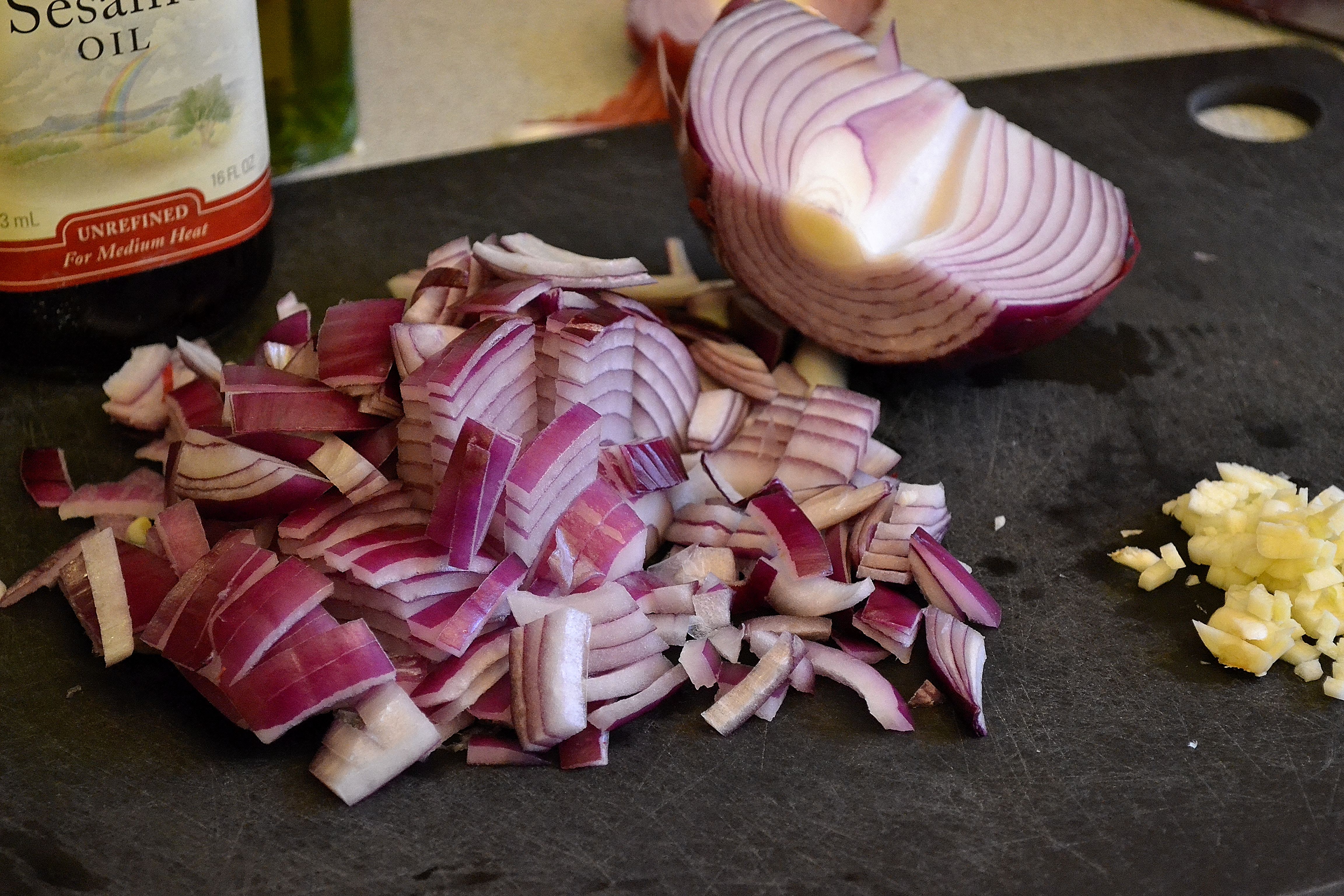
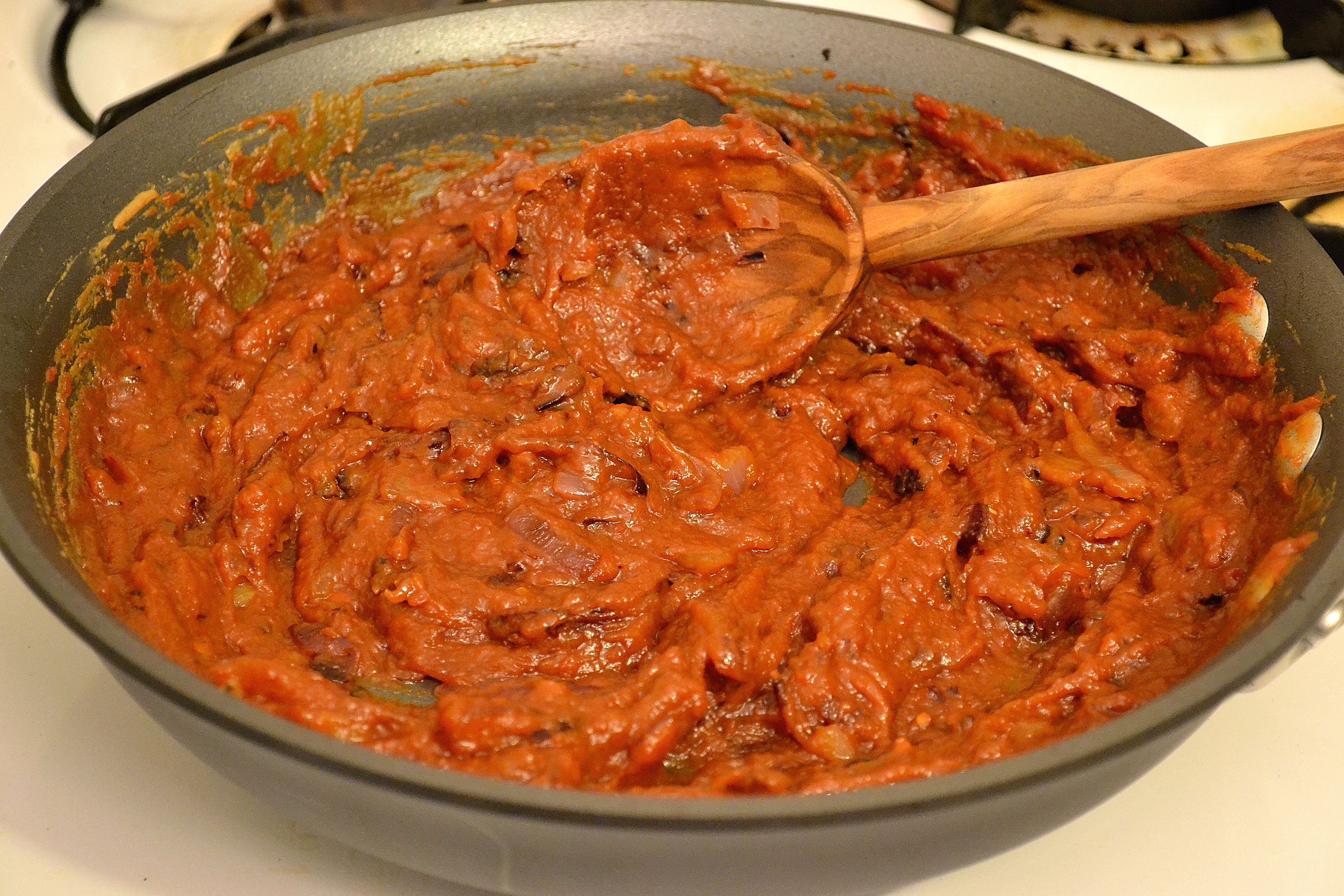
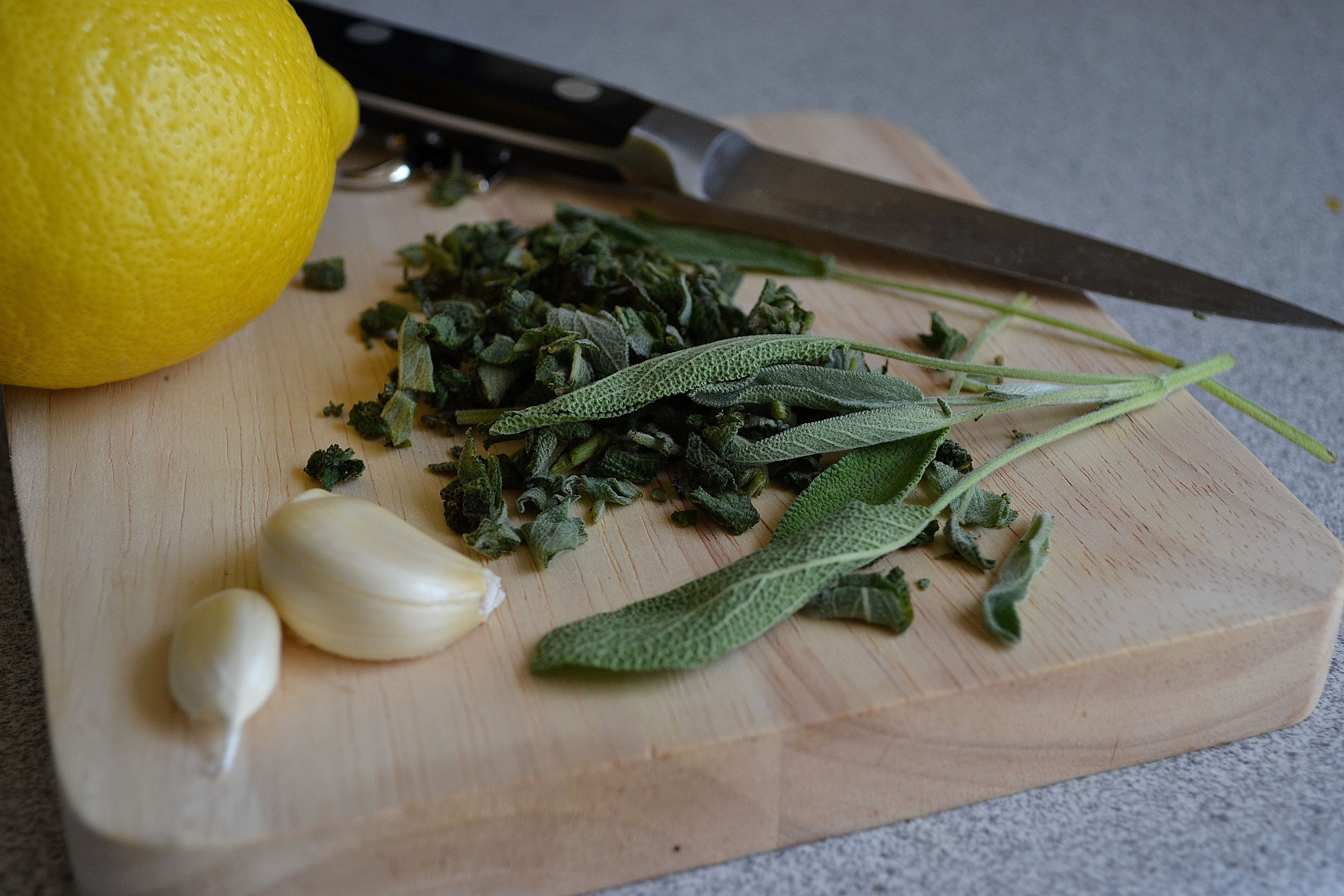
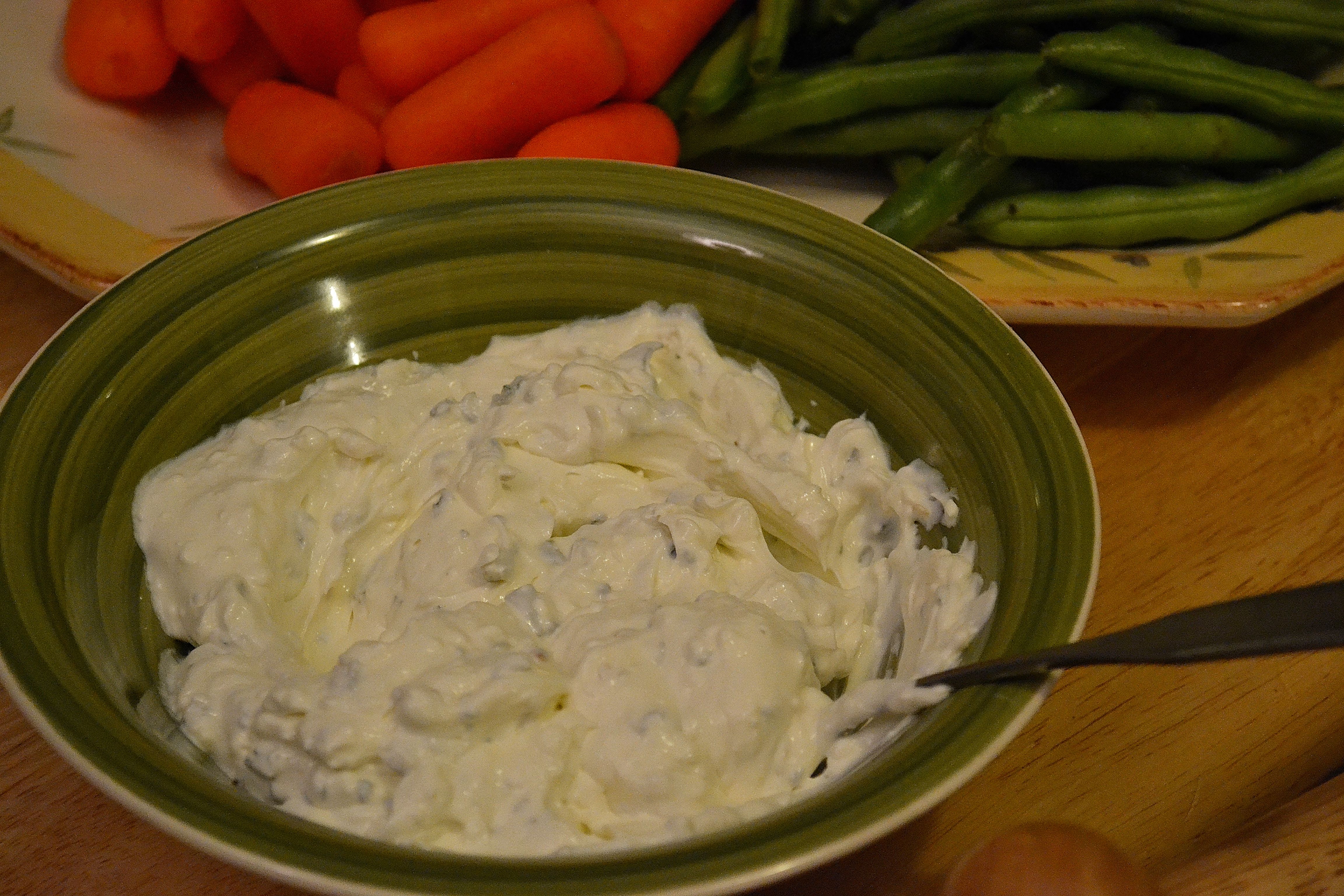
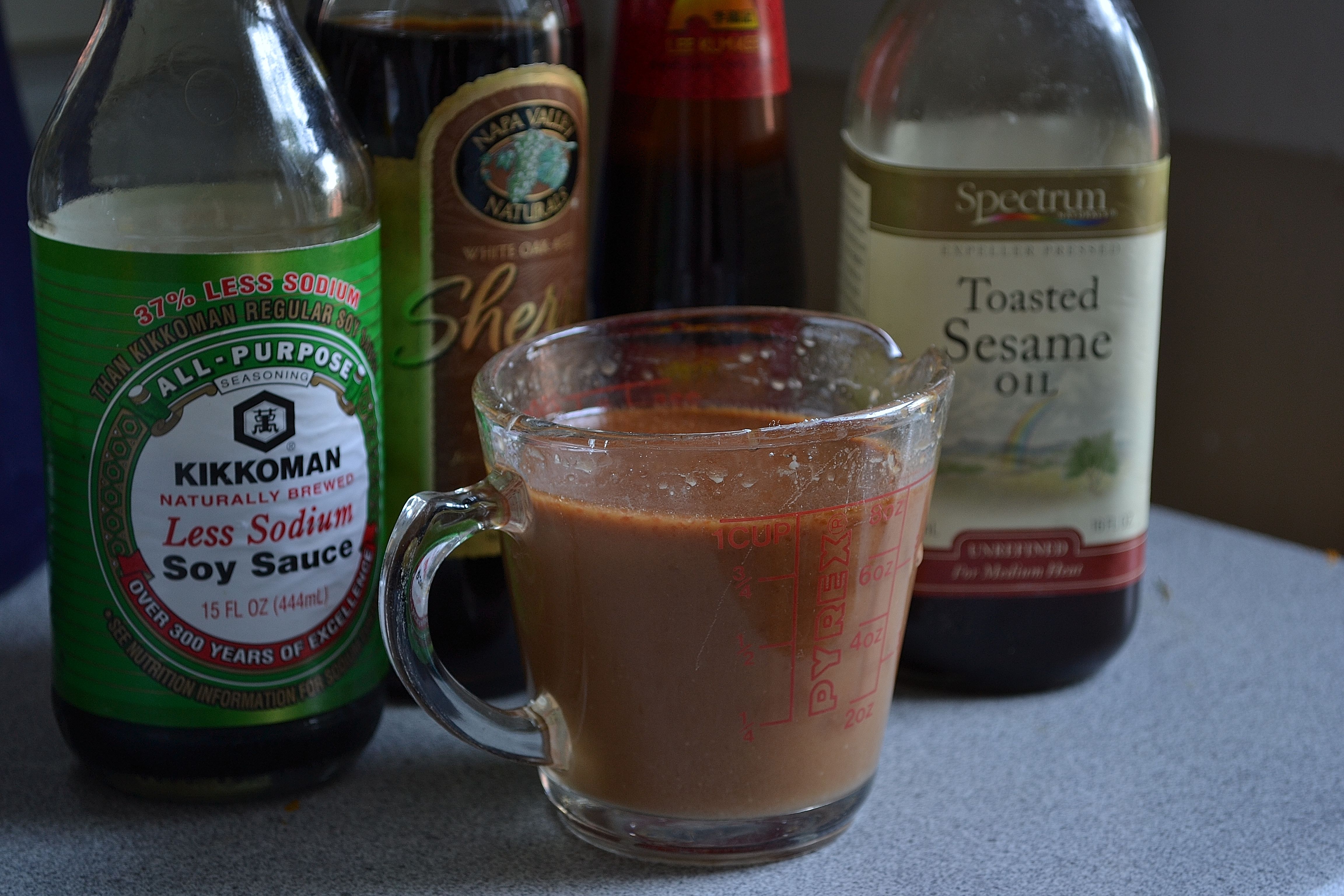
The dip, though, is what makes this dish – while its texture may not be as smooth as your standard satays, its flavor is fantastic! I still have the dark sesame oil in my pantry from when I first made this recipe (clearly not a staple in my cooking repertoire). I often omit the sherry from this recipe and substitute more liquid either through water or part oil/part lime juice; so far as I can tell, it’s never been missed. I also use an immersion blender to get a smoother consistency – this is a personal preference of mine. You can find this recipe HERE.This second recipe was one of those “what’s in the fridge?” creations. I had just baked a chocolate cake (coming soon!) that used 1 cup of sour cream, and I wanted to find a dip that could use the rest of the 16 oz. container I was forced to buy. I also still had some fresh sage leaves leftover from the Pan-Roasted Chicken with Olives and Lemon dish that I didn’t want to see go to waste. These ingredients led me to a recipe by Rachel Ray who, even though I can’t stand watching her show on Food Network, manages to provide creative ways for using leftovers. I wasn’t floored by her recipe, but it was definitely a good starting point. I also had 4 ounces of cream cheese left over from the gorgeous cream cheese icing that I paired with that chocolate cake (okay, now I’m just being cruel). All in all, I had the makings for a dip with a twist. While I wouldn’t say this was one of my all-time favorites, this dip provided a subtle, fresh flavor that paired beautifully with the crudités. Daily dose of trivia: crudité is a French term derived from the Latin crudus, meaning “raw.”** You can choose any number of crudités to pair with this dip; I highly suggest green beans, but bell peppers, broccoli florets, or even asparagus spears would be perfect. Check out this leftover creation of mine by clicking HERE. Many affiliate classical music with respectable concert venues, such as Boston’s Symphony Hall or Vienna’s Musikverein. Yet 19th century Europe saw the rise of a far more exclusive setting for classical performance – the “salon.”  While these were by no means a “new” setting, the 19th century saw an increase in households that were capable of supporting such affairs. These salons were gatherings hosted at private residencies for friends and family, and artists were invited as a way to infuse an air of prominence*** (the artists in my “salons” just so happen to be close friends, a fact with which I am blessed). Many prominent composers found support through these musical soirees, including the brilliant Johannes Brahms. A leading composer of the Romantic genre, the music of Brahms is expansive in both technique and spirit. I’ve always been a sucker for minor works, so I have included his Rhapsody in B minor Op.79 No.1 with none other than the illustrious Glenn Gould performing. The passion and precision of this performance is impeccable, a noteworthy pairing for one who loves the intimacy of small gatherings. Enjoy!

*”Chicken from Farm to Table” USDA.gov.
**”Crudités.” Wikipedia.com
***Funk, John. “Early Romantics and the Salons of 19th Century Europe.” Academy of Music Sciences International

A New Beginning…

“The secret to a rich life is to have more beginnings than endings” (David Weinbaum). There’s nothing quite like a new beginning, and this is one project I’d been hoping to pursue for quite some time. There are two great passions in my life: music and cooking. These two are a match made in heaven, one that I hope to explore through my own musical training and culinary experiences. And so my “breath of fresh air” begins with this blog – The Classical Kitchen. I hosted a dinner party for close friends this past weekend to celebrate the blog launch. The menu was, in theory, Italian – but unique flavors betrayed a cultural diversity:

◊ Arugula Salad with Oranges, Tomatoes & Goat Cheese tossed in a Red Wine Vinaigrette
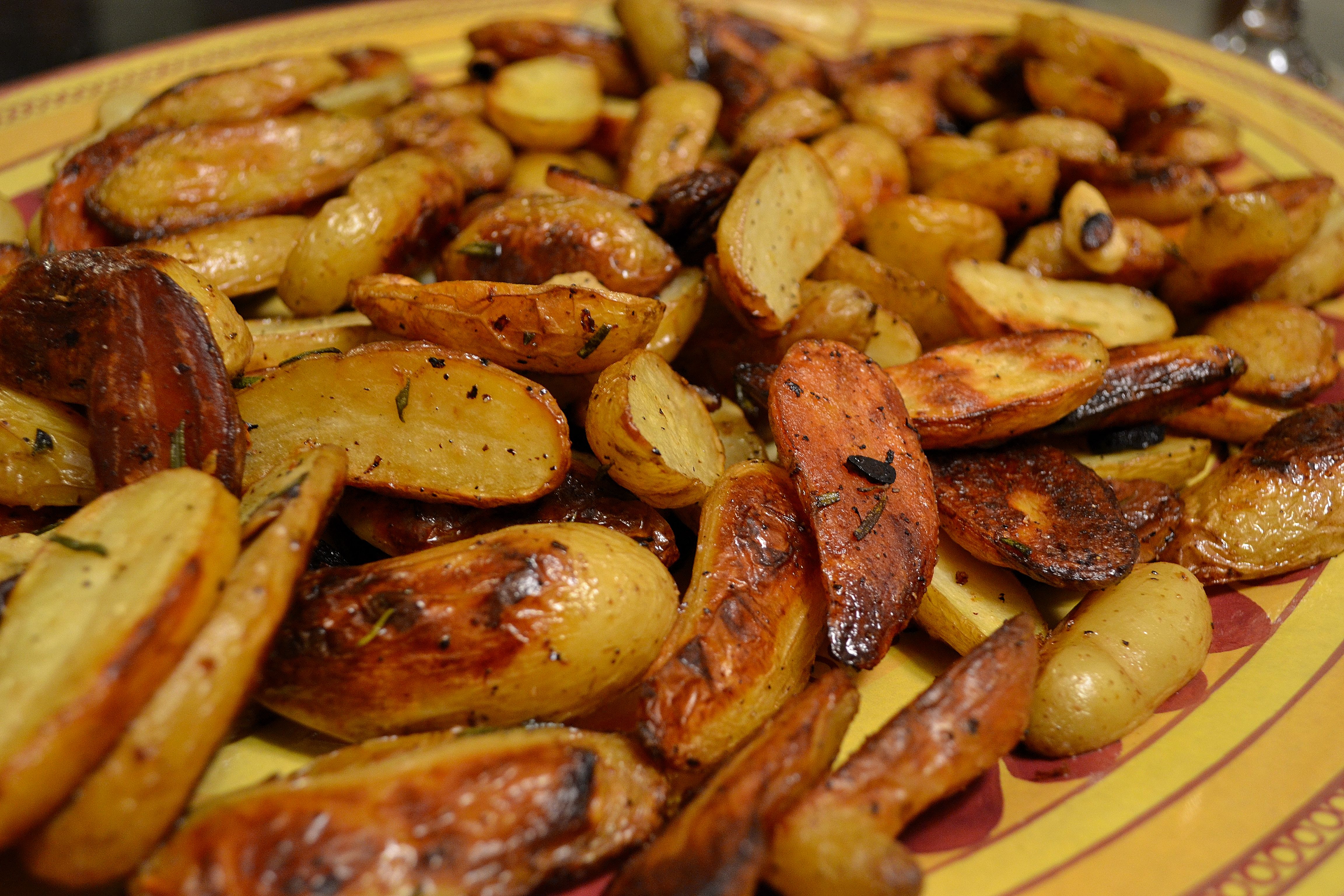
◊ Roasted Rosemary Potatoes with Crispy Garlic and Lemon Zest
◊ Pan-Roasted Chicken with Shallots, Olives and Sage
◊ Vanilla Creme Fraiche Cheesecake with Blackberries

(It’s okay, you can take a moment to digest…)

This dinner was a FANTASTIC way to launch this new blog, and (as always) a great excuse to spend time with friends. Before diving into the chronicles of these recipes, I want to say how lucky I am to be surrounded by such wonderful friends – cooking has no purpose without good company.

The salad was the contribution of my dear friend Tim Wilfong. A veggie through-and-through, he wanted to bring a side that would complement our main dish as well as his (veggie burgers – nothing too fancy, but he claims it was the perfect match).

So about the potatoes – potatoes in general are an easy sell: mashed, roasted, baked, fried, scalloped, etc. You can almost always guarantee that any crowd will love a potato dish. These, though, exceeded everyone’s expectation! While these beautiful, golden potatoes can stand on their own, the added flavors are what bring this dish up a notch: crispy garlic slivers, freshly crushed rosemary, and zesty lemon. Oh.My.God! My advice? Let these guys cook longer a little than you’d expect (without burning them, of course!) The amount of olive oil used in the recipe will protect the potatoes to a longer heat exposure, so don’t fret.

Some modifications: The end of the recipe calls for tossing the potatoes in the leftover lemon/rosemary vinaigrette – I wouldn’t recommend more than a tablespoon (or two). Trust me, you want to maintain that crunchy goodness, and too much oil will just make a soggy mess. The original recipe also calls for dill, but I went with rosemary. You can view this recipe HERE.

Here’s where our regional fare gets an exotic twist. This method of roasting calls for the chicken to be separated into 8 pieces (a process you can do on your own, though I highly recommend asking your butcher to do this for you), then cooked in a large oven-safe pan. Lemon and sage stay true to our Italian taste, but we journey closer to the Mediterranean with a curveball – brined green olives: a fruit native to the Mediterranean region, appearing in Egyptian chronicles dating back to 17th century B.C. Green olives are unripe and much firmer than the black and brown varieties, so they have to be cured with a lye solution to soften the fruit’s flesh.* This dish packs a LOT of flavor, and is a definite keeper.

A few variations: I placed the chicken directly under the broiler for the final stage of cooking to deepen the flavor and color. I also thickened the sauce slightly at the end to make a quick gravy. To check out this fabulous recipe, click HERE.

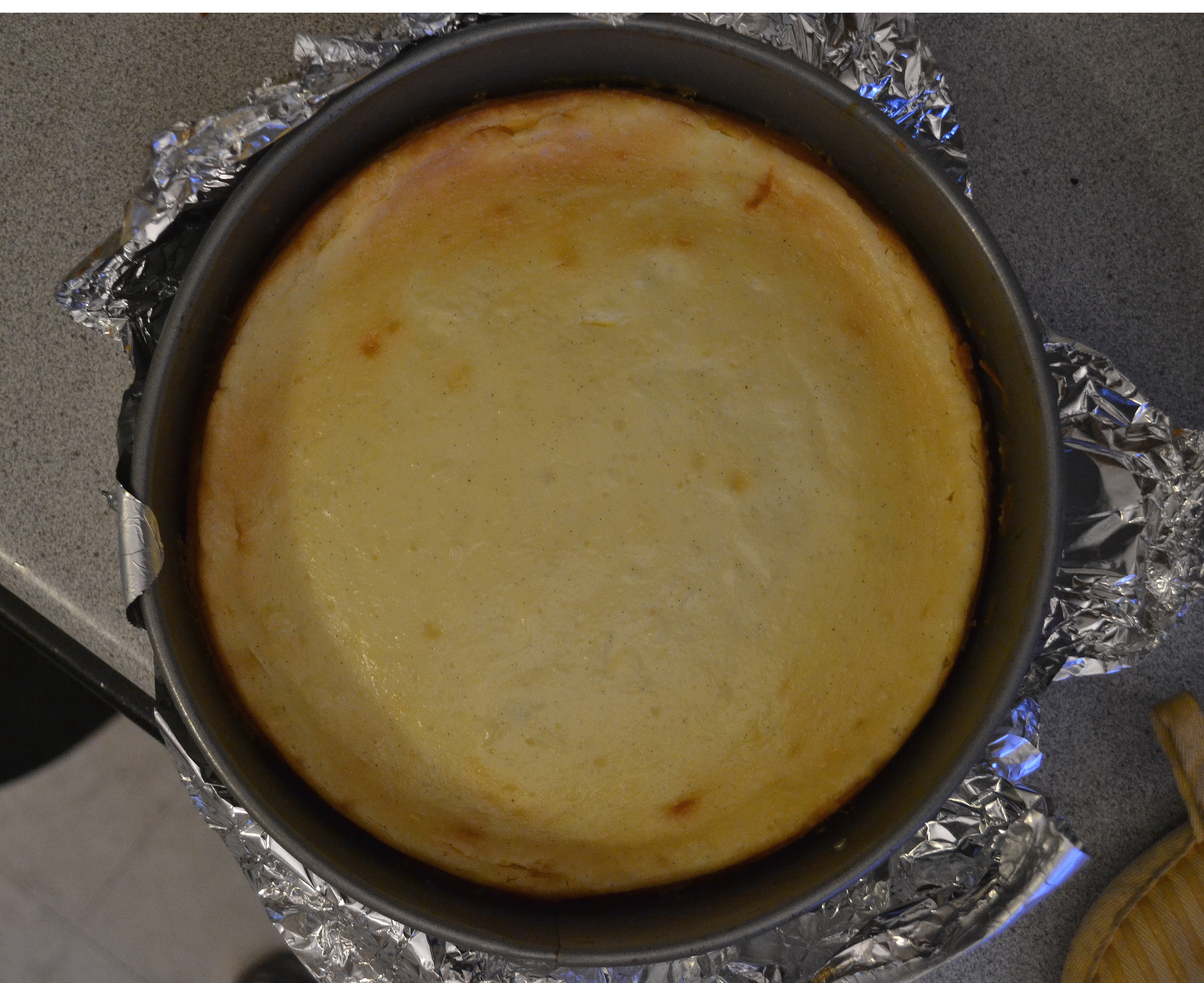
Even though I created this blog to expand my cooking repertoire beyond sweets, dessert is still a must at all my dinner parties. This dessert was the PERFECT selection for a launch menu. With a gorgeous texture and depth of flavor, this WILL be my go-to cheesecake recipe from here on out. The original recipe called for a roasted pineapple topping…which probably would have been fantastic if I had the energy to make it, but fresh blackberries were the perfect touch. If there is anything you take away from this lengthy first post, it should be this recipe.

My recipe notes: do NOT overmix the batter, or an unseemly crack will be inevitable, and use real vanilla bean. While vanilla extract is obviously cheaper and easier to manage, this cake would lose half its charm. Finally, don’t substitute sour cream for the crème fraîche – the tangy, light flavor is what makes this recipe! You can get the recipe for this cheesecake HERE.

Given our “twist” in ingredients and method, I feel it only appropriate to take a detour in genre when considering a musical pairing for this menu. I needed a piece that appeared Italian, for all intents and purposes, but contained elements of diversity. My friend Nate Lofton gave the perfect suggestion: Mendelssohn’s Symphony No.4, Op.90 “Italian“. A German-born composer of Jewish descent who studied briefly in France,  Mendelssohn was inspired to write this work following his travels in Italy.** I have included  a recording of the first movement below with The Simon Bolivar Youth Symphony Orchestra of Venezuela – arguably one of the best up-and-coming professional orchestras today. Enjoy!

http://www.youtube.com/watch?v=bWaGq3HIojs

*According to homecooking.about.com.
**According to Wikipedia.com