An Unexpected, Delicious Medley

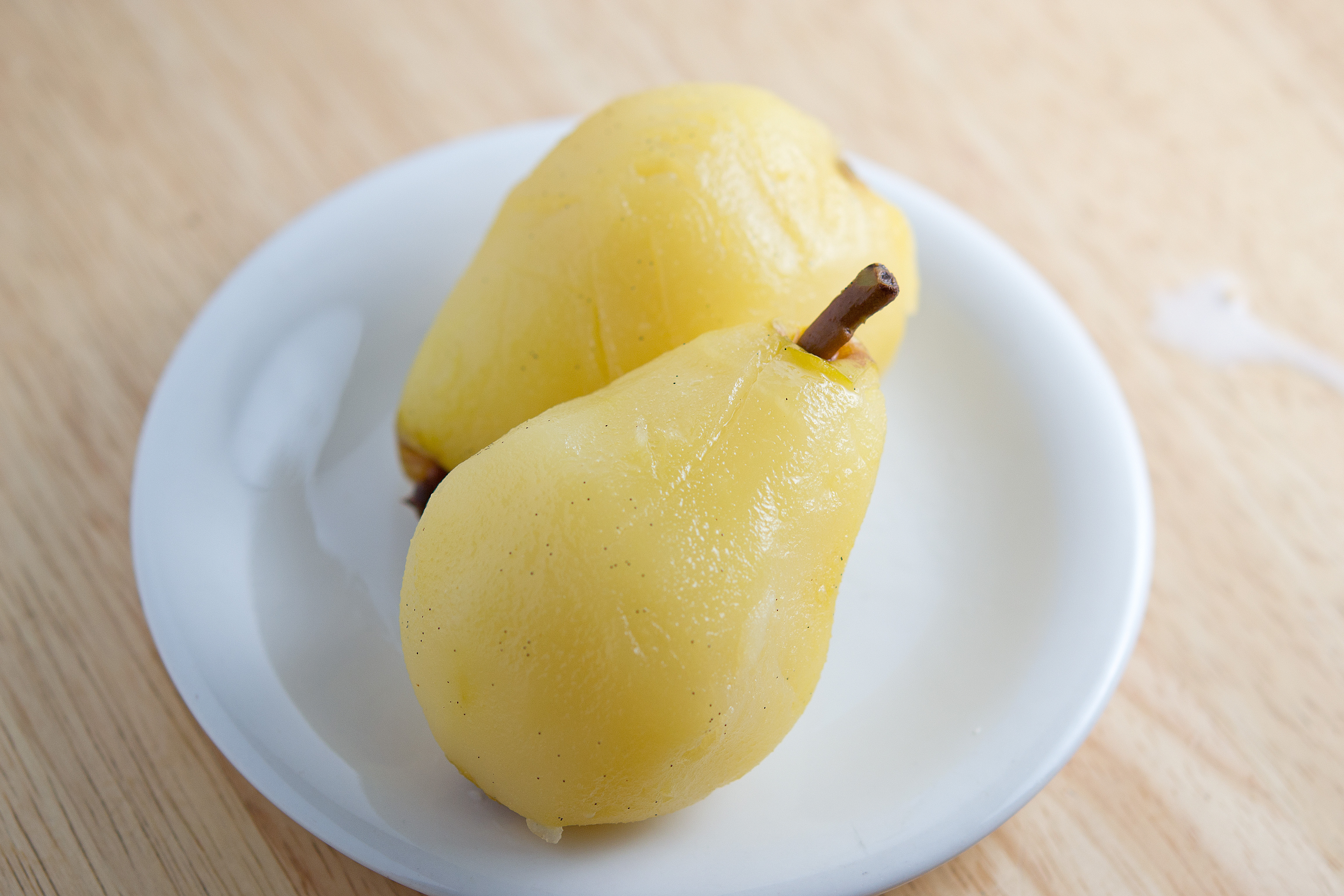
Dessert tends to be the dish that my friends have come to expect in my home, an expectation I undoubtedly fostered given my endless creation of sweet treats. From cakes to cremes, I seem to always being looking for the next-best-challenge on my dinner parties’ grand finales (it should be noted that I have never set foot in the dessert restaurant Finale given my personal standards, though I’m sure they’re fabulous). For this meal, I just happened to have a GIANT bottle of Moscato that my friend TJ had brought over. Being more of a Chardonnay gal, this was bound to become a dusty relic in my pantry, so I had to find a use for it. Best way to get rid of an excess amount of liquid? Poach or Braise. Since this was dessert, the former option was the winner, and I went with Poached Pears in Honey and Cinnamon Syrup.
Using Moscato in a dessert is quite appropriate given its characterization as a “sweet dessert wine.” It is from the family of vines Muscat, allegedly one of the oldest grape species in the world that is also cultivated for table grapes and raisins. The “dessert” varietals are either harvested once fully ripe (even overripe) or fortified with a distilled beverage (such as brandy). These two methods guarantee that the resulting wine will possess the fullest sweetness of the grape. As I mentioned above, I’m drawn to whites with an oaken or buttery taste, so finding a way to use this bottle was a huge relief.
These poached pears were undeniably gorgeous, beautifully shaped and covered with flecks of vanilla bean.  It also creates a beautiful reduced sauce that would have been a shame to waste it…so I baked a cake (surprised?) The cake was Dorie Greenspan’s favorite butter cake, which you can find the recipe for HERE (I’ll do a more in-depth post on this cake at some point – it is AMAZING!) The cake was the perfect sponge, making this already-elegant dessert even more ridiculous. I served them with a few scoops of French Vanilla ice cream – my friends were practically licking the bowl clean. Whether you’re looking to use an unwanted bottle of Moscato or can’t stand the thought of NOT making this dessert in the next 24 hours, you can find the recipe HERE.
Poaching pears and moscato is not a combination many would consider, yet the end result is stunning. That led me to a piece with instrumentation that, though unusual, has a beautiful result: Charles Ives’ The Unanswered Question. There are three layers to this piece, each represented by a separate set of instruments: a solo trumpet consistently asking “The Perennial Question,” a woodwind quartet on a quest for “The Invisible Answer,” and an offstage string quartet who represent “the Silences of the Druids—who Know, See and Hear Nothing.” The intermittent trumpet calls are like “flecks” of vanilla throughout, with the winds bringing a marked presence to an otherwise still environment (much like the moscato to the pears). The recording below is with Leonard Bernstein and the New York Philharmonic – enjoy!

http://www.youtube.com/watch?v=trkFgIMC-Ks

Sources Cited:
“Muscat (grape),” Wikipedia.com
“A Question is Better than an Answer,” CharlesIves.org
Developing Depth with Time

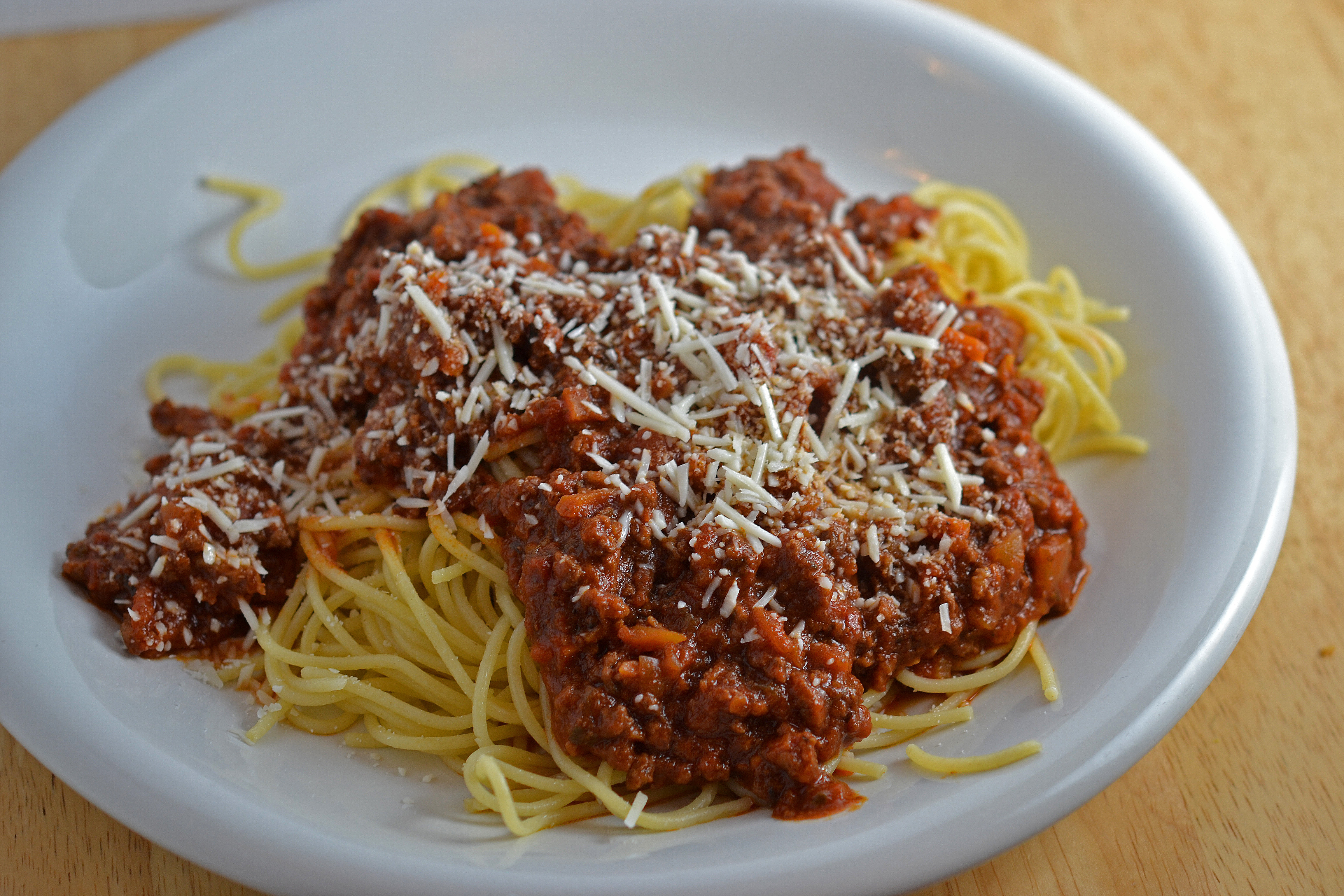
Boston and I have a love-hate relationship. There are times when I can’t get enough of this place, wanting to breathe in every ounce of its thriving energy and warmth. Then there are times like this weekend, when the temperature drops to 8 degrees F without warning.  Needless to say, I am not built for this. My beloved Le Creuset becomes a regular in my kitchen during these unbearable conditions. I had a group of friends over the other night as a belated birthday dinner for my friend Sev (featured previously on this blog for his renowned fondue), and it was yet another bone-chilling evening. With my Le Creuset fired up and ready, I made a hearty batch of Ragù alla Bolognese that fought off the chilly weather quite beautifully.
Whether using a dutch oven or a slow cooker, the key to a good bolognese is low and slow. Like a stew, the flavor deepens beautifully the longer it simmers. Authentic bolognese calls for chunks of meat, so the longer it stews the more tender the meat can become. This bolognese, on the other hand, calls for ground chuck, giving you the option to cook it as short as 30 minutes or as long as 4 hours. Thanks to the Pioneer Woman, this recipe had gone viral in the blogosphere. I made a few changes (like the addition of hot sausage) and wanted to give it an authentic edge by cooking it for hours. I also served it over spaghetti (what I had), though the traditional pairing is tagliatelle. The result was fabulous – click HERE to see how to make this beautiful, soul-warming sauce.
I thought a lighter side would be appropriate for this dish, yet wasn’t keen on the “salad” idea. With that, I made Lemon-Garlic Broccoli that, to my surprise, almost outshone the main course! It’s quite simple, with no more than a handle of pantry staples and ready to go in under 30 minutes. Trust me, TRY this side dish – you won’t regret it. Click HERE to see the recipe.
For the pairing, I wanted to emphasize the developed flavor this dish receives from cooking for a long period of time. That depth of flavor led me to Chopin’s Étude Op. 25, No. 12 “The  Ocean”. The entire work is structured on falling and rising arpeggios, hence the oceanic appellation, with modulations developing the theme throughout. The work climaxes in C Major, and ends in a massive arpeggio covering five octaves . The richness of these piece is perfect for this bolognese sauce. The recording below is with Vladimir Horowitz – enjoy!

http://www.youtube.com/watch?v=3o6v_myVAhQ

Sources Cited:
“Étude Op. 25, No. 12 (Chopin)” Wikipedia.com 

A Delicious Parting Gift

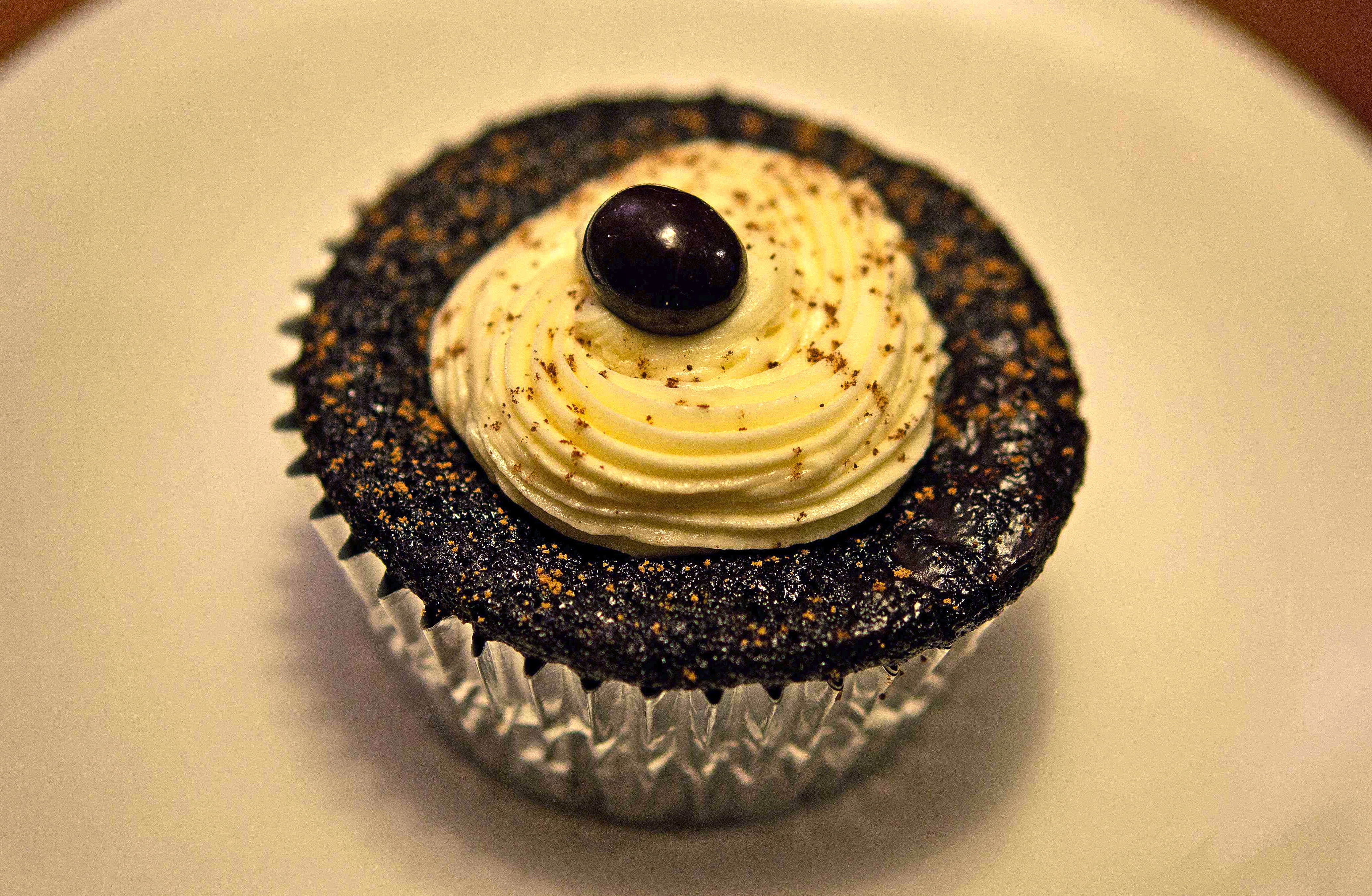
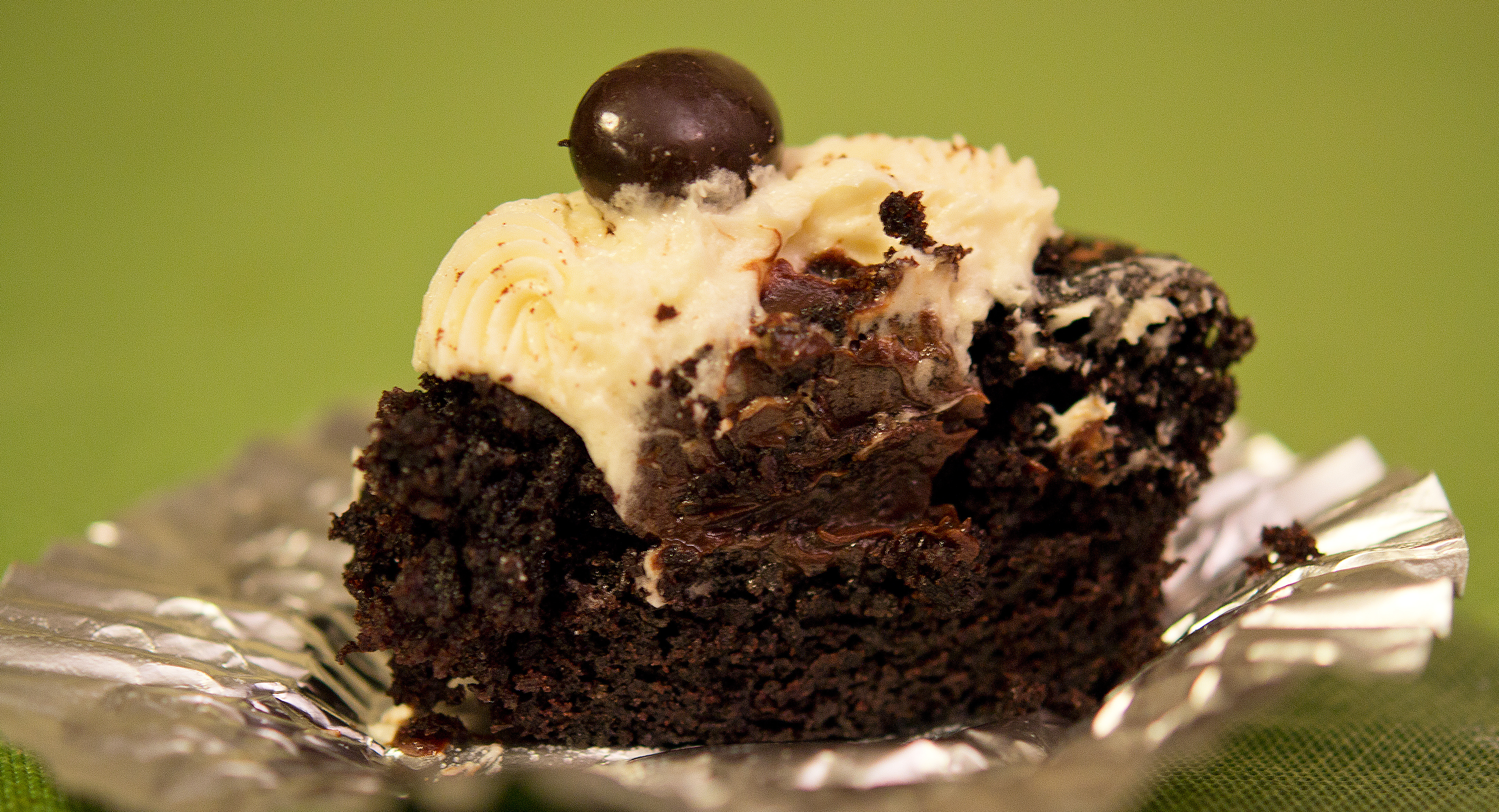
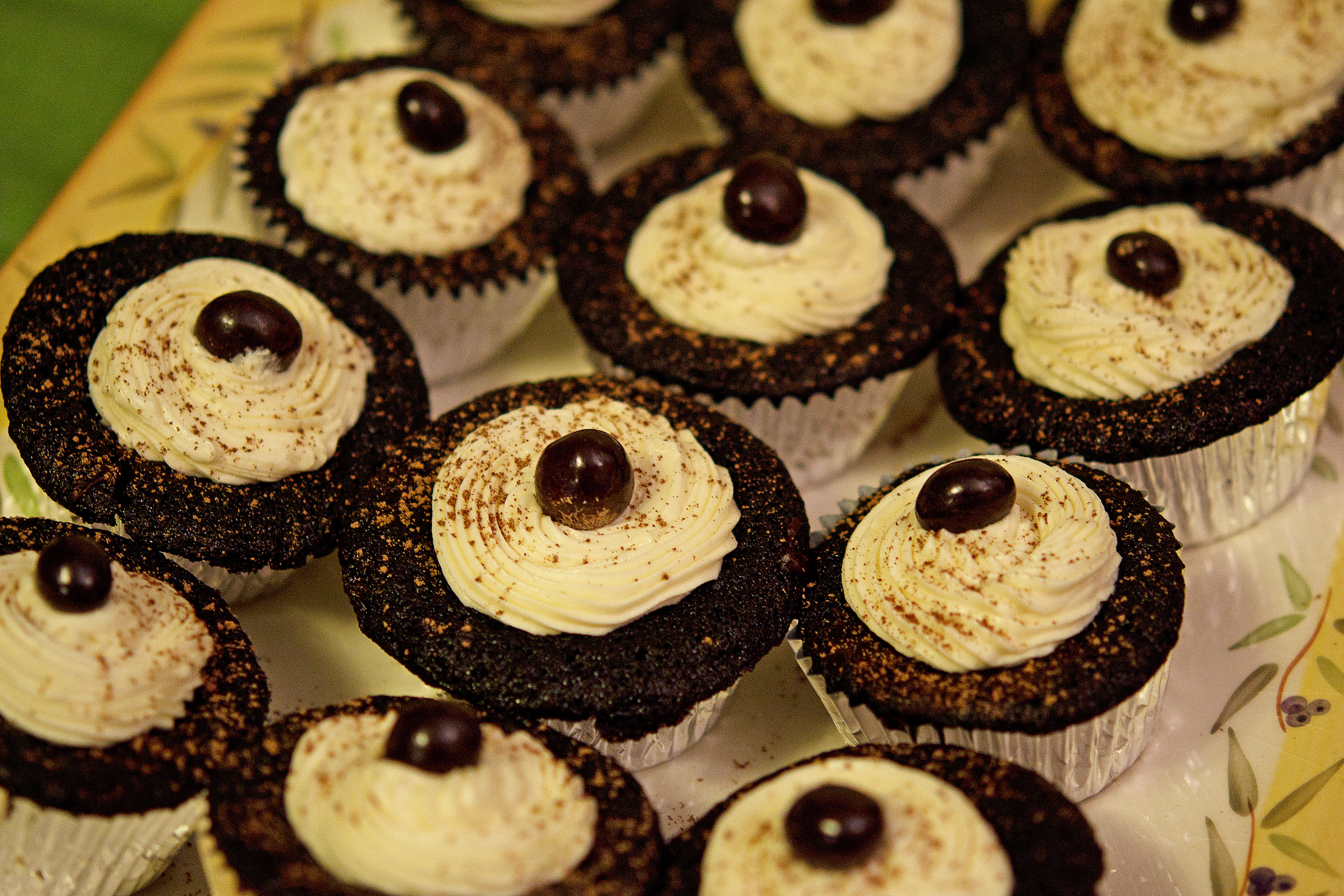
As young adults, it’s inevitable that our friends have yet to find that one permanent place to settle down. It’s never easy to say goodbye when a friend decides to move on; such is the case with my very dear friend Brian McCarthy – he’ll be leaving Boston soon to join the army band, a position he will no doubt excel with. I’ve been through a lot with Brian, and he is someone I will miss a lot. I hosted a small going-away party for him earlier this week, inviting a handful of close friends to wish him luck. Knowing my Brian, I made sure there was a wealth of cheeses, a sizable line-up of party games, and a worthy drink for an Irishman: Jameson. This latter spirit also inspired the dessert for the evening, which undoubtedly takes the “cake” in my dessert repertoire: Chocolate Stout Cupcakes with a Whiskey Ganache and Bailey’s Buttercream Frosting.
Brian stands by his Irish heritage, which compelled me to avoid the original title for these cupcakes: Irish Car Bomb Cupcakes. I have nothing against bakers who do label these cupcakes as such, it’s more the dark history behind the name itself. A drink consisting of Guinness, Irish whiskey and Bailey’s, this infamous shot garners mixed reactions, from total indifference to unmitigated outrage. The name is an allusion to the violent exploits used by the IRA against Northern Ireland during The Troubles. In other words, this shot is far from serving as a tribute to the Irish.
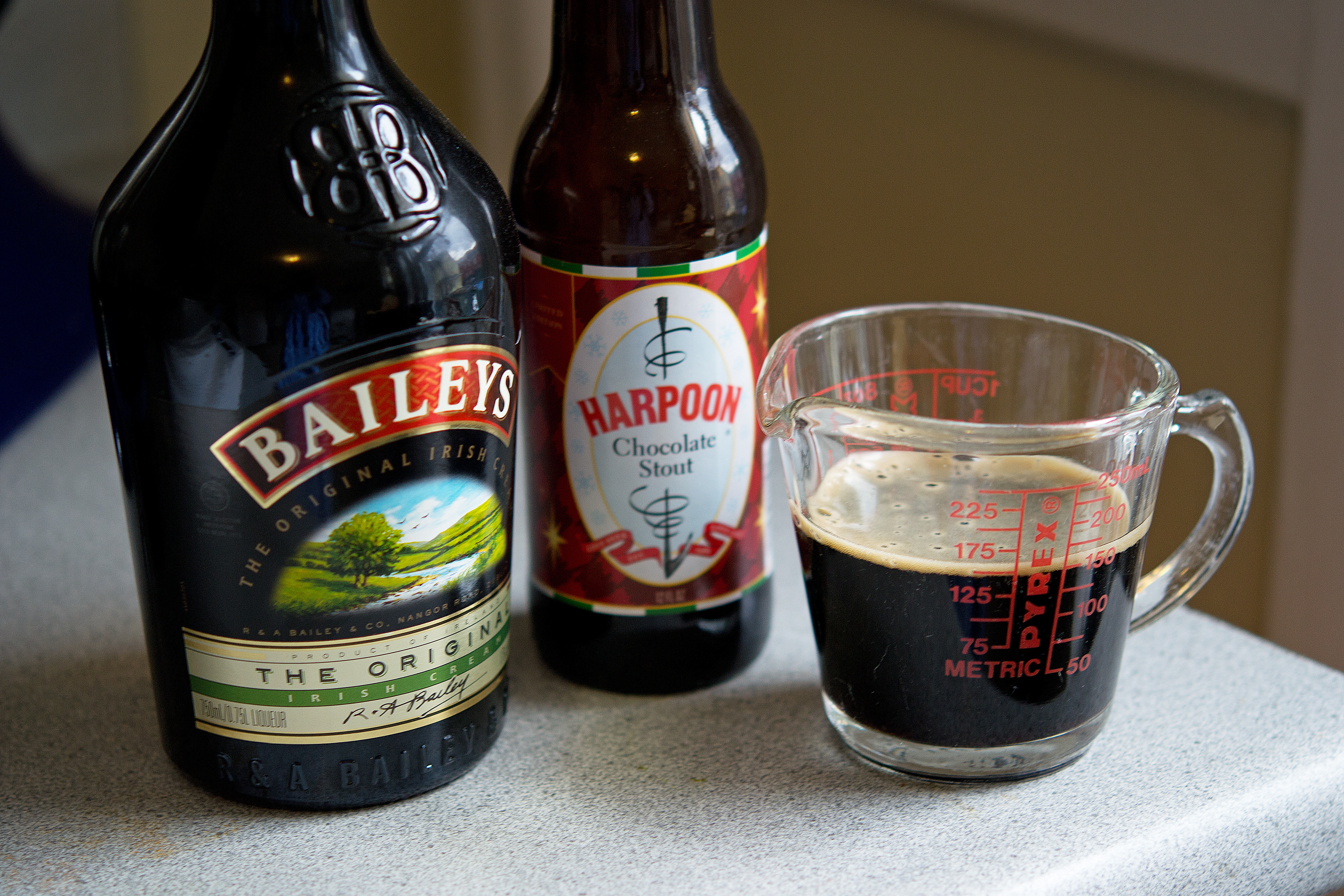
Name aside, these cupcakes are simply amazing! Stout and chocolate are a match made in heaven – the dark, rich brew complements the silky batter perfectly. As you saw above, I went with a Harpoon Chocolate Stout (what I had) rather than the Guinness called for – it was an unintentional stroke of genius! Filled with a spicy ganache (Jameson, no less) and topped with a buttery Bailey’s frosting, these cupcakes can’t go wrong. To push the cuteness factor up a notch (a must with cupcakes), I topped each with a chocolate-covered espresso bean – click HERE to see how to make these deliciously rich cupcakes!
If there is one thing I know about Brian, he plays an amazing Liszt – with that in mind, I chose a work I have heard Brian perform on multiple occasions (yet never grow weary of) – Liszt’s transcription of Wagner’s “Liebestod” from Tristan und Isolde. Liszt was both a benefactor to and supporter of Wagner’s music. The opera Tristan und Isolde is based on the medieval legend of two star-crossed lovers, and has become on of the more prominent works in orchestral repertoire. The “Liebestod” concludes the third and final act of the opera – it is sung by Isolde as she mourns we lover’s death, shortly before her own tragic end. Known for his virtuosic genius on the piano, Liszt had a gift for adapting the music of large scale works to the keyboard. He stays true to the voice of Wagner, effectively adapting the extensive orchestration to the piano while maintaining the rich, emotive qualities of the overall work. Similarly, each bite of these cupcakes is extremely rich and decadent. I want to dedicate this post to Brian – you will be missed dearly by all of us here in Boston, and we hope you know that you always have a home with us whenever you need it 🙂 Wishing you all the best!

http://www.youtube.com/watch?v=_UQrOIa7coc

Sources Cited:
“Franz Liszt,” Wikipedia.com
“Tristan und Isolde,” Wikipedia.com

Georgia On My Mind

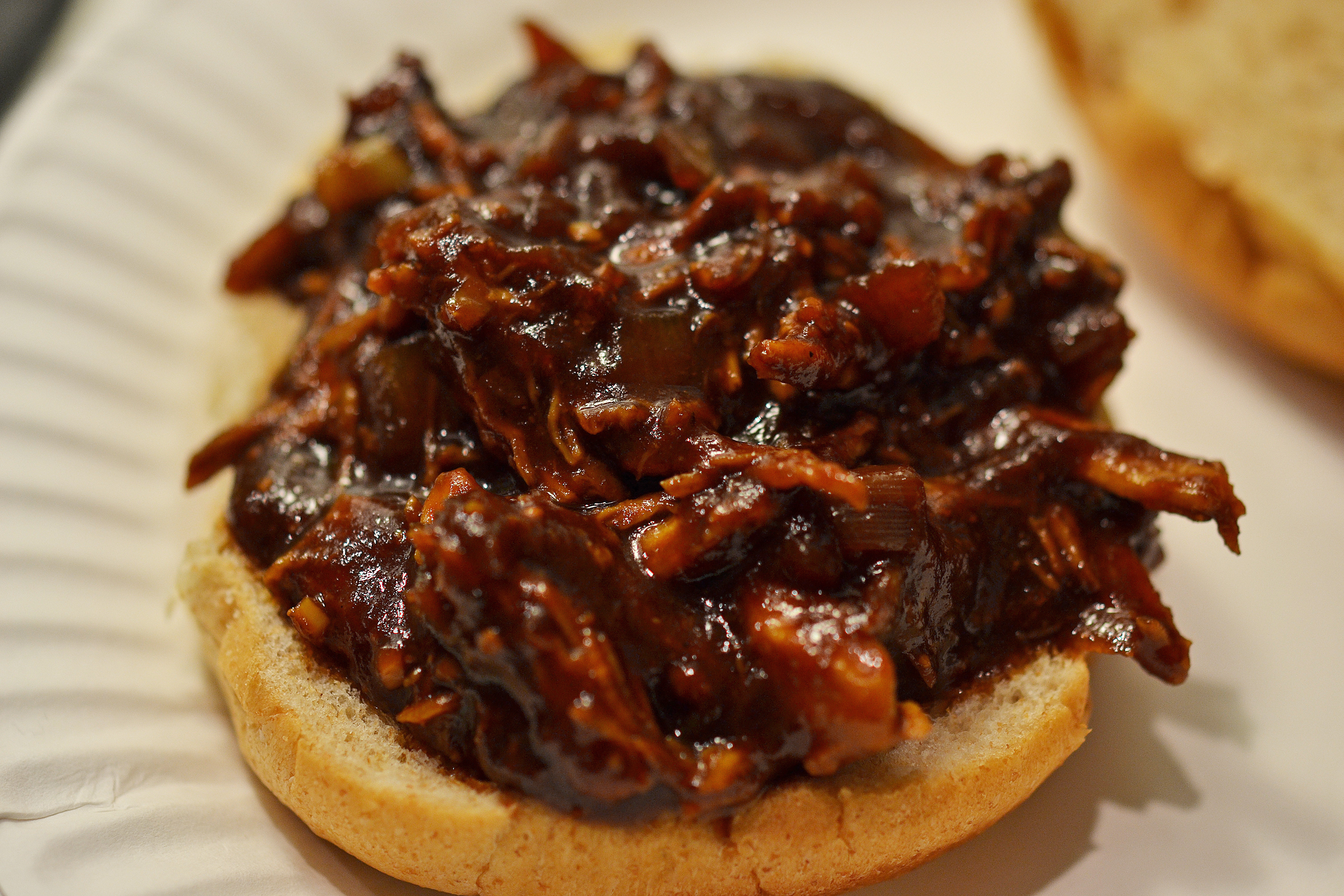
Every now and then, my “southern” side finds its way into my culinary ventures (the kale recipe I just posted, for example). Yet more often than not it takes the passenger’s seat in my posts, so I thought I would finally give it the spotlight it deserves. Southern food is often labelled as “comfort food,” and that was just the type of food we needed to fend off the terribly cold weather (I believe it reached the high “teens” that night…not the type of temperatures my Georgia self is built for). Wanting a hearty meal that was would break the cold (but not the bank), I decided to make Pulled Chicken Sandwiches with Bourbon Orange Coriander Barbecue Sauce.
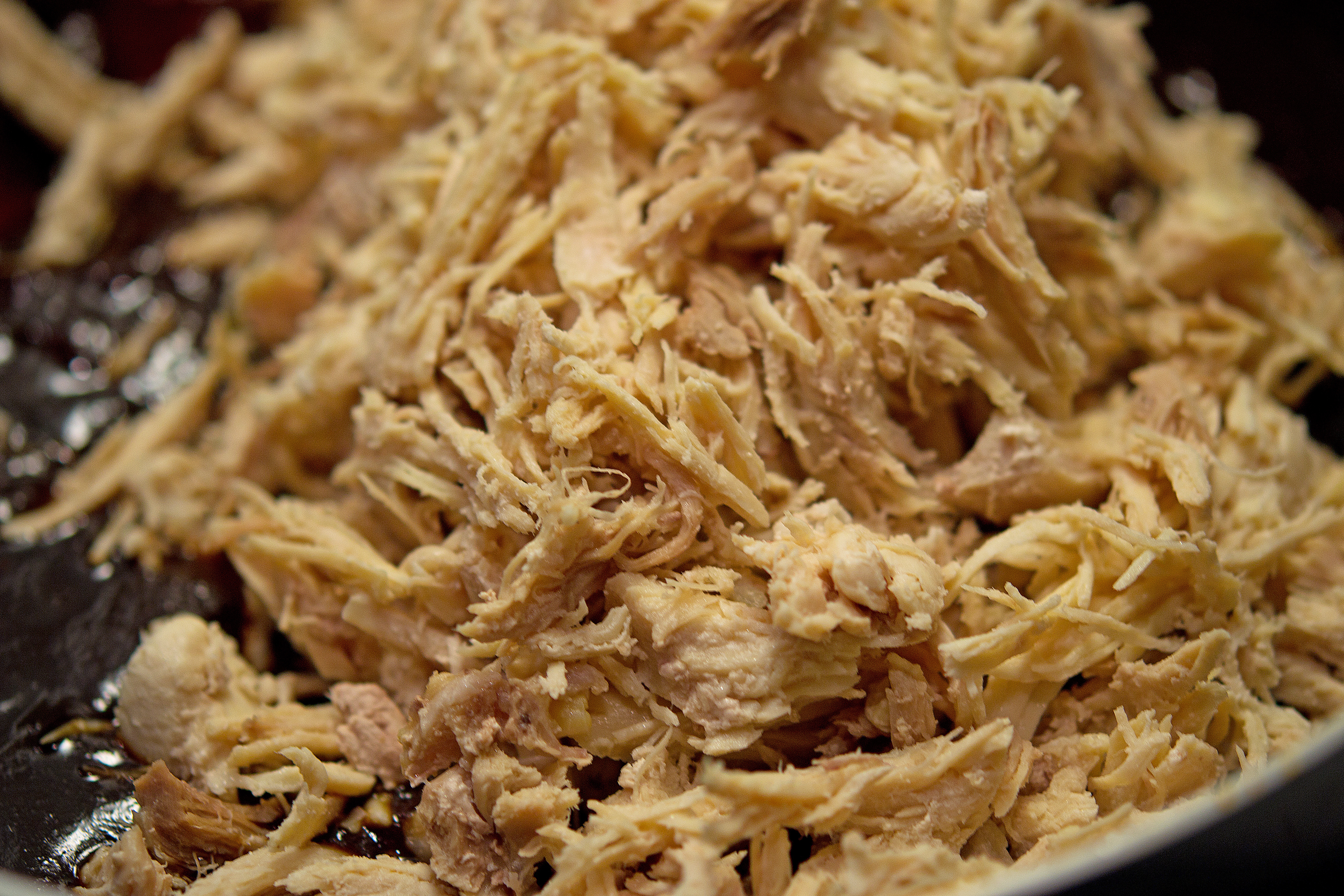
This sauce is amazing! I was somewhat wary of the orange, but Joy’s insistence (at Joy the Baker) had me convinced that this was a must-try sauce. Oh.My.God was she right! A beautiful union of citrus and spice, with just the right amount of sweetness, has easily made this a favorite in my book. You can serve it with any recipe that calls for barbecue sauce. I decided to shred chicken (what I had) and serve it on hamburger buns – even the sight of these wonderful sandwiches brought back warm memories of backyard, summer picnics back in the South. Click HERE to see how make these amazing sandwiches!
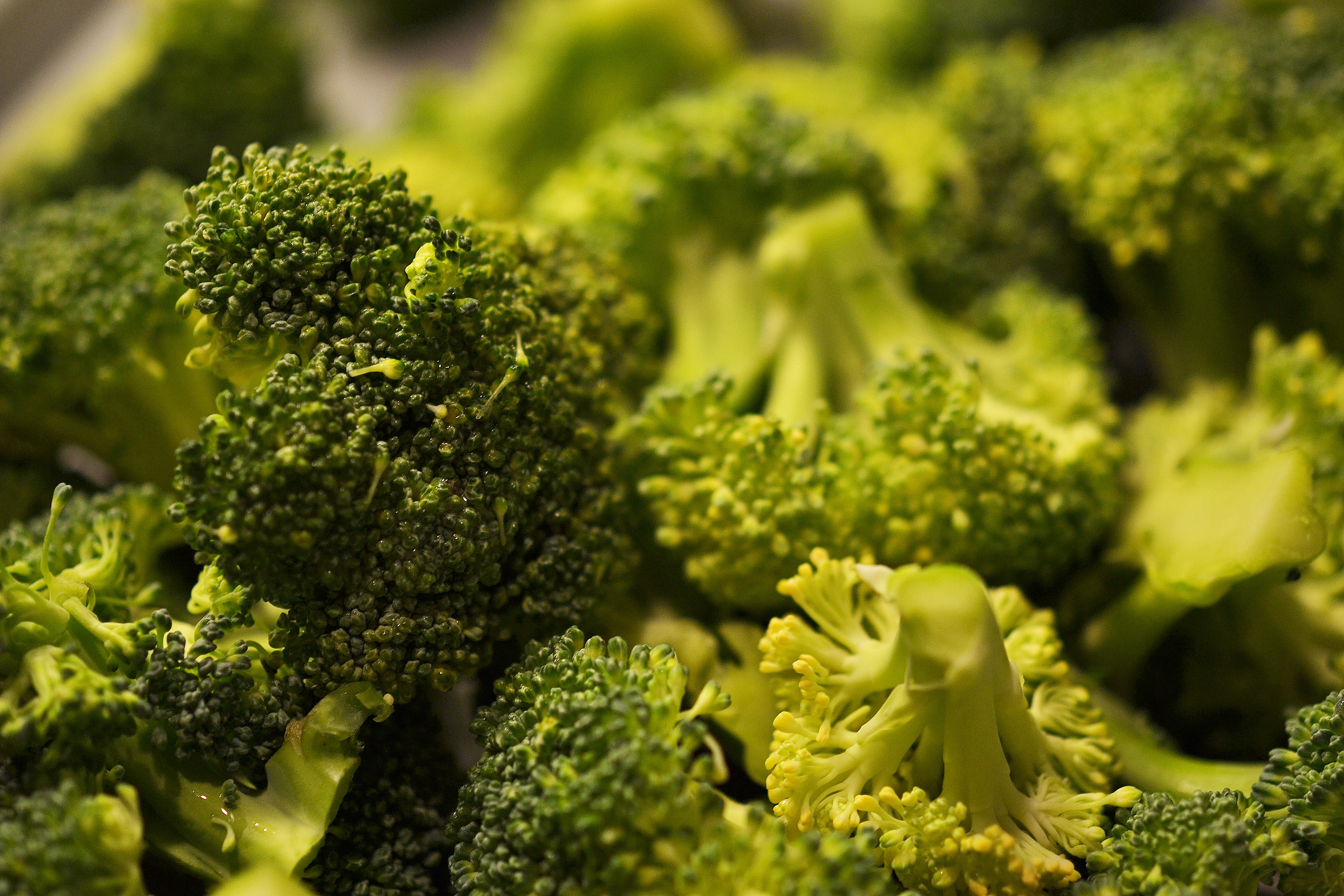
In addition to  the sandwiches, I thought a side salad would add a nice touch (as well as a healthy alternative). Broccoli salad is a classic in Southern dish, but its major flavor components are mayonnaise and bacon. Now I have no objection to bacon (as my next post will demonstrate), but the thought of a salad relying wholly on mayonnaise wasn’t the most appetizing affect. So I used a lighter version combined with the goddess of healthy cooking: Greek yogurt. With grapes, almonds and raisins, this Lighter Broccoli Salad was the perfect complement to a Barbecue dinner – click HERE to lighten up this Southern classic.
For pairing this meal, I wanted to showcase a composer whose nostalgia for home is equally as prominent in his music – that led me Béla Bartók. A Hungarian-born composer and pianist, his music is well-known for its incorporation of traditional folk melodies. He traveled all across Central Europe to track down folk musicians, collecting numerous songs through field recordings and/or transcriptions. His thorough analyses and collections of folk music helped institute the field of ethnomusicology. It wasn’t until World War II that Bartok left his beloved country and came to the U.S – though he never truly became acclimated to the culture (much like I will never become accustomed the grueling Northeastern winters), he managed to compose several masterpieces while in the States. The Concerto for Orchestra is one that is well-known and loved, but I was too extravagant for this meal, so I chose his Sonata for Solo Violin – the extent Hungarian influences make it the perfect pairing for a dinner that feels like home. Though I’ve paired the entire piece, I thought the nostalgic taste of the Melodia movement was appropriate to include – enjoy!

http://www.youtube.com/watch?v=5UKOKN8VL0w

Sources Cited:
“Béla Bartók,” Wikipedia.com

A Festive Feast

Christmas dinner – a meal nearly as stressful as its Thanksgiving precedent. The setting: a cozy apartment in sleepy Bensalem, Pennsylvania. Cast of characters: my mom and stepdad, my sister Sarah, and her boyfriend Grant (the latter three possessing a strong appetite for southern-style food). With all of its familial expectations, a great amount of pressure is placed on the designated chef for Christmas dinner. Being the crazy person I am, I (naturally) volunteered to be said chef. Though I was only cooking for four other people, I knew this meal had to be an outstanding occasion for all parties involved. Avoiding the hackneyed honey-baked ham or roast turkey, I decided to go with a more humble, hearty feature: Spice-Rubbed Roast Beef Tenderloin with Red Wine Gravy.
History doesn’t delegate a specific type of game or meat for the holidays – goose, turkey, oysters, ham, pot roast, pheasant, suckling pig, fish, and more have graced Christmas tables around the globe. These dinners tend to reflect more extravagant renditions of traditional cuisine, celebrating family and faith with a bountiful feast. American traditions most closely reflect those of the UK: a roasted entree paired with ample side dishes, including mashed potatoes, roasted squash, braised greens, cookies and pies, etc.
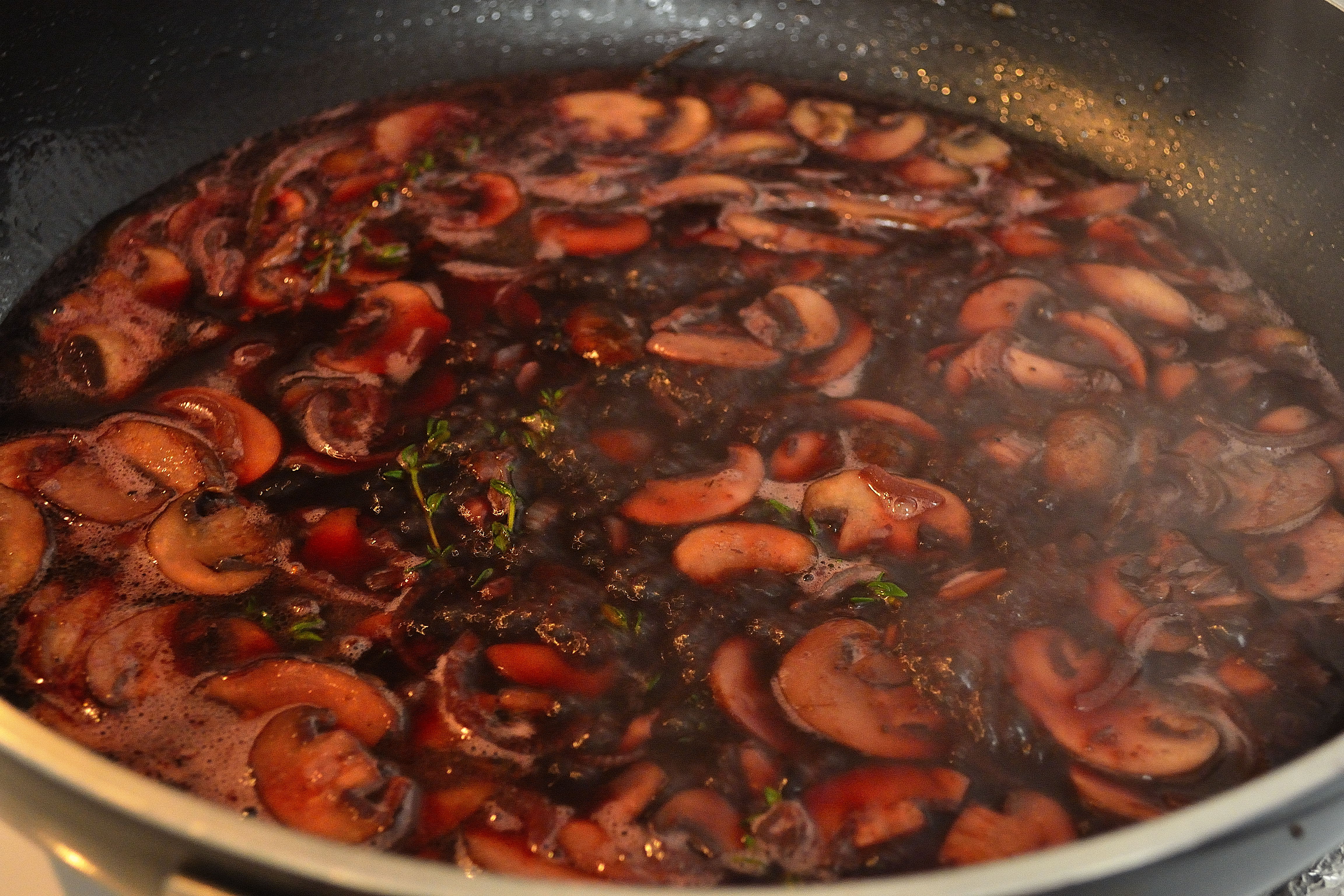
While I relish experimental menus, I went with a  traditional one for this dinner. I managed to sneak in a few unconventional touches to the tenderloin. For the gravy, it relies on a red wine reduction that is brimming with flavor. You can opt to keep the aromatics (shallots and mushrooms respectively), though I followed the recipe and discarded them for a smoother sauce.
The meat itself is spiced with fennel, caraway and thyme – the latter is arguably a beautiful pairing for any rich meat, yet the fennel and caraway gave the meat an aromatic depth unlike any I’ve experienced. As you can tell, we went for a rarer cut, yet roasting times will vary depending on your personal preference. Regardless, I can guarantee this recipe will create a beautiful centerpiece to your Christmas dinner – click HERE to see how to make this flavorful roast.
Kale is endorsed as one of the healthiest greens available to consumers today…this recipe is perhaps not the healthiest realization of the green’s potential, yet it is pretty darn amazing. I mentioned my Georgian sister was present – the bitter edge of kale was a far-fetched bet with this one. So I chose a recipe that would appeal to her “Southern roots” with Southern-Style Braised Kale.
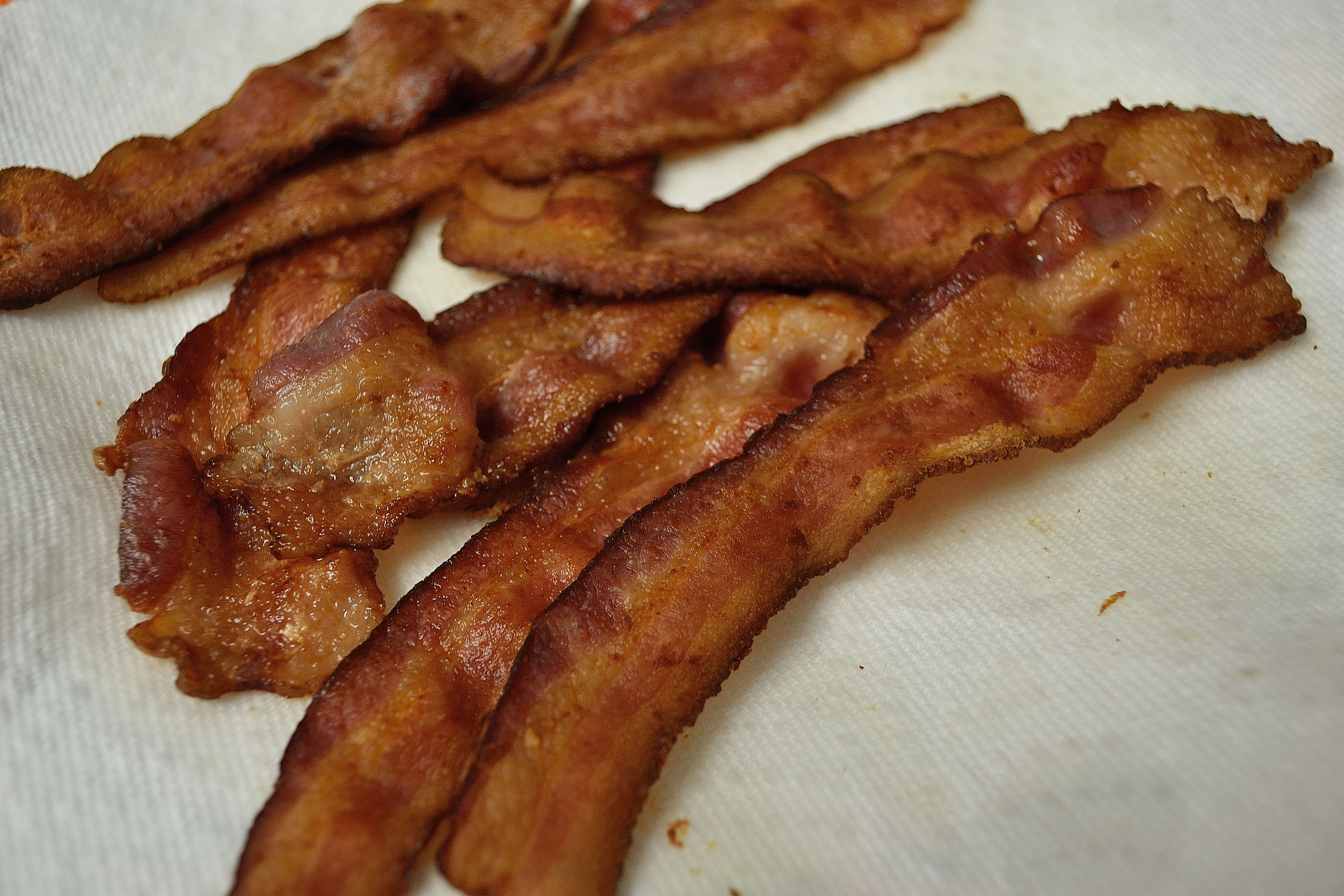
What makes is Southern? Bacon. The remarkable thing about this seemingly simple ingredient is it can truly be a chef’s secret weapon – a dish can go from sophomoric to superb. This recipe is a standard for collard greens, but proved to be remarkably successful with kale. To see how to give kale a “southern touch,” click HERE. We also served basic mashed potatoes and a personal favorite of mine, Orange & Fennel Salad with Citrus-Shallot Vinaigrette (recipe can be found HERE).
The musical pairing for this meal may seem cliché, yet it was too perfect: Tchaikovsky’s The Nutcracker (especially considering I had just seen it at the Boston Ballet). While its original premiere in 1892 wasn’t markedly successful, it has since become one of the most celebrated works by the composer. Its themes are recognizable by nearly anyone (particularly The March and Sugar Plum Fairy), and no Christmas would be the same without it. Its variety of characters and themes pairs all too well with the colorful, unique traditions of Christmas dinners across the globe. I hope all of you had a beautiful holiday season, and wish you the happiest New Year – enjoy!

http://www.youtube.com/watch?v=vP5oVMvYHBs

Sources Cited:
“Christmas Dinner,” Wikipedia.com
“The Nutcracker,” Wikipedia.com

Crooning for Christmas Cookies

I should start this post by saying Merry Christmas!!! There really is no such thing as too many cookies, especially during the holiday season. Everyone from children to Santa Claus relish these seasonal treats, and Christmas morning just wouldn’t be the same without the smell of freshly baked goods lingering in the air. As you can glean from my previous posts, my baking skills have been amped to the max for the past several weeks. While cutouts are a staple of the season, Thus, the cookie chronicles continue with a pair of recipes that are out-of-this-world amazing – boozy Rum Balls and irresistible Peanut Butter Balls (or Buckeyes).
Considering these are no-bake cookies, many assume that rum balls will knock you off your feet after just a few bites. Though it’s true that the rum isn’t “baked out”, it’s highly unlikely that you will feel the effects of the alcohol. That being said, I do add a “touch” more to mine (including a splash of Kahlua for added depth). The two must-have ingredients for rum balls are chocolate and rum (naturally), while the remaining add-ins can vary. Most recipes call for crushed biscuits, ground nuts, and a binding ingredient of some kind (jam, corn syrup, etc). Though many imagine these cookies as an American tradition, they are enjoyed across the globe: from Australia to Canada to Denmark! I can guarantee that you’ll love these boozy treats – click HERE to make these treats a holiday tradition in your home!
The combination of peanut butter and chocolate will rarely disappoint – you will be disappointed, though, to discover that these will be the first cookies to disappear from your holiday spread. These mouthwateringly delicious treats are, according to my coworker David, practically gourmet versions of Reese’s Peanut Butter Cups. They are SO easy to make, yet the chilling time does require a labored patience while waiting to eat one. The state of Ohio calls these “Buckeyes,” leaving the tops without chocolate to resemble the nut of the Buckeye tree (Ohio’s state tree). They have naturally become a football tradition for the Ohio State Buckeyes. If you love Reese’s, then I promise these are for you – click HERE to discover the easiest, most delicious holiday cookie you’ll ever find!
As you have read, both of these recipes create cookies that are irresistibly delicious – despite their bite-sized form, they are both rich, decadent cookies. Last night I attended a Christmas Eve service and discovered the perfect pairing – Poulenc’s O Magnum Mysterium (O Great Mystery), from his Quatre Motets pour le Temps de Noël. The text is a responsorial chant from the nocturnal Matins of Christmas – the prayer service that is celebrated at midnight on Christmas Eve. The work is sung a cappella, yet is filled with rich, touching harmonies that reach right into your soul. I’ve included a recording of the Robert Shaw Festival Singers – I hope you enjoy it, and Happy Holidays everyone!!!

 http://www.youtube.com/watch?v=VShyqHcWjPY

Sources Cited:
“Rum Ball,” Wikipedia.com
“Peanut Butter Balls,” Joy of Baking

Tis the Season to be Baking!

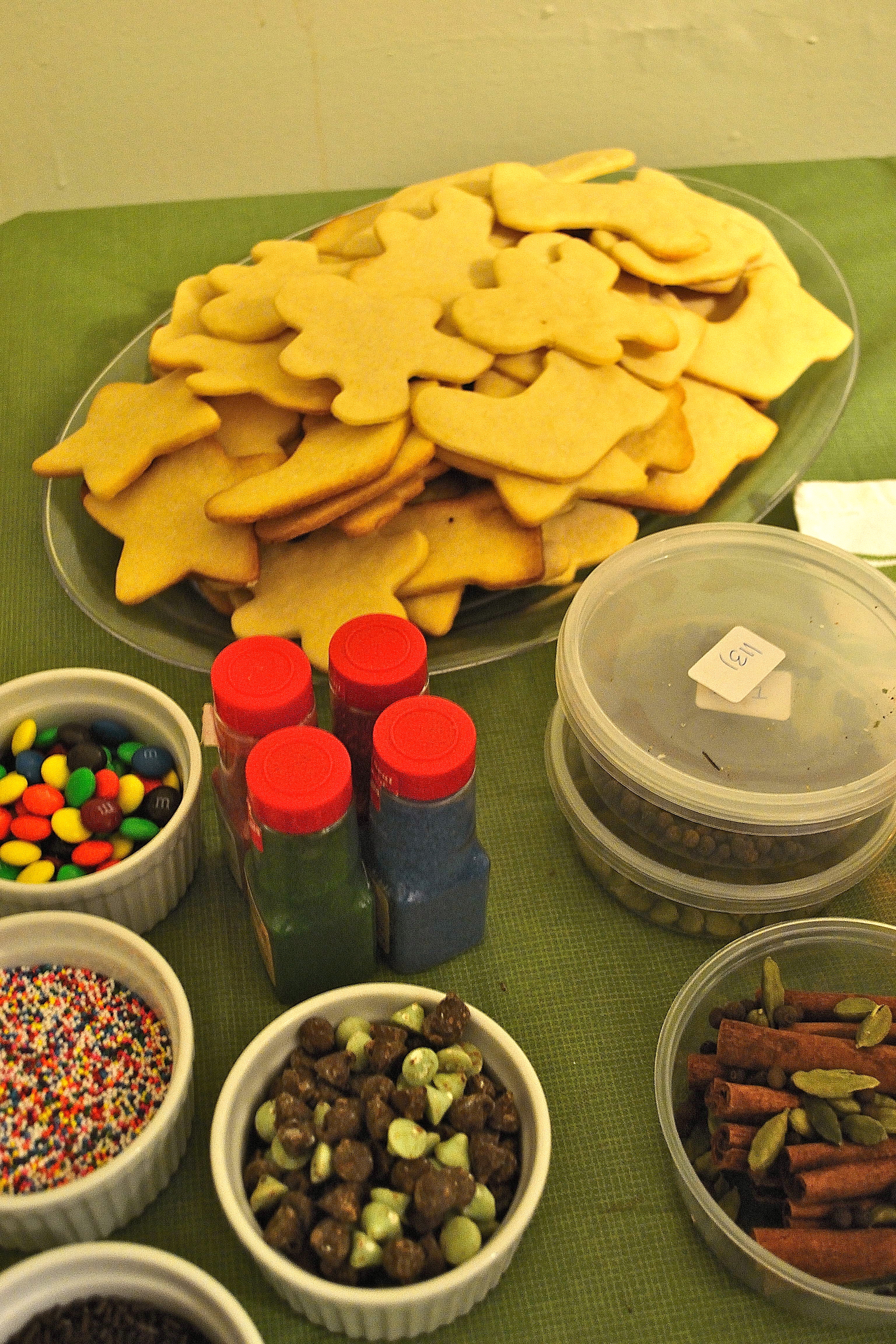
For a baker, the Holidays mean stocking your pantry with more flour and sugar than you could ever know what to do with,  just to be prepared. I often bake a variety around this time, from your standard cut-out cookies to decadent truffle-like treats. I hosted a holiday party this past weekend – the company was cheerful, the setting was festive, and the spread was epic. Perhaps the most noteworthy installment was the cookie-decorating station: rich cream cheese frosting with a myriad selection of sprinkles and candies were set out as toppings for adorable Gingerbread Men and Cut-Out Sugar Cookies.
Cutout cookies are a Christmas classic, giving bakers everywhere an edible palette for colorful icings and candies. The traditions dates back to 13th-century Germany with Lebkuchen. This style of cookie (very similar to gingerbread) is a refined delicacy in German culture, boasting intricate shapes and designs. Gingerbread itself can be traced back even further, appearing in Europe in the year 992! Though both cookies are spiced, Lebkuchen is made with honey while gingerbread relies on treacle (or molasses). The first recorded instance of gingerbread being shaped as “men” appears with Queen Elizabeth I, who would present distinguished guests with gingerbread likeness of themselves.
These gingerbread men were absolutely perfect! The recipe recommends making the dough ahead of time to allow both the flavor and texture to develop, which I strongly second. I used blackstrap molasses, When rolling out these cookies, be sure to have a bowl of flour on hand (I just had an entire bag) to prevent the dough from sticking to the rolling pin or the surface. As I mentioned before, I paired these with cream cheese frosting, though feel free to use whatever style you prefer (royal icing is a favorite) – click HERE to see how to make these traditional treats!
I’ve made a number of sugar cookies in the past, but these were by far THE best I’ve ever made! There are several ingredients that help set these cookies above the rest. The first is the addition of cream cheese as a binding agent – the result is a sturdier dough that is SO much easier to work with than an all-butter dough. The second factor is the medley of flavorings – while vanilla extract is standard, these cookies achieve an almost-fruity contrast with the additions of almond extract and lemon zest. Best part of all, the dough can be frozen for up to 3 months if needed! I rolled out the dough a week before the party, stored it between sheets of parchment paper and froze it. I highly recommend these, and can guarantee they will become a new tradition in your household as well – click HERE to see how to make these stunning cut-out classics!
You can already guess that a pairing for traditional Christmas cookies deserves a traditional Christmas tune – so naturally I went with a piece that plays in every pops concert, Macy’s, and in every holiday broadcast: Sleigh Ride, by Leroy Anderson. In fact, the American Society of Composers, Authors and Publishers [ASCAP] claims the light orchestral work has routinely been within the top 10 songs performed (worldwide) during the holiday season. Steve Metcalf, author of Lero’s biography, states that “‘Sleigh Ride’ … has been performed and recorded by a wider array of musical artists than any other piece in the history of Western music.” The piece was first recorded by the Boston Pops, which is why I thought it appropriate to include a recording with that orchestra – enjoy!

http://www.youtube.com/watch?v=OATi34PKNPw

Sources Cited:
“Christmas Foods,” FoodTimeline.org
“Sleigh Ride,” Wikipedia.com

A New Take on Holiday Traditions

For my family, the menu for Christmas dinner practically mirrors the cover of a “Good Housekeeping” holiday issue: creamy mashed potatoes, garlicky spinach, a juicy beef tenderloin, freshly baked cookies – the works. So when my roommate Jenn Berg offered to cook a meal with her take on tradition, you can imagine my surprise when she brought home a giant stack of tortillas and several pounds of ground beef. My Texan roomie was making her famous enchiladas, and I quickly understood why this could become a beloved tradition. She asked me to cover the desserts, and I made two that would make any Texan proud: Mexican Wedding Cakes and Sopapilla Cheesecake.
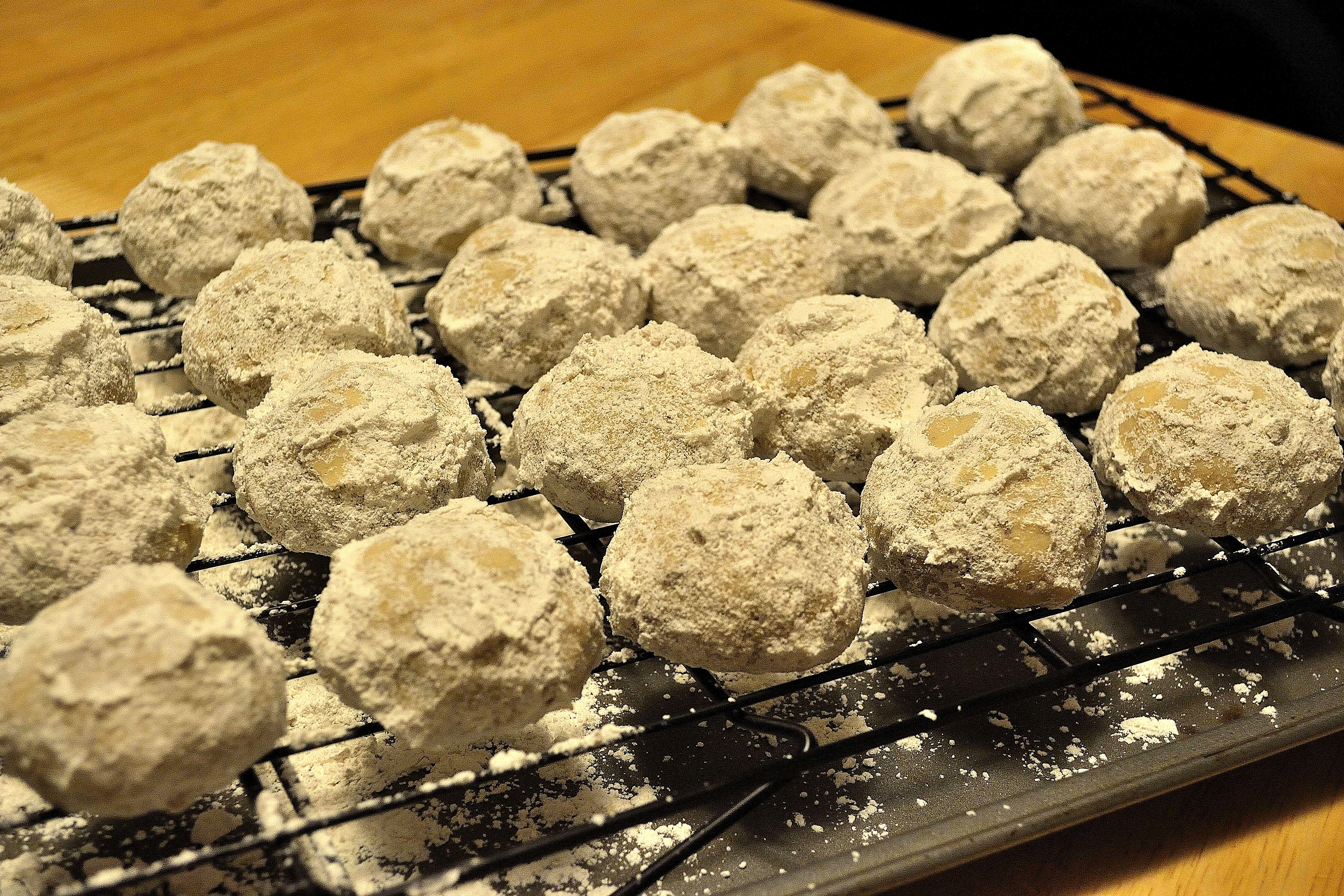
What’s interesting about Mexican Wedding Cakes is while the recipe is old, the name is fairly new. They are closely related to jumbles, a recipe dating back to the Middle Ages. They appeared in Russian culture around the 18th century as sweet confection in tea-sharing ceremonies. This tradition gave them the name Russian Tea Cakes – the shift to its current name has no evident impetus (though rumor has it the Cold War may have played a key role in the change).
These are easily my favorite cookie – they are basically bite-sized pillows of nutty, sugary goodness that are all-too-easy to make. Their lightness comes from using confectioners’ sugar in lieu of regular, and the addition of ground nuts give them a contrasting texture that is irresistibly perfect. While still warm, they are then tossed in confectioners’ sugar – genius! I can guarantee you will make these a Christmas tradition for it will be love at first bite – click HERE to see the recipe for these addictive cookies.
Sopapillas are another Berg Family tradition. They are essentially fried pastry squares that are served warm with honey and/or confectioners’ sugar. I wasn’t fully certain I’d be able concentrate on deep frying after a long day’s work, so I sought an alternative; that’s when I happened upon this recipe. Cheesecake is a Christmas tradition for my family, so this twist felt all too appropriate. I’ll admit, I was initially apprehensive about this recipe: crescent dough, cream cheese and melted butter? Sounds like a gooey mess out of context. The verdict: this cake is ridiculous. I guess you can credit the butter, but the dough does achieve a flaky texture emulating its sopapilla intention. It’s extremely easy to make, and yet still can bring anyone to their knees with its cinnamon-sugary goodness – click HERE to see how to make this unique twist on cheesecake.
I wanted a pairing the embraced the fun, unique take on tradition, so I chose Danzón No. 2, by Arturo Márquez. A celebrated Mexican composer, his works draw significant inspiration from the traditional styles and rhythms of his culture. In terms of Mexican contemporary music, this piece is one of the more venerated among orchestral repertoire (much like these two desserts will be in your baking repertoire!). I’ve included one of the more famous recordings  of this work – Gustavo Dudamel and the Simon Bolivar Orchestra. Enjoy!

http://www.youtube.com/watch?v=3vwZAkfLKK8

Sources Cited:
“Russian Tea Cake,” Wikipedia.com
“Food Timeline: Cookies, Crackers, & Biscuits,” FoodTimeline.org

A Dish That Will Make You Melt

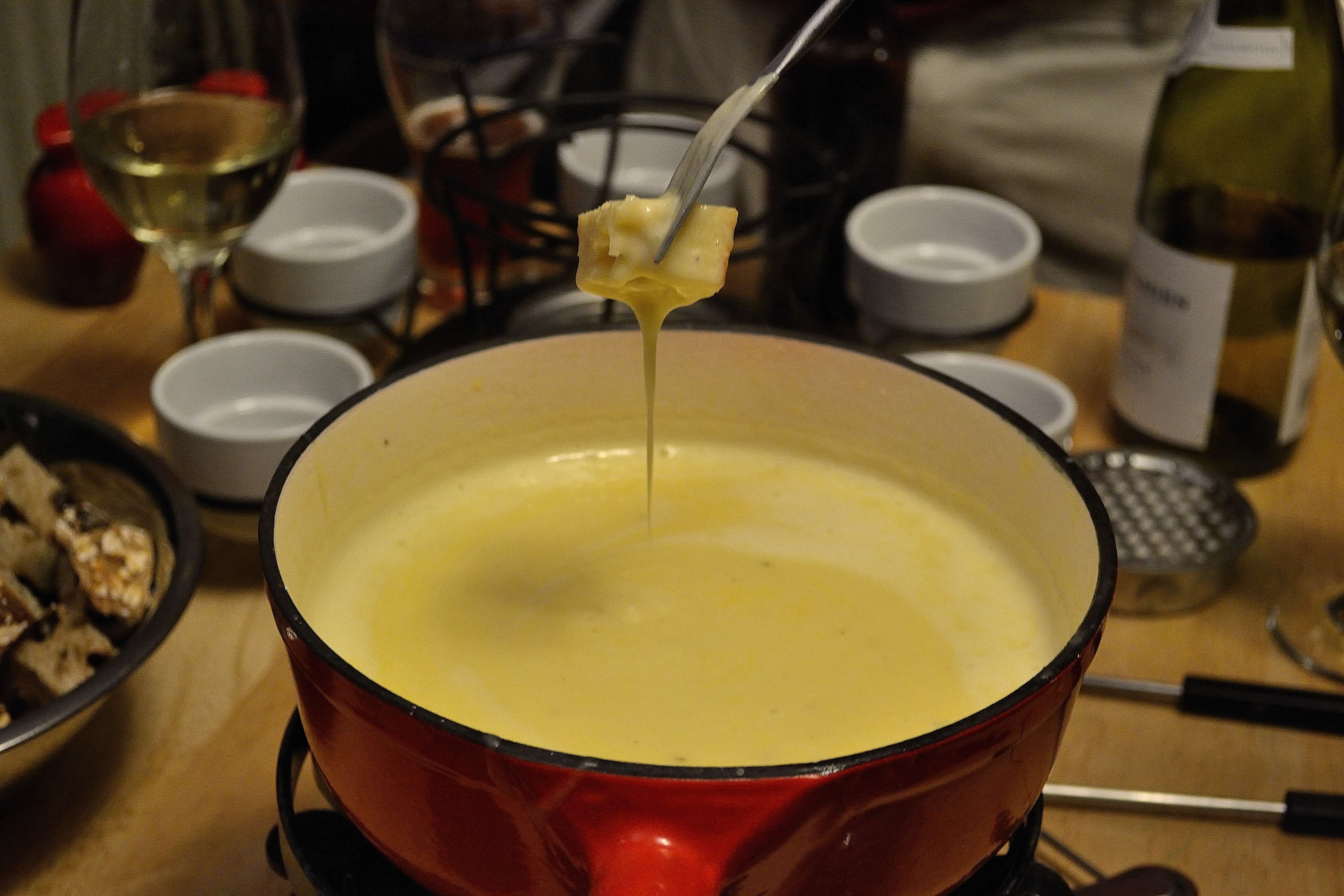
I don’t know if I’ve mentioned this, but my cold weather tolerance is not built for the Northeast. Alas, here I am – a southerner with a surplus of scarves and mittens – prepping my mental sanity for the cold, dark months to come. Thank God for the onslaught of rich, warm recipes of the season – meaty stews, creamy soups, rich casseroles, etc. Tis the season for eating (no regrets!) and spending time with friends and family enjoying it! Thus my good friend Sev (a clarinetist) unearthed his cast-iron caquelon to melt a ridiculous amount of cheese for a Swiss Fondue that is to die for!
As a native Swiss, Sev’s approach to fondue is far more serious than what most American households have become accustomed to (i.e. prepackaged fondues and queso look-alikes). He only uses quality ingredients, has specific standards on cookware and utensils, and prepares the dish by sight and feel. Gruyère (NOT Swiss Cheese) is the key to this dish. To demonstrate how much the Swiss value their Gruyère, it was recently given the certification Appellation d’origine contrôlée (French for “controlled designation of origin”). As a result, Gruyère from Switzerland (and France, to some degree) must meet certain standards of production and “affinage” (French for “maturation”). Locations for this aging must be cellars with climates similar to natural caves (obviously caves being the ideal) – this ensures control over the levels of temperature and humidity. The affinage can take anywhere from 2 to 10 months, with the flavor and color achieving greater depths the longer it ages.
Derived from the French term “fonder” (meaning “to melt,” in French), the earliest recipe for fondue dates back to 1875 as a national dish of Switzerland. It was a classic peasant dish as a way to use up leftover cheese during the cold, winter months. Fondue was a way for friends and family to come together and enjoy a single dish, and it has since come to serve as a symbol of unity to the Swiss. Bread is the traditional accompaniment, but I love to include fruits and vegetables. At the end of the day, the art of fondue is not by precision but by feel – knowing the right consistency, temperature, and adjustments to make are all part of the technique. That being said, this recipe is a great place to start (and will be ten times better than those prepackaged varieties, trust me) – click HERE for Sev’s authentic approach to making a great fondue.
Fondue, as an export of Switzerland, is adequately associated with the rustic mountain life of its native consumers. This led Sev to recommend the following: Richard Strauss’ Eine Alpensinfonie (An Alpine Symphony), Op. 64. This work illustrates an eleven-hour journey, from dusk till dawn, spent trekking an Alpine mountain. It is the largest and last of Strauss’ tone poems; it is also considered to be his most popular. The composer had a great passion for nature, and took inspiration for the work from his own experiences as a boy. This past summer, Sev and I drove to New Hampshire with our good friend Danny to hike Mount Washington – out of necessity, we listened to this piece on the drive home. The recording I’ve included below is with Andrè Previn & Vienna Philharmonic Orchestra (the movements of the “journey” are listed in the video’s description) – I hope you enjoy!

http://www.youtube.com/watch?v=vnvuMc_4pvg

Sources Cited:
“Gruyère,” Wikipedia.com
“Fondue” Wikipedia.com
“An Alpine Symphony” Wikipedia.com