A Frightfully Delicious Cake

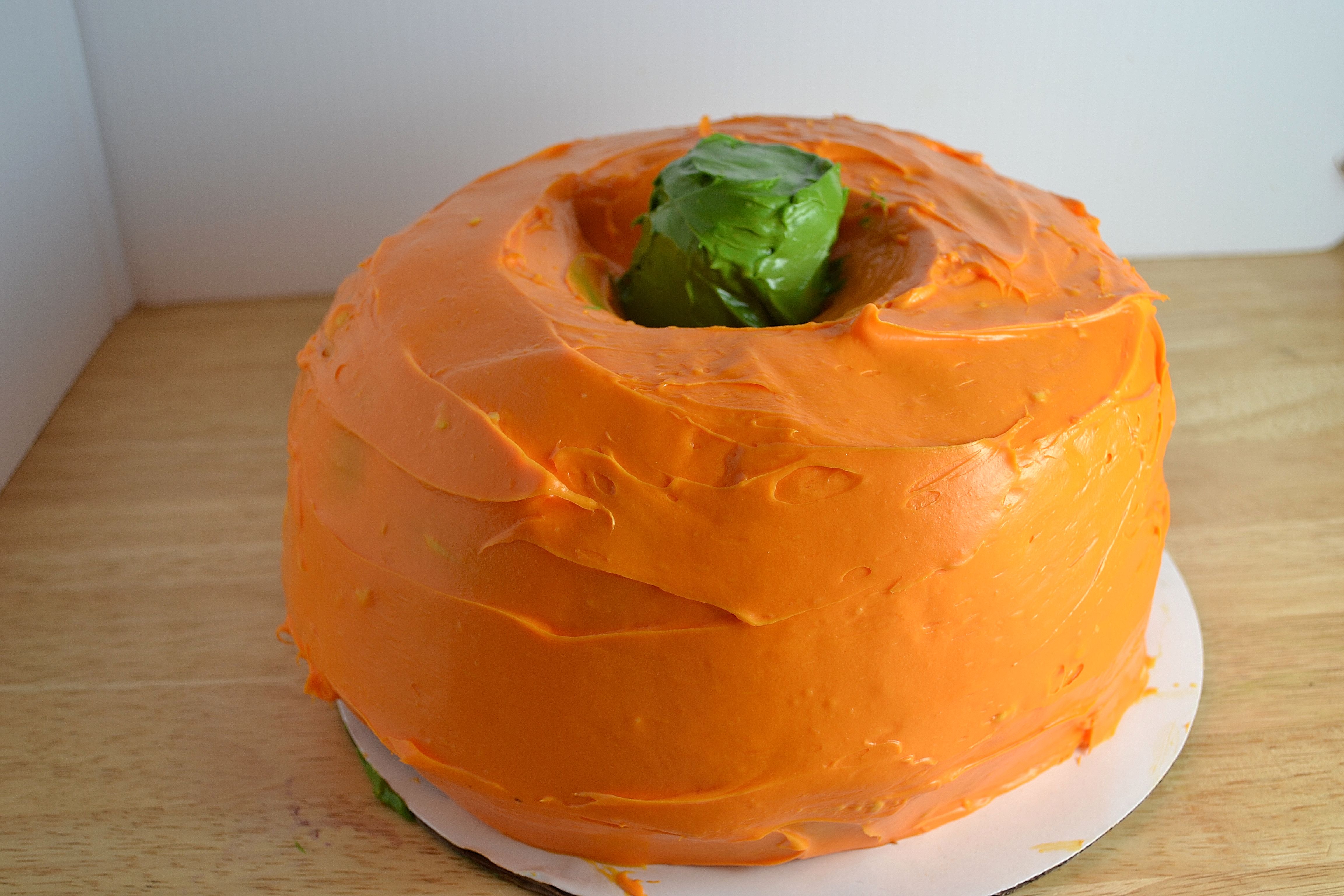
The pumpkin: a beloved tradition of Fall, appearing in everything from homemade pies to front doorsteps as Jack-O-Lanterns. Nothing quite speaks to the “flavor” of the season like this beloved squash. Both its aesthetic appearance and familiar taste have defined a number of traditions. So when I discovered that I would be baking a cake for my office on Halloween itself, I couldn’t resist finding a way to combine these two qualities. I ended up creating this (Literal) Pumpkin Cake with Cream Cheese Frosting.
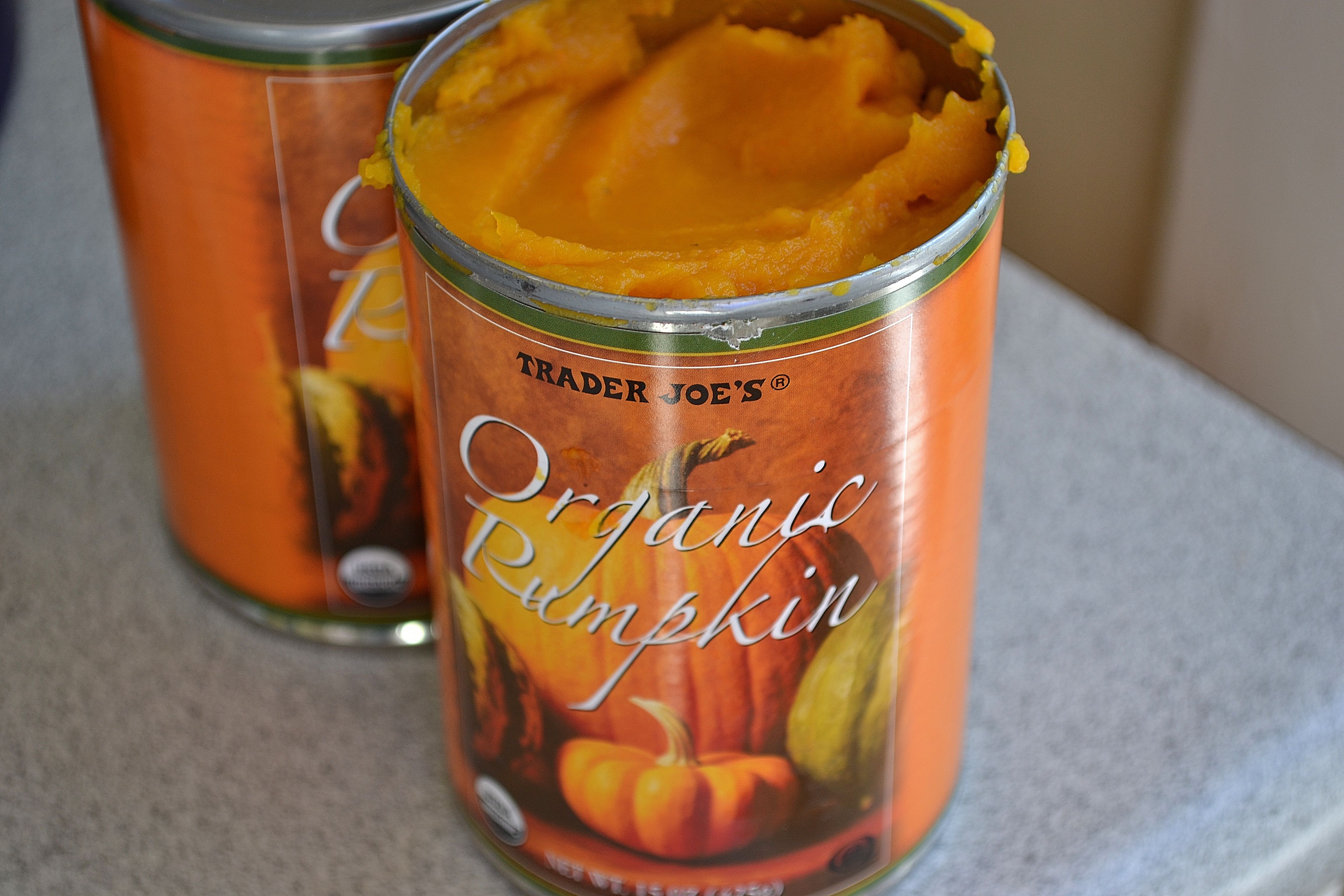
While it may seem inauthentic to use canned pumpkin, it is actually the next best thing. The majority of canned produce is canned at its peak, guaranteeing fresh flavors that are available year-round. With the number of canned pumpkin options out there, it might seem difficult to find just one. LIBBY’S® is always a safe bet, but a glance at the label can help you narrow down your choices – avoid choices with additives (sugar, preservatives, etc), and organic is always a good option.
While the assembly of this cake is impressive on its own, the cake itself is out of this world! It has the perfect level of spice, and an extremely tender crumb. You will end up using a lot of your pantry staples, but the result is entirely worth it. The baking time for this will vary based on your oven and pans, but be prepared to allow it more time than expected. This entire cake was gone after a single day in the office (with only half of my coworkers actually present) – a true “treat” for Halloween. Click HERE to make this cake a part of your Halloween traditions!
I chose musical pairing for this before the cake was even baked – Saint-Saëns’ Danse Macabre. Composed in 1874, this tone poem draw inspiration from a poem by Henri Cazalis about an old French legend – at the stroke of midnight on Halloween, “Death” appears and calls forth the dead to partake in a dance of death while he plays along on the fiddle. The work is programmed quite regularly by orchestras to celebrate the holiday, particularly for family concerts. Though I would’t say this cake is necessarily “macabre,” it certainly has the seasonal spirit – enjoy, and Happy Halloween!

http://www.youtube.com/watch?v=tG8QCjaw4yk

Sources Cited:
“Danse macabre (Saint-Saëns),” Wikipedia.com
Going Beyond Potential

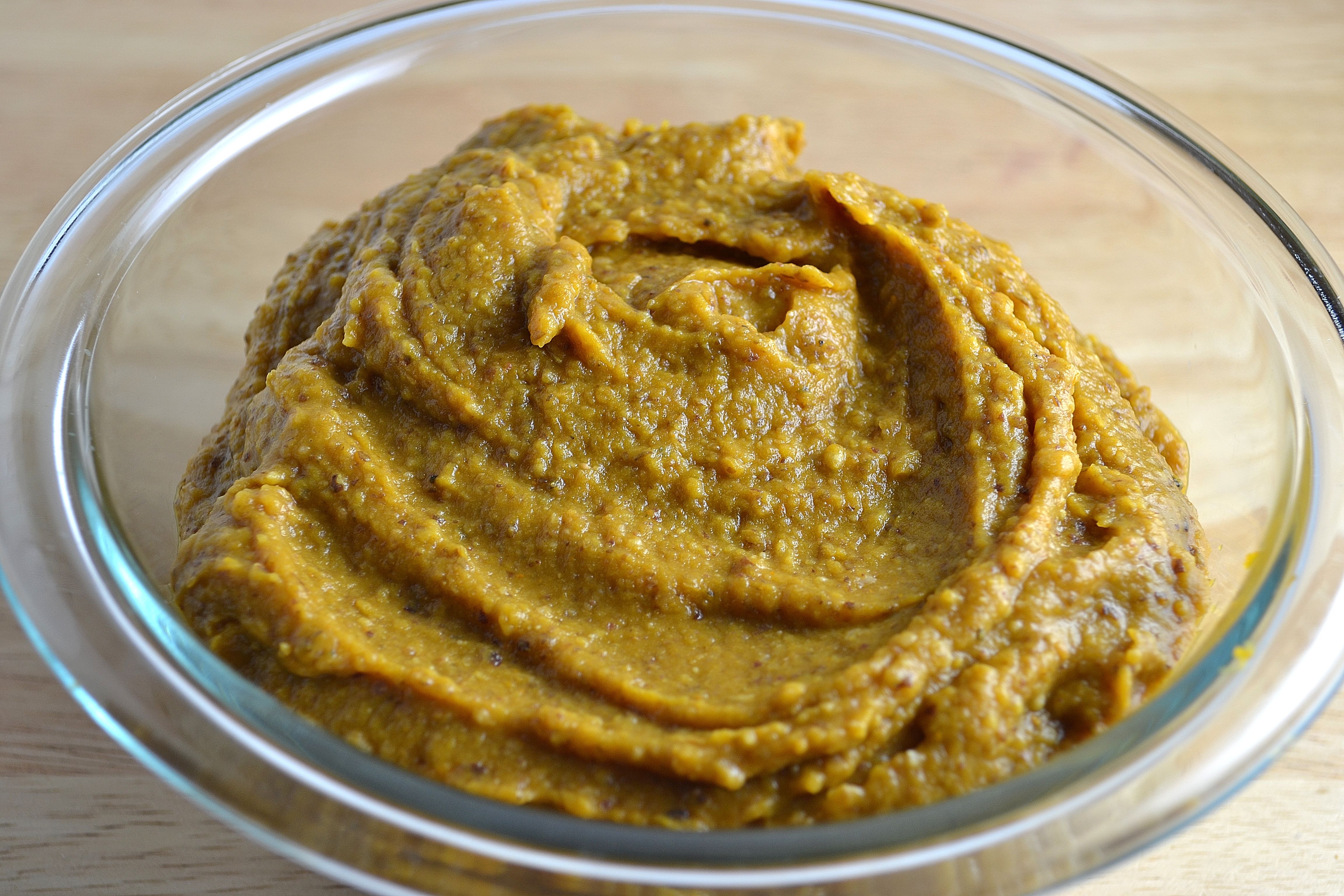
After a long day at work, going to the grocery store to try and brainstorm recipe ideas is the last thing I want to do. It’s moments like these where I rely wholly on what’s currently stocked in my pantry, hoping there will be just the right mixture of fresh and canned to create somethin. Such was the case when I decided to whip up a few snacks to take over to a friend’s the other night. I wanted dishes that would be quick to prepare (since it would be after said long day at work) and easy to transport. After surveying what I had on hand, I chose to make a Pumpkin Bean Dip as well as a batch of Parmesan & Thyme Crackers.
The thing I love most about dips is their simplicity, where dumping the ingredients into a food processor is often the only step required. This extremely simple appetizer is a different spin on your average bean dip, and perfect for the fall! The pumpkin adds a creamy finish that pairs beautifully with the earthiness of the beans. I doubled the recipe, a decision justified once everyone was reaching for seconds after the first bite – click HERE to make this beautifully simple appetizer!
I’ve spoken about my love for Ina Garten before – this woman is fabulous! She lives in the Hamptons in a gorgeous home, with (of course) a HUGE kitchen that has everything you would ever need/want. She basically spends the majority of her time cooking and socializing – a dream life. Her approach to cooking is relaxed and down-to-earth, creating recipes that are both simple and elegant. These savory crackers were addicting, yet required minimal effort – another Ina success!
For the “pantry” part of this recipe, I just happened to have a very good Romano cheese in my refrigerator. While the recipe calls for Parmesan, the Romano was a beautiful substitute. There are only 6 ingredients total, making these a perfect last-minute snack for gatherings. The thyme adds an earthy tone that really brings these up a notch. Constructing the dough into a log was the only tricky part of this, but the result was certainly worth the effort. These crackers, though seemingly basic, achieve far more than what might be expected – click HERE to see how to make these savory treats!
I’ve always been a sucker for Chopin, and it just so happens that the friend I made these lovely appetizers for was Brian McCarthy – a pianist who plays Chopin beautifully! Knowing that the piece I chose should also reflect the timeliness of these recipes, I chose a work that was short yet filled with color: Chopin’s Étude Op.10 No.1 in C Major. Much the way these dishes reinvented the potential of everyday pantry staples, Chopin took the étude form and created it into something far greater. His etudes exhibit an eloquence and emotional depth that place them on par with performance repertoire. This specific work captures the best of Chopin’s style with the genre. The recording below is with Valentina Lisitsa – enjoy!

http://www.youtube.com/watch?v=ROVy9PC8_8A

Sources Cited:
“Frédéric Chopin,” Wikipedia.com

A Flavorful Duality

With the onset of Fall, we find ourselves turning towards heartier fare in anticipation of the colder weather: filling stews, creamy soups, baked pastas, etc. Many assume that winter meals translate into fatty, less-healthy options than the summer’s alternatives. Thanksgiving (just around the corner) does very little to diminish these concerns. Nonetheless, there are plenty of healthy options that provide a cozy complement to the colder nights. This dish is certainly one of them, and is surprisingly flavorful! I doubled the recipe knowing that I would be serving a crowd, and there still ended up being tons of leftovers! For a healthier way to warm up and still feel sated, look no farther than this amazing French Lentil Salad.
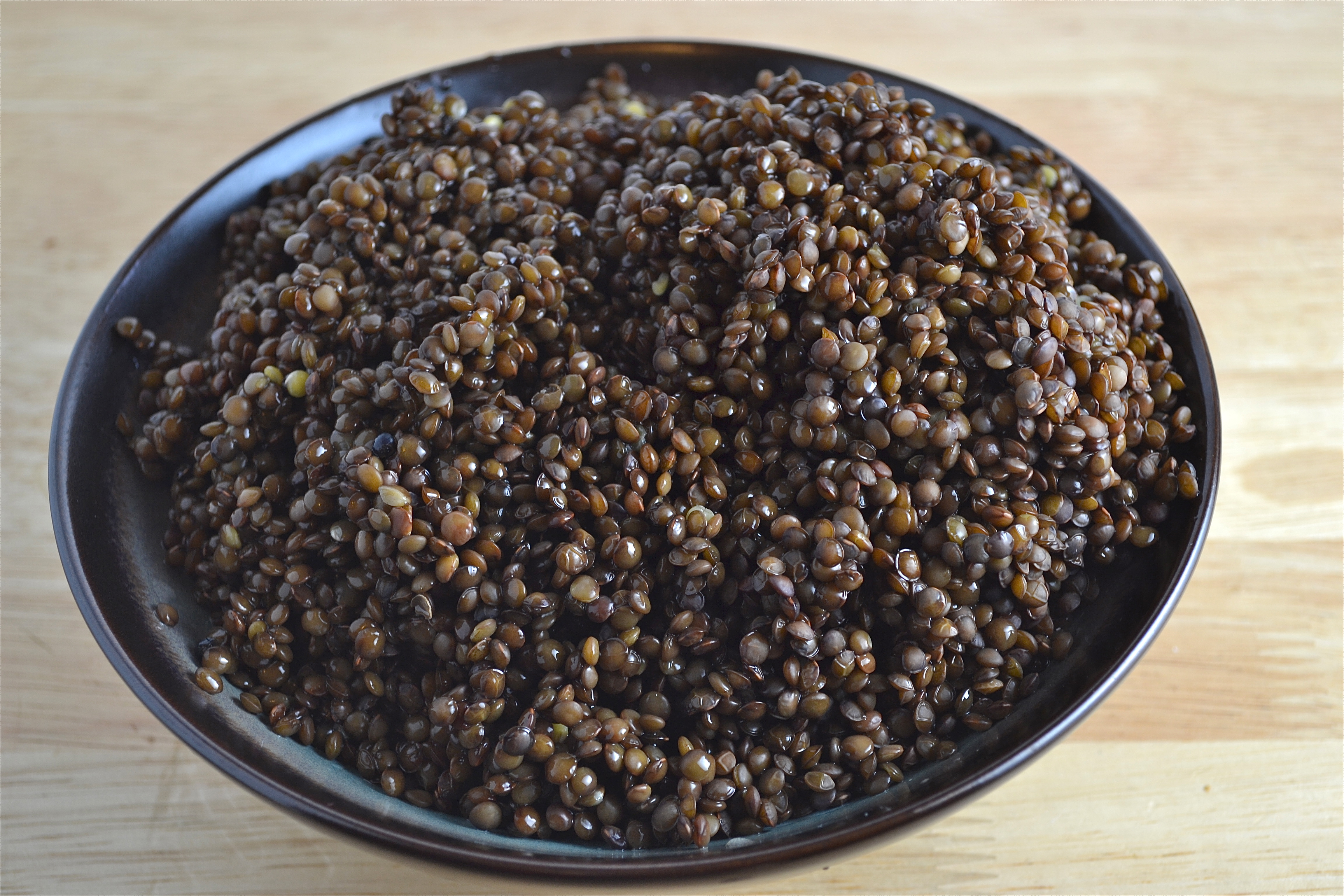
The internet is addicting – we all know this. Yet the more inundated we become with information and options, I find the old-fashioned method for recipe searches to be far more satisfying – good old cookbooks. I have WAY too many (a point I’ve made countless times on this blog) and should use them more than I actually do. Thank God I decided to for this recipe – Dorie Greenspan, once again, proves her genius in this dish. Lentils are a tough ingredient, given they can easily become too mushy or lack complexity. These lentils were perfectly tender and extraordinarily complex. It was the first time I’ve cooked with black lentils (she calls for French green lentils, but these are an apt substitute) and I have officially fallen in love with their earthy taste.
I credit the complexity in this dish to the cognac. You can use any brand, but I wanted the novelty of actually owning a bottle of Courvoisier – a drink that had become an outdated luxury until P.  Diddy released that hit single to bring it back into the limelight (this doesn’t necessarily mean I like the song, but it was the first time I heard about the drink). Adding the cognac is optional, but brings a bit of edge to the dish that is difficult to achieve in meatless entrees. Whether or not you choose to go with a pricier brandy is irrelevant, the result should be the same.
This is the first stew I’ve made where the vegetables are boiled whole, then chopped after the dish is done. I was apprehensive about not having the “caramelized” taste, but ended up being extremely pleased with the result. Including the vegetables (after chopping them) is optional, which I chose to do for added color and texture. That being said, those onions were NOT easy to cut – the outside skin becomes very slippery, so please be careful if you choose to include them. I also chose to include the vinaigrette Dorie recommends. The lentils are excellent on their own, but this dressing paired beautifully. This salad will probably become a go-to of mine for those colder nights, and perhaps paired with a short glass of Courvoisier. Click HERE to learn more about this filling yet healthy entree.
This dish was somewhat dichotomous, exhibiting both robust and subtle flavors – this brought to mind the music of Robert Schumann. His style was driven by dualities, ranging from intense passion to thoughtful tenderness. I chose his Piano Concerto in A minor, Op.54 to reflect on this eclectic style. Originally intended to be a Phantasie for piano and orchestra, Schumann’s wife Clara encouraged him to expand the work into an entire concerto. She was deeply moved (as were most listeners) by the integration of the solo line within the orchestral context. It is one of his more famous works, and the only piano concerto he ever completed. The following recording is with pianist Arthur Rubinstein – enjoy!

http://www.youtube.com/watch?v=gAEGdGu5200&feature=related

Sources Cited:
“SCHUMANN: Concerto in A minor for Piano and Orchestra, Opus 54,” San Francisco Symphony

A Smile for the Day

There is something perfectly adorable about cookies. Fresh out of the oven and paired with a glass of milk, they can be the perfect way to relax at the end of a tough day at work. They are also an ideal dessert for large gatherings (cakes tend to be too complicated, trust me on that one). A group of friends gathered for an evening of music and food the other night, and I thought cookies would be the perfect complement. I wanted cookies that were both fun yet simple, so decided to bake Chocolate Snickerdoodles and Chewy Peanut Butter Cookies.
I have to be honest: the main reason I baked these is because I love saying “snickerdoodle.” It’s one of those words that you can’t help but smile after saying it. Allegedly the name is of German origin, as a corruption of the word Schneckennudeln (which means “snail noodles”…still smiling after this). The original version of this recipe is a basic sugar cookie rolled in cinnamon sugar. I saw this chocolate version in an issue of Food & Wine I picked up at the airport, and knew I had to give them a shot – click HERE to see the recipe for these chocolatey treats.
Peanut butter cookies are a classic, and rarely fail to please. Basically a sugar cookie enriched with peanut butter, they are extremely simple to make. The practice of “cross-hatching” these with the tines of a fork dates back to 1933, with the edition of Pillsbury’s Balanced Recipes. The result gives the cookies a more aesthetic appearance – upping their “cute appeal,” if you will. I’ve tried peanut butter cookies with a number of add-ins, but the simple classic can never be topped – click HERE to see the recipe for this all-time favorite.
Cookies are always a fun project – not only do they make your house smell amazing, but they can be made with a few ingredients and minimal effort. That led me to a piece I found by chance: Three Preludes, by George Gershwin.  These are your typical Gerswhin, filled with jazzy appeal and spirit. Originally for piano (and premiered by the composer himself), they have since been transcribed for a number of solo instruments. The way I came across this set was by doing a YouTube search on the virtuoso Jascha Heifetz. I found the works so charming that I knew I had to pair them on this blog. I hope these will also bring a smile to your day – enjoy!

http://www.youtube.com/watch?v=NjMJRINJNTo

Sources Cited:
– “Snickerdoodle,” Wikipedia.com
– “History of Cookies,” WhatsCookingAmerica.net
– “Three Preludes (Gershwin),” Wikipedia.com

A Heroic Feat

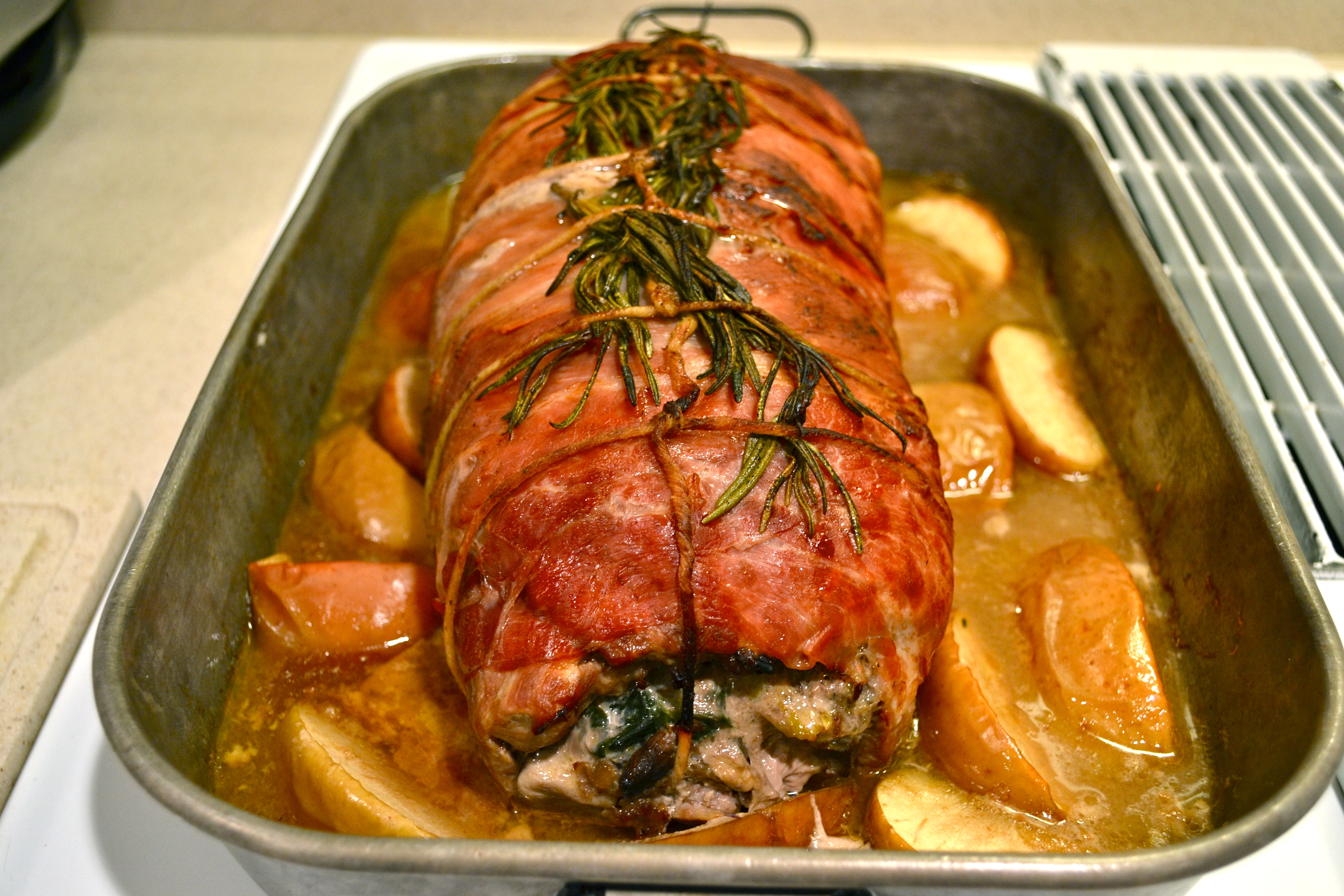
When I first received my October issue of Bon Appétit, I stared at the cover photo for a solid 5 minutes – somehow, I needed to make this dish. Fast forward 3 week: I’m visiting with my parents and that same issue sits on their coffee table, further enticing my culinary drive. I walked into the kitchen and was nearly floored when I saw that they had almost every ingredient needed for this dish on hand! While it was by no means a walk in the park, this Prosciutto-Wrapped Pork Loin with Roasted Apples was a huge hit!
This was the first time I tackled a whole pork loin, much more stuffing one! Butterflying the pork is arguably the most challenging step in this recipe – the magazine likens the process to unrolling a carpet, which actually helped me visualize what to do pretty well. After butterflying the pork, you then get to go to town with a meat mallet to get the pork to an even thickness – for those of you harboring frustration and/or anxiety, here’s a step for you!
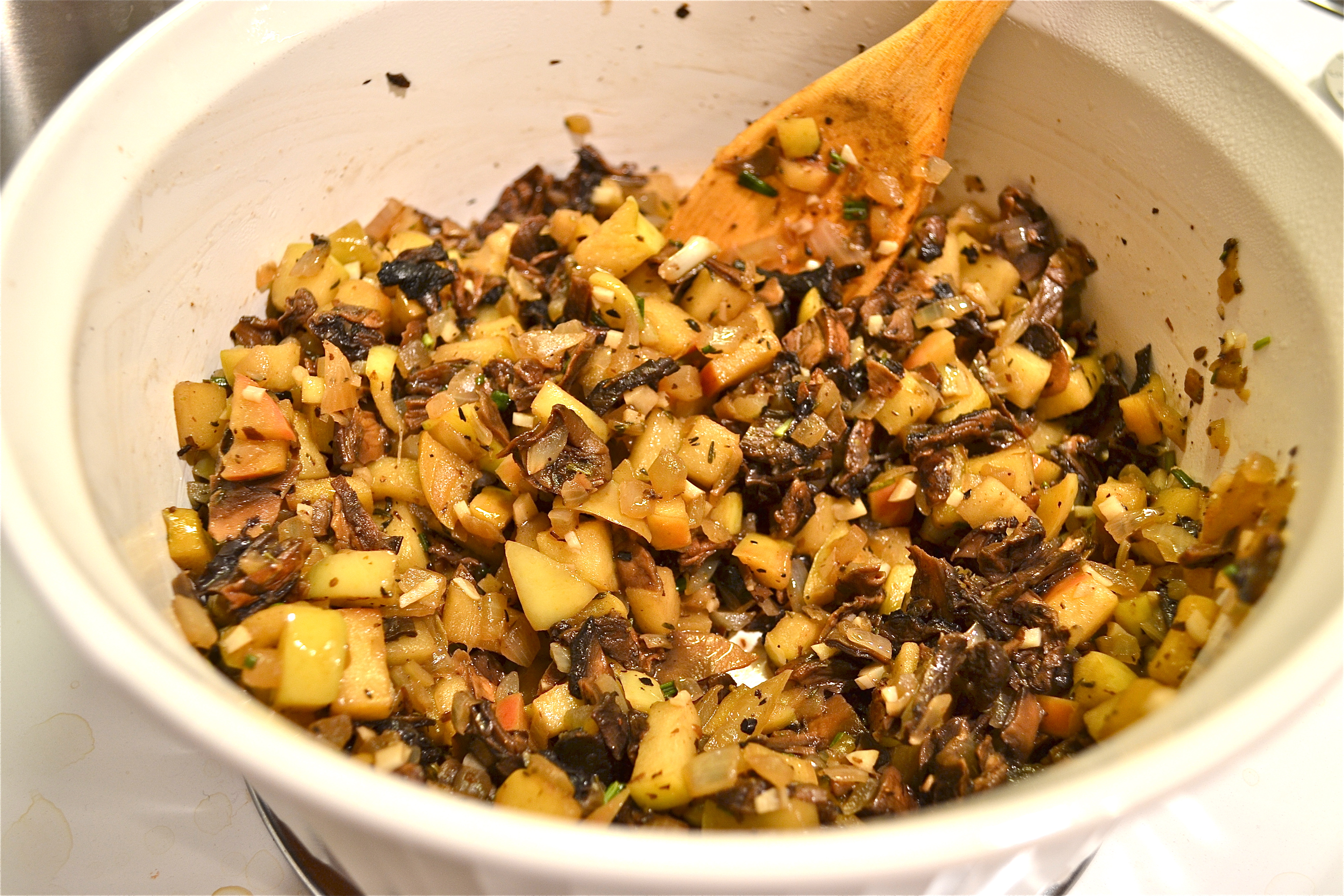
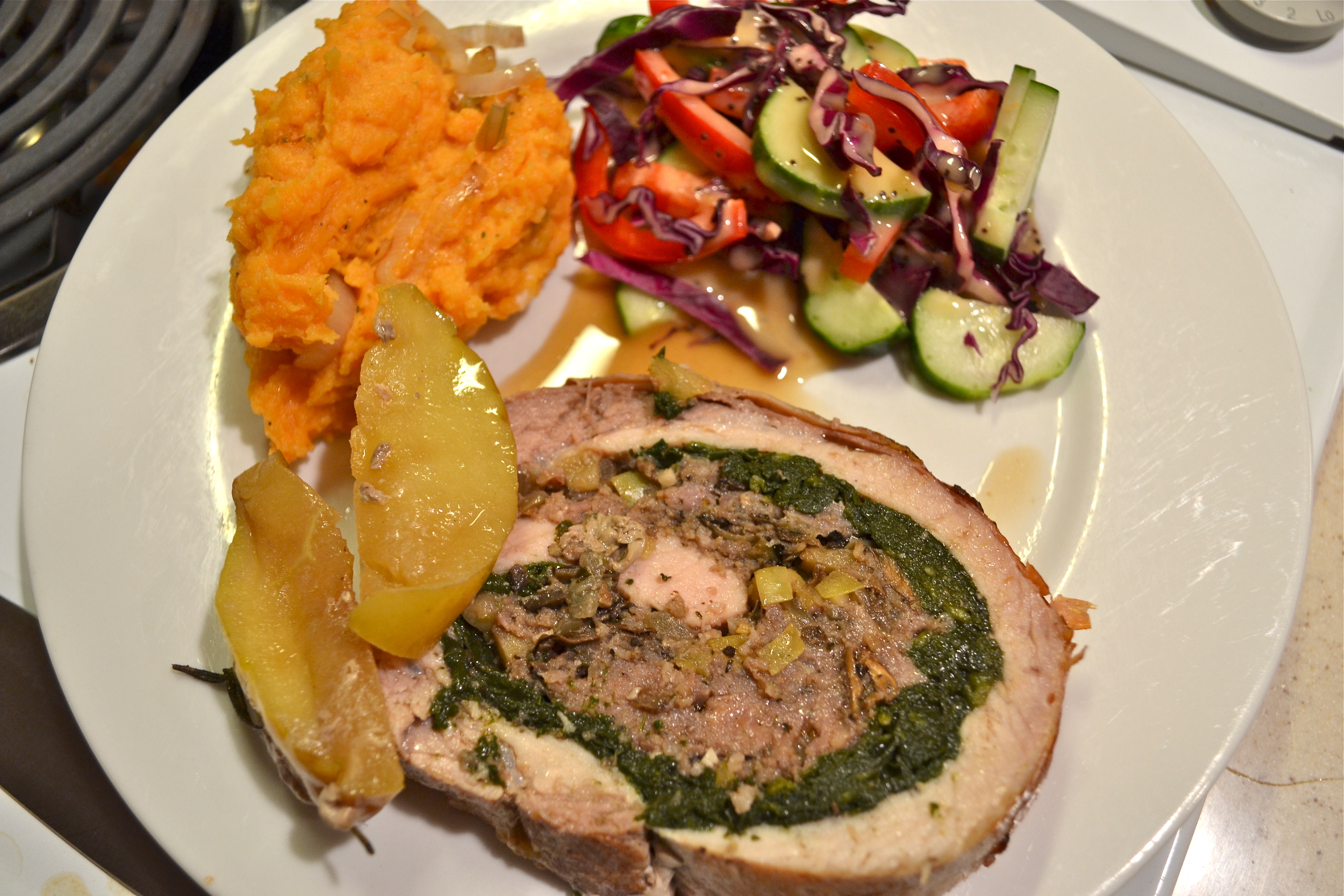
I took some poetic license on the filling. I knew I wanted to used dried mushrooms, but the store only had dried portobello mushrooms (instead of porcini). We also had SO many fresh apples at the house that I nixed the dried apple request and went for fresh Fuji apples. While I love kale and the earthy quality it brings, we had beautiful fresh spinach – yet another easy substitute for what I had on hand. I did include the brandy, at least 😉 Regardless of time or effort, the result is absolutely fabulous: juicy pork with a sweet & savory stuffing, all “gift-wrapped” in crispy prosciutto. Hungry yet? I served this dish with a simple salad and mashed sweet potatoes – click HERE to see how to make this elegant dish!
I originally had no idea how I would be able to pull off such an elaborate recipe – such a “courageous” risk drew my pairing to (the somewhat obvious) tone poem Ein Heldenleben (A Hero’s Life), by Richard Strauss. Typical of a tone poem, the movements are played without pause (much like this recipe made me nervous to take one). It is considered to be one of Strauss’s finest works in utilizing the full potential of the modern orchestra, giving “flavor and depth” to every moment and part. Additionally, much the way that I am giving myself a “pat on the back” for accomplishing this meal, it is rumored that Strauss may have been referring to himself as the “hero” portrayed in the work (if only somewhat). The recording below is with Seji Ozawa conducting – enjoy!

http://www.youtube.com/watch?v=UHoRPnrG-44

Sources Cited:
“Ein Heldenleben, Op.40,” The Kennedy Center

Pretzels, Prosecco, and a Parisian

I really like pretzels…not sure why, they’ve just always been a favorite. They are the ultimate fix when you get a salty craving, and are readily available basically anywhere: convenience stores, baseball parks, most people’s pantries, etc. I’ve introduced to Maya Jacobs before (sushi guru), and the other day she suggested we try to make pretzels on our own. I laughed at first, only to discover that they are SO easy to make! If you don’t believe me, I dare you to give these Soft Pretzel Bites a try yourself.
I admit – dry active yeast can be a tricky thing to work with (and of course takes a lot of patience). This recipe is almost like a “beginner’s guide” to baking with yeast. One recommendation – start letting the dough rise before you are hungry (or else an hour will feel like a year…heh). I topped these pretzels with coarse salt, but feel free to be creative with your toppings: cinnamon sugar, parmesan, fresh herbs, etc.
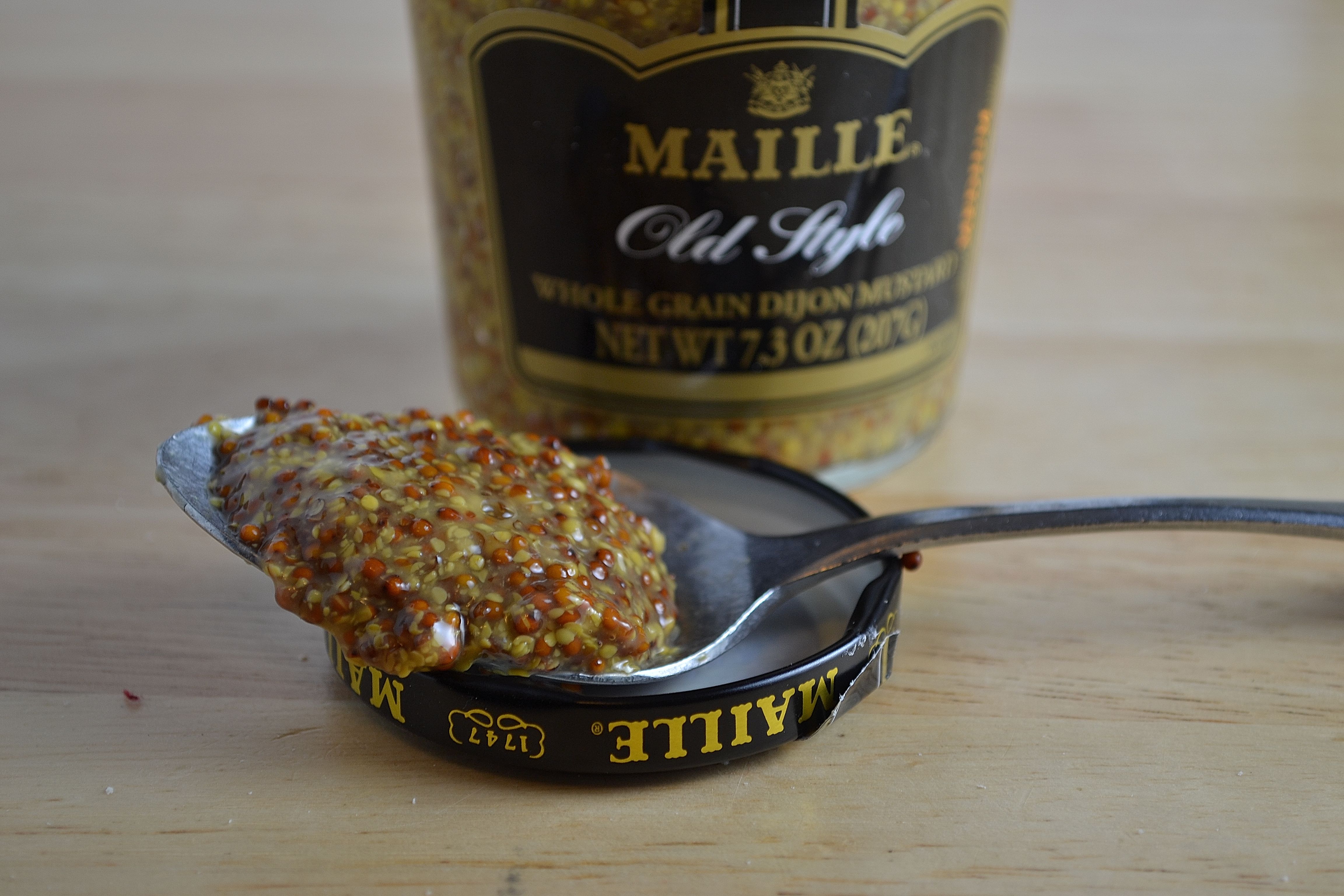
Mustard is a given for serving – I prefer the whole grain variety (Maille is my favorite!) That being said, you can basically choose whatever you’re craving: hummus, cheese, dipping chocolate even!  Maya and I also are fans of Prosecco, so we made that our drink for the evening (I know you’re supposed to eat pretzels with beer, but this combination was quite lovely…and I’ve never been much of a beer person). Click HERE to see the recipe for these pillowy pretzels – you’ll wonder why you ever spent money at an Auntie Anne’s!
For this pairing, I wanted something light yet unique – the “pillowy” aspect of these  led me to the music of Poulenc, and I chose his Trio for Piano, Oboe and Bassoon, Op. 43. Written in 1926, the work is both witty and light, yet also has moments of dissonance true to Poulenc’s style. Author and music critic David Ewen says of the work: “Pictorially one is sometimes reminded of a chase, sometimes a dialogue…The very heart of Poulenc is in this adroit little work.” It is fun little trio, and many people love it (almost as much as I love pretzels, I bet!)  – I hope you enjoy it as well!

http://www.youtube.com/watch?v=F6N0XQzQG94

Sources Cited:
“Francis Poulenc: Trio for Piano, Oboe, and Bassoon,” Sierra Chamber Society Program Notes

A Master of Disguise

On first glance, you might actually be fooled into thinking these are just your average meatballs. But this dinner was made for a vegetarian: my buddy Tim (Albert was there too!) Before my carnivorous readers navigate away from this post, let me tell how how AMAZING these were! Both light and rich, these Eggplant “Meatballs” with Homemade Tomato Sauce were definitely a worthy substitute.
These are definitely a little time consuming, but the product is completely worth it. Having made vegan macaroni and cheese before, I knew that nutritional yeast was a great option for mimicking the flavor of cheese – it served as the “parmesan” in these meatballs. Panko along with Ener-G Egg Replacer were the binding agents. All in all, it was a surprisingly delicious outcome! This healthy alternative for meatballs is sure to please even the staunchest of carnivores – click HERE to check out this awesome recipe!
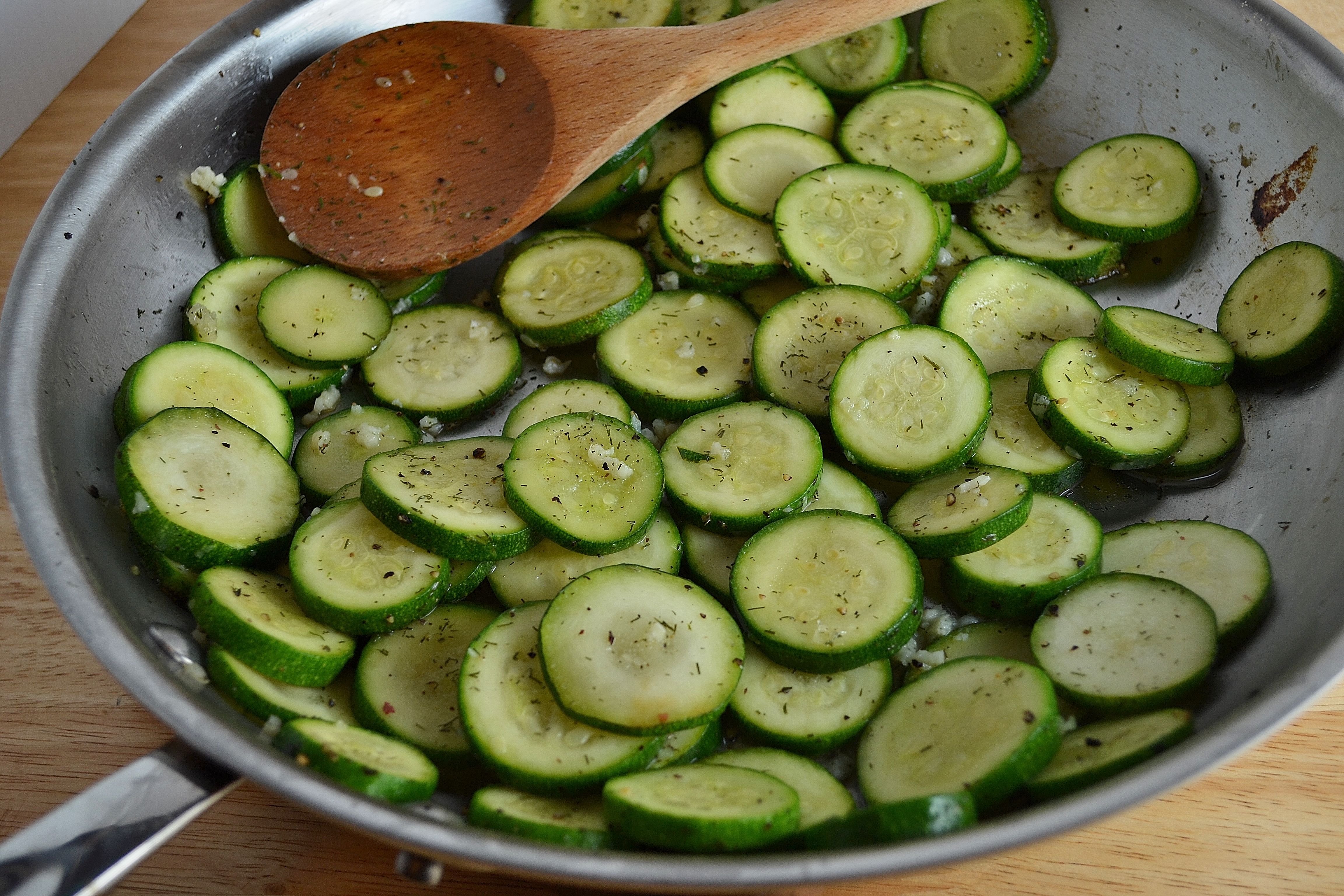
I also made a side of Lemon-Dill Zucchini that was extremely simple (you can also get a glimpse of my NEW All-Clad skillet – SO excited!) The zucchini at the market looked beautiful, so I couldn’t resist. Basically you just heat some oil in a large skillet, then add the zucchini slices with salt and pepper, and cook for about 5 minutes. Add some garlic, lemon, and dill and you’re set to go! Whatever you decide to pair with these meatballs, I’d suggest a simple green – you’re already going to be putting a lot of energy into the main course, so go easy on the side dish.
I wanted to pair these “meatballs” with a piece that also pulled off an ingenious disguise – the vegetarian of the evening, Tim Wilfong, naturally came up with the perfect piece: A Chloris, by Reynaldo Hahn. While this song may sound French, it was in fact written by a Venezuelan composer. Known for writing in the tradition of mélodie, Hahn was often confused for being a French composer. Another disguise to this pairing is the recording itself: the song is written for a woman, yet this recording is by a man – the countertenor Phillipe Jaroussky. While it can be argued that Hahn is a “worthy substitute” for a French composer, the latter comparison can best be addressed in Tim’s own words: “A man singing in a woman’s range…no one could ever say he’s a “substitute” for a woman, though!!!” Anyways, this is a beautiful piece, and I hope you enjoy!

http://www.youtube.com/watch?v=QamSjqX5ApM&feature=related

Sources Cited:
“Reynaldo Hahn,” Wikipedia.com

Do You Believe in Magic?

Baking elaborate cakes can be an exciting challenge, but sometimes it’s the simple things that really shine. I had invited a small group over to hang out, and it just so happened to be my friend Kyle’s birthday as well! I wanted to make something quick and easy, knowing that a cake would be too much for a small crowd. With only seven ingredients, this dessert was shockingly good! It’s no wonder they are called Seven Layer Magic Bars.
The “magic” in these bars comes from the sweetened condensed milk. Granted, chocolate and butterscotch combined with walnuts and coconut is pretty fantastic on its own. But these all come together thanks to this decadent ingredient. Condensed milk is basically milk from which water has been extracted and sugar added to. Once canned, it can have a shelf life that lasts for several years. Condensed milk can be found in recipes around the world, from the Brazilian Brigadeiro to the English Banoffee Pie.
First appearing in cookbooks in the 1960s, these cookies quickly became and still are Eagle Brand’s most popular recipe. These cookies don’t require any eggs, making them a quick fix for any busy weekday. That being said, they are insanely delicious and definitely worthy of a special occasion. My friends certainly agreed – click HERE to the secret to these wonderful bars!
I thought that for a recipe with seven ingredients, a septet would be a great pairing. That led me to the beautiful Introduction and Allegro for Harp, Flute, Clarinet and String Quartet by Maurice Ravel. Ravel wrote the work on a 1905 commission by the Érard company to celebrate its creation of a double-action pedal harp. The work is well-known amongst harpists, resembling more of a miniature “concerto” than a chamber work for the instrument. It demonstrates the agility and expressive range of the harp, with the quartet and winds providing colorful context. I performed this work several years ago with my beloved friend, harpist Lucia Stavros (she did a fabulous job, as always!) I hope you enjoy this piece as much as I do!

http://www.youtube.com/watch?v=5s6suaIQVzI

Sources Cited:
“Condensed Milk,” Wikipedia.com
“Introduction and Allegro (Ravel),” Wikipedia.com
Food for the “Starving Artist”

Perhaps I’m old-fashioned, but I prefer to be surrounded by lots of people when serving good food. What’s the point of creating a masterpiece if it can’t be enjoyed by others? This need for expression is a quality I can blame on my musical training 🙂 Yet sometimes a group can become much bigger than anticipated, and what was supposed to be 5 people suddenly turns into 10. It’s times like this when I seek recipes that give the most bang for the buck, and the May 2011 issue of Cooking Light had just the answer: Maple-Mustard Chicken Thighs.
I can almost guarantee that 90% of the ingredients for this marinade are currently sitting in your pantry (I’m not counting those who only eat microwaveable meals, naturally). This is a fantastic sauce, with the perfect balance of sweet and spicy. I’m also a firm believer in chicken thighs as they are less costly and more tender than chicken breasts, so this meal was bound to please – click HERE to learn more about this budget-friendly and amazingly delicious dish! I served these with a side of Leek and Potato Soup that was quite flavorful (and vegan!) – click HERE to see the recipe for this dish. 
I couldn’t help but pair this meal with (for the second time in a row) a piece by Mozart. The concept of the “starving artist” is famously affiliated with Mozart, and his works are arguably staples of the classical repertoire (much like the ingredients of this dish are “pantry” staples themselves). When discussing Mozart’s hardships, his Requiem is more often than not central to the conversation. This meal was very good, but far too modest to pair with such an exalted work. That led me to the gorgeous motet Ave verum corpus in D major, K. 618 (which many believe to be a precursor to the Requiem). Under 50 measures in length, it is orchestrated for choir, string orchestra and organ. The beauty of this piece is how it attains depth through tranquility, and can reach right into the soul. I’ve included a recording featuring the choir and orchestra of Bayerischer Rundfunk(Bavarian Broadcasting) with Leonard Bernstein conducting – enjoy!

http://www.youtube.com/watch?v=6KUDs8KJc_c

Sources Cited:
“Ave verum corpus (Mozart),” Wikipedia.com