South of the Orient: Part VIII

Mangalorean
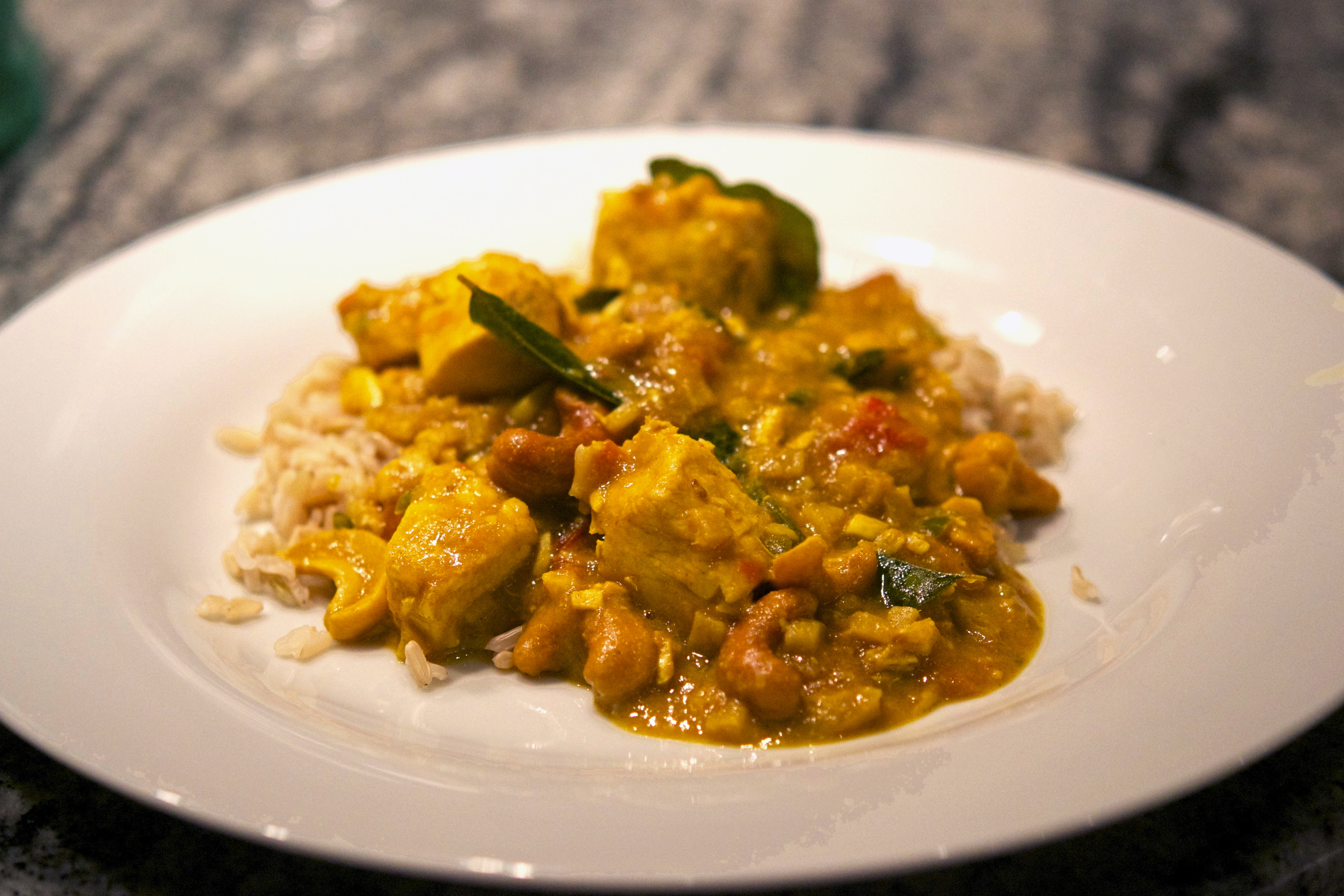
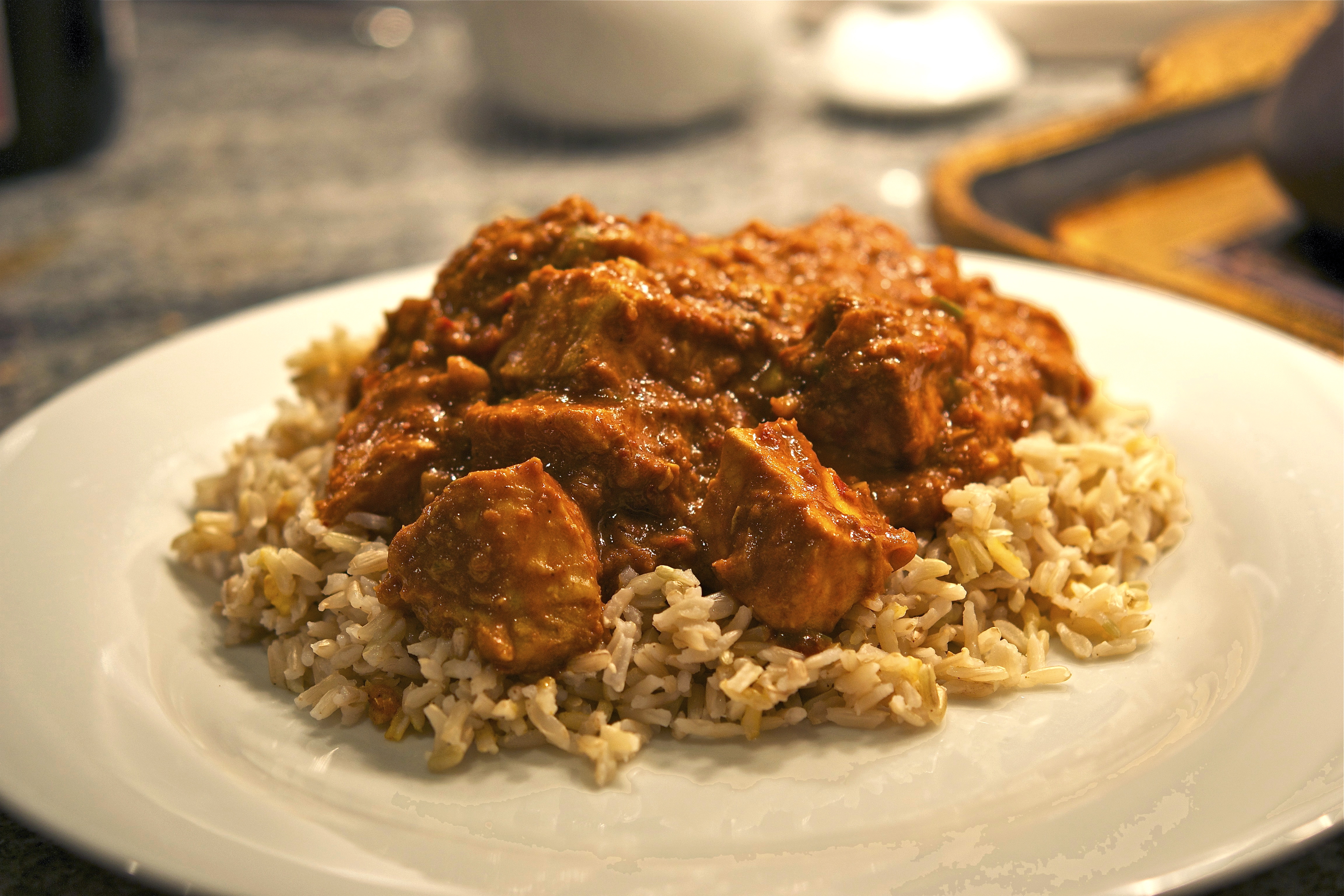
Everyone has their special recipe – grandma’s marinara, a secret chocolate chip cookie recipe, dad’s favorite BBQ sauce. For Tom, his recipe is this beautiful Mangalorean Curry. Chunks of swordfish are slowly cooked in a curry sauce that will knock your socks off. He’s made this for me several times, and I’ve been dying to feature it on the South of the Orient Series. This is a dish that he has updated and perfected over the years, making it absolutely perfect for special occasions. A word of warning: this may become your new favorite curry…in fact, I can guarantee it.
155775_1693169418572_4572868_n This isn’t just a recipe Tom found in a Williams Sonoma cookbook, but rather one that harkens back to his travels in India. Tom shares more about what led him to this recipe:

“Certain curries reach a legendary status with the culinary elite on the subcontinent. The Mangalorean Fish Curry was a dish I’d heard about as far north as the Nepali border, so when I found myself in Karnataka, its birthplace, I couldn’t resist taking the train, a full day off-course, to track down the recipe. Mangalore is a gritty, medium-sized port city on the Indian Ocean which makes a living through trade. I fought through the honk and bustle for a couple of days, talking to chefs at local restaurants, the ladies preparing dinner in homestays (the real founts of gastronomic knowledge) and consulting spice markets, and rendered this recipe, which I believe captures the spirit of the thing.”

Mangalorean 1
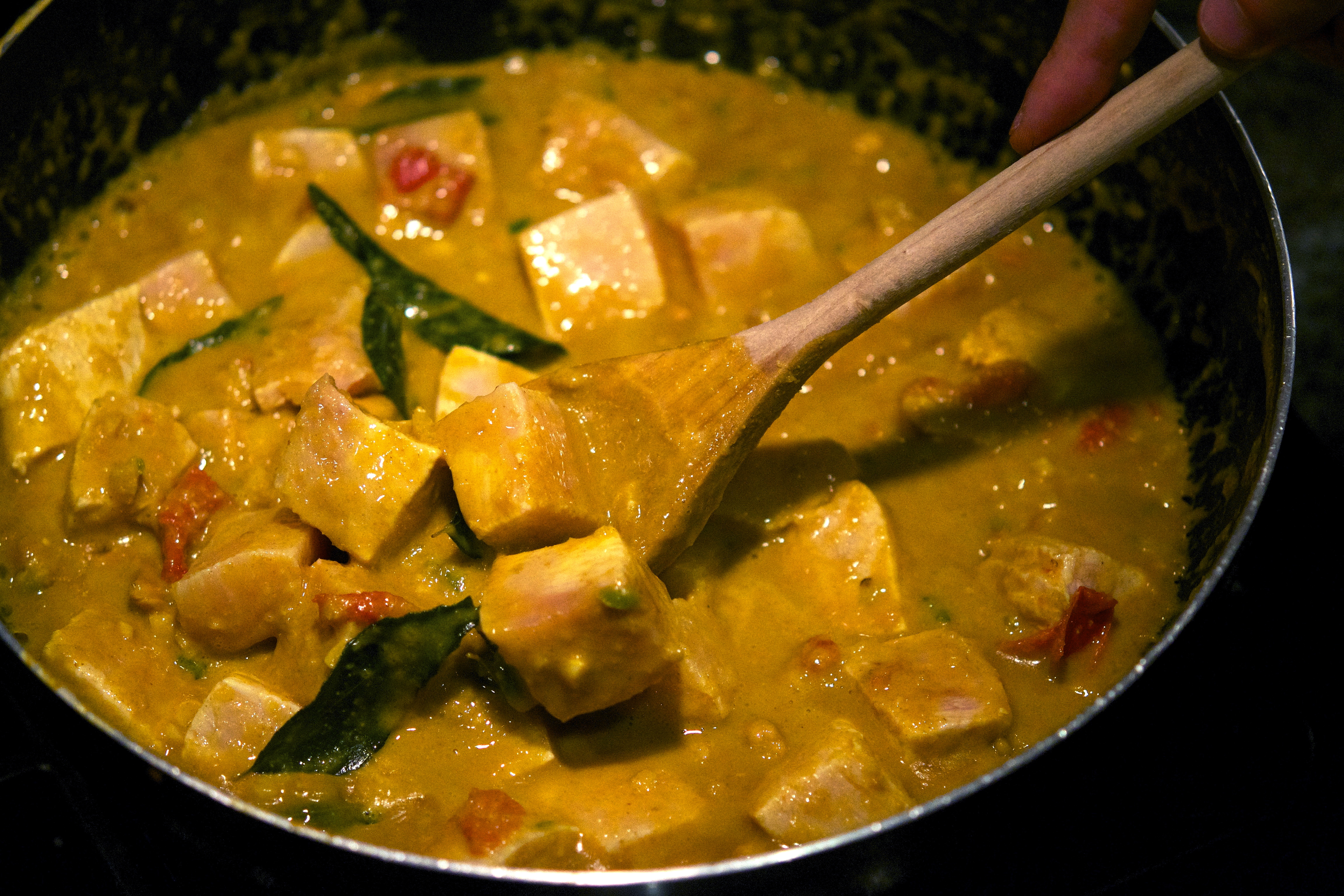
The base of this curry is a fragrant paste of chilies, aromatics and seasonings, all of which give the curry its unparalleled flavor and gorgeous hue. As I mention above, this curry packs a punch: two types of chilies and a healthy dose of spices take this recipe the extra mile, but air on the side of caution for those who can’t take the heat. For those who can, I promise this is curry for you.
Mangalorean 2
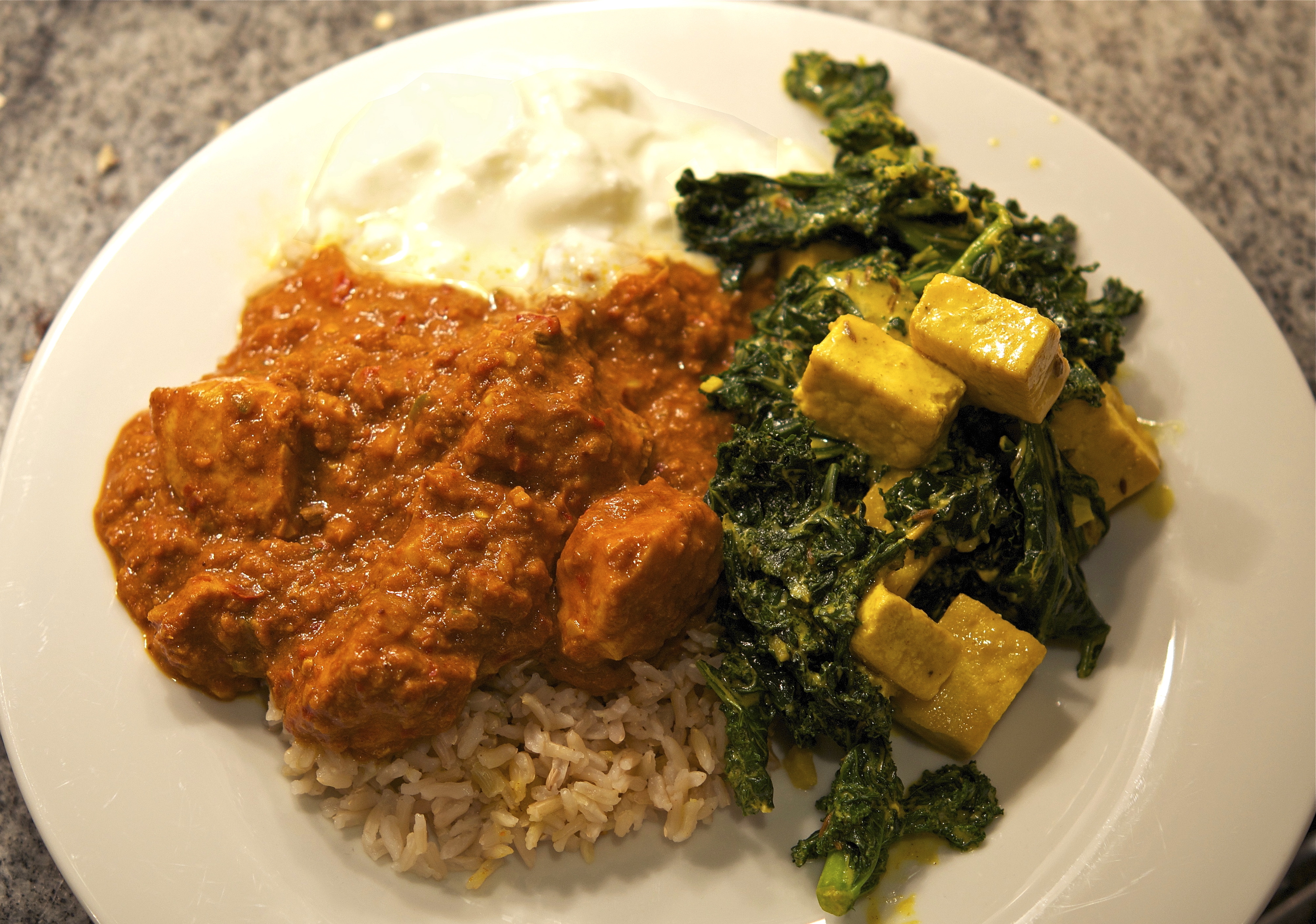
We enjoyed the curry with a side of our favorite Saag Paneer (using kale in lieu of spinach) and a dollop of yogurt, since Tom made this particular batch a little spicier than we were used to. Needless to say, it is a beautiful dish and fantastic way to impress any guest. What is truly remarkable about a favorite recipe is that it feels like home, no matter where you are or who you are with – why else do you think I am so in love with cooking? Click HERE to see the recipe for this fantastic dish. Mangalorean 3
This recipe’s complexity and storied introduction make it a special one, deserving of a piece that is both notable and unique. The curry is an homage to generational traditions, while also being the signature of Tom’s own style and culinary craft. So for this particular osvaldo_golijov_2pairing, I chose Osvaldo Golijov’s Oceana, for Vocalist, Boy Soprano, Chorus and Orchestra. Composed in 1996, the work was a commission for the Oregon Bach Festival’s “Cantatas of the Amercas” concert series. The festival was seeking to premiere new works that pay tribute to the genius of Johann Sebastian Bach – THE father of cantata writing – while also establishing a voice in this new day and age. Golijov’s work also draws musical inspiration from his native Argentina and Chilean poet Pablo Neruda. Oceano consists of seven movements, alternating between passionate choral refrains and pensive interludes. The score calls for a “Brazilian jazz-style vocalist,” a boy soprano, two choirs, two guitarists, and an orchestra consisting of a piccolo, three flutes, alto flute, percussion, and strings.      This recipe’s complexity and storied introduction make it a special one, deserving of a piece that is both notable and unique. This curry is an homage to generations of cooking tradition, while also being the signature of Tom’s own style and culinary craft. So for this particular pairing, I chose Osvaldo Golijov’s Oceana, for Vocalist, Boy Soprano, Chorus and Orchestra. Composed in 1996, the work was a commission for the Oregon Bach Festival’s “Cantatas of the Amercas” concert series. The festival was seeking to premiere new works that paid tribute to the genius of Johann Sebastian Bach – THE father of cantata writing – while also illustrating a contemporary voice. Golijov’s work draws musical inspiration from his native Argentina and Chilean poet Pablo Neruda. Oceana consists of seven movements, alternating between passionate choral refrains and pensive interludes. The score calls for a “Brazilian jazz-style vocalist,” a boy soprano, two choirs, two guitarists, and an orchestra consisting of a piccolo, three flutes, alto flute, percussion, and strings. The following video features the first movement of the piece (the remaining movements can easily be found on YouTube) – enjoy!

Sources Cited:
Bromberger, Eric. “Program Notes: Oceana,” La Jolla Symphony and Chorus
Osvaldo Golijov photo courtesy http://www.osvaldogolijov.com
Welcoming a New Day

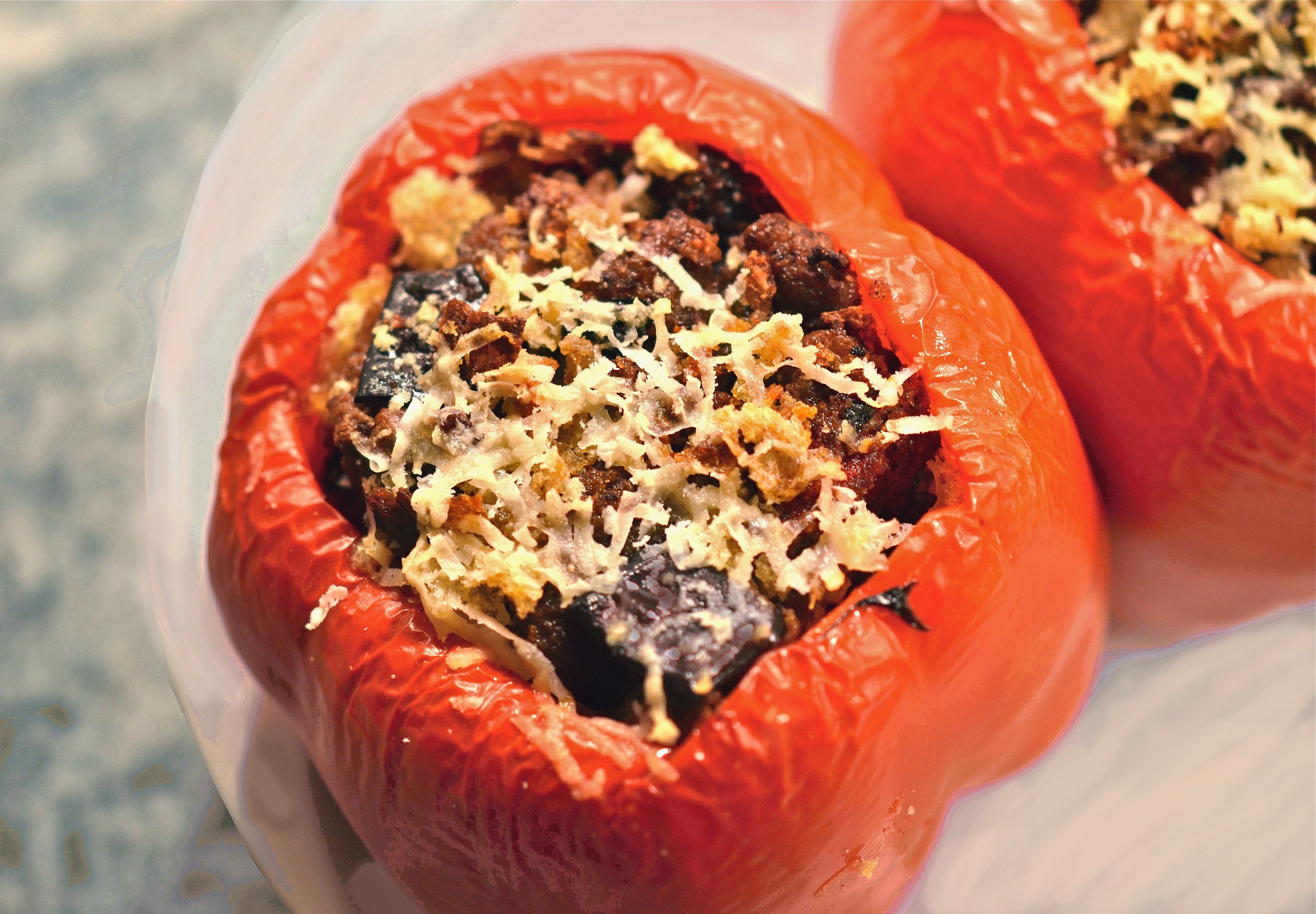
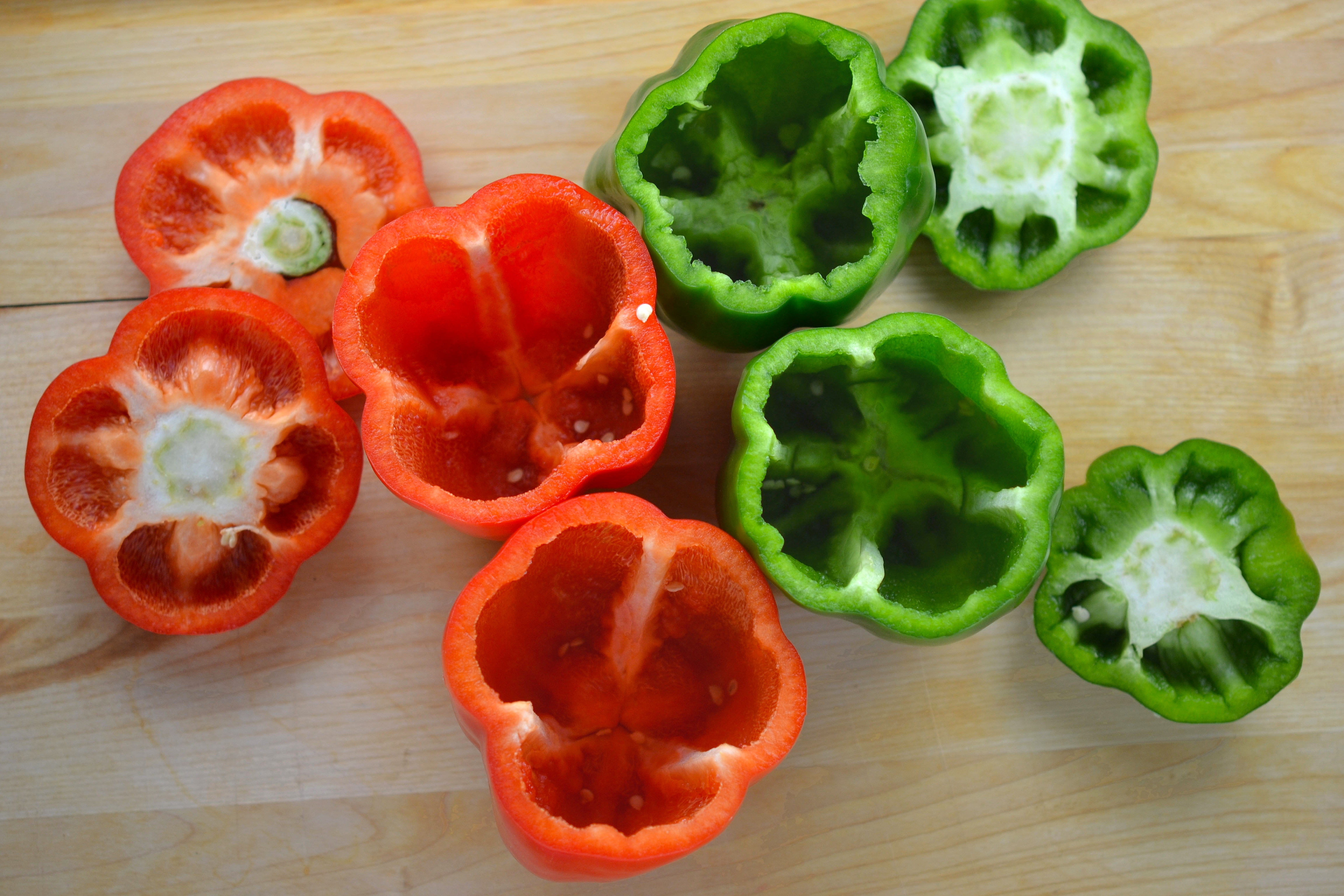
Lamb Stuffed Peppers 6It is officially SPRING! After the winter we’ve endured (looking at you, Boston) it’s about time we were able to see the sidewalks again. While this miserable weather was partially to blame for my extended hiatus from blogging, I’ve been mostly getting ready for a “new chapter” in my life: New York City! I started this blog back in 2011 to share my music and food with friends and loved ones, and my love of Boston can be read between every line. Now I’m taking ClassicalKitchen to a new town. Though I will likely be posting less frequently, know that I’ll still be cooking up a storm (in what is likely to be a closet-sized kitchen). To celebrate the onset of warmer days and this exciting/crazy news, I want to share these delicious Lamb Stuffed Peppers.
Lamb Stuffed Peppers 4Bell peppers are nature’s edible bowls. Fun fact: the fruit was named “pepper” by none other than Christopher Columbus, who brought the plant back to Europe following his expedition to “the new world”. Though this variety is sweet and mild, it is related to the spicier chilies we know and love (such as jalapeños and habañeros) as a member of the Capsicum genus. In fact, the bell pepper is the ONLY one of this genus that does not produce capsaicin, which is the chemical that creates a “burning” sensation in the spicier varieties. SO long story short, Columbus named these fruits “peppers” because they were spicy like peppercorns, which was a popular (and expensive) spice at the time in Europe. God I love history…
Mediterranean Filling 2This is one of Tom’s specialties. We’ve made these peppers on several occasions, and often switch up the fillings. However, we often vie for a Mediterranean mix of olives, anchovies, basil, capers, sundried tomatoes, roasted garlic, and artichokes. We quite literally “pack” these peppers with as much flavor as possible. You can also use any meat, or even make it vegetarian…though I don’t think I could ever convince Tom to go for the latter. Click HERE to learn how to make these beautiful peppers.
Lamb Stuffed Peppers 2Spring is a very coy season – you’re never really sure if it’s here to stay, until the forecast shows nothing but sun for more than a week (at least). It certainly took its sweet time this season, but it seems as though it is finally here – in thinking of a work that could illustrate the onset of springtime, I came across Boccherini’s Cello Concerto in B-flat No. 9, G 842. The opening Boston Springmovement resounds with majesty, and each subsequent movement seems to drift between the joy of what’s to come and a wistfulness over what had been. I may be stretching this to fit my “spring is ahead, winter is behind us” outlook, but the spirit of the concerto still fits quite well with a “springtime” spirit. Written around the year 1770, the work as it appear today is known to have been dramatically altered by Friedrich Grützmacher – a virtuosic cellist who lived nearly a century later than Boccherini. Grützmacher made extensive cuts, incorporated passages from previous Boccherini concertos, and even ventured to write his own cadenzas. The work thus presents only vestiges of the original manuscript, and yet stands as one of Boccherini’s most popular works. The recording below features the magnificent Jacqueline du Pré – enjoy!

Sources Cited:
“Chili Pepper,” Wikipedia.com
“Cello Concerto No. 9 (Boccherini),” Wikipedia.com

The Virtue of Patience

IMG_4779It’s been quite some time since I last blogged…blaming Boston’s snowpocalypse is an option, but it doesn’t fully excuse my 2-month hiatus. It’s not for lack of cooking, since this kind of weather is the perfect excuse to whip up copious amounts of chili, stew, and stir fries to keep warm. As we near March, I plan to shake off these winter blues and jump back into blogging. For those enduring the snowy onslaught in the Northeast, here are two hearty slow-cook dishes to enjoy: a Classic Beef Stew and a Lentil and Chicken Sausage Soup.
Beef Stew 1Let’s start with the beef: my boyfriend Tom challenged me to make an old-fashioned stew, and I came up with this recipe: it’s extremely simple to make, yet packed with complexity and flavor. These tri-colored potatoes added character the stew, but you can use any root vegetable of your choosing. The starchier the better, since it will help thicken the stew as it cooks. The blue potatoes have become one of my favorite add-ins for stews and roasts alike.
Beef Stew 2What I love most about chuck is how tender it becomes when cooked slowly. While you may be tempted to opt for another cut, there really is no replacement when it comes to stews – chuck will give you the best results. I cooked this in my trusty slow cooker, on low for about 6 hours. As is always the case with stews, it was even better the next day. With record low temperatures and snowfall, this recipe is a surefire way to warm up at the end of the day. Click HERE for the recipe.
Lentil Chicken Stew 2I’ve always wanted to try a “lentil and sausage” stew, but am honestly not a huge fan of sausage. My solution is to substitute chicken sausage wherever possible, and I have somehow convinced Tom to opt for it as well. To match higher demands for healthier products, stores have been stocking a remarkable array of flavors. My personal favorite is Chicken & Apple, which is perfectly suited for the purposes of this recipe.
Lentils and Kale 2The lentils and kale are the real powerhouses in this soup, respectively providing a healthy dose of potassium, folate, Vitamin C, fiber, copper…to name a few. You can use any leafy green or legume, and (if you’re a pork fan) feel free to use regular sausage as well. I cooked this soup in the slow cooker for about 4 hours on “high,” and the result was a flavor-packed meal to warm a cold, snowy night. Click HERE to see the recipe for this savory soup!
Lentil Chicken StewThis winter has not been an easy one for Boston: trains have taken a turn for the worse, sidewalks are nearly impassable, cars are buried beneath feet of snow, and the city’s patience is as thin as ice (pun intended). Yet winter is, at it’s most basic level, quite beautiful. Watching snow fall can be an experience that is both magical and nostalgic. Even as we pile on layers of clothing and trek through slush, our eyes drink in the sights of blanketed fields and frosted trees. For my musical pairing, I wanted a piece that would mirror both winter’s serenity and Boston’s constancy. I ultimately chose Schubert’s Impromptu in G-flat major Op. 90 No.3. The piece is remarkably gentle, with triads cascading like snow and a melody that floats above a peaceful landscape. The emotions in the music speak to what I am certain many a Bostonian has endured this winter: moments of triumph, silence, frustration, melancholy, and acceptance. The recording below features the piano virtuoso Vladimir Horowitz. What I love most about his interpretation is its patience, allowing the music to breathe and grow with each phrase. In this type of weather, patience can be difficult to muster – but spring is just around the corner, and soon we’ll be looking back on the “blizzard of 2015” with a sense of understanding and resolve, because we’ll have made it through this.

An Extravagant Feast

Thanksgiving 1Tis the season to spend time with loved ones while eating lots of food! It’s also the time of year that I find it extremely difficult to keep up with my blog, between holiday parties and travel. Thanksgiving is always a big project…but it’s also one of my favorites to blog since the memories and recipes are worth cherishing. I flew down to Atlanta for the second year in a row to celebrate Thanksgiving with my mother’s side of the family, my sister Sarah and her boyfriend, and my boyfriend Tom.
DSC_0294  DSC_0377
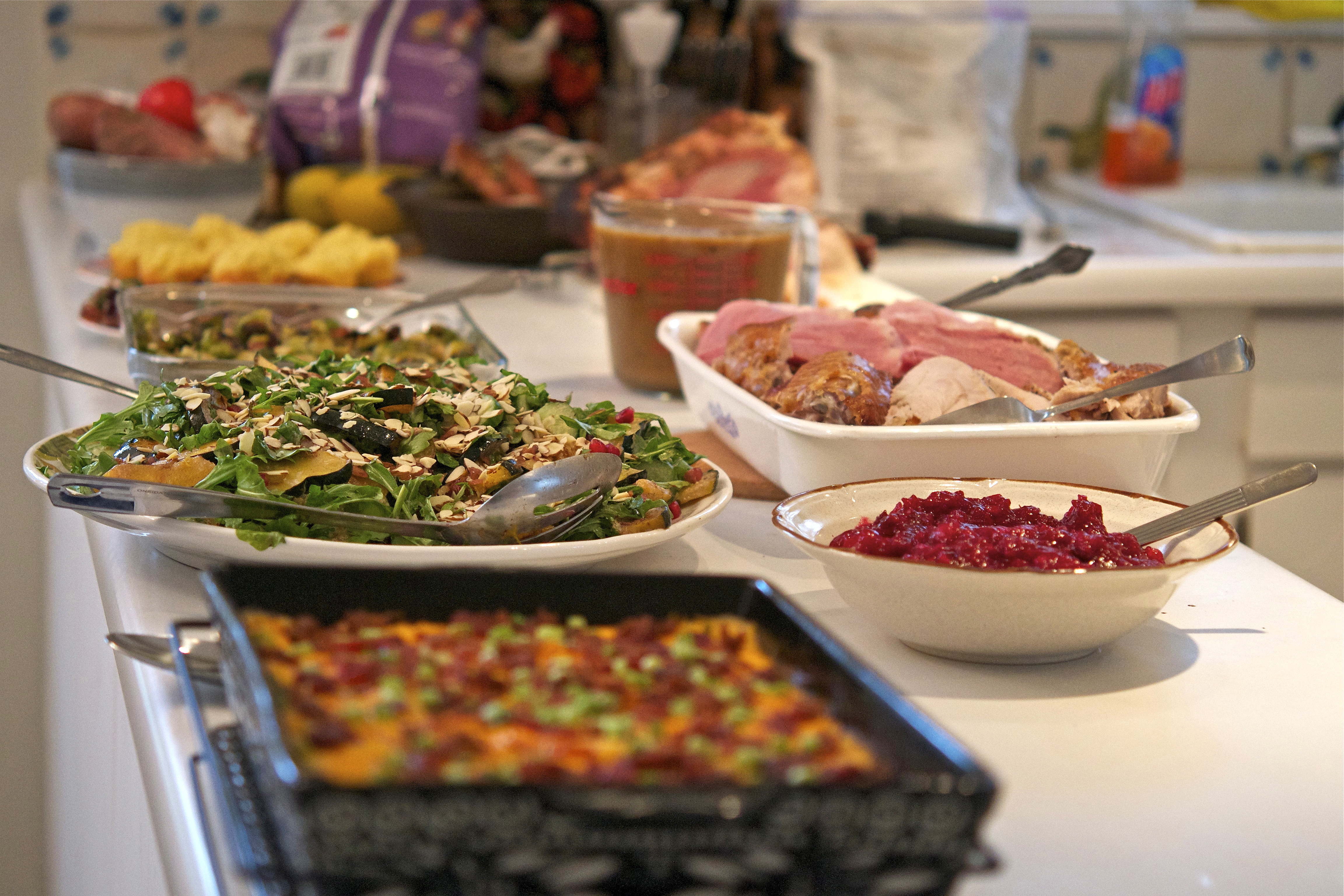
Aside from being way warmer than Boston, the trip was filled with lots of family moments and holiday cheer. While I spearheaded most of the cooking, my sister made a ton of food (two of her recipes are featured below) and the rest of the family helped out with odds and ends: peeling potatoes, lifting heavy pans, etc. When planning something for a party of 12, there is often the fear that there won’t be enough food. In my world, this translates into overcompensating and creating way more food than is actually necessary. See the below photo…
Thanksgiving 2The main meal turned out really well, and there was plenty of food to spare. Since it was such a sizable spread, I decided to highlight a few of my personal favorites for this post:

Sweet Potato Rounds with Pecans and Goat Cheese
Cool, Creamy, Cheesy Corn Dip
– Roasted Turkey, prepared with a Citrus and Peppercorn Dry Brine
Baked Ham with Brown Sugar-Whiskey Glaze
Arugula Salad with Roasted Squash and Pomegranate Ginger Vinaigrette
Pumpkin Pie with Buttermilk Crust and Candied Pecans

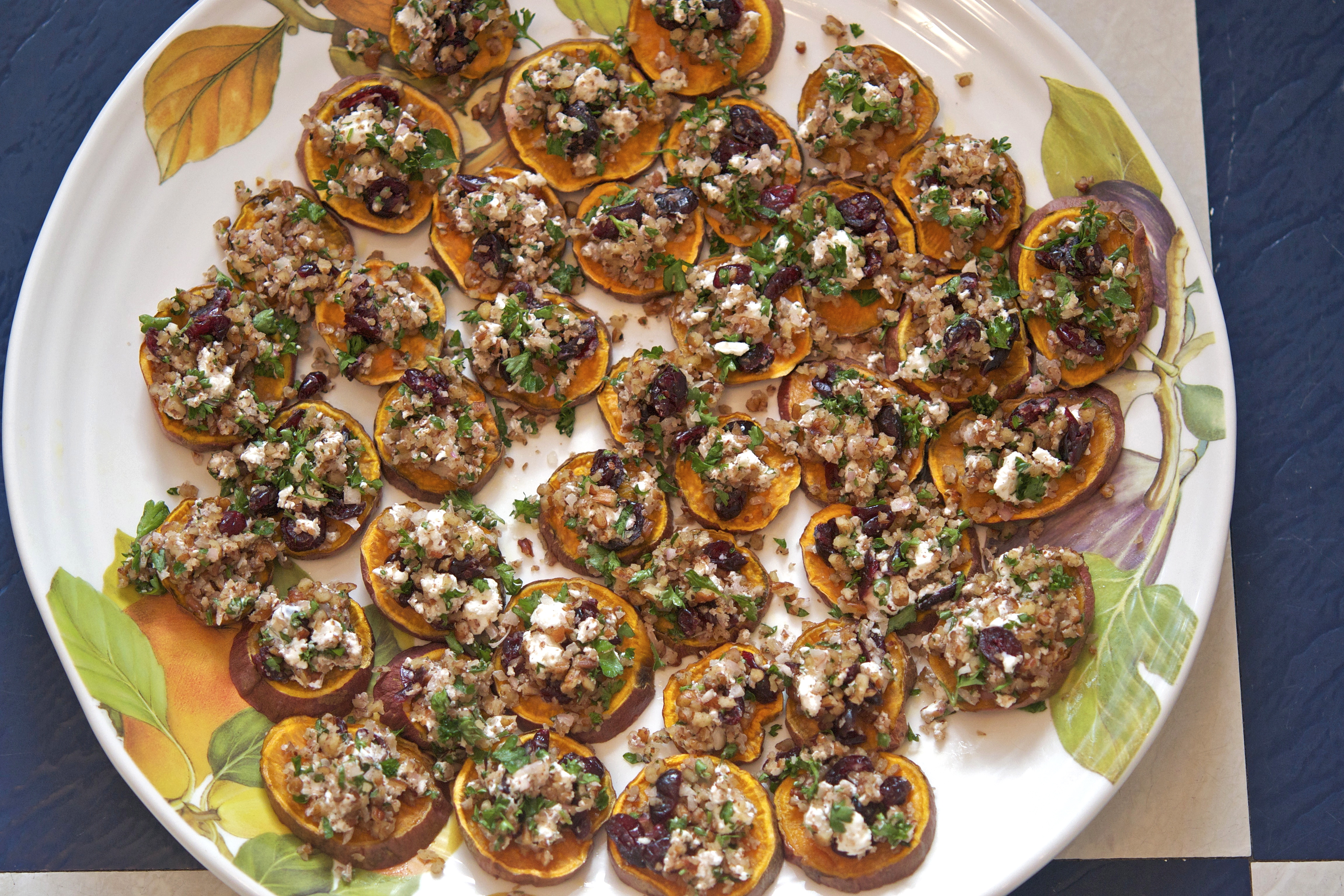
Sweet Potato RoundsTo start, we had several great appetizers to keep people occupied while the turkey and ham were finishing up. The above appetizer was courtesy of Smitten Kitchen (one of my favorite blogs) – it is healthy, picturesque, and delicious. Tom made the topping, and changed the recipe by doubling the pecans and parsley and omitting the celery altogether. It was a hit. Those who know me know that I’m a bit of a sweet potato addict…so I polished off quite a few of these in between my cooking bouts.
Cheese Dip 2The next starter was my sister’s contribution, a cheesy corn dip. It’s one of those appetizers that you have no idea what it’s going to taste like until you try it. Sarah insisted on making it, and I’m happy she did – that bowl of tortilla chips had to be refilled at least twice, which is why this is a recipe worth sharing. It will probably be something I add to my hosting repertoire, and would be perfect for a Superbowl spread.
Citrus Turkey Brine 1Now let’s talk about the turkey: this is the second time I’ve prepared the bird using a dry brine, and I’ve come to believe that it yields a better result than a wet brine. While both produce a tender meat, a dry brine guarantees a deeper flavor, and the meat’s texture will be juicy instead of “watery”. Every family has a different method, and it really comes down to preferred tastes and comfort with preparation. It’s a tough bird to cook, especially considering most people get one shot at making it per year.
Citrus Turkey 2Thankfully my family is an easy crowd, and they all loved it. The preparation and roasting was fairly similar to what I’ve done in past years (Check out my first, second, and third turkey attempts), and I can always rely on my trusty All-Clad roaster. There are two things things I did differently that are worth mentioning: first, I tented the bird for most of the cooking process, and second I flipped it with the backbone facing up so the juices would keep the breast meat from drying out. It’s not as elegant a presentation as the traditional, but it did the trick!
Honey-Baked HamBack to the overcompensation bit, we decided to throw in a ham for some extra protein – it was my sister’s recipe, and she’s got this down to a science. Ham, similar to turkey, is a meat that’s typically served only during the holidays. Granted, people enjoy ham sandwiches or breakfast slices any time…but an entire ham is a rare thing to see. The glaze was fantastic, and kept the meat perfectly moist. Overall, it’s a wonderful complement to a Thanksgiving spread (and made for amazing leftovers!)
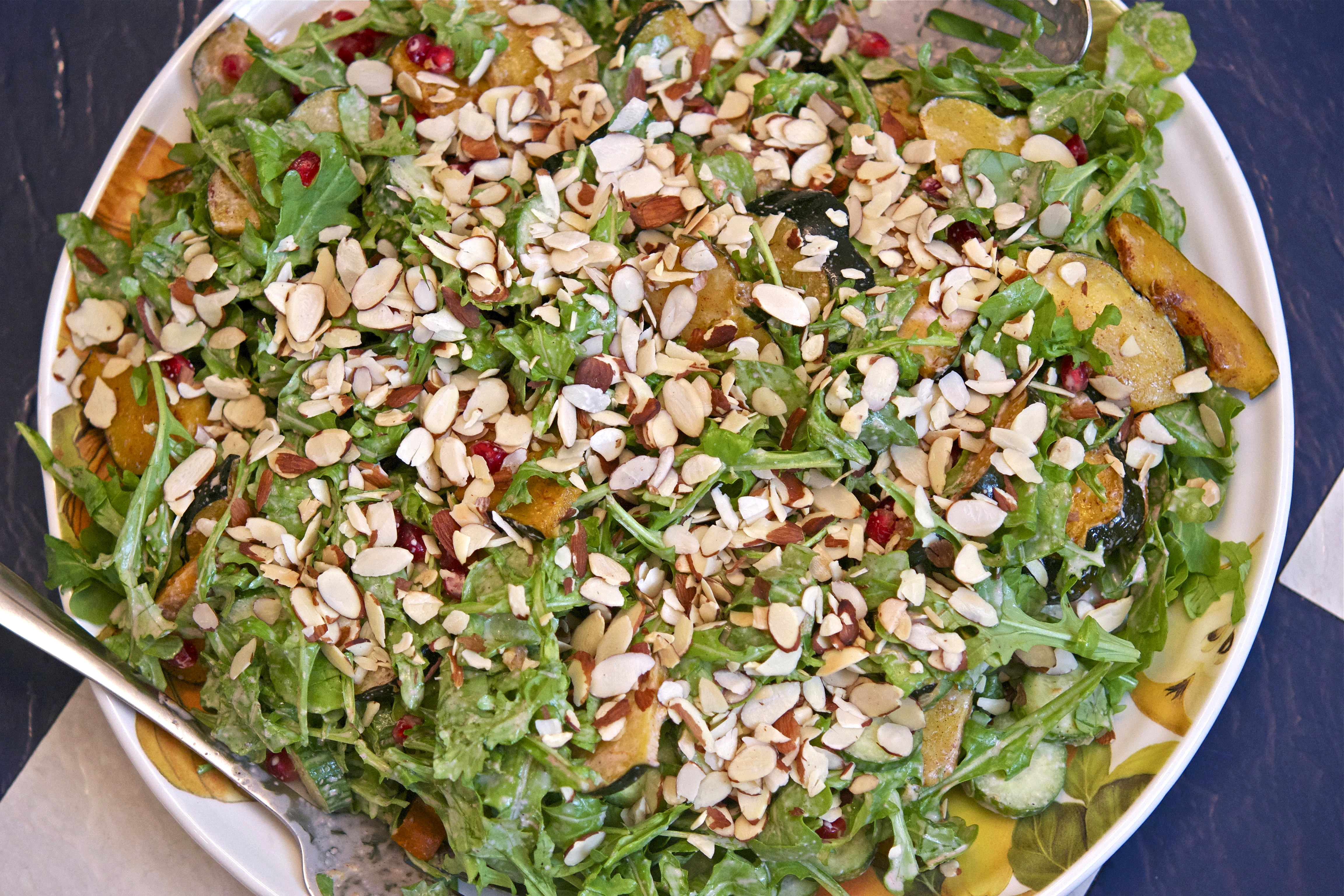
Pomegranate SaladThe salad was the “wild card” on the menu. The original recipe has you whisk together all of the ingredients for the vinaigrette…but I decided to emulsify the dressing with a hand blender instead. The result looked somewhat like Pepto Bismol but the flavor profile was (of course) far from it: it was fruity and bright with a bit of an edge (thanks to the ginger). Tossed with the roasted squash, peppery arugula, sparkling pomegranates, crunchy almonds, this salad and vinaigrette make for one hell of a side dish.
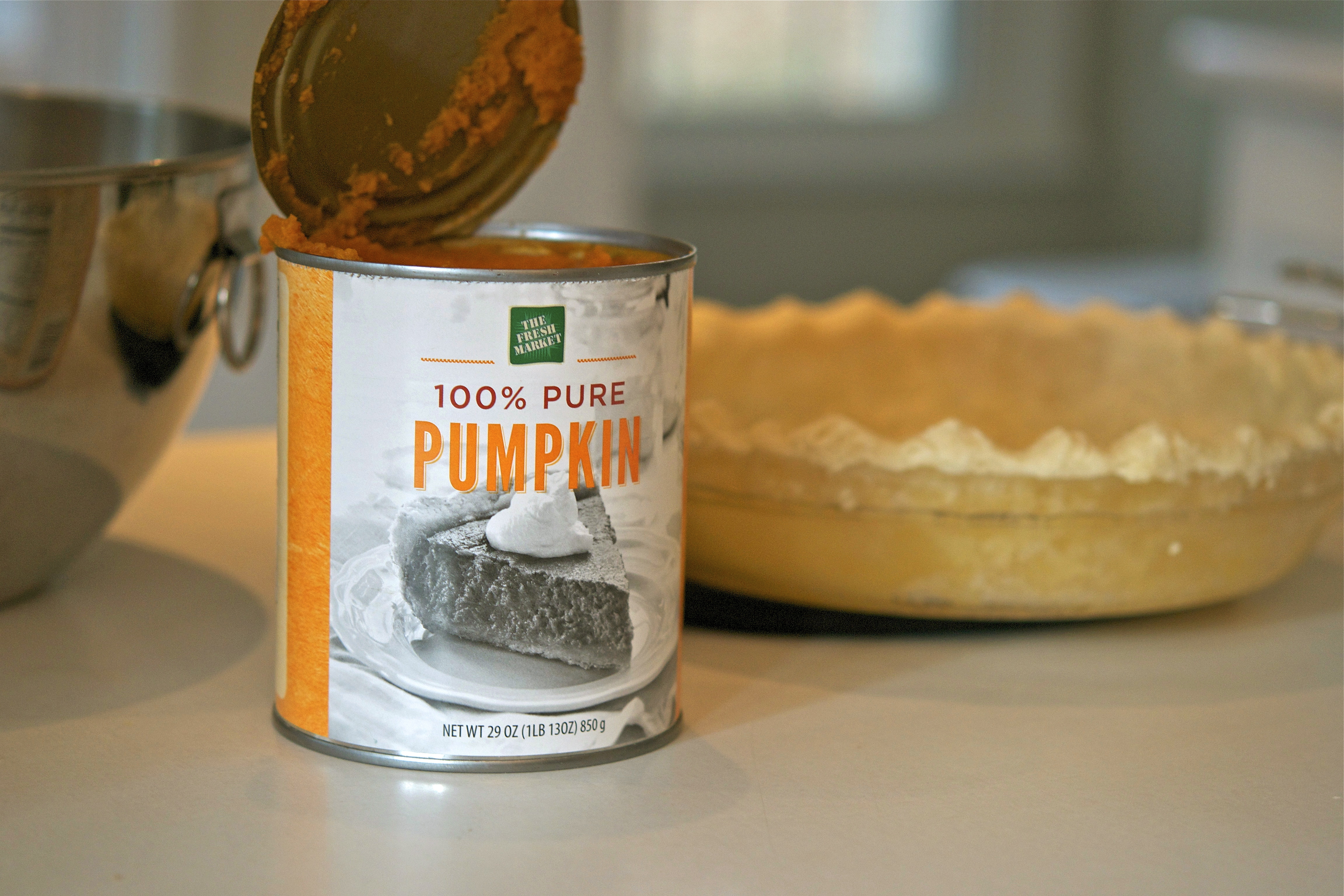
Pumpkin Pie 1The pie was a bit of an experiment. While the filling was fairly straightforward, the crust itself used buttermilk. The result was a flaky crust with a slight tang, but also a profound buttery taste. The filling was creamy and filled with spices. In an effort to add a decorative flair, I made some candied pecans for garnish – I couldn’t help but notice my relatives picking the pecans off of the uneaten pie…which means it was worth the extra effort. Overall, it was a truly memorable Thanksgiving, and I feel both thankful and fortunate to have such an awesome family.
Pumpkin Pie 2Given my love for cooking (and fear of having too little to eat!) every Thanksgiving feels like a banquet – the food is plentiful, the wine is flowing, and the laughter is endless. In describing the meal to my coworker Emilio, he suggested I turn to the 15th century for my musical inspiration, and to look at the Feast of Pheasant: a banquet hosted by Duke Philip the Good of Burgundy in 1454, renowned for its excessive luxury. It’s sole purpose was both to celebrate and officiate an anticipated crusade against the Turks to regain sovereignty of Constantinople.
1280px-'Le_voeu_du_faisan'_Rijksmuseum_SK-A-4212The extravagant feast included a tradition practiced across Medieval France called the voeux du faisan, where nobles would take oaths upon a living bird – in this case, it was a pheasant. Aside from these formalities, the guests was lavished with food, wine, minstrels, theater, and live music…Guillaume Dufay, a highly renowned composer of the French Renaissance, was one of many invited to write original works for the celebration. While chronicles of the actual musical program are vague, there are three works commonly believed to have been included: Lamentatio sanctae matris ecclesiae Constantinopolitanae (“Lament of the Holy Mother Church of Constantinople“), Alma redemptoris Mater (“Loving Mother of the Redeemer”), and Je ne vis oncques la pareille (“I Have Never Seen the Equal”)…though some ascribe this last work to Dufay’s contemporary, Gilles Binchois. While discrepancies are present, for the sake of this post I will stand by the assertion that these are all connected to Dufay. To give a sense of what the music was like for such a feast, I thought I would showcase all three of the pieces. Enjoy, and Happy Holidays!!!


Sources Cited:
“Feast of the Pheasant,” Wikipedia.org
Douglass, David. “The Newberry Consort’s performance of ‘The Feast of the Oath of the Pheasant'”, The Newberry. February 2, 2014

South of the Orient: Part VII

Fish Molee 2Before I met Tom, I was fairly certain that Indian food was one cuisine that could never be genuinely replicated at home. I have since enjoyed countless dinners of remarkable Indian dishes packed with flavor, hailing from a variety of regions. This compelled me to launch the South of the Orient series on my blog, with the hope of sharing the diverse and colorful recipes we have been enjoying. One that has become a standard is Fish Molee: a dish that is as unique as it is delicious, and is quite simple to make.
192152_1895014824581_2415938_oThe above photo comes from Tom’s travels to Southwest India – it captures a unique contraption of fishing nets located along the shore of Kerala. It is an ancient mechanism from which square nets are suspended over the water by large wooden beams, balanced and controlled by stone counterweights on the shore side. It can take up to 6 fishermen to operate a single net. These nets are just one example of the regional beauty found in Kerala.
Fish Molee 3Tom’s introduction to Fish Molee was through Kerala, and he shares more about his experience below:

“After two months frozen in the Himalayas, I headed far south to a balmy cosmopolitan port town called Fort Cochin, in Kerala. The aromas from neighboring spice and tea plantations drift into Kochi when the countervailing coastal breeze lets up at sunset, and when they do they mingle with a uniquely pungent combination of curry leaves and coconut oil. To this day that smell is my South Indian madeleine. Diji, an Indian homemaker with a kitchen full of mosquitos and an incredible talent as a chef, took the time to show me the basics for making her state’s flagship recipe, the Fish Molee.”

Fish Molee 4My favorite part of this dish is the cashews – they provide a unique texture to the dish, lending a hearty crunch with every bite. This dish also calls for curry leaves – a popular “curry” seasoning – which are similar to bay leaves in that they are purely intended to add flavor (in other words, don’t eat them). The consistency of the sauce comes from the coconut milk, ground almonds, and onion puree. Overall it is packed with nutrients and flavor, and has become the go-to Indian curry for both of us. Click HERE to see the recipe for this unique dish!
Fish Molee 5The textures and flavors of this recipe make it wholly irresistible, all of which are heightened by it respected history. Colorful and traditional are a rare yet beautiful combination, which led me to choose Igor Stravinsky’s Pulcinella Suite as the SAND_Maurice_Masques_et_bouffons_12musical pairing. This piece is neoclassicism at its finest. The work was commissioned by Sergei Diaghilev, who was the founder of the Ballet Russes and one of the primary influences behind Stravinsky’s ballet repertoire. Diaghilev wanted a ballet inspired by commedia dell’arte, and Stravinsky was naturally tasked with creating the musical score…while the costumes and set were designed by none other than Pablo Picasso! The ballet is based around Pulcinella (pictured right), who was a classic character of the commedia dell’arte genre. Stravinsky revised the original music (believed to have been written by 18th-century composer Giovanni Pergolesi) by incorporating contemporary harmonies and rhythms and by scoring it for a sizable chamber orchestra. He says the following of the piece:

“Pulcinella was my discovery of the past, the epiphany through which the whole of my late work became possible. It was a backward look, of course—the first of many love affairs in that direction—but it was a look in the mirror, too.”

The ballet was premiered for a Parisian audience in May 1920. 2 years later, Stravinsky abridged the ballet into a “Suite” for chamber orchestra, which uses 11 of the original 18 movements – the work has since become a standard of the orchestral canon. Like the above dish, Pulcinella is by far one of my favorites – the colors and characters are truly unparalleled, and I hope you enjoy it!

Sources Cited:
“Chinese fishing nets,” Wikipedia.com
“Pulcinella (ballet),” Wikipedia.com

A Flavorful Journey

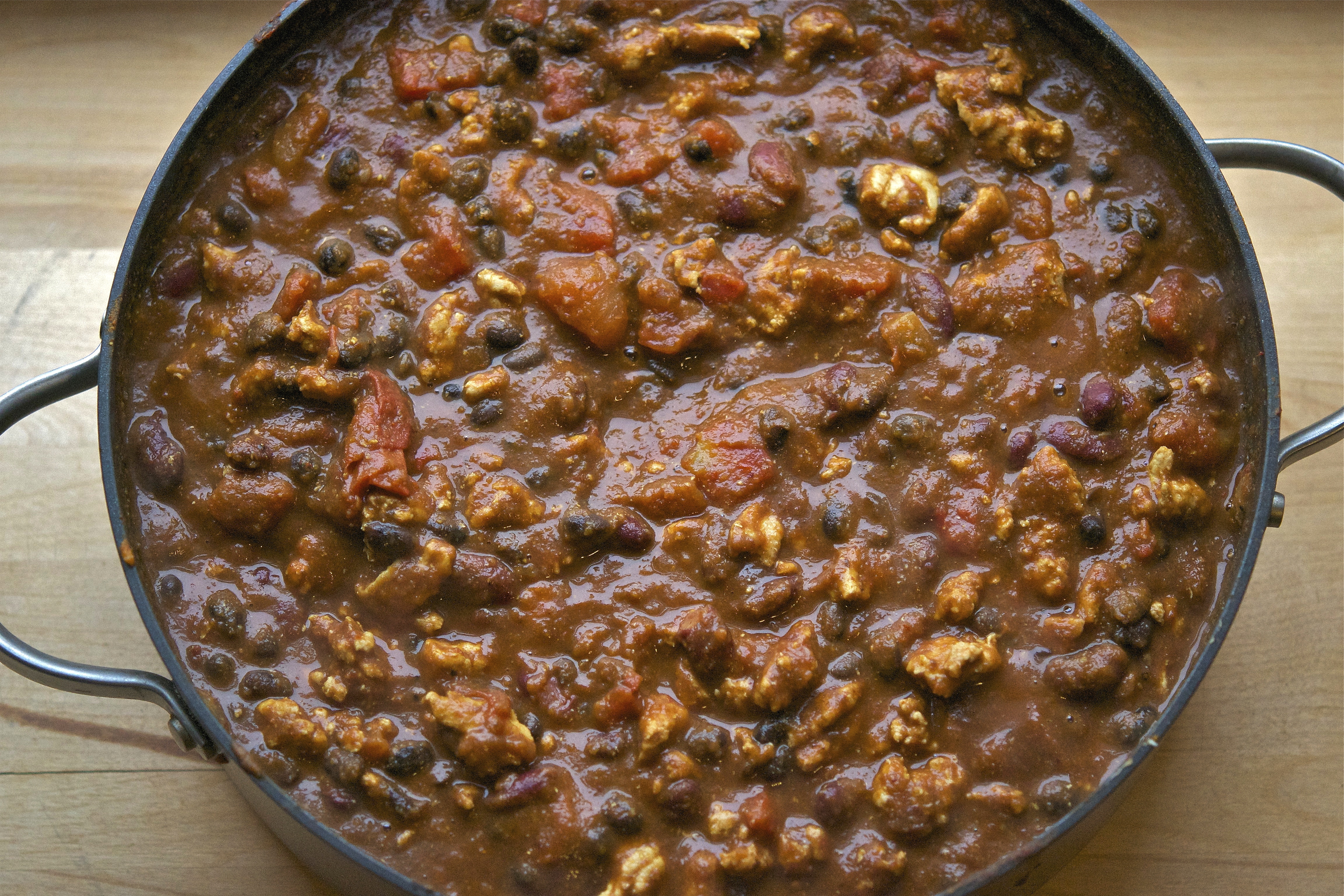
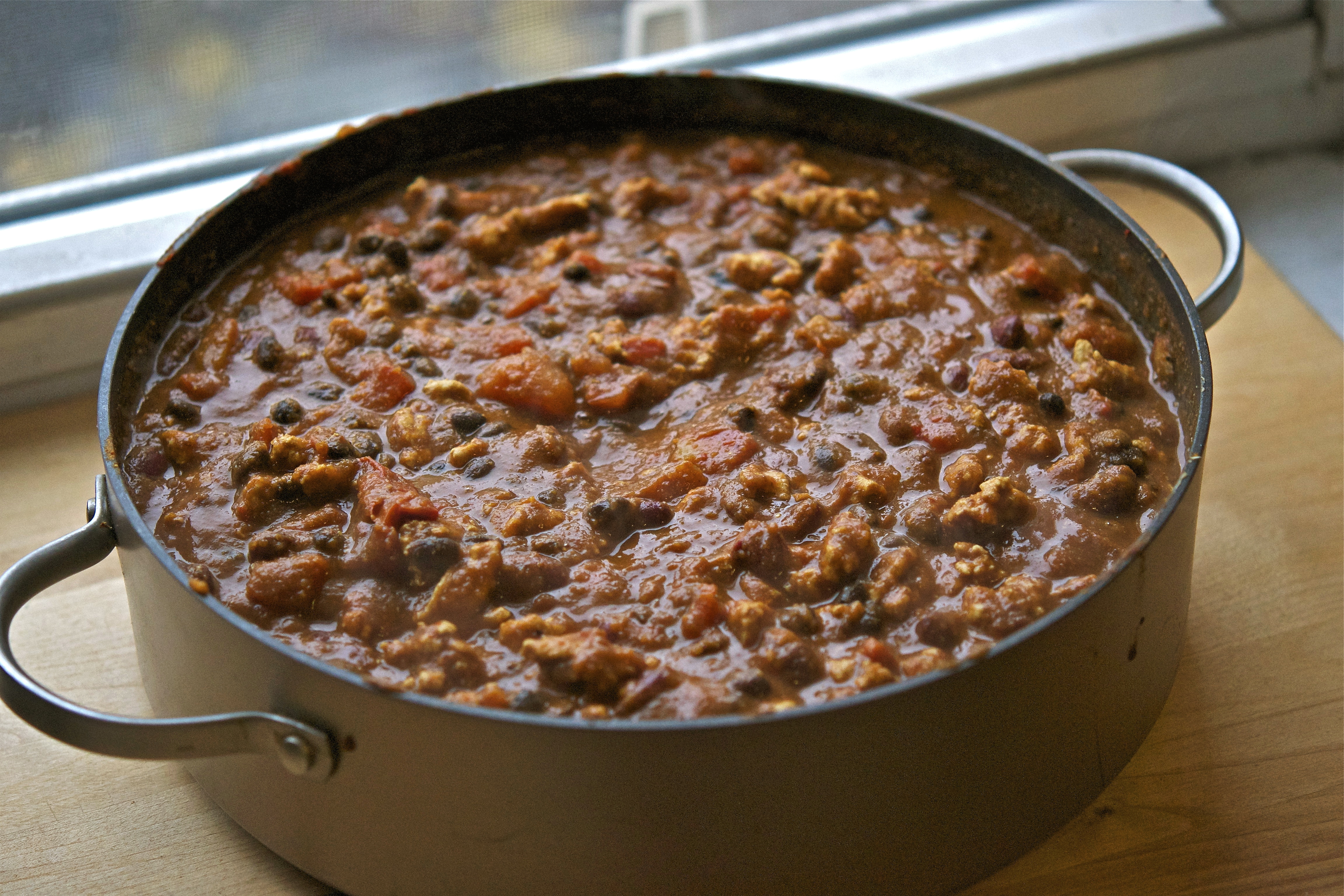
Turkey Chili 2I’ve been loving this unseasonably warm weather, but the temperatures are finally starting to dip…meaning thick snow boots, over-active radiators, and slushy snow puddles are just around the corner for those of us in the North. It also means that my slow cooker, having gathered dust all summer, is finally being put to use for making a variety of soups and stews! I quite like winter, mostly because I am given the opportunity to create inventive meals that are both hearty and filling. In an effort to give the colder season its due, Tom and I made an amazing Chipotle Pumpkin and Turkey Chili.
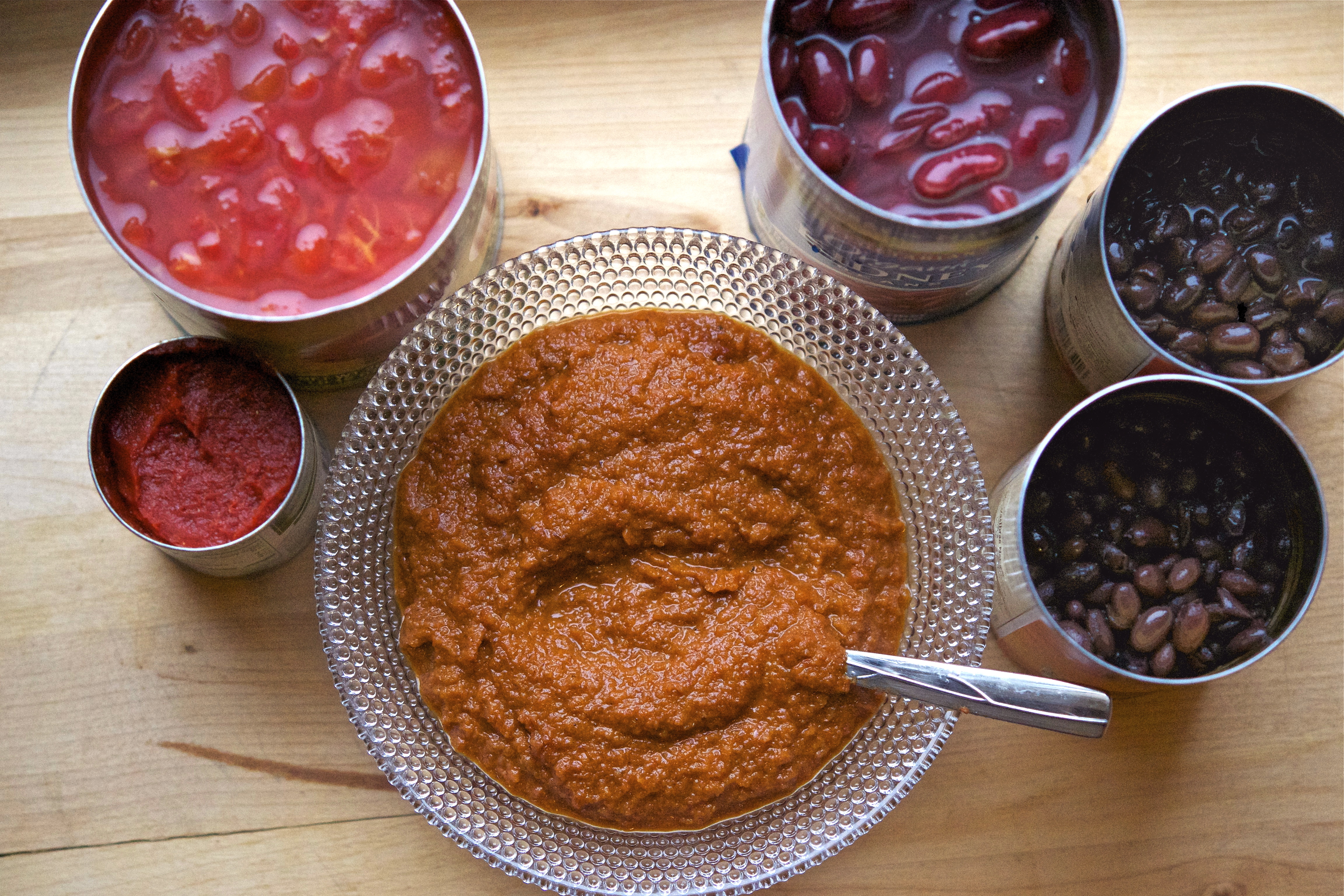
Turkey Chili 3Spice and heat is what makes a great chili – you can use any number of ingredients, so long as the flavorful depth and fiery kick are the defining characteristics. In our case, Tom whipped up a “chili paste” using onions, chilies in adobo, and garlic. The result was a thick base from which we built our chili. Ground turkey, black beans, kidney beans, tomato paste and diced tomatoes were the standards. The secret ingredient was puréed pumpkin, which was more of a “let’s see what happens” add-in. The pumpkin ended up being a game-changer, tying together the chili’s various flavors and overall texture.
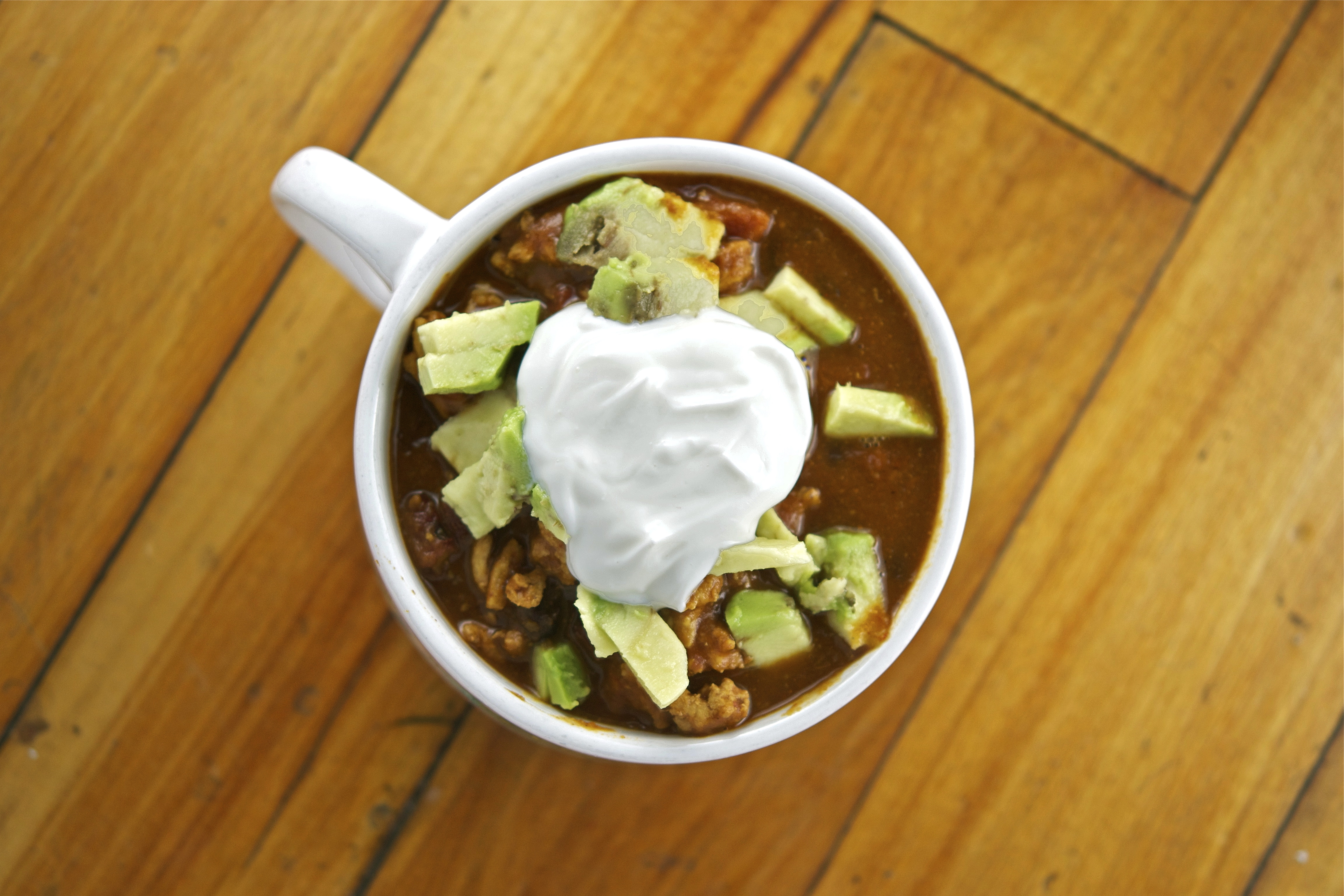
Turkey Chili 1We let the chili cook for a total of 5 hours in a slow cooker, and only had to add a few splashes of stock throughout the process. The consistency was thick, which can be credited to the pumpkin and chili paste, and the level of spice was absolutely perfect. We topped each of our bowls with chopped avocado and a dollop of Greek yogurt. You can sub out any number of ingredients (beef for the turkey, or puréed sweet potatoes for the pumpkin), so feel free to experiment! It is honestly the best (healthy) chili I’ve ever had – click HERE to see the recipe for this cold-weather staple.
Turkey Chili 4Chili is one of those dishes that is redolent of the warmth and comfort to which we are drawn on a cold night. It’s the “goal”, the end of the journey as you tug your gloves and hat tight against the wintery winds. This recipe can certainly be likened to such a journey, and yet the objective is far from being your “standard fare”. I was thus inspired to choose a unique and ambitious work for my musical pairing, and came across Barber’s Concerto for Cello and Orchestra, Op. 22. Though quite challenging for the soloist, the piece is remarkably evocative and has become an admired standard of cello repertoire. Cellist Alisa Weilerstein says of the piece”

“[Barber] really stretches the technical limits of the cello, which is a great challenge for the performer, but it’s only to serve the most musical ends. It’s a really fantastic piece…not a dull moment.”

The concerto seamlessly combines elements of the Romantic era with those of the 20th century, and its overall narrative paints a colorful journey: from a militant introduction (the “Allegro moderato”) into an impassioned “Andante sostenuto”, closing with a frantic yet ultimately triumphant “Molto allegro e appassionato.” The piece was commissioned by Serge Koussevitsky, former music director of the Boston Symphony Orchestra, for cellist Raya Garbousova. The below recording features Garbousova and the Music Aeterna Orchestra, conducted by Frederic Waldman. Enjoy!

Sources Cited:
Schiavo, Paul. “Program Notes – SAMUEL BARBER, Cello Concerto, Op. 22”. Seattle Symphony, 2007.

Rise and Shine: Part IV

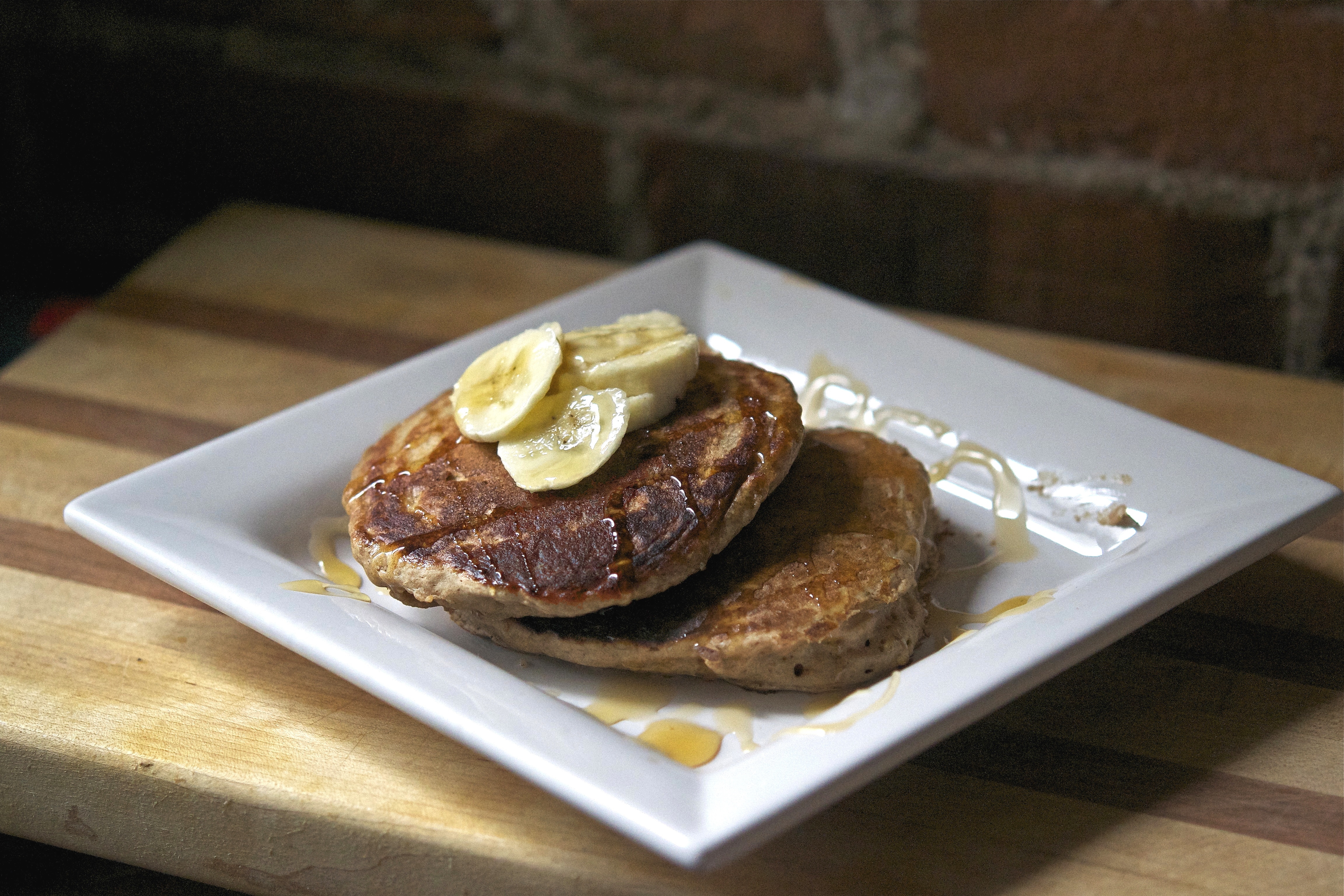
Banana Pancakes 1I’ve always been a morning person, which explains my love affair with breakfast. The alarm clock is my “hallelujah” chorus as I dash into the kitchen and welcome the day with a bowl of delicious food. I love breakfast so much that I would eat it for every meal. It is (as they say) they “most important meal” since it fuels your entire day. Tom and I have started a mini tradition of cooking unique breakfasts for one another, featured as the “Rise and Shine” series on this blog. A few weeks ago, we were huddled in his apartment during a rainstorm and I had a serious craving for pancakes…and not just any pancakes: banana pancakes. So we braved the crappy weather, grabbed ingredients from a local market, and went to work on these Whole Wheat Banana Pancakes with Honey.
Banana PancakesPancakes are so beloved and simple that their equivalent can be found in practically any culture: injera in Ethiopia, blintzes in Russia, bánh xèo in Vietnam, crêpes in France…at its simplest, a pancake is a flat, round cake cooked on a griddle or frying pan. It is typically made from a starch-based batter that is either leavened or unleavened. Pancakes as we know them are typically leavened (using baking soda and/or powder), but most cultures prefer unleavened. In an effort to make our pancakes “healthy”, we used whole wheat flour and all-organic ingredients.
honeyThese pancakes have a perfect balance of sweetness and texture. They’re moist and fluffy, thanks to the addition of puréed bananas, but not as dense as banana bread. The only other sweetening agent is one tablespoon of honey. I love honey, and will often use it in lieu of maple syrup by drizzling it over pancakes or French toast. These banana pancakes were a hit, and both Tom and I had to go for seconds. They will definitely become a go-to treat for rainy days. Click HERE to add this dish to your morning routine!
Banana Pancakes 2Pancakes are a playful dish, and can brighten practically any day (especially the rainy ones). This inspired my musical pairing of Schubert’s Impromptu Op. 90 No. 4. An impromptu is defined as something that is “done without being planned, organized, or rehearsed.” This piece isn’t necessarily spontaneous, but the playful energy and sudden shifts are perhaps more in line with the “unplanned” feeling. It’s overall merriment is very much akin to a childish energy, which can certainly be compared to an impromptu (and pancakes!). The piece opens with a series of cascading progressions, followed by gentle and grounded chords – the juxtaposition of playful with calm sets the opening tone of joyfulness. The middle section suddenly descends into a place of deep brooding and apprehension, as the music unfolds in a minor setting. Both the melody and harmony are immersed into a restless dialogue of self doubt – the pall is suddenly lifted as the opening material resumes and brightens the mood. The pieces end as it began, with a joyful air and light heart. The below recording is with pianist Krystian Zimerman – enjoy!

Sources Cited:
“Pancake,” Wikipedia.com
“Impromptus (Schubert),” Wikipedia.com

A Simple Beauty

Mediterranean Salmon 4“Make everything as simple as possible, but not simpler.” What I love most about this quote (Einstein) is it encourages the belief that beauty can be born from simplicity. We often pressure ourselves to go to extremes to write the perfect narrative, create a superb presentation, or cook an amazing meal. If there is one thing that life has taught me, it’s the joy you get from achieving something wonderful without stress or hardship. Cooking is the perfect example – we often forget that food is food, and mother nature knows what she’s doing when it comes to flavoring natural ingredients. So you can imagine how I excited I was to share this Mediterranean Baked Salmon: it is the definition of simple, but is far from being “simple” in taste.
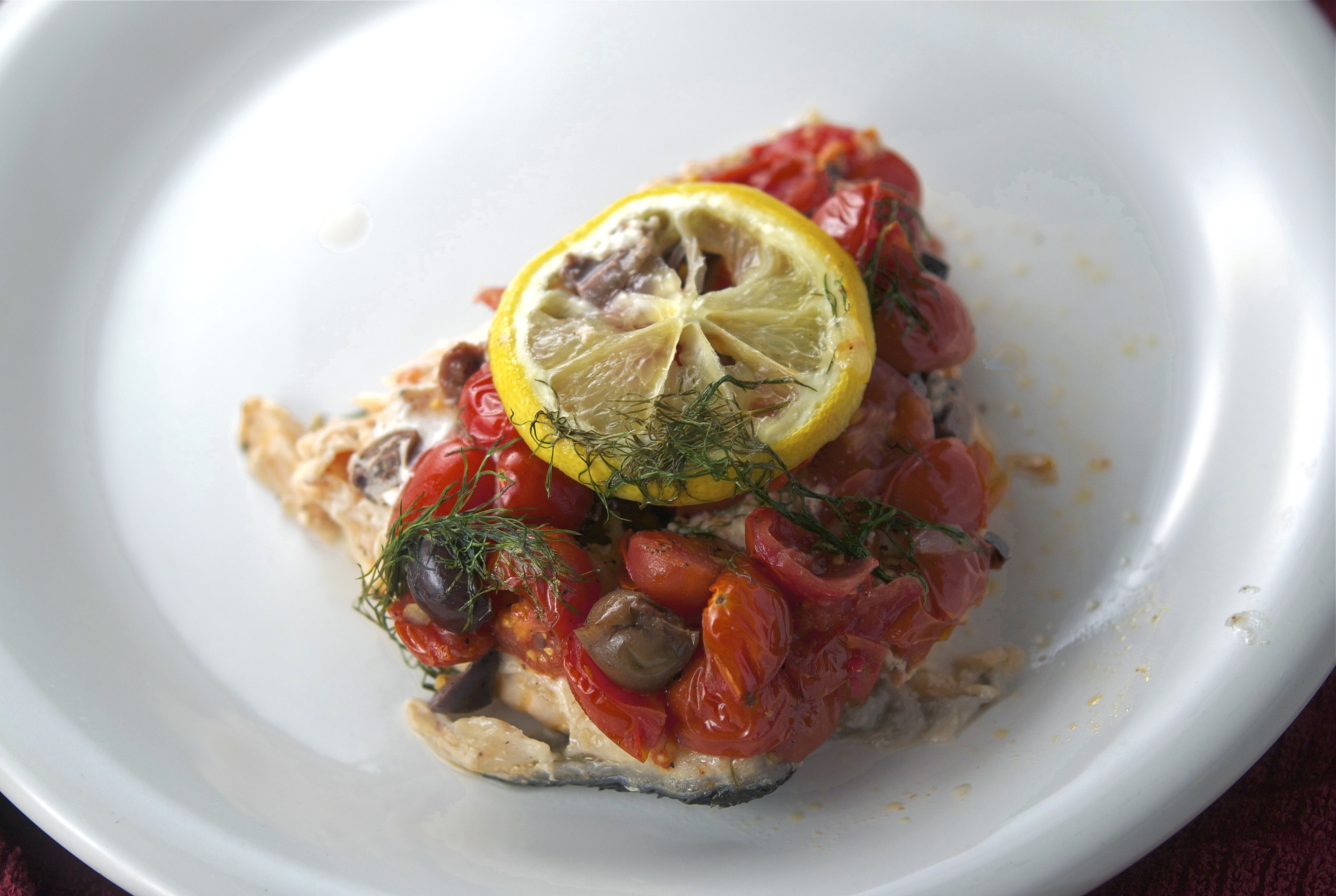
Mediterranean Salmon 1This is one of my favorite methods for preparing fish – the culinary term is en papillote, but it’s basically a foil or parchment “pocket” into which you can pack any number of vegetables or aromatics. It’s a popular method for cooking fish since the pocket locks in moisture along with all of those great flavors. As a result, the process is more akin to steaming than baking. I wanted a dish with Mediterranean flair, and so I included kalamata olives, tomatoes, fresh herbs, and lemon with the salmon.
Mediterranean Salmon 2The result was a to-die-for combination of flavors, and yet it came together in less than 30 minutes! Right towards the end, I opened the foil packet to allow some of the liquids to cook down. This also gave the toppings a crisper finish, while still maintaining the beautiful texture of the overall dish. You can cook individual packets for each guest, but we ended up cooking the entire portion of salmon in a single pan. It was fantastic, and is the perfect recipe for a weekday meal or fancier occasion – click HERE to see the recipe!
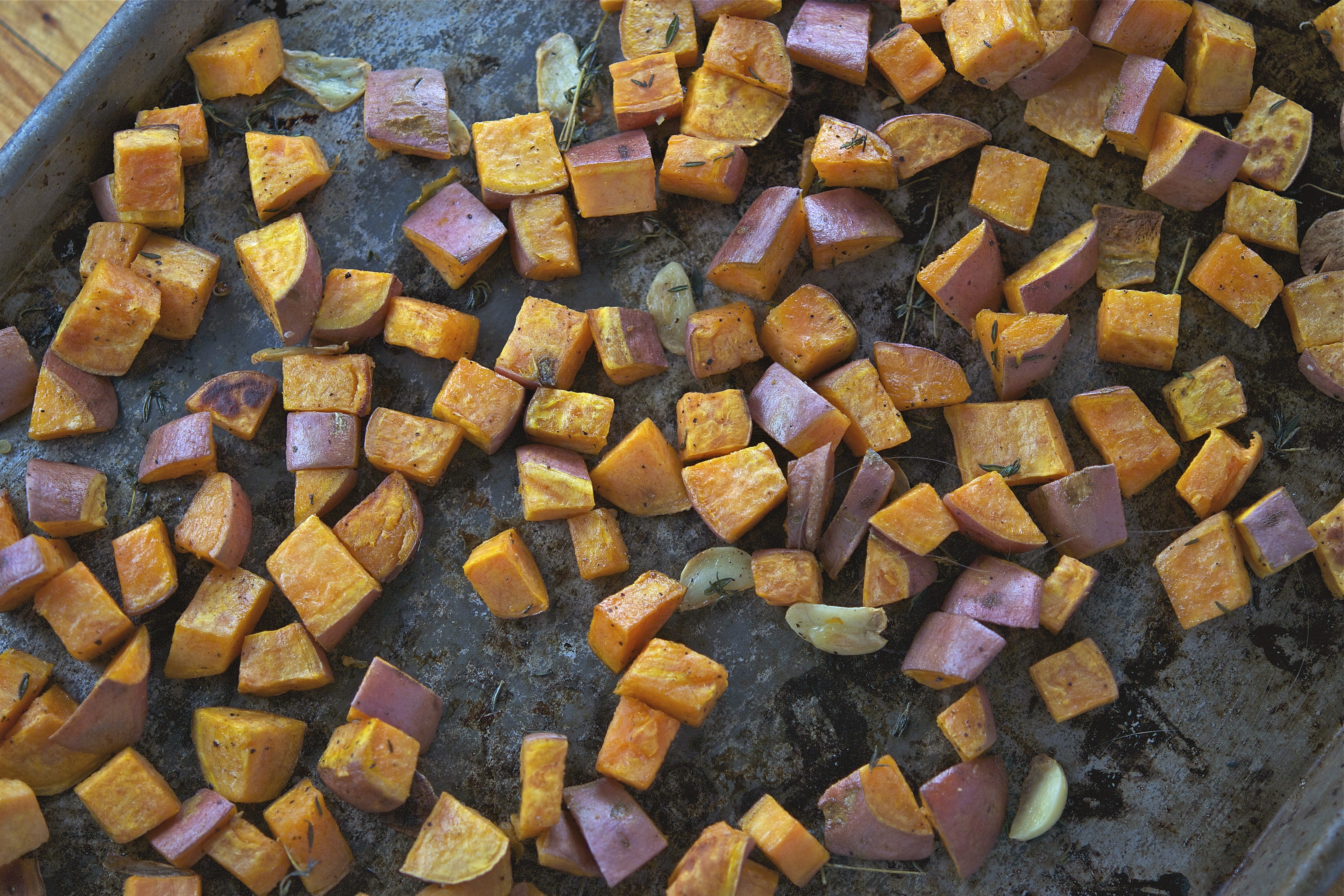
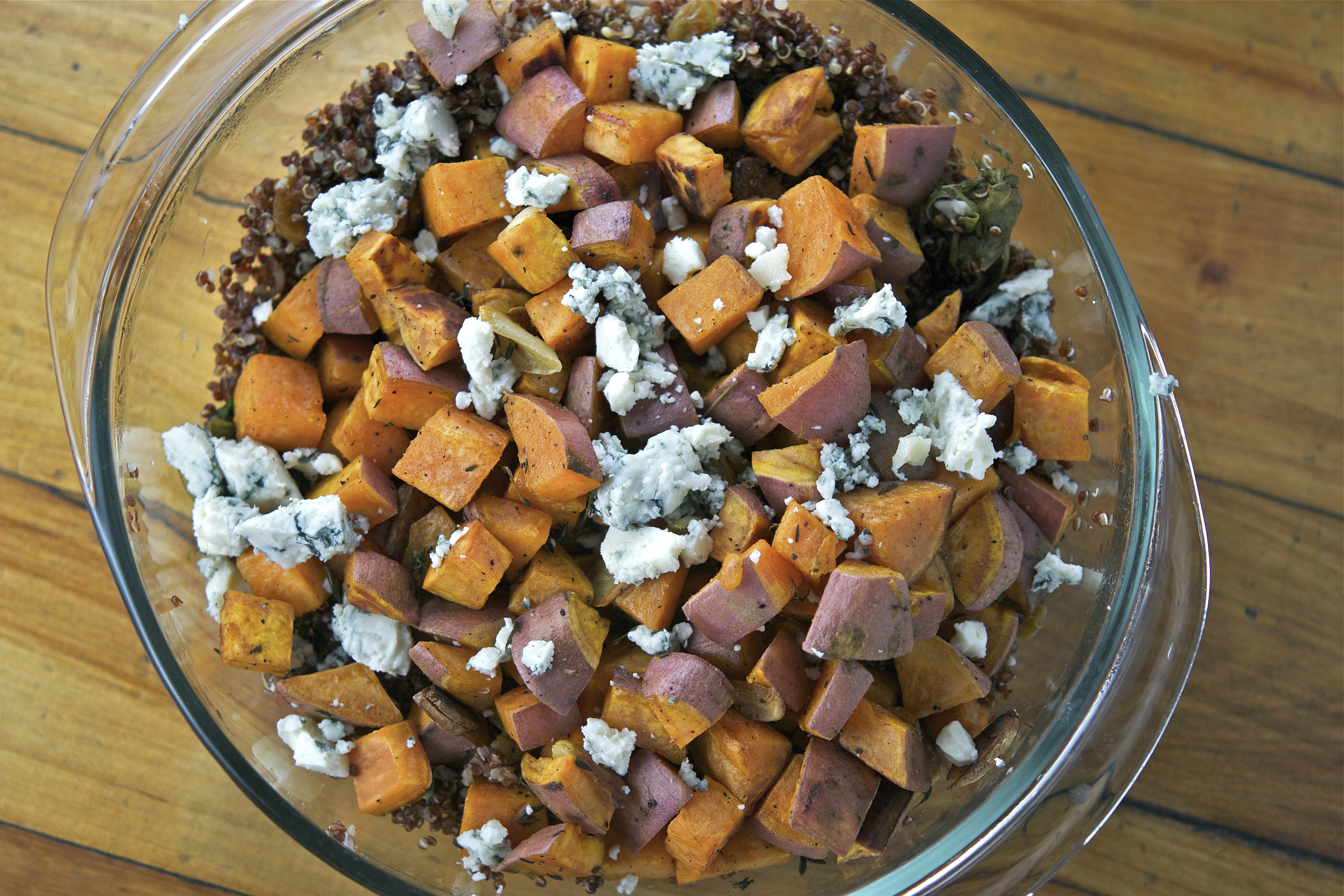
Sweet Potato Quinoa 2As a side dish, I roasted some sweet potatoes with thyme and garlic, and then tossed them with quinoa, arugula and blue cheese. Tom has called me out on this…I think I might have a minor addiction to sweet potatoes. He’ll ask me about a vegetable or carb, and I always say sweet potatoes. I know they don’t qualify as a vegetable…but why not?? They are orange and versatile and highly addictive and OH MY GOD you see what I mean?? Anyways, this was a quick side that could easily make for an amazing lunch or vegetarian main. I will be making it again, mostly for the sweet potatoes. Click HERE to see the recipe!
Sweet Potato Quinoa 1Beauty is by and large defined by its evocative and provocative outcomes – whether it be a person, an item, a piece of music…we see beauty as something that has the ability to move us. Sometimes, it is the simple things that are truly beautiful, where the weight of added embellishment would seem folly. In music, a great example of a simple masterpiece is Ravel’s Pavane pour une infante dèfunte (“Pavane for a dead princess”). Written in 1899, the solo piano work is based on the pavane: a slow traditional dance that was popular during the European Renaissance. Though the title alludes to such, the work is not an homage to any one person or “princess”, but rather “an evocation of a pavane that a little princess might, in former times, have danced at the Spanish court” (Ravel’s own description). Its beauty lies in the juxtaposition of pure innocence and emotional depth. It is quite unlike the Ravel many of us know and love, as confirmed by concert critic Samuel Langford

“The piece is hardly representative of the composer, with whom elusive harmonies woven in rapid figuration are the usual medium of expression. In the Pavane we get normal, almost archaic harmonies, subdued expression, and a somewhat remote beauty of melody.”

Of course, this piece has since become ridiculously famous and overplayed. I scoured YouTube for a recording of solo piano (you can only imagine how many interpretations there are…) I finally found the below video, with Laura Mikkola. Her interpretation is one of patience, giving full attention to the delicate melody and unique coloration of each harmony.

In 1910, Ravel published an orchestrated edition of the piece – the opening melody is played by solo horn, which I believe is one of the most beautiful artistic choices in a piano-to-orchestra transcription. The piece’s gentle charm is by no means overwhelmed in the reproduction – rather, its subtle harmonies are given a richer and more vibrant coloring.

Sources Cited:
“Pavane pour une infante défunte,” Wikipedia.com

Rise and Shine: Part III

Sweet Potato Hash 4Labor Day Weekend (for me) is often equated with being in the outdoors, shopping sales, splurging on movies, and eating a great brunch. We scored on all fronts, particularly in the brunch category…though the movie splurge was a close second: Guardians of the Galaxy, Predator, and The Princess Bride (EPIC). Anyways, the brunch we made was fantastic – we often go for scrambled eggs with kale, but wanted something extra special for the holiday weekend. The result was a Spicy Chorizo & Sweet Potato Hash with Avocado that was unbelievably unhealthy delicious!
Sweet Potato Hash 1Labor Day was a holiday established in the late 19th century, having been championed by the Central Labor Union of New York and fought for by the countless supporters of the labor movement. It takes place annually on the first Monday of September, paying homage to “the creator of so much of the nation’s strength, freedom, and leadership — the American worker.” While the celebration itself has become less grandiose and parade-driven in recent years, it still serves as a reminder of the many accomplishments and victories of the American working force…and no one loves brunch more than a 9-to-5’er on Labor Day!
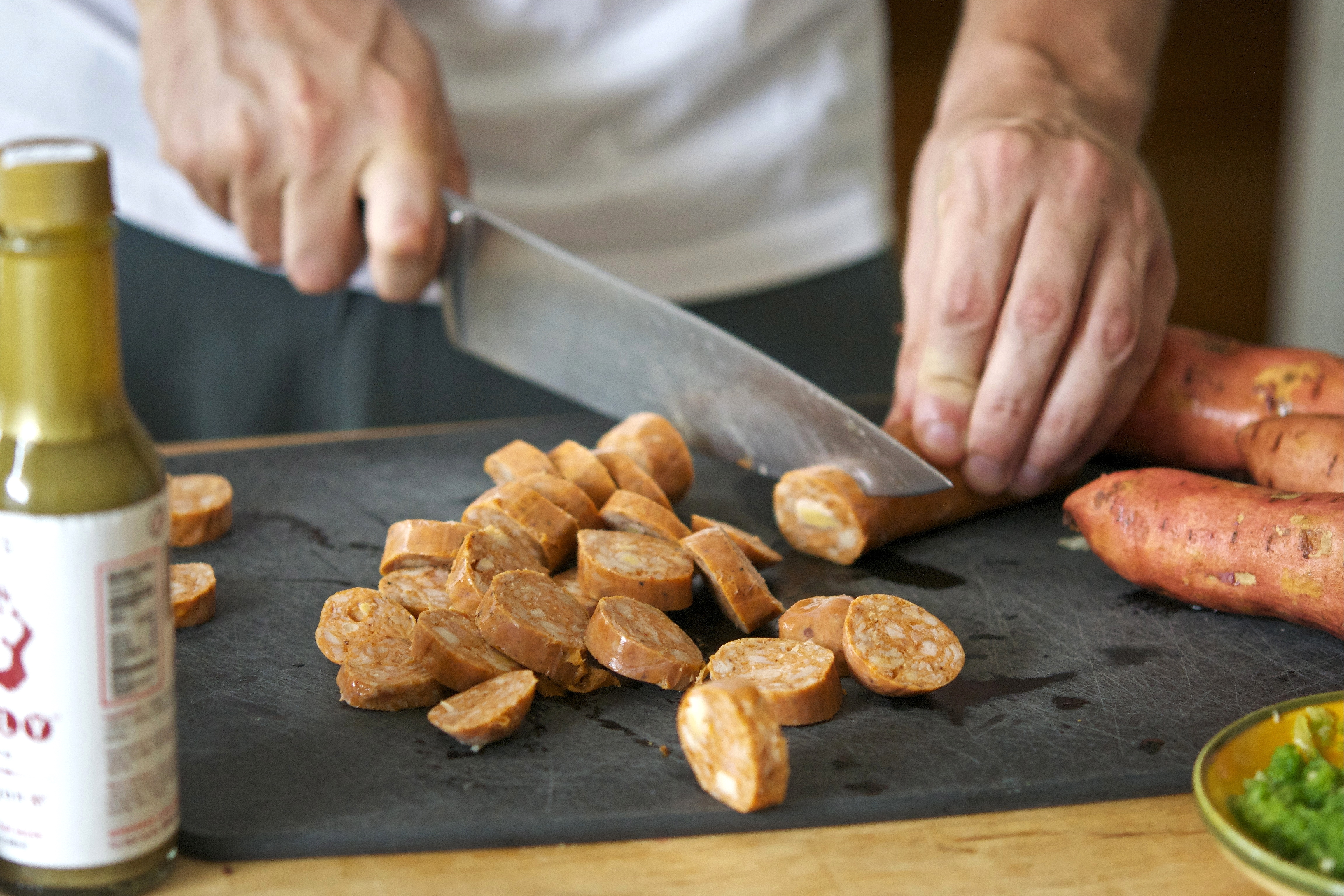
Sweet Potato Hash 5Of course, most restaurants don’t serve lunch on Mondays (assuming that everyone will be at cookouts or drinking) so we took brunch into our hands. And my what a success it was. This is Tom’s genius, taking some of my favorites (sweet potatoes and kale) combined with some of his (chorizo and eggs) to create a dish so potent that each bite elicited a groan of indulgence.One of the secrets to the flavor’s depth was thanks to my newest cooking tool, which is basically a ceramic “grater” within a small plate – the tool allows you to break down aromatics while capturing the oils and juices. It’s pretty and awesome (and was an impulse buy thanks to Labor Day sales).
Sweet Potato Hash 3Much to Tom’s chagrin, we used chorizo-flavored chicken sausage in lieu of actual chorizo – some may harken the substitute as a sacrilege, but the result was surprisingly full of flavor. The flavors all married beautifully, with the sweet potatoes adding a touch a sweetness and the kale adding fullness. We could have stuck with the healthier end of things…but then Tom stirred in some crumbled blue cheese OH MY GOD I LOVE CHEESE. The result was creamy and fantastic, and I couldn’t stop eating it. Topped off with some hot sauce and parsley, this was all-in-one win for a Labor Day brunch. Click HERE to get the recipe!
Sweet Potato Hash 2My original intention had been to select a musical piece that pays homage to the labor movement…but you can only imagine the top search results for my query “classical music and unions” (heh…) Well I imagine there may exist such a piece (suggestions are Carl_Nielsenalways welcome!) I opted for an alternative approach and chose a piece that was composed in 1894 – the year Labor Day was officially established. The findings were impressive, with Massenet’s Thaïs and Debussy’s Prélude à l’après-midi d’un faune, to say the least. However, it was Carl Nielsen’s Symphony No. 1 in G minor that caught my attention. He is generally an underrated composer, and I thought it suitable to showcase him here for the first time. Premiered in March of 1894, the 4-movement symphony lasts just over half an hour. Though the title indicates a minor setting, the work actually begins and ends in the joyful key of C Major…which is more than appropriate within the celebratory context of this post. The symphony is quite unique, given the aforementioned progressive tonality and Nielsen’s early mastery of orchestral form. Composer and Nielsen scholar Robert Simpson says the piece is “probably the most highly organized first symphony ever written by a young man of twenty-seven” (you read that correctly – Nielsen was 27). The below recording is with the San Francisco Symphony, under the direction of Herbert Blomstedt – enjoy!

Sources Cited:
“History of Labor Day,” United States Department of Labor 
“Symphony No. 1 (Nielsen),” Wikipedia.com
PHOTO of “Carl Nielsen” Wikipedia.com