Giving Thanks for Family

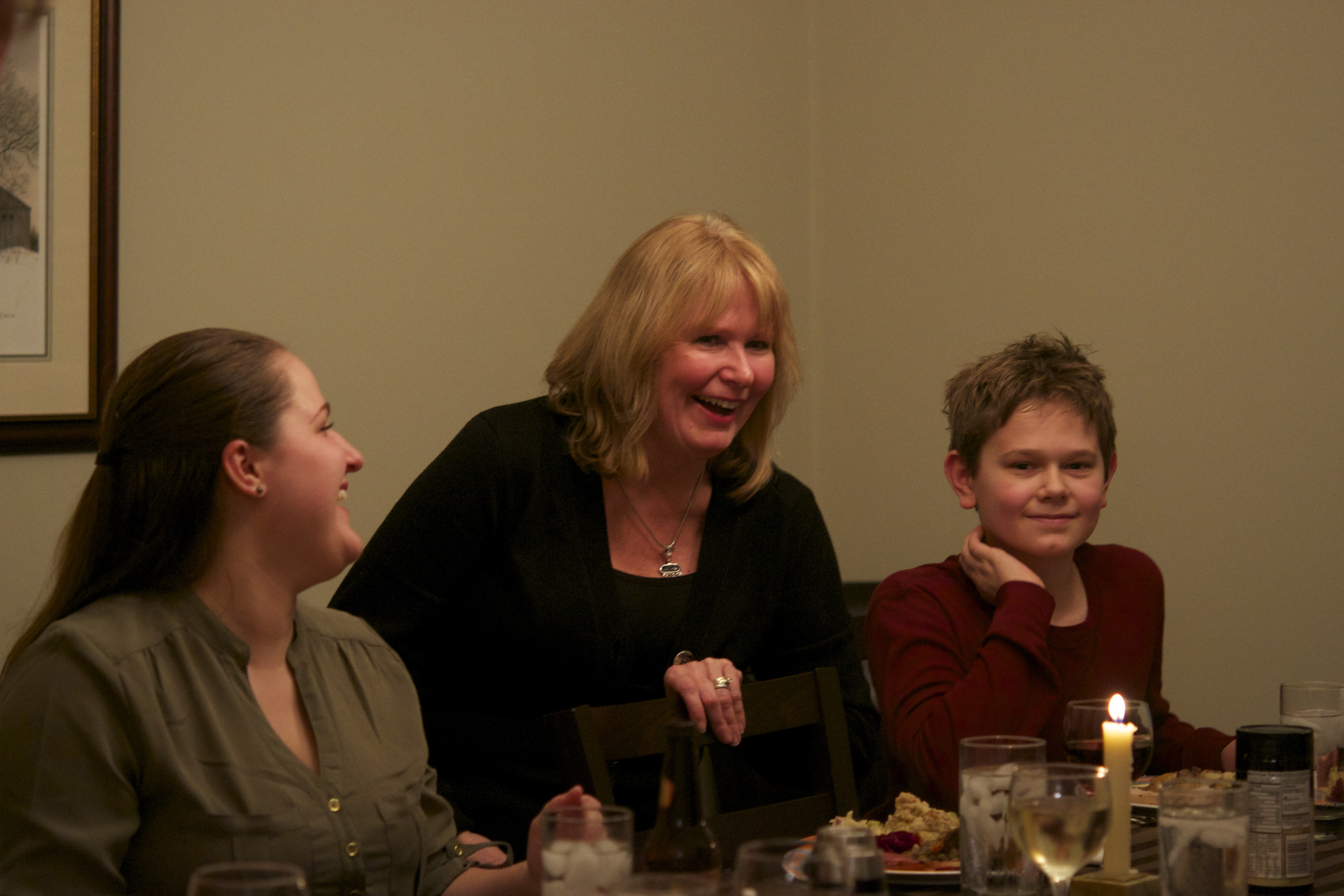
DSC_0331For the first time in 6 years, I decided to travel home for the holidays – following a series of unfortunate events (including a missed flight and nearly dropping my suitcase from onto a passenger’s head from the overhead compartment) I landed in the world’s busiest airport: Hartsfield–Jackson Atlanta International. I navigated my way through swarms of travelers and frustrated families – stepping outside into the passenger pickup area was a welcome relief. I spotted my mother’s taupe Toyota, and watched as it inched its way towards baggage claim. Despite the vehicular chaos all around us, I could see her small face beaming through the front windshield. That brief moment reminded me what this holiday is all about – Thanksgiving is a time to celebrate with loved ones and reflect on all that we are truly thankful for. I hoisted my luggage into the trunk knowing that there would likely be drama and frustration, but at least I would be with family.

DSC_0082Every household has its own traditions for Thanksgiving – fortunately for ours, the requirements were fairly minimal: turkey, potatoes and gravy, and pie. The rest of the menu was left to my crazy scheming, which of course resulted in a family with distended bellies. Our plates were filled with a colorful array of both traditional and unconventional dishes. Given the following menu, you can understand why we experienced food comas shortly after the meal:

  • Cider Brined and Glazed Turkey with Sage Gravy
  • Honey-Glazed Ham
  • Brie Bites
  • Stuffed Mushrooms
  • Indian-Spiced Roasted Vegetables over Lentils
  • Apple-Orange Cranberry Sauce
  • Cornbread Stuffing
  • Mashed Potatoes
  • Chocolate Chip Blondies
  • Bourbon Pumpkin Tart
  • Apple Pie with Spiced Pastry

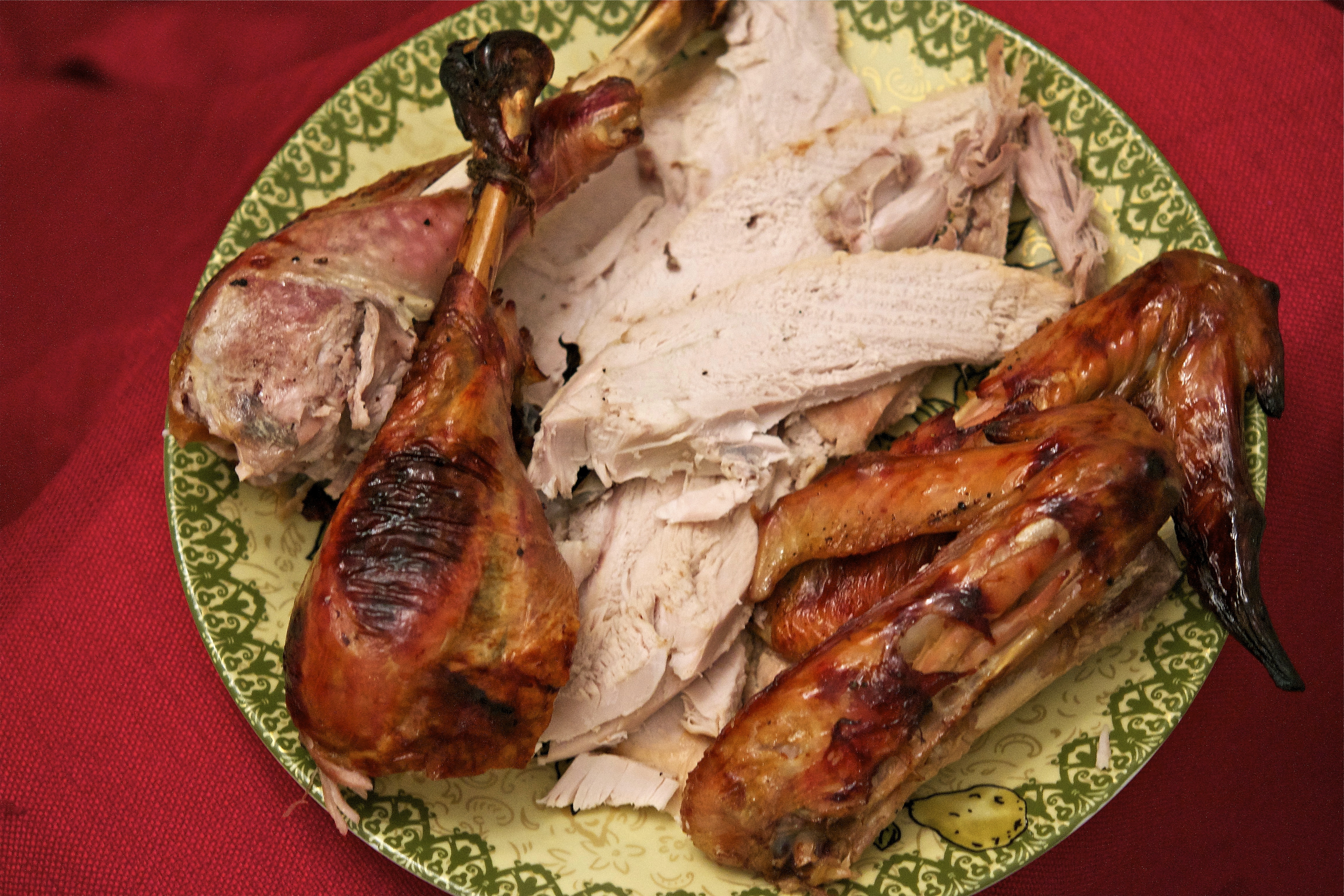
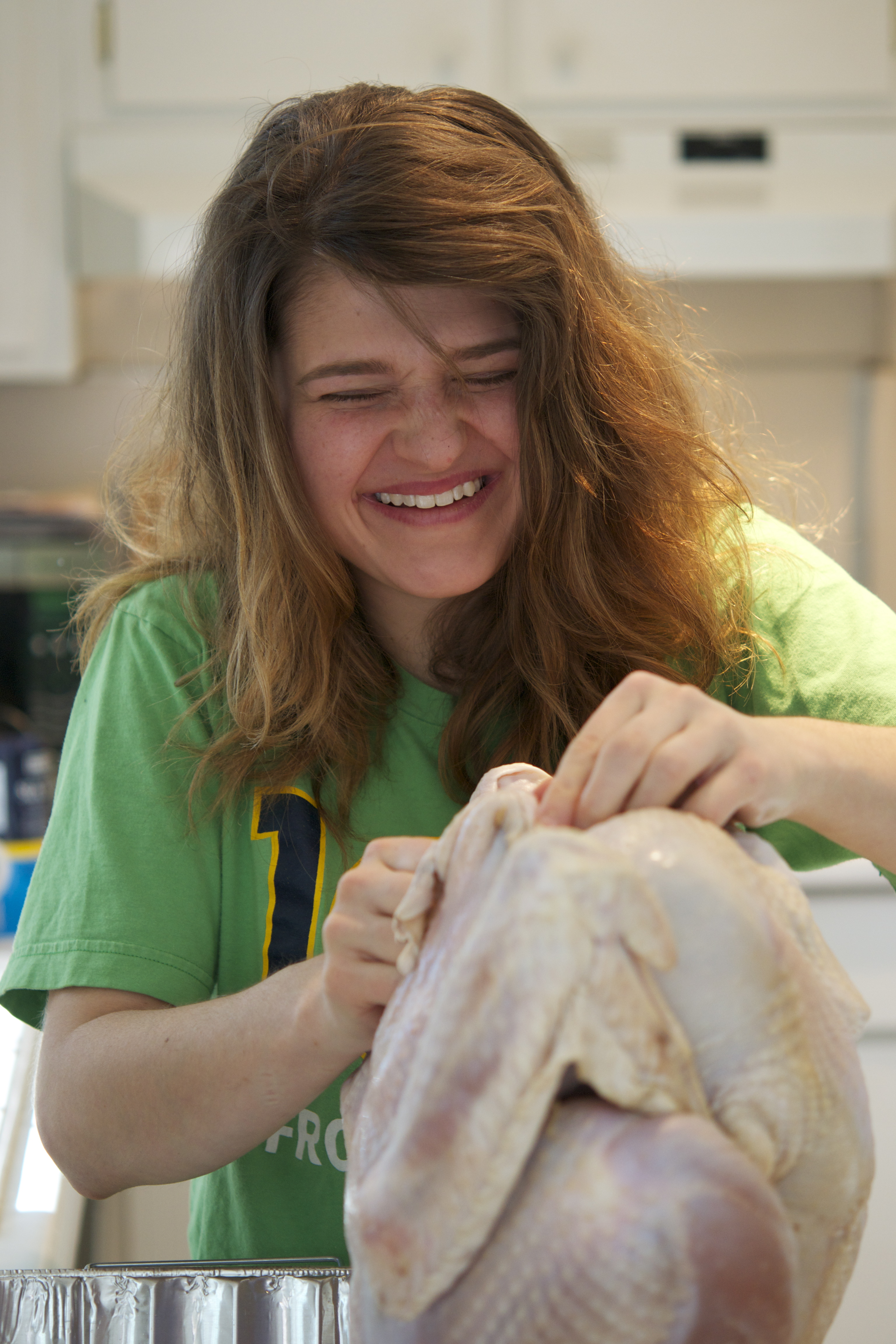
Turkey 1I’ll be sharing the recipes in bold for this post (even though I’d love to share them all with you!) A lot of these have make-ahead components, which (for a Thanksgiving chef) is vital to one’s sanity. So to start, let’s go right for the gold: the turkey. This was my fourth time making a turkey, and it weighed in at a whopping 20 POUNDS; just lifting this thing was a workout. Brining has become my go-to method, so I decided to try a different recipe this year using apple cider to make a Cider-Brined and Glazed Turkey with Sage Gravy.
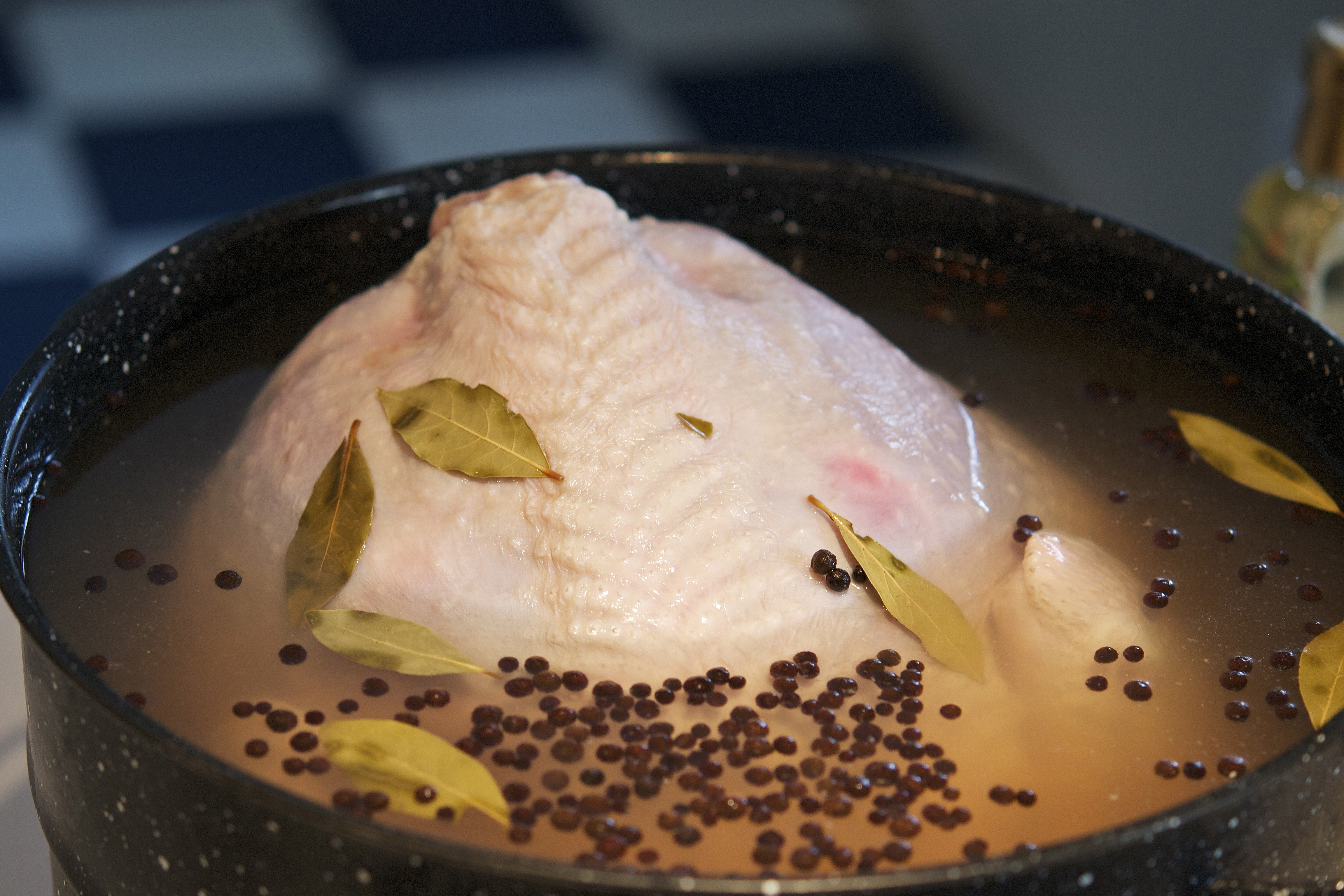
Turkey 2The turkey brines for a full 24 hours, and then sits uncovered in the fridge for an additional 24 hours (to help the skin “dry out” post-brining). The broth, glaze, and even the fillings can all be prepared the night before. Cooking times will vary (depending on size and your oven) but ours took close to 4 ½ hours. Turkey is stressful, considering it’s not necessarily a “weekly staple”. Many of us have one shot to make this dish perfect – I tend to supervise for the first 3 hours, standing in the kitchen with oven mitts and a glass of wine at the ready. This recipe was a great twist on the classic, and I’m curious to try it again next year (especially since I didn’t manage to catch a photo of the finished bird – we were starving by the time it was ready!) Click HERE to see the recipe for this epic turkey.
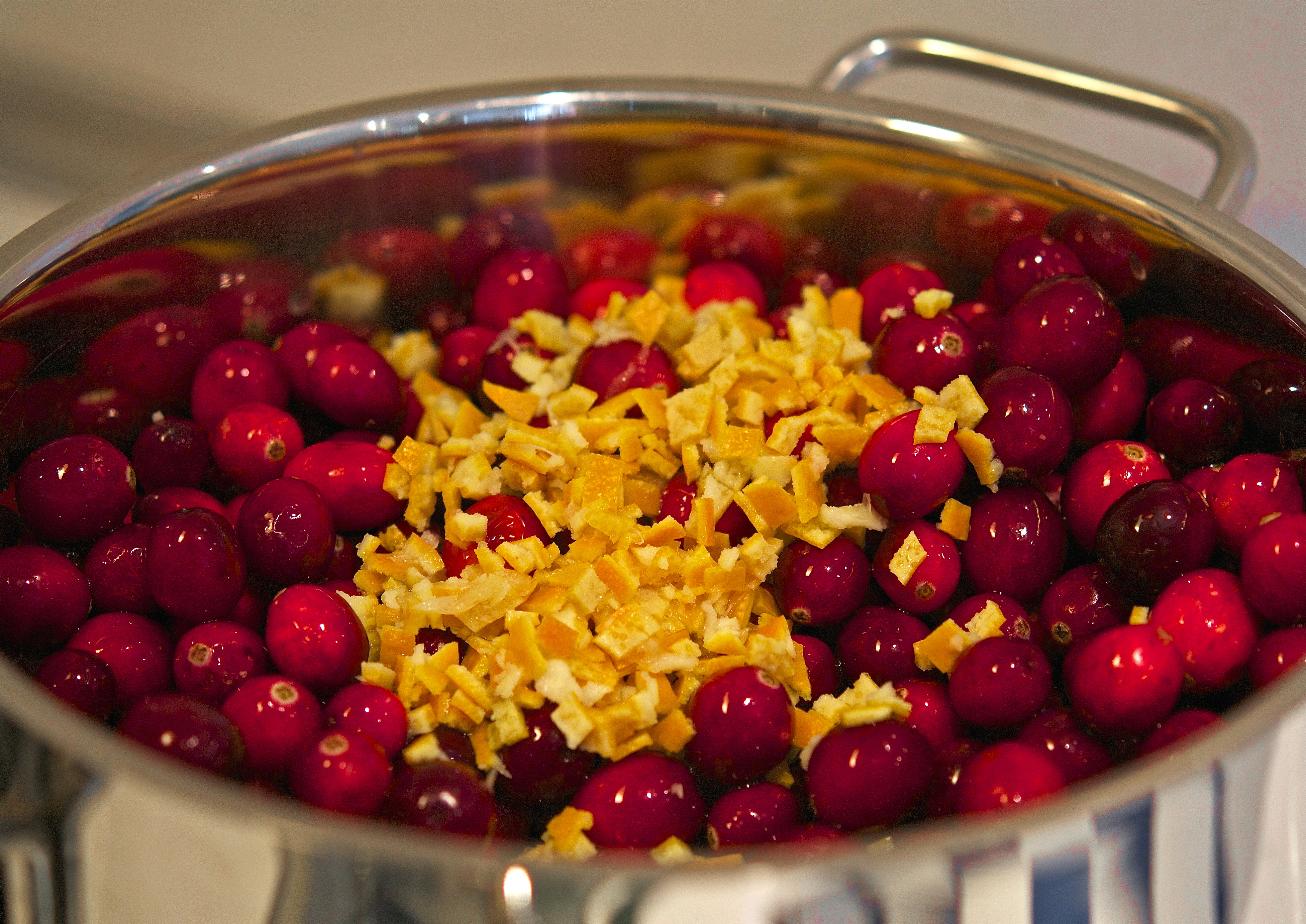
Cranberry Sauce 1Cranberries are sold everywhere during the holiday season. These small berries find their way into a variety of dishes, from fruit cocktails to meat condiments. Grown in acidic bogs, the berries turn from white to deep red when ripe and ready for harvest. They are too tart/bitter to be eaten raw, and thus are sweetened with sugar or other fruits. Spices (like cinnamon or nutmeg) can also be a welcome addition.
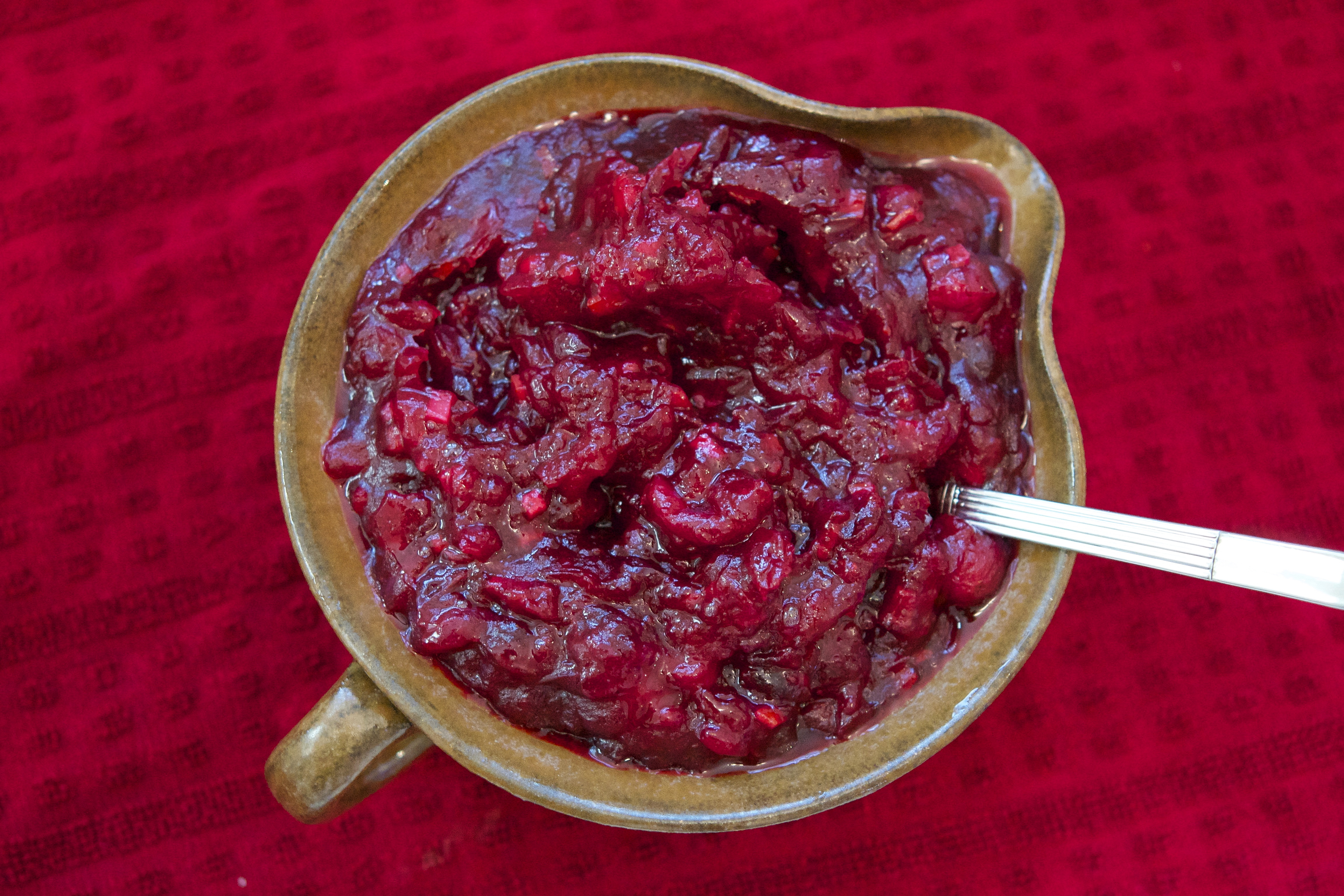
Cranberry Sauce 2Cranberry sauce is a holiday staple in England, Canada, and the United States – it is a tradition that I personally love. That being said, I can’t stand the canned variety as it does no justice to this seasonal fruit. Making your own is so simple that it makes little to no sense to buy a tine of flavored jello. Granted this Apple-Orange Cranberry Sauce is a little “fancier” than others: the citrus and spices give the sauce a warmer depth, and your kitchen will smell like heaven. While there is a good deal of sugar in this recipe, you can use more or less depending on your preference. Click HERE to see the recipe for this gorgeous side dish!
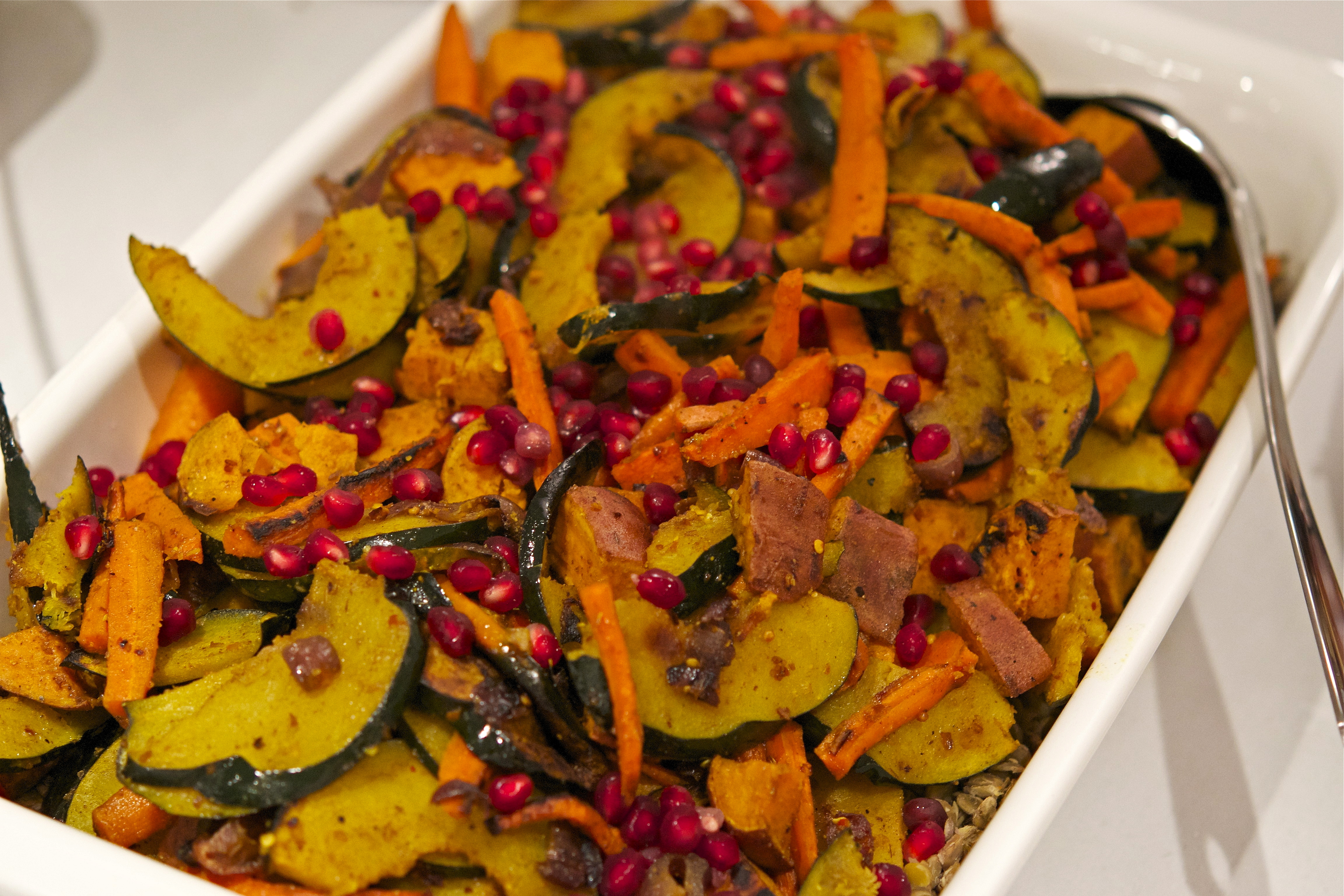
Indian-Spiced Vegetables 2When initially considering a vegetable side, the majority of the recipes I had were in-line with traditional menus: pan-seared brussels sprouts, creamed spinach, roasted carrots. After rummaging through countless Pinterest boards, I came across a unique alternative: Indian-Spiced Roasted Vegetables over Lentils. I sent the recipe to my mom, and was surprised to get an approval (and from the Stepdad, no less!) I tripled this recipe (heh…) but the original makes the perfect amount for a “meatless Monday” option any old time. The presentation was breathtaking – the colors combined with rustic veggies made for a lovely wild card at our holiday spread. Click HERE to see the recipe for this colorful veggie side!
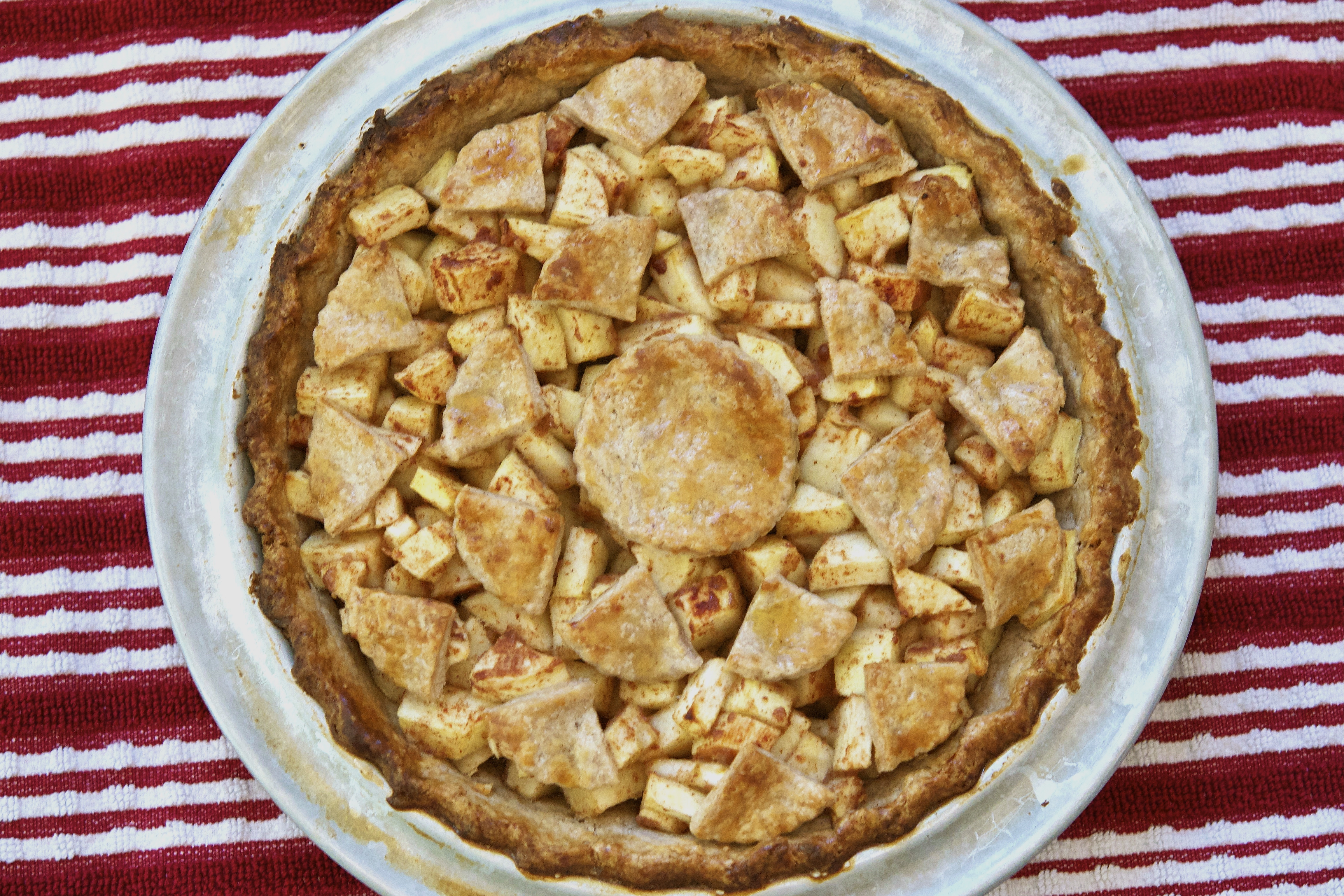
Apple Spice Pie 1Dessert is nearly as important as the turkey (but not as stressful, thank GOD). While we’re not a family with a sweet tooth, we certainly had our fair share of options. To start, let’s talk about this Apple Pie with Spice Pastry – pie is the unwritten requisite for the holidays. A Thanksgiving dinner without pie is like Bach without figured bass…This is the type of dessert that can be enjoyed year after year, and it never gets old. I ended up choosing a recipe that includes spices in the actual pastry.
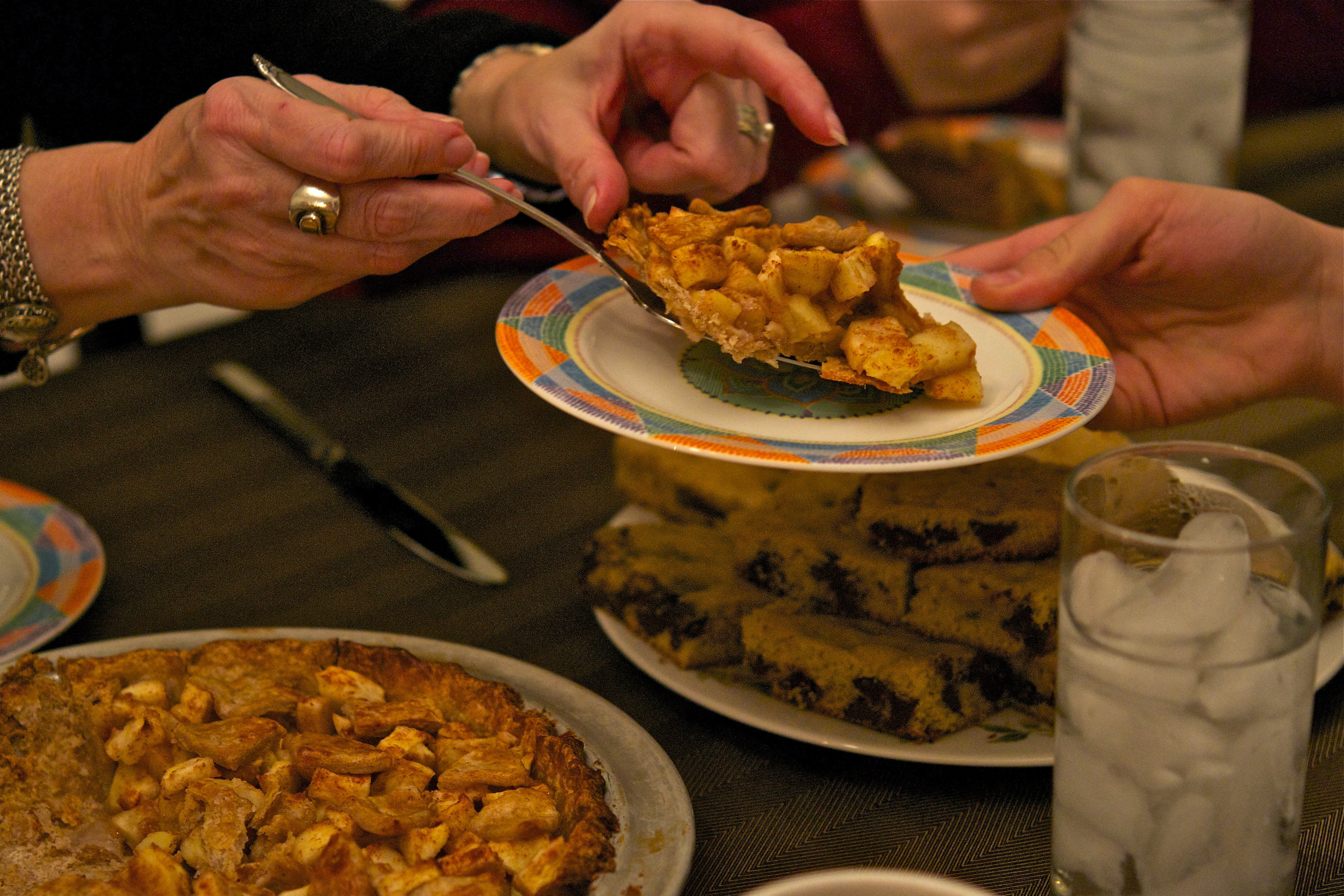
DSC_0364The result was a beautiful presentation of chopped apples nestled in a browned crust speckled with cinnamon, cloves, and ginger. The kitchen smelled heavenly, and the crust held up beautifully for serving. I might use this crust for future pies, and give a few other spices or herbs a try. Rosemary crust with pear filling, fennel pastry with spiced plums – the options are endless! Click HERE to see the recipe for this lovely pie.
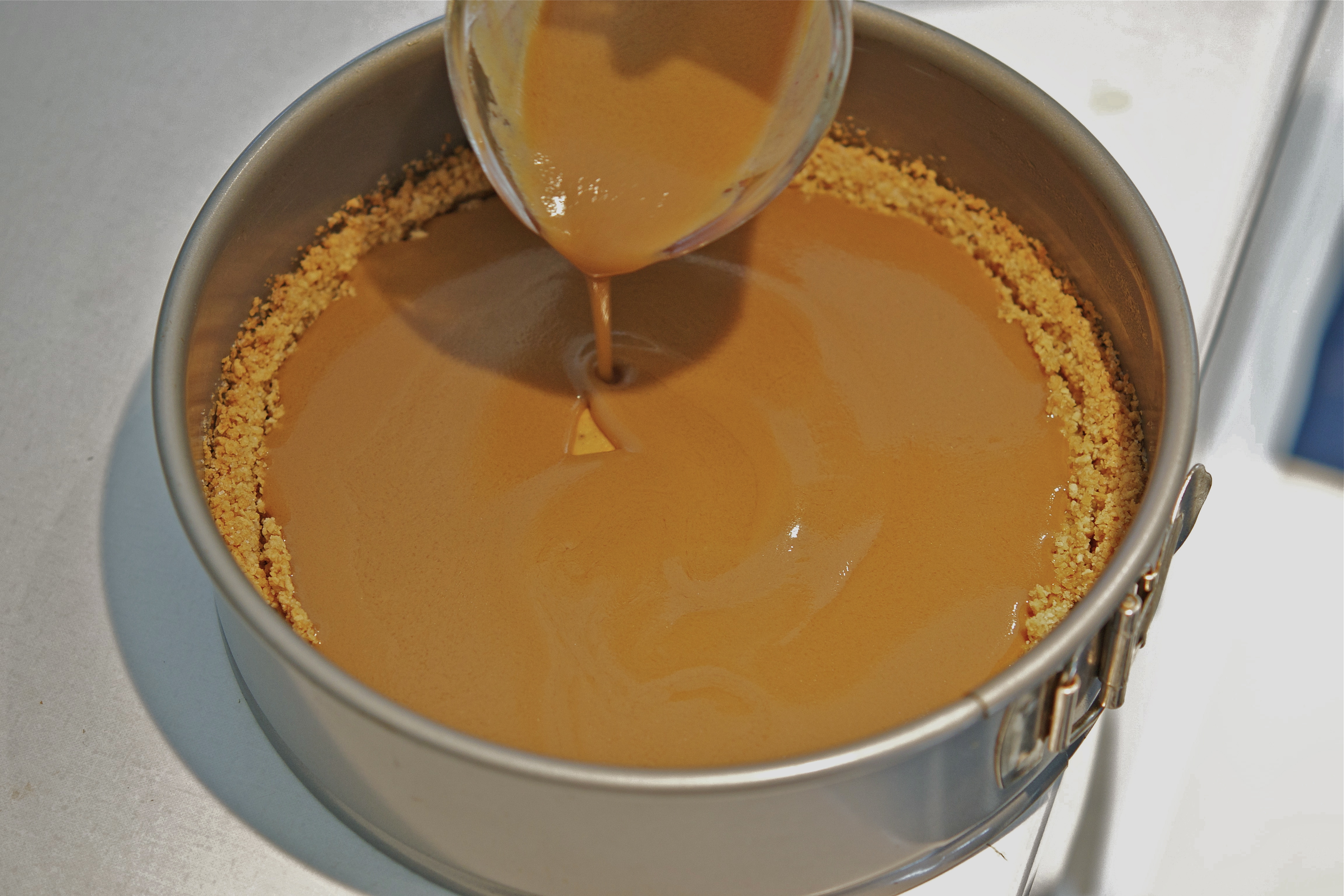
Bourbon Pumpkin Tart 2This Bourbon-Caramel Pumpkin Tart had been on my list for a LONG time – it was on the cover of an issue of FineCooking magazine, and I knew I had to give it a try. Bourbon caramel sauce?? Sold. We served smaller slices…because our food comas would have been incurable had they been any larger. The bourbon helped to balance out the sweetness, while also giving giving the spices a smoky complement. I highly recommend this recipe – it’s a great alternative to pumpkin pie, and (though inordinately rich) will have your guests begging for seconds: click HERE to see the recipe for this decadent dessert!
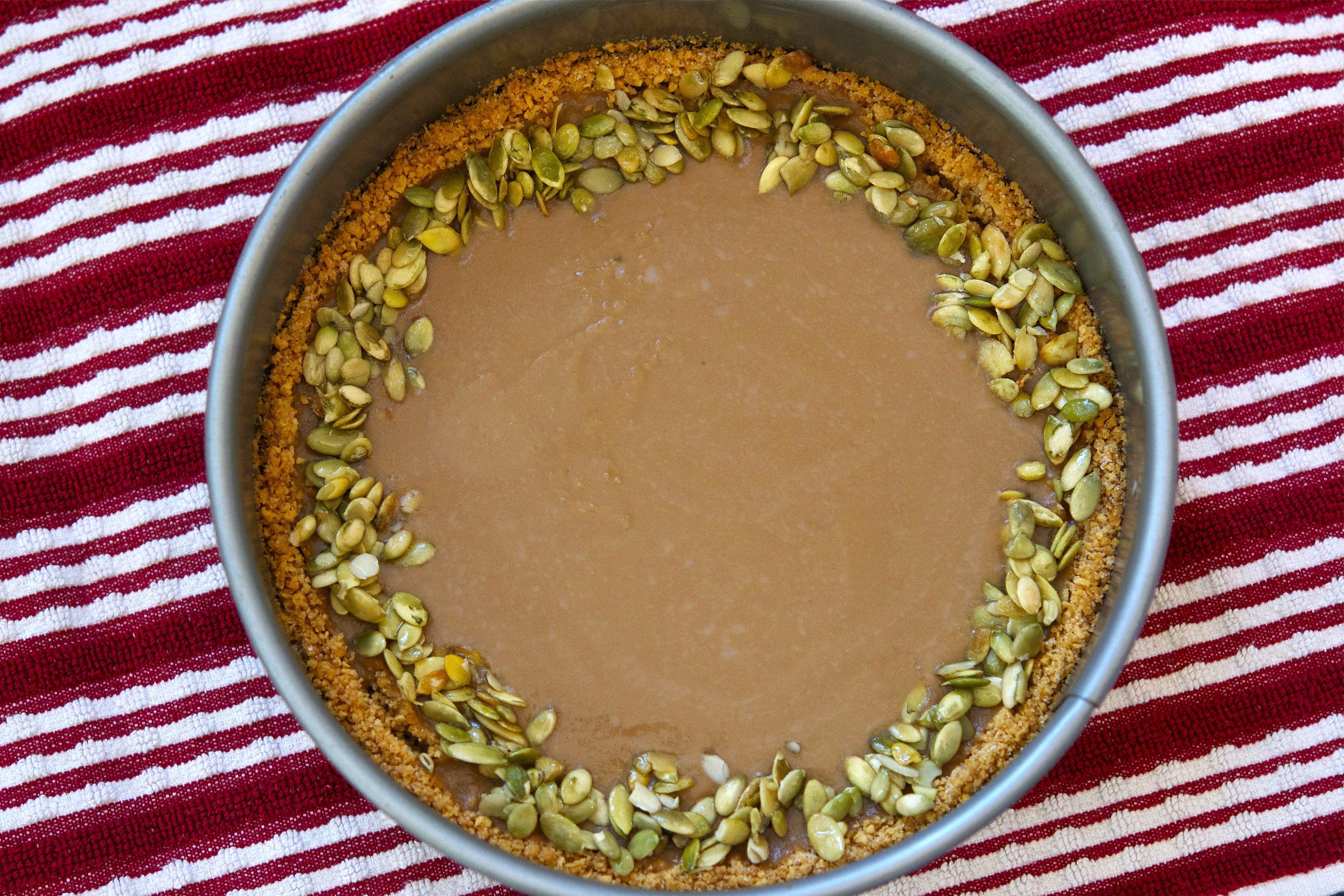
Bourbon Pumpkin TartThis was not the first time I’d prepared a Thanksgiving dinner (see the 2011 and 2012 feasts, respectively) yet it was the first time preparing one for my family. Unlike hosting a party for friends, there is a certain level of expectation involved with one’s family during the holidays – you’ve already spent the better part of a week together, and a great meal becomes the thread that keeps everything in tact. My thoughts were awash with doubt: ‘They’ve been doing this without me for years – who am I to impose my cooking on their age-old DSC_0142traditions?’ Thankfully, my family is far more loving and supportive than my apprehensive thoughts may lead you to think. Remarkably, the fear of letting others down in the face of legacy is a timeworn theme. In the world of classical music, it is especially notable: the drive to innovate interpretations while also respecting that which came before is expected of any musician. Take Brahms: a German composer whose music had reached acclaim at the ripe age of 20 (having received written praise from his to-be mentor and friend Robert Schumann). Yet despite this success, Brahms felt his writing was constantly shadowed by the German “greats” whose works had redefined the standards of music. Beethoven’s precedent was especially harrowing, having said himself: “You have no idea how it feels to hear behind you the tramp of a giant like Beethoven.”
The symphony was a feat that Brahms had yet to undertake. He feared a venture into the symphonic idiom would have no value in the face of Beethoven’s symphonic masterpieces: how could his symphony have any commensurate measure? After nearly 15 years of compositional sketches and second-guessing, Brahms finally completed his first symphony: Symphony No. 1 in C minor – today it is one of the most celebrated in the orchestral repertoire.

DSC_0222Overcoming the pressure of precedents may be a difficult task, yet will lead to new traditions and values. Our Thanksgiving meal was an overwhelming success – while I could have dwelt on the setbacks or imperfect outcomes, they were ultimately of no consequence in the grand scheme of things. Laughter, joy, and family – that’s what Thanksgiving is all about, after all. The following recording of Brahms’ first symphony is with Claudio Abbado and the Vienna Phil: enjoy!

Sources Cited:
“Symphony No. 1 in C minor, Op. 68.” The Kennedy Center
South of the Orient: Part IV

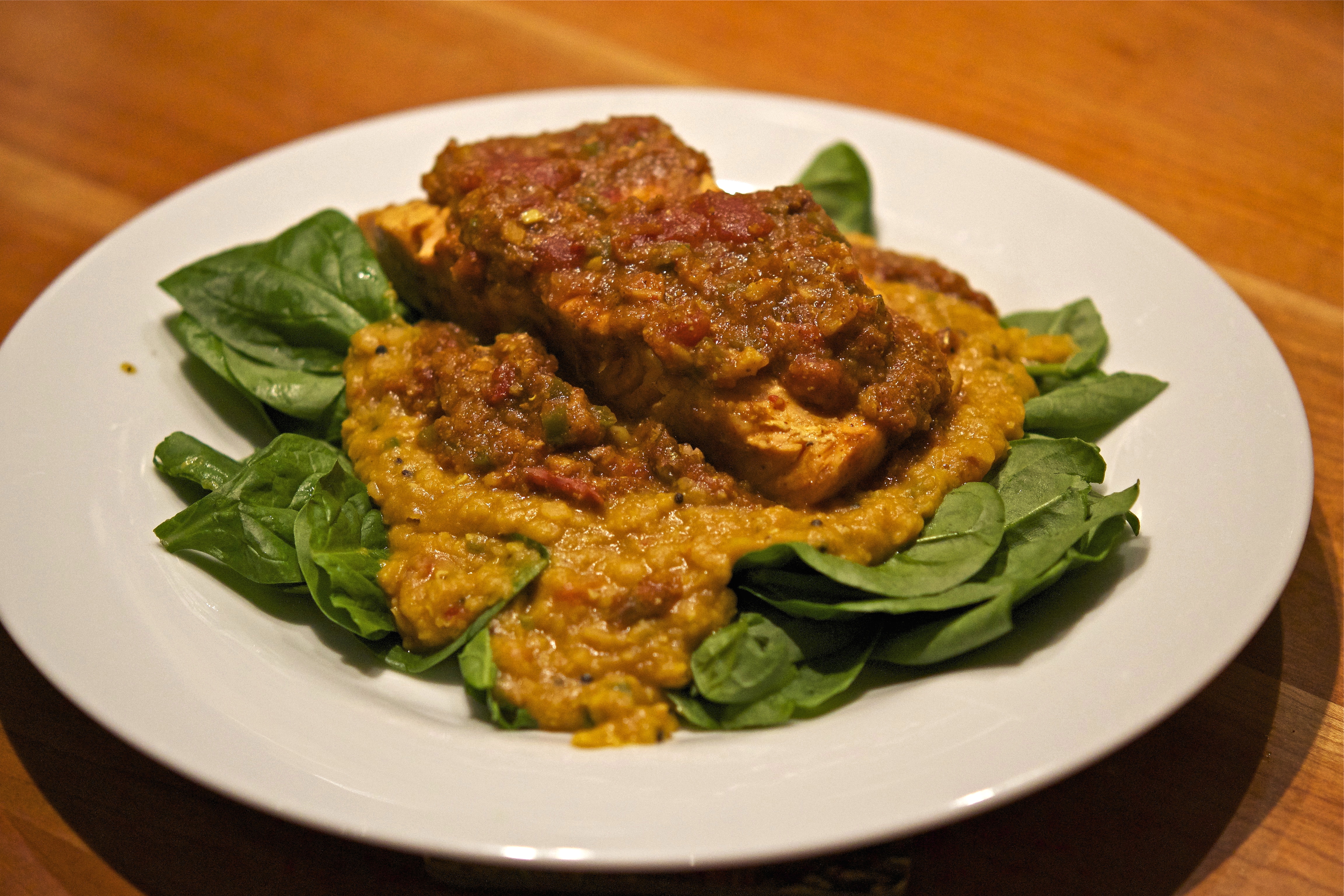
Salmon Curry & ParippuA major benefit to dating a fellow foodie is that home-cooked meals are rarely boring – Tom and I often create something unique and delicious. Just the other week, we were at a coffee shop and (naturally) began to discuss what we could make for dinner that evening. The hope was to make something healthy and packed with protein – that idea led to salmon, and lentils slowly found their way into the discussion. Not surprisingly we decided to give this pairing an Indian twist, and the result was perfect: Salmon Curry over Parippu (Red Lentil Dal) and Spinach.
Parippu 3As per usual with Tom’s cooking, these recipes are permeated with a variety of spices…which reminds me to briefly discuss the term “curry”. Many assume that “curry” is a specific type of Indian spice, when in reality it is a generic term for a mixture of spices (flavors). The word is of English origin, with its creation dating back to the British Colonial government – during their colonial administration of India, British officials had come to know and love the flavors of the local cuisine. It is alleged that the mixture was created by an Indian chef for a single colonial magistrate: while preparing for his return to England, the magistrate announced that he couldn’t bear to live without the flavorful fare. The result was a spice powder that has become wildly popular throughout the British Isles, as well as across the globe in “fusion” settings.
Parippu 1 Indian cooking is often inspired by Ayurveda: a holistic practice of Indian origin that encourages well-being through physical and emotional awcareness. This practice relies on the understanding of the three doshas (or elemental energies that constitute each individual): Vata (motion), Pitta (metabolic), and Kapha (growth). Pitta espouses the life-giving properties of certain spices and foods, and legumes are seen as especially potent. This particular recipe uses red lentils (also known as Parippu or Masoor dal) – they cook more quickly than your standard brown lentils, with the difference being that these have been stripped of their outer hulls and split in half. The result is a protein that serves as an excellent thickener for stews and curries, making them a popular choice for Dal. Learn how to make this flavorful Dal by clicking HERE!
Curry SalmonSalmon with Indian spices was definitely a new one for me. Swordfish is Tom’s preferred choice for curries (more on that later), but we both agreed it might be interesting to try the oilier fish for a change of pace. I was in charge of making this dish, and it was actually fun to cook. Connecting to the previous dish, Ayurveda certainly applies here as well: salmon provides whopping dose of Omega-3’s, vitamins, protein, and amino acids. I decided to cook the salmon skin-on, but you can certainly go with your preference. For plating, we placed the Dal onto a mound of baby spinach, and topped it off with the salmon and extra sauce. The resulting dish was stunning, and needless to say our “dosha” were fully satisfied – click HERE to see the recipe for this beautiful salmon!
Curry Salmon & Parippu 2The life-giving properties of food are absolute – nutritional choices are a requisite for any healthy lifestyle. That being said, a person’s well-being is incidentally influenced by countless elements, and music certainly has a place in the formula. Think back on all of the times that you’ve turned to music: special occasions with family and friends, moments you were sad or nervous, times of laughter and joy, an instance of inspiration. These are experiences you’ll never forget, as they were integral to your personal wellness and psyche. Composer Marc Neikrug thoroughly believes in the power of music, and his work Healing Ceremony reflects this philosophy. He says of the piece:

“I thought about the power music has over people; I wanted to write something that would change how your body feels — helping you calm down, handle stress, get in touch with inner feelings and inner thoughts…This [composition] is not a treatment, but it surely can put you in the right place.” – Marc Neikrug

Neikrug has been living on a Pueblo reservation in Sante Fe for over twenty years, and has been greatly inspired by their cultural perspectives on healing and connectivity. From the three dosha of Ayurveda described above, music is perhaps most connected to Vata: a dosha that involves your breath, heart rate, and blood circulation. Exposure to music can influence all of these elements, and Neikrug’s intention with Healing Ceremony is to invoke calmness and  through the music:

“People should be much more conscious of the power that music has upon all of them — meaning your body and everything that’s going on inside of you…It’s not just, ‘Oh this is cool — it makes me want to dance,’ it’s much more complicted than that.” – Marc Neikrug

Nearly 40 minutes in length, the piece consists of 8 movements: North – Air – West – Earth – South – Water – East – Fire/Love. The following recording is with the New Mexico Symphony Orchestra performing “Earth”. Enjoy 🙂

Sources Cited
“Curry,” Wikipedia.com
“Ayurveda,” Wikipedia.com
“Ayurveda & Dosha Types for Beginners” MindBodyGreen
“Marc Neikrug, ‘Healing Ceremony’ Composer, Talks The Power Of Music” Huffington Post: Lifestyle

Autumnal Panache

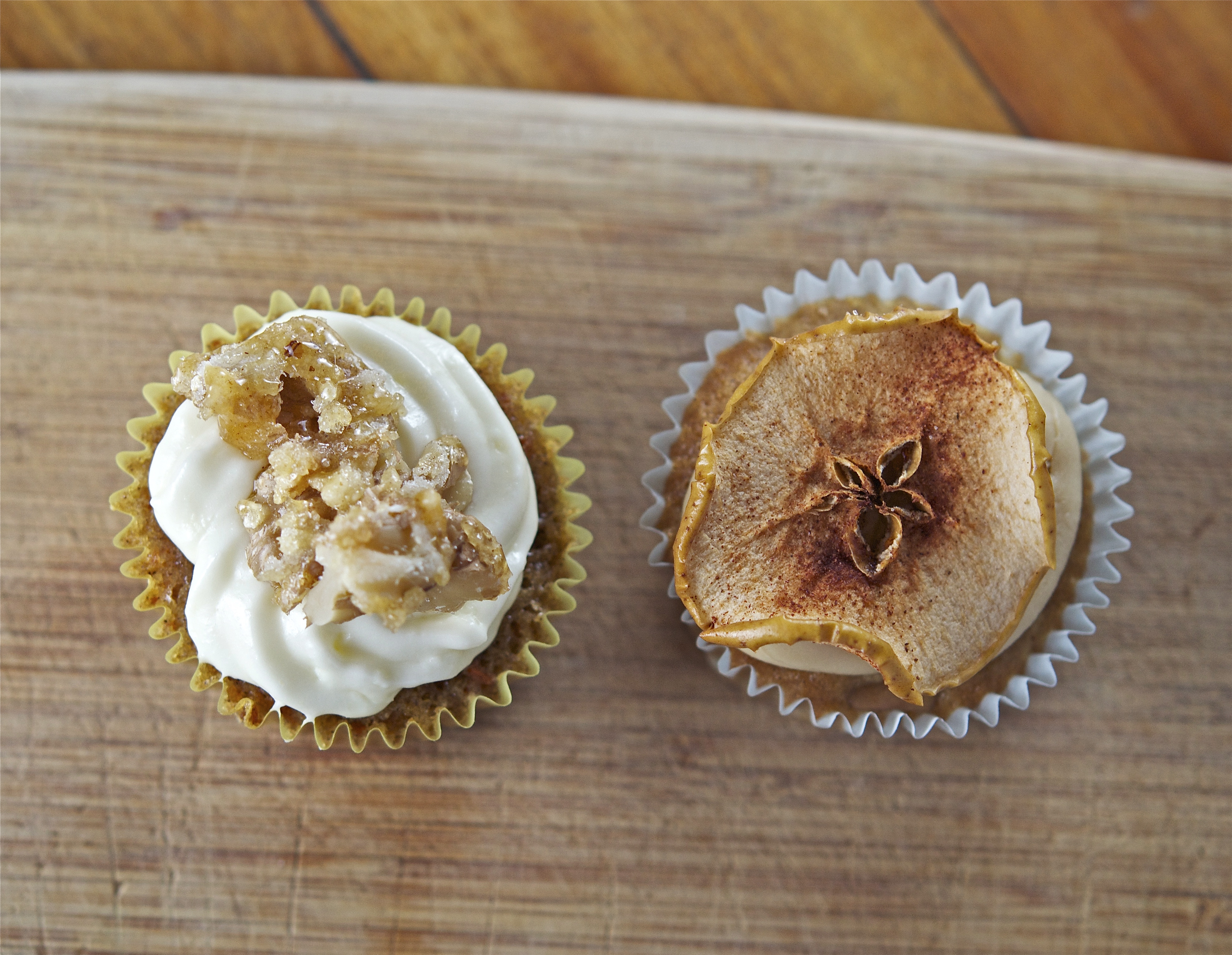
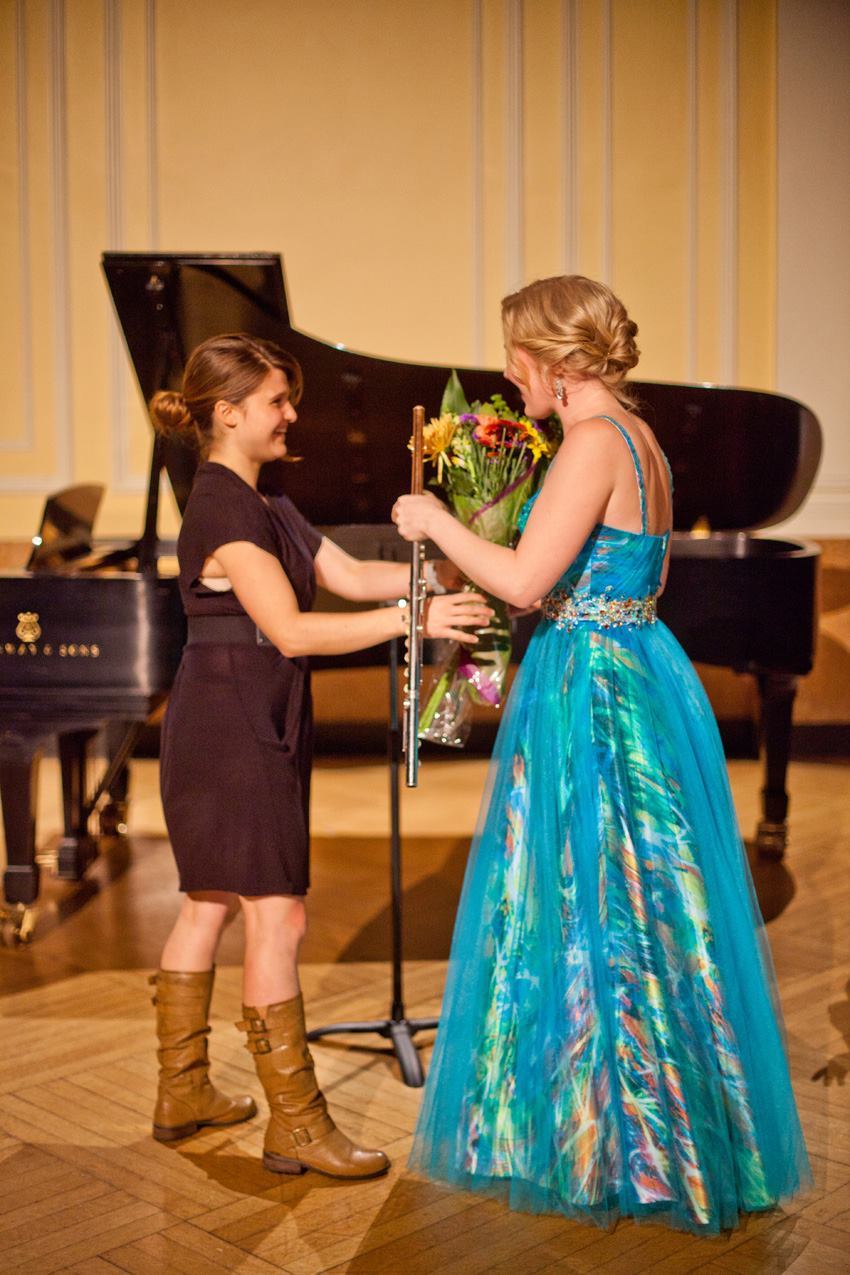
Recital CupcakesI am often asked if cooking is what I do for a living – there have certainly been times that the thought has crossed my mind, from throwing a pitch to FoodNetwork on behalf of Classical Kitchen (I would be an awful TV chef, in all honesty) to opening a small hole-in-the-wall bakery with organic everything. But the reminders as to why I do this simply for the love of cooking are endless – my dear friend Kate Lemmon’s flute recital was one of those reminders. Kate had asked me to bake “Fall-themed” cupcakes for the event – I spent the entire day prepping, baking and decorating. By the time I arrived at the concert hall, I was exhausted and covered in powdered sugar…but then Kate performed one of THE best recitals I’ve heard and was practically glowing by the end. Moments like these are why I could never do this for anything but my friends. So for Kate, I ended up making Carrot Cupcakes with Maple Cream Cheese Frosting & Walnut Praline and Apple Spice Cupcakes with Salted Caramel Frosting.
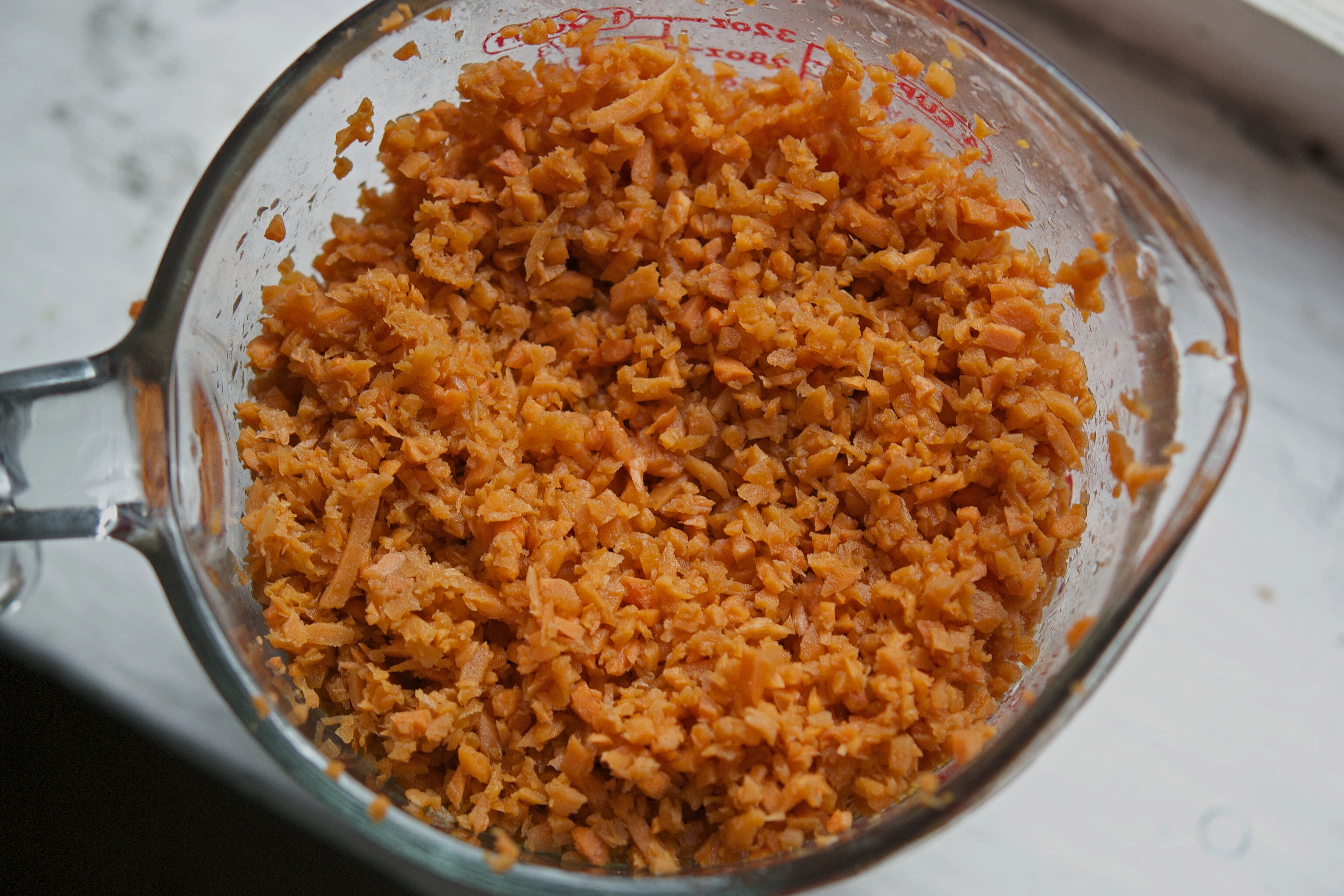
CarrotsKate had originally asked me to bake pumpkin cupcakes…yet as proven by this post, I’d already had my fill of pumpkin. I was wavering between several recipes when I remembered carrot cake: that one dessert that people rarely see in cupcake form, and yet it is perfect in this context! I purchased carrots that were pre-shredded, and further diced them in a food processor…you are welcome to do this by hand if you so wish (and have the time). My only recommendation is to make the pieces as small as possible, as this is what makes or breaks the texture.
Carrot Cupcakes 1For this recipe, I’d have to say the walnut praline was the most difficult step…I burned myself more than once, which was my own fault on all counts (patience is a virtue, especially when dealing with boiling sugar). I actually double-candied the walnuts to give them an extra oomph of sweetness. And that frosting…good lord was it amazing! All together, the resulting cupcakes were adorable, and they were devoured by a crowd of hungry hippos (aka musicians, and we LOVE food) – click HERE to see the recipe for this gorgeous cupcake!
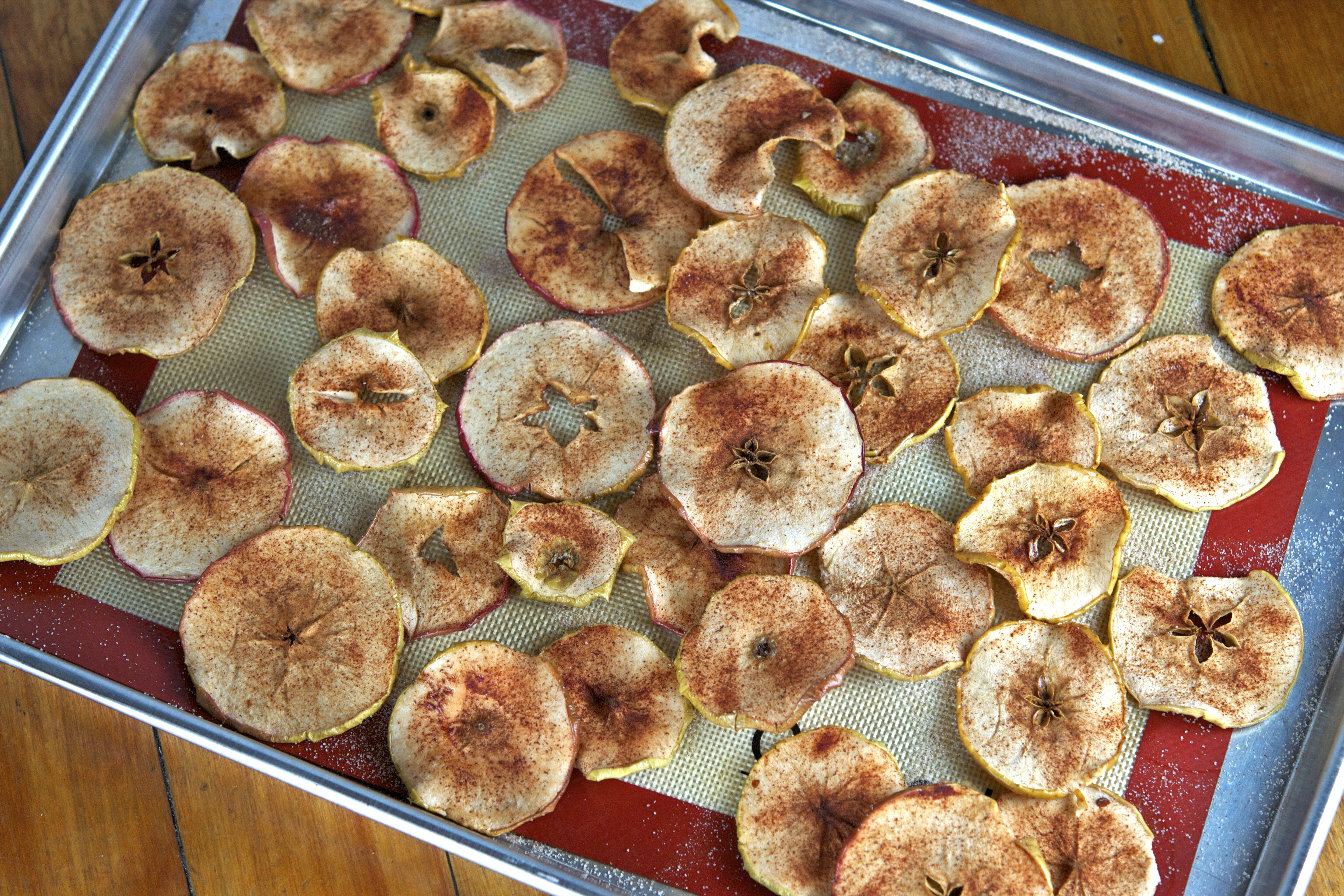
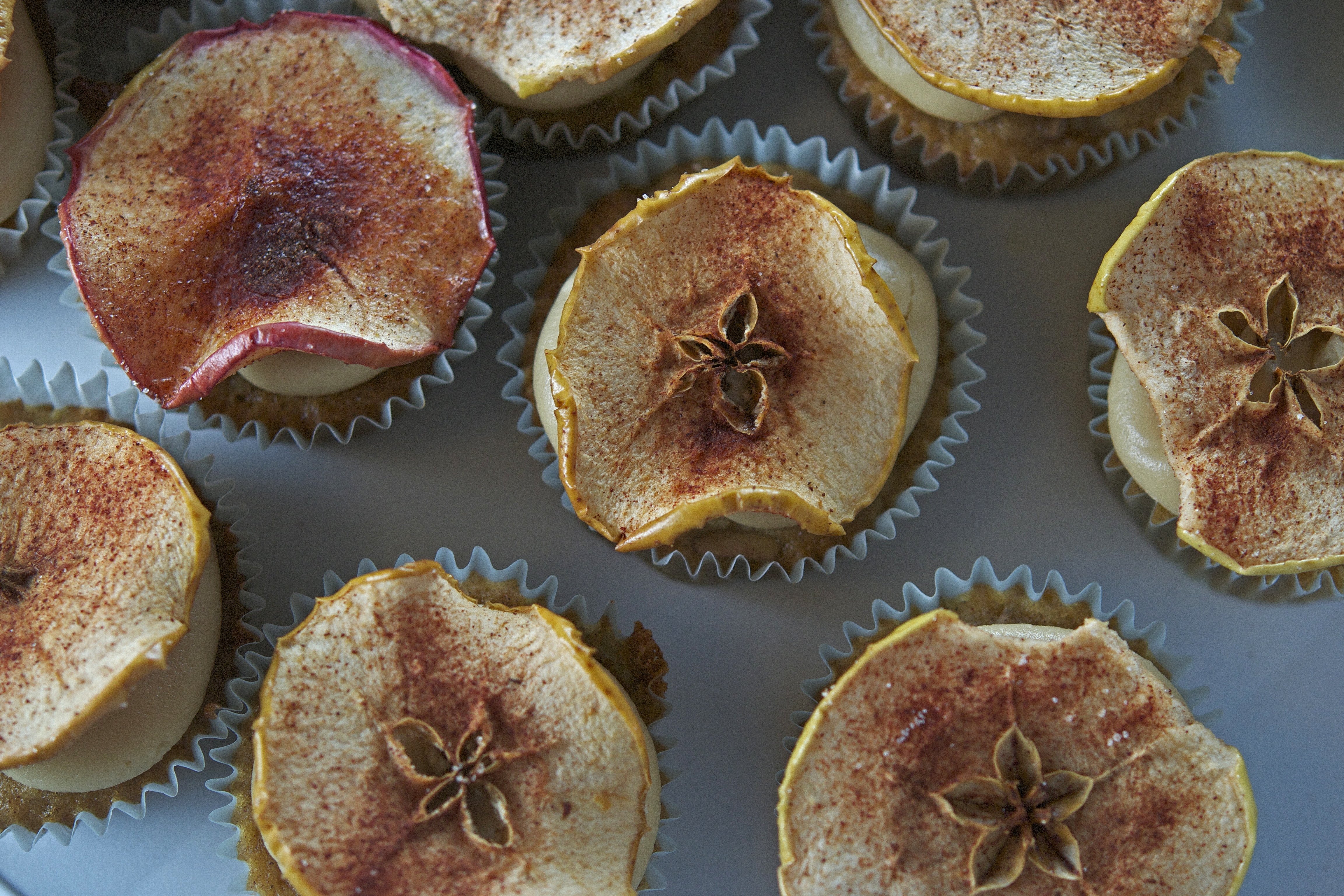
Apple SlicesCinnamon and apples are the epitome of fall-like flavors in New England – orchards are EVERYWHERE, and they all offer some type of delicious baked good doused in cinnamon. So for me, it was a no-brainer to go with an apple spice cupcake. The garnish was a last-minute touch – I didn’t have time to make caramel for a drizzled effect, and needed something to top the frosting. I remembered the success of this cupcake, and thought an apple garnish would be equally as loved. These apple chips took almost 3 hours to make, so I would suggest starting with the garnish and then baking the cupcakes…so you don’t pull an Anne and just barely finish these decorations in time!
Apple Spice Cupcakes 1What I like most about these cupcakes was the visual aesthetic – they were both cute and rustic, which may seem antithetical, but the two work quite well in tandem. The batter had noticeable apple pieces, which gave the texture a moist crumb. The winner was the salted caramel frosting, which proves that there is nothing wrong with adding a little salt to your sweet. Click HERE to see the recipe! The best part of the night was handing Kate a plate full of both cupcakes after her recital – she was ecstatic, which made all of that hard work completely worthwhile.
1402188_10202472558365768_87553117_o  967059_10202472558245765_996501305_o  893858_10202472553445645_943483242_o
Kate’s recital program featured a variety of great rep, but one piece with which she showed a special affinity was Fauré’s Violin Sonata No. 1 in A Major (transcribed for flute). Just before performing, Kate shared the following memory with the audience:

“I heard the Fauré [Violin Sonata] for the first time last year when my colleague Alicia Mielke played flutist Paula Robison’s recording for us in studio class. I always know whether a recording is great based on whether or not it makes me cry, and I was in tears within seconds. The sheer power and beauty of her performance had me hooked, and I knew that I had to program it on my master’s recital.”

The work itself is quite remarkable. It is the first of Fauré’s chamber works, and can be seen as a milestone piece for the genre at-large. The opening phrase blossoms from the piano, immersing listeners into a world of color to which the violin gently joins. The two voices become an intricate coalescence of ideas and gesture, alternating between tranquility and ardent fervency. The second movement takes a step backs from the sweeping passion of the first, though remnants of this spirit can still be felt. Witty humor and crisp expression constitute the third movement, and is charged with a sparkling vitality. The fourth movement is an almost happier echo of the first, and weaves through unexpected turns of key and melody.

Aside from the dynamic elements of the piece, one could say that Fauré and Kate share a similar ethos concerning the purpose of art. As a flutist, photographer, and designer, Kate is someone who sees beyond the face value of art – this ideas translates into everything from her music to her photography even to her recital invitations. As for Fauré, he famously once stated:

“For me, art, and especially music, exist to elevate us as far as possible above everyday existence.” – Gabriel Fauré

For the sake of sharing both the original and the transcription described above, I have included two recordings. The first is with Joshua Bell (violin) and Jean-Yves Thibaudet (piano) performing the first movement:

And the second is by a wonderful colleague and friend, flutist Benjamin Smolen, also performing the opening movement with pianist Jennifer Hsiao:

Sources Cited:
“Gabriel FAURÉ,” 52Composers.com
“Program Notes: Scorpion Tales by Duo Scorpio” MusiMelange.com
Kate’s Recital Photos courtesy Caroline Sonett and Kate L Photography

South of the Orient: Part III

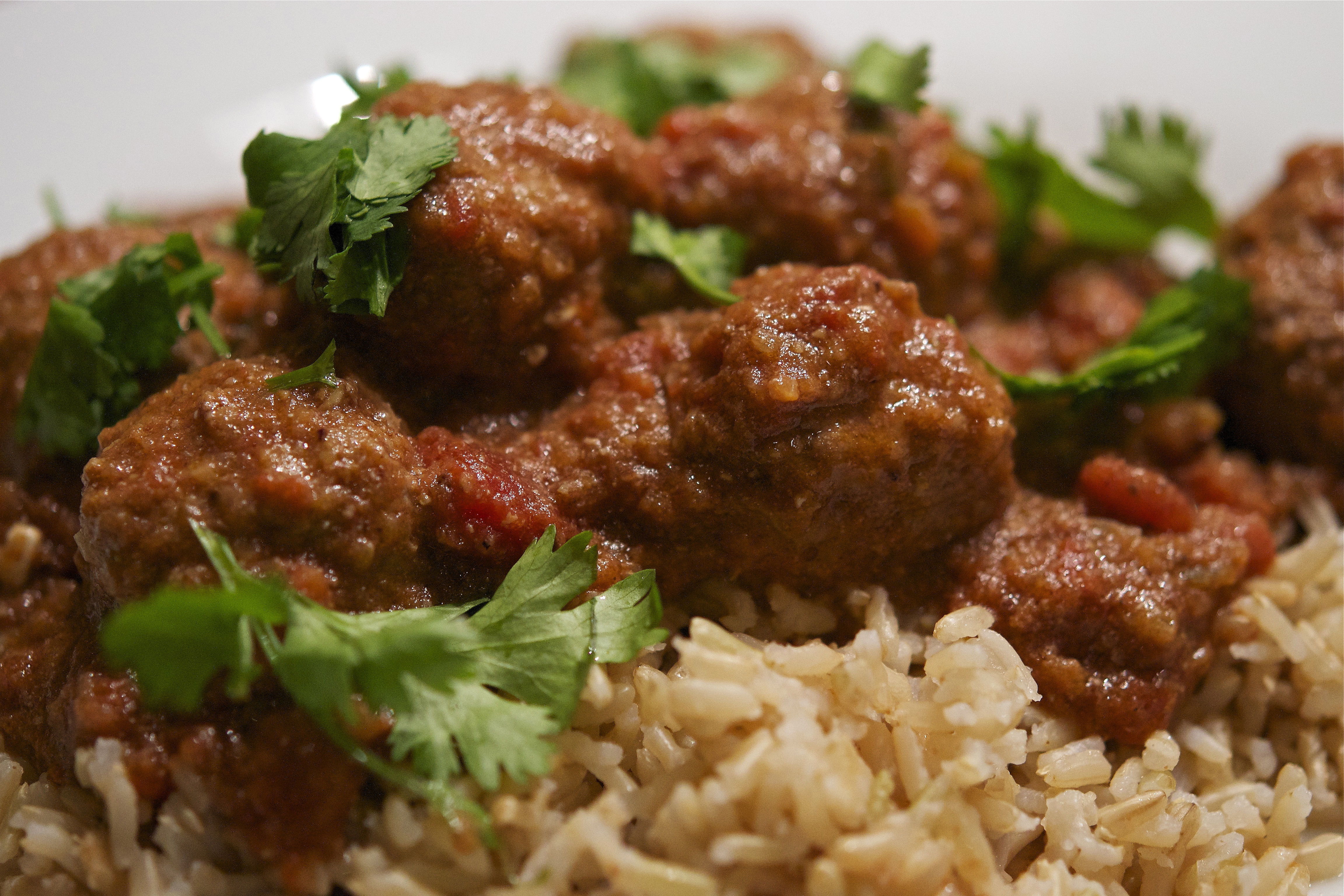
Lamb Kofta 2It’s getting to be that time of season where I hate leaving the warmth of my apartment…which is a bummer because I love being outdoors. Then again, one significant pro to colder weather is the seasonal food – a necessary comfort to the portending cold that is New England winters. Meals are heartier and even more flavorful to help us put some “meat on our bones”. Not surprisingly, a number of Indian dishes fit beautifully in this context; a cuisine with which my boyfriend has developed quite the expertise. To recap this series: Tom is a veteran traveler, whose culinary tastes have been greatly inspired by his experiences abroad. He made this Lamb Kofta with Tomato & Yoghurt Sauce a while back, which I’m craving now more than ever as the cold slowly creeps through my apartment’s lousy window units.
63470_1714380868845_310848_n This dish holds a special affinity with Tom’s travels in Rajasthan: India’s largest state, located along the Pakistani border in the Northwest. He shares his experiences below:

“As you progress west, away from the Indian heartland toward the Pakistani border with Rajasthan, availability of food changes drastically. The landscape of Rajasthan is a rugged marriage of mountain foothill and high desert, dotted with magnificent palaces and fortresses built many centuries ago by the Rajput empire. Leaving Jodhpur, the “Blue City” on the road west (pictured above), I knew I’d had my last chicken for a while. As the terrain flattens and gives way to brush and sand dunes the only available meat becomes goat, mutton and lamb, and the latter will cost you. Past a thousand year old desert fortress made out of sandstone called Jaisalmer, I spent a few days out in the desert with Indian guides and a small pack of camels. A German, an Australian and myself had had our fill of vegetarian food, and persuaded the guides to barter with a nearby village for a goat. The Indians insisted that it wouldn’t be right for any of the westerners to kill the animal, and took it to a quiet corner. That night we barbequed on the sand and had more ropey meat than we knew what to do with.”

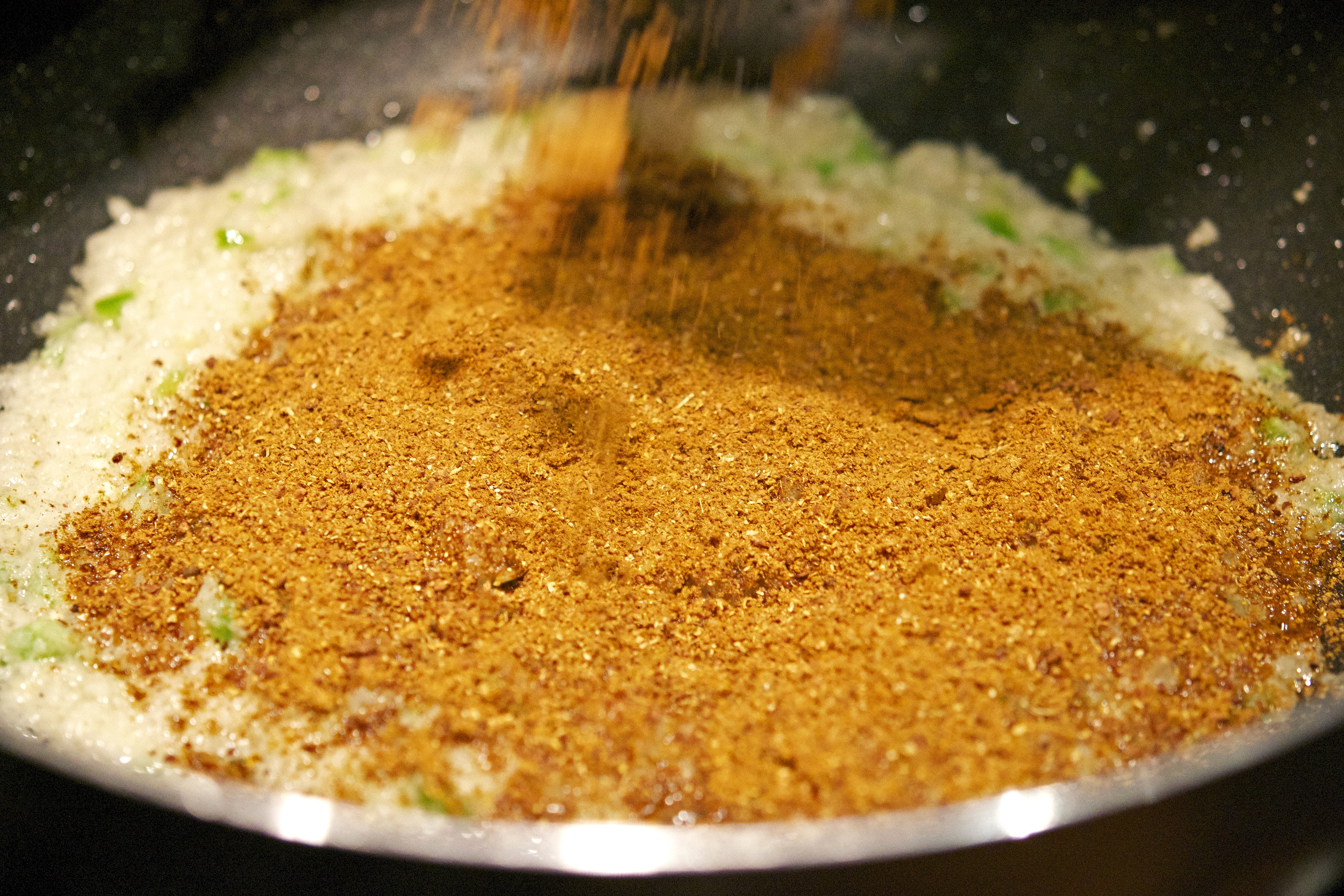
Lamb Kofta 4Like most of Tom’s recipes, this dish is redolent with Indian spices. One thing I learned from Tom is that most cookbooks underestimate the amount of spice you should use, in hopes of creating a recipe that isn’t “too intense” for the average Joe. The result is often dishes that are a little bland…Tom and I want a meal to punch us in the taste buds, so we go a little crazy (he asked me to put a warning here: dishes like this can result in a spice addiction, leading to an inclusion of spices in everything from your breakfast cereal to chocolate cake…) Another thing I should point out is Tom’s choice to purée all of the onion in this recipe (as opposed to simply chopping or mincing) – half of this is out of personal preference, but the other half is to help enrich the texture. The purée acts as a thickening agent, creating a smoother and more aesthetic sauce.
Lamb Kofta 5The name of this dish is derived from the Turkish term küftə – which translates to “small ball.” Kofta is a fairly popular item on most Indian and Pakistani menus, having been introduced to South Asia following the Muslim ascendancy in the region. It is commonly cooked in a spiced gravy or curry sauce. Call me naive…but I picture it as a more exotic rendition of spaghetti and meatballs – both are simmered in a tomato-based sauce, loaded with regional herbs/spices, and served atop a carb of choice. Kofta is the more interesting of the two in my opinion, and possibly more nutritional as well.
Lamb Kofta 6This was love at first bite! I’m not a big fan of lamb, but the character it lends to this dish is undeniably perfect. You can serve the Kofta with basically anything you want: brown rice, white rice, quinoa, naan…or you can eat it directly out of the pan if that’s your style. Dishes like this can be your greatest ally on colder nights…like tonight. It tastes even better the next day, so go ahead and cook yourself a batch for the week – you can enjoy leftovers inside your warm home, while watching another episode of Breaking Bad and not thinking twice about the dropping temperatures outside: click HERE to see Tom’s recipe for this delicious Kofta!
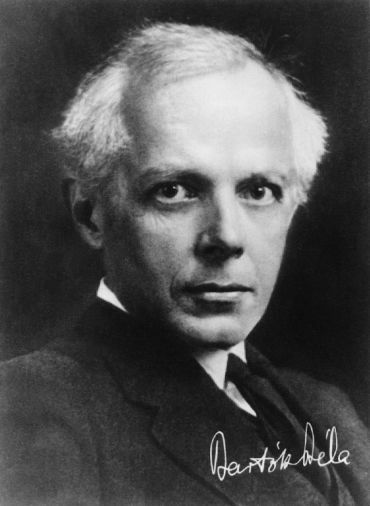
Lamb Kofta 3Tom’s experiences in India give him a unique advantage regarding its cuisine – he is no longer a slave to Indian cookbooks, and can easily modify and/or create meals based on his own practiced understandings. In the classical music world, an analogous parallel would be Béla Bartók’s compositional process. Born bartoktowards the end of the 19th century, Bartók (pictured left) was well-known for incorporating folk music into his own works. Over time, he became increasingly familiar with the harmonic and melodic tendencies of this music that he eventually was writing his own folk melodies. Bartók’s entire style took a whole new direction from then onward, and has placed his works among the more innovative to come out of the 20th century. One great example is his Dance Suite (Táncszvit) – the work was premiered in November of 1923, just five years after the end of WWI. While the piece has melodies of Hungarian, Romanian, and Arabic influence, the themes are all Bartók’s own. The work consists of six dances, but is audibly perceived as two movements. It opens with bassoon (which reminds me of Stravinsky’s Rite of Spring – 1913), and the orchestra pulses between moments of kinetic intensity and gentle reflection over the next three dances. At the end of the third dance, we reach a climax that feels decisively conclusive. Yet the fourth movement slowly emerges, immersing listeners into a dreamlike realm. We then transition into the brief yet energetic fifth dance, which finally cascades into the sixth dance where the work’s many themes are resurfaced for an exciting finish. The below recording is with the Deutsches Symphonie-Orchester Berlin – I hope you enjoy!

Sources Cited:
“Kofta,” Wikipedia.com
“Dance Suite,” The Kennedy Center
Like Night and Day

I would like to dedicate this post to Drew Thompson – bassoonist, swing dancer, beer connoisseur, and devoted friend. We’ll always remember you (1986-2013)MaplePumpkinBread2 VERSUS

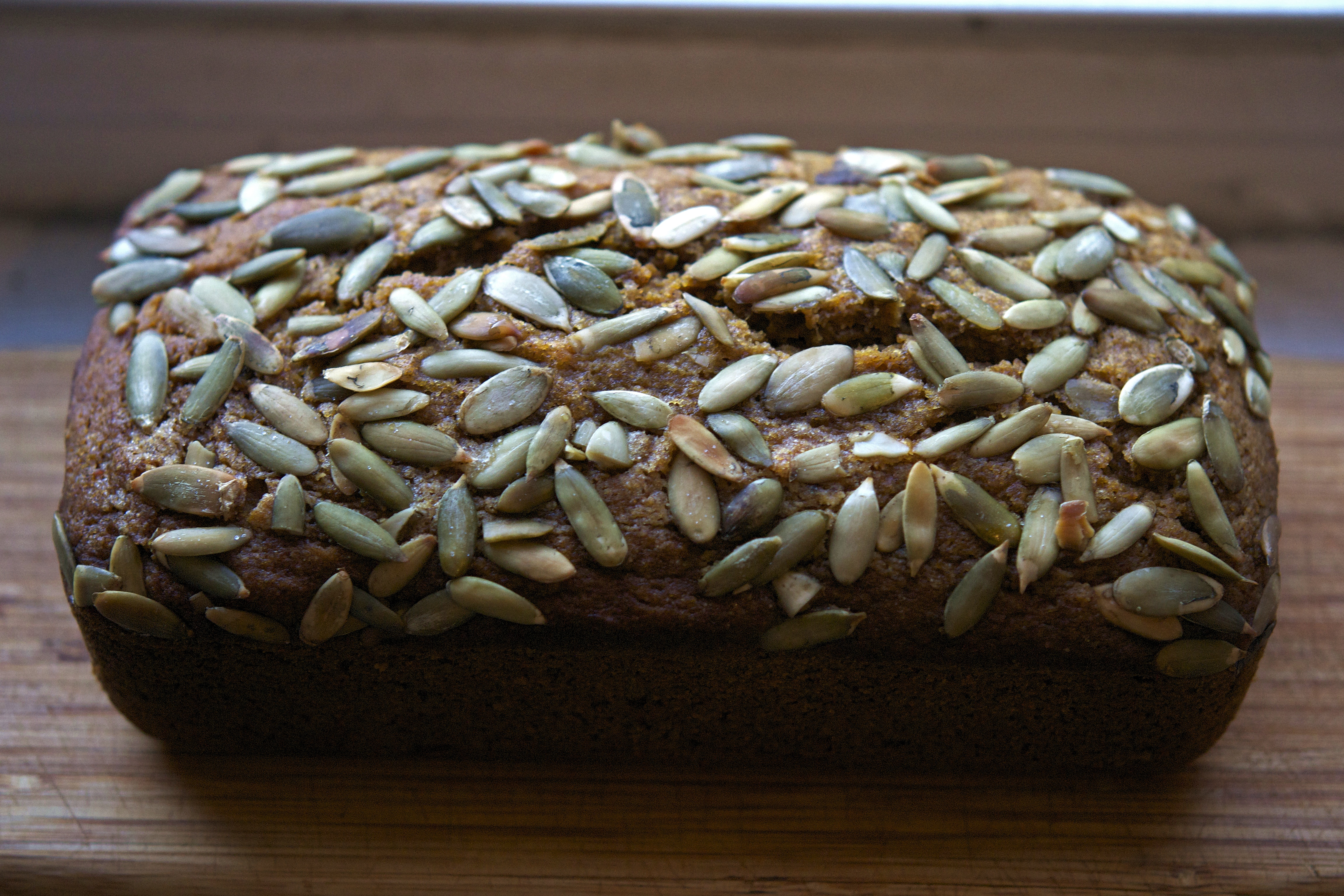
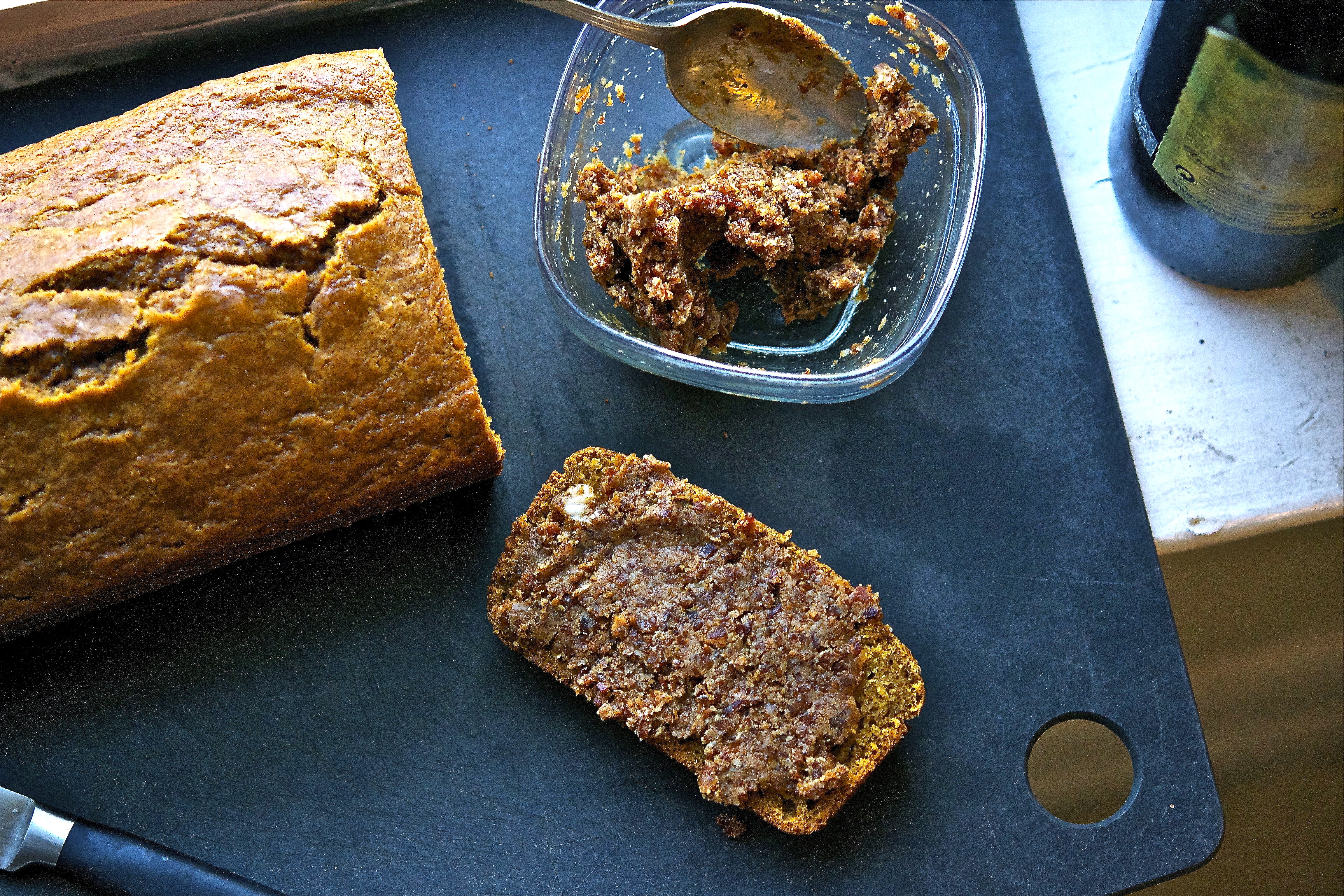
Pumpkin Bread with Bacon Jam 3When writing this post, I couldn’t help but picture a figurative angel and devil on either shoulder: the angel being an advocate for all-things healthy, and the devil espousing those dangerous temptations we’re taught to avoid (read “fatty goodness”). Here we have two quick breads: both were baked in my favorite Pyrex loaf pan, contain pumpkin, and finished cooking in just under an hour. The affinity ends there – while I pride myself on being a healthy and active individual, breaking the rules for a decadent treat can be such a release. My shoulder angel would approve of the Maple-Spice Pumpkin Bread with Pepita Crunch, but the Pumpkin-Beer Bread with BACON JAM is most certainly a devilish indulgence.
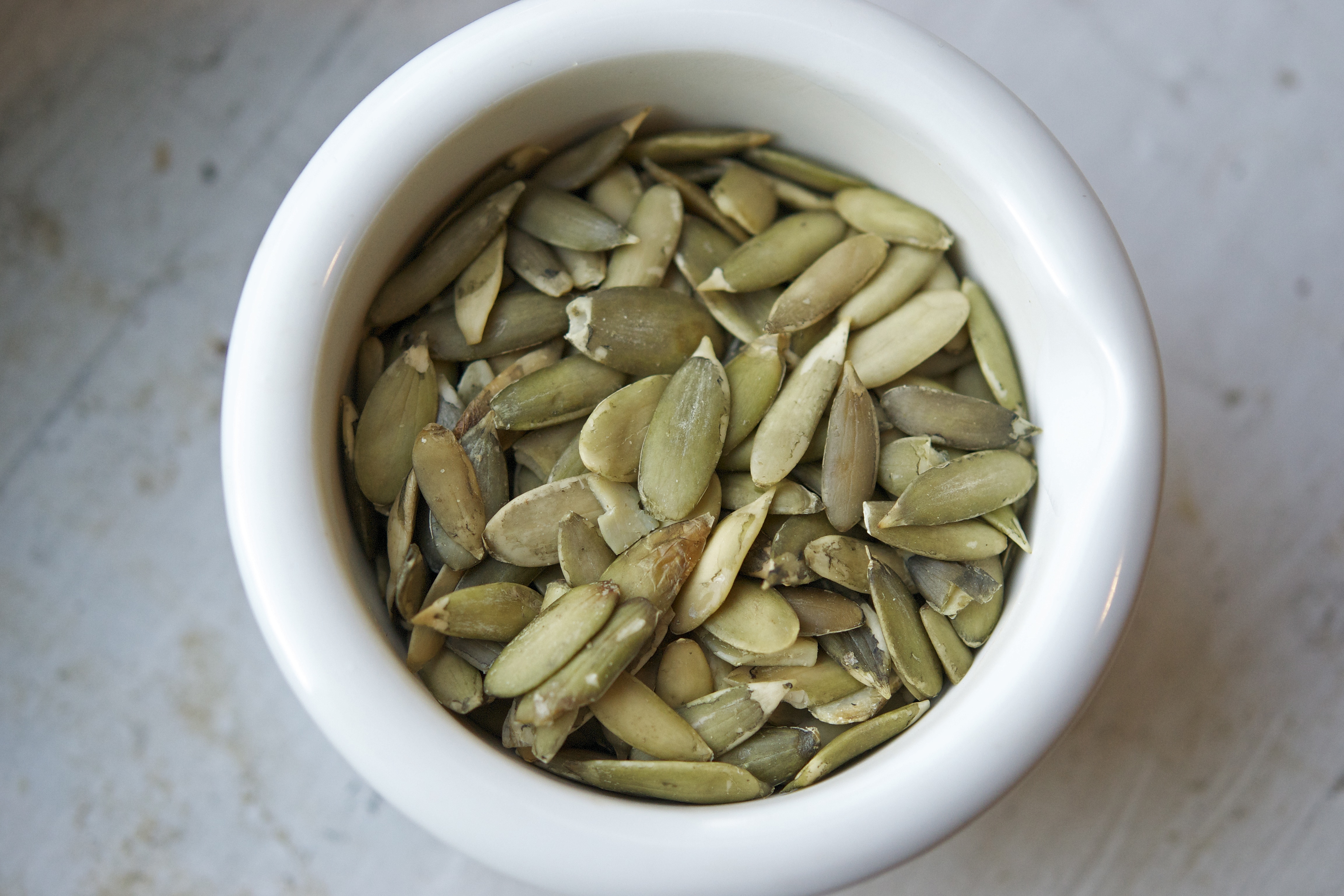
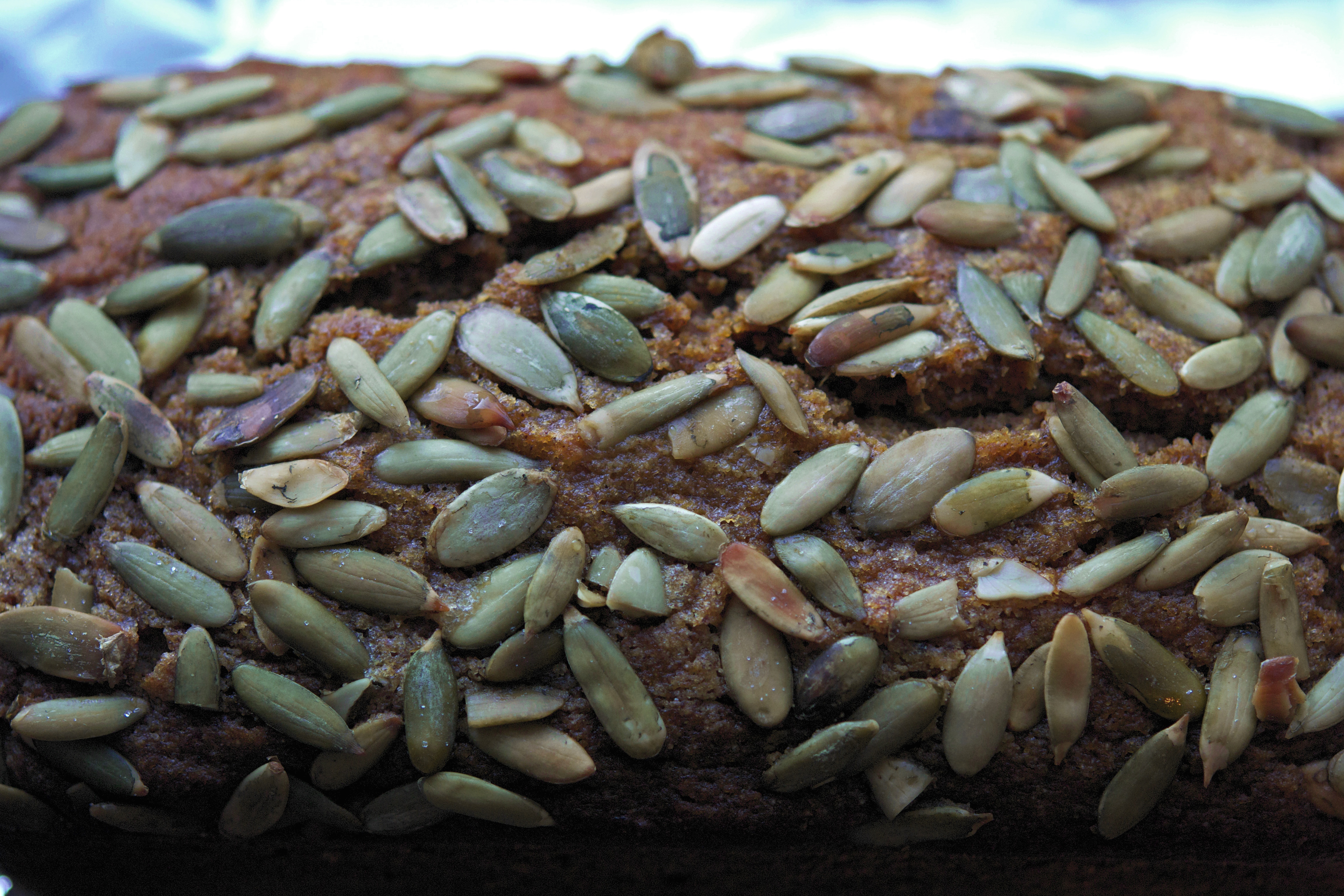
PumpkinSeedsLet’s start light (even though you’re all here for the bacon jam) – most pumpkin breads call for sugar or butter, bumping the health quotient down a notch or two. Olive oil and maple syrup are the featured ingredients in this recipe, yielding a bread with a moist crumb and a subtle sweetness. The pepita topping is adorable…and I just happen to have WAY TOO MANY PEPITAS right now, so this was perfect 🙂 In case you’re wondering, a pepita is the edible portion of a pumpkin seed (having been removed from the more recognizable ivory-colored hull). They are fun to snack on, but (if you’re like me) it’s way easier to buy pre-packaged trail mix for your midday nosh…I’ll throw a handful of these into those mix packs every now and then as well.
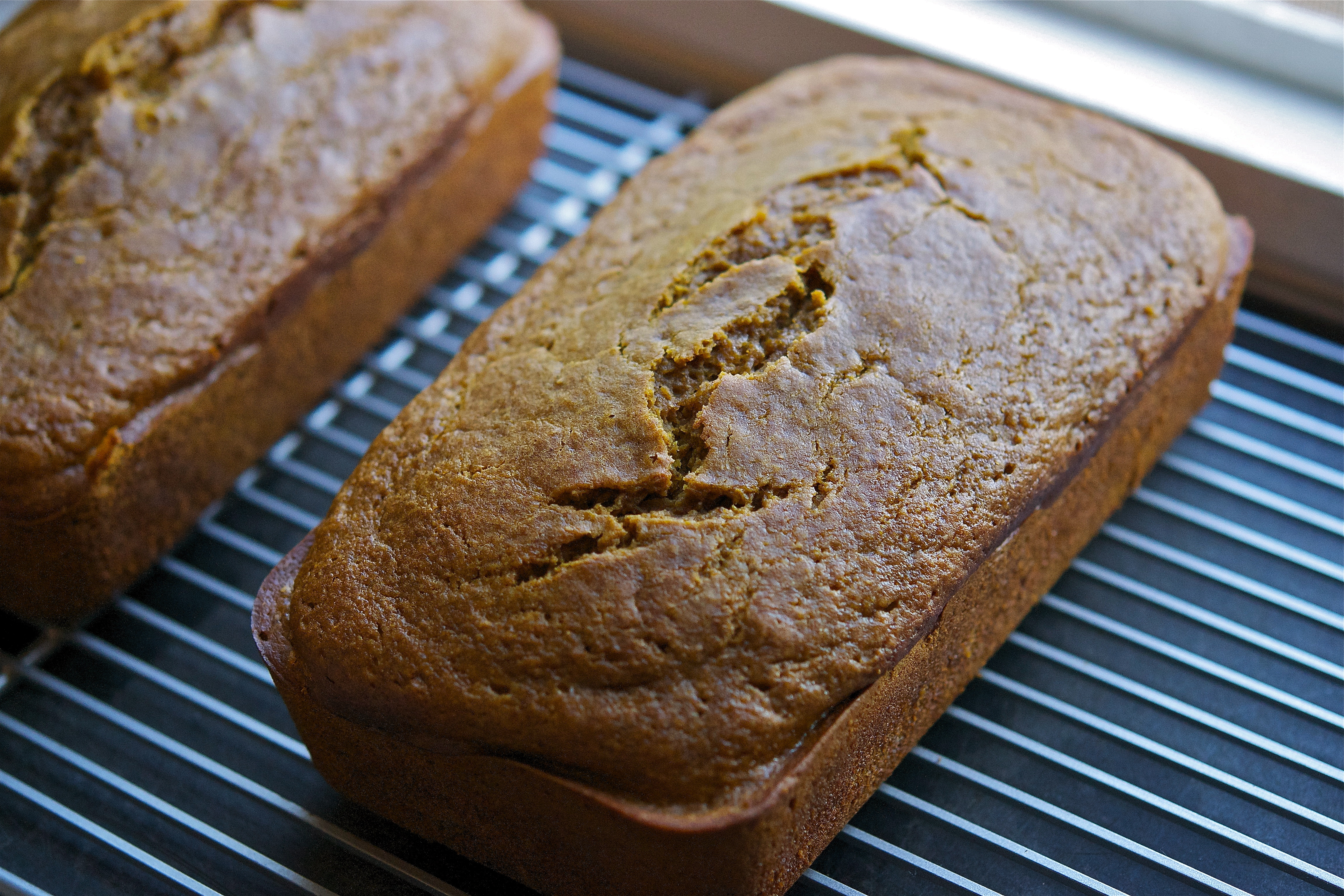
MaplePumpkinBread1Cloves, cinnamon, nutmeg, and ginger make for a potent spice mix – I guarantee that your kitchen is going to smell like heaven. The resulting loaf is both stunning and aromatic, invoking thoughts of New England Falls and warm nights by the fire. As the literary figure Anne of Green Gables once said, “I’m so glad I live in a world where there are Octobers.” (So I quoted a character who shares my name…biased, but I LOVE October!) This bread is perfect on its own, but a touch of honey or even butter would be a beautiful finishing touch. Click HERE to add this recipe to your seasonal repertory!
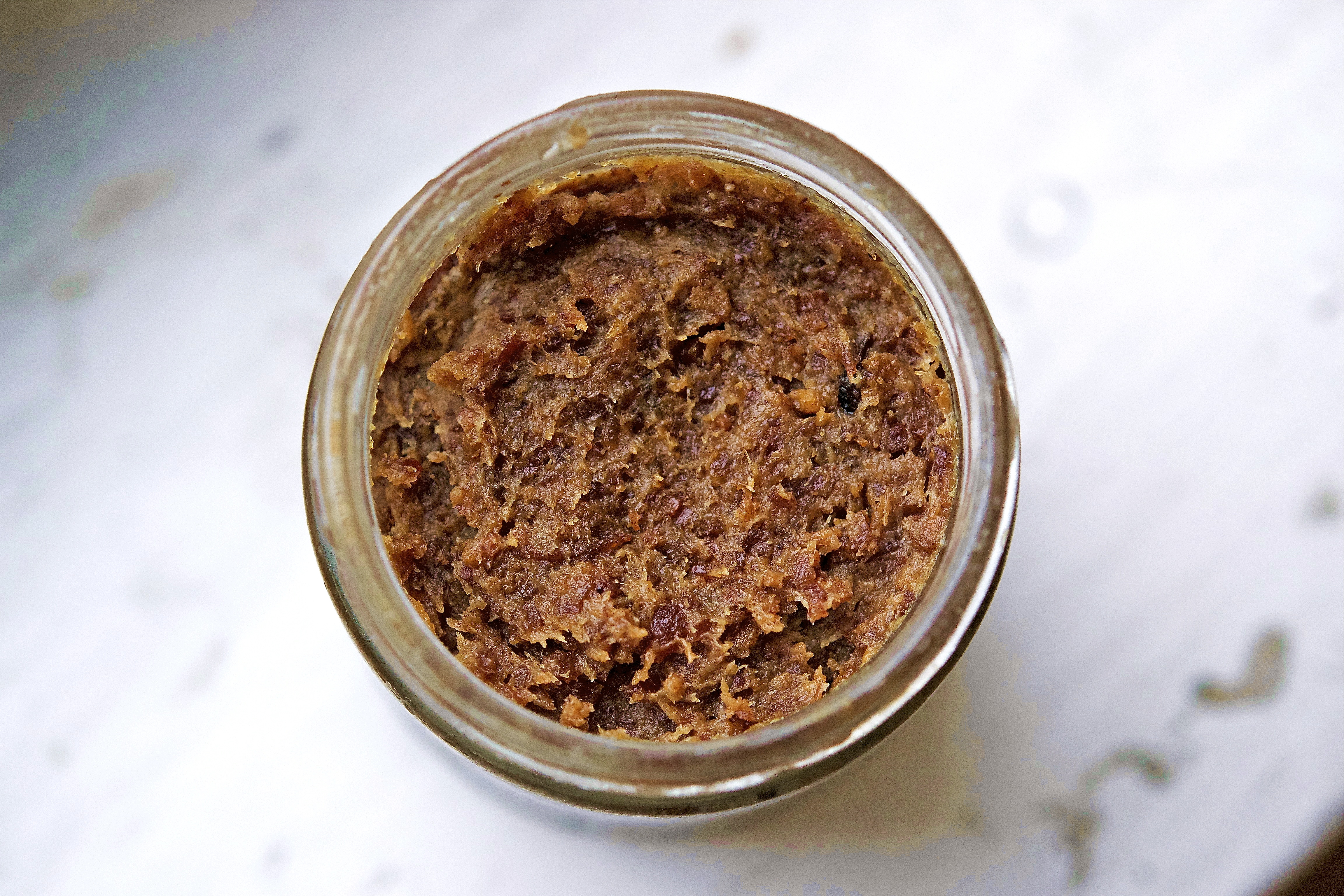
Bacon Jam[CUE about-face, and change into stretchy pants] – so let’s talk bacon: arguably THE fat of  choice in our nation. According to a survey published earlier this year, 69% of American households buy bacon…making it the second highest red meat of the country’s overall purchases. It appears in everything from breakfast casseroles to ice creams, so no surprises there. There are those who would go so far as to say that bacon is the “olive oil” of North America. I don’t know if I fully agree, but this jam gave me a new perspective on its potential – it’s akin to flavored butter, and doe not have an overwhelming “bacon-y” taste. It’s a really simple process, and the jam will last for a month in the refrigerator…if you manage to not eat it all in one sitting. Click HERE to see the recipe for this sinfully delicious spread!
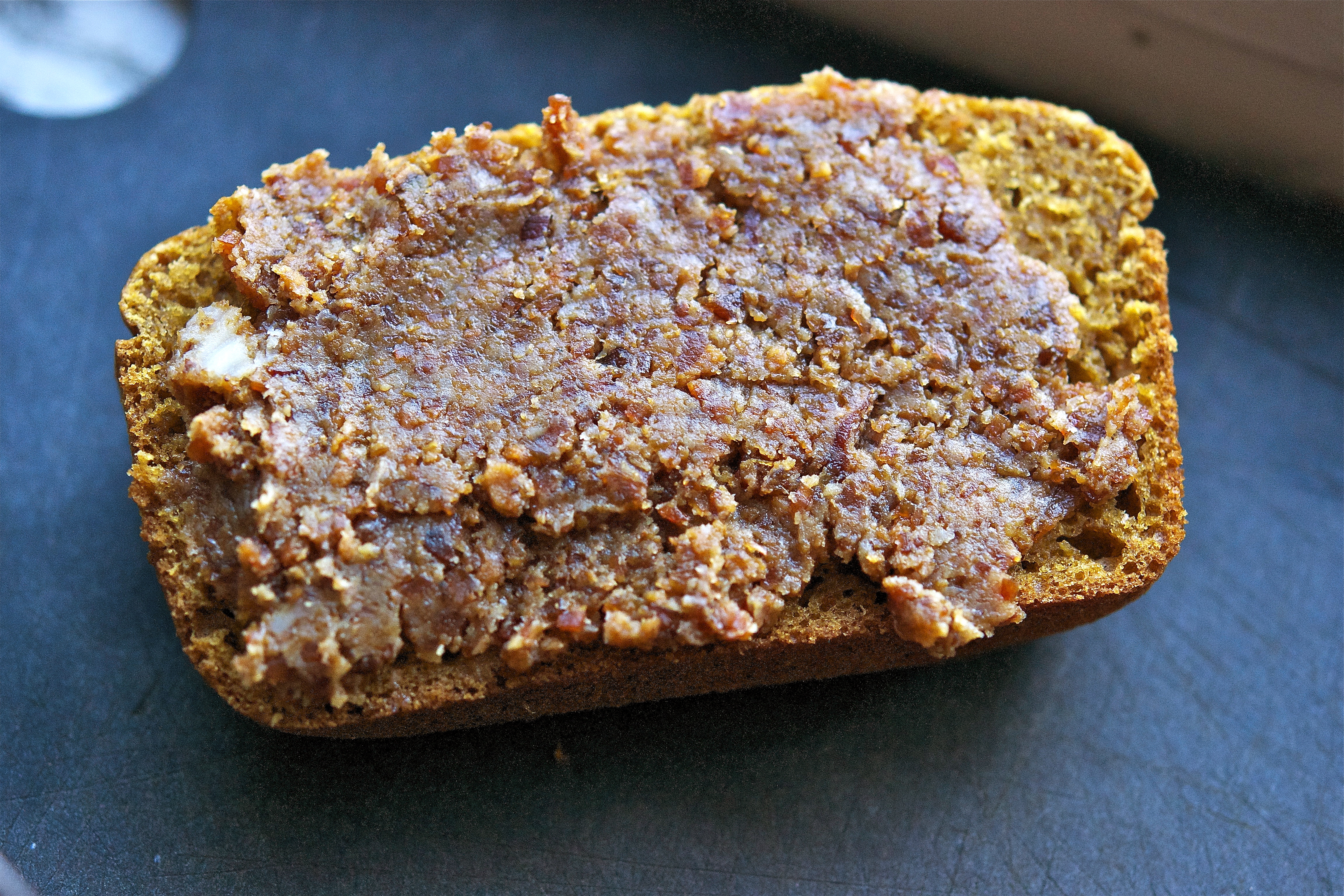
Pumpkin-Beer BreadWhile the jam is ridiculous, the bread is just as drool-worthy. It’s loaded with pumpkin, thanks to a healthy dose of pumpkin purée AND pumpkin ale. Like the former recipe, you’ll be adding a handful of the fall’s best spices (my hand is much smaller than others’…so make that an “Anne handful” of spices). There is some whole wheat flour in this recipe, but once you’ve melted the butter, poured in the ale, and spread on the bacon jam…well, let’s just say now is not the time to focus on the “nutritional” elements. Indulgence is the reward, and this combo will certainly meet your expectations – click HERE to see the recipe for this richly flavored fall bread!
Pumpkin Bread with Bacon Jam 2Quick breads can go one of two ways – a healthy alternative for breakfast, or a decadent treat for dessert. At the end of the day, they all have a shared seasonal aesthetic and ease of preparation. These were both pumpkin breads, but the results were as different as night and day. While many composers valued the concept of opposing forces, one who particularly stands out was Robert Robert_Schumann_1839Schumann. His music was often guided by the impressions and emotions of various personae. In fact, he even drew inspiration from his own “multiple” personalities, most famously depicted through the characters Florestan and Eusebius. On the one hand you have Florestan – the outgoing adventurist driven by impulsive desires – and on the other Eusebius – the careful wallflower whose interests are more scholarly than enterprising. These two personalities are prominently featured in Schumann’s Davidsbündlertänze (Dances of the Tribe of David): a group of 18 pieces for solo piano. Each is inspired by one or both characters, alternating between impulsive fervor and melodic contemplation. It is a truly marvelous collection – the pieces are described as “dances”, but act more as a back-and-forth dialogue between these two antithetical voices of Schumann’s nature. The following recording features pianist András Schiff – enjoy!

Sources Cited
“Pepita” Wikipedia.com
“Davidsbündlertänze” Wikipedia.com
“The Life and Music of Robert Schumann,” NPR Music

Some Cheesy Pleasure

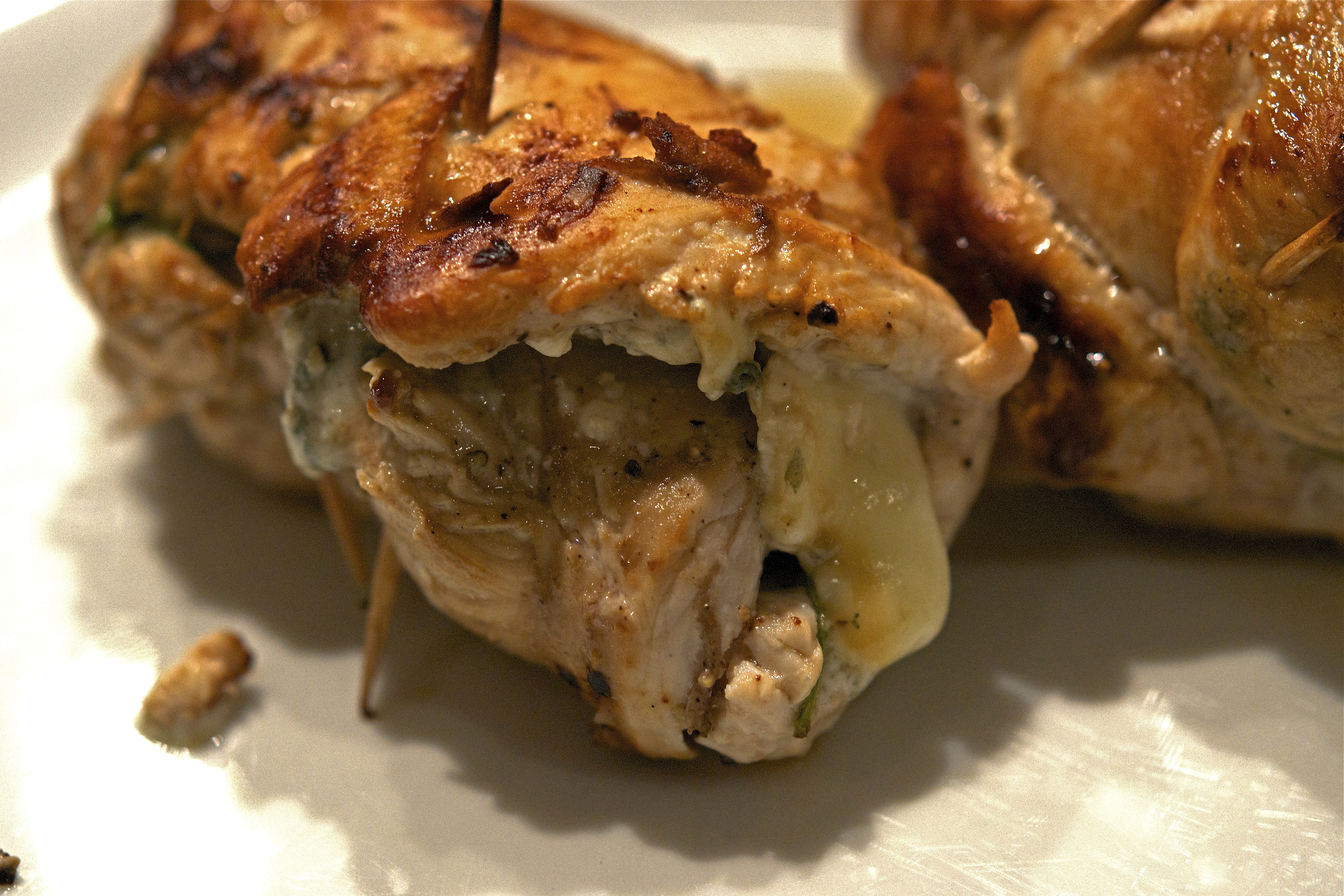
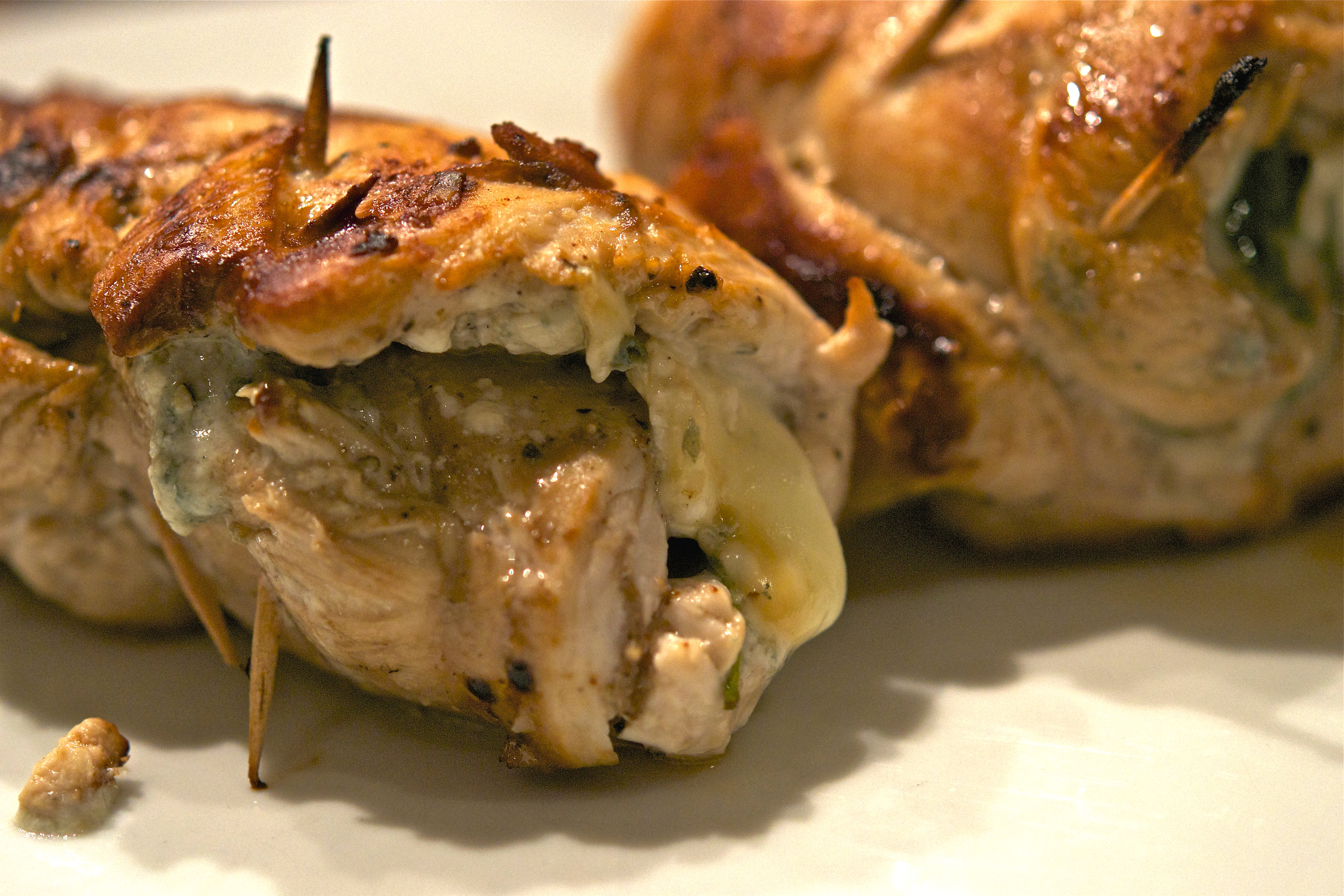
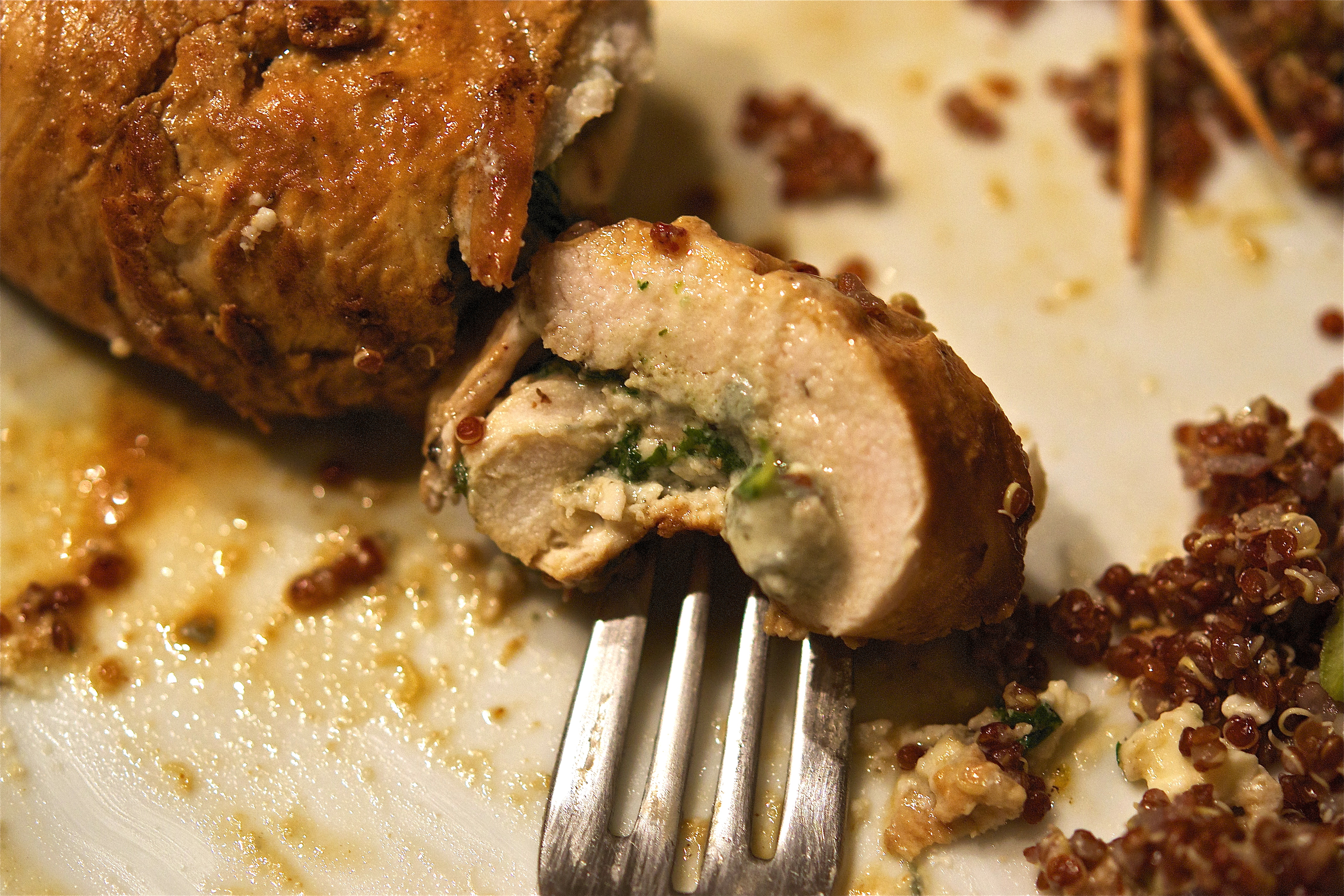
ChickenRoulade3You know the old adage “tastes just like chicken?” Well, if you’ve been eating as much chicken as I have, the taste of chicken becomes just that: a flavor as unique as grass. Your daily cognizance of its presence reaches the point of tedium. Chicken is wonderful, don’t get me wrong – yet the “lean protein” and “cross-cultural” accolades lose their luster after the 10th meal you’ve had with chicken…similar to hearing Vivaldi’s Spring for the umpteenth time. So here I was again, facing the inevitable task of creating a chicken dinner that didn’t taste like chicken. I went for the easy win, and chose the one thing that makes any meal beautiful – a pungent, fatty hunk of cheese. And I daresay these Blue Cheese Chicken Roulades were to DIE for!
Blue CheeseNot to gross you out, but blue cheese is quite literally a “molded” cheese – it has been infused with Penicillum (yup, it’s the same genus that produces the antibiotic) to create those distinctive blue “spots”. It’s this addition that gives the cheese such fabulous depth – a salty, sharp taste that pairs well with honey and fruit (apples or pears especially). Like many a wonderful invention, blue cheese was a total accident – cheeses being stored in caves started to develop mold under the humid circumstances, and yet the flavor was a surprisingly welcome deviation from the original….WHY they ate the moldy cheese in the first place beats me, but I’m thankful they did.
ChickenRoulade2This is one of those recipes that looks more difficult than it actually is…well, you might accidentally prick yourself with a toothpick, but it’s a minor threat for such an irresistible result. The trick is to soak the toothpicks for 30 minutes at least, so they are “heatproof” and won’t splinter easily. We decided to include spinach as an afterthought, but it was more for color than anything else. Basil would have been too overpowering, and any other green would defeat the purpose.
ChickenRoulade6These roulades are the paragon of “comfort food” – no frilly sauces or special seasonings, just cheese doing what it does best: MELT. A castiron pan is best for this recipe, but any ovenproof skillet will do (or you can simply transfer the chicken to a baking pan post-searing…but then you lose all of those glorious pan juices!) Warning – you might attack your friend so that you can have his/her share…don’t say I didn’t warn you 😉 Click HERE to read more about this sinful recipe.
ChickenRoulade5“Nutritional” and “daring” rarely define comfort food – this is a genre whose sole intention is to portray the joy of eating, a pleasure that is by no means a triviality. The goal is analogous to the philosophy of many a French composer during the 20th century. Conveying pleasure through art was a priority, as Debussy famously describes:

“There is no theory. You have only to listen. Pleasure is the law. I love music passionately. And because l love it, I try to free it from barren traditions that stifle it.” – Claude Debussy

While the music of Debussy is among my favorites, I chose another French composer as the subject of this pairing: Jean Françaix (a fan of Debussy himself!) Françaix was a musical prodigy from the start, telling his family that he would become the next “great French composer” following the death of Camille Saint-Saëns. 1240471_504518966291893_466927587_nWhile this may seem overly ambitious (if not arrogant), his musical abilities by and large merited such confidence. His Wind Quintet No. 1 (written in 1948) is a remarkable example of the virtuosic, joyous style that guided most of his writing. The opening is a slow dance, with a horn melody soaring above a texturally rich harmony. In an instant, the winds take off on a series of running scales – yet the horn is still singing, reflecting on the calm from moments before. The second movement is playful, alternating between a fast-paced presto to a lilting, honeyed waltz. We encounter a theme and variations in the third movement, where each instrument takes a turn. The fourth is pure fun – the winds are flying through runs and articulated passages, while the horn and oboe recall the opening’s joyful respite. It ends on a humorous note, as though Françaix is reminding us to smile – for after all, isn’t that what music (and food) are all about? The below recording is with the Berliner Bläserquintett – enjoy 🙂
Sources Cited:
“Blue Cheese,” Wikipedia.com
“Claude Debussy,” Wikipedia.com
“Programme: Zephyr Wind Quintet,” Chamber Music New Zealand
PHOTO: Interlude.hk

Unhurried Finesse

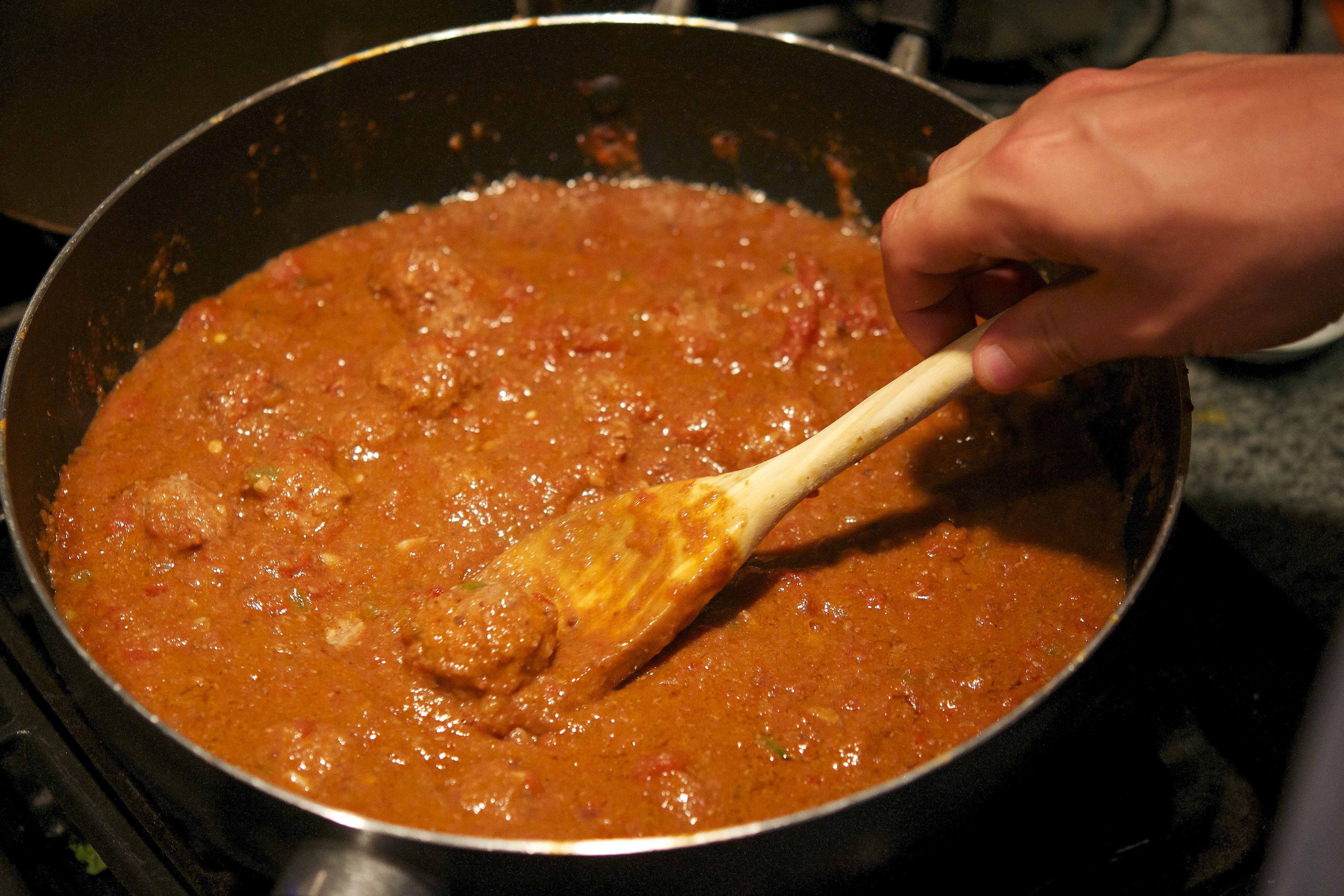
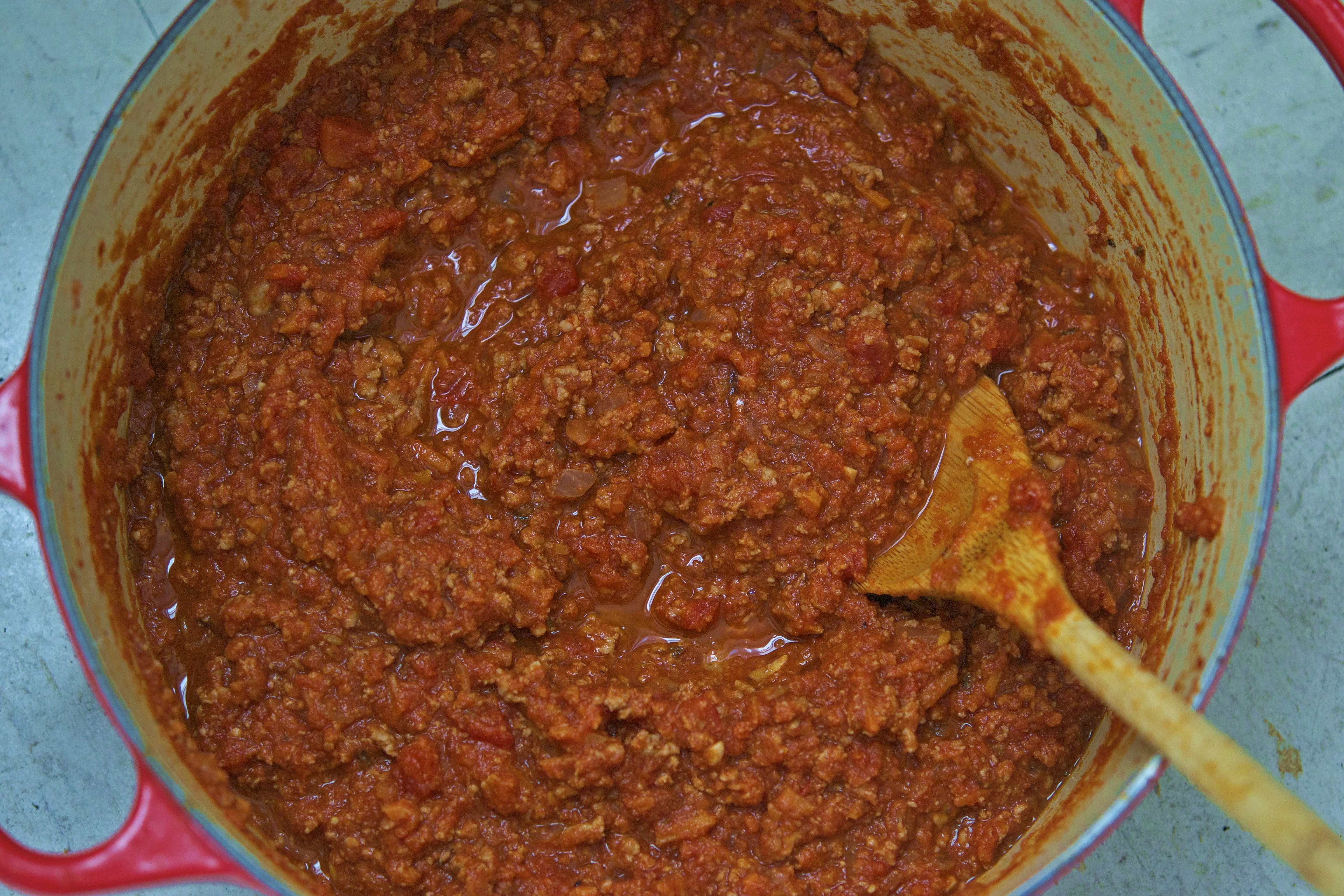
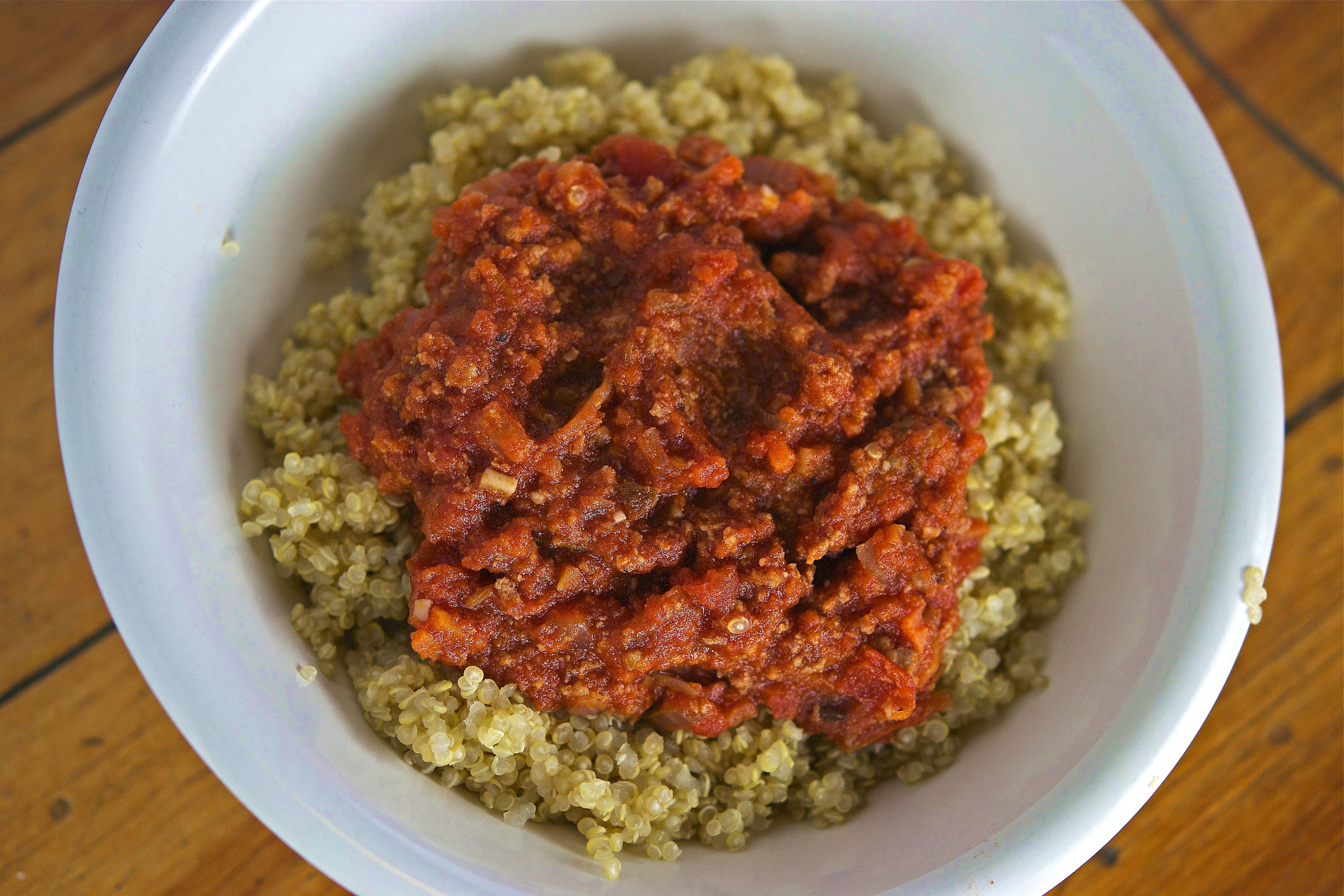
TurkeyBolognese1One thing that Boston can guarantee is drastic seasonal transitions – two weeks ago we were drenched in 90-degree weather with unfathomable levels of humidity. Tonight’s weather? A balmy 48 degrees, and dropping. We’ve taken the inevitable step into Fall – sweaters, scarves, and soups are making their way into our daily routine. Food becomes richer, as we dive into the depths of a hearty stew or warm ourselves with a bowl of steaming noodles. The other day I made dinner for two very close friends of mine, and decided to make a dish that would hint at the turn of the season: Turkey Bolognese.
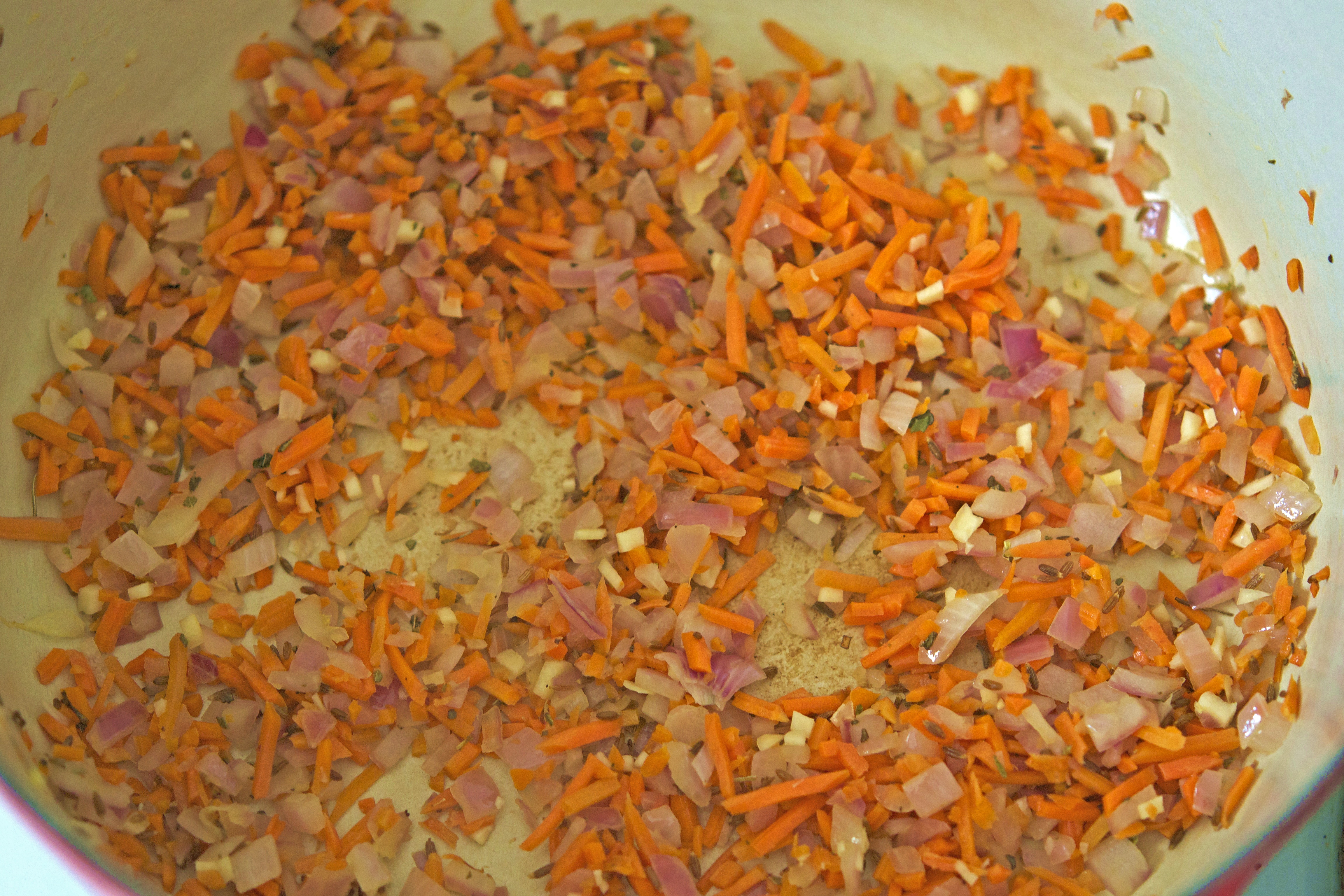
TurkeyBolognese3Ragù alla bolognese, a meat-based sauce, is a fairly basic recipe. You have a distinctive “soffrito” – onion, celery, and carrot sauté – as well as wine, tomato and meat. What happens next is totally up to you – my recipe is a little more idiosyncratic than your traditional bolognese. For starters, I used ground turkey in lieu of red meat – this wasn’t actually a healthy incentive, but more of a personal flavor preference. I also forgot to buy celery…so my soffrito was a little “less so”. Since I clearly had thrown tradition out the window, I decided to throw in some cumin seeds…and WOW did that make a difference! Both flavor and texture were enhanced, and I can’t even begin to tell you how it warmed my house with the most beautiful aroma.
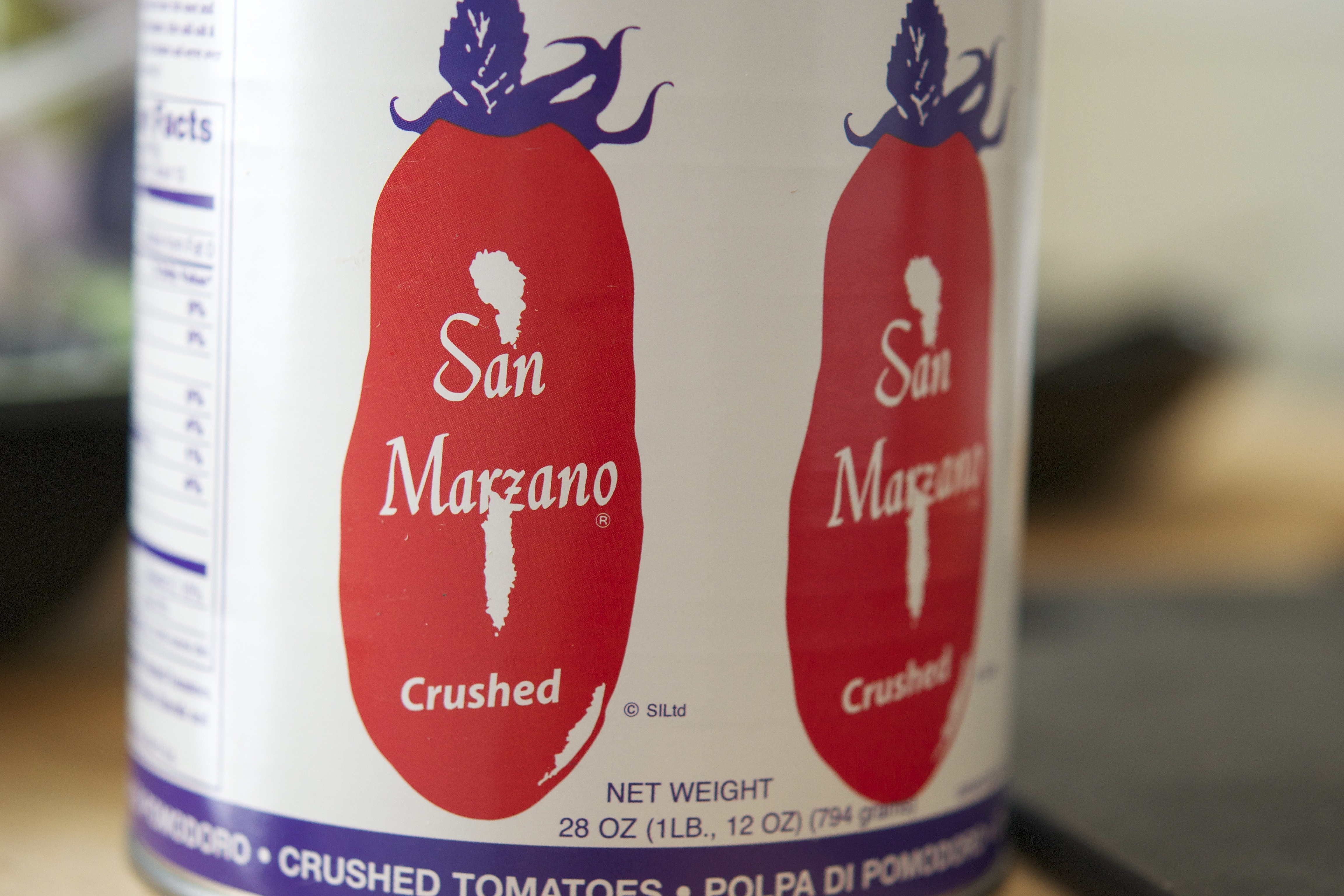
SanMarzanoI am not a “very” picky chef, but there are certain brands that I trust implicitly – San Marzano canned tomatoes are my go-to for tomato-based sauces. The result is consistent, and the flavor always spot on. San Marzanos are heralded as “Italy’s finest plum tomatoes” – they are grown at the base of Mount Vesuvius, which is of course surrounded by fertile volcanic soil. Upon ripening, the tomatoes turn a deep red and are handpicked with the utmost attention. It’s quite the process, as you can imagine…so perhaps I am a little pickier than I thought 😉
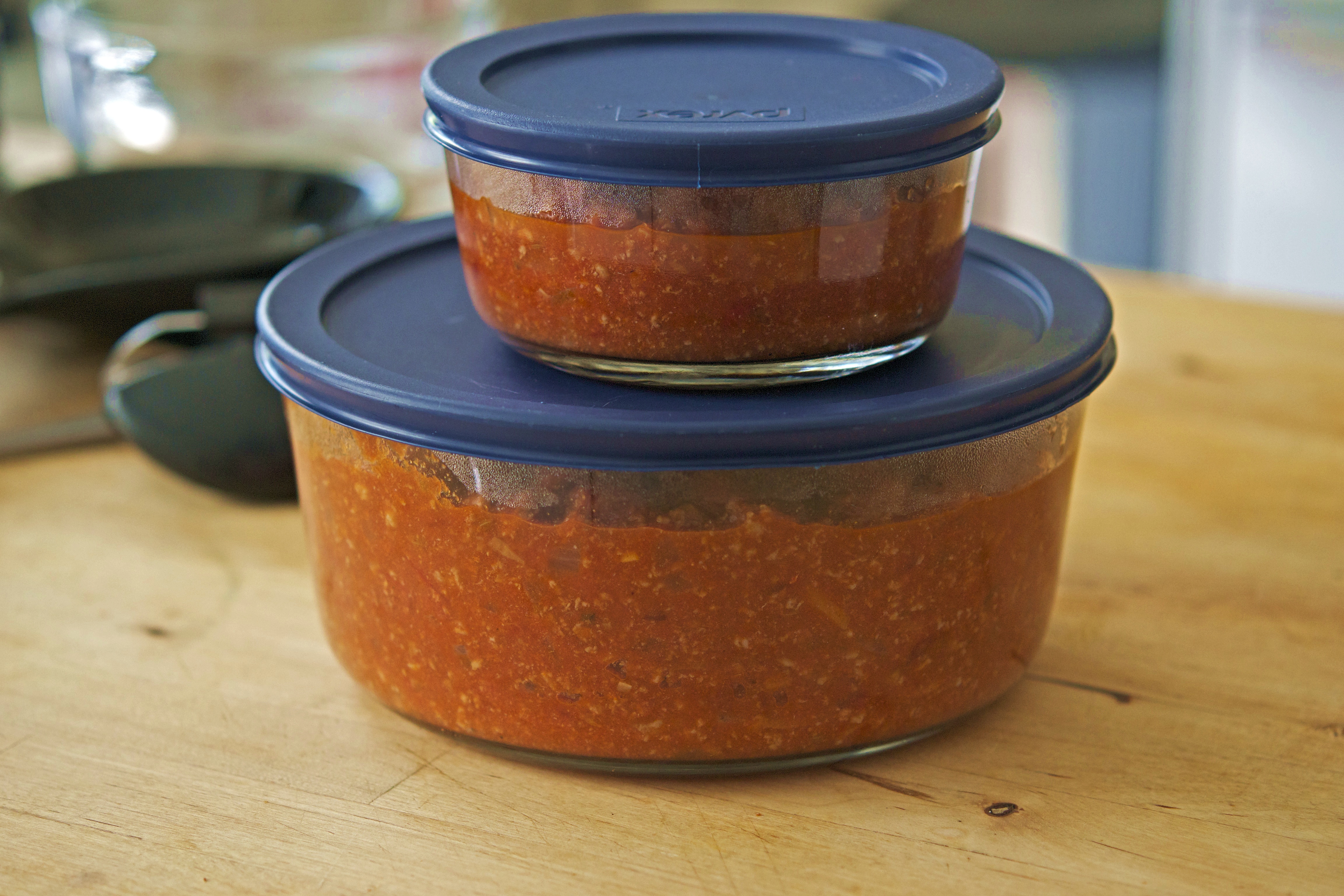
TurkeyBolognese4The real power in this sauce comes with time – not just the cooking time (which should be close to an hour) but the willingness to put this “smells-so-wonderful-I-could-eat-a-horse” sauce into glass tupperware…and allow it to chill overnight. What this does is allow the sauce’s flavors to further develop, creating a rich outcome without the hassle of sitting in front of a stove for endless amounts of time. This doesn’t mean you can’t devour the whole bowl right then and there…but trust me when I say that this dish turns into something else entirely the next day. Click HERE to the see the recipe!
TurkeyBolognese2Patience has become an attenuated virtue in a world where immediate access is daily expectation. The thought of allowing a sauce to chill overnight (much less for 4 hours!) is difficult to imagine, especially when frozen dinners have gone organic and salads are the new “chic”. The musical world was and often is guilty of this hurried spirit – rushing through a practice session, taking an allegro at a presto pace, etc. And then there was Brahms – a man whose self-scrutiny created a remarkably meticulous, thorough style of composition. In fact, said meticulousness reached the point of absurdity at times. Take his Piano Concerto No. 1 – a work which evolved from double piano sonata to orchestral symphony to piano concerto, and is this blog’s musical pairing as a result. Brahms’ ambitions as a young composer led him to pour his energies into creating a symphonic masterpiece, yet the need to “live up” to the genius of Beethoven (and predecessors as a whole) instilled a powerful sense of patience url-1by which Brahms’ composing would forever be governed. Having started the work in 1854, he would finally introduce the completed work to the public in January of 1859. His friendship with the piano “power duo” Robert and Clara Schumann, pictured left, inspired the work (and ultimately became an homage to Robert following his death in 1856). What I thought made this piece the perfect musical pairing is the maturity it boasts, both in the emotional and intellectual sense, under the auspices of a concerto. The work’s maturity can in part be attributed to patience – had Brahms chosen to unleash his symphonic ambitions, his ultimate venture into that genre may have been diminished. While it may be no symphony, this concerto achieves orchestral feats far beyond the average concerto. In a similar sense, this turkey bolognese (though not quite the original) is a dish with unexpected depth and character. The recording below is by the renowned Emmanuel “Manny” Ax, and the Chamber Orchestra of Europe – enjoy!

Sources Cited:
“What’s the Deal With San Marzano Tomatoes?” The Kitchen
Huscher, Phillip. “Program Notes: Piano Concerto No. 1 in D minor, Op. 15.” Chicago symphony Orchestra
PHOTO – DeepRootsMag.org (Roots Music & Meaningful Matters)

South of the Orient: Part II

Gaeng Panang1Advancements in travel and communications have made our world far more accessible, and culinary experimentation has become easier as a consequence. Even so, it’s amazing how many flavorful foods have yet to be included in the conventions of American cooking. This mini series is meant to catalog the travels of my boyfriend Tom, and his unique understanding of Asian cuisine – one thing that certainly holds true to this style of cooking is the use of colorful ingredients. While it may seem laborious to prepare and process so many ingredients, the food is always packed with flavor – this Gaeng Panang Gai was a fantastic example of just that.
Gaeng Panang3This dish is native to Thailand, where Tom lived for almost a year (the below photo is from his travels). Similar as with India (which you can read about in my last post from this series), he was captivated by Thailand’s wealth of resources:

“…the ingredients come from what is readily available, and the south of Thailand is blessed with year round access to unique, evocative plants, roots and vegetables that they pound together in a pestle and mortar, a process that takes hours, not to mention iron wrists, until it forms a smooth, blisteringly strong paste, which is mellowed out in the wok with the addition of coconut milk.”

16440_1266104022204_6628122_nAn interesting fact about Thailand, there are only three seasons: hot, cool, and rainy. Local Buddhist monks measure their regional tenure by rainy seasons as opposed to years spent in said area. On the other hand, there are FIVE basic attributes to Thai cuisine: sweet, spicy, sour, bitter and salty. A pretty remarkable shift from Western traditions. And did I mention how much they love rice? Thailand currently stands as the world’s largest exporter – no wonder they make so many curries!
Gaeng Panang4The one thing I love about Asian cuisine is the color – bright reds, rich golds, luscious greens – when plated on white dish, the contrast is stunning. Watching Tom prepare this, I learned that it’s worth taking your time to get everything in place before running with it – that way you can act quickly once the “heat is on”. The paste is quite simple, and is the central element of this recipe. A food processor or blender is necessary, but you can mash it to a paste with a pestle and mortar if all else fails (and it would be an excellent forearm workout!) You can serve with or without rice, but you’ll definitely want something to sop up all of that delicious sauce – click HERE to see the recipe.
Gaeng Panang2The amount of flavor you experience in a single bite sets this dish apart – it’s practically a “treatise” on the qualities of Thai cuisine. You have your fundamental ingredients, to which a variety of components are added in support. This led me to consider Samuel Barber’s First Essay for Orchestra, Op. 12. The work is built upon a musical “thesis”, where the proceeding ideas and harmonies are all played out accordingly – similar to the structure of a written essay. The work was composed in 1938 for conductor Arturo Toscanini. Barber met the renowned Toscanini in the late 1930’s, who was quite taken with the composer’s music. The work was commissioned and premiered by Toscanini with the NBC Symphony Orchestra – Barber’s Adagio for Strings (arguably his most well-known composition) was performed for the first time on this very concert. The other thing that led me to consider this work was the chef himself – Tom is a very strong writer, and takes a good deal of pride on an “essay” well done (okay, so this connection may be a little kooky, but I’m fully aware of my writing eccentricities!) Anyways, this pairing both compliments and supports this delicious meal, and is a beautiful work – it may be only 8 minutes in length, but it is filled with musical color and passion. Enjoy!

Sources Cited:
“Thailand”, Wikipedia.com
“Essay for Orchestra (Barber)”, Wikipedia.com

It’s Lobstah Time!

Lobster 2Have you ever just cooked a certain food for the sake of saying you actually went through with it? This summer I did just that with some of my girlfriends by cooking lobster. I think this might be a rite of passage for any good Bostonian, considering they are in abundant supply on this coast. That being said, it’s something that most people don’t want to “shell” out for on a regular basis – that’s what makes it special. Rachel Roberts ran the whole operation, from creating the awesome boil to helping us break those darned shells…and let me tell you, this was a messy occasion. No cutesy silverware or dainty garnishes – this is food as it was meant to be eaten: with your hands. Lots of napkins and laughter are key to any good Lobster Broil.
Lobster1Many classify lobster dinner as a “high society” meal, when in fact this wasn’t always the case. Before the 19th-century, lobster was relegated to use as fertilizer, fish bait, and prison food (and the inmates hated it). It wasn’t until the twentieth century that restaurants began to seek out this delicacy. While it can be incorporated to any number of dishes (like Lobster Mac and Cheese!) boiling is the most popular method. To get the most out of your lobster, you can’t just toss them into a pot of plain water – the flavor comes from that boil! Rachel went above and beyond expectations with this recipe. She divided the stock between two large stock pots (since she doesn’t own a massive lobster pot), and each was brimming with potatoes, corn, and kielbasa – not to mention beer! The best part about is that you can eat all of those gorgeous add-ins at the end – making it literally a “one-pot meal”.
Lobster Party 2The most difficult part of cooking lobster is…well, cooking the actual lobster. A word of caution: this is not a recipe for the faint of heart, as you will be placing a live lobster into a pot of boiling hot water. That being said, you will definitely find yourself more willing to go for it with friends around – Rachel attributes this to a friendly “group peer pressure.” There’s no doubt that strength comes in numbers, and we were all laughing and rooting each other on throughout the process. Still seem a little overwhelmed? This How-To Post by Simply Recipes outlines the process beautifully. My advice is to keep on smiling, and remember just how delicious it will be after the fact…
Lobster Party 1Ah, we’ve finally reached the food! Lobster meat is some of the most expensive seafood you can buy, and the process of actually getting to the meat makes the cost all the more understandable. It is delicious, whether on its own with a pat of butter or folded into a rich risotto. We went for the former, with butter and seasoning to spare. I am more of a hot sauce girl myself (a credit to my Southern roots!) As crazy as this meal may seem, I’ve found that the most enjoyable food is the kind that gives everyone a chance to “be involved” – considering we were all covered in shell pieces by the end, this was a perfect example. Click HERE to see the secrets behind New England lobstah!
Lobster 3As Rachel and I were discussing the musical pairing, the one word I kept coming back to was chaotic. It is certainly worth it by the end, but can be a bit of an involved process leading up to the actual meat. With that concept in mind, Rachel suggested the perfect piece: Peter Maxwell Davies’ Orkney Wedding, With Sunrise. It’s roughly 14 minutes in length, and depicts the “chaotic” atmosphere often connected to wedding ceremonies. The composer explains it himself:

“It is a picture-postcard record of an actual wedding I attended on Hoy in Orkney. Each event in the music, then, describes something that happened. At various points the flute, the clarinet, the oboe, the bassoon, and, most especially, the violin call the tune; various harmonic and orchestrational adventures depict the consequences of the consumption of whiskey. Finally the bagpipes are heard at the back of the hall representing the steadying, sobering dawn.” – Peter Maxwell Davies

These mini episodes can be likened to the various stages of cooking a lobster – avoiding the claws, getting the lobster into and out of the pot, and the laborious process of cracking the shell. Just when you feel like throwing out the lobster cracker, you reach the meat and a bagpipe heralds your victory! (Not really, but wouldn’t that just be the coolest thing?) You can finally sit back, relax, and reflect on the whole occasion as you dip claw meat into a fresh bowl of melted butter. Just like a wedding, there will always be another time – yet you will feel all the more prepared for this enjoyable meal, “chaos” and all 🙂

Sources Cited:
“Lobster,” Wikipedia.com
“Orkney Wedding, With Sunrise,” Wikipedia.com
“Program Note: Sir Peter Maxwell Davies: An Orkney Wedding, with Sunrise” Toronto Symphony Orchestra