A Classic Dessert with a Twist

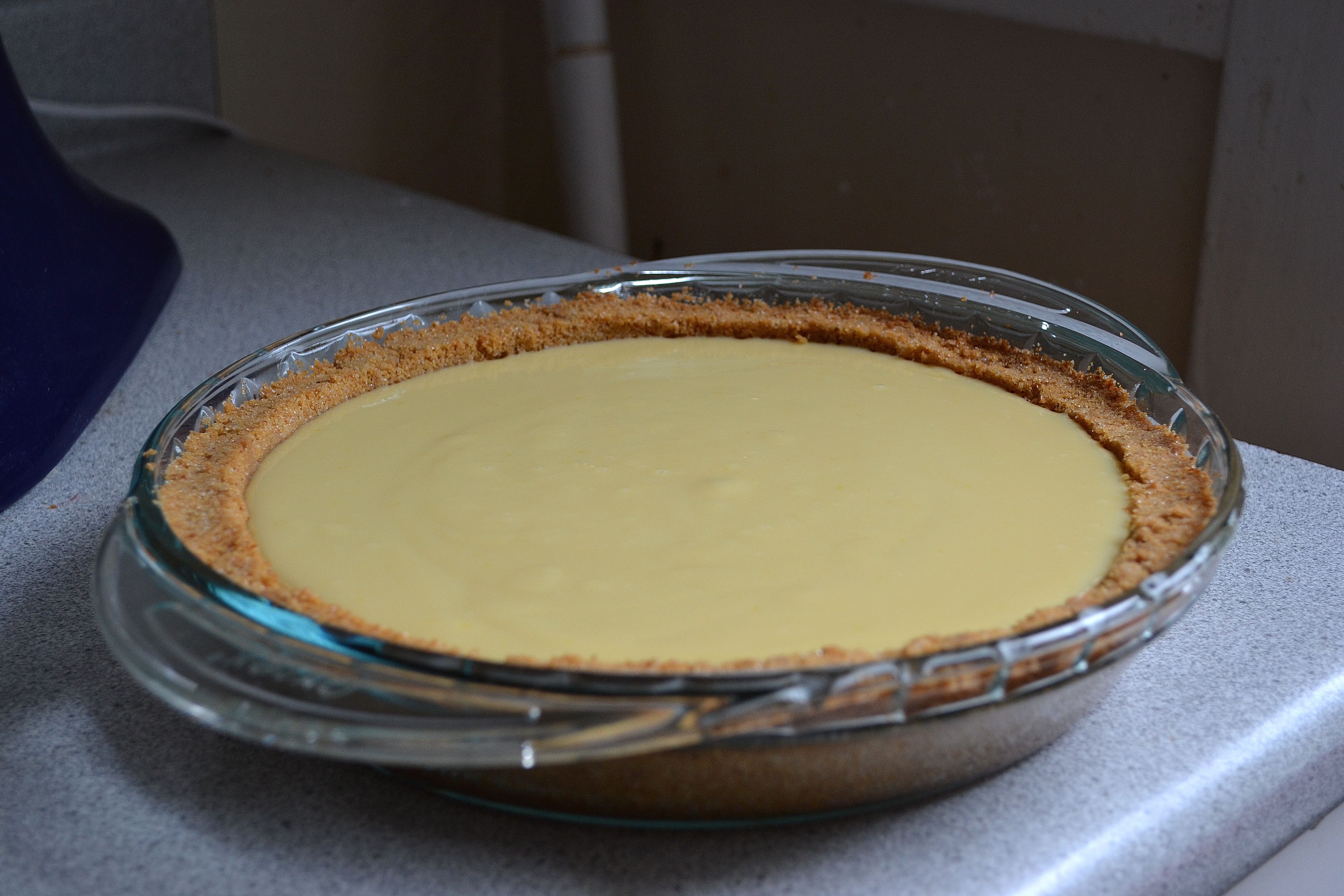
In case you didn’t notice, summer in Boston is one of my favorite times of year. The weather is almost always perfect (knock on wood), and the notorious audacity of Boston’s residents is temporarily replaced with a warm conviviality. Fall is lovely, of course, and the fist snow of winter can be breathtaking; but I can’t get enough of this beautiful season. My relish for hosting parties is tenfold, and friends/coworkers who are around for the summer become the guinea pigs of my culinary adventures. I hosted one party this past weekend that was your all-American standard: burgers, beer, chips & salsa, etc. The dessert was a classic that allowed my southern heritage to really shine: Key Lime Pie.
Key Lime Pie is named for the use of the Floridian Key Lime…okay I confess, I didn’t use actual Key Limes to make this pie. I used an organic brand of regular lime juice that I had on hand. The primary difference between these citrus cousins is color and flavor. Unlike conventional limes, Key Limes are noted for their bitter, tart taste and for having a yellow to light green skin. Native to Southeast Asia, the Key Lime was introduced brought by Spanish explorers to the West Indies. The Florida Keys became a prominent location of harvest for the fruit, with the term “Key” being added to differentiate them from the traditional Persian cultivar.* I decided to split the difference by omitting a tablespoon or two of sugar to achieve a more tart filling. Check out how to make this fabulous recipe by clicking HERE.
In pairing this dish, I chose to acknowledge Spain and its role in introducing Key Limes to North America. Spain is a nation rich with culture and history, and its composers bring that wealth of culture to their music. One example is the music of Isaac Albéniz – a Catalan composer, pianist, and conductor whose efforts were instrumental in promoting Spanish music abroad. He is most well-known for his piano works, many of which were later transcribed for the guitar.** such is the case with the selection I chose: Asturias, from Suite española, Op. 47. This suite consists of eight movements, each representing a different region in Spain. Several of these movements are performed on guitar more often than piano, including Asturias.^ This “reinterpretation” of the original composition further compelled me to pair this work with my own “reinterpretation” of the original recipe. The recording I have included is by John Williams: not “Star Wars” John Williams, but perhaps the guitar soloist of his generation. Enjoy!

http://www.youtube.com/watch?v=oEfFbuT3I6A

Sources Cited:
*”Key Lime.” Wikipedia.com
**”Isaac Albéniz,” Wikipedia.com
^”Suite española,” Wikipedia.com
Finding a Sweeter Sunrise

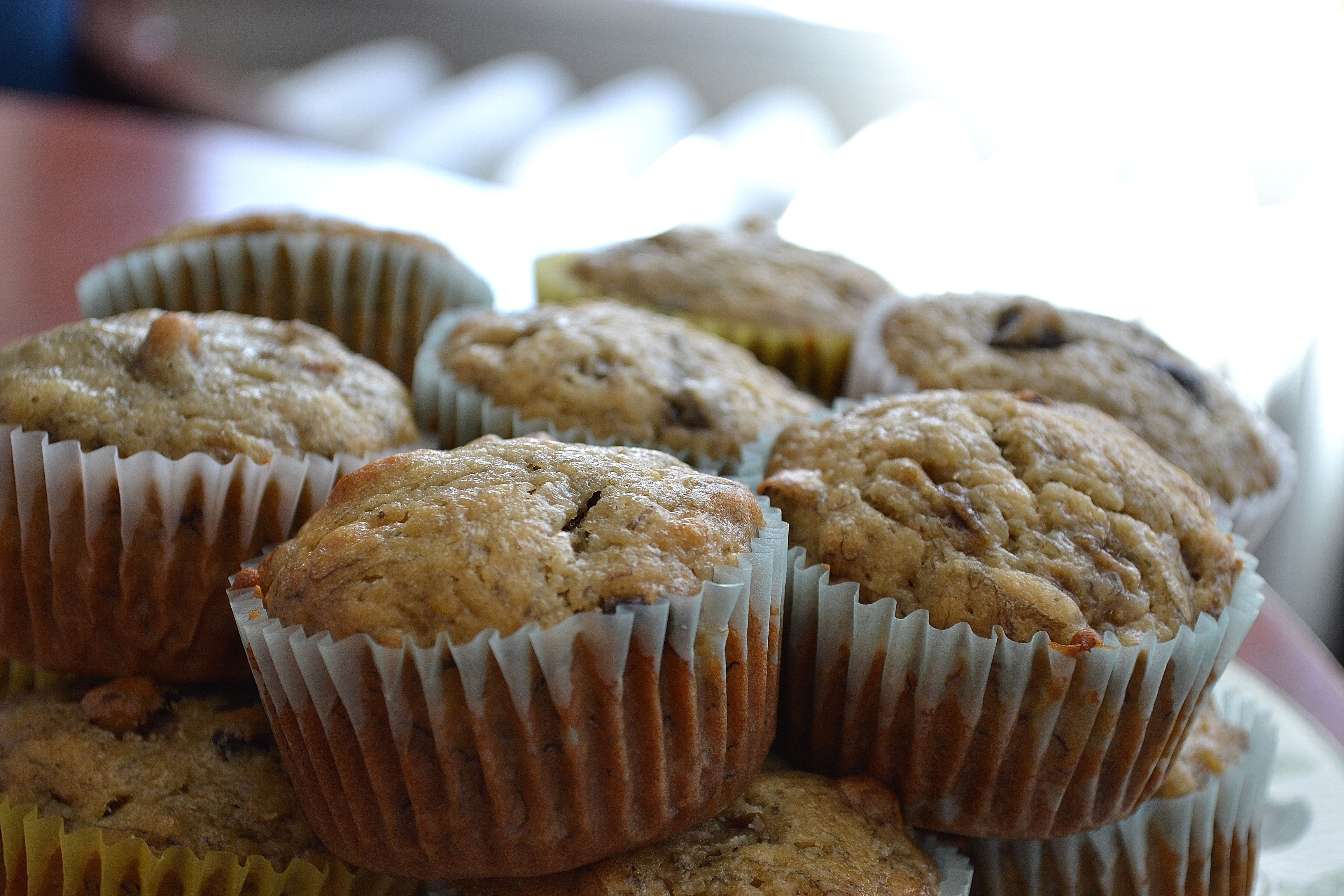
Waking up is rarely an easy task: thoughts of the day ahead and the work left to be done are little help. The cure? Freshly baked muffins. The ambrosial scent of these morning delights can rouse any sleeping beauty. While the gorgeous Boston summers are arguably what make the winters tolerable, we had a rough stretch of weather for a good part of May. To help “rouse” the spirits of my fellow coworkers, I felt that freshly baked muffins were in order and made the following: Banana Nut Muffins with Chocolate Chips and Vegan Blueberry-Orange Muffins.
The term “muffin” is believed to been derived from the French term moufflet, or “soft bread.” The original cakes were made using yeast, and tended to be round, flat, and sweetened with a touch of sugar. Today’s English muffins are much closer to this variety, only they are cooked on a griddle rather than baked. Muffins as Americans know them are substantially different: they are made without yeast, baked in small pans, and are much sweeter. The 19th century saw rise to this style of muffin, with classics such as “blueberry” and “bran” gracing a number of American cookbooks. The actual origin of muffins is extremely convoluted, and is as traceable as the origin of bread itself.*
There is only one answer for ugly, overripe bananas: muffins. Banana muffins are, in essence, miniature versions of banana bread and thus extremely simple to make! This recipe is from one of my favorite cooking blogs, SimplyRecipes, with the only difference being my addition of chocolate chips (at the request of my coworker Victor). These muffins are fantastic, and I guarantee they will be consumed within a matter of hours (as were mine). Check out how to make these breakfast delights by clicking HERE.
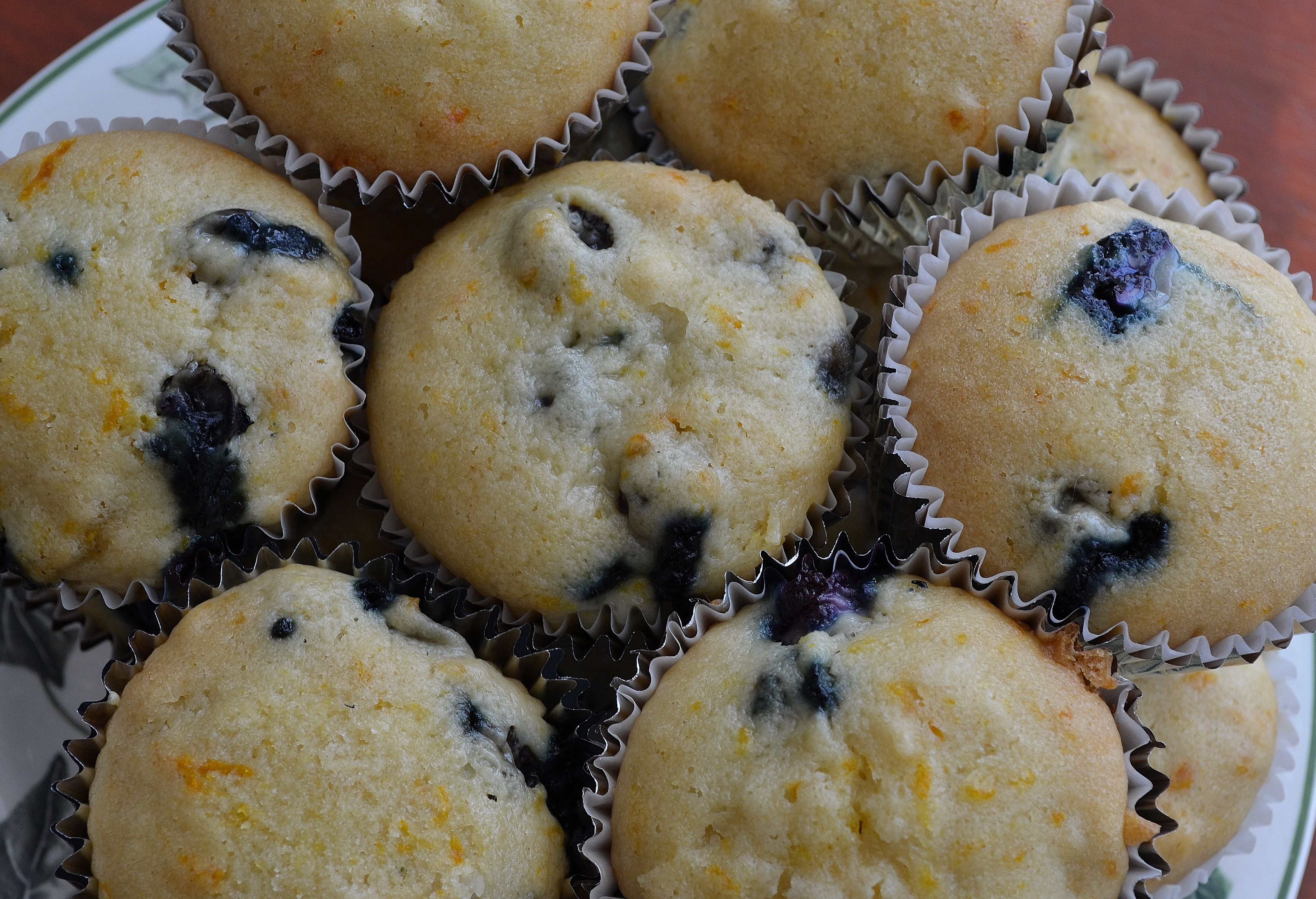
The term “vegan” is a scary one for a baker to hear, yet I was willing to attempt one such recipe for the sake of my vegan friend Rosena. I chose to go with THE classic: blueberry. The trick here was to get a muffin that had a velvety texture, yet wasn’t too dense. If I had chosen to label these as traditional blueberry muffins, no one would have guessed they were vegan. The apple cider vinegar is a crucial ingredient, giving these muffins a lightness akin to the regular variety. I chose orange zest over lemon, wanting a more summery taste – it was possibly one of the best decisions I could have made. Trick your taste buds and try these vegan muffins by clicking HERE.
Since muffins are best enjoyed with a cup of coffee and a golden sunrise, I paired these with one of my favorite works: Maurice Ravel’s Daphnis et Chloé, Suite No.2. This is honestly one of the most beautiful pieces, and has been a favorite of mine for years. The work in its entirety is a ballet of three parts, and stands as Ravel’s longest work at nearly at nearly one hour in length. The story is based upon the legendary romance of a goatherd named Daphnis and a shepherdess named Chloé.**
Ravel later selected excerpts from the ballet to create two orchestral suites. The second suite is perhaps the most popular, encompassing the more complex elements of the overall work. The suite opens with “daybreak,” where a sleeping Daphnis is awakened to be reunited with his beloved Chloé, who has just been rescued by the god Pan from a band of pirates.** I have included here the opening of the Suite No.2 with the Berlin Philharmonic under Herbert von Karajan. The sad thing about this video is that it ends RIGHT before one of THE solo of all flute solos in orchestral repertoire takes place…which is why I’ve included a second link with my biggest flute crush playing the solo: Emmanuel Pahud. Luckily, it’s the same orchestra (different conductor), making it the closest thing to a continued recording as YouTube can provide. This is genuinely a gorgeous work, and I hope you enjoy it!

1) http://www.youtube.com/watch?v=Fm6zNYZoHJs
2) http://www.youtube.com/watch?v=2HdpAoI8Ciw

Sources Cited:
* http://www.foodtimeline.org/foodfaq2.html#americanmuffins
** http://en.wikipedia.org/wiki/Daphnis_et_Chloé

A Divine Pastiche

Enjoying a cold glass of milk with a slice of cake is a beautiful thing. Given that success, who’s to say combining the two can’t be just as beautiful? I don’t mean just simply cooking a cake with a cup of milk in the batter – I mean literally drenching it in milk. Heck, why not make it THREE types of milk, just for added measure…this is precisely the method used for the beloved cake Tres Leches Cake. When I bake for a large crowd, I try to make a cake that brings the biggest “bang for the buck” – this cake was a HUGE hit: Dulce de Leche Cake with Fresh Strawberries.
The history of Tres Leches Cake relies on two of its primary ingredients: sweetened condensed milk and evaporated milk, both of which are “canned milks.” Due to spoilage and preservation difficulties, excessive health risks made fresh cow’s milk a limited commodity prior to the 20th century. Inventor Gail Borden was the first to develop the concept of canning milk. Heating the product was the primary solution to eradicating harmful bacterias, allowing for milk to be stored and distributed without refrigeration.* The dispute over the demographic history of this cake, though, is both a cultural and corporate issue. Nestlé claims a big role, having advertised the recipe on the backs of canned milks to promote the products, while Central American nations claim rights to its conception. There is little evidence on the actual origin, making the dispute a futile one.**
This cake is much easier to make than it seems, even though there are a lot ingredients (see above) – it is essentially a vanilla cake that is subsequently soaked in three types of milk (see photo below). The result is a beautifully moist cake with a lighter taste than expected. The recipe I used, originally from Saveur, is called Dulce de Leche Cake given the layer of dulce de leche spread over the top; the “traditional” tres leches cake simply uses whipped cream as a topping. I took it one step further and halved strawberries to add a decorative flair. All-in-all, it was a delectable work of art. View this recipe by clicking HERE.
Wanting to focus on the diversity of ingredients used in this cake, I went with a piece that has a number of musical “ingredients”: Charles Ives’ Three Places in New England (as per the recommendation of my dear friend Neal Markowski). This work was composed over a span of nearly three decades, and stands as one of Ives’ most iconic pieces. Considered to be one the first American composers to reach international acclaim, Ives’ works went largely unrecognized for the majority of his lifetime (having led an extremely successful career as a life insurance executive). While the literal interpretation of “three” and “tres” can be considered, my pairing takes into regard the numerous styles and layers Ives incorporates into this work. Ives is best known for his adaptation of traditional hymns and popular American songs, such as Yankee Doodle, into his compositions. These themes provide relatable substance within contexts of heavy chromaticism, polytonality, and layered melodic passages.^ Three Places is considered to be highly representative of Ive’s style, incorporating both his “avant garde” techniques as well as a number of (paraphrased) traditional themes. This work consists of three movements, each representing a different location in New England:

I. The “St. Gaudens” in Boston Common
II. Putnam’s Camp, Redding, Connecticut
III. ‘The Housatonic at Stockbridge^^

The link I’ve included below is of the first movement (slightly biased considering I’m a Boston gal), and is performed by Orchestra New England (quite fitting) with James Sinclair conducting. For those unfamiliar with Ives, he’s certainly no Beethoven; yet his works have an endearing, rich quality which is truly masterful, and stand as important emblems for our culture. Enjoy!

http://www.youtube.com/watch?v=ZKJw74JWYwg

Sources Cited:
* http://homecooking.about.com/od/milkproducts/a/canmilkhistory.htm
** http://en.wikipedia.org/wiki/Tres_leches_cake
^ http://en.wikipedia.org/wiki/Charles_Ives
^^ http://en.wikipedia.org/wiki/Three_Places_in_New_England