For All the Moms

So I am definitely behind on this post, but I place the blame on my incessant touring as an excuse for not having the chance to devote a post to moms for Mother’s Day. Many of us cherish those memories (complete with blurry edges a la Hollywood) where we ran inside from a day of play or school to the smell of freshly baked cookies. They say smell is the strongest catalyst of memory, with the majority of those connections being formed in our childhood. This is due to the connection of the olfactory bulb (the part of our brain that processes odor) to the ever-powerful amygdala…I should probably stop while I’m ahead and talk about this irresistible pair of cookie recipes: Chocolate Chunk Cookies and Chocolate Mocha Cookies with Nutella.
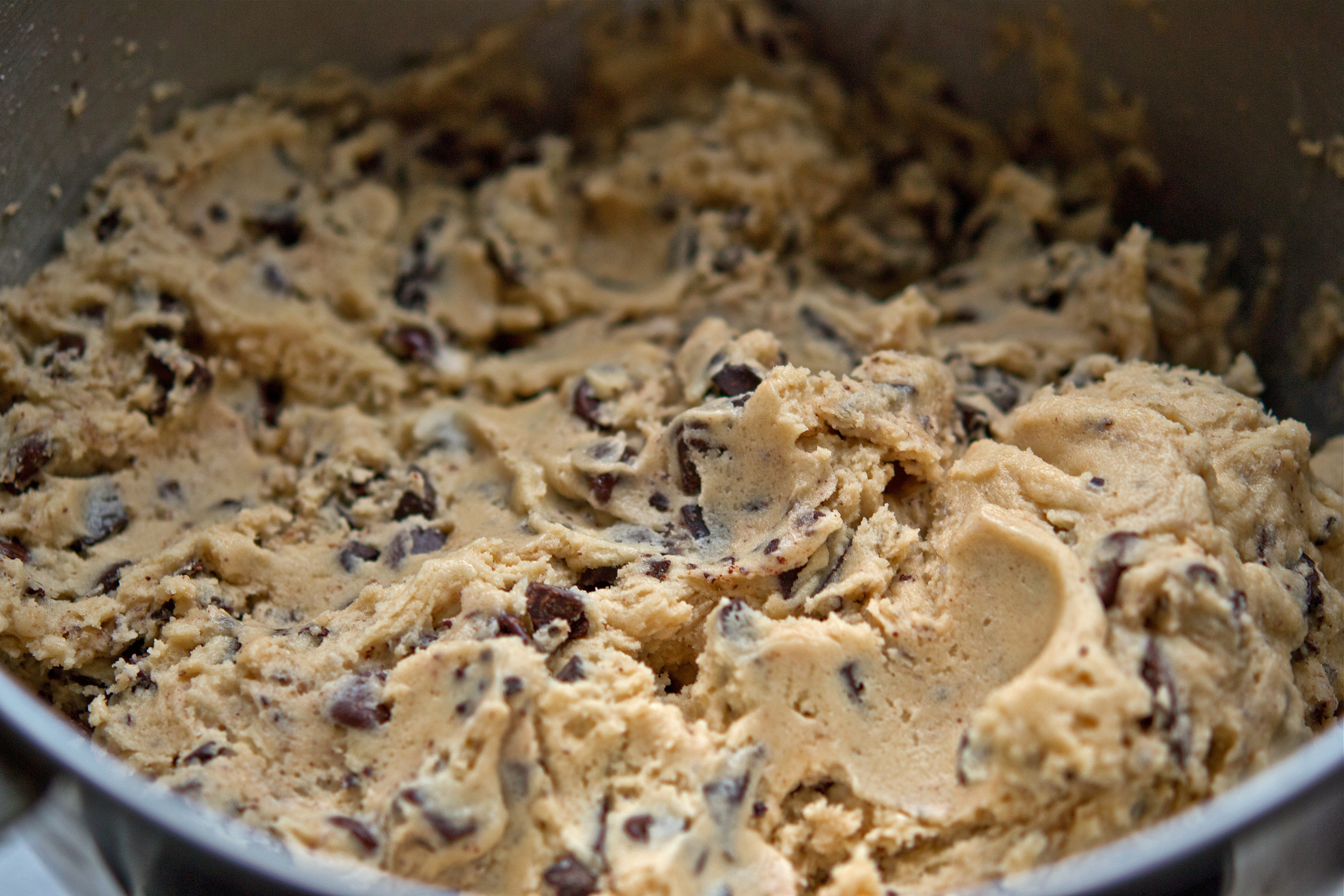
I’m often asked why I don’t eat all the desserts I make. For starters, I would basically be eating cookies and cakes for breakfast, lunch and dinner if I actually ate everything I made. But my secret indulgence? Once whatever it is I’m making is done and in the oven, guess who gets to clean the beaters 😉 And cookie dough is probably one of the most addictive things on the planet…and this dough was uhhhhhh-mazing! If you are one of the proclaimed few who can’t resist eating cookie dough, enlist help from a friend to make sure these cookies actually make it to the oven.
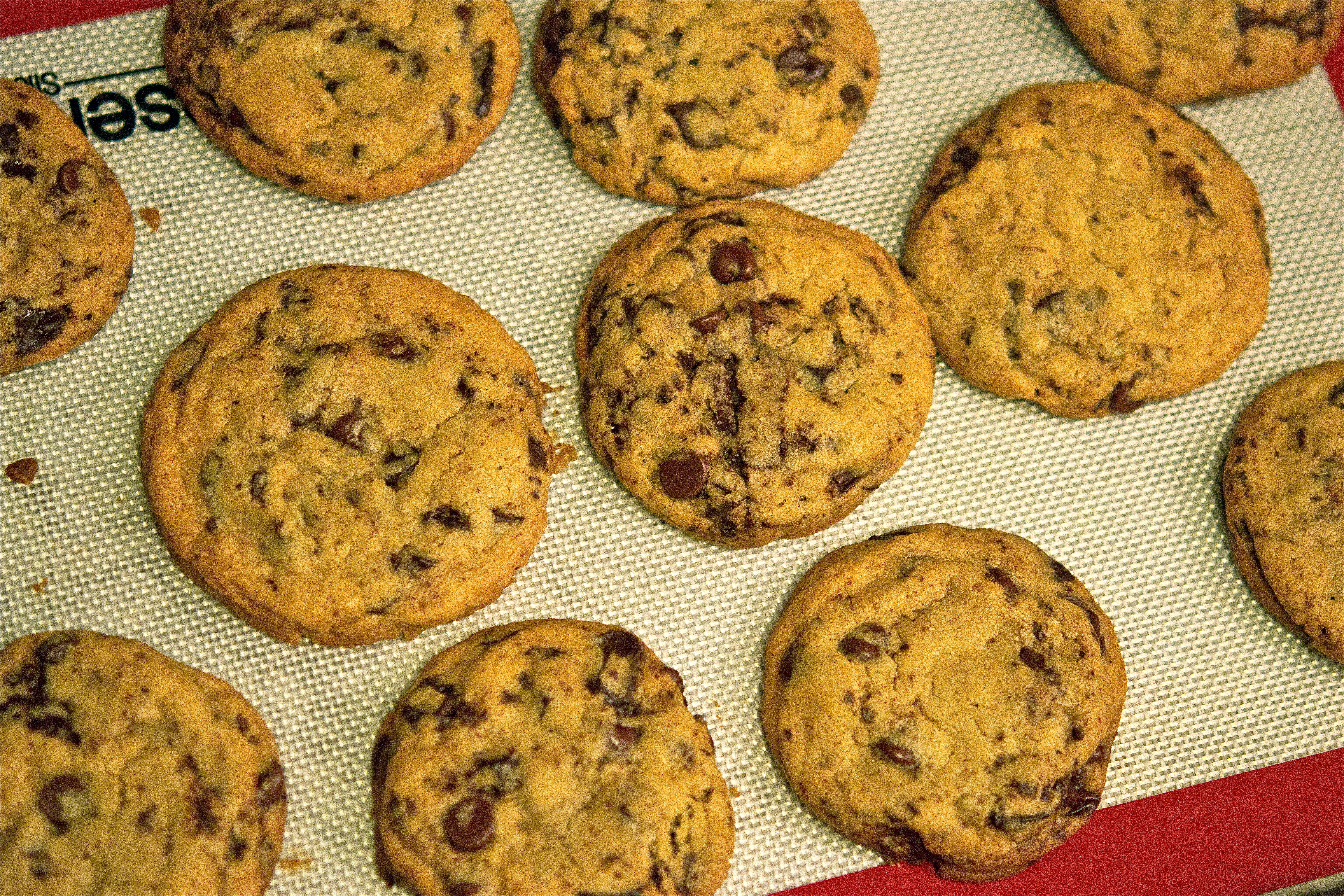
That being said, the finished cookies were fabulous! Loaded with melty chunks and chips of dark chocolate, they are pure heaven. The cookie itself has a buttery crunch, with a tender crumb that makes your heart melt. It goes without saying, but chocolate chunk cookies are best straight out of the oven (as they always have been) – click HERE to see the recipe for these golden, chewy delights!
So now that I have you thinking about chocolate, how about taking it a step further with melted chocolate, cocoa powder, AND nutella…how can anyone resist? These cookies are more brownie than cookie, with a rich center and a crumbly edge. They also have a touch of espresso, which is only “topped” by the the nutella swirl to finish – the ultimate cookie. It may not be quite like the cookies (or brownies) we enjoyed as kids, but a cookie always has a way to make us reminisce over our childhood days – click HERE to see the recipe for this glorious sweet.
I looked at my own childhood as inspiration for this musical pairing. Growing up, I was extremely fortunate to have not one, but two moms – one was a pro with baking amazing chocolate chip cookies (the foolproof Toll House version!) and the other a master of baking brownies (Betty Crocker double fudge…). Seeing how both of my cookies took inspiration from those two classics, I wanted to honor that legacy with Dvorák’s “Songs My Mother Taught Me.” Part of his cycle Gypsy Songs, the truly nostalgic work has notes of grief and hopefulness. The lyrics, by German poet Adolf Heyduk, translate as follows:

Songs my mother taught me,
In the days long vanished;
Seldom from her eyelids
Were the teardrops banished.
Now I teach my children,
Each melodious measure.
Oft the tears are flowing,
Oft they flow from my memory’s treasure.

Though short, the music is filled with color and life that other songs don’t quite achieve – a perfect way to describe two cookies whose size don’t quite speak to their ultimate potential. I’ve included a recording with soprano Anna Netrebko – enjoy!

http://www.youtube.com/watch?v=bAOy1waBdpI&feature=related

Sources Cited:
“Songs My Mother Taught Me Lyrics and Text Translation,” About.com
Challenge Accepted

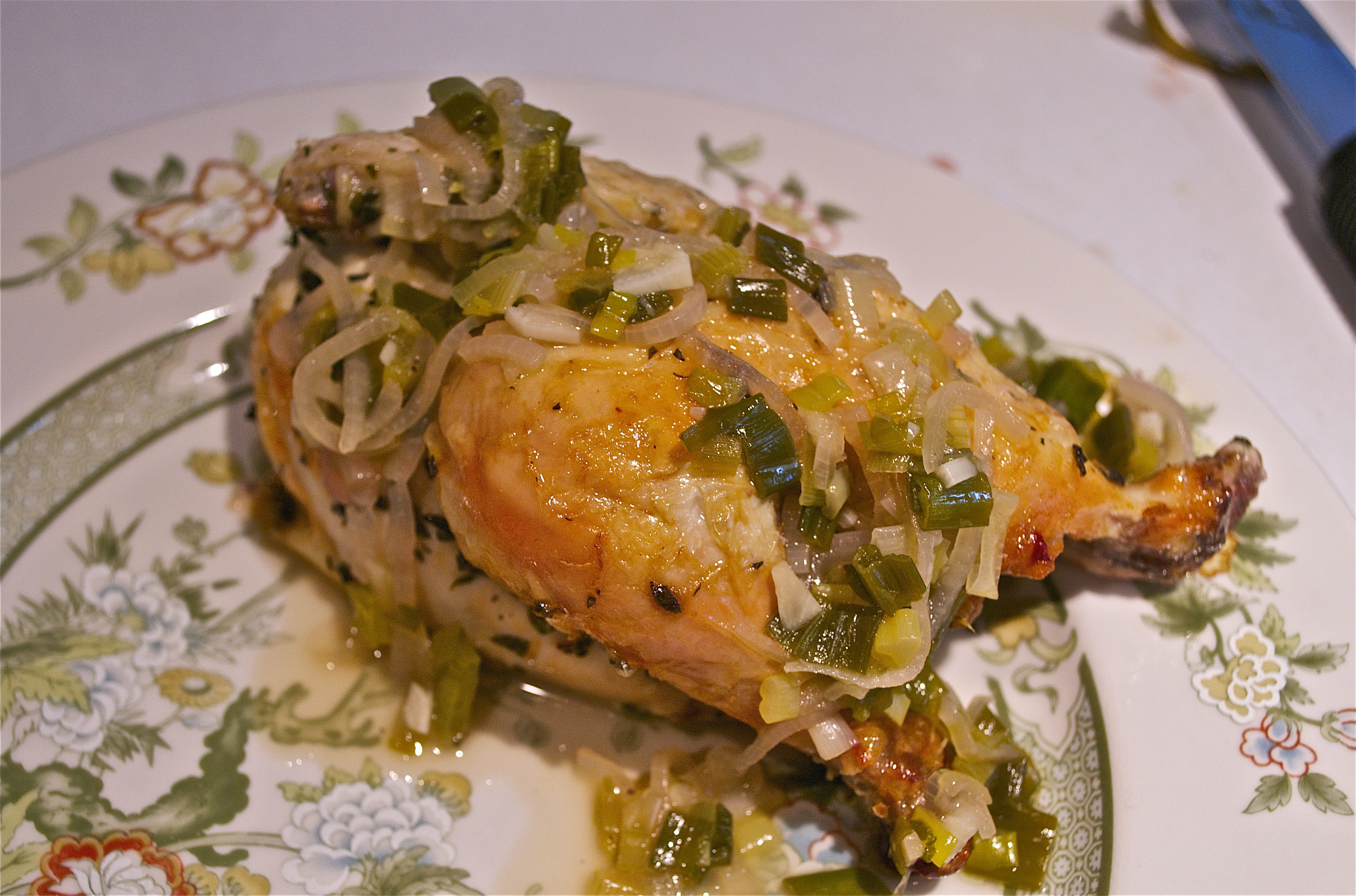
Iron Chef has transformed the way we perceive culinary challenges – the “blood, sweat, and tears” of cooking finally has a stage, and food’s competitive qualities have been taken to a whole new level. The show certainly left an impression on my mom: a business-savvy, energetic woman who loves the prospect of a challenge. So naturally, my visits home are often paired with an Iron Chef-like arrangement. My most recent challenge: Cornish Game Hens…well, that took me through a loop considering a) I had never prepared these before, and b) couldn’t even begin to imagine how they were suited for spring fare. After stumbling through several menu options, I finally landed on one that suited my standards: Roasted Cornish Hens with White Wine-Scallion Sauce.
Cornish hens are a peculiar kind of bird: they aren’t actually a game bird, but in fact a hybrid of Cornish Game and the Plymouth Chicken. Though identified as “hens,” these birds can be either male or female, and often weigh no more than 3 pounds. I was pretty floored when my mom asked me to prepare these hens for the dinner party she was hosting, especially since I’d always thought of them as that “other” holiday bird (i.e. the simpler alternative to roast turkey).
My trick in making these hens “Spring-friendly” was a combination of REALLY fresh herbs and seasonal ingredients, like scallions and shallots. Complementing these birds with strong flavors is vital considering the meat has a rather dull taste on its own. Rather than stuffing them with actual stuffing (a holiday trend), I threw in a few aromatics to help infuse the meat with more flavor. The result was an elegant, flavorful dish that had all the right notes of Spring. Our guests enjoyed nearly every last bite of their individual helpings (yet in all honesty, I’ll probably reserve future attempts with Cornish hens for the colder months) – click HERE to see the recipe for this unique dish.
For dessert, I wanted to make a cake that packed a punch but was a lighter afterthought to the entree. I’ve got a crush on vanilla beans, so shelled out $14 for TWO beans (that’s not a typo) and made a Golden Vanilla Bean Pound Cake that was out-of-this-world good. The trick with this cake is having your butter and eggs at ROOM temperature. Yes, this means shelving your fears of leaving them unrefrigerated and just letting them sit out – if I can leave you with any piece of advice when it comes to baking, this is it.
In line with the menu’s seasonal trend, I topped each slice with sherry-macerated strawberries that paired beautifully with the cake’s buttery, golden texture. Feel free to pair it with whatever strikes your fancy – ice cream, caramel, etc. Though simple to make, this cake is definitely not simple in taste, and makes for the perfect weeknight indulgence – click HERE for this heavenly treat.
For this pairing, I thought it appropriate to pair a piece of music that took on a classic, venerable topic and gave it an avant garde spin. That led me to Stravinsky’s Firebird Suite. In folklore, the firebird is (more often than not) a coveted prize that induces a challenging quest by the story’s hero. Stravinsky acknowledged his own reservations on the “challenge” of composing the music for this ballet (similar to my reservations on preparing this dish):

The Firebird did not attract me as a subject. Like all story ballets it demanded descriptive music of a kind I did not want to write..However…I know that, in truth, my reservations about the subject were also an advance defense for my not being sure I could.”

The music is an entirely different matter – even though it was his first, it is perhaps the most widely recognized and acclaimed of Stravinsky’s ballets (even more so thanks to Disney’s Fantasia 2000). The opening passage (alternating between thirds and seconds of a tritone in the cello, bass and viola lines) set the “supernatural” setting of the hero’s quest, which ultimately ends in a truly majestic Finale (an ending that is admittedly uncharacteristic of Stravinsky). Yet the piece still demonstrates what will become the composer’s greatest qualities in later works. The primitive style that would take on a whole new level in Rite of Spring finds a starting point in this work, with metric dynamism that keeps demands a keen concentration from performers and listeners alike. Two examples being the offset downbeat of the Danse Infernale, and the 7/4 time signature of the Finale. Additionally, the orchestration of the work was substantial for the time, with Stravinsky even claiming it to be “wastefully large.” Despite this claim, the orchestral force brings a rich quality to the piece that has truly come to define the music. For the recording, I found a fabulous video of Claudio Abbado with the Lucerne Festival Orchestra‬ – enjoy!

http://www.youtube.com/watch?v=WI-MG_CXYiY

Sources Cited:
– “Cornish game hen,” Wikipedia.com
– “Firebird (Slavic Folklore),” Wikipedia.com
– Huscher, Phillip. “Program Notes: Igor Stravinsky – The Firebird” Chicago Symphony Orchestra
– “About the Piece: The Firebird (complete),” LA Phil

A Star-Worthy Spread

The Academy Awards: an evening of glamor where the “who’s who” of Hollywood gather to honor the year’s most celebrated films. For a hostess, it is the perfect excuse to throw a party – but this couldn’t be just any part, it had to be in true Hollywood form: red carpet entrance, formal attire, and of course classy hors d’oeuvres.  For this post, I though I would share three of the dishes featured in the extensive spread: Coconut-Crusted Chicken Tenders, “Eggstremely Good” Deviled Eggs, and Fiery Jalapeño-Bacon Bites.
It’s worth mentioning that I created appetizers to pair with each of the various film nominees. These chicken tenders, for example, were grouped with The Descendants: a film starring George Clooney that takes place in Hawaii. Though simple in concept, the flavor of these was extraordinary (and a wonderful twist on the standard breaded variety). They can be served with any dipping sauce, though sweet chili sauce works quite beautifully – click HERE to see how to make these tasty chicken tenders! 
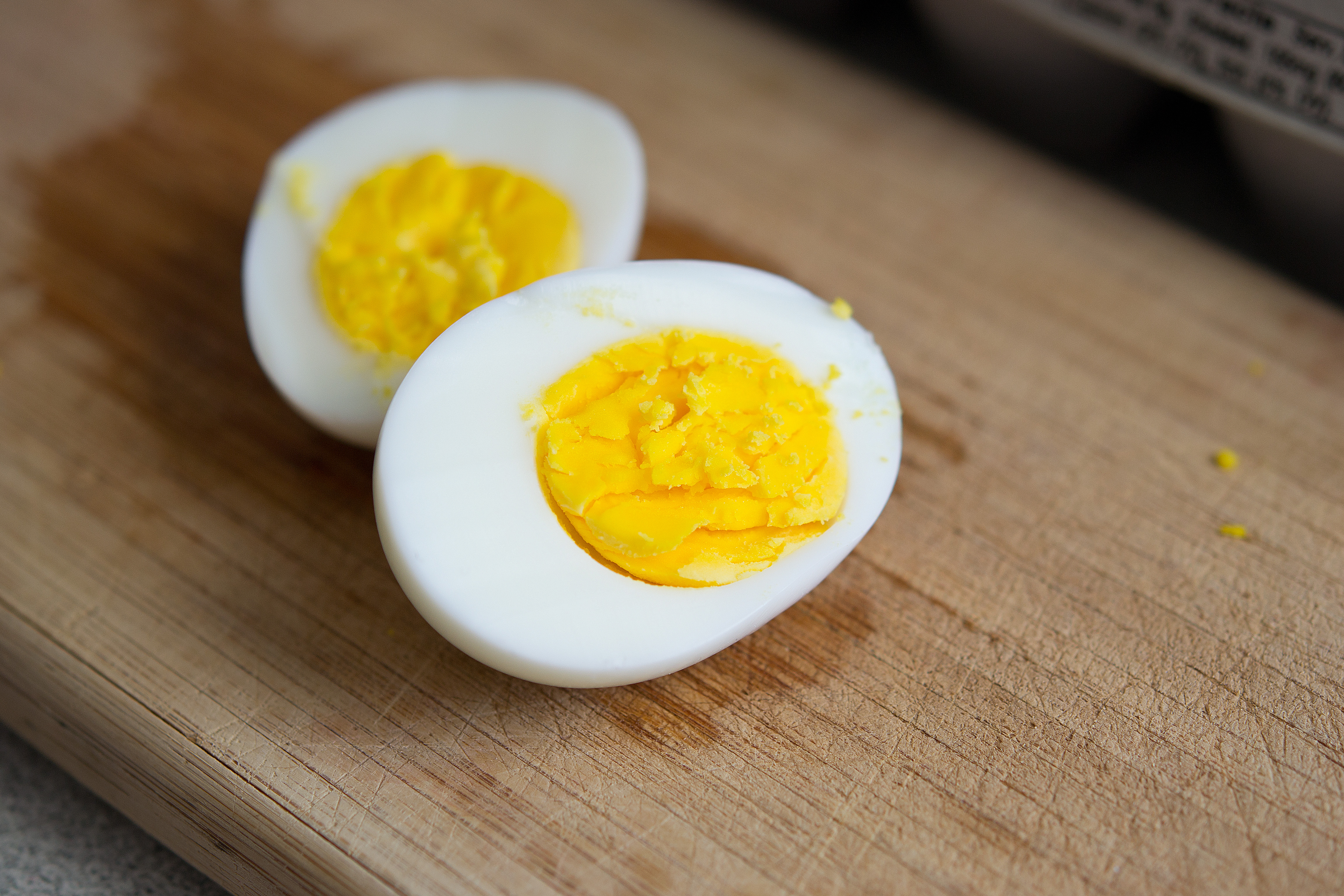
I think deviled eggs have received a bad rep as the appetizers found at any and every gathering, devoid of flavor and character. In reality, they provide the perfect canvas for creativity: wasabi, curry, even smoked salmon are all flavors to try! On top of that, they are great for large parties (budget-friendly!) and such an elegant addition to any affair. I paired these with the film Extremely Loud and Incredibly Close (as their title suggests).
While deviled eggs are a classic, a solid foundation is vital to their success which, of course, starts with boiling. Too often are we plagued by hard-boiled eggs with gray, chalky yolks. Yet there is a trick to guarantee a perfectly cooked center every time – removing the eggs from the heat once the water reaches a boil. I was apprehensive of this method at first glance, though it is utterly foolproof. Click HERE to see the recipe for these “eggstremely good” bites!
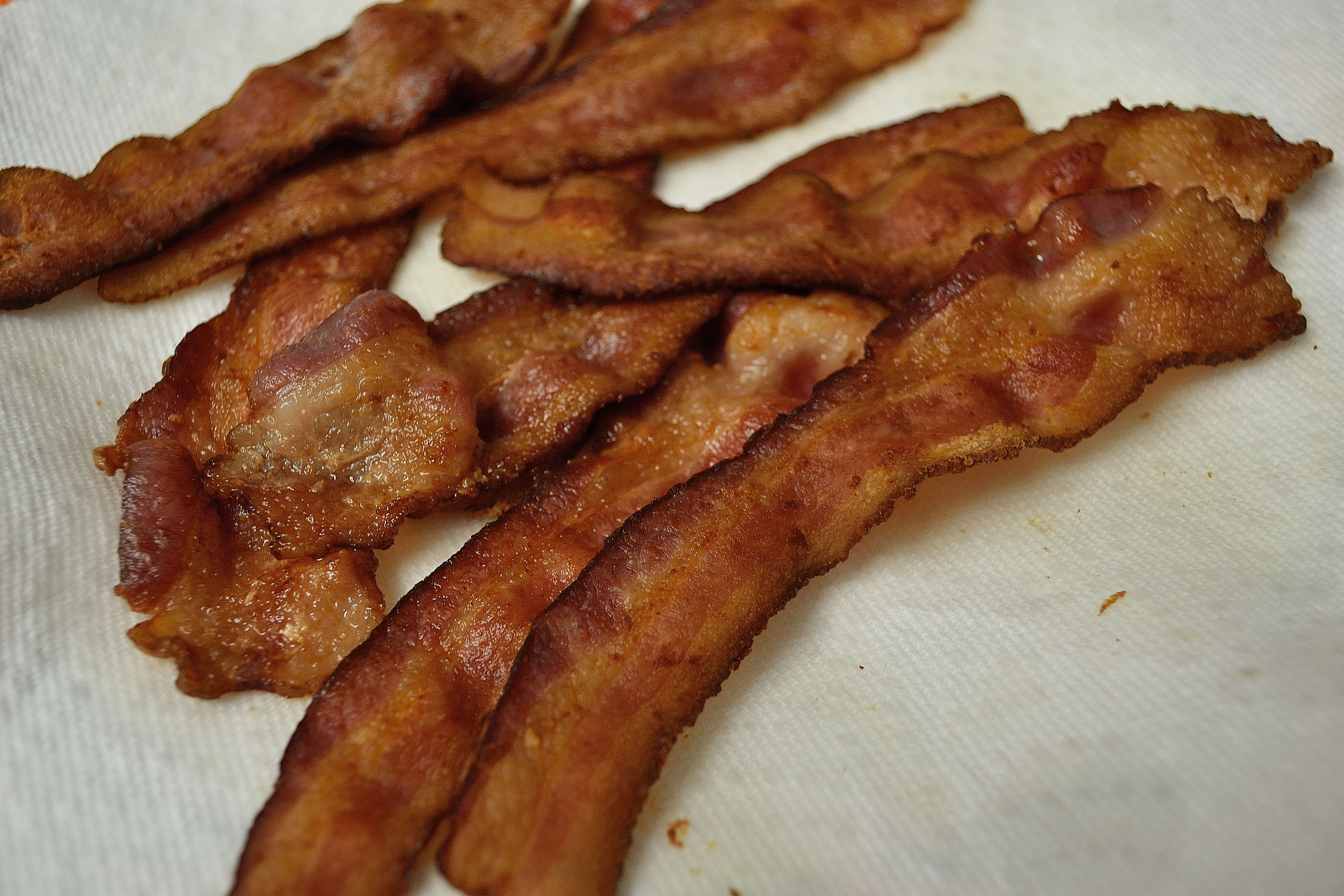
These aren’t just spicy…they are downright addictive. Who would have thought the simple trio of jalapeño, cream cheese and bacon could have so much moxie? Warning: you will NOT want to stop eating these once you’ve started…a fate many of my guests fell victim to. I paired these with the film Girl with a Dragon Tattoo given their dangerous, “fiery” appeal. I guarantee these WILL be the star at your next event – click HERE to see how to make these addictive bites.
Movies are an addictive diversion: the excitement, the passion, the humor – it compels us to buy tickets or press play time and time again. With that in mind, I wanted a piece that truly captured the energy of the “movie magic”; a piece that pulls you in, and has a palpable, compelling story. Funnily enough, I was only recently introduced to this work, yet it is the ideal match: Poulenc’s Sonata for Violin and Piano. Composed during the German occupation of Paris, the piece is replete with passionate energy. It is dedicated to Federico García Lorca – a Spanish poet assassinated during the Spanish Civil War. The first and third movements are driven by a dark, potent energy that bring listeners to the edge of their seats, while the second evokes a deeper emotion for which we have no words (though Lorca does, with Poulenc attaching the following quote by the poet to said movement: “The guitar makes dreams weep”). The following recording is with violinist Josef Suk – enjoy!

http://www.youtube.com/watch?v=o41e7qcSwSw

Sources Cited:
Program Notes – WPAS: Itzhak Perlman, violin and Rohan DeSilva, piano,” Strathmore.org

When Decadence meets Elegance

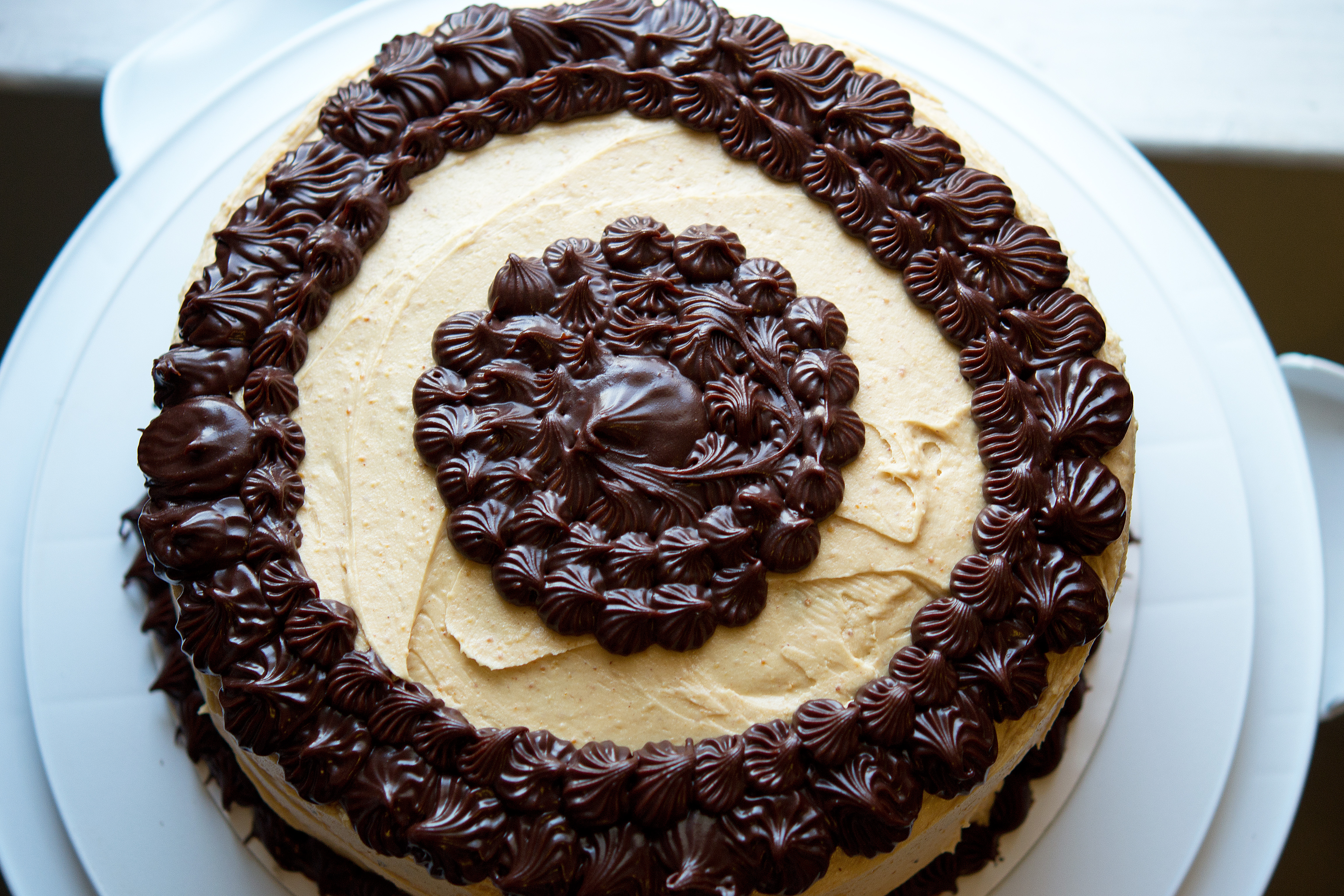
There are very few who will say no to a peanut butter/chocolate combination (I’ve stressed the draw of this “super couple” a number of times on this site). That being said, I can’t quite say there’s been a cake as dangerously addictive as this one – the perfect balance of a rich, dark chocolate cake with a light, heavenly peanut butter frosting. I had volunteered (again) to be the baker for our office’s January birthdays celebration – it’s a busy time of year, so I wanted to bring in an extra-special treat. This Dark Chocolate Cake with Peanut Butter Frosting and Chocolate-Peanut Butter Ganache DEFINITELY was just that.
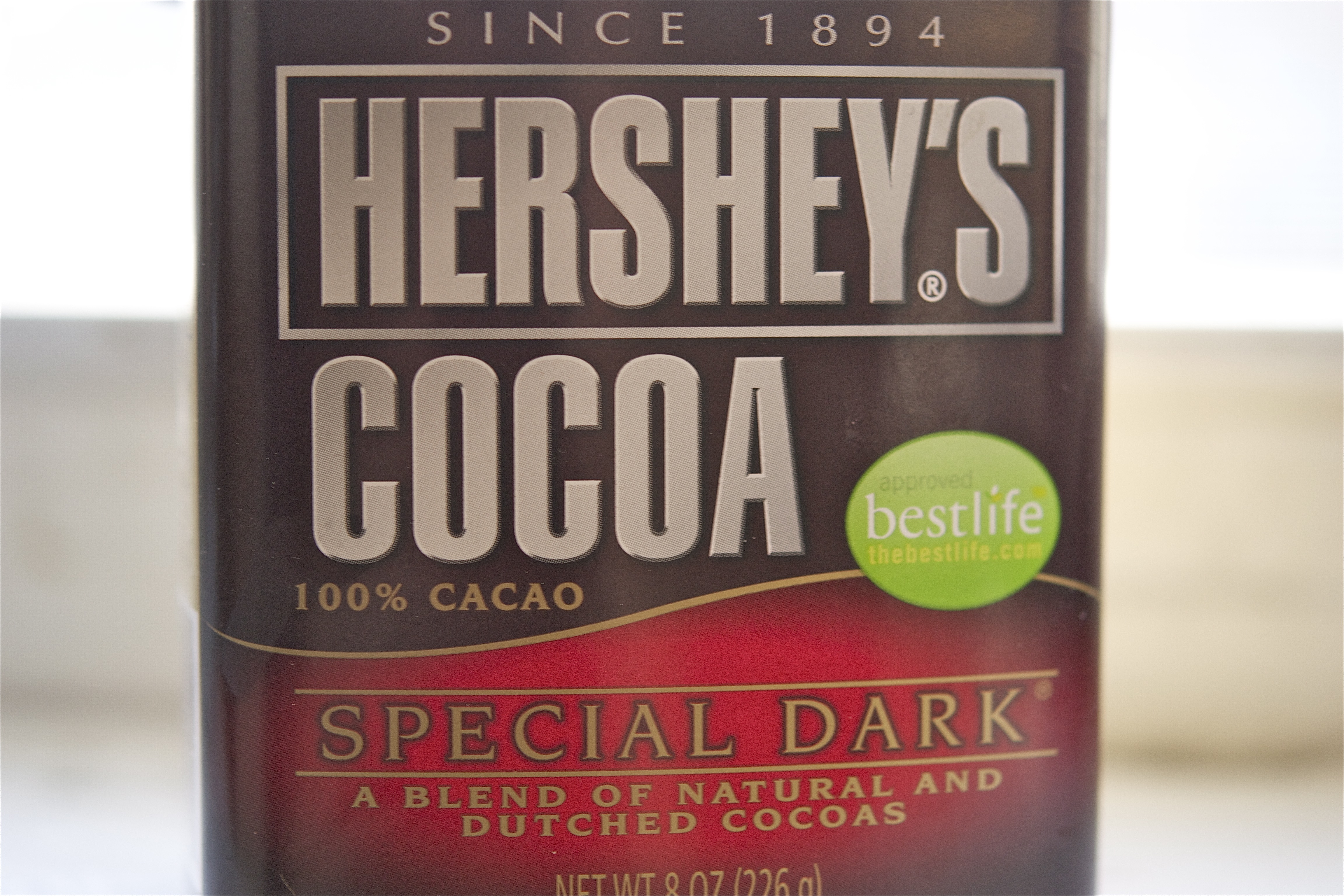
There is dark chocolate, then there is this cake – I decided to give Hershey’s Special Dark cocoa a shot for this cake. The result was a cake that was nearly black. It was a rich cake, no doubt, but my fear that the chocolate flavor would be WAY too intense was unfounded. I’ve discovered that chocolate cakes made with boiling water = amazing. Though it makes the batter appear more like chocolate soup, its function is helping dissolve the cocoa butter fats into the batter, resulting in a smooth, rich finish. It also means that the cakes will be that much more difficult to remove from your pans, so be prepared with parchment (or grease and flour the pan).
The frosting was the winner of this cake – despite having nearly 3 cups of peanut butter, the result was a “light, airy” frosting with just the right amount of sweet and salty. In fact, it might just be one of the best frostings I’ve made yet. I had originally thought about decorating it with Reese’s Peanut Butter Cups, but chose to make my own chocolate-peanut butter ganache – people were practically licking this stuff off their plates (it was also a gorgeous alternative). All-in-all, this was a fabulous cake that had all the right elements. I highly recommend making this…asap – click HERE to see the recipe for this showstopping dessert.
To complement the “darkness” of this cake, I thought a piece that has a bit of a dark side would be appropriate. At the same time, it needed to be a work with a certain elegance to mimic the balance of this beautiful cake. This led me to the Czech composer ‪Leoš Janáček‬, whose music is known for both its volatilities and subtleties. The piece I felt would be perfect for this pairing is his String Quartet No. 1. Composed when ‪Janáček‬ was 69, the piece is based on Tolstoy’s novella, “The Kreuzter Sonata” – a dramatic tale of marital distrust, fury and ultimate despair. The piece itself is highly evocative, filled with powerful harmonies that are countered by delicate refrains; a beautiful balance. The recording below is with the Alban Berg Quartet – enjoy!

http://www.youtube.com/watch?v=sc-DZWoU52E

Sources Cited:
“Janáček, String Quartet No. 1, ‘Kreutzer Sonata,’” Earsense Blog

An Unexpected, Delicious Medley

Dessert tends to be the dish that my friends have come to expect in my home, an expectation I undoubtedly fostered given my endless creation of sweet treats. From cakes to cremes, I seem to always being looking for the next-best-challenge on my dinner parties’ grand finales (it should be noted that I have never set foot in the dessert restaurant Finale given my personal standards, though I’m sure they’re fabulous). For this meal, I just happened to have a GIANT bottle of Moscato that my friend TJ had brought over. Being more of a Chardonnay gal, this was bound to become a dusty relic in my pantry, so I had to find a use for it. Best way to get rid of an excess amount of liquid? Poach or Braise. Since this was dessert, the former option was the winner, and I went with Poached Pears in Honey and Cinnamon Syrup.
Using Moscato in a dessert is quite appropriate given its characterization as a “sweet dessert wine.” It is from the family of vines Muscat, allegedly one of the oldest grape species in the world that is also cultivated for table grapes and raisins. The “dessert” varietals are either harvested once fully ripe (even overripe) or fortified with a distilled beverage (such as brandy). These two methods guarantee that the resulting wine will possess the fullest sweetness of the grape. As I mentioned above, I’m drawn to whites with an oaken or buttery taste, so finding a way to use this bottle was a huge relief.
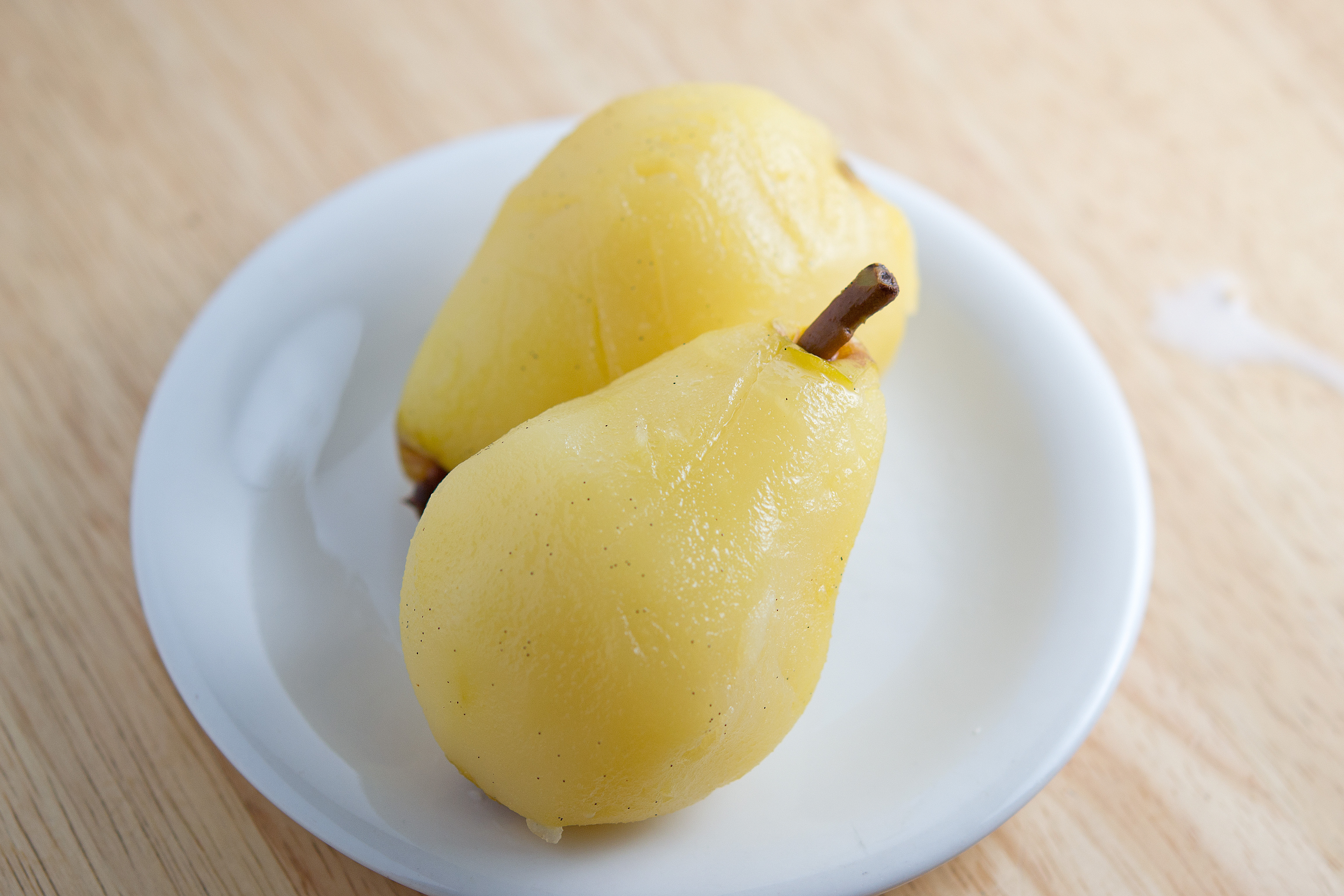
These poached pears were undeniably gorgeous, beautifully shaped and covered with flecks of vanilla bean.  It also creates a beautiful reduced sauce that would have been a shame to waste it…so I baked a cake (surprised?) The cake was Dorie Greenspan’s favorite butter cake, which you can find the recipe for HERE (I’ll do a more in-depth post on this cake at some point – it is AMAZING!) The cake was the perfect sponge, making this already-elegant dessert even more ridiculous. I served them with a few scoops of French Vanilla ice cream – my friends were practically licking the bowl clean. Whether you’re looking to use an unwanted bottle of Moscato or can’t stand the thought of NOT making this dessert in the next 24 hours, you can find the recipe HERE.
Poaching pears and moscato is not a combination many would consider, yet the end result is stunning. That led me to a piece with instrumentation that, though unusual, has a beautiful result: Charles Ives’ The Unanswered Question. There are three layers to this piece, each represented by a separate set of instruments: a solo trumpet consistently asking “The Perennial Question,” a woodwind quartet on a quest for “The Invisible Answer,” and an offstage string quartet who represent “the Silences of the Druids—who Know, See and Hear Nothing.” The intermittent trumpet calls are like “flecks” of vanilla throughout, with the winds bringing a marked presence to an otherwise still environment (much like the moscato to the pears). The recording below is with Leonard Bernstein and the New York Philharmonic – enjoy!

http://www.youtube.com/watch?v=trkFgIMC-Ks

Sources Cited:
“Muscat (grape),” Wikipedia.com
“A Question is Better than an Answer,” CharlesIves.org

A Delicious Parting Gift

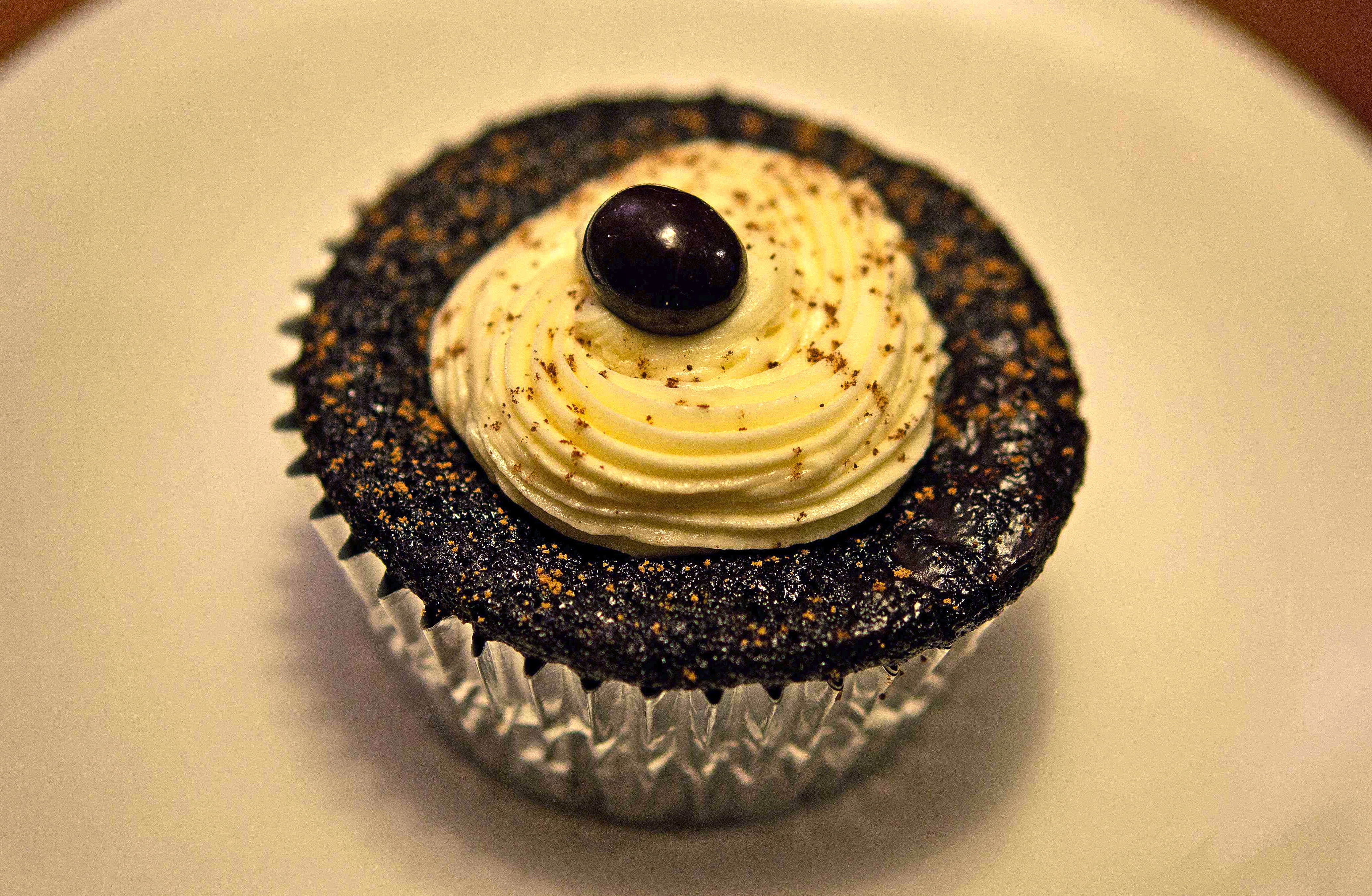
As young adults, it’s inevitable that our friends have yet to find that one permanent place to settle down. It’s never easy to say goodbye when a friend decides to move on; such is the case with my very dear friend Brian McCarthy – he’ll be leaving Boston soon to join the army band, a position he will no doubt excel with. I’ve been through a lot with Brian, and he is someone I will miss a lot. I hosted a small going-away party for him earlier this week, inviting a handful of close friends to wish him luck. Knowing my Brian, I made sure there was a wealth of cheeses, a sizable line-up of party games, and a worthy drink for an Irishman: Jameson. This latter spirit also inspired the dessert for the evening, which undoubtedly takes the “cake” in my dessert repertoire: Chocolate Stout Cupcakes with a Whiskey Ganache and Bailey’s Buttercream Frosting.
Brian stands by his Irish heritage, which compelled me to avoid the original title for these cupcakes: Irish Car Bomb Cupcakes. I have nothing against bakers who do label these cupcakes as such, it’s more the dark history behind the name itself. A drink consisting of Guinness, Irish whiskey and Bailey’s, this infamous shot garners mixed reactions, from total indifference to unmitigated outrage. The name is an allusion to the violent exploits used by the IRA against Northern Ireland during The Troubles. In other words, this shot is far from serving as a tribute to the Irish.
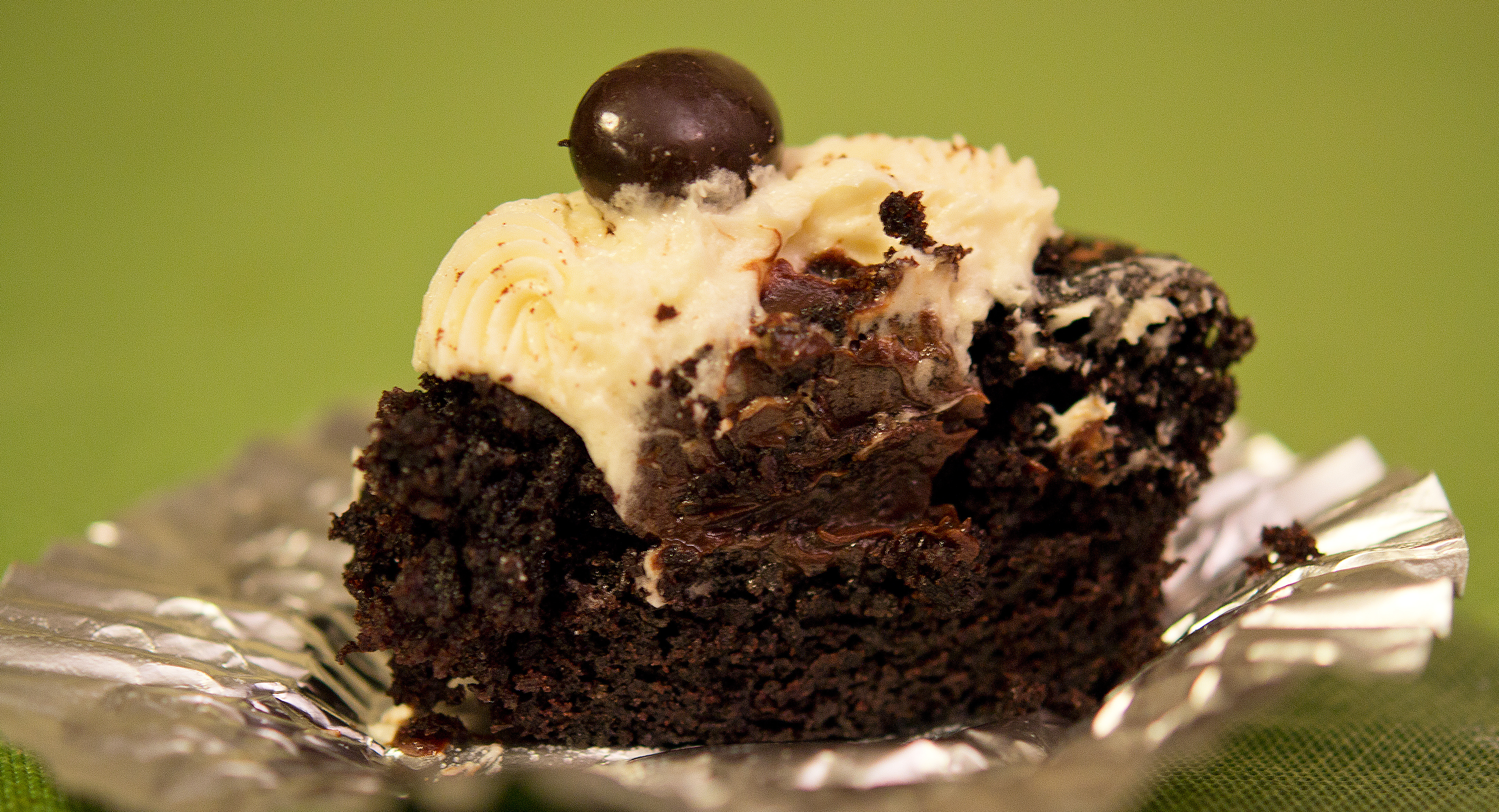
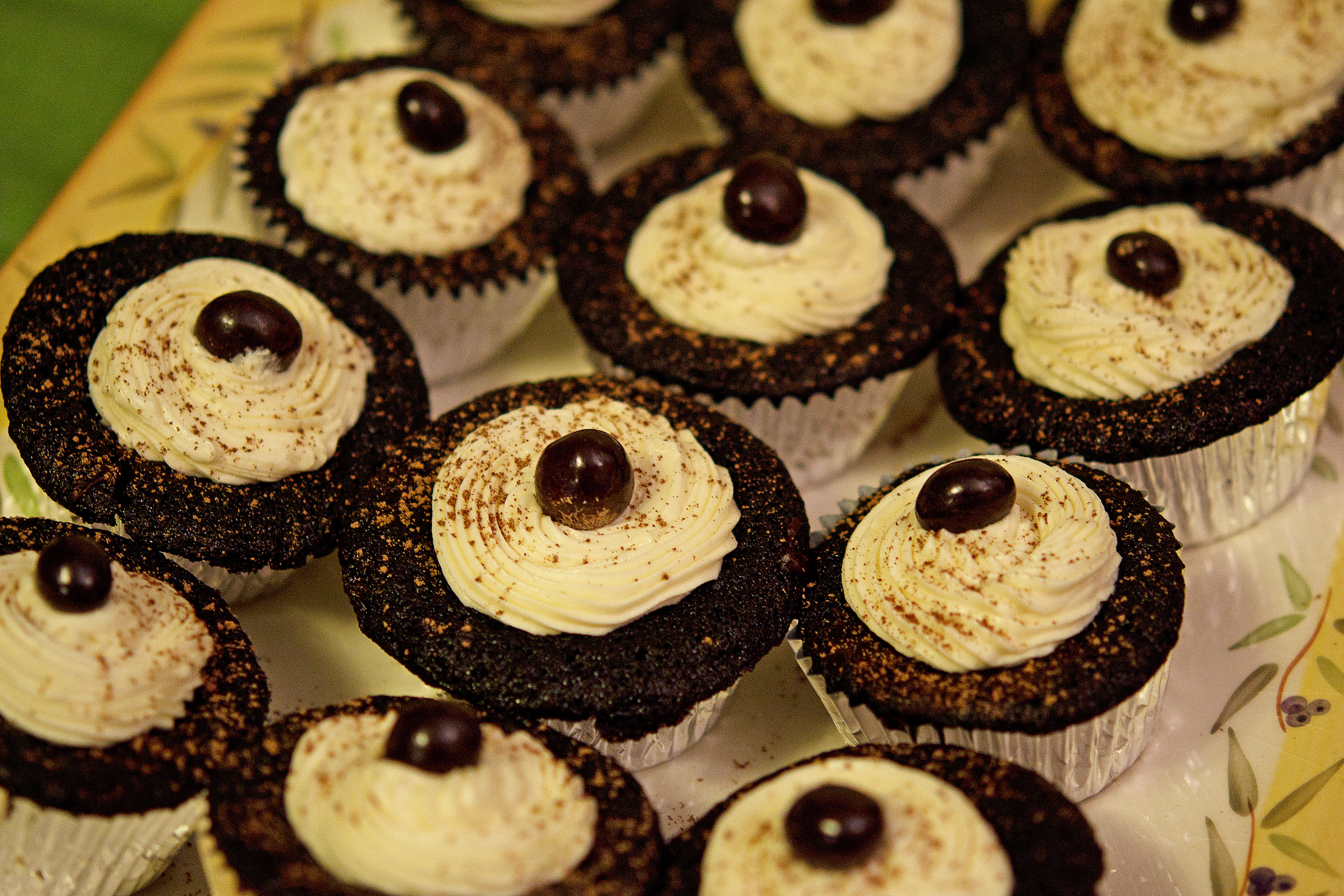
Name aside, these cupcakes are simply amazing! Stout and chocolate are a match made in heaven – the dark, rich brew complements the silky batter perfectly. As you saw above, I went with a Harpoon Chocolate Stout (what I had) rather than the Guinness called for – it was an unintentional stroke of genius! Filled with a spicy ganache (Jameson, no less) and topped with a buttery Bailey’s frosting, these cupcakes can’t go wrong. To push the cuteness factor up a notch (a must with cupcakes), I topped each with a chocolate-covered espresso bean – click HERE to see how to make these deliciously rich cupcakes!
If there is one thing I know about Brian, he plays an amazing Liszt – with that in mind, I chose a work I have heard Brian perform on multiple occasions (yet never grow weary of) – Liszt’s transcription of Wagner’s “Liebestod” from Tristan und Isolde. Liszt was both a benefactor to and supporter of Wagner’s music. The opera Tristan und Isolde is based on the medieval legend of two star-crossed lovers, and has become on of the more prominent works in orchestral repertoire. The “Liebestod” concludes the third and final act of the opera – it is sung by Isolde as she mourns we lover’s death, shortly before her own tragic end. Known for his virtuosic genius on the piano, Liszt had a gift for adapting the music of large scale works to the keyboard. He stays true to the voice of Wagner, effectively adapting the extensive orchestration to the piano while maintaining the rich, emotive qualities of the overall work. Similarly, each bite of these cupcakes is extremely rich and decadent. I want to dedicate this post to Brian – you will be missed dearly by all of us here in Boston, and we hope you know that you always have a home with us whenever you need it 🙂 Wishing you all the best!

http://www.youtube.com/watch?v=_UQrOIa7coc

Sources Cited:
“Franz Liszt,” Wikipedia.com
“Tristan und Isolde,” Wikipedia.com

A Festive Feast

Christmas dinner – a meal nearly as stressful as its Thanksgiving precedent. The setting: a cozy apartment in sleepy Bensalem, Pennsylvania. Cast of characters: my mom and stepdad, my sister Sarah, and her boyfriend Grant (the latter three possessing a strong appetite for southern-style food). With all of its familial expectations, a great amount of pressure is placed on the designated chef for Christmas dinner. Being the crazy person I am, I (naturally) volunteered to be said chef. Though I was only cooking for four other people, I knew this meal had to be an outstanding occasion for all parties involved. Avoiding the hackneyed honey-baked ham or roast turkey, I decided to go with a more humble, hearty feature: Spice-Rubbed Roast Beef Tenderloin with Red Wine Gravy.
History doesn’t delegate a specific type of game or meat for the holidays – goose, turkey, oysters, ham, pot roast, pheasant, suckling pig, fish, and more have graced Christmas tables around the globe. These dinners tend to reflect more extravagant renditions of traditional cuisine, celebrating family and faith with a bountiful feast. American traditions most closely reflect those of the UK: a roasted entree paired with ample side dishes, including mashed potatoes, roasted squash, braised greens, cookies and pies, etc.
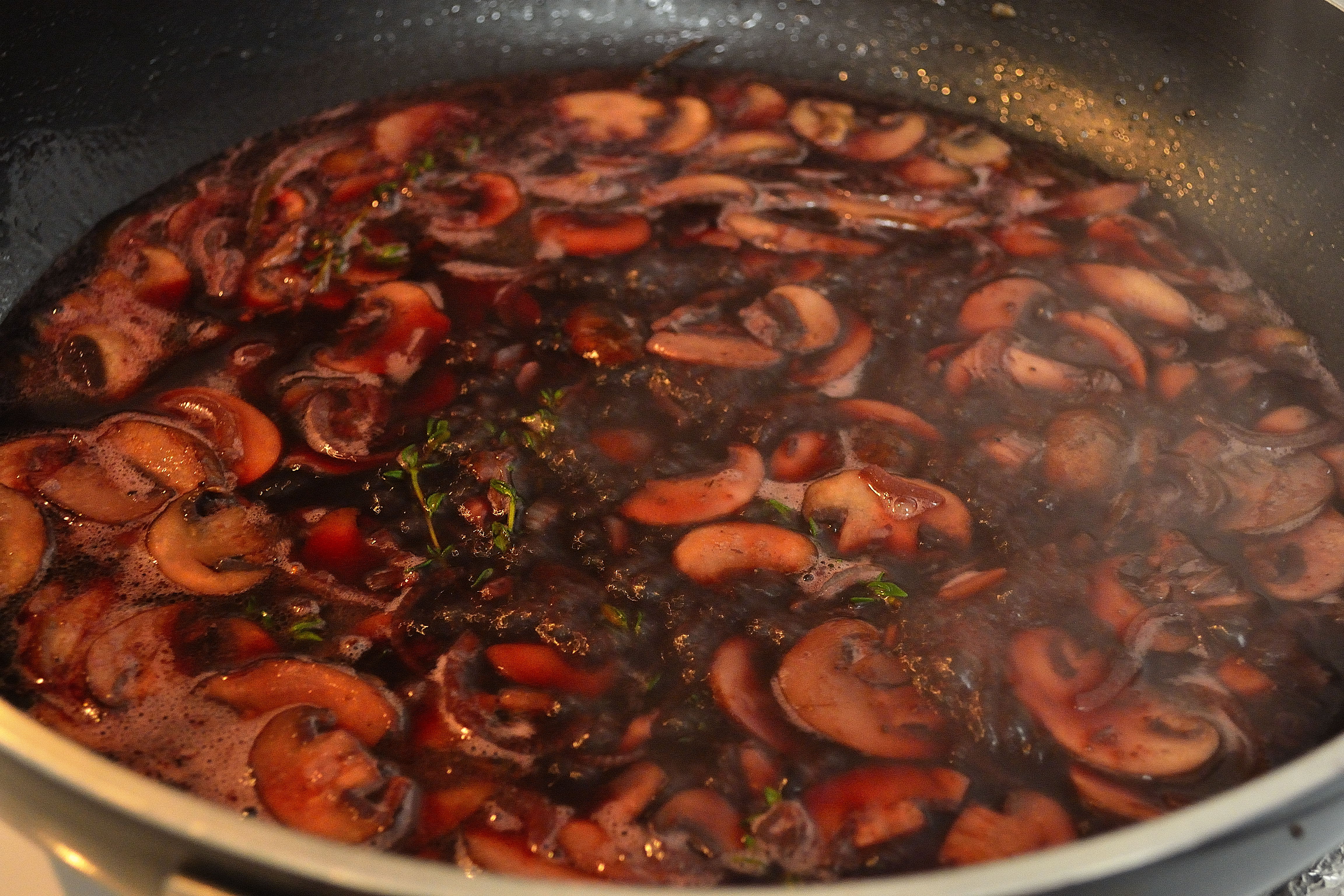
While I relish experimental menus, I went with a  traditional one for this dinner. I managed to sneak in a few unconventional touches to the tenderloin. For the gravy, it relies on a red wine reduction that is brimming with flavor. You can opt to keep the aromatics (shallots and mushrooms respectively), though I followed the recipe and discarded them for a smoother sauce.
The meat itself is spiced with fennel, caraway and thyme – the latter is arguably a beautiful pairing for any rich meat, yet the fennel and caraway gave the meat an aromatic depth unlike any I’ve experienced. As you can tell, we went for a rarer cut, yet roasting times will vary depending on your personal preference. Regardless, I can guarantee this recipe will create a beautiful centerpiece to your Christmas dinner – click HERE to see how to make this flavorful roast.
Kale is endorsed as one of the healthiest greens available to consumers today…this recipe is perhaps not the healthiest realization of the green’s potential, yet it is pretty darn amazing. I mentioned my Georgian sister was present – the bitter edge of kale was a far-fetched bet with this one. So I chose a recipe that would appeal to her “Southern roots” with Southern-Style Braised Kale.
What makes is Southern? Bacon. The remarkable thing about this seemingly simple ingredient is it can truly be a chef’s secret weapon – a dish can go from sophomoric to superb. This recipe is a standard for collard greens, but proved to be remarkably successful with kale. To see how to give kale a “southern touch,” click HERE. We also served basic mashed potatoes and a personal favorite of mine, Orange & Fennel Salad with Citrus-Shallot Vinaigrette (recipe can be found HERE).
The musical pairing for this meal may seem cliché, yet it was too perfect: Tchaikovsky’s The Nutcracker (especially considering I had just seen it at the Boston Ballet). While its original premiere in 1892 wasn’t markedly successful, it has since become one of the most celebrated works by the composer. Its themes are recognizable by nearly anyone (particularly The March and Sugar Plum Fairy), and no Christmas would be the same without it. Its variety of characters and themes pairs all too well with the colorful, unique traditions of Christmas dinners across the globe. I hope all of you had a beautiful holiday season, and wish you the happiest New Year – enjoy!

http://www.youtube.com/watch?v=vP5oVMvYHBs

Sources Cited:
“Christmas Dinner,” Wikipedia.com
“The Nutcracker,” Wikipedia.com

A Dish That Will Make You Melt

I don’t know if I’ve mentioned this, but my cold weather tolerance is not built for the Northeast. Alas, here I am – a southerner with a surplus of scarves and mittens – prepping my mental sanity for the cold, dark months to come. Thank God for the onslaught of rich, warm recipes of the season – meaty stews, creamy soups, rich casseroles, etc. Tis the season for eating (no regrets!) and spending time with friends and family enjoying it! Thus my good friend Sev (a clarinetist) unearthed his cast-iron caquelon to melt a ridiculous amount of cheese for a Swiss Fondue that is to die for!
As a native Swiss, Sev’s approach to fondue is far more serious than what most American households have become accustomed to (i.e. prepackaged fondues and queso look-alikes). He only uses quality ingredients, has specific standards on cookware and utensils, and prepares the dish by sight and feel. Gruyère (NOT Swiss Cheese) is the key to this dish. To demonstrate how much the Swiss value their Gruyère, it was recently given the certification Appellation d’origine contrôlée (French for “controlled designation of origin”). As a result, Gruyère from Switzerland (and France, to some degree) must meet certain standards of production and “affinage” (French for “maturation”). Locations for this aging must be cellars with climates similar to natural caves (obviously caves being the ideal) – this ensures control over the levels of temperature and humidity. The affinage can take anywhere from 2 to 10 months, with the flavor and color achieving greater depths the longer it ages.
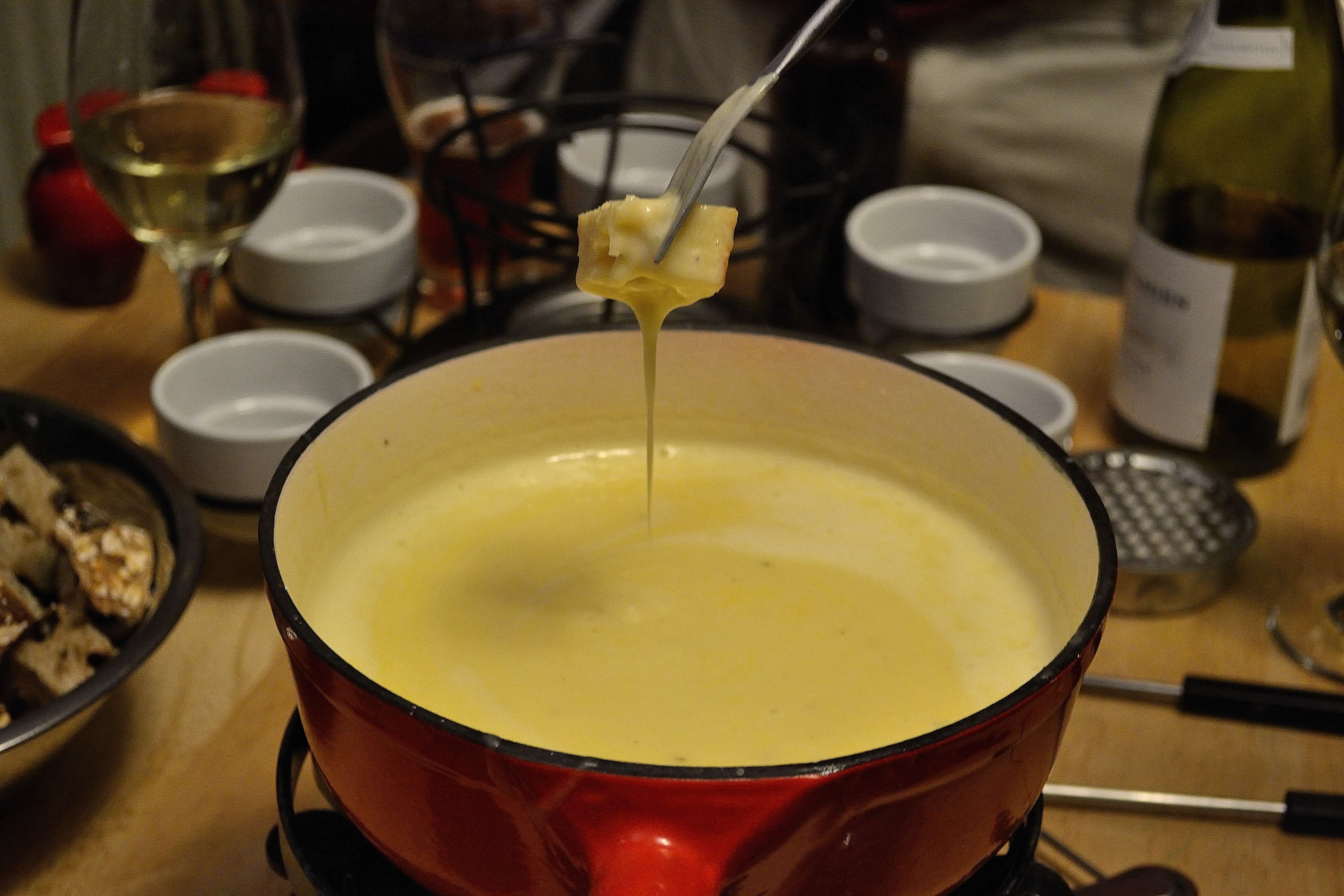
Derived from the French term “fonder” (meaning “to melt,” in French), the earliest recipe for fondue dates back to 1875 as a national dish of Switzerland. It was a classic peasant dish as a way to use up leftover cheese during the cold, winter months. Fondue was a way for friends and family to come together and enjoy a single dish, and it has since come to serve as a symbol of unity to the Swiss. Bread is the traditional accompaniment, but I love to include fruits and vegetables. At the end of the day, the art of fondue is not by precision but by feel – knowing the right consistency, temperature, and adjustments to make are all part of the technique. That being said, this recipe is a great place to start (and will be ten times better than those prepackaged varieties, trust me) – click HERE for Sev’s authentic approach to making a great fondue.
Fondue, as an export of Switzerland, is adequately associated with the rustic mountain life of its native consumers. This led Sev to recommend the following: Richard Strauss’ Eine Alpensinfonie (An Alpine Symphony), Op. 64. This work illustrates an eleven-hour journey, from dusk till dawn, spent trekking an Alpine mountain. It is the largest and last of Strauss’ tone poems; it is also considered to be his most popular. The composer had a great passion for nature, and took inspiration for the work from his own experiences as a boy. This past summer, Sev and I drove to New Hampshire with our good friend Danny to hike Mount Washington – out of necessity, we listened to this piece on the drive home. The recording I’ve included below is with Andrè Previn & Vienna Philharmonic Orchestra (the movements of the “journey” are listed in the video’s description) – I hope you enjoy!

http://www.youtube.com/watch?v=vnvuMc_4pvg

Sources Cited:
“Gruyère,” Wikipedia.com
“Fondue” Wikipedia.com
“An Alpine Symphony” Wikipedia.com

An Evening to Be Thankful For

Yesterday I hosted my first Thanksgiving dinner, and it was a terrific success! Originally expecting to have only 8 friends over, the list quickly blossomed to 15! For those of you who know my place, fitting that many people at a dinner table was not an easy feat. Yet there we were, 15 friends gathering for the year’s most thankful (and indulgent) dinner. It couldn’t have been a more perfect evening.
This was also my first time making a Roast Turkey (commence panic mode). I probably considered over 20 different recipes while planning this, but the biggest question I had was on brining. There was a 50/50 take on this – some say it works wonder, others say it’s a complete waste of time. Having never cooked a turkey, I of course had no idea which to trust. At the end, I went with the brine; I am so happy I did!
Brining may seem scary, but it’s not actually that intimidating (though finding the space in your refrigerator might be). The basic components of a brine are salt and water – meats immersed in this solution . Brining works through diffusion and osmosis – the brining water, which has a high concentration of salt, moves to where there is a lower concentration in the meat. In permeating the meat’s cells, the water becomes “locked” into the meat, creating a perfectly moist roast as result. Seasoning are often added to brines to give the meat more flavor.
That being said, brining takes time – I left mine in the fridge for about 18 hours. I bought a brining bag to place the turkey in…and I highly suggest having a second hand to help lift the turkey into the bag (this coming from the near catastrophe I had trying to do this myself). I chose an 18-lb fresh turkey – fresh is key, as frozen turkeys often have higher sodium content (unless you go organic).
The stock for the gravy is made in the pan while the turkey roasts – it’s an added step, but creates one of the most flavorful gravies you will ever make! Unfortunately, I was unable to snap a photo of the finished product in the dinner rush. It makes a lot of gravy, which your friends will be extremely grateful for. If you are looking to impress, go with this recipe – you’ll be extremely please (and so will your friends!) Click HERE to learn how to make this perfect centerpiece to your Thanksgiving meal!
Seeing how this was my first-ever Roast Turkey (and that first Thanksgiving I’ve hosted), I felt it only appropriate to (finally) showcase a work by Gustav Mahler. Though he was primarily known as a conductor during his own lifetime, Mahler’s symphonies are among the most prominent of the orchestral repertoire. These large-scale works utilize the full orchestral force, and are lush with rich musical content. In spirit of this being my first Thanksgiving, I chose his Symphony No. 1. in D Major.  The symphony took him nearly two years to complete, and was premiered with the orchestra he was the conductor of at that time. Though it is a lengthy work (just under an hour), it is extremely beautiful and difficult to not enjoy, like our Thanksgiving: though the dinner was a lot of effort and quite demanding, it too became an occasion of wonderful friends and great food that was meant to be enjoyed.

http://www.youtube.com/watch?v=UskC4VILUeg

Sources Cited:
“Symphony No. 1 (Mahler),” Wikipedia.com.