Love It or Hate It

When it comes to my department at work, food is a very important point for discussion. We are all big foodies, and often swap recipes and stories just before the start of our weekly meetings. This past week, we had our annual team retreat to brainstorm strategy, content, and the next steps in everything we do as a department. The retreat was held in my apartment, and I took this opportunity to showcase two delicious vegan dishes I’d been wanting to try: Kale Salad with Avocado and Sweet Potato and Tuscan Stuffed Mushrooms with Pine Nuts.
Kale is a power food that is often left behind – it’s more bitter than your average green, and has a tougher texture as well. That being said, it is loaded with vitamins and nutrients to the max! My solution to bitter greens is finding the right balance of a) sweetness or b) salty goodness (like bacon, which makes most things taste amazing). I vied for sweetness with this salad and chose my southern favorite: the sweet potato. Creamy chunks of avocado and a sprinkle of dried cranberries made this dish a true winner – click HERE to see the recipe for this healthy, nutrient-rich salad.
Mushrooms are also a food with its fair share of both fans and critics – some people swear by their earthy taste, while others can’t stand it. I grew to love mushrooms during my veggie days, and (thankfully) never lost that appreciation. You can make any stuffing for mushrooms, from a nutty quinoa salad to a spicy sausage filling. Based on what I had on hand, I took a little inspiration from Tuscany for these and stuffed them with sun-dried tomatoes, roasted red pepper and fresh basil – click HERE to see just how simple and delicious these can be! 
There are a number of composers whose critics are just as vocal as their fans, but the one who especially comes to mind (for me) is Paul Hindemith. The reason for this choice is his musical departure from diatonic tonality, resulting in harmonies based on free-form scales and notational structures. In fact, there are currently music teachers who refuse to even teach Hindemith given their own aversions. For this pairing, I chose the Viola Sonata, Op. 11 No. 4 – it is the fourth of his sonata series, and perhaps one of my personal favorites (though others, as expected, would disagree). The sonata has three “movements” that are performed without pause. The first is “Fantaisie”, and takes harmonic experimentation to a whole new level – it navigates through nearly ten different keys over just 41 bars! This is perhaps my favorite of the three movements, being extremely beautiful and almost haunting in character. The second, “Thema mit Variationen,” is  much more playful and energized. It changes the established downbeat throughout, allowing the melodies to flow without rhythmic constraint. The final movement, “Finale (mit Variationen)”, unleashes a series of classical forms that bring the piece to an uncertain yet glorious conclusion. Overall, it’s a very cool piece that some people love, and some people hate.

My friend Erin Nolan (violist) said one of her instructors recommended to approach Hindemith as one would approach Bach: in a methodical manner…so perhaps I can recommend to try cooking kale as you would spinach, and mushrooms as you would meat – just a thought 😉 The recording below is by a violist Erin recommended for his beautiful tone, and I definitely agree: Lawrence Powers. Enjoy!

http://www.youtube.com/watch?v=m9VuCybiTvk

Sources Cited:
“Paul Hindemith,” Wikipedia.com
“Viola Sonata, Op. 11 No. 4 (Hindemith)” Wikipedia.com
Pie, Oh My…

What better way to end a hot summer’s day than with a cool slice of pie? Some reasons why pie is the all-time seasonal dessert:

  1. It can be made ahead of time, allowing your kitchen to stay at a reasonable (and tolerable) temperature during gatherings (CRUCIAL for hosting!)
  2. It is portable – always a welcome treat at cookouts and potlucks!
  3. It is remarkably versatile, and can be the perfect palate for the season’s colorful harvest.
  4. Let’s face it – who doesn’t like pie?

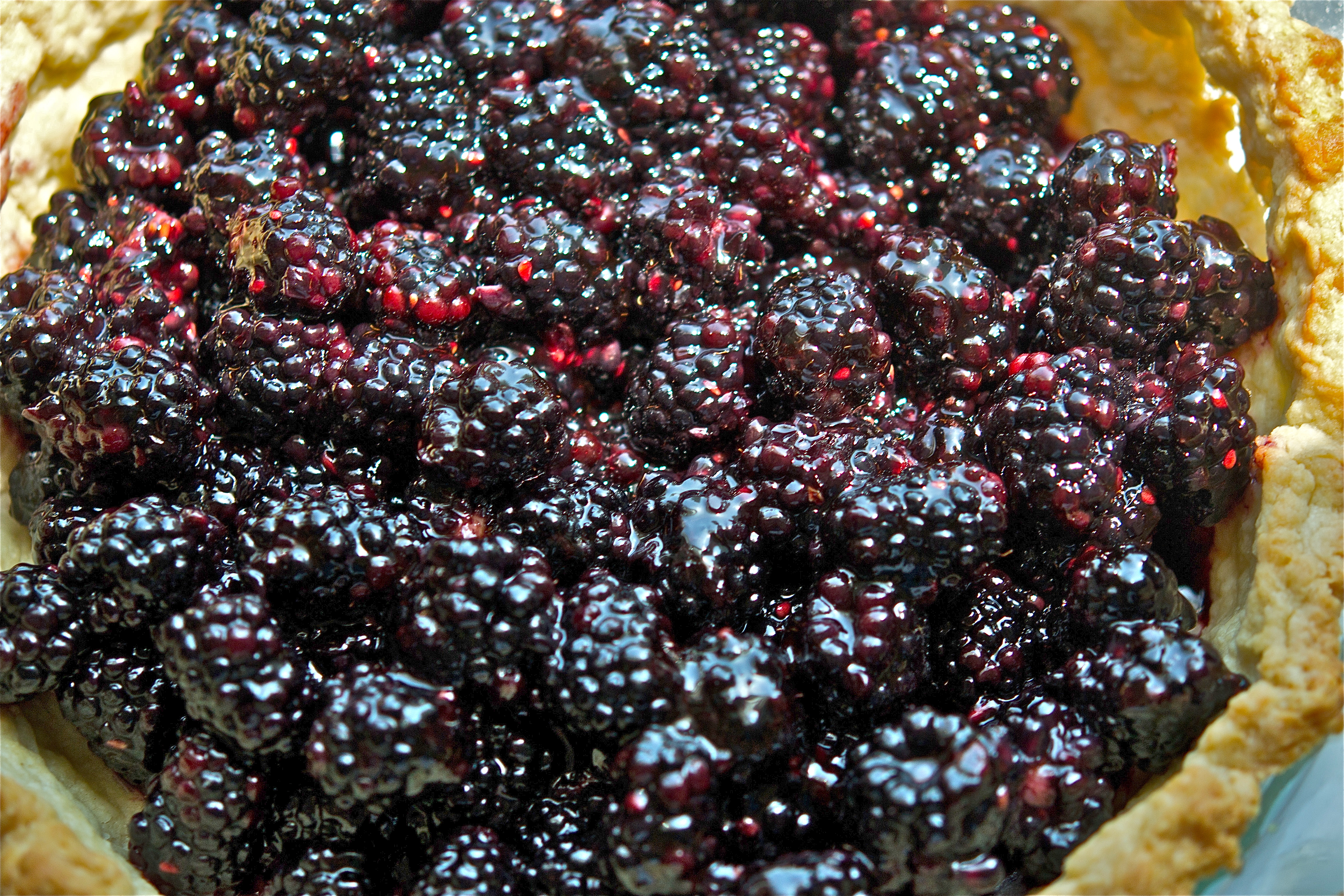
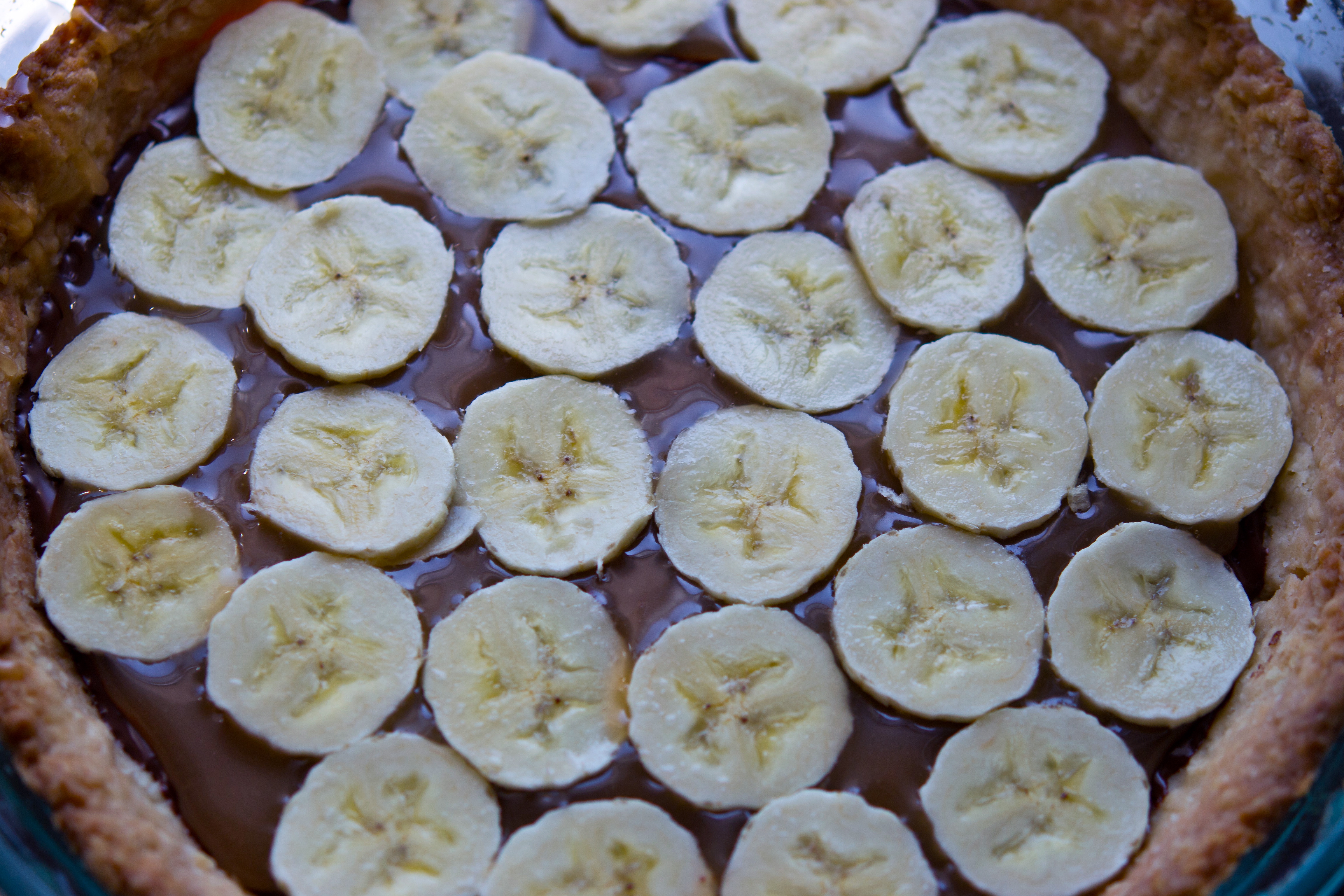
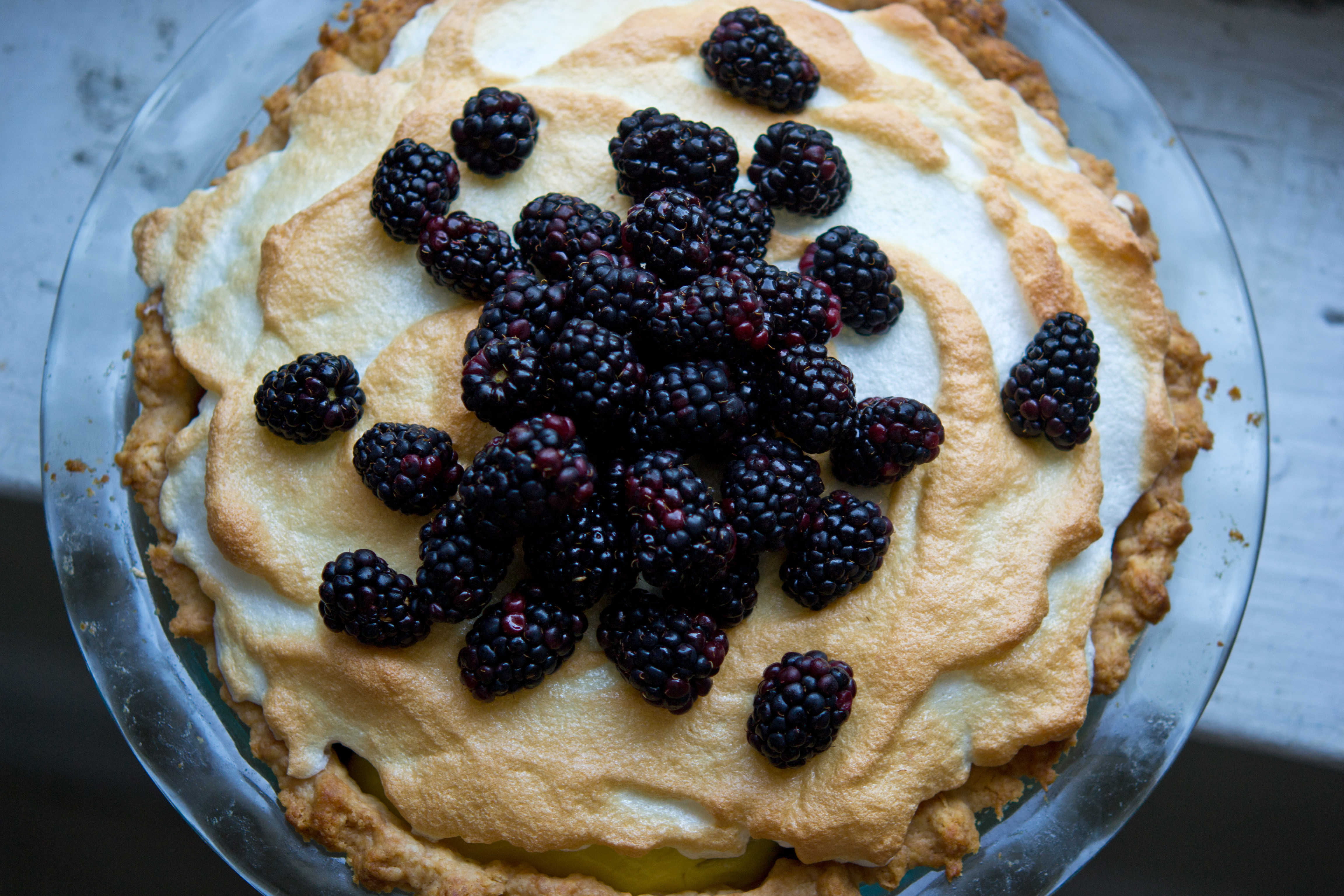
When I hosted a BBQ the other weekend, I thought I’d throw my efforts into not one but TWO pies…as expected, there wasn’t so much as a crumb left by the end of the party. What made them disappear so soon, you ask? Brace yourself – Lime and Blackberry Meringue Pie and Banana Cream Pie with Homemade Caramel and Chocolate Crust.
I have tried countless pie dough recipes, resulting in everything from lifeless crusts and burnt edges. This recipe is my new go-to: perfectly flaky, yet still full of that sinfully buttery taste! The secret ingredient? Vodka! Probably one of the few times that vodka is a good choice. Once the dough starts baking, the (flavorless) alcohol evaporates, and leaves behind a golden crust just begging to be filled! It’s a Cook’s Illustrated experiment (gotta love those nerdy cooks!) and will guarantee a perfect slice of pie 🙂
I’m a sucker for blackberries – there is something too irresistible about berries so fresh that they look ready to burst. Glazed with red wine and sugar…I was sold! As for the lime curd, there (apparently) is a step that involves powdered gelatin and whipped cream…I think my subconscious decided to omit this in favor of a straight-up curd. The result was (in my opinion) fabulous! A simple, creamy lime curd atop a beautiful bed of glazed blackberries – does life get any sweeter? Click HERE to see the recipe for this gorgeous pie!
For many of us, banana cream pie evokes memories of Nilla wafers and Jello pudding mix. Yet this recipe is a cut above those “out-of-a-box” creations – layers of homemade caramel and dark chocolate ganache topped with a creamy vanilla bean custard and fresh bananas. The caramel and custard require a bit of patience (and careful monitoring). Both are prepared over low heat, and immediately removed the second they are finished…failure to do this will put you right back at square one. That being said, the result is one of the BEST banana cream pies you will have ever tasted! I’m not one to pressure others, but I really encourage you to give this pie a try – click HERE to see the recipe for this homemade classic!
I wanted a musical pairing that captured the “joy” of summer in addition to acknowledging the unique flavor of these two pies. That led me to Debussy: a composer whose style is both beautiful and exotic. His work L’Isle joyeuse (Isle of Joy) for solor piano made a perfect fit. Debussy was inspired by Jean-Antoine Watteau’s painting L’Embarquement pour Cythère (Voyage to Cythera). The scene, filled with color and sensuality, portrays a group at the onset of their journey to the Island of Aphrodite (pictured below):
Debussy captures this colorful revelry by combining standard diatonic scales with whole tone scales; the result is almost otherworldly. These pies, each of classic origin, bring a new concept of flavor combinations that allow one to experience an almost “otherworldly joy” at first bite. Not to mention the technical difficulty this piece requires can certainly be met by the amount of time and patience needed to make these delicacies. I hope you enjoy this work as much as I do!

http://www.youtube.com/watch?v=Q4LvR9IPwwI

Sources Cited:
“Debussy: L’Isle joyeuse,” Minnesota Orchestra Program Notes
“L’Embarquement pour Cythere, by Antoine Watteau,” Wikipedia.com

“Grillomania”

Have you ever walked into a store and seen that one item that you can’t take your off of? You glance at the price, and quickly walk over to another display in hopes of avoiding it at all costs…but then you find yourself wandering back (against your own will) just to get a second look. Next thing you know, you’re smitten…long story short: I bought a new grill this past weekend for Memorial Day. I originally set out to buy one of those small charcoal models, but walked out of the store with a massive gas grill and a grin the size of Texas. My summer cooking has just been taken to a whole new level of potential. I christened the grill this past weekend with quite the spread, and so for this post I thought I’d share one of the evening’s masterpieces: Grilled Drumsticks with Peach Barbecue Sauce.
This sauce literally lives up to the name “finger-lickin’ good!” Once the chicken ran out, people became creative and turned it into a chip dip…or just ate with spoons. What’s great about this recipe is that it can be made any time of year, especially given the use of preserves (in lieu of fresh fruit). While peach is what’s called for in the recipe, I’d love to try it with blackberry, or even rhubarb. Add some bacon and maple syrup and smoked paprika…now that’s barbecue! I made the sauce a day ahead of time, which I highly recommend – this will give all those beautiful flavors enough time to really get to know each other, making for a fantastic sauce!
Did I mention that I made 5 POUNDS of chicken legs for this party? These take a long time to cook, so it may not have been the best game plan for a large party (lesson learned!) That being said, the meat was perfectly tender thanks to a quick and easy brine. Topped with that beautiful sauce, these were devoured in no time! My good friend Bonnie snapped several classic shots of friends – they were just too good to not include in this post 🙂 Click HERE to see the recipe for perfectly grilled barbecue chicken!
Irresistible: I couldn’t stop thinking of how irresistible this sauce was, and how I (personally) could not resist that beautiful new grill…Franz Liszt, while being seen as a true virtuouso, had the ability to bring an audience to near hysteria during his performances, causing women to faint, weep, and fight over his discarded kerchiefs and even cigar stubs! This magnetic quality helped coin the term “Lisztomania” – musicologist Alan Walker shares more on this phenomenon:

Liszt was a natural phenomenon, and people were swayed by him…. With his mesmeric personality and long mane of flowing hair, he created a striking stage presence. And there were many witnesses to testify that his playing did indeed raise the mood of an audience to a level of mystical ecstasy.

I chose Liszt’s Piano Sonata in B minor for the pairing. It’s wealth of components, emotional depth, and thematic metamorphosis perfectly speak to the richness of these drumsticks – a dish that relies on ingredients, flavor, and time. This piece comes across as a single movement, though many agree it can be applied to the sonata form (with no formal breaks, naturally). This seamless quality makes every component dependent on one another; an irresistible “blend,” if you will 😉 The work ends on a peaceful coda, quite similar to our food “coma” following this massive feast. While this sonata wasn’t among the works that induced mass “hysteria,” its present-day popularity has certainly placed it within the upper echelon of our modern “Lisztomania.” Enjoy!

http://www.youtube.com/watch?v=VCHE-UPwBJA

Sources Cited:
“Lisztomania,” Wikipedia.com
“Symphonic Poems,” Wikipedia.com
“Piano Sonata (Liszt),” Wikipedia.com
One Spread, Many Tastes

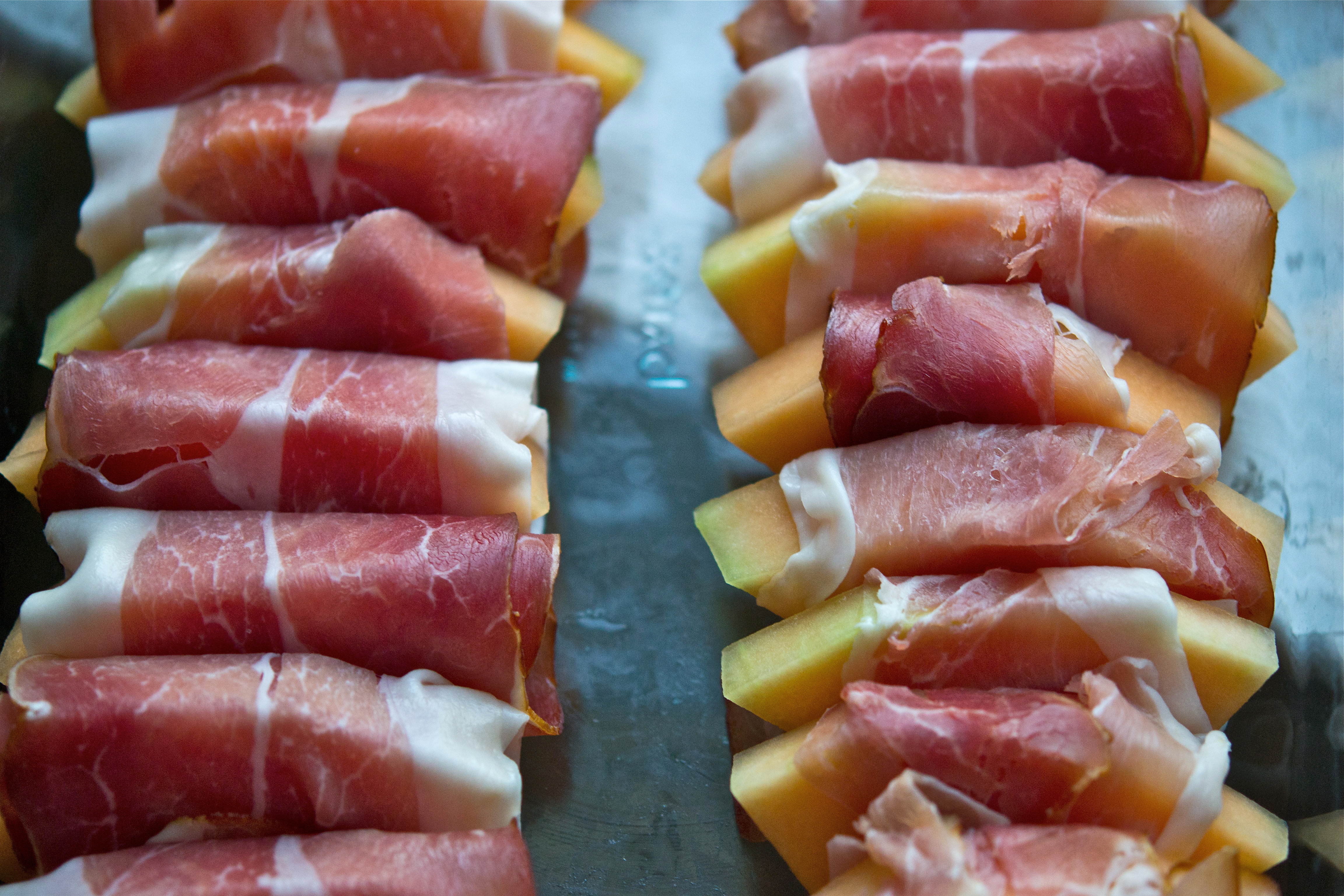
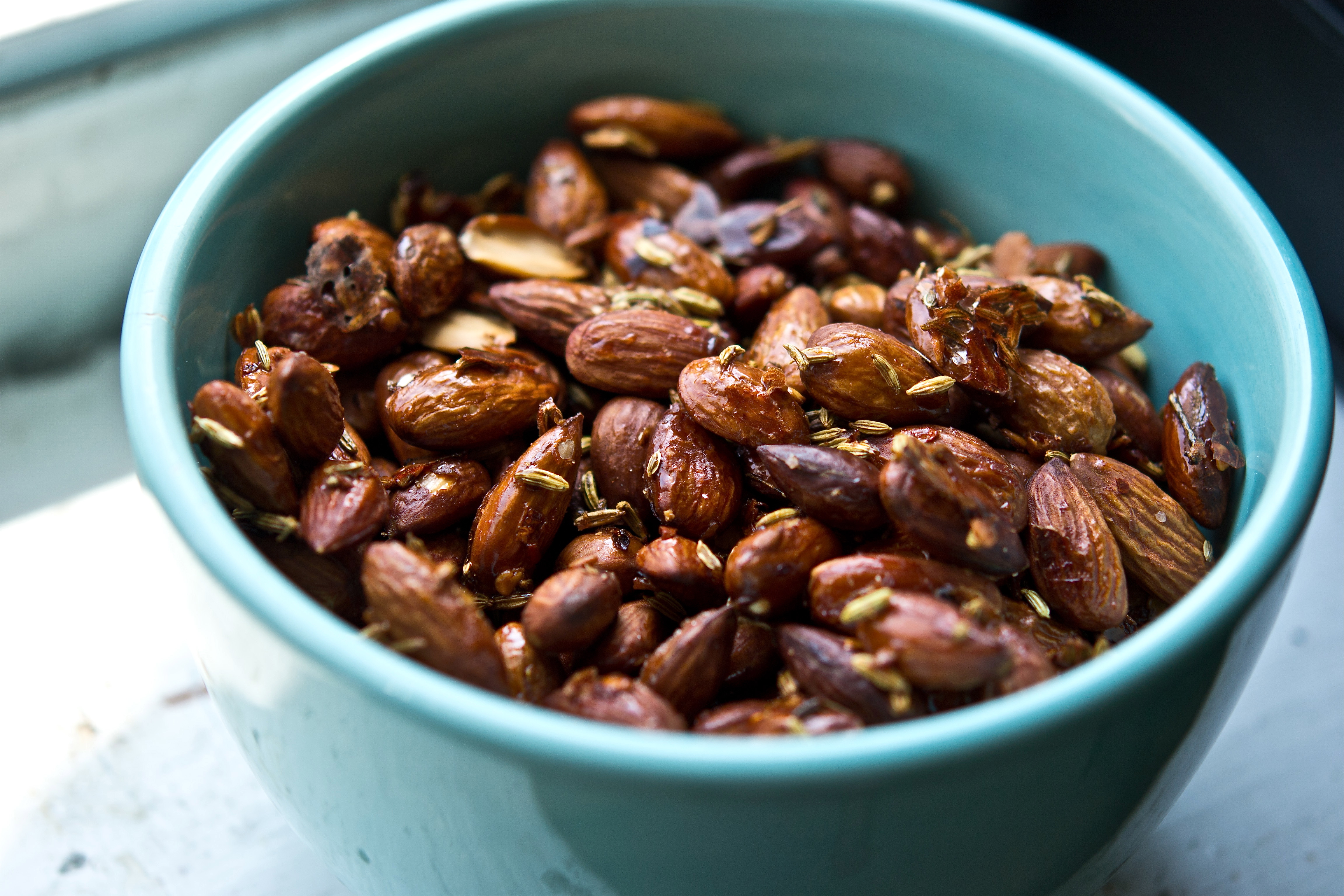
We’ve all been to those restaurants where every menu item has us on the edge of our seats with excitement…but then you have to choose only one. Even if you get the perfectly braised chicken or creamy gnocchi, you can’t stop thinking about that cedar grilled salmon, or the chimichurri steak that a waiter just brought to the table next to you! Moments like these make us wish we could get a taste of those other gorgeous entrées. This (on top of my love for all things cute) is the reason I LOVE tapas! You can choose up to four or five, and keep ’em coming as long as you’re hungry! What better way to explore the culinary signatures of a place than through perfectly portioned samples? Well, so I enjoy making them as much as I enjoy eating them…and summer is THE season for tapas. So trust me when I say this Tapas Spread will be the first of many you’ll see this summer 🙂
Okay, so Prosciutto-Wrapped Canteloupe (top photo) isn’t really a recipe, but it’s awesome! Besides, no authentic tapas spread is complete without melon or cured meat, and deciding to put the two together was one of history’s finer moments. I love all things olive – olive oil, olive tapenades, and marinated olives…melt (especially with chili peppers!) I thought I would give marinating olives a try myself, so I grabbed three varieties, tossed them with a few simple ingredients, and ended up with a heavenly bowl of Spicy Spanish Olives (above). Make these – don’t think twice about, just trust me on this. You’ll thank me later 😉 Click HERE to get started!
Most of us can attest to having tried and loved candied pecans and/or honey roasted peanuts. I thought a variety of this favorite would be the perfect complement to my spread, but I wanted something with a twist. Enter fennel seed – this added touch put these Sweet and Spicy Almonds through the roof. Both subtly sweet with an edge of savory, these almonds are the perfect “munchies” for any party – click HERE to get this delicious snack!
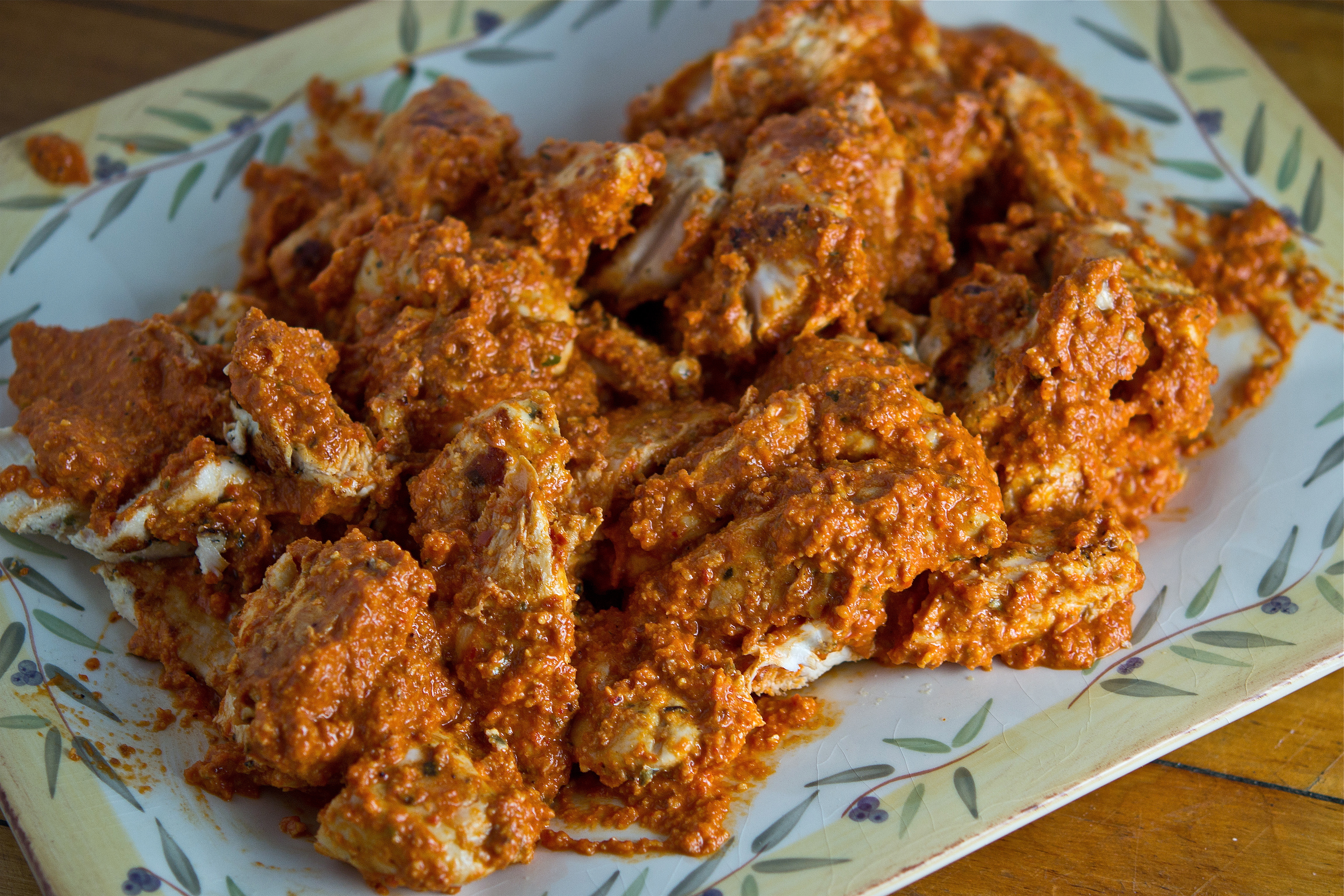
I saved the best for last: Romesco Sauce. A pureé of roasted red peppers, toasted almonds, fiery chili peppers…I (along with everyone else who tried this) was willing to sell my soul to the genius of this sauce. How is it so good? I honestly don’t know…the marriage of flavors in this sauce was pure destiny. It’s a fairly simple recipe whose flavor become exponentially better the next day (and the next day, and the next day…) You can serve it with basically anything, and I chose to toss mine with beautifully tender chicken tenders . Click HERE to see the secret behind an amazing sauce!
I wanted to choose a musical piece that could give us a taste of a composer’s style. Looking for a composer who truly embraced their national heritage, I went with the Brazilian music of Heitor Villa-Lobos. The following quote by Villa-Lobos perfectly captures this quality:

“Yes, I’m Brazilian – very Brazilian. In my music, I let the rivers and seas of this great Brazil sing. I don’t put a gag on the tropical exuberance of our forests and our skies, which I intuitively transpose to everything I write.”

Gaining international fame and recognition for his Brazil, he is seen as a cultural icon. Some of his most well-known works are his fourteen Choros, composed between 1920 and 1930. Choros literally means “weeping” or “crying,” and was used to describe the music of the Brazilian street ensembles from the latter half of the nineteenth century. Villa-Lobos’ intention with these pieces was to bring the music of Brazil to life within a variety of performing contexts. Each Choros is written for a different instrument or ensemble, ranging from solo to full orchestra. I thought it would be fun to include several from the series, and to pair each one with a different tapa. For the olives, I chose Choros No. 5 for solo piano, “Alma Brasileira” (Soul of Brazil) – it expresses a depth of character and nostalgia that speak to the dish’s own complexity and flavor development with time. This is perhaps y favorite of the four included, which also speak to my love of olives 🙂 I included Choros No. 1 for solo guitar (which in fact inspired the series altogether) to pair with the almonds – it’s casual flair and energy are perfect for these spicy bites. The Choros No. 2 for flute and clarinet  perfectly describes the prosciutto and melon, as it itself is a conversation between the flutist and clarinetist – though it’s a duet, the dialogue is really more individual than melded. And last (but definitely not least) I chose Choros No. 10 for chorus & orchestra, “Rasga o coraçao” (Tear My Heart) to pair with the Chicken and Romesco – this “tour de force” of a piece was perfect for the quality and perfection of this sauce. You can check out each one below – enjoy!

Choros No. 1: http://www.youtube.com/watch?v=eZuETVzODME
Choros No. 2: http://www.youtube.com/watch?v=oVGBl42aKfQ
Choros No. 5: http://www.youtube.com/watch?v=24w7fMiJZr8
Choros No. 10: http://www.youtube.com/watch?v=7UnVmG-DDhY

Sources Cited:
“Villa-Lobos and the Choro,” Guitarra Magazine

For All the Moms

So I am definitely behind on this post, but I place the blame on my incessant touring as an excuse for not having the chance to devote a post to moms for Mother’s Day. Many of us cherish those memories (complete with blurry edges a la Hollywood) where we ran inside from a day of play or school to the smell of freshly baked cookies. They say smell is the strongest catalyst of memory, with the majority of those connections being formed in our childhood. This is due to the connection of the olfactory bulb (the part of our brain that processes odor) to the ever-powerful amygdala…I should probably stop while I’m ahead and talk about this irresistible pair of cookie recipes: Chocolate Chunk Cookies and Chocolate Mocha Cookies with Nutella.
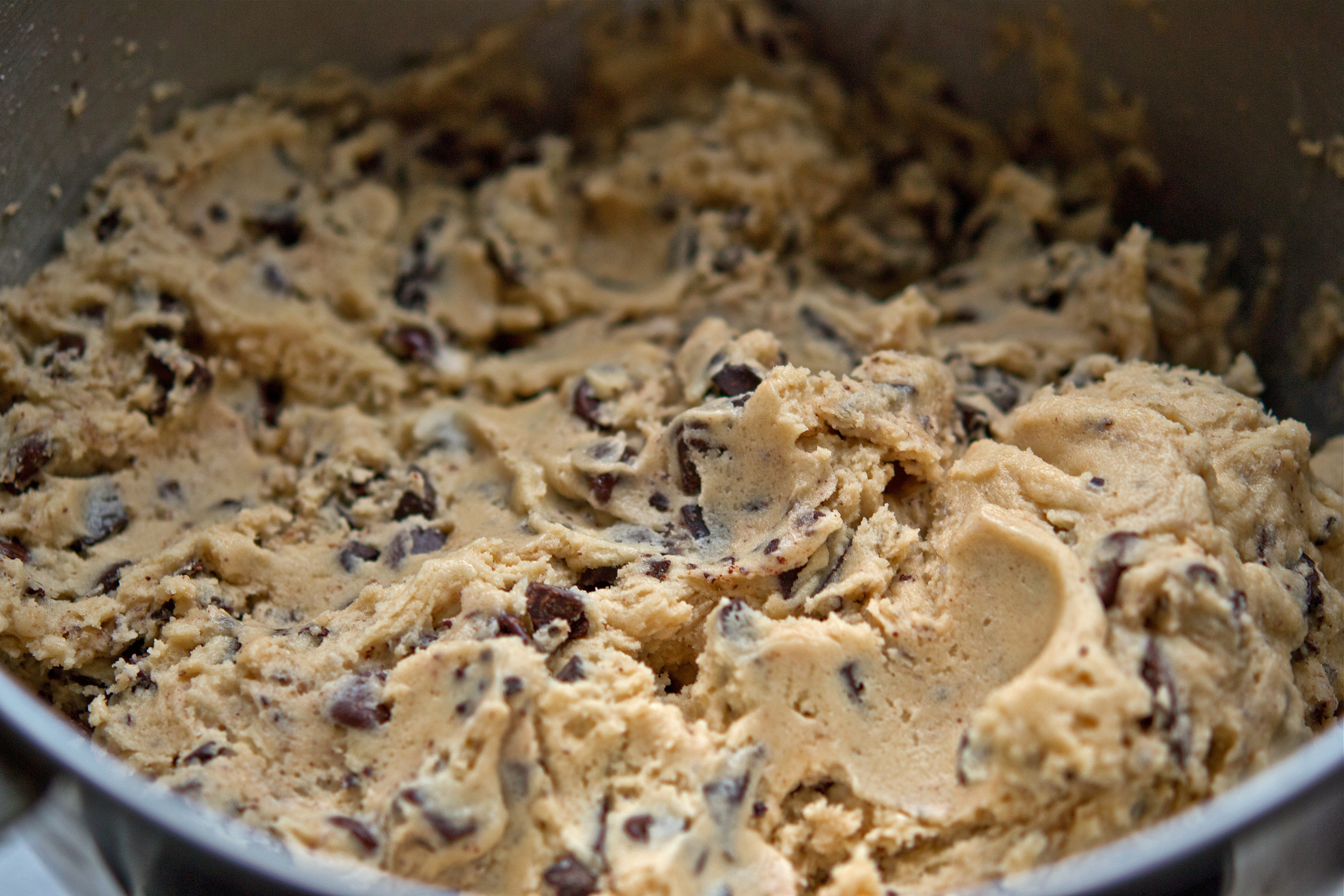
I’m often asked why I don’t eat all the desserts I make. For starters, I would basically be eating cookies and cakes for breakfast, lunch and dinner if I actually ate everything I made. But my secret indulgence? Once whatever it is I’m making is done and in the oven, guess who gets to clean the beaters 😉 And cookie dough is probably one of the most addictive things on the planet…and this dough was uhhhhhh-mazing! If you are one of the proclaimed few who can’t resist eating cookie dough, enlist help from a friend to make sure these cookies actually make it to the oven.
That being said, the finished cookies were fabulous! Loaded with melty chunks and chips of dark chocolate, they are pure heaven. The cookie itself has a buttery crunch, with a tender crumb that makes your heart melt. It goes without saying, but chocolate chunk cookies are best straight out of the oven (as they always have been) – click HERE to see the recipe for these golden, chewy delights!
So now that I have you thinking about chocolate, how about taking it a step further with melted chocolate, cocoa powder, AND nutella…how can anyone resist? These cookies are more brownie than cookie, with a rich center and a crumbly edge. They also have a touch of espresso, which is only “topped” by the the nutella swirl to finish – the ultimate cookie. It may not be quite like the cookies (or brownies) we enjoyed as kids, but a cookie always has a way to make us reminisce over our childhood days – click HERE to see the recipe for this glorious sweet.
I looked at my own childhood as inspiration for this musical pairing. Growing up, I was extremely fortunate to have not one, but two moms – one was a pro with baking amazing chocolate chip cookies (the foolproof Toll House version!) and the other a master of baking brownies (Betty Crocker double fudge…). Seeing how both of my cookies took inspiration from those two classics, I wanted to honor that legacy with Dvorák’s “Songs My Mother Taught Me.” Part of his cycle Gypsy Songs, the truly nostalgic work has notes of grief and hopefulness. The lyrics, by German poet Adolf Heyduk, translate as follows:

Songs my mother taught me,
In the days long vanished;
Seldom from her eyelids
Were the teardrops banished.
Now I teach my children,
Each melodious measure.
Oft the tears are flowing,
Oft they flow from my memory’s treasure.

Though short, the music is filled with color and life that other songs don’t quite achieve – a perfect way to describe two cookies whose size don’t quite speak to their ultimate potential. I’ve included a recording with soprano Anna Netrebko – enjoy!

http://www.youtube.com/watch?v=bAOy1waBdpI&feature=related

Sources Cited:
“Songs My Mother Taught Me Lyrics and Text Translation,” About.com

An Indulgence of Laughter and Sugar

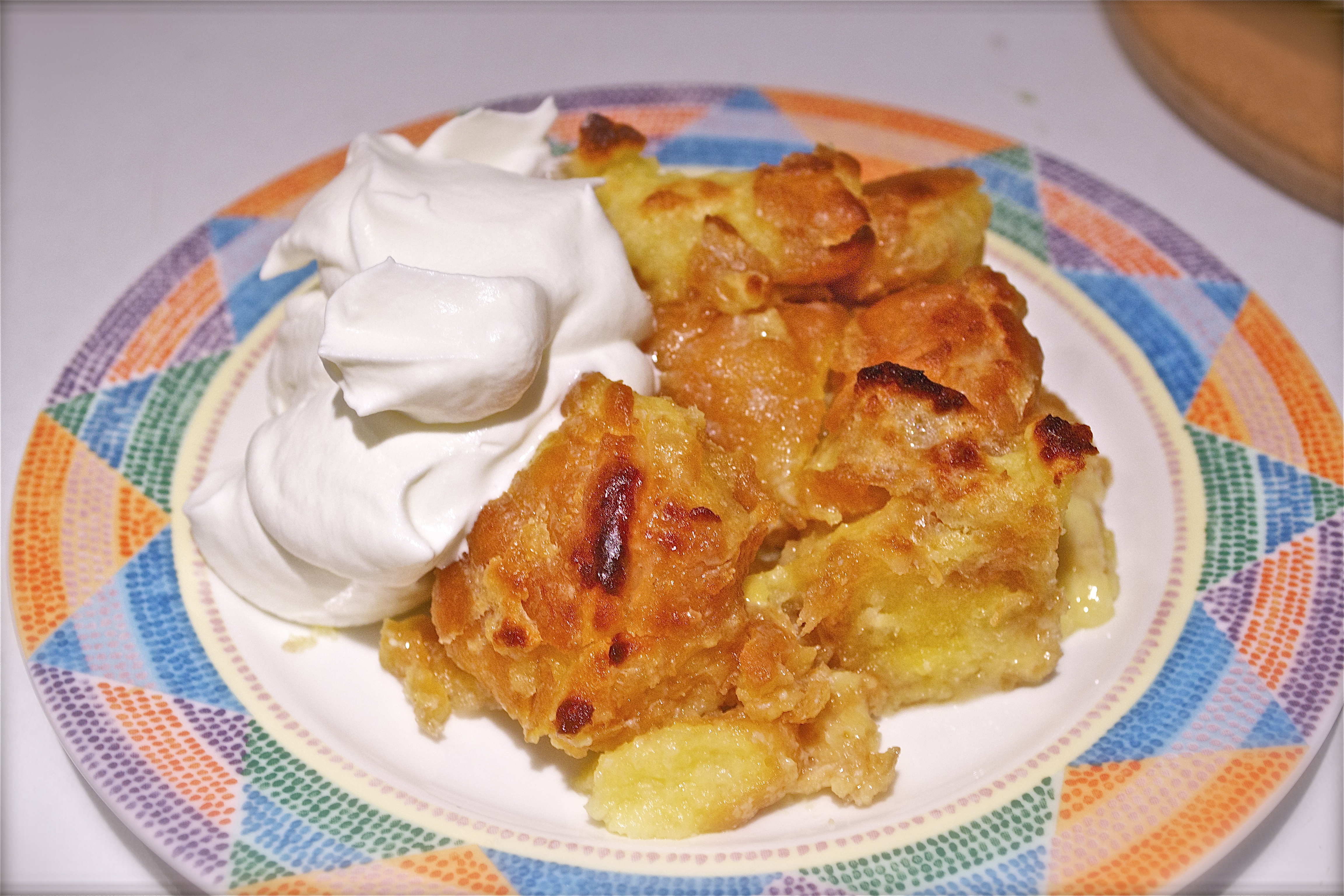
Donuts…baked in a bread pudding…forgive me arteries, for I have sinned. My sister talked me into this one, how I’m still not certain. I honestly thought she was joking…but then I had a bite, and wished I had never discovered this irresistible thing. I tried to push my plate away, but found myself going back for more against my own will. Sugary, golden goodness…save yourself while you can from this Krispy Kreme Bread Pudding.
There’s something truly American about the doughnut (or “donut” as we like to spell it here). Evocative of classic diners and incomplete without a cup of coffee, they are seen as a cultural staple of the American breakfast. Though believed to be of Dutch origin, Hanson Gregory (an American) takes the credit for the ring shape we’ve all come to know and love. It is said he disliked the doughy, uncooked center of the pastries, and started using a tin can to cut the holes. Despite their integral connection to our culture, doughnuts are enjoyed across the globe, from the German Berliner to the Moroccan Sfenji.
The custard for this dish is pretty dense, no lie – three types of cream and a dozen eggs – but crucial to turning this dessert from “just another pudding” to “you-can’t-put-the-fork-down” amazing! The trick is to toast the doughnut pieces completely, then allow them to sit at room temperature for a good 30 minutes or so before adding the custard. This helps give the pudding a sugary crunch. Regardless of the occasion, this dish will win over even the staunchest of critics (myself included): click HERE to see the recipe.
This dish is so rich and eccentric, I couldn’t help but laugh when Sarah first told me about it. That led me to consider a musical pairing with such a sense of humor: Britten’s A Simple Symphony, for string orchestra. With movements titled “Boisterous Bourrée,” “Playful Pizzicato,” “Sentimental Saraband,” and “Frolicsome Finale”, he’s made known the humorous intent. That being said, each movement does ring true to it’s name. The work opens on a lively note, giving us hints of  classical norms which are then offset with not-so-subtle antics. It then glides into a dazzling second movement simmering with a restrained energy, played entirely without bows. The third movement is the longest, taking a reflective turn into a more emotive realm. The fourth movement then  “snaps us back to reality,” giving a festive closure to this delightful “morsel” of a work that runs just under 20 minutes. The recording below is with the Orpheus Chamber Orchestra – enjoy!

http://www.youtube.com/watch?v=RH0OjuiEvwk&feature=relmfu

Sources Cited:
“Doughnut,” Wikipedia.com
“About the Piece: Simple Symphony,” LA Phil

Challenge Accepted

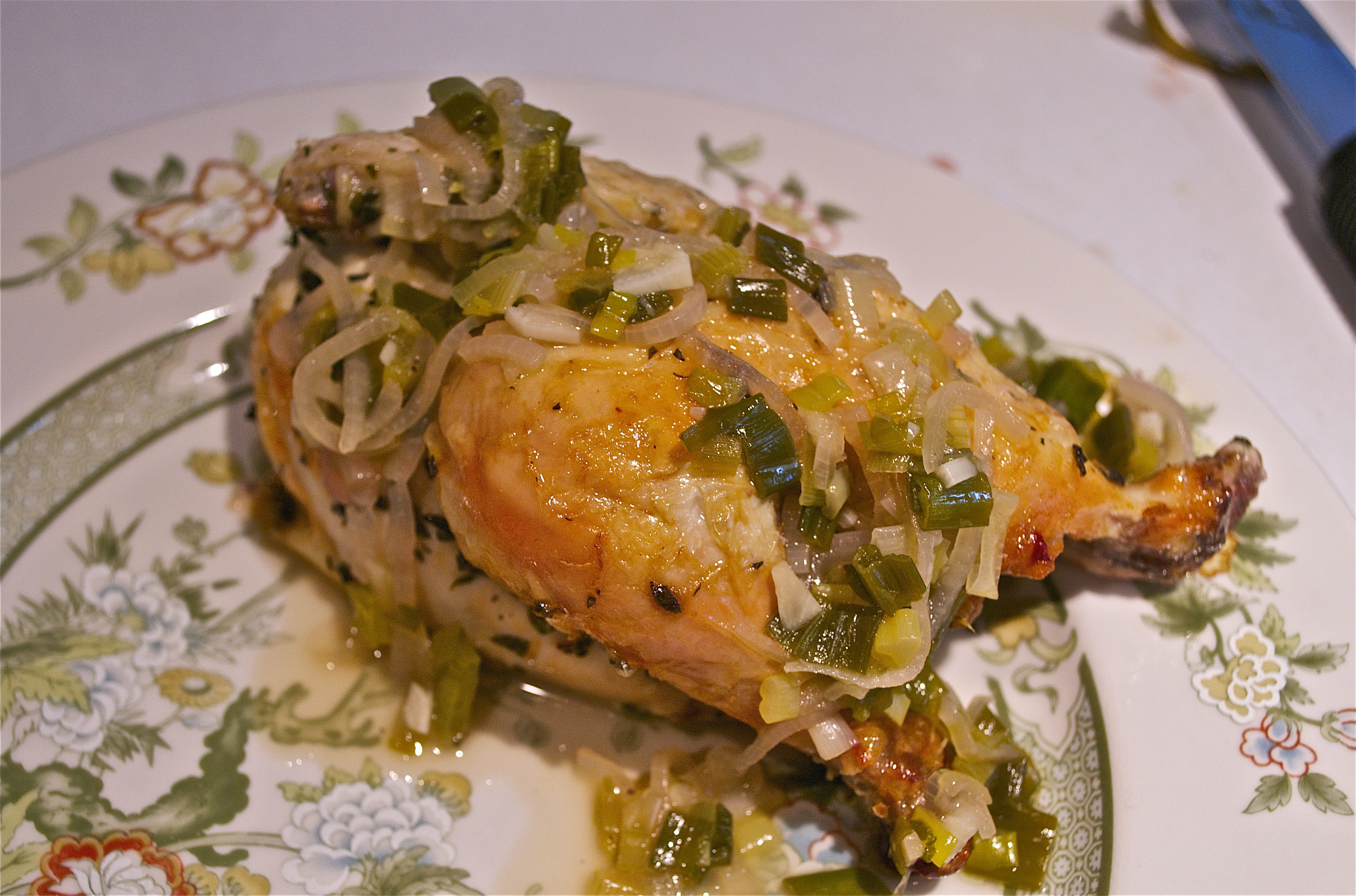
Iron Chef has transformed the way we perceive culinary challenges – the “blood, sweat, and tears” of cooking finally has a stage, and food’s competitive qualities have been taken to a whole new level. The show certainly left an impression on my mom: a business-savvy, energetic woman who loves the prospect of a challenge. So naturally, my visits home are often paired with an Iron Chef-like arrangement. My most recent challenge: Cornish Game Hens…well, that took me through a loop considering a) I had never prepared these before, and b) couldn’t even begin to imagine how they were suited for spring fare. After stumbling through several menu options, I finally landed on one that suited my standards: Roasted Cornish Hens with White Wine-Scallion Sauce.
Cornish hens are a peculiar kind of bird: they aren’t actually a game bird, but in fact a hybrid of Cornish Game and the Plymouth Chicken. Though identified as “hens,” these birds can be either male or female, and often weigh no more than 3 pounds. I was pretty floored when my mom asked me to prepare these hens for the dinner party she was hosting, especially since I’d always thought of them as that “other” holiday bird (i.e. the simpler alternative to roast turkey).
My trick in making these hens “Spring-friendly” was a combination of REALLY fresh herbs and seasonal ingredients, like scallions and shallots. Complementing these birds with strong flavors is vital considering the meat has a rather dull taste on its own. Rather than stuffing them with actual stuffing (a holiday trend), I threw in a few aromatics to help infuse the meat with more flavor. The result was an elegant, flavorful dish that had all the right notes of Spring. Our guests enjoyed nearly every last bite of their individual helpings (yet in all honesty, I’ll probably reserve future attempts with Cornish hens for the colder months) – click HERE to see the recipe for this unique dish.
For dessert, I wanted to make a cake that packed a punch but was a lighter afterthought to the entree. I’ve got a crush on vanilla beans, so shelled out $14 for TWO beans (that’s not a typo) and made a Golden Vanilla Bean Pound Cake that was out-of-this-world good. The trick with this cake is having your butter and eggs at ROOM temperature. Yes, this means shelving your fears of leaving them unrefrigerated and just letting them sit out – if I can leave you with any piece of advice when it comes to baking, this is it.
In line with the menu’s seasonal trend, I topped each slice with sherry-macerated strawberries that paired beautifully with the cake’s buttery, golden texture. Feel free to pair it with whatever strikes your fancy – ice cream, caramel, etc. Though simple to make, this cake is definitely not simple in taste, and makes for the perfect weeknight indulgence – click HERE for this heavenly treat.
For this pairing, I thought it appropriate to pair a piece of music that took on a classic, venerable topic and gave it an avant garde spin. That led me to Stravinsky’s Firebird Suite. In folklore, the firebird is (more often than not) a coveted prize that induces a challenging quest by the story’s hero. Stravinsky acknowledged his own reservations on the “challenge” of composing the music for this ballet (similar to my reservations on preparing this dish):

The Firebird did not attract me as a subject. Like all story ballets it demanded descriptive music of a kind I did not want to write..However…I know that, in truth, my reservations about the subject were also an advance defense for my not being sure I could.”

The music is an entirely different matter – even though it was his first, it is perhaps the most widely recognized and acclaimed of Stravinsky’s ballets (even more so thanks to Disney’s Fantasia 2000). The opening passage (alternating between thirds and seconds of a tritone in the cello, bass and viola lines) set the “supernatural” setting of the hero’s quest, which ultimately ends in a truly majestic Finale (an ending that is admittedly uncharacteristic of Stravinsky). Yet the piece still demonstrates what will become the composer’s greatest qualities in later works. The primitive style that would take on a whole new level in Rite of Spring finds a starting point in this work, with metric dynamism that keeps demands a keen concentration from performers and listeners alike. Two examples being the offset downbeat of the Danse Infernale, and the 7/4 time signature of the Finale. Additionally, the orchestration of the work was substantial for the time, with Stravinsky even claiming it to be “wastefully large.” Despite this claim, the orchestral force brings a rich quality to the piece that has truly come to define the music. For the recording, I found a fabulous video of Claudio Abbado with the Lucerne Festival Orchestra‬ – enjoy!

http://www.youtube.com/watch?v=WI-MG_CXYiY

Sources Cited:
– “Cornish game hen,” Wikipedia.com
– “Firebird (Slavic Folklore),” Wikipedia.com
– Huscher, Phillip. “Program Notes: Igor Stravinsky – The Firebird” Chicago Symphony Orchestra
– “About the Piece: The Firebird (complete),” LA Phil

An Inspired Trend

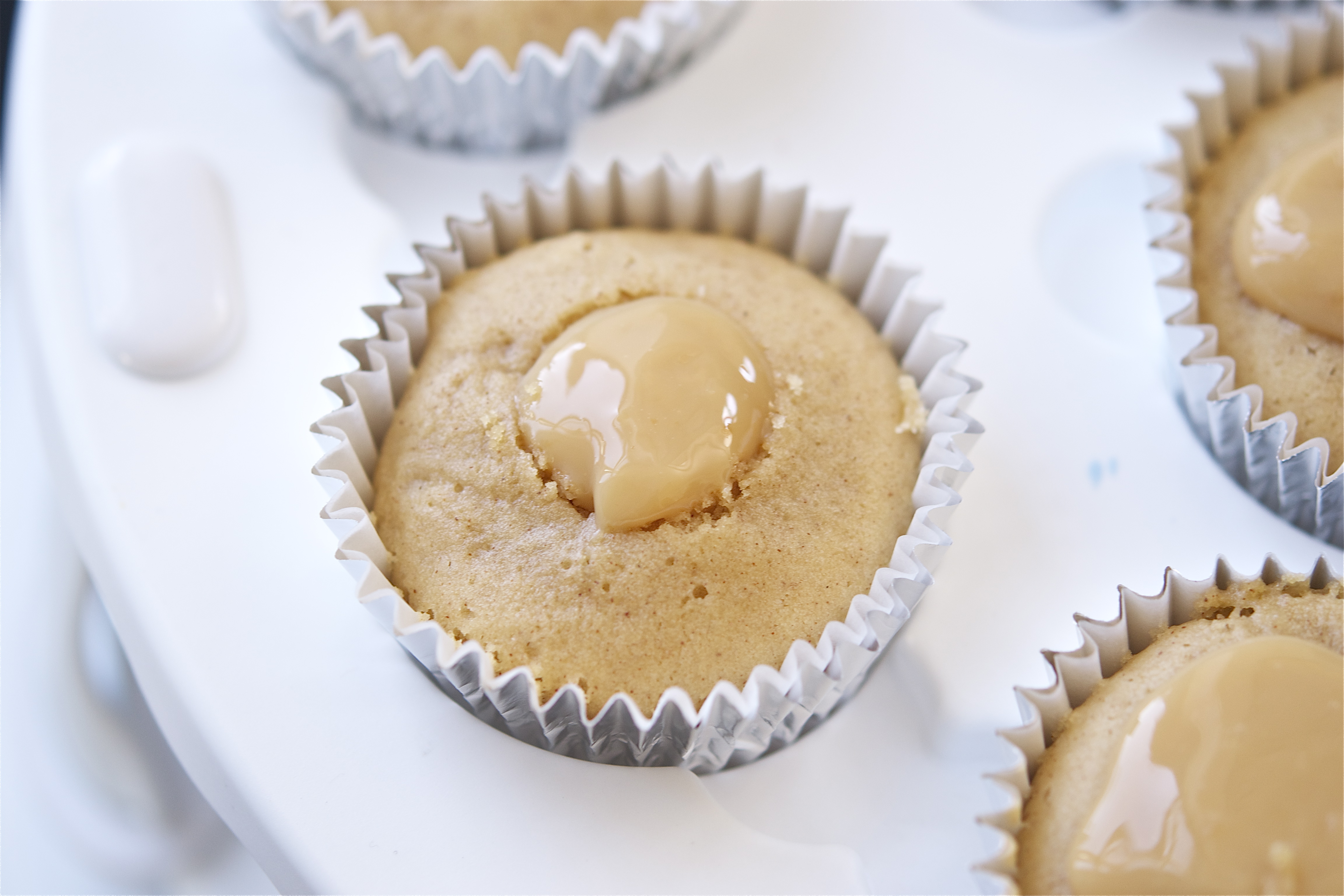
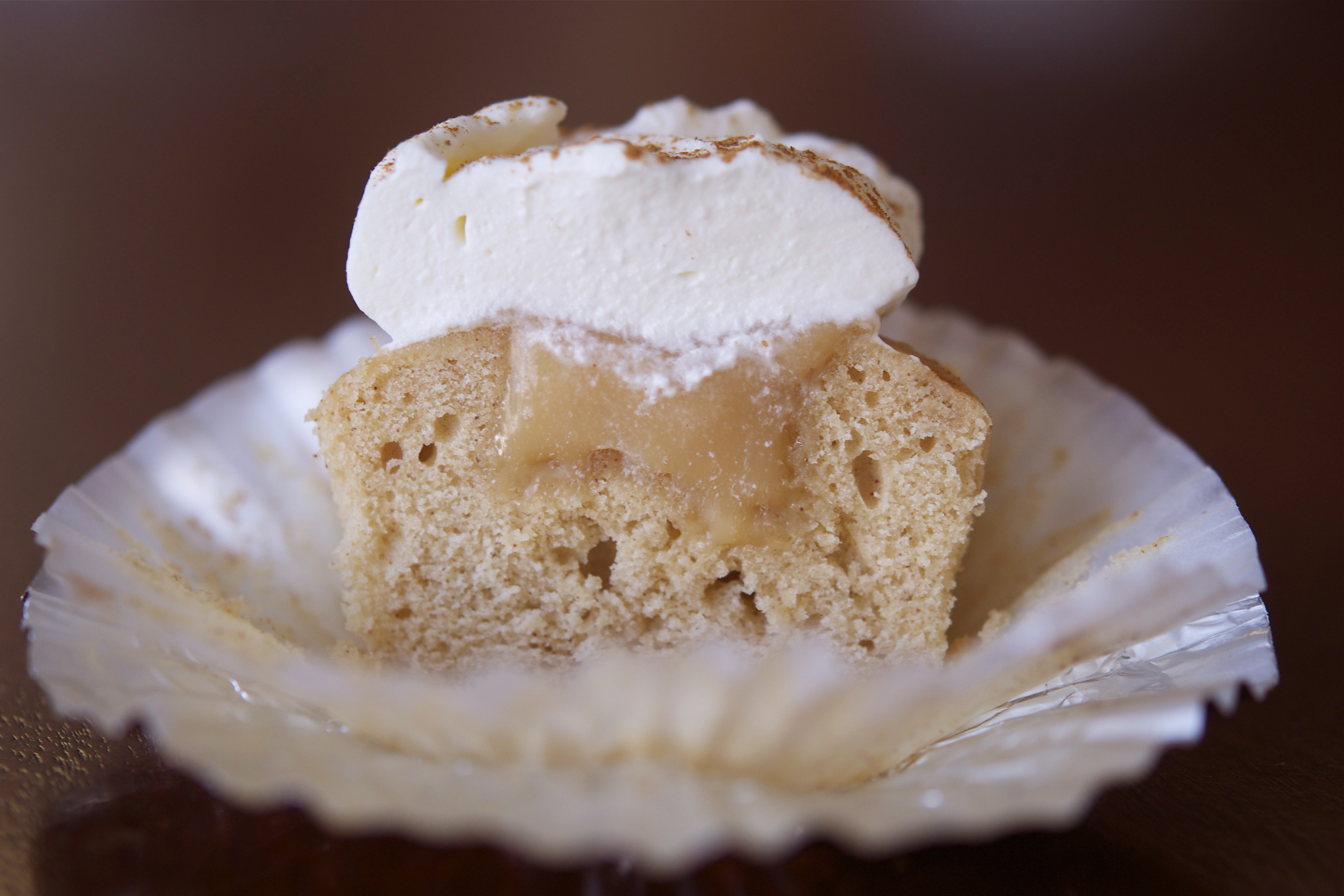
What makes the perfect cupcake? A creation that is both adorable and irresistibly delicious. Cupcakes have become the food industry’s new craze, taking the nation by storm with their portion-sized perfection. Countless bakeries have opened dedicated solely to creating these little cakes, taking their flavor and decorative potential to new heights. When I have to bake for a sizable crowd, I vie for cupcakes; a decision my coworkers wholly support. So when baking for the office’s monthly birthday party, I made a batch that I knew no one would resist: Churro Cupcakes with Dulce de Leche and Cinnamon Whipped Cream.
The term “cupcake” began to appear in publications during the early 19th century, referring to cakes baked in pottery cups and ceramic molds (muffin tins were not widely available). They were often treats enjoyed during tea parties and informal gatherings, with lavish decorations as more of an afterthought of luxury. Today, they have reached a celebrity status in the food world that is impossible to ignore. Sweet, savory, baked, fried – there is no limit to what these little cakes can achieve.
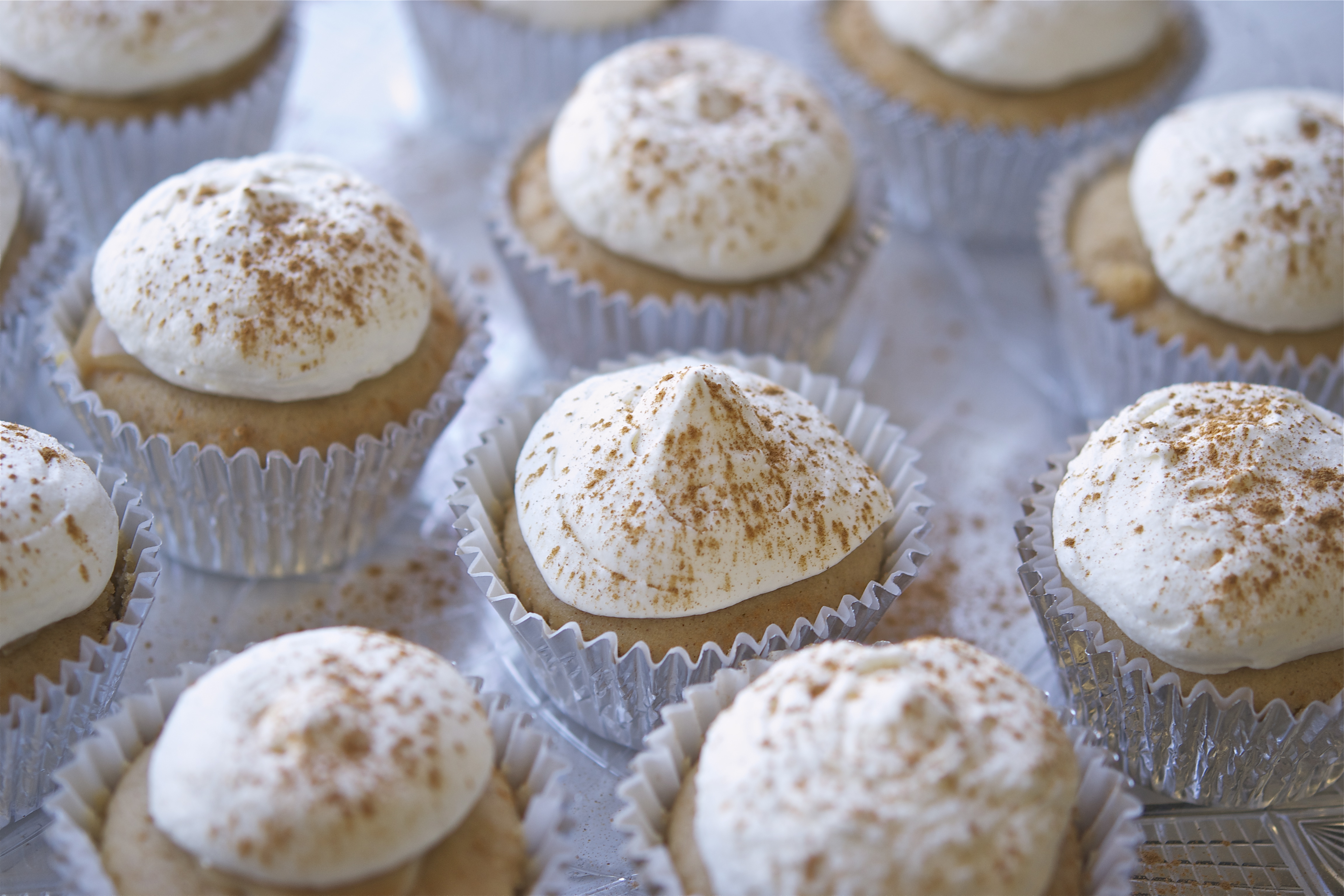
These cupcakes mimic the taste and character of churros – cinnamon fried-dough pastries popular in Spain and Latin America. Churros are often enjoyed with hot chocolate or café con leche, so I decided to fill these cakes with dulce de leche (a personal favorite). Since it was practically 70 degrees outside, I avoided a heavy frosting by topping each with a dollop of sweetened whipped cream. The result was  an extremely delicious, utterly adorable cupcake – click HERE to see my recipe for these perfect little treats.
I sought out a fellow musician’s advice for the pairing, and asked my colleague Tom Vignieri – his immediate response: “Well, they weren’t heavy and romantic, but also not too light – I’d say they remind me of Schubert.” I couldn’t have agreed more. Ernst Krenek, a twentieth-century composer, gives the perfect description on Schubert: “a thinking artist with a keen appetite for experimentation.” To say Schubert was a prolific composer is almost an understatement: he composed over 600 songs, 9 symphonies (one unfinished), and  a number of operas, sacred works, chamber music, and solo piano works. Such an outpour of music for a man who died at the young age of 31 truly speaks to his remarkable artistry. What better pairing for a dessert that embraces truly inspired styles! I chose the song “Heidenroslein,” or “Rose on the Heath.” The lyrics are from Goethe’s poem of the same name, which tells the tale of a young man whose love has been rejected. Its light character and technical finesse perfectly complement these cupcakes – the recording below is with lyric soprana Barbara Bonney. Enjoy!

http://www.youtube.com/watch?v=HFPpoU9ecZo

Sources Cited:
“Cupcake,” Wikipedia.com
“Franz Schubert,” Wikipedia.com

Well Worth the Wait

There is a truly beautiful (almost unexplainable) synergy between warm weather and barbecue. As we pack away the last of our wool sweaters, it’s time to unearth all the summertime classics. I personally feel a nostalgic tug when reminiscing on summer cookouts, where everyone had to balance styrofoam plates overflowing with corn on the cob, barbecued chicken and vegetables. I made this particular dish quite some time ago, though better late than never to feature this delicious Slow Cooker Pulled Pork with Sweet-and-Smokey Barbecue Sauce.
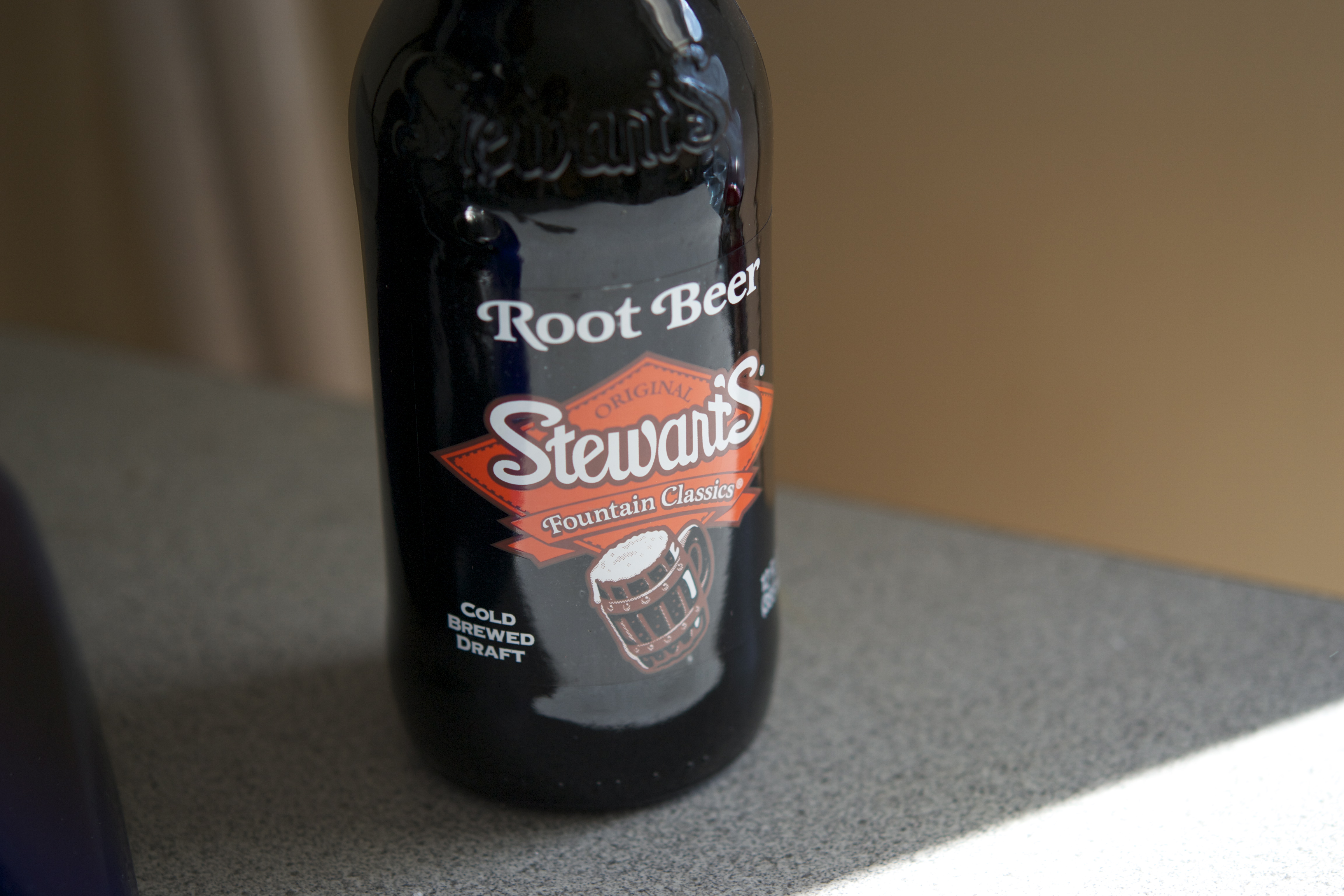
The genius of this recipe lies in its simplicity. Granted, the sauce has its own tricks, though the pork’s flavor defies logic. The secret is root beer. You probably don’t believe me, and I don’t blame you – I had my own reservations, yet the result was a beautifully tender pork infused with a touch of sweetness from the root beer. I personally splurged on Stewart’s (a personal favorite) for this recipe.
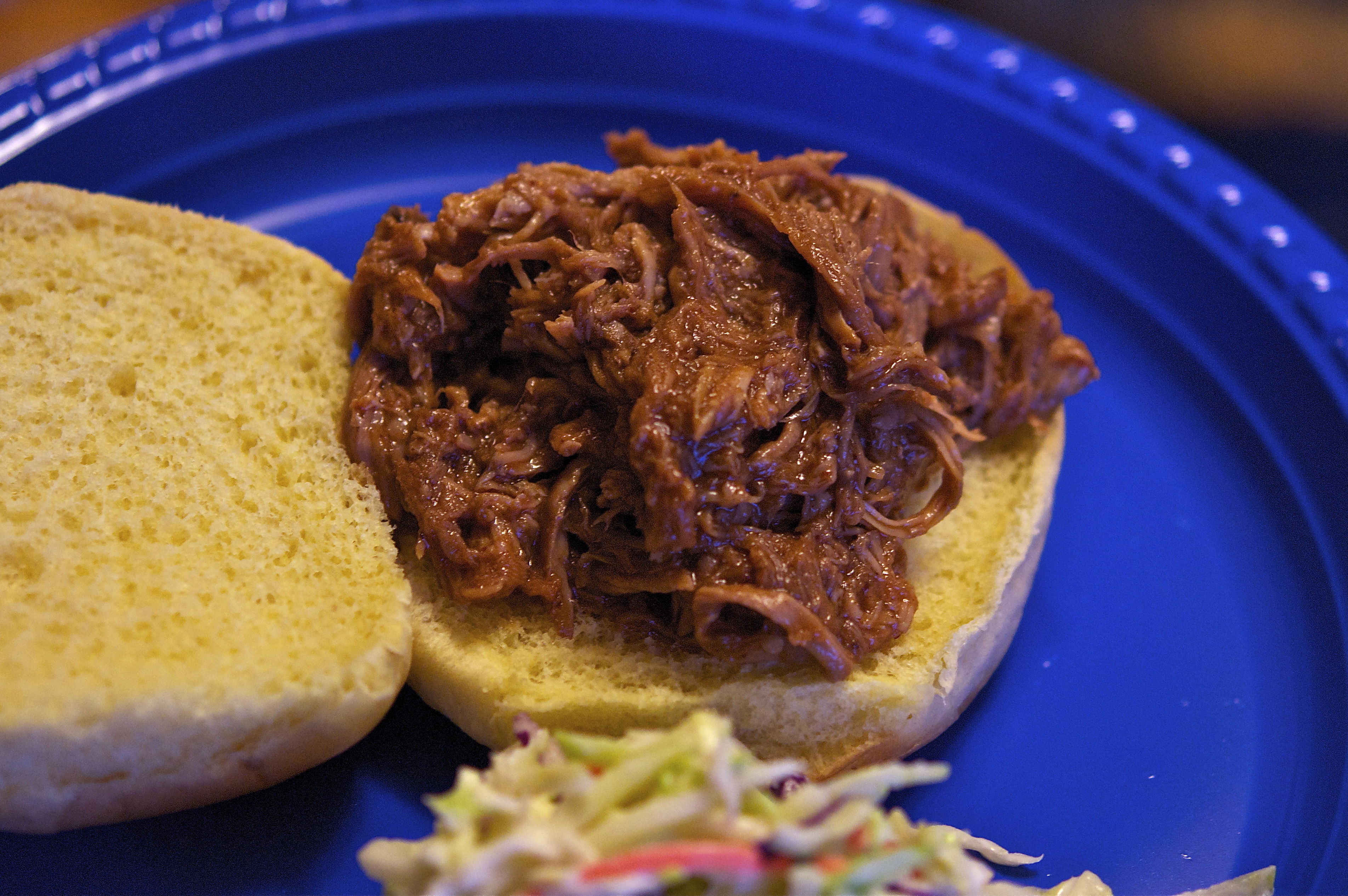
The original recipe only calls for pork, root beer and barbecue sauce, but I threw in a few extra ingredients for the added depth. After nearly 9 hours of cooking, the pork all but melted, it was that tender! It definitely takes a while, but it is definitely worth the wait! You can use any barbecue sauce, though the included recipe is a guaranteed winner – click HERE to make this amazing barbecue pulled pork! I served these with potato rolls and Classic Buttermilk Coleslaw, which most of my friends chose to pile on top of their pork sandwiches – you can find the recipe for this crunchy slaw HERE.
The patience required to make this mouthwatering meal inspired my musical pairing – Beethoven’s Violin Concerto in D major, Op. 61. Composed towards the end of 1806, the concerto has become a truly iconic work in the violin repertoire. Patience is the name of the game for this concerto. The first movement opens with an orchestral introduction that carries on for nearly 100 bars before the violin entrance – you nearly forget you’re listening to a concerto! The soloist finally emerges, spinning a series of ornamental motifs before settling into the main theme. The second movement captures the listener’s attention through its lyrical essence, suspending time into a realm free of worry or violence. As though waking from a dream, the transition into the Rondo goes without pause. This final movement rewards said patience with its merriment, weaving lively themes within a rich orchestral context. The recording below is with none other than the ingenious Jascha Heifetz and the Boston Symphony – enjoy!
http://www.youtube.com/watch?v=dBv077dSO5A

Sources Cited:
“Concerto in D Major for Violin and Orchestra,” The Kennedy Center
“BEETHOVEN: Concerto in D major for Violin and Orchestra, Opus 61,” San Francisco Symphony