The Irresistibility of Cheese

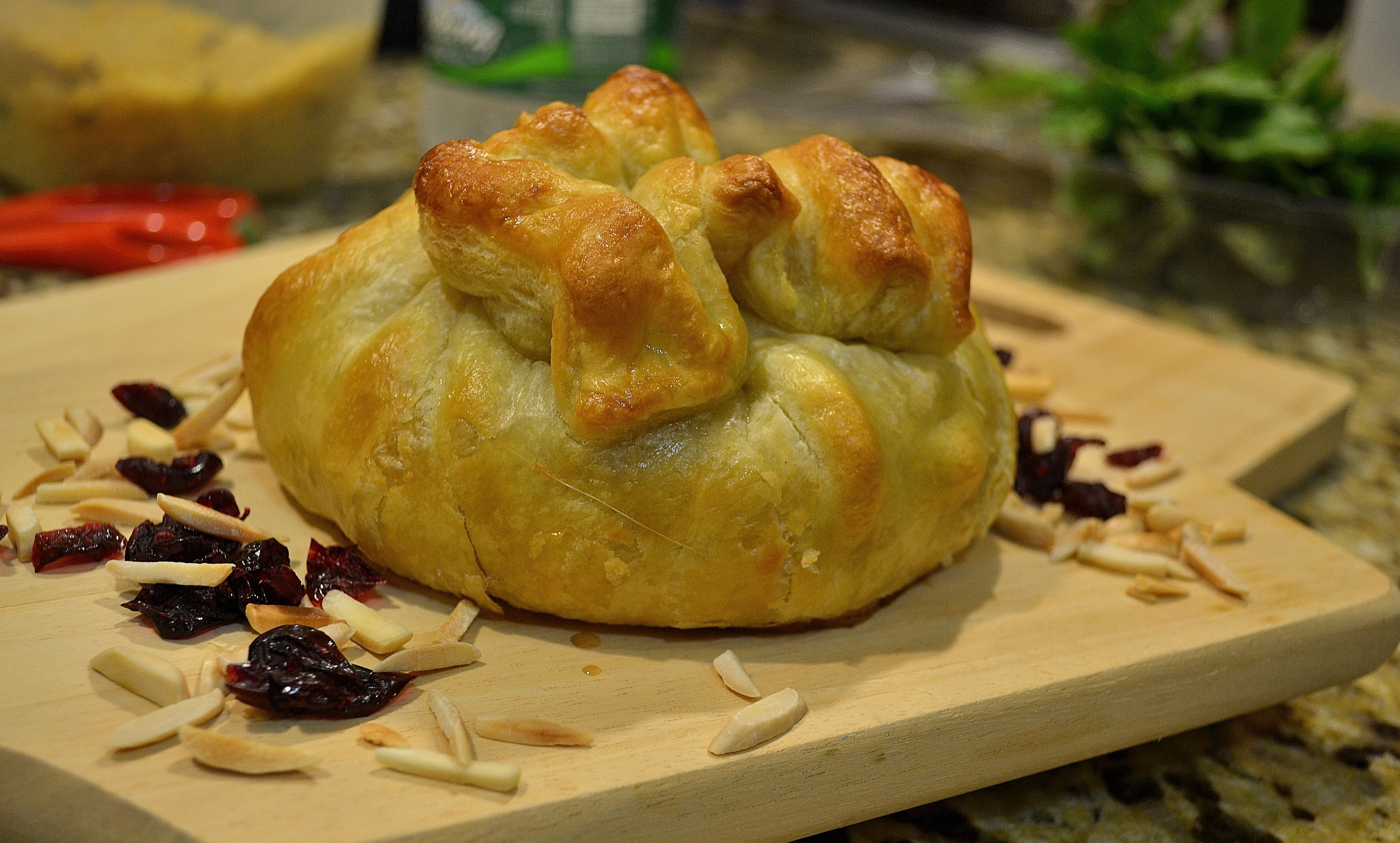
While I’m not the biggest fan of a “European” dinner (basically eating later than 8 or 9pm), I find they are becoming more common in my social circles. As a hostess, you can guarantee that at least half of your guests will be craving some type of comestible before then, especially if you are serving wine or beer ahead of time. Enter the saving grace of the hors d’oeuvre: a time-honored tradition that has relieved many a host from rushing to finish a meal. I attended a dinner this weekend and offered to provide the appetizer course. Knowing that there are few who can resist a good cheese dish, I made adorable Caprese Salad Skewers with Saba Dressing and a creamy Brie en Croute.

Let’s start with the skewers (the more innocent of two): caprese salad is a wonderful dish on its own, but what really made this shine was the Saba dressing. My initial intention had been to make a reduced balsamic, yet our host introduced to this gourmet item. Made from the same grape (Must) as balsamic vinegar, Saba is reduced over an open flame in copper kettles to a thick, sweet syrup and is then aged for FOUR years! Reduced balsamic vinegar can easily be substituted, but this stuff is UH-mazing!
These skewers are SO simple, and pack a lot of flavor in one bite! You can get creative with this combination and add other flavors, such as olives for a Mediterranean flair or cheese tortellini for a more filling dish. The dressing can also be modified, from a more subtle red wine vinaigrette to a spicier  lime-pepper glaze. Assemble them as close to serving as possible so the ingredients maintain a fresh, colorful look – click HERE to see how I made these bite-sized delicacies!
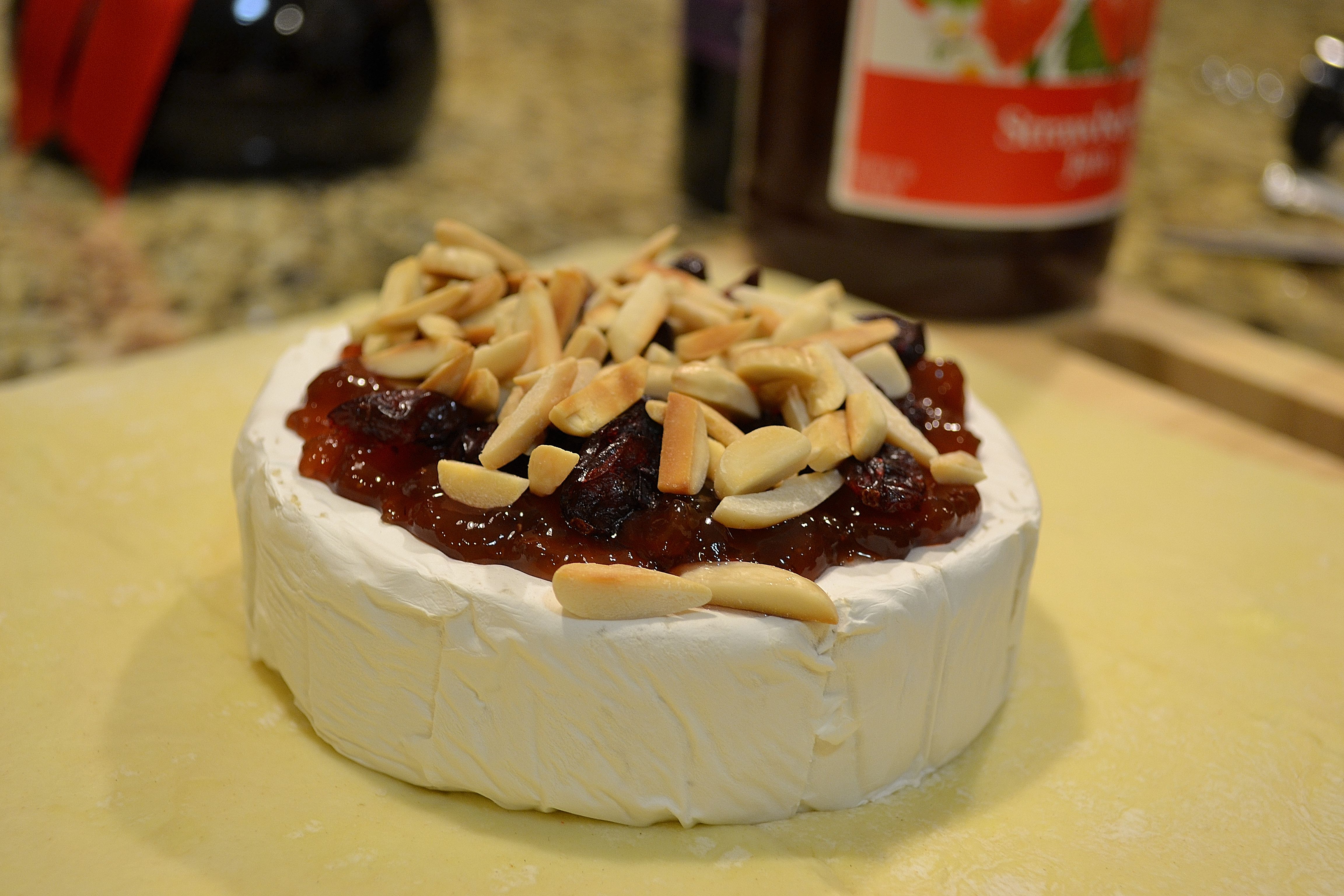
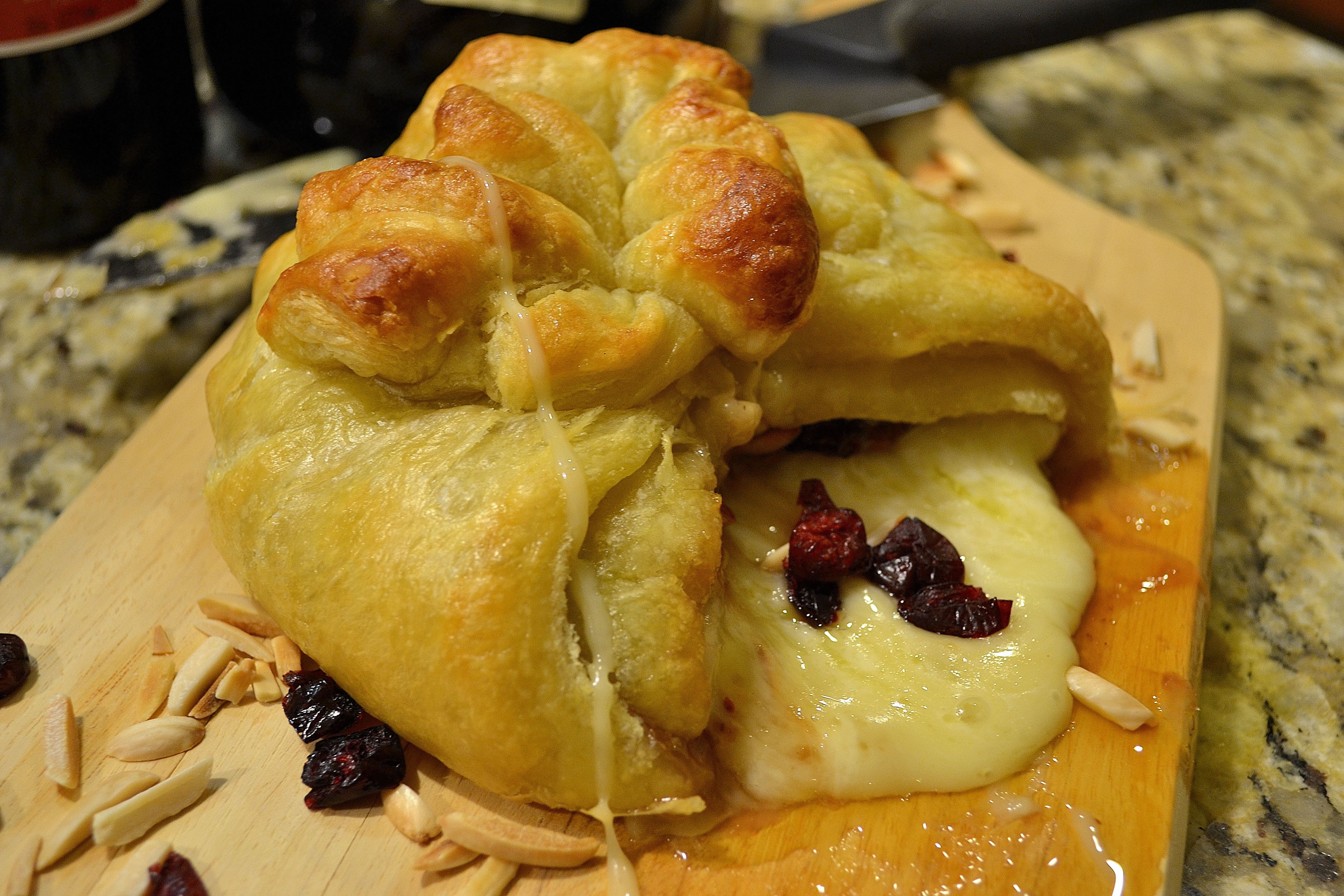
Baked brie is undeniably a seductive dish, and I use that word very rarely when it comes to food. The jeweled fillings of jams and dried fruits, combined with a toasted crunch from the almonds, make for a beautiful aesthetic. But it’s when you take that first slice after removing the oven that your guests will “melt” at the sight of the creamy, rich brie. This is also a very easy dish to make, and the flavors (once again) can be changed to your liking (sweet or savory!) – click HERE to learn how to make this irresistible appetizer.
Both of these appetizers are classics, and I wanted to pair them with a classic piece: Mozart’s Clarinet concerto in A major, K. 622. Written in 1791, this work is renowned for showcasing the delicate yet lively character of the clarinet. The interplay between the clarinetist and the orchestra is quite remarkable, acting as more of a conversation rather than just a soloist with accompaniment. This reciprocity beautifully mirrors the above dishes, where every element and part counts in the ultimate taste. The recording I’ve included below is with clarinetist Martin Fröst, and essentially cuts the opening orchestral tutti (which is nearly 60 measures long) to just before the soloist’s entrance – this is personally one of my favorite Mozart concertos, and I hope you enjoy it just as much!

http://www.youtube.com/watch?v=DVXFONkLPok&feature=related

Sources Cited:
“Clarinet Concerto (Mozart),” Wikipedia.com
A Delectable Surprise

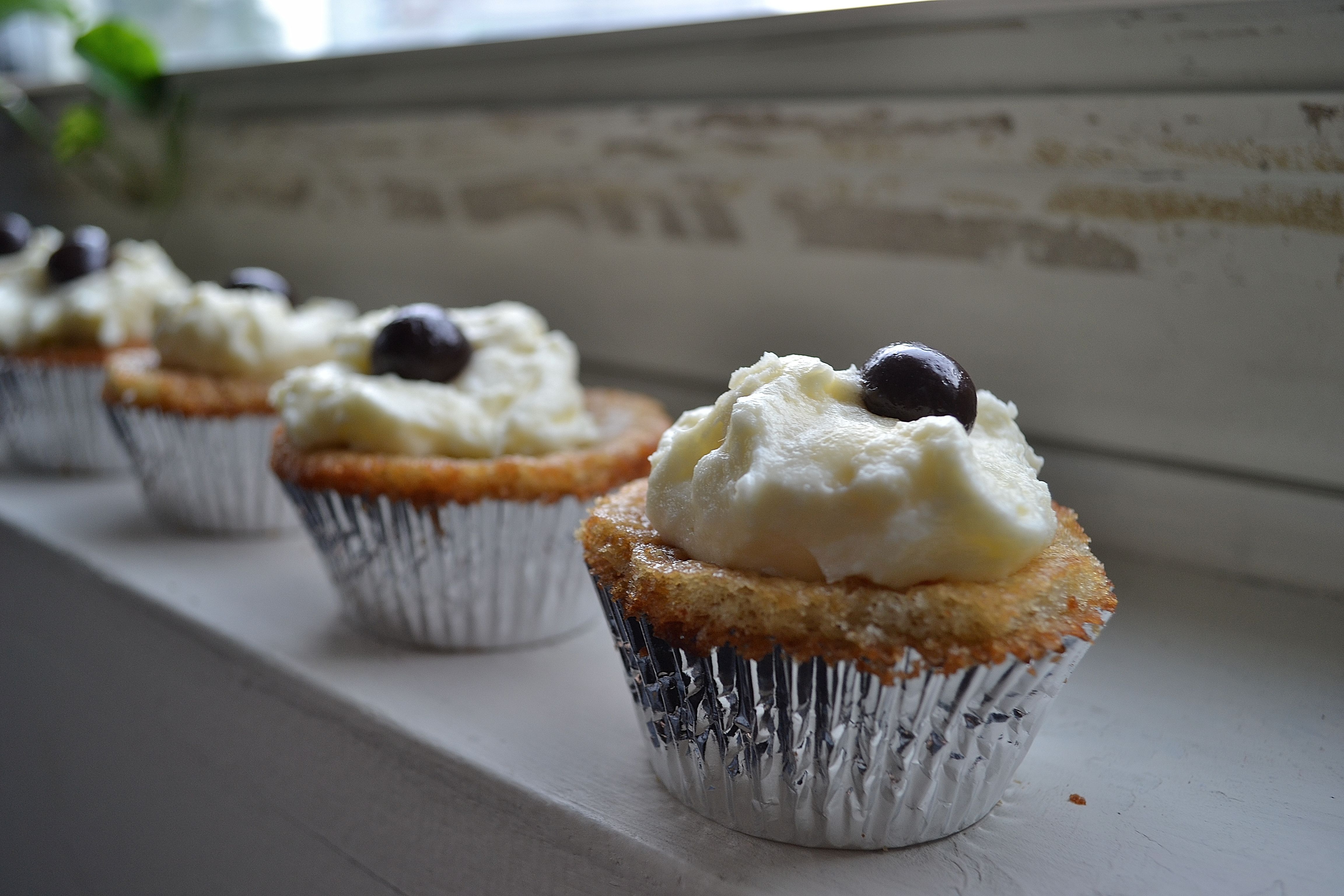
There’s nothing like a surprise party to make a rainy Friday night come to life. We decided to throw one for my close friend Erika Boysen, and it was a huge success! Somehow we managed to keep it under wraps, and she showed up totally unaware. Lots of great people were there, and there was (of course) tons of food. Earlier that week I managed to glean from Erika her love for tiramisu. Since this was going to be a party with lots of people, authentic tiramisu would quickly become a mess so I decided to make Kahlúa Tiramisu Cupcakes.
For those of you familiar with making tiramisu, you may be wondering why use Kahlúa instead of Marsala. While it’s not the most traditional substitute, Kahlúa gives an extra kick of coffee flavor to these. Plus I also have a giant bottle leftover from brownies I had made a while back…expect more Kahlúa recipes, in other words. These actual cakes are just like ladyfingers – they are perfect little “sponges” for the coffee-kahlúa syrup. They have a light crumb and bake to a beautiful golden brown. Topped with an airy mascarpone frosting, these cupcakes are just like the real deal. Click HERE to learn how to make these marvelous treats!
For pairing this piece, I wanted to honor the birthday girl and feature a work that genuine standard in the flute repertoire: Francis Poulenc’s Flute Sonata. Poulenc composed the work for flutist extraordinaire Jean-Pierre Rampal (whose was often cited as being the authority on stylistic choices by a previous flute teacher that Erika and I shared). As a member of the French group of composers “Les Six,” Poulenc’s music was known for being light and simplistic. The “light” relation to these cupcakes goes without saying. These cakes may have not been simple to make, but they are certainly easy to eat! I’ve included a recording of the first movement performed by Emmanuel Pahud, as well as a fabulous photo of the birthday girl and my friend TJ (thanks Philip!) – enjoy!

http://www.youtube.com/watch?v=m0Q-0ztr-Xw

Photo courtesy of Philip Varricchio

Jamaican Me Hungry!

There’s something almost to good to be true about grilled meat with fruit – chicken, pork, fish, anything. Not only is it incredibly easy to prepare, but it always delivers amazing results! All it takes is a little creativity – for this occasion, I had leftover bananas from a bananas foster evening (will be blogged about one day if I can beat the melting ice cream in time!). Swordfish steaks were on sale at Whole Foods, so naturally I bought two and made Jamaican-Spiced Swordfish with Banana and Pineapple Salsa.Swordfish are very popular sporting fish, yet these agile predators are no easy catch: measuring up to 14 feet in length and weighing as much as 1,500 pounds, swordfish are quite powerful and highly elusive. As a food, its tough meat is a comparable trade for steak. While considered to be a delicacy, the FSA advises consuming swordfish (shark and marlin as well) no more than once a week; pregnant women and children should avoid it entirely. When choosing swordfish at the store, look for steaks with for healthy pink meat and dark red strips.
This salsa was DELICIOUS! I mean, who thought bananas could take the leap from sweet to savory so effortlessly? As I learned with a previous fruit salsa, ginger does wonders in these settings, so I added a touch to this recipe. Feel free to substitute another fruit for the pineapple, like mango or peach. This salsa was ridiculously good with swordfish, though any fish will do (heck, try it with steak even!) – click HERE to give this fantastic entrée a shot!
This was quite unique recipe, and almost “daring” in theory – thus I wanted a musical piece that was edgy and provocative. I tend to think of Piazzolla when I think of “edgy”, and his Estaciones Porteñas (The Four Seasons of Buenos Aires) captures a raw energy that pairs perfectly with this dish. The original composition was written for his own quintet, with bandoneón, violin, piano, electric guitar, and double bass. It has since been transcribed for a number of ensembles, from piano trio to solo violin with string orchestra. I have included a recording of the transcription for piano trio below of the third movement: Primavera Porteña (Buenos Aires Spring). Definitely take the time to listen to the to other three as well, it’s worth it – enjoy!

http://www.youtube.com/watch?v=HJzogioRx6A

Sources Cited:
– “Swordfish,” Wikipedia.com
– “Mercury in fish: your questions answered,” Food Standards Agency website.
– “Estaciones Porteñas,” Wikipedia.com 

Making Meatless Count

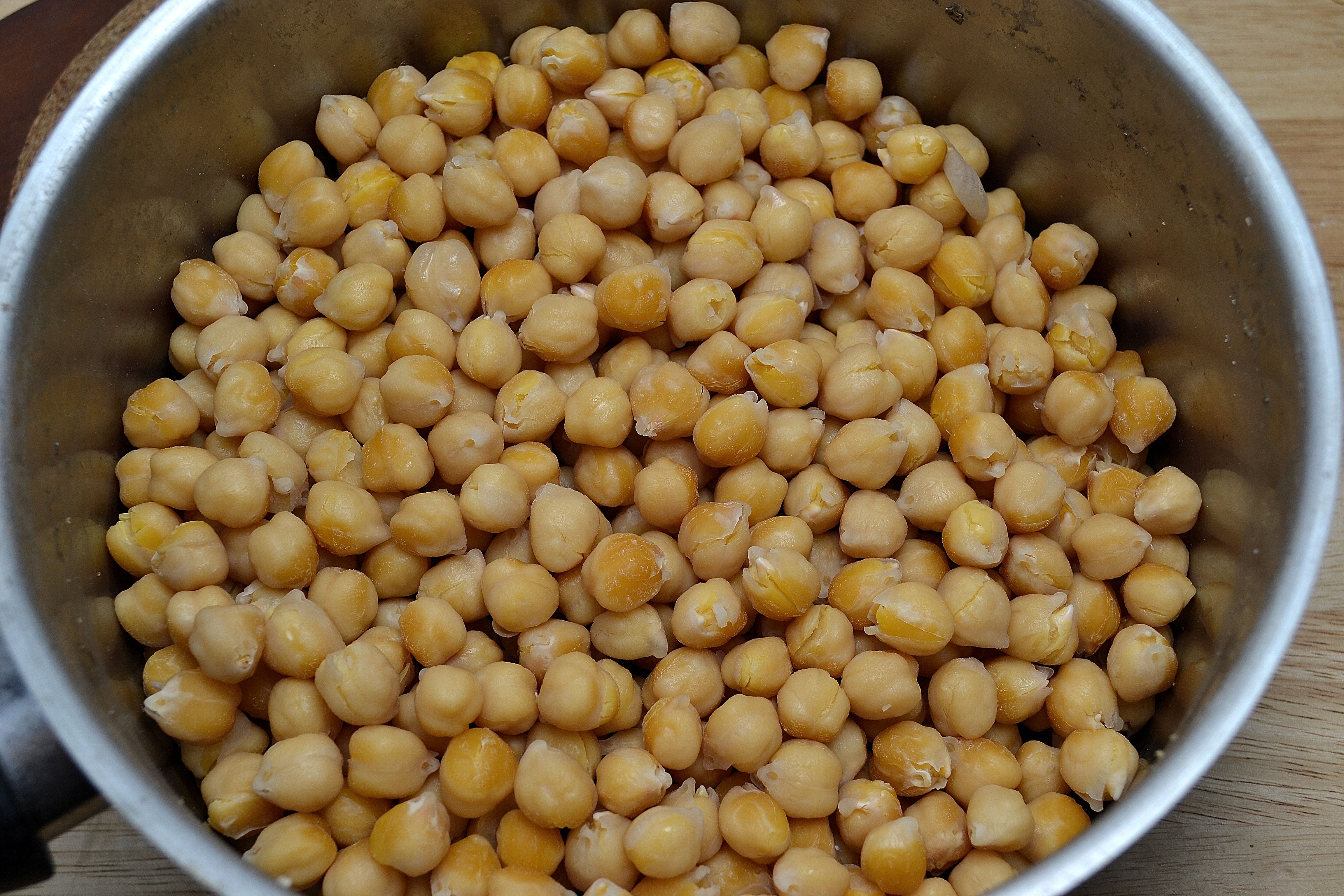
I have a theory when it comes to cooking vegan: make it count. Vegan fare should fully outshine the fact that it is without meat, so I take explore a number of ways to do this: flavor, aesthetic, novelty, heartiness, etc. I’ve mentioned my neighbors who are vegetarian by choice, and I love having the chance to cook wholesome dinners with them. But my self-challenge in vegan cooking is to hook the non-veggies who swear by bacon, and this Moroccan Butternut Squash and Chickpea Tagine did just the trick.
You may feel overwhelmed by the ingredients and step involved in this stew, but it’s a lot easier than it looks. The harissa, which you can buy from a store, is extremely simple to make and really gives this dish that extra umph! The other cool ingredient in this dish is the preserved lemon – that may sound a little eery, but it did give this stew a fantastic edge. I’ve included a quicker version for preparing these in the recipe itself.  Canned chickpeas are also always an option, but there really is a special added value to taking the time to cook dried chickpeas. They take a while to soak (overnight), so put that into your prep work if planning on using dried.
Seeing as how I nearly tripled the original recipe, this made a LOT of food. I wanted to accommodate a sizable dinner party (9 people), and ended up with delicious leftovers for a few days after. I served this dish with a whole wheat couscous, but I imagine it would be equally delicious served with pita bread or over rice. Click HERE to make this vegan showstopper today!
For the musical pairing, I wanted to reflect on the complexity of flavors and components. That brought me to a work I had seen performed live a few years back: Tchaikovsky’s String Sextet in D minor “Souvenir de Florence”. The four movements are quite diverse in quality: the first movement, in D minor, opens the piece on an impassioned, almost violent note. The second movement settles into the relative F major, bringing the timbre back to a calmer state. The latter two movements assume a Russian feel, with a third movement that’s almost playful transitioning into a driven, frantic fourth. This divergence of style made it the perfect match for the complexity of this dish – included is the actual performance of the work I experienced by Boston’s very own A Far Cry ensemble (arranged for chamber orchestra). I’ve included the fourth movement below – enjoy!

http://www.youtube.com/watch?v=JUmxHXsxsug

Sources Cited:
“Souvenir de Florence,” Wikipedia.com

A Global Delicacy

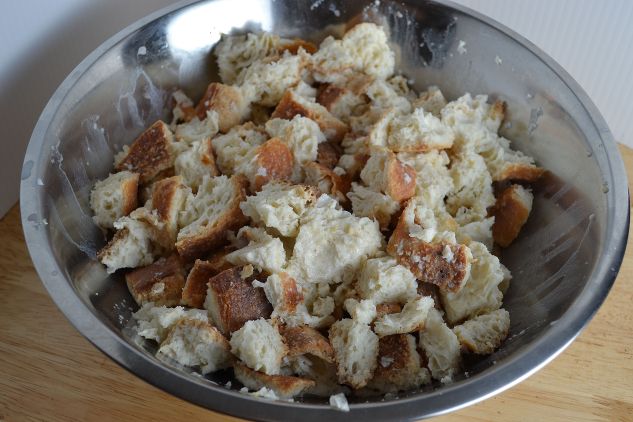
When you host social gatherings as often as I do, you are left with a bunch of odds and ends in your kitchen: half-eaten bags of chips, nearly depleted salsas, cheeses of every variety, etc. These leftovers often find their way into my culinary creations. More recently, I found myself with a collection of untouched baguettes that were too stale to enjoy, yet too young to toss. My upstairs neighbors also had an untouched leftover: dark rum. The solution was just too easy: Rum Raisin Bread Pudding.Like many food histories, that of bread pudding isn’t necessarily traceable to a specific region. This simple way to use up stale bread finds footing in a number of cuisines, such as European stuffings, Indian Shahi Tukra, and the Spanish Capirotada. With liquid and sweeteners as a starting point, it’s no wonder that this dessert is such an international delight. With such a simple base, the add-in options are endless: sliced fruits, chocolates, dried fruits, nuts, syrups, the list goes on!
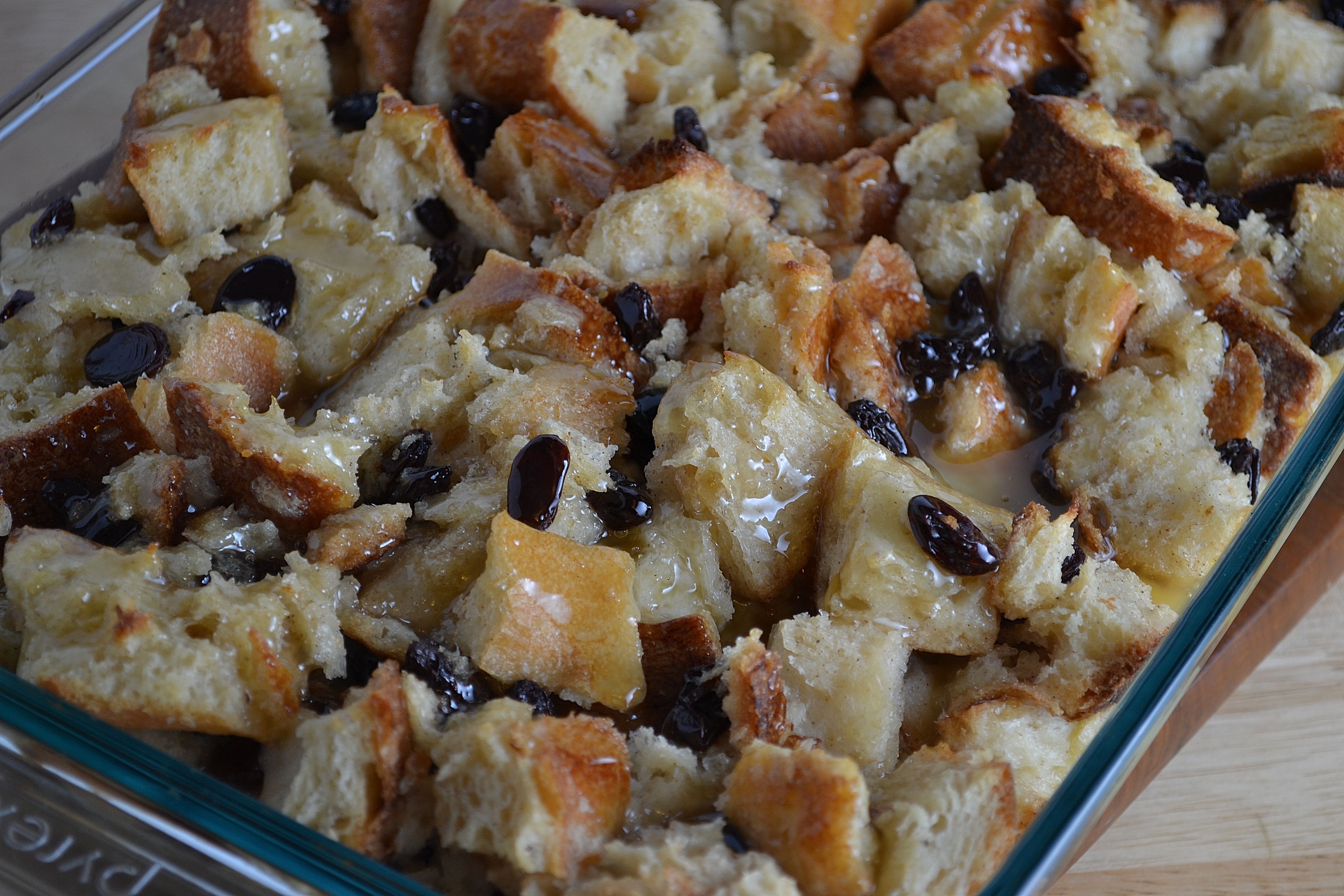
I’ve personally always felt that dried fruits work wonders in bread pudding, and the thought of rum raisins was a hard one to shake. I can’t tell you how easy this is for being SOOO good! My only confession on this dish: the sauce was a near-disaster (rum bubbling over saucepan = unexpected flambé!). PLEASE remove the pan from the heat before adding the rum. That being said, the sauce made this pudding Oh.So.Good – Click HERE to make this simple, delectable treat today!
Though he’s been paired several times on this blog already, Debussy is yet again a composer whose music most suitably fits this dish. Though rather than the qualities of his style, my pairing refers more to his actual influences. As this dish is arguably “a worldly staple,” I wanted a composer who drew from international influences. Debussy is a wonderful example, with a wide range of cultural inspirations: Russian music by prominent composers of his time, the works of English painter Joseph Turner and Japanese artist Hokusai, gamelan music of Java (which he experienced at Paris’s Exposition Universelle in 1889), the German composer Richard Wagner, an extensive selection of literature, etc. The work I chose exhibits a number of “exotic” influences: Estampes. This work, for solo piano, consists of three movements that reflect a variety of cultures. The first movement (which I’ve included here) is structured on pentatonic scales and hints at melodies redolent of East Asia. The second draws inspiration from Spanish styles, while the third reflects on his native France – enjoy!

http://www.youtube.com/watch?v=VbXZPGm2YIs

Sources Cited:
– “Puddings, custards, & creams,” FoodTimeline.org
– “Capirotada,” Wikipedia.com
– “Claude Debussy,” Wikipedia.com 

A Wealth of Delicious Variety

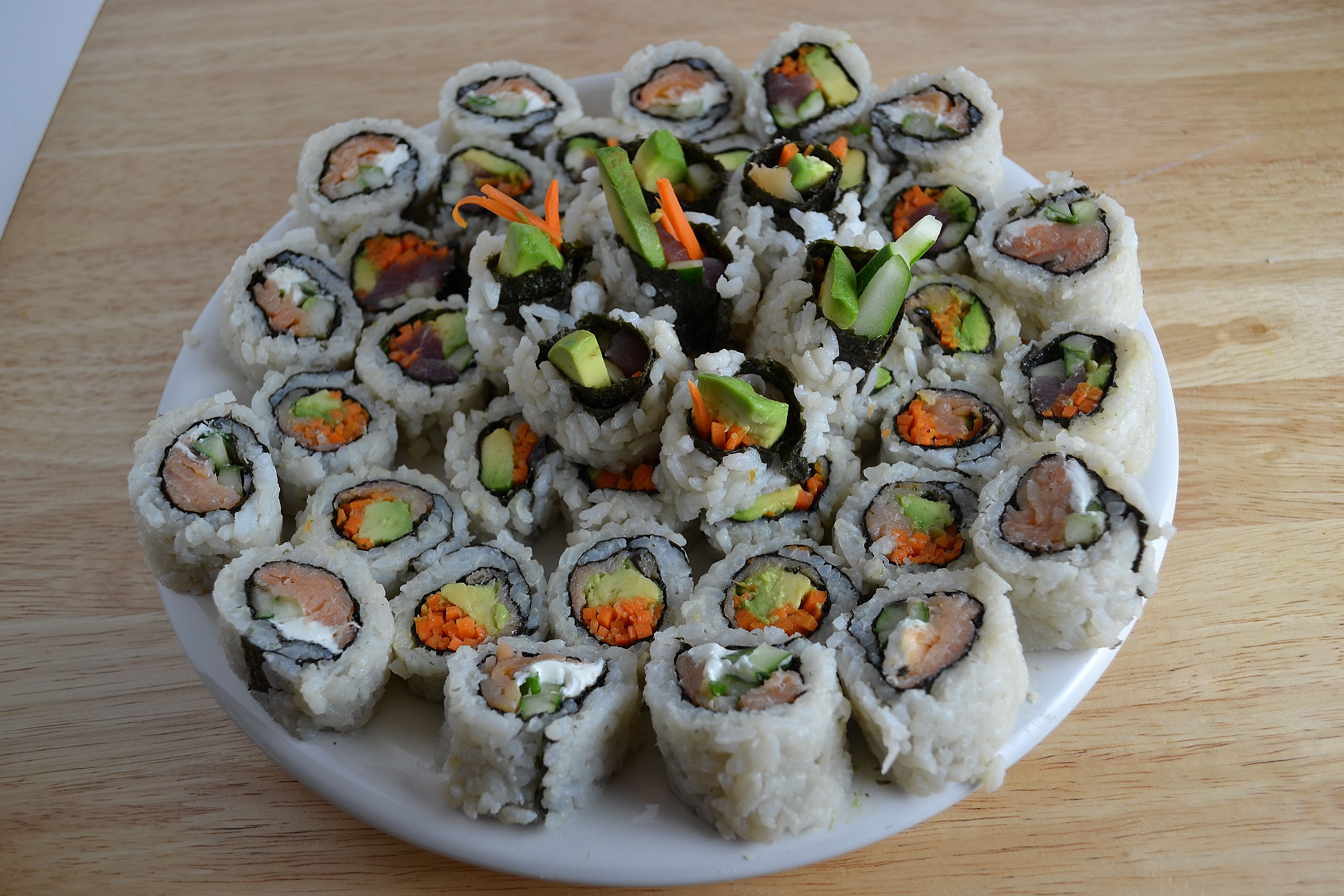
While practically anything that you eat at a restaurant can be made in your home, there will always be a few that you prefer to leave in the hands of professionals. For the longest time, I had always assumed sushi was one such meal – until I met Maya Jacobs. She never lived in Japan and doesn’t necessarily cook Asian dishes on a regular basis; she just knows that quality ingredients, homemade rice, and a skilled hand at rolling seaweed are all it takes to make great Maki Sushi.
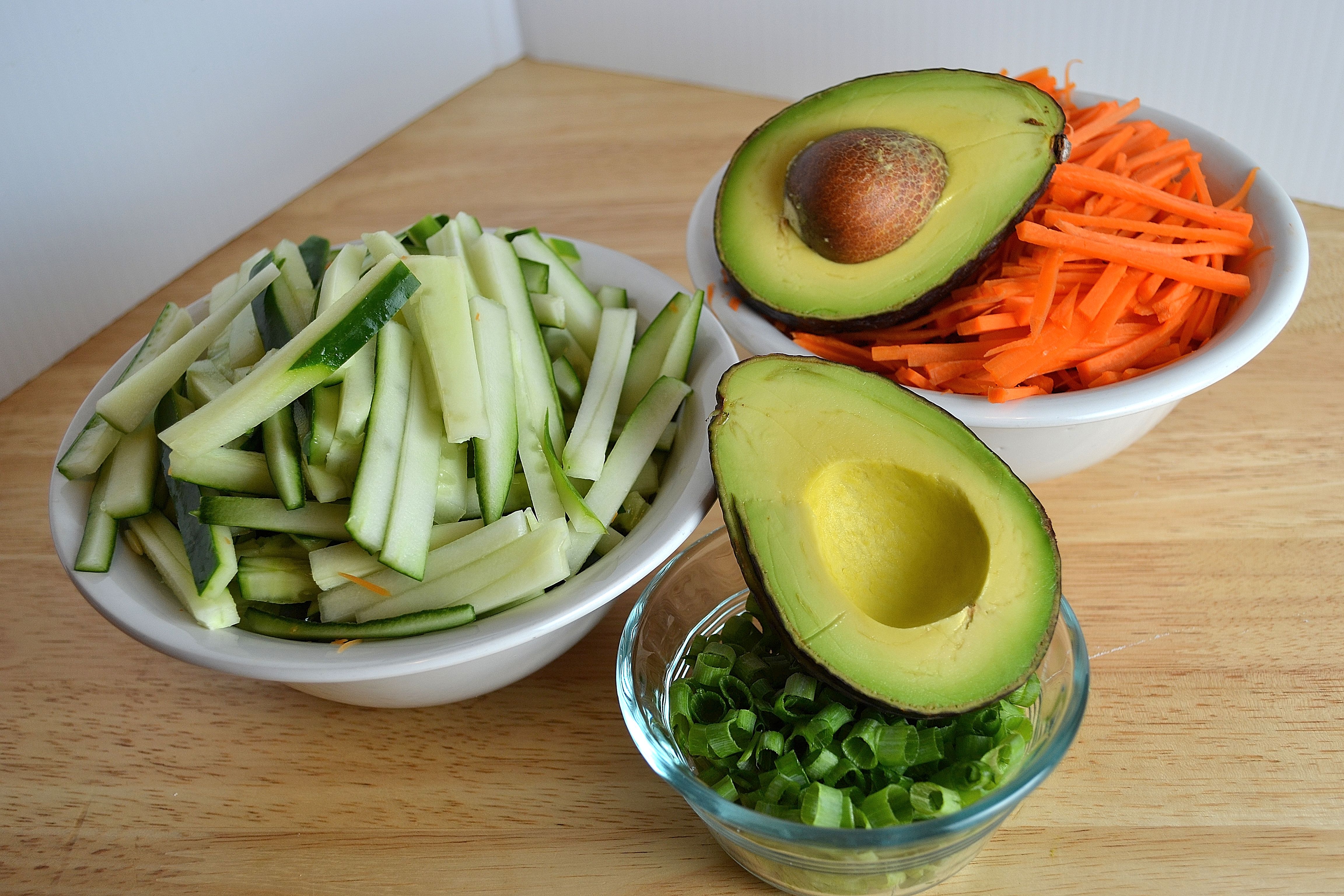
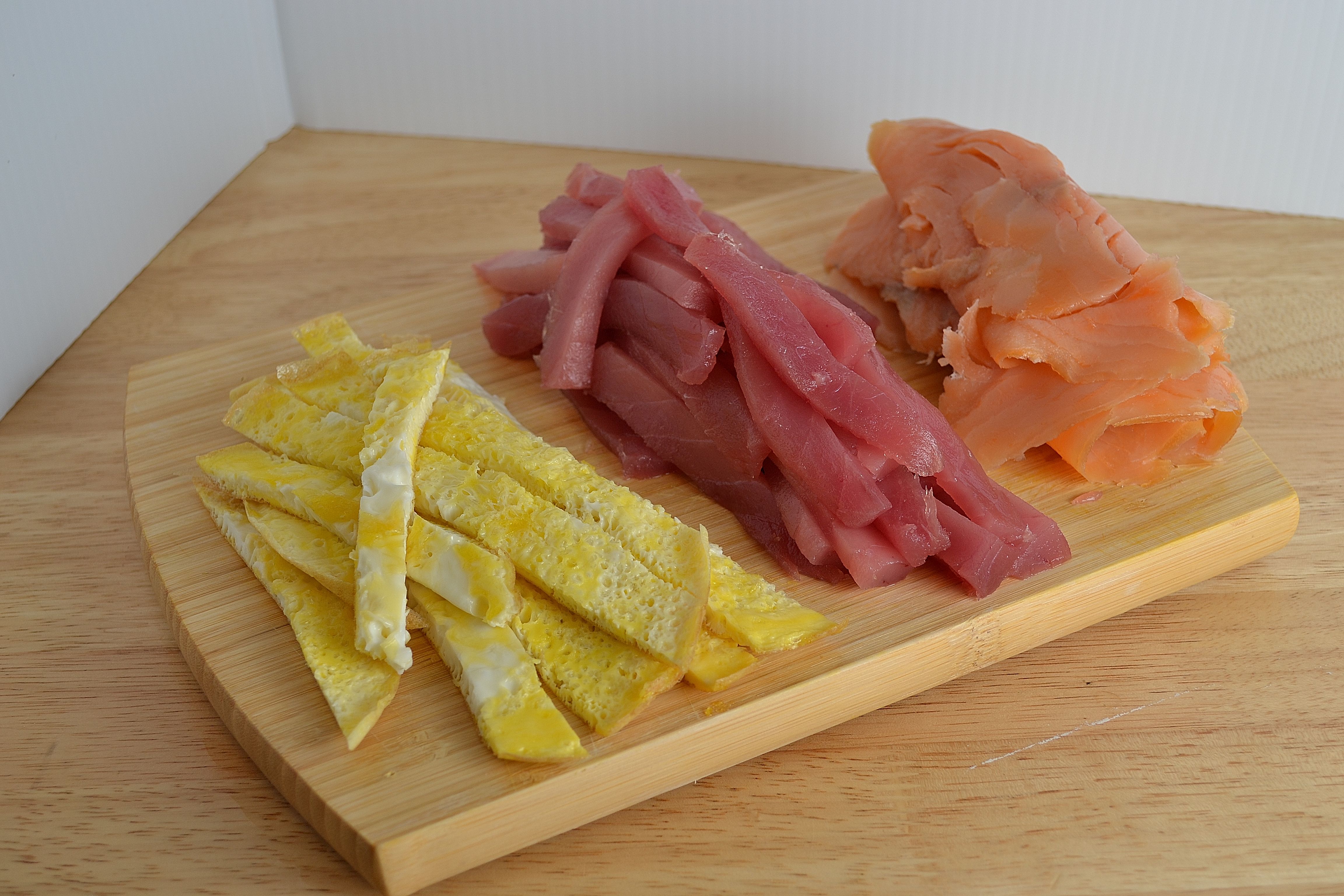
When Maya and I make sushi, we never just stop at a few rolls – we always go for 20 or 30 and invite as many people as we can. The key to a great sushi spread is having a ton of options: fresh tuna (Maguro) or salmon (Sake), julienned vegetables, fried egg (Tamago), avocado (a must for any sushi party!), etc. For this occasion, we used smoked salmon and cream cheese as well. Lots of color is key, and makes it much more exciting! The filling varieties are endless – it’s basically whatever you feel inspired to try.
The rice is the trickiest part of making sushi – getting the right balance can be tough, but Maya’s recipe comes out perfect every time! You can use any type of rice (including brown) though it’s recommended to use sushi rice. It is a short-grain variety with a higher starch level than other rices, yielding a sticky, “glutinous” result that is perfect for rolling. Click HERE to see Maya’s practically perfect way to create homemade sushi.   
For pairing this meal, I wanted to focus on the variations and endless colors this meal can provide. My friend Alexis recommended a work that is considered to be on of the standards of variation form: Bach’s Goldberg Variations. Originally composed for harpsichord, the work consists of 30 variations on the opening aria. The variations are based on the bass line, or foundation of the piece (much like the sushi variations all rely on the same basic ingredients). It’s a beautiful piece, and a truly iconic work in the classical repertoire. This recording is by (once again) Glenn Gould, an artist who just gets Bach – enjoy!

http://www.youtube.com/watch?v=64Xb3qiXR9Y 

Sources Cited:
“Goldberg Variations,” Wikipedia.com

Achieving Quality through Quantity

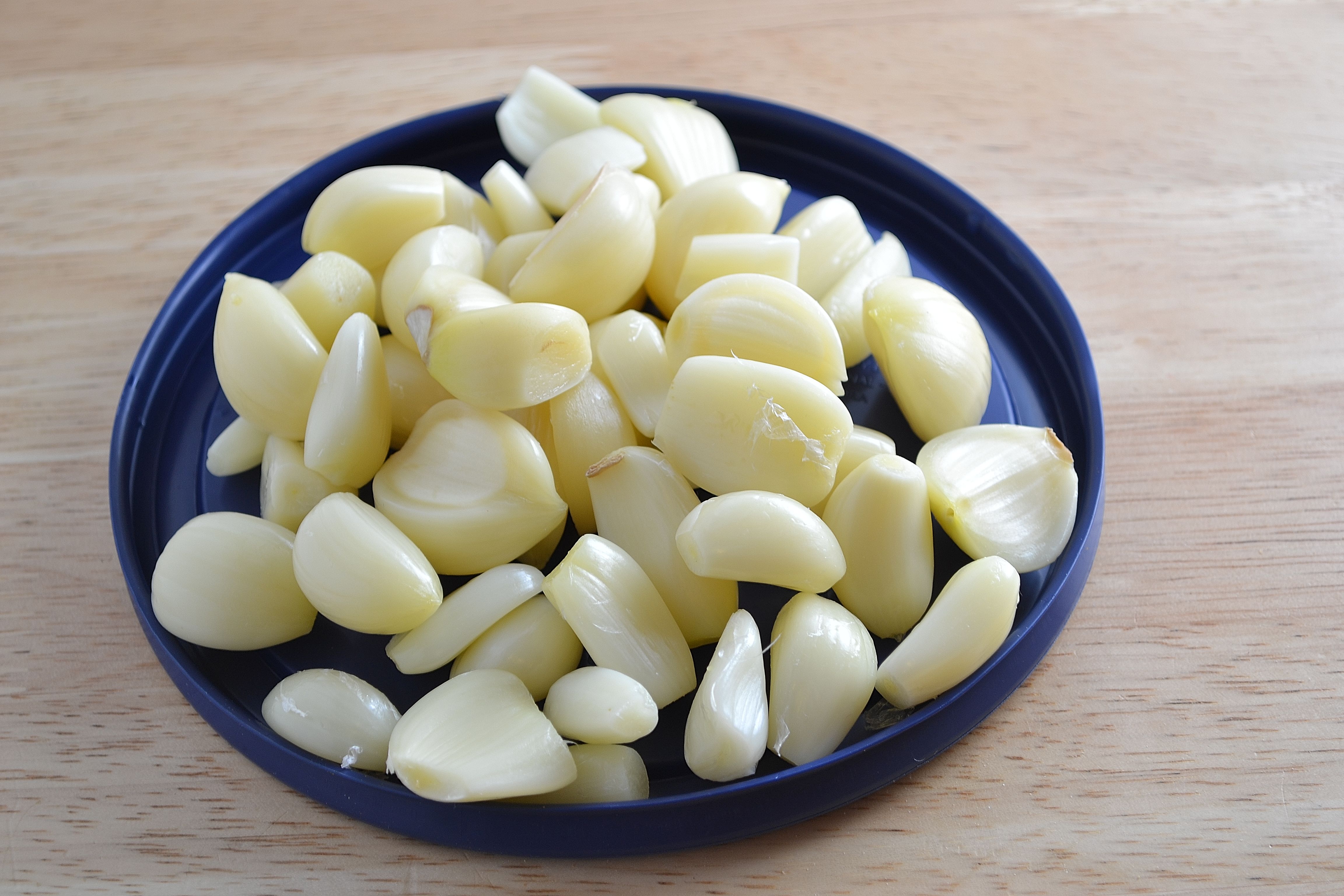
As I mentioned in my last post, I am attempting to use my cookbooks on a more regular basis. With the collection I have, I should be able to scrounge up a recipe or two per occasion. My dad’s visit to Boston this past weekend prompted such an event, and the neighbors were (as usual) on the guest list as well. You’ve heard me worship Ina Garten and her inspiring creations, so this next fabulous recipe (from her book Barefoot in Paris) should come as no surprise: Chicken with Forty Cloves of Garlic.Putting aside the fact that this is an Ina Garten recipe, I have always wanted to give this specific dish a try. I love garlic, and the thought of putting FORTY into one dish was too intriguing an offer to resist. A traditional French “comfort food,” this dish climbed its way up the culinary ranks due to its rich, complex flavor. There are many ways to make this dish, though the best recipes agree on the basic following: a good white wine, bone-in chicken parts with skin, and (of course) 40 entire cloves of garlic.
Though Julia Childs was a catalyst behind the American popularity of this dish, I was drawn to Ina’s. It’s a little bit more complicated than the original, but had multiple flavor notes I found intriguing (including the thyme, my favorite herb, and touch of Cognac). I omitted the heavy cream, and it was still utterly rich – click HERE to learn how to make this flavorful entree today! I also made a delicious side of Roasted Butternut Squash with Kale as a healthy afterthought – find that recipe HERE.
For the pairing, I wanted a piece that explored the layers of taste this meal achieved. It was the suggestion of Albert Oppenheimer that made for the perfect pairing: Spem in alium, a 16th-century motet by English composer Thomas Tallis with FORTY vocal lines! The work is divided into eight choirs, each with five parts, and gradually unfolds from a single voice into a magnificent assemblage of all forty parts. In addition to the literal connection of forty parts with forty cloves, the name of the motet is also complementary: while the title is Latin for “Hope in any other,” the Latin term for garlic just happens to be “allium” (see why this piece is a perfect match?). This recording is by the Taverner consort and choir – enjoy!

http://www.youtube.com/watch?v=1c6UYHbNYuA

Sources Cited:
“Spem in alium,” Wikipedia.com

A Palette of Colorful Fare

I need to use my actual cookbooks more often. The internet is addicting given it provides access to millions of recipes (with photos, a big plus for me!), but I have SO many real cookbooks that it’s a shame I don’t use them more often. I was hosting a dinner for my new neighbors Albert Oppenheimer and Mike Dahlberg, and wanted to finally start utilizing these wonderful resources. So I started to peruse the beautiful book by David Tanis, A Platter of Figs (great title), and flipped to the “summer” menus. That’s when I saw it: a gorgeous dish that uses everything I love about cooking, and so I made this beautiful rendition: Grilled Cod with Indian Spices and Yellow Tomatoes.
The ONLY thing I changed here was using cod instead of hailbut. I prefer the latter, but the cod at the market looked so much fresher that I couldn’t resist. I followed the rest of the recipe to a T. What’s fantastic about this dish is how everything on the plate works perfectly together. The serranos and spices give it just the right kick, making you instantly reach for a second bite rather than your glass of water (a spiciness which Albert enjoyed immensely). The cool raita provides an amazing depth of flavor, and all of it is framed by gorgeous yellow tomatoes.  There’s not much else to say about this dish other than MAKE IT! Click HERE to learn how. 
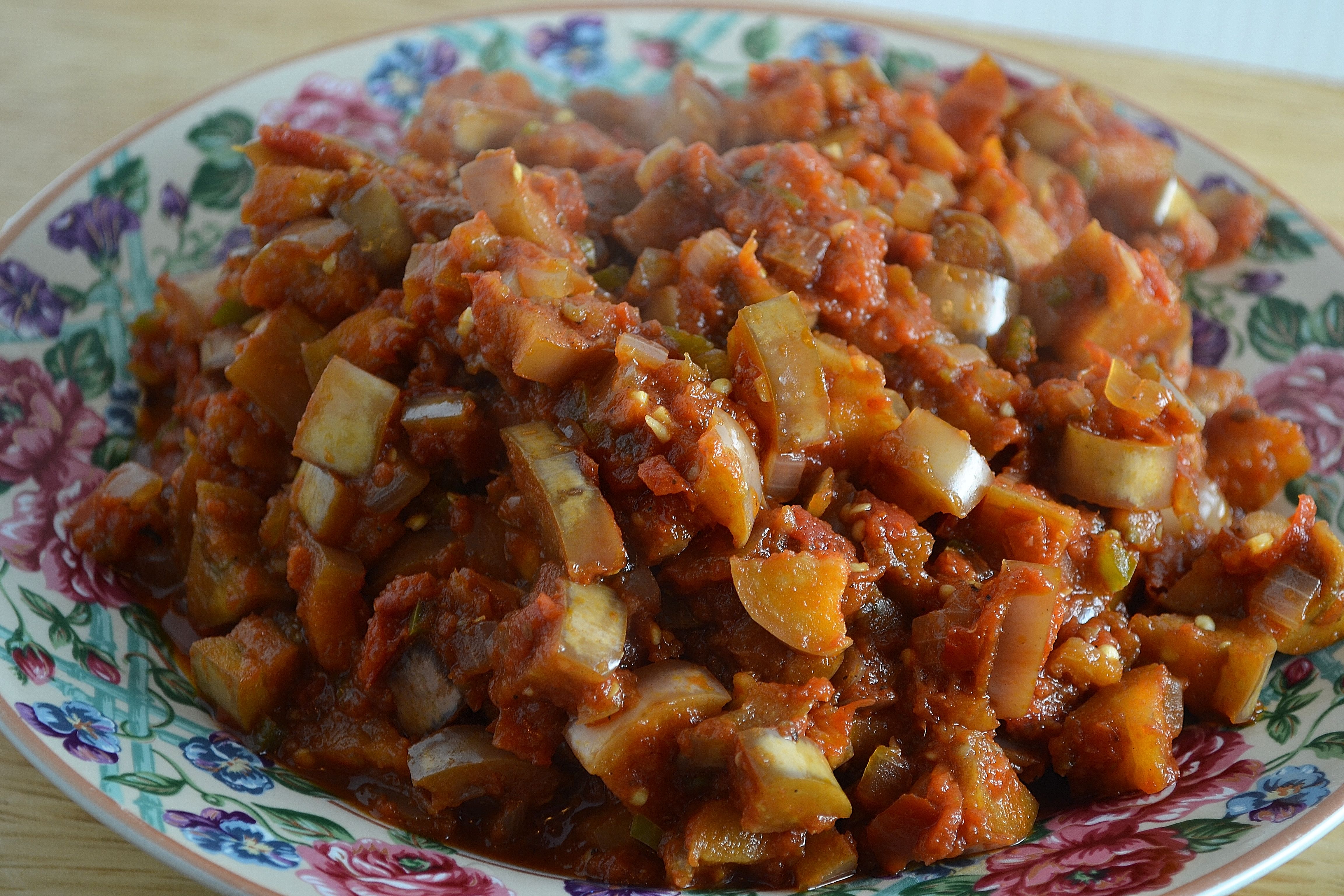
Have you ever bought something from the market just becaus it looked cool? That was the case with these Chinese eggplants. These amethyst beauties looked liked something from outer space, so naturally I wanted to know how to cook them (that is natural, right?) Anywho, this cultivar, when compared to the familiar American eggplant, is far more delicate in flavor, has thinner skin, and less seeds (the cause of the bitter taste many affiliate with eggplant). I sort of “made-up” this recipe for Indian Spiced Eggplant, using the knowledge I know from previous attempts combined with my preferences for preferring eggplant (see my previous post to learn more about preparing eggplant). Click HERE to learn how to make this spicy, flavorful dish today! 
The pairing for this dinner was inspired by a live performance I saw the other night which just so happened to include one of my dinner guests, Mike Dahlberg (cellist). His string quartet was playing for a function, and it was a piece I had never heard: Brahms’ String Quartet No. 3 in B flat Major. They performed the third movement: Agitato (Allegretto non troppo). This movement features a killer viola part (played beautifully by their violist, Jason Amos) and so I have included a recording of that movement (by the Jerusalem Quartet). The overall depth and flavor of this movement helped to inspire my pairing. The viola, in my opinion, is a very “colorful” instrument that I felt paired beautifully with these two dishes. Please listen to the entire work if you have the time, it’s worth it – I hope you enjoy!

http://www.youtube.com/watch?v=DNrkUmZsMTU 

A Cake that Wears Many Hats

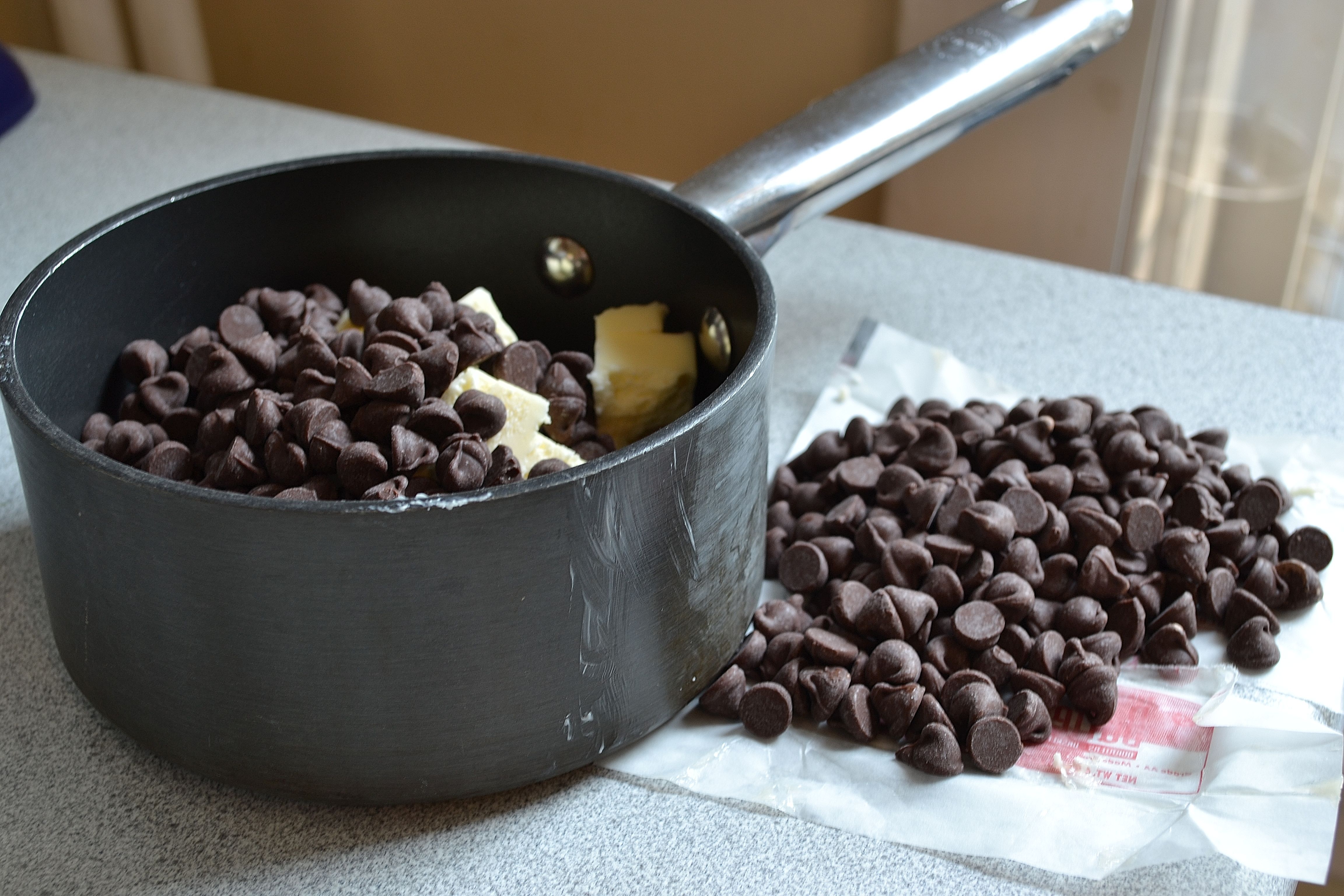
Have you ever wanted a cake that could be a round-the-clock enjoyment? An elegant dessert, a midday snack, or even a late night nosh? There’s no “rule” that cakes can only be enjoyed at certain times of day, yet there are few that can satiate those random cravings. Enter this beauty –   a Chocolate Soufflé Brownie Cake. You can enjoy it chilled with a berry coulis, microwaved and served with ice cream, or even just as is with your hands! What more can you ask of a cake…or brownie…or whatever it is.The reason you can say I’m slightly confused about this cake’s “category” is because it has all the components of a soufflé, and yet still manages to taste just like a brownie. The brownie element comes from the melted chocolate, to which the egg yolks and flour are stirred in by hand. This creates a smooth, rich texture of chocolatey goodness. Most “authentic” brownie recipes are made this way, and often use a really good chocolate (and I used Ghiradelli for this cake).The soufflé element comes from the separation of the eggs. The yolks, as mentioned above, are added per usual, yet the white are whipped to a frothy perfection on the side. By whipping the whites separately from the rest of the batter, the cake’s texture is leavened substantially. This cake, in a way, gets the best of both worlds thanks to these separate but wonderful elements. Click HERE to make this versatile dessert today! In thinking about a composer that could also “wear many hats,” there was one name that I was shocked to discover has yet to be on my blog: Mozart. He was an extremely prolific composer whose list of repertoire is nearly endless: operas, sonatas, symphonies, vocal works, concertos, numerous chamber settings (the list goes on).  Though his life was tragically cut short, he managed to produce a wealth of musical genius that influenced countless generations. Le Nozze di Figarois arguably one of his most renowned operas, and I have chosen the beautiful aria “Porgi, amor” for this pairing. In this scene, the Countess laments her husband’s alleged duplicity with her maid Susanna (even though such is not the case). This recording, from the 1980 Paris Opéra production (thanks Tim Wilfong for helping me find this!) features the extremely talented Gundula Janowitz as the Countess – enjoy! 

http://www.youtube.com/watch?v=Gz3jBUmzqlQ&feature=related

Sources Cited:
“The Marriage of Figaro,” Wikipedia.com