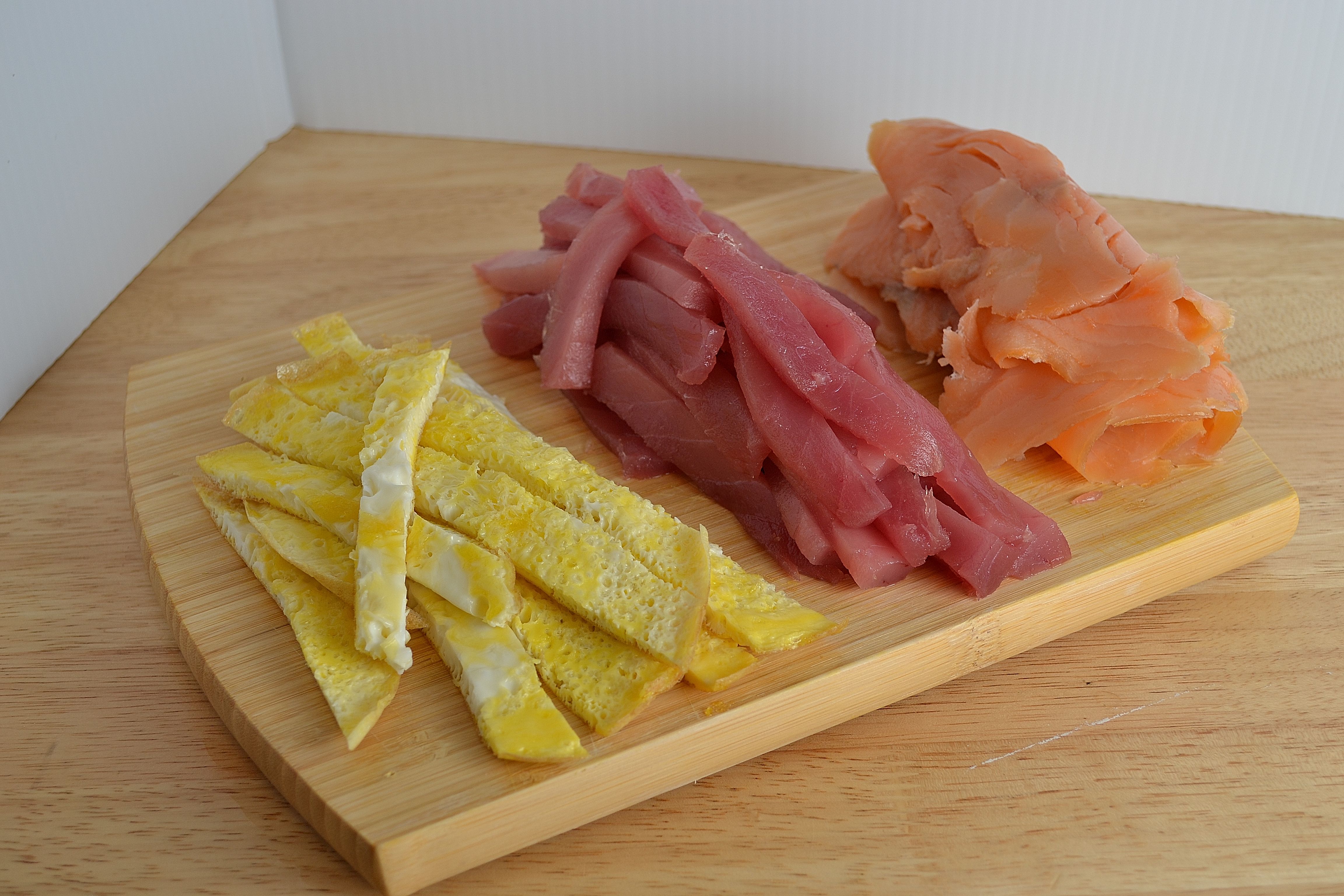
While practically anything that you eat at a restaurant can be made in your home, there will always be a few that you prefer to leave in the hands of professionals. For the longest time, I had always assumed sushi was one such meal – until I met Maya Jacobs. She never lived in Japan and doesn’t necessarily cook Asian dishes on a regular basis; she just knows that quality ingredients, homemade rice, and a skilled hand at rolling seaweed are all it takes to make great Maki Sushi. When Maya and I make sushi, we never just stop at a few rolls – we always go for 20 or 30 and invite as many people as we can. The key to a great sushi spread is having a ton of options: fresh tuna (Maguro) or salmon (Sake), julienned vegetables, fried egg (Tamago), avocado (a must for any sushi party!), etc. For this occasion, we used smoked salmon and cream cheese as well. Lots of color is key, and makes it much more exciting! The filling varieties are endless – it’s basically whatever you feel inspired to try. The rice is the trickiest part of making sushi – getting the right balance can be tough, but Maya’s recipe comes out perfect every time! You can use any type of rice (including brown) though it’s recommended to use sushi rice. It is a short-grain variety with a higher starch level than other rices, yielding a sticky, “glutinous” result that is perfect for rolling. Click HERE to see Maya’s practically perfect way to create homemade sushi. For pairing this meal, I wanted to focus on the variations and endless colors this meal can provide. My friend Alexis recommended a work that is considered to be on of the standards of variation form: Bach’s Goldberg Variations. Originally composed for harpsichord, the work consists of 30 variations on the opening aria. The variations are based on the bass line, or foundation of the piece (much like the sushi variations all rely on the same basic ingredients). It’s a beautiful piece, and a truly iconic work in the classical repertoire. This recording is by (once again) Glenn Gould, an artist who just gets Bach – enjoy!
As I mentioned in my last post, I am attempting to use my cookbooks on a more regular basis. With the collection I have, I should be able to scrounge up a recipe or two per occasion. My dad’s visit to Boston this past weekend prompted such an event, and the neighbors were (as usual) on the guest list as well. You’ve heard me worship Ina Garten and her inspiring creations, so this next fabulous recipe (from her book Barefoot in Paris) should come as no surprise: Chicken with Forty Cloves of Garlic.Putting aside the fact that this is an Ina Garten recipe, I have always wanted to give this specific dish a try. I love garlic, and the thought of putting FORTY into one dish was too intriguing an offer to resist. A traditional French “comfort food,” this dish climbed its way up the culinary ranks due to its rich, complex flavor. There are many ways to make this dish, though the best recipes agree on the basic following: a good white wine, bone-in chicken parts with skin, and (of course) 40 entire cloves of garlic. Though Julia Childs was a catalyst behind the American popularity of this dish, I was drawn to Ina’s. It’s a little bit more complicated than the original, but had multiple flavor notes I found intriguing (including the thyme, my favorite herb, and touch of Cognac). I omitted the heavy cream, and it was still utterly rich – click HERE to learn how to make this flavorful entree today! I also made a delicious side of Roasted Butternut Squash with Kale as a healthy afterthought – find that recipe HERE. For the pairing, I wanted a piece that explored the layers of taste this meal achieved. It was the suggestion of Albert Oppenheimer that made for the perfect pairing: Spem in alium, a 16th-century motet by English composer Thomas Tallis with FORTY vocal lines! The work is divided into eight choirs, each with five parts, and gradually unfolds from a single voice into a magnificent assemblage of all forty parts. In addition to the literal connection of forty parts with forty cloves, the name of the motet is also complementary: while the title is Latin for “Hope in any other,” the Latin term for garlic just happens to be “allium” (see why this piece is a perfect match?). This recording is by the Taverner consort and choir – enjoy!
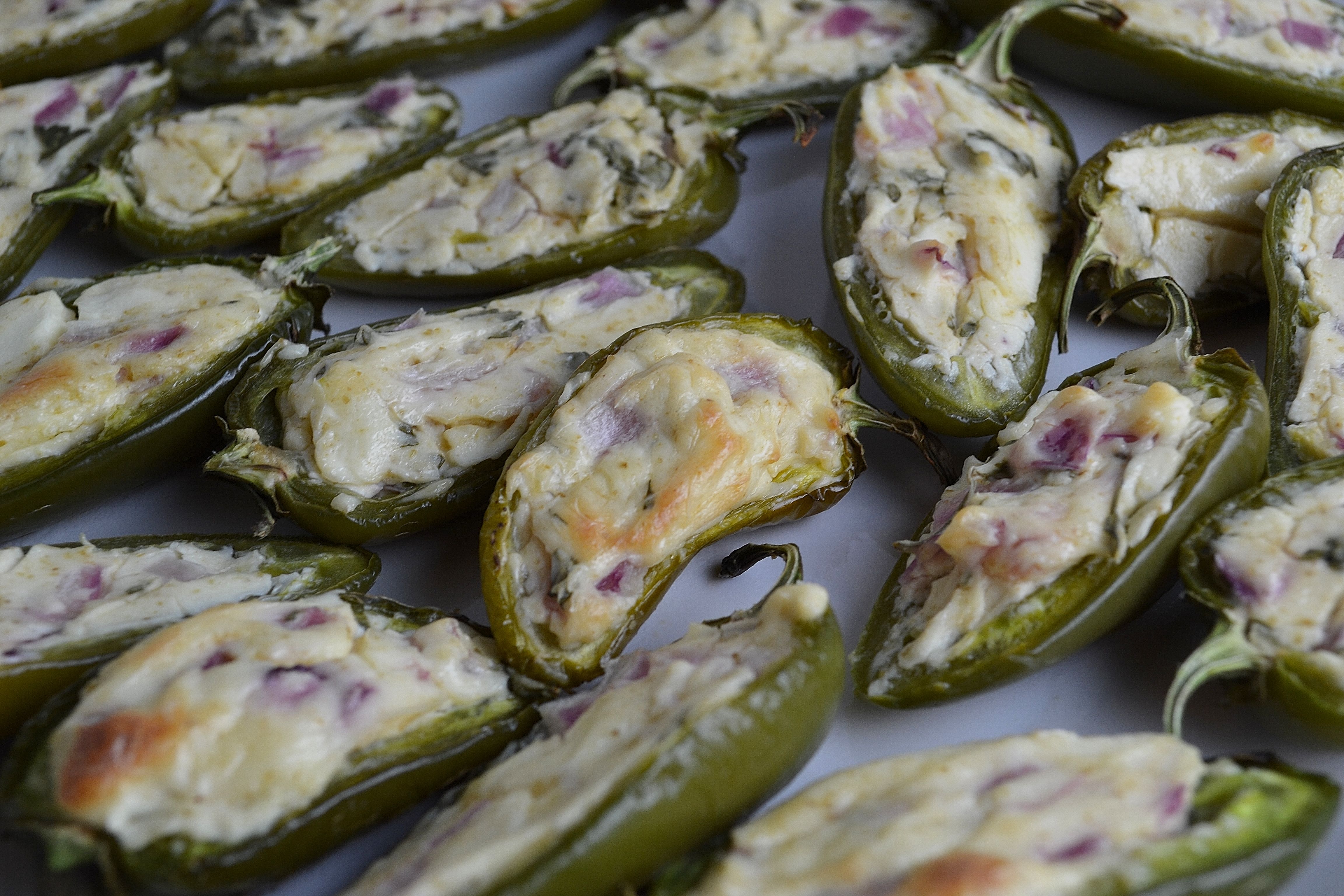
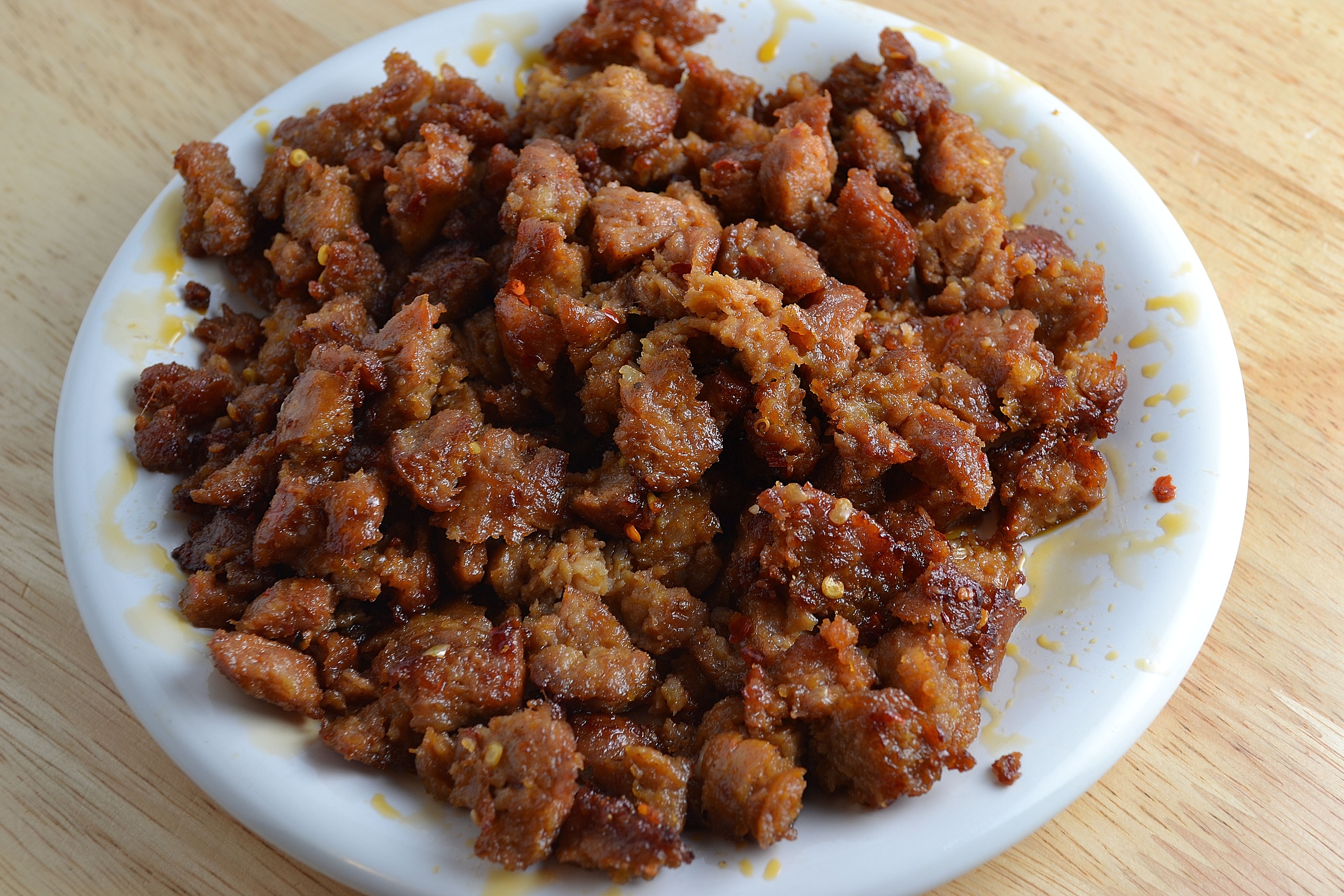
Not sure if I’ve mentioned this before, but my apartment building is becoming a remake of the Friends sitcom. THREE of the eight apartments are close friends of mine, meaning I will be spending (most likely) 80% of my time hanging with friends in this very building. For a food blogger, it’s perfect – I have a built-in group of recipe testers who all have eclectic tastes. I decided to throw an impromptu party the other night, and the relentless summer heat merited a night of frozen margaritas. Not wanting to submit to serving only chips and salsa, I decided to also make Baked Stuffed Jalapeños and Potato Skin Bites with Chorizo. Jalapeños are a tough bunch to work with – when cutting one, you’re fine with a simple paring knife and board. When cutting 20, it is almost crucial to have gloves on if you plan on touching anything for the next several hours. While the seeds and the veins are notably hot, it’s the oils that are the culprit for irritating skin. Trust me, with the cheap price of gloves your hands will be thanking you for it. These are quick to make, and the result is fabulous! Any number of cheese can be stirred into the cream cheese as well, such as monterey or cheddar, but I chose to go with just the basics. You can also leave in a few of the seeds if you are daring, but I’ll warn you that these little guys pack a punch as is – click HERE to learn how to make these spicy bites! This second dish was a little bit more complicated. Roasting the potatoes was a synch, but removing the pulp (using a teaspoon worked best for me) was a little trickier. Be sure they are cool enough to handle, otherwise you’ll be playing “hot potato” with the floor (and the floor’s gonna win, it always does). I hadn’t really worked with chorizo prior to this dish. My friend Brian was given the task of removing the casings, and that turned out to be quite the chore. Slicing the sausages in half and removing it with a paring knife was our discovered shortcut. When browning the chorizo, you really have to break up the pieces with a spoon. You can use bacon in this, but chorizo adds a great taste that is definitely the centerpiece of these little bites – check out this recipe by clicking HERE. For the pairing, I wanted to turn up to the heat to complement these spicy treats. What better way than with Le Grand Tango, by Ástor Piazzolla. An Argentine composer, Piazzolla is known for tangos that feature elements of jazz and classical. His love for music emerged when, after moving to New York with his family, his father purchased bandoneón for him from a pawn shop. His music is both lively and tragic, and is really fun to perform. This is a great piece, and I hope you enjoy the recording (even though it sadly ends 2 minutes before the end…another setback of YouTube…).
Last weekend, a group of friends decided to devote a Sunday afternoon to watching Angels in America: an HBO mini-series adapted from Tony Kushner’s play of the same name that focuses on the social and political consequences from the AIDs epidemic of the 1980s. Running at a total of 6 hours, we managed to watch only four the of the six chapters (watching the remaining 2 the next night). Seeing as how this 4 hours of material, we thought it could be fun to pair a meal with our viewing. Trying to be clever yet not too campy, we went for the following menu:
◊ Caprese Salad with Balsamic Vinegar ◊ Roasted Cauliflower ◊ Deviled Eggs with Curry and Paprika ◊ Angel Hair Pasta with Leek-Squash Purée ◊ Angel Food Cake with Lemon-Lime Curd and Fresh Fruit Assortment
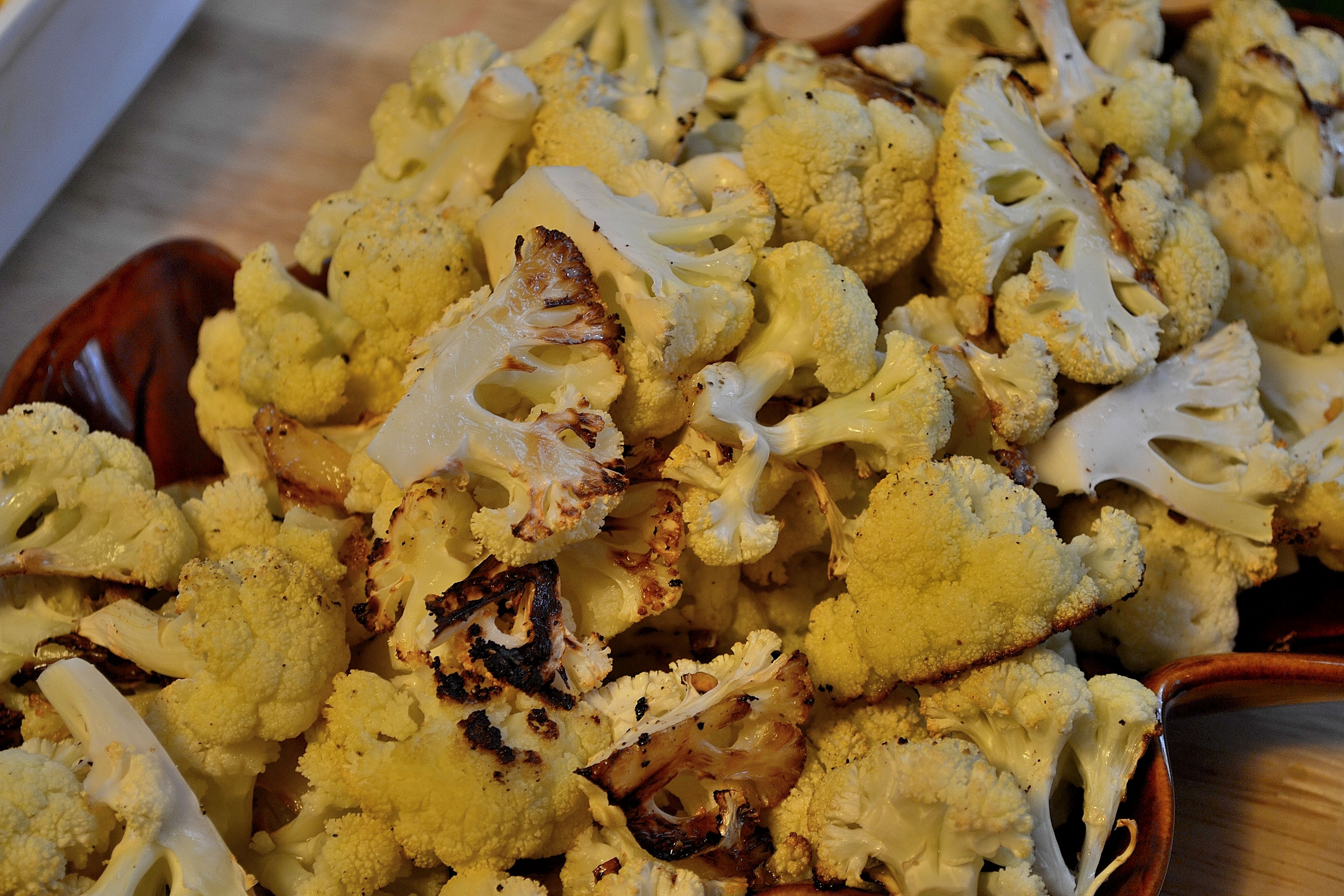
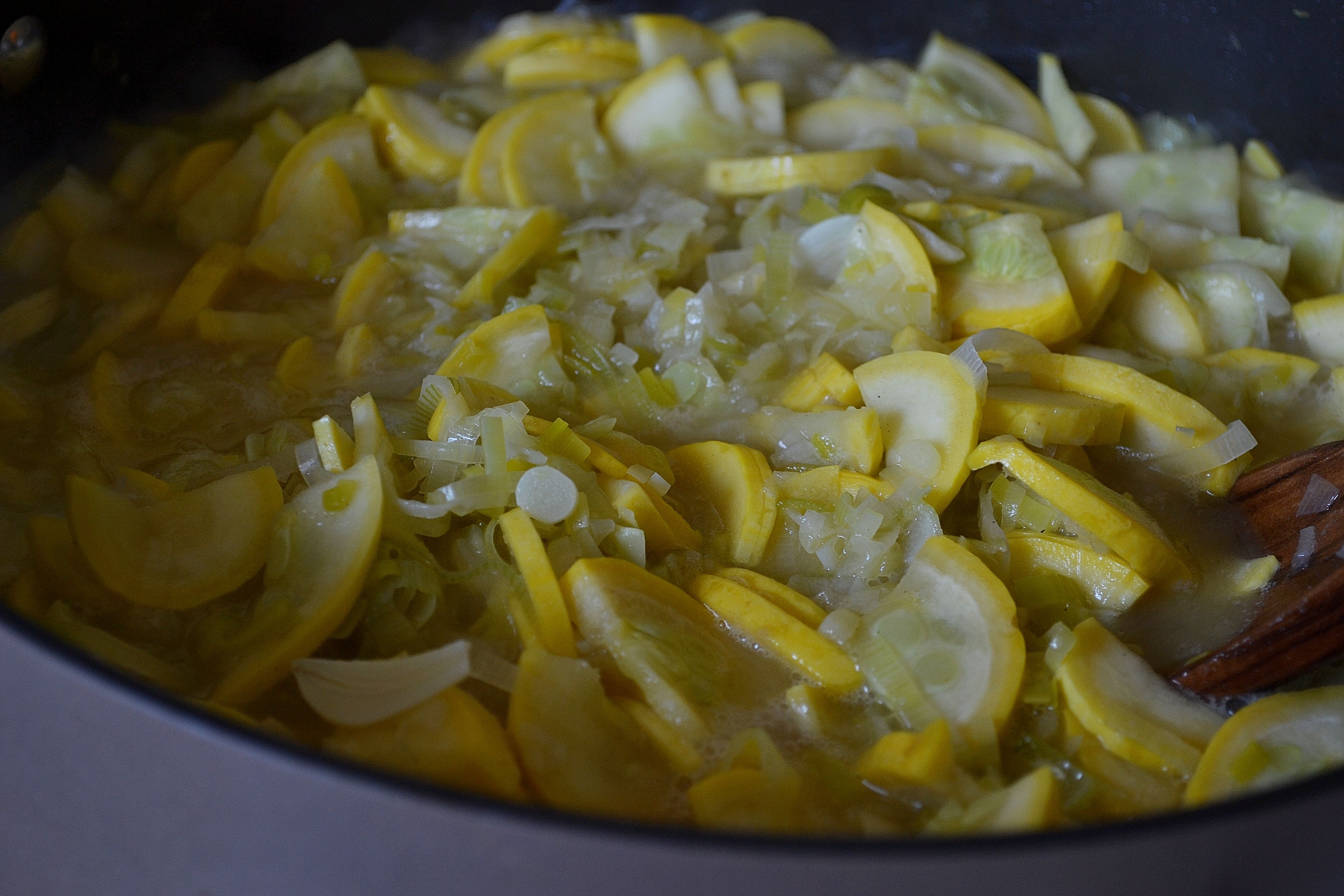
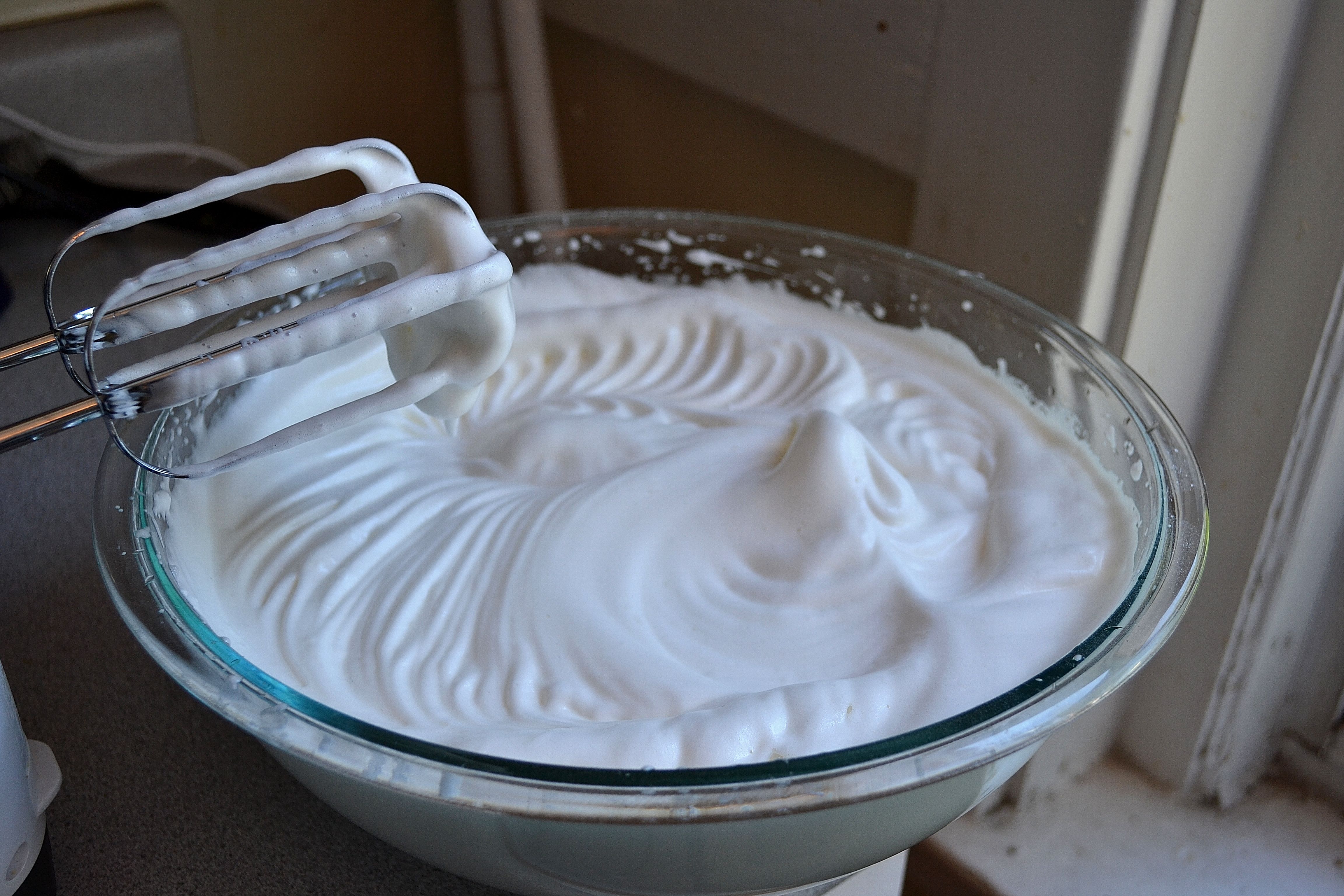
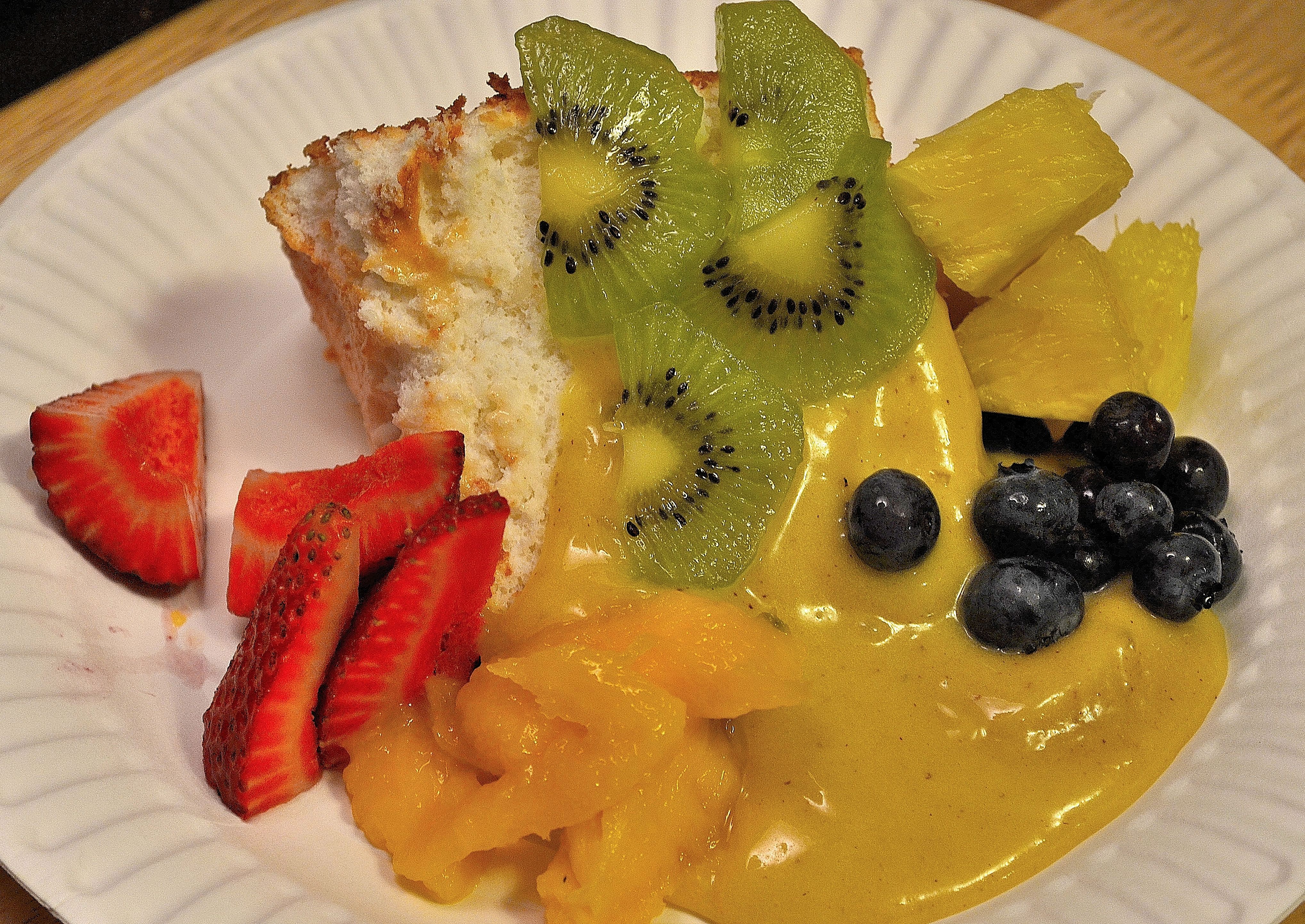
While I would love to share all of these with you, I am only going to focus on three of the menu items, starting with the cauliflower – I love this recipe! The beauty of Roasted Cauliflower is that while it is utterly simple to do, the result is so addictive you’ll be going back for thirds. We paired it with this event given its “cloud-like” resemblance. Give this heavenly recipe a try by clicking HERE. This next dish, Angel Hair Pasta with Leek-Squash Purée, will take a little more explanation than the cauliflower – let me start by saying, aside from being “Angel Hair Pasta”, this dish was an attempt to create a vegan pasta that even meatlovers could enjoy. I didn’t want the basic tomato sauce, and tossing the pasta with roasted vegetables also felt uninspiring. Walking through the aisle at my local co-op, I noticed all of the beautiful summer produce. It was then I happened on a thought: pureed vegetables…plus pasta…can it work? The answer is undeniably YES! I chose a vegetarian warhorse: the leek. When sauteed, these onion-like vegetables take on a sweet, subtle taste with a butter-like texture; making them perfect for a “butter-less” sauce to go with pasta! Sort of sticking to the “angelic” theme, I wanted the second vegetable to also be light, making the summer squash that were buy 1 get 1 free an awesome coincidence! The rest of the recipe was pure improv – it basically was a soup that I added wine to for an extra edge of taste. I used my handy-dandy food processor, but feel free to an immersion or standing blender. Learn how to make this unique vegan pasta dish by clicking HERE. You knew this last one had to be on the menu – it was too easy. A cake so beautifully white in color, with a texture equally light and fluffy, that is “must be fit for angels.” Angel Food Cake was thus the first pairing I came up with for this dinner. The cake is made with no butter or oil, only sugar, flour, and a TON of egg whites. The history of Angel Food Cake is relatively obscure, but most agree the cake’s origin was a frugal means of using up leftover whites (the yolks having been used for noodles, custards, etc). Funny thing is, my predicament was the exact opposite. How was I going to use up 12 whole egg yolks?! The other half of this pairing was going to acknowledge the story’s prominent theme of same-sex relationships. Per the suggestion of my friend and CK regular Tim Wilfong, we selected a potpourri of colorful fruit to top the cake. Originally intending to just use whipped cream, I couldn’t shake the idea of wasting 12 whole yolks. The perfect solution was using the logic of its origins: custard. Having just bought a ton of limes and lemons from the store, a lemon-lime curd sounded all too perfect, and it was…almost too perfect…like we couldn’t stop eating the stuff kind of perfect. Click HERE to check out how to make this beautiful cake and custard duo (or to make use of an entire carton of eggs, in case you’re curious). At first I thought I might pair an external work with these recipes, but then researched the actual soundtrack for the movie. It was nominated for the Grammy Award for Best Score Soundtrack Album for a Motion Picture, Television or Other Visual Media. The soundtrack was both composed and conducted by Thomas Newman. Newman’s film repertoire is quite impressive, with titles such as The Shawshank Redemption, The Green Mile, and Finding Nemo to his name. When I also saw that Steve Kujala (a jazz/contemporary flutist who I’ve long admired) is one of the performers, I knew I had to use this soundtrack for the musical pairing. Below is the opening title from the miniseries. Again, definitely check out this HBO series when you have the time – it is a beautiful story. Enjoy!
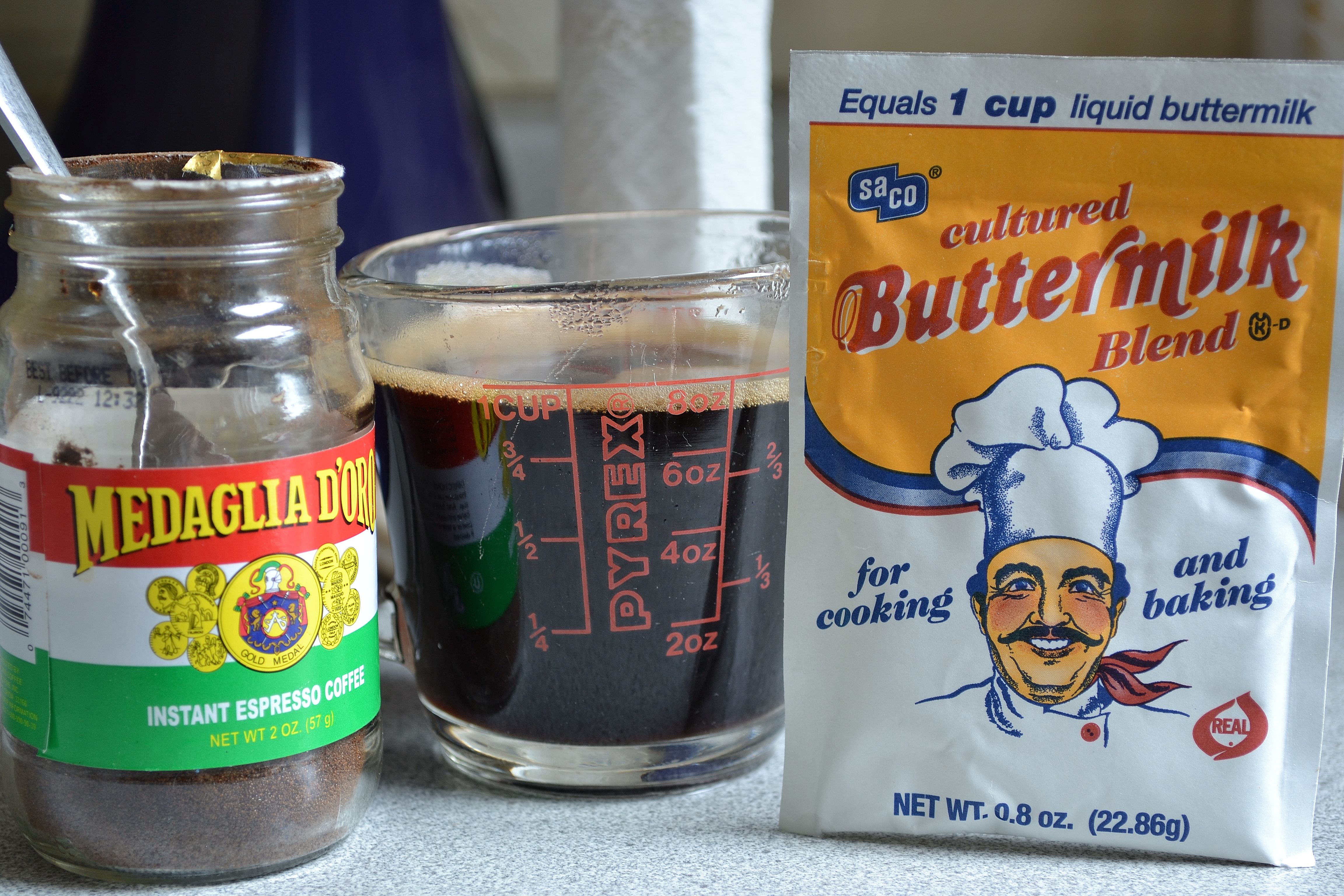
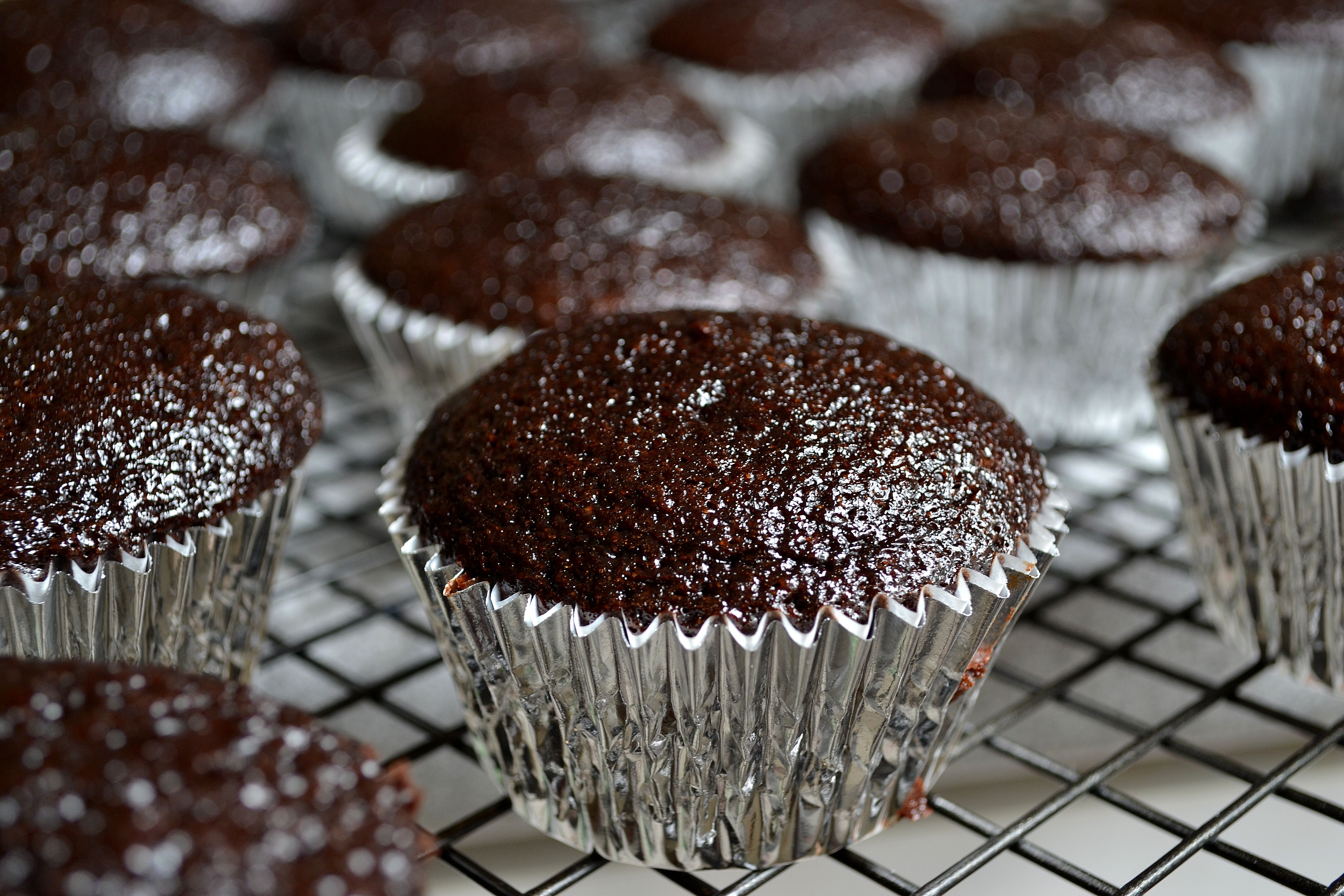
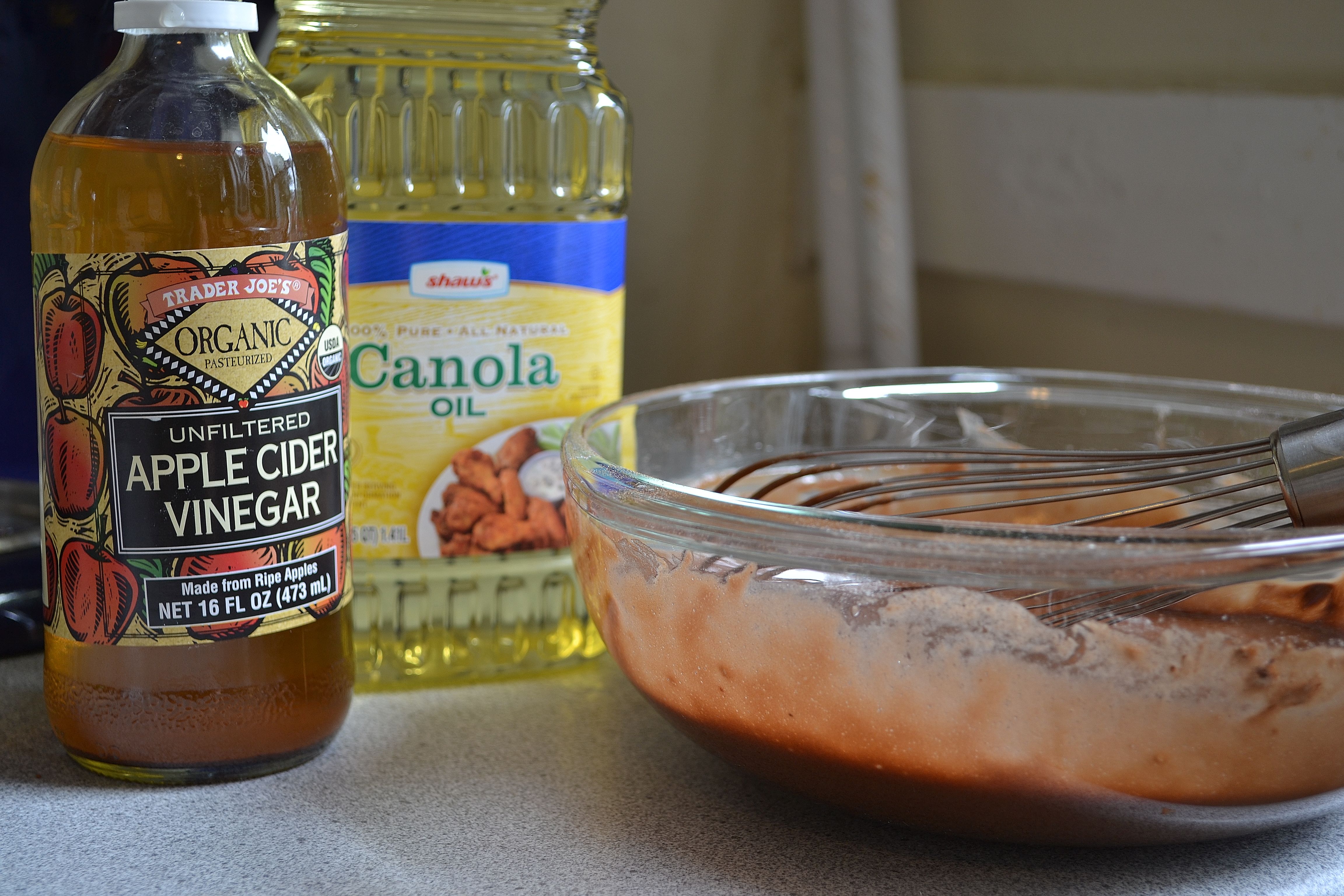
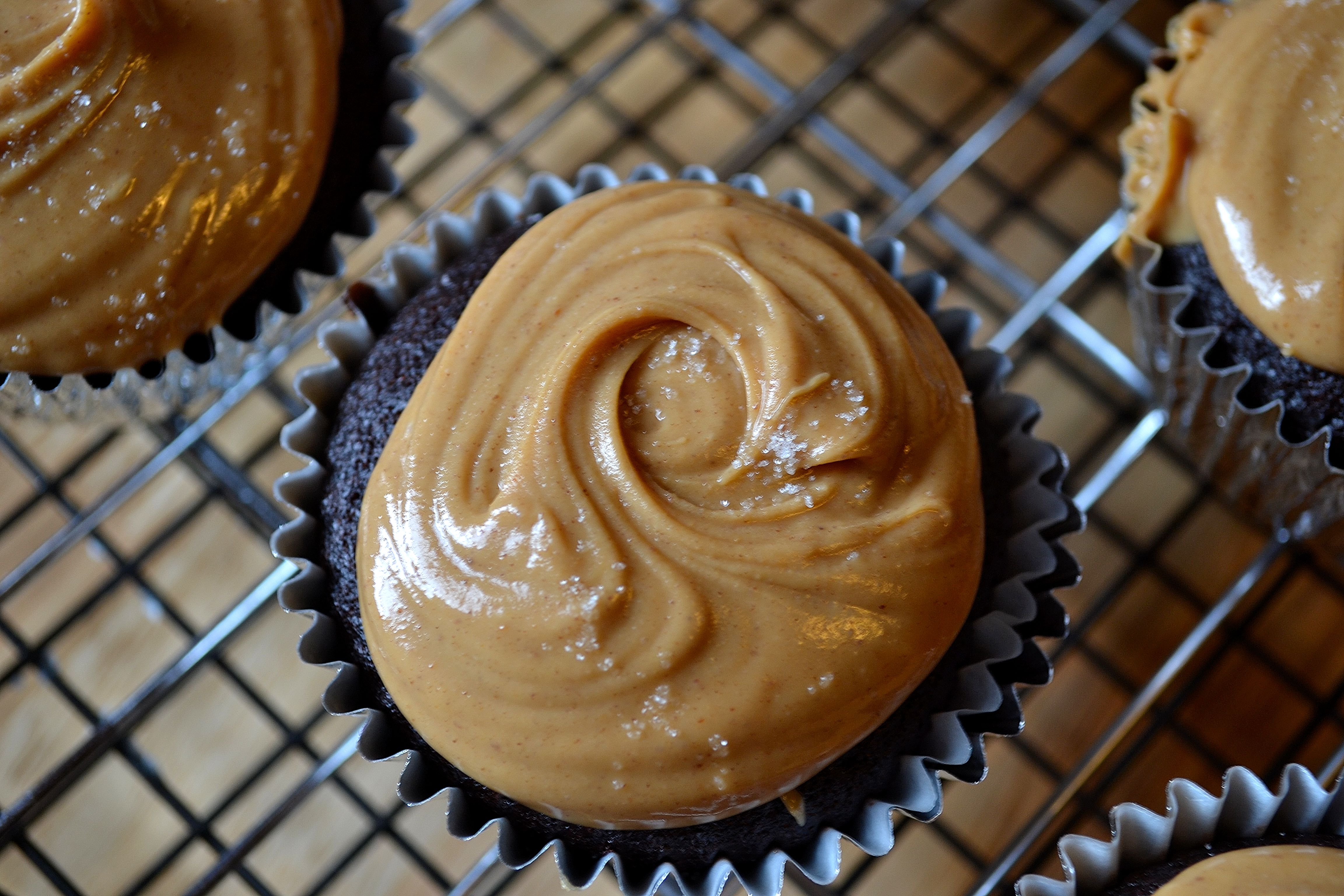
I’ve been a little too excited about blogging on these two cake ideas. Mind you, I am always an advocate for taste over decoration…but every now and then I give in and run wild with cute frosting ideas. Two occasions merited these frivolous tendencies, and the result couldn’t have been cuter! The first was for the going-away celebration for my dear friend Jenny from work, and the second was for my friend Diana Wensley’s birthday party. The Terrier Cupcakes were almost too cute to eat, while the Kermit the Frog Cake was a definite hit with Diana (a huge Muppets fan!). My piece of advice on decorative frosting: the freezer IS your best friend! Frost some, let it chill, frost some more, let it chill. Time and patience are the unwritten rules here, but they will make all the difference in the end result. The idea for the cupcakes came from this video, and the kermit design from this blog. While design was clearly an incentive behind these two, I couldn’t abandon my standards on taste. As such, I used my go-to chocolate cake (a la Ina Garten) for both occasions. With coffee and buttermilk listed, this is a super rich dessert! These ingredients, though, represent two of the few instances where I take shortcuts in baking: instant espresso and powdered buttermilk. While I don’t recommend these for recipes where coffee and buttermilk are the key flavors, they are perfect companions to a recipe featuring more dominant ingredients (like chocolate!). Check out my chocolate cake staple by clicking HERE. I also paired both of these cakes with cream cheese frosting (one of the easier frosting type to decorate with during the hot summer months – buttercream is definitely a bust). As for the other ingredients, the terrier cupcakes are made with: big marshmallows (snout), halved mini marshmallows (ears) with pink sprinkles, M&M candies (eyes), and chocolate-covered pomegranates (nose). I separated the frosting into three parts for the Kermit cake, using only green and red food coloring. The lines are upside-down chocolate chips. As a side note: there was another cupcake at the office party worth sharing – I have a vegan coworker, so I made a batch of vegan chocolate cakes that turned out remarkably well! While not frivolous in nature, these cupcakes were undeniably delicious in taste! They were super easy to make, and apple cider vinegar did wonders in making these look and taste like the real deal. The terrier cupcakes occupied the better chunk of my evening, so I made a simple swirl of peanut butter melted with honey for the topping – it was perfect! Check out these vegan delicacies by clicking HERE. These adorable desserts deserved a piece that could represent both the spirit of their appearance and the enjoyment of their taste. Subletter Erin came to the rescue with the perfect suggestion: Le carnaval des animaux (The Carnival of the Animals), by Camille Saint-Saëns. Only 30 minutes in length, this suite consists of 14 separate movements that each represent a different type of animal. Much the way that I rarely indulge in “frivolous” decorating, Saint-Saëns was nervous this piece would debase his musical reputation. He only published one of the movements during his lifetime: “Le cygne” (The Swan), arguably the work’s most famous movement. The remainder of the work was published posthumously, and has since become one of his best-known works.* I’ve included the “Finale” movement, performed by the Chicago Symphony with James Levine for the Disney production Fantasia 2000 (which I recommend watching if you haven’t yet, even though they’ve made cuts throughout the works featured in the film). Enjoy!
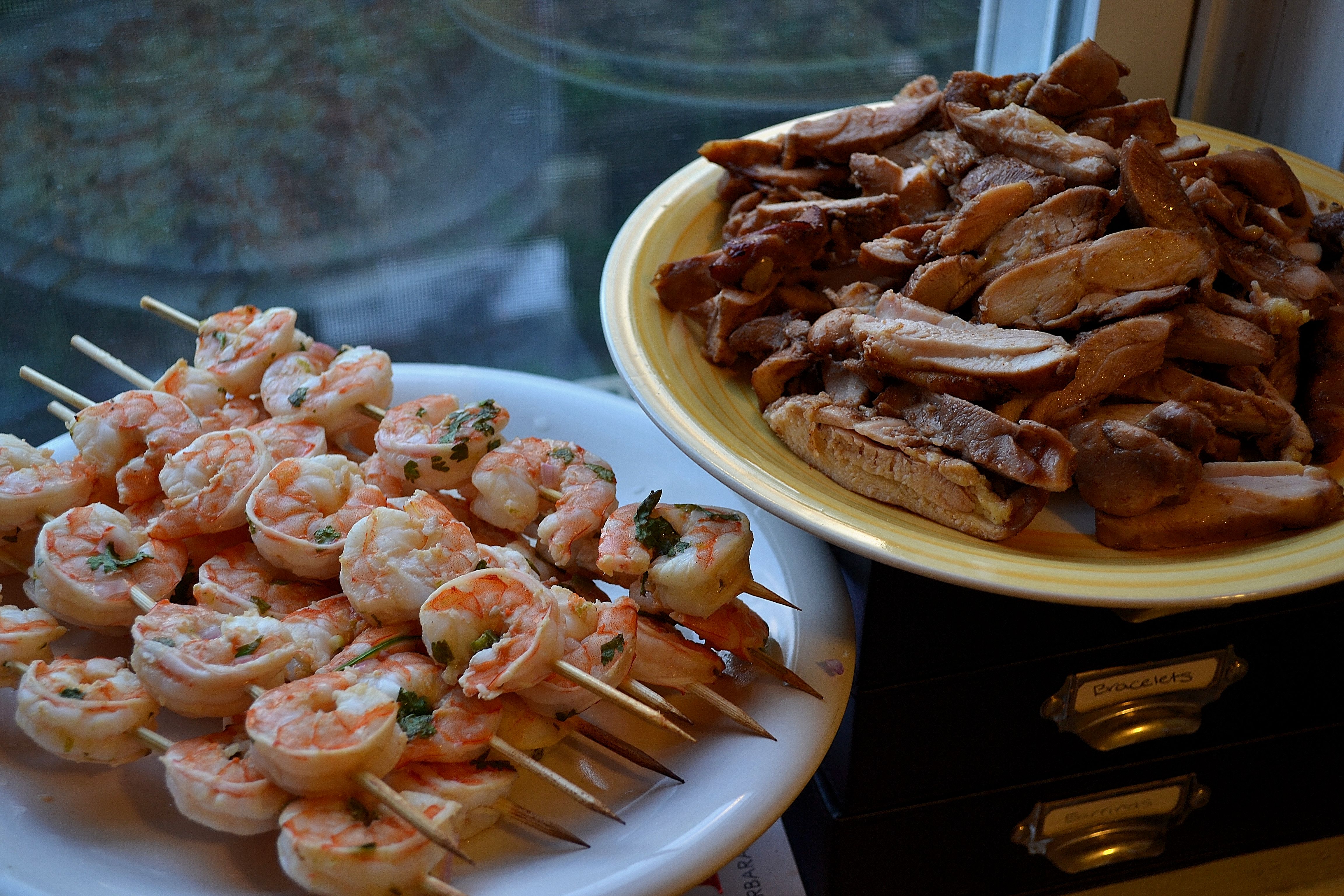
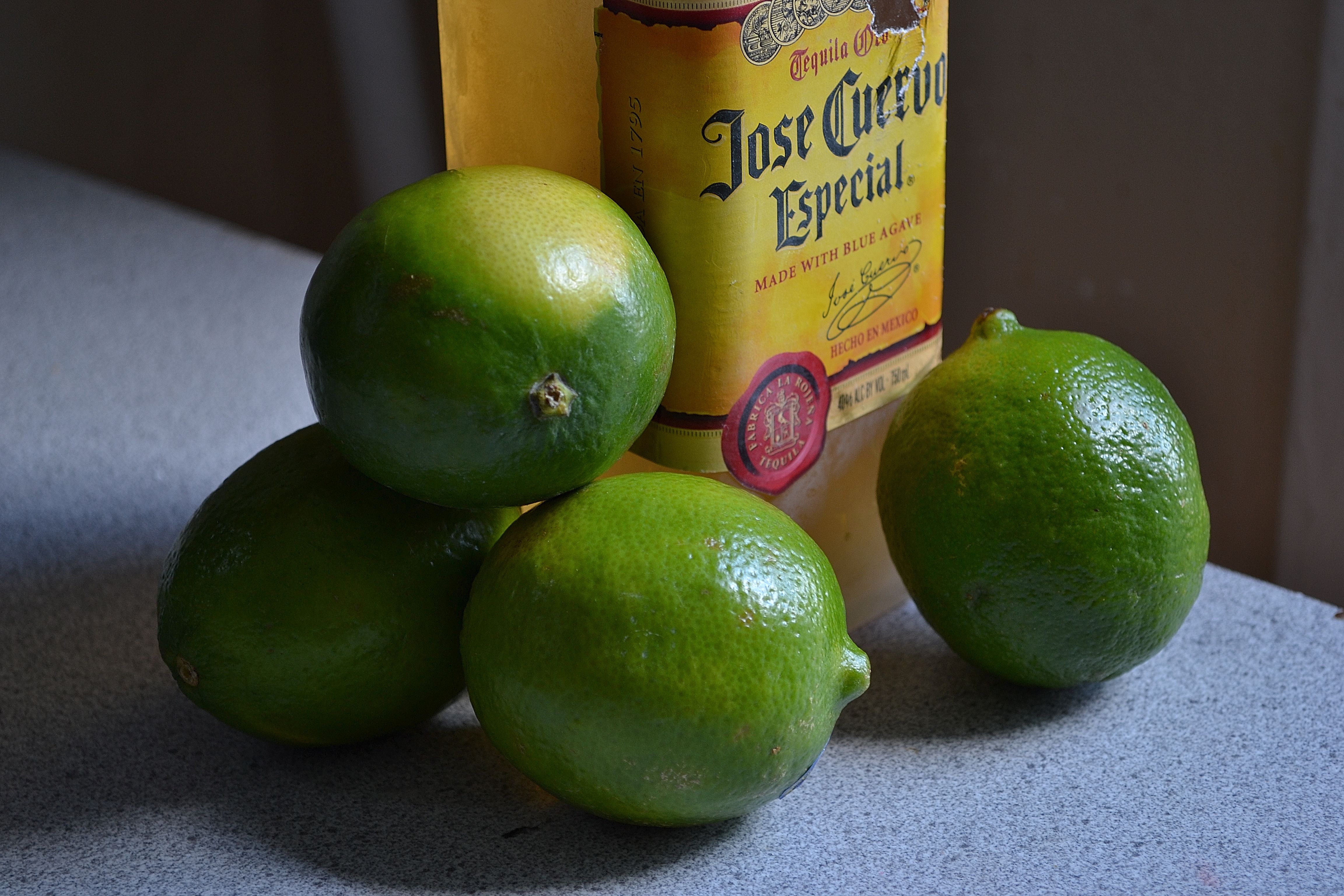
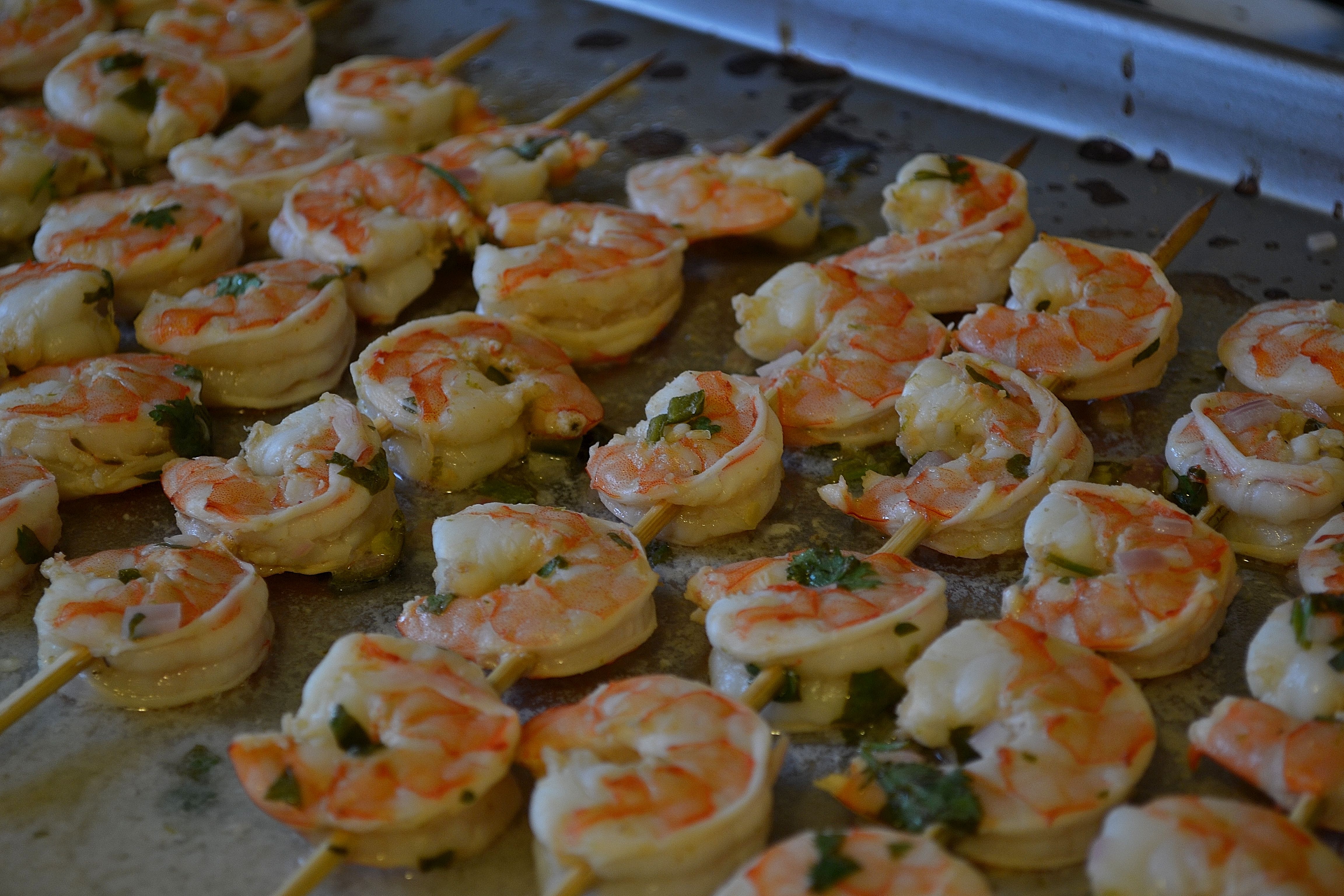
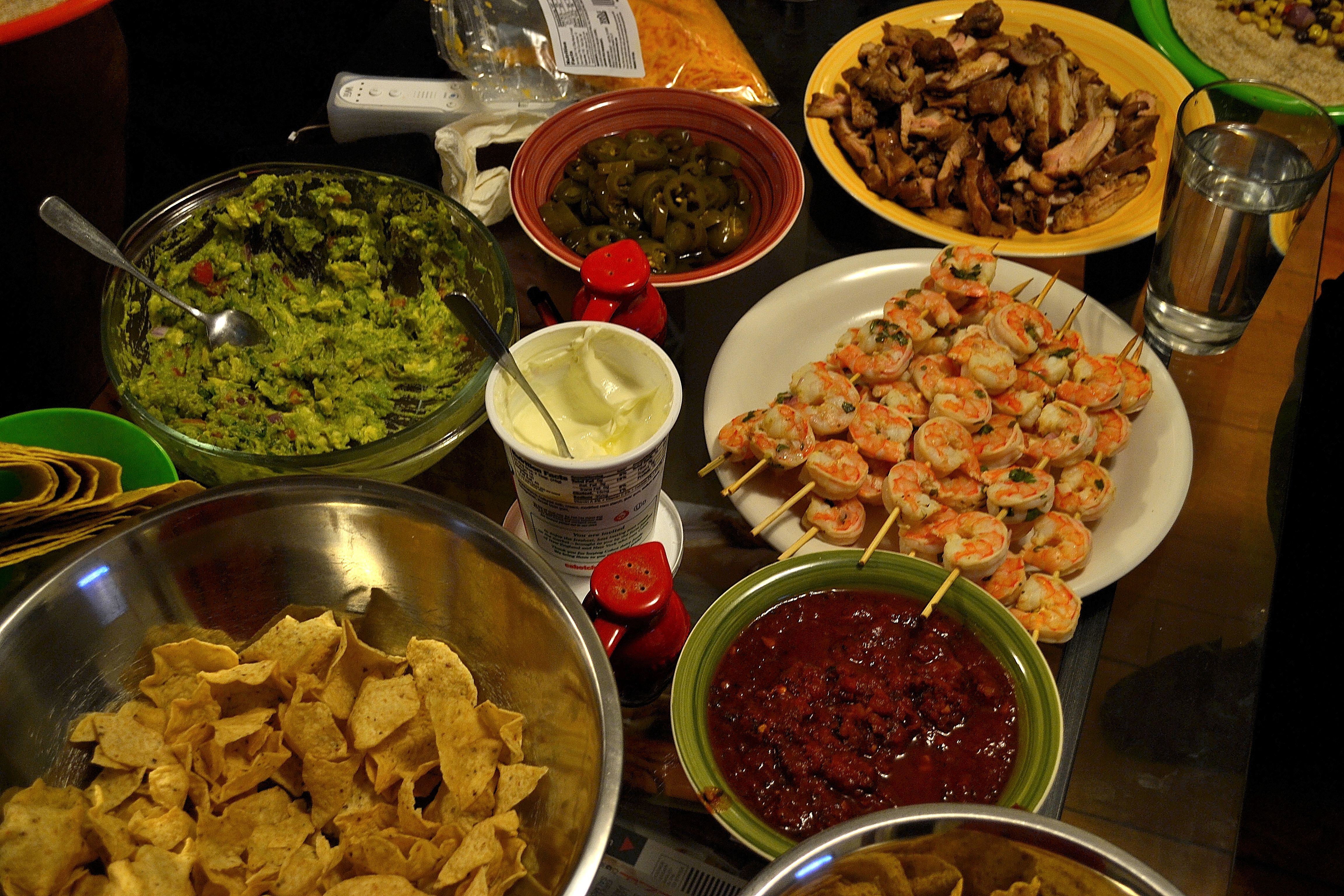
I love tacos – they are quick, easy and perfect for those last-minute get-togethers! Yet keeping a ravenous group at bay in order to snap a few photos is a nearly impossible task. I have already had several parties where tacos were the main event…which you can tell never made it to this blog. Yet my most recent endeavor was saved by an age-old trick: the marinade. This made preparation the day of a breeze, giving ample time to snap some awesome photos! No taco party is complete without salsa and guacamole (my recipe HERE), both of which we had plenty! The fillers were two recipes that gave this taco bar a unique twist: Grilled Tamarind Chicken and Tequila-Lime Shrimp Skewers. Tamarind soda…having never even used Tamaring before, this ingredient seemed a little far-fetched. I received my FineCooking issue this month, and was dying to give this recipe a try. About Tamarind: primarily indigenous to tropical Africa, the Tamarind tree can be found in areas throughout Arabia, South Asia and Mexico. The fruit resembles a pea pod, and is often brown or reddish-brown in color. It imparts a sweet and sour taste, resulting in its popular use for a number of dishes ranging from sorbets and sweetened drinks to soups and salads.* The beauty of this marinade is two-fold: one is the tangy flavor imparted by the tamarind, and the other is the tenderizing effect from the soda itself (you can find it in the Asian or Latin aisles at your supermarket). The recipe is SO simple, and yet this was some of the tenderest chicken I’ve ever made for tacos! The flavor was subtle, yet a delicious tangent from conventional Tex-Mex marinades. Click HERE to learn more about this unique recipe! Normally these two ingredients imply a very different kind of evening…yet for culinary purposes, they can be a powerful pair. Tequila has (understandably) received a horrible reputation, yet it is this very repute that has made it a premium liquor in both production and standards. The blue agave plant is the base for tequila, and is to this day still harvested manually by “jimadores,” who know and understand the plant like the backs of their hands. The distillation process is equally venerable.** I’ve made this marinade before, and it works like a charm! No worries if you’re not a tequila fan: the alcohol cooks off, leaving a unique flavor that won’t (at least shouldn’t) stir up any bad memories. The shrimp only need to cook briefly, making for a quick and easy meal. Feel free to eat these with tacos, or straight off the skewer (which you may be tempted to do): click HERE to check out this awesome recipe. Considering this meal was a taco bar, these dishes each started out with a single idea, then were built upon with other ingredients – salsa, guacamole, bean salad, cheese, sour cream, etc. The idea of building multiple items upon a theme led to my musical inspiration: Maurice Ravel’s Boléro (thanks to my awesome subletter Erin Bollacker!) This piece is built upon an ostinato, or a musical phrase/rhythm that is repeated over and over again. Gradually, more instruments are added to the theme, growing in volume and size. The climax is a massive finale with the entire orchestra playing in tandem – not unlike a finished taco brimming with fillings and sauce! The ostinato context, on the other hand, reflects the simplicity of making these delicious tacos. The video link I’ve included is of the Vienna Philharmonic with (my favorite!) Gustavo Dudamel conducting – the opening solos are absolutely breathtaking! Mind you, this is a 20 minute recording, which should be ample time to assemble at LEAST 2 of these awesome tacos (perhaps 3) – enjoy!
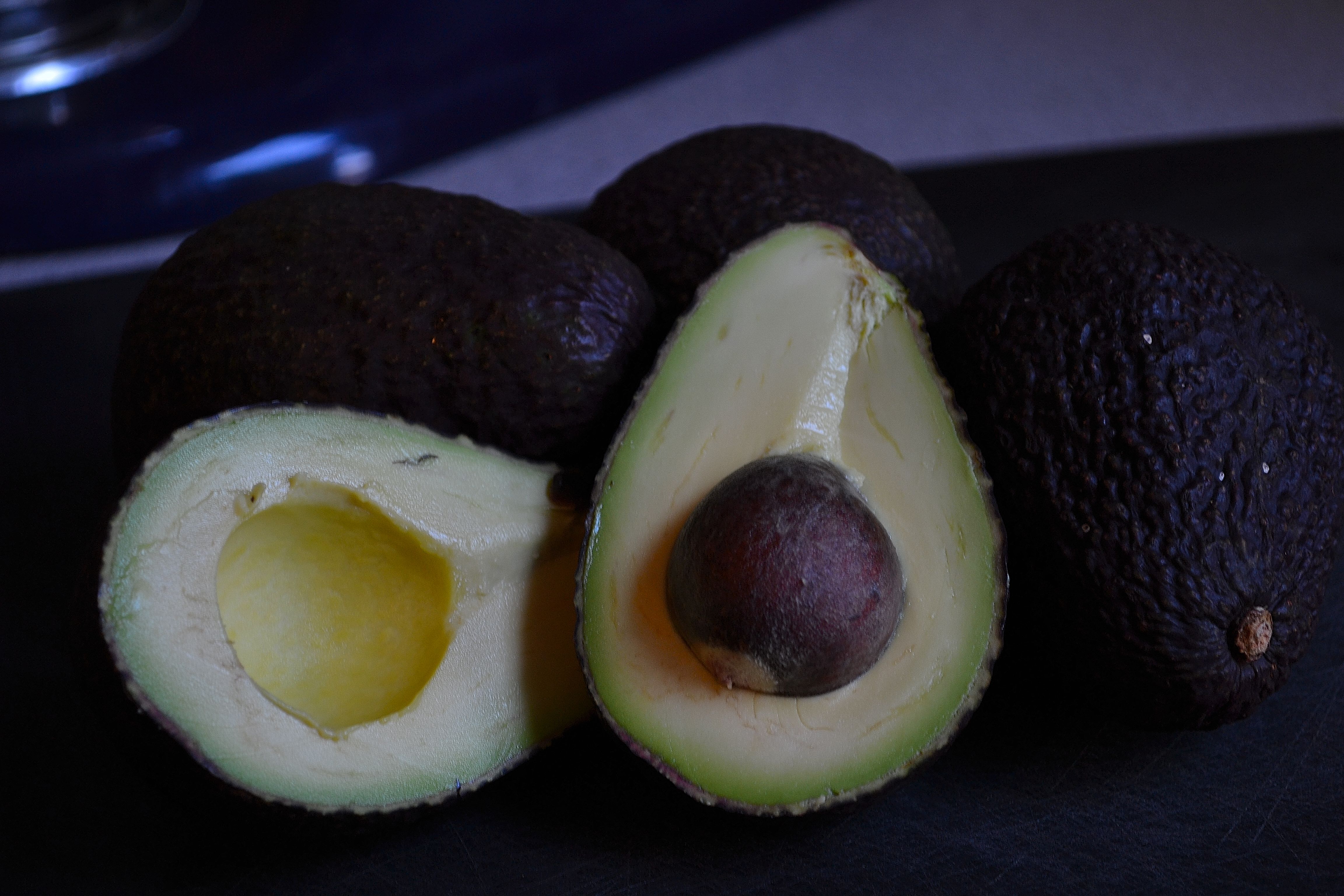
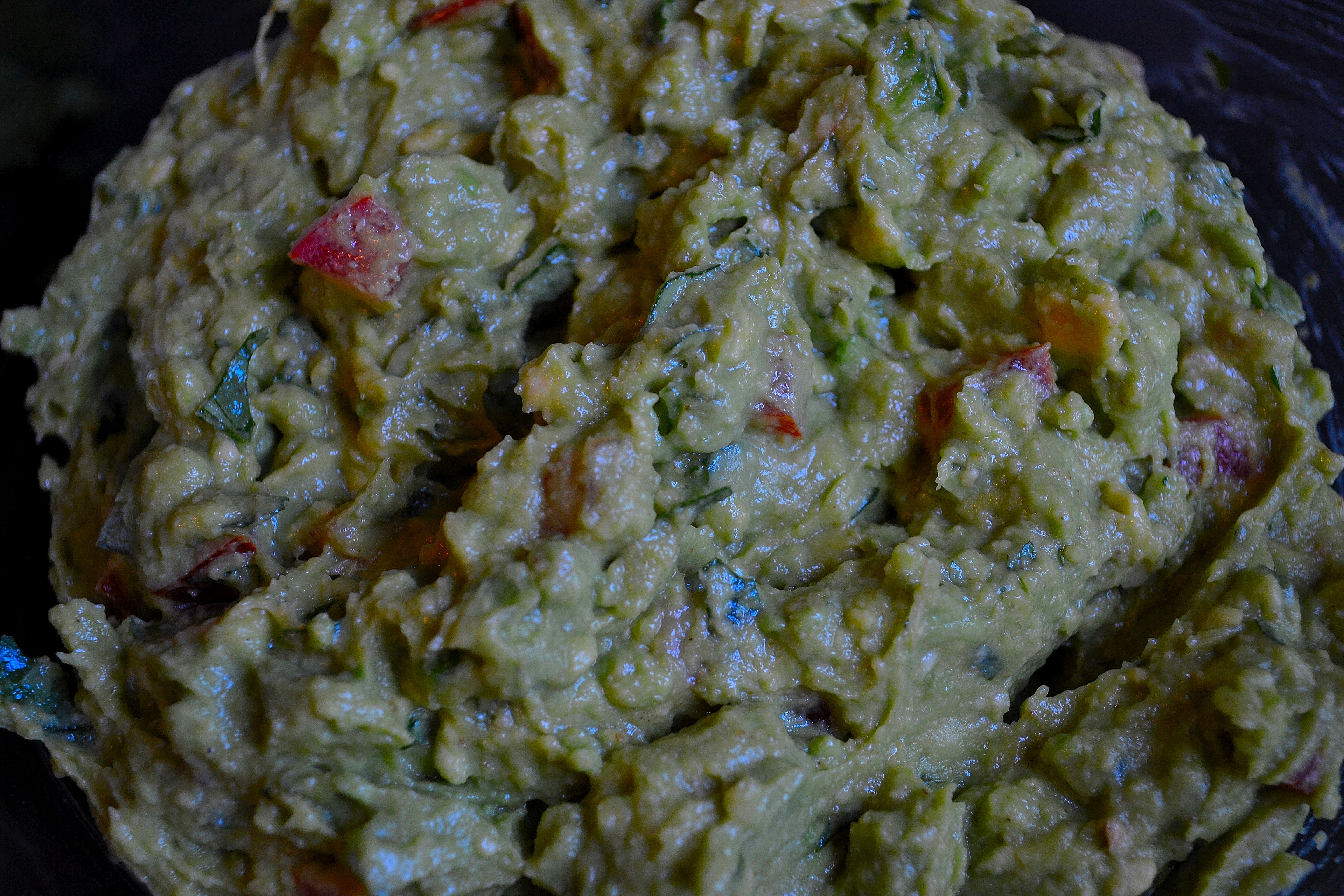
Whether it be a picnic or a movie night, no summertime hang is complete without chips and dips. I’m not talking about those prepackaged salsas you can buy year round at the local corner store – I’m talking about dips that feature the fresh, colorful harvest of this season. Though the former is more convenient, the flavor and depth o the latter is far more enjoyable. I had a group of friends over the other day to watch one of my favorite Pixar films, Toy Story 3, and I decided to make two seasonal favorite of mine: Guacamole Auténtico and Mango Salsa. The taste, health benefits, and overall aesthetic of the vibrant avocado has made it one of summer’s most beloved fruits. The word avocado comes from the Spanish term aguacate, which had been a simplification by Spanish explorers of the original Aztec name “ahuacatl.” Ancient cultures believed the fruit to be a symbol of fertility and passion (given its suggestive shape). Today, it is still seen as a natural aphrodisiac due to its nutritional benefits and rich taste. Though there are signs of cultivation dating back to 500 B.C., the avocado wasn’t introduced to the states until 1871 in Santa Barbara. California still stands as the number one producer of the nation’s avocados, accounting for 90% of the total crop. Fun Fact: an avocado tree in California can produce as many 500 fruits per year – that’s 200 pounds of avocado!* This guacamole is a knockout, and I recommend using only the freshest of ingredients for it. The only thing I omit is the hot sauce given that it feels like a slightly less “authentic” ingredient. I also use jalapenos in place of the serranos to tone down the heat for those less predilection towards spicy fare. Although many purists would be furious at the inclusion of cumin, the slightly earthy flavor it provides with a touch of spice is a perfect complement to the avocado (as an added bonus, many Arabic cultures see cumin as a symbol of love**). This is a delicious guacamole, and comes together in no time – click HERE to learn how to make this summer standard. When most hear the term salsa, they think tomatoes – I imagine very few picture mangoes as part of the equation. The mango, like the avocado, is another pitted fruit. Originating in Southeast Asia, mango comes from the Tamil term “mangkay.” The mango is featured prominently in this region, serving as the national fruit of India, Pakistan and the Philippines. The mango, like the avocado is seen as a symbol of love and fertility.* Hindu culture uses mango leaves as decorations in doorways for weddings and religious ceremonies.^ This salsa is almost a simplified version of another variety I’ve featured on this blog. Like guacamole, the mango is the main ingredient, with a few other flavors and textures to provide body. This was surprisingly addictive, and not terribly spicy due to the mango’s sweetness. Click HERE to learn how to make this twist on salsa! Given that these are both fruits symbolic of love, I thought it would be appropriate to choose a musical selection to match. I decided to go literal with this one, and chose Franz Liszt’s Liebesträume, or “Dreams of Love.” These three solo piano works are based on love poems Ludwig Uhland and Ferdinand Freiligrath: “Hohe Liebe“, “Gestorben war ich,” and “O Lieb, so lang du lieben kannst.”Liszt simultaneously composed song equivalents for these three poems, though these (unlike the piano solos) are rarely performed.^ Each piece represents a different type of love: exalted love, erotic love, and unconditional love. The most famous is No.3, which many simply refer to as “Liebesträum” (despite it being the title for the entire set). I have included a recording of this work, performed by Evgeny Kissin. Enjoy!
This dish was my first time cooking with flank steak – given it is a much leaner steak than your standard T-bone, I was extremely nervous about how to make the most out of this cut. I had two options – simply cooked then covered it with a sauce, or a marinade. I went with the latter, and thank God I did! If you remember from my previous post, I’m not a big meat eater, but this steak was amazing! Not only that, it fit beautifully into my “get-rid-of-all-that-leftover-OJ” efforts (like this orange cake had from a previous post). If you like steak, but don’t want to shell out big bucks for it, I highly recommend giving this Broiled Flank Steak with Citrus-Honey Mustard Marinade a shot! Flank steak comes from the abdominal section of a cow, making it much leaner and tougher than your more expensive cuts (i.e short loin, chuck, etc). For quite some time, it was seen as a “cheap, unreliable cut.” Yet that opinion has drastically changed given flank steak is easy too cook, arguably healthier than your fattier cuts, and extremely versatile in cooking method and flavor options. Cutting the steak across the grain is key to help break down the fibrous muscle of the meat, giving you the most tender result. Marinades really bring out the potential of this cut, and the longer it sits the greater the taste. I learned the above method of placing a ziploc bag in a bowl from SimplyRecipes – it ensures even coating with little to no mess. This marinade…wow was it good! It was on a complete whim, actually – I was cleaning out some old magazines and saw a SouthernLiving grilling edition. There were two pages devoted to marinades, and seeing as how I have so much OJ to spare this one was perfect! The coarse-grained mustard is essential – you can use Dijon, but it won’t have the same intensity. This marinade would probably be great with chicken or fish as well (something I am definitely planning on trying); I didn’t change a thing with the recipe. Given the lack of grill, the broiler was the way to go (as you can remember from my previous post). If you don’t have a broiler pan, I wouldn’t recommend using your cookie sheets; they will warp/darken considerably. A broiler pan ss a worthwhile investment if you like grilled food and have apartment limitations. Cast iron works great too, of course 🙂 The key to serving flank steak is cutting it into thin slices – it capitalizes on the meats tenderness, and makes for a beautiful presentation. This has definitely become my new go-to cut of steak for a large crowd – it’s fast, tastes great, and has less than 10 ingredients! We had pasta and steamed vegetables as sides for the steak. Click HERE to learn how to make this dish a staple in your own cooking repertoire. In keeping with my OJ theme, I also made a Orange & Fennel Salad with Citrus-Shallot Vinaigrette. The reduced orange juice gives the vinaigrette a potent richness, needing only a touch of honey to even out the taste. It’s such a simple recipe, yet makes a fantastic salad – click HERE to find out how to make it. For the pairing of this dish, I wanted to piece that would complement the depth of flavor these two dishes possess: colorful, yet potent. It drew my to Strauss’s renowned tone poem Don Juan, Op. 20. The work launched a 25-year-old Strauss to international success. Regarded as Strauss’s “coming-of-age” masterpiece, Don Juan displays an orchestral valor that far transcends the conservative writing of his youth. This shift of style was a direct result of Strauss’s aquaintance with fellow composer Alexander von Ritter.* Ritter’s influence led to Strauss’s pursuit of the “tone poem,” or an orchestral work that evokes a story, landscape, or other non-musical art form, and is one continuous movement.** For a work that is not even 20 minutes in length, this tone poem is replete with emotional depth and poetic grandeur, thus my pairing. I’ve included here a recording with Bernard Haitink and the Royal Concertgebouw Orchestra – it is in two parts, and I strongly recommend listening to the entire thing. Enjoy!
One guaranteed way to brighten up a roomful of people is to present them with a platter of cupcakes. While other desserts can be equally as enchanting, there is something more special about the personal enjoyment cupcakes can provide. Each one is its own little present, waiting to be unwrapped and enjoyed. My office loves it when I make cupcakes, so for the monthly birthday celebration (when we acknowledge all of our coworkers with birthdays that month), I brought two very distinct varieties: Sour Cream-Chocolate Cupcakes with Nutella and Vanilla Bean-Coconut Cupcakes with Coconut Frosting. Ever since visiting Germany with my youth orchestra when I was 16, I have had a true appreciation for the genius of Nutella: a sweet, spreadable delight that has no parallel in either flavor or form. Nutella is truly a baker’s best friend, given it is sure to please any who try it. In fact, it’s so amazing I decided to just use it AS the frosting alone – perhaps one of the tastiest shortcuts I’ve ever taken. The cupcakes themselves are a little tricky – the sour cream gives them an inherent lightness in texture, to which the melted chocolate lends a beautiful silkiness. This makes the batter a little capricious (I had to toss 3 or 4 that sort of collapsed within the cups – they were that delicate). I cut holes out of the top to fill with the nutella, and I suggest using a serrated knife so you don’t “drag” the cake. The flavor of this cake made the effort all worthwhile – click HERE to check out these chocolatey delights. This next recipe has been in my repertoire for quite some time now, and it has never failed to please. It is quite time consuming, given all the prep work and steps involved. The reduced coconut milk isn’t too scary to make, just be sure to keep an eye on the pot to prevent scorching. Vanilla bean is absolutely necessary here – it is what gives these cupcakes their profound taste. Trust me, you won’t regret taking the time to create these – click HERE to learn how to make these fantastic cupcakes. Now I mentioned I made these for an office birthday party – someone had purchased a gallon of vanilla ice cream, and I started noticing that a few of my coworkers were halving one of each cupcake and placing the two types in a bowl together with a scoop of ice cream. I thought I had seen it all, but this was definitely a novel concept: pairing together two entirely different flavors with a “loving” scoop of ice cream. Funny thing is, they were a match made in heaven! This inevitably led me to choose my musical pairing for this piece: Pyotr Ilyich Tchaikovsky’s Romeo and Juliet Fantasy Overture. I had initially intended to post these two recipes separately, but this was the perfect way to combine the two: This piece is styled in sonata form (fast-slow-fast), with the middle section containing the work extremely well-known “love theme.” This work, which runs at just under 20 minutes, hopes to capture the passion and color of the story, rather than narrate the tale itself. Below I’ve included a recording of the London Symphony Orchestra with Valery Gergiev – Enjoy!

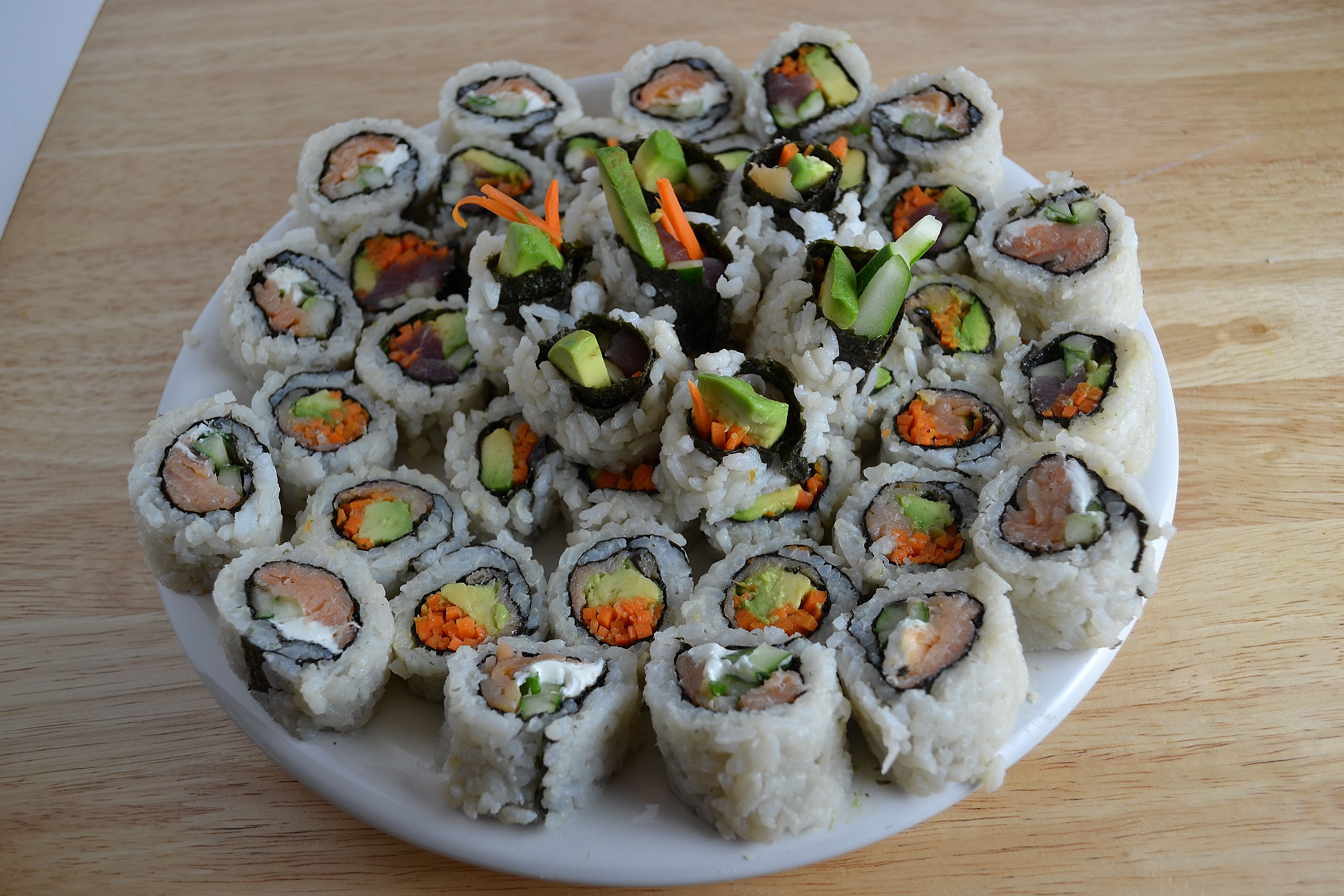 While practically anything that you eat at a restaurant can be made in your home, there will always be a few that you prefer to leave in the hands of professionals. For the longest time, I had always assumed sushi was one such meal – until I met Maya Jacobs. She never lived in Japan and doesn’t necessarily cook Asian dishes on a regular basis; she just knows that quality ingredients, homemade rice, and a skilled hand at rolling seaweed are all it takes to make great Maki Sushi.
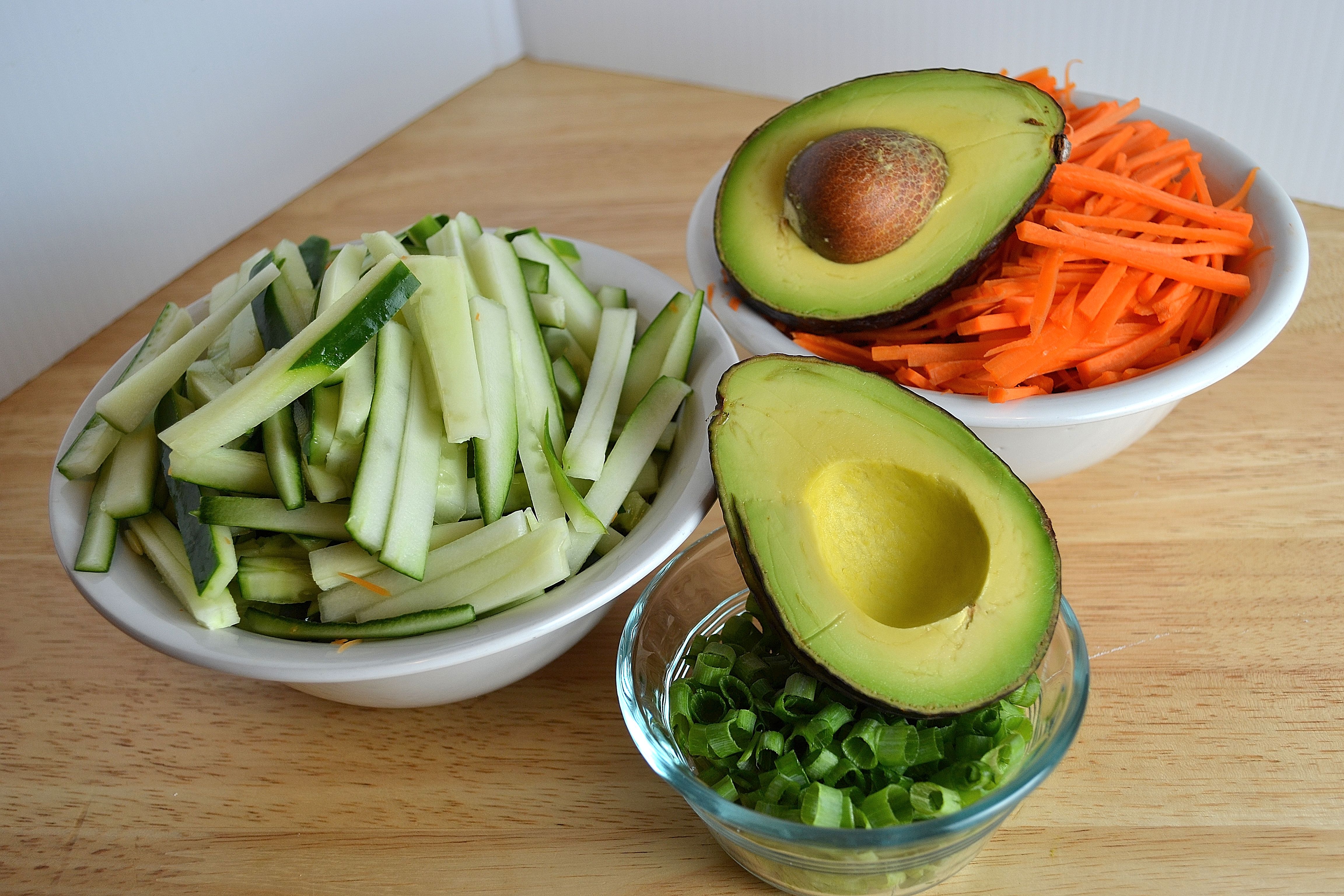 When Maya and I make sushi, we never just stop at a few rolls – we always go for 20 or 30 and invite as many people as we can. The key to a great sushi spread is having a ton of options: fresh tuna (Maguro) or salmon (Sake), julienned vegetables, fried egg (Tamago), avocado (a must for any sushi party!), etc. For this occasion, we used smoked salmon and cream cheese as well. Lots of color is key, and makes it much more exciting! The filling varieties are endless – it’s basically whatever you feel inspired to try.
 The rice is the trickiest part of making sushi – getting the right balance can be tough, but Maya’s recipe comes out perfect every time! You can use any type of rice (including brown) though it’s recommended to use sushi rice. It is a short-grain variety with a higher starch level than other rices, yielding a sticky, “glutinous” result that is perfect for rolling. Click HERE to see Maya’s practically perfect way to create homemade sushi.
  For pairing this meal, I wanted to focus on the variations and endless colors this meal can provide. My friend Alexis recommended a work that is considered to be on of the standards of variation form: Bach’s Goldberg Variations. Originally composed for harpsichord, the work consists of 30 variations on the opening aria. The variations are based on the bass line, or foundation of the piece (much like the sushi variations all rely on the same basic ingredients). It’s a beautiful piece, and a truly iconic work in the classical repertoire. This recording is by (once again) Glenn Gould, an artist who just gets Bach – enjoy!














 THE CLASSICAL KITCHEN
