
 Ah the beauty of Carbonara – a dish that both my boyfriend Phillip and I felt would make for a great weeknight meal. This iconic recipe is all about timing. The spaghetti needs to be cooked just before “al dente”, so you can add it back to the pot without fear of overcooking – and the heat subtle enough so as not to curdle the eggs. While an incredibly patient Phil was fishing the spaghetti out of the pot, I was whisking the eggs and grabbing a small cup of the leftover pasta water. It can be a tough egg to crack, they might say (couldn’t resist). The result should be a silky sauce, laden with cheese and pepper, that covers the pasta and pulls from the pan and my mouth is watering while typing this out.
 Carbonara is a Roman dish, with 6 very simple ingredients: pasta, Parmesan, egg, guanciale, salt and pepper. But we decided to add truffle, mostly because I had never bought fresh truffle and it was there and Phil was all for it. It was also a great learning opportunity…in that I should only buy fresh truffle if I want to eat it in multiple consecutive dishes. For this at least, it was the actual icing on the cake. Fun truffle fact! Harvesters once relied on pigs to discover these pricey fungi but (given the pigs’ voracious appetite for truffles) the responsibility shifted to man’s best friend, as all a dog desires is a loving pat and a delicious (non-truffle) treat.
 The name Carbonara is an interesting one – it’s derived from carbonaro, which means “charcoal burner”. NOT what I expected, but there you have it. Why it was awarded such a name has several theories: it was once a hearty meal for miners, it found its fame in a Roman restaurant of the same name, or even that it served as tribute to the secret society “Carbonari” (personally my favorite theory, albeit the least likely). All this being said, what the dish had been called prior to the mid-1900s remains a mystery. Fortunately for us, the recipe itself is known far and wide – and is much tastier than a name. Click HERE for the recipe to this classic Italian dish.
 For the musical pairing, an Italian piece was an obvious fit – and (to help narrow it down) my favorite element of the “carbonara” narrative is the mystery behind its name…which inspired my choice for the pairing: Puccini’s Nessun Dorma. This is one of the most famous arias ever – many know it, yet few know its meaning (sort of like Carbonara, eh?) So for those who have neither seen nor heard of the opera Turandot, a VERY quick summary – Princess Turandot has many suitors, yet will only marry the man who can accurately answer 3 riddles. None succeed until Prince Calaf wins her game…she begs her father to release her from this oath, yet he insists she marries the prince. So Calaf (being a good dude) gives her an “out”: if she can guess his true name, she can execute him; yet if she cannot, she must marry him (yes, this is a bizarre contract). She recruits the entire kingdom screaming “Let no one sleep!” (i.e Nessun Dorma) until his name is uncovered – the aria we know and love is when Calaf takes on the refrain and claims Victory (Vincero!) believing that none truly know his name. It ends on a somewhat happy note, they marry and she doesn’t murder her entire kingdom for lack of finding his name (yay). Random aside: I was today years old when I discovered the famous “B” held at the end (second to last note) is a sixteenth note – yet Pavarotti (along with most tenors) holds for nearly 5 whole seconds, but oh the panache! You can hear his performance in the clip below – a true legend.
Sources Cited:
“Carbonara,” Wikipedia.com
“Truffle,” Wikipedia.com
“Nessun Dorma” Wikipedia.com
 August was HOT. The temps in Seattle were much higher, on average, than usual. As a consequence of these norms, the city doesn’t believe in air conditioning…so Tom and I were on the lookout for any solution to cool down. In many parts of the world, heat is met with more heat. Whether it is an Indian drinking hot chai or a Jamaican enjoying jerk chicken (seasoned with must-have Scotch bonnets), a variety of cultures turn to hot and spicy foods in the sweltering heat. The reason? It makes you sweat, and sweat cools you down. I’m no scientist, but we were desperate and willing to try anything. So we decided to indulge in our own spicy experiment with
 This recipe did not come out of a cookbook. Tom learned how to make the dish while living in Southeast Asia; in Laos, Thailand and Malaysia, primarily. He spent about a year in the region, split between a pre-college getaway and a post-college return. The above photo was taken by Tom in Tham Kong Lo: a cave that extends for 7 miles. He shares more about the adventure:
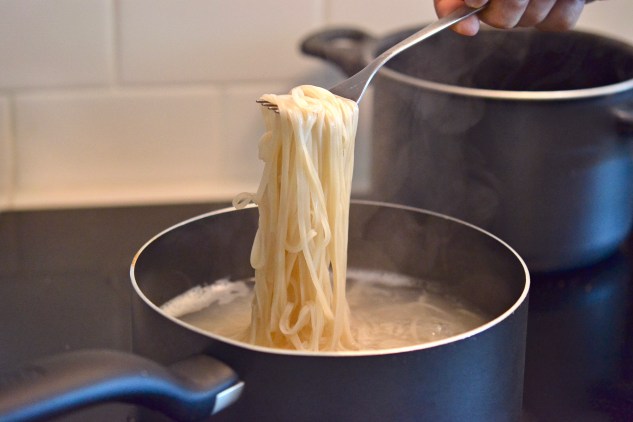 When Tom shared this story with me, I was inspired to recreate an image of those “stalactites” using our noodles…it was one of those things that sounded way cooler in my head. But the photo also illustrates perfectly al dente rice noodles, so I kept it. Moving on, many of us know Pad Kee Mao by it’s English title: Drunken Noodles. Khi mao is Thai for “drunkard”…yet the source of this appellation is a bit of a mystery. Some believe the first-ever recipe included rice wine, while others attribute the recipe to a drunken chef who concocted the dish with whatever was available in his home after a long night out. Regardless, it is now one of the cuisine’s most famous celebrities, and for good reason.
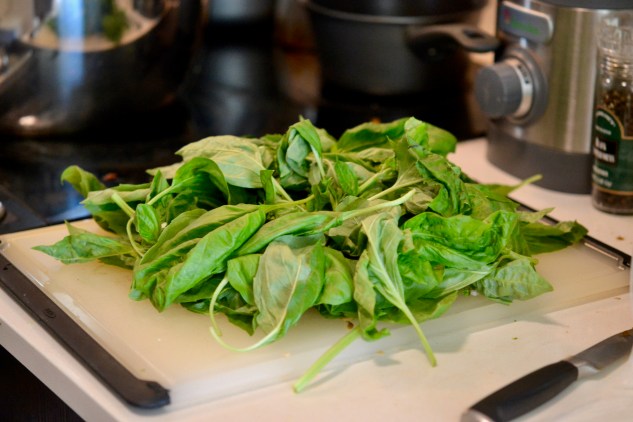 The dish is spicy, but can be moderated to your taste by de-seeding the peppers or omitting them entirely. It brings together a variety of rich flavors in a fairly quick preparation: oyster sauce, chili paste, soy sauce, fish sauce, and loads of veggies. Tom cooks the dish so that there is very little liquid left in the pan before serving – so there is some patience involved. But the end result is absolutely worth the wait. You can include one or a medley of proteins (we used both chicken and tofu in our recipe). One key ingredient, flavor-wise and aesthetically, is basil: you can use Thai or regular, just be sure to have a whole heap of it.
  When you eat something spicy, not only do you sweat – your heart rate also increases…much like my own whenever I think of playing the opening lines of Jacques Ibert’s
 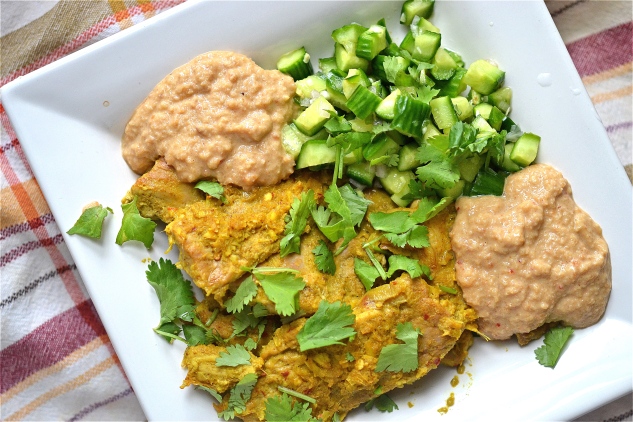 After a crazy 11 months of nonstop action and studying, my first year as an MBA student is officially done! It was an extraordinary year, and I’ve learned a great deal about both business and myself. I’ll be starting my internship at Colgate-Palmolive very soon, but in the meantime thought I could catch up on blogging about my culinary adventures in my little corner of Brooklyn. Tom and I have been cooking a great deal, but between term papers and B-school life I was hard pressed to find the energy for taking photos. We decided celebrate the end of finals by cooking Pork Tenderloin with Thai Spices and Peanut Sauce.
 Thanks to some Thai classics such as lemongrass, ginger and lime, the chicken could have stood on its own. The marinade is essentially a puree of aromatics that then translates to a beautiful coating in the final product. The original recipe calls for skewers (to make an actual “satay”) but I just thinly sliced the pork and arranged them on a baking tray – for ease of a quick weeknight meal. I imagine chicken could be an apt substitute, but I highly recommend the tenderloin.
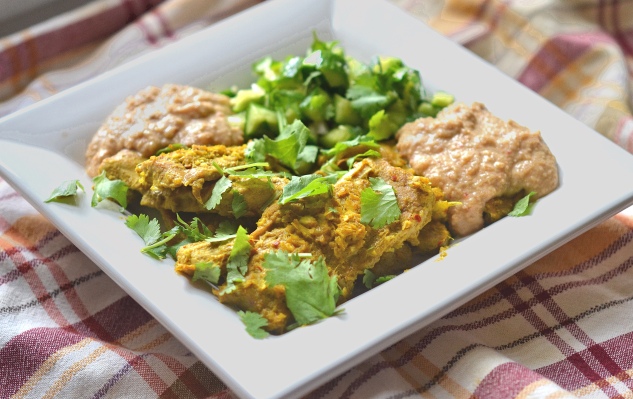
 Add in the rich peanut sauce and cucumber relish, and you’ve got yourself an incredible meal. The peanut sauce was perhaps my favorite. The coconut milk and sesame pair beautifully with the chicken, and the texture can be adjusted to taste (smooth like butter, or a rougher blend for added crunch). The salsa, while simple, was a phenomenal addition. I cut back the sugar in both the peanut sauce and the salsa, but you are welcome to add more (or less!) to taste. I made the sauce the night before, which definitely enhanced the flavors, and the cucumber salsa while the pork was cooking. Overall, this was a fantastic meal and one that we’ll be making again.
 In considering a pairing for this piece, I wanted something that recognized the richness of this dish while also celebrating my first year as an MBA student. This led me to arguably one of my favorite symphonies, Sibelius








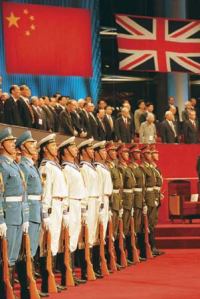 the internationally renowned musicians. One of the most notable graduates of that class was composer Tan Dun – his style is a unique fusion of Western, traditional Chinese, and experimental styles. In 1997, Tan Dun was commissioned to write a piece celebrating a truly historic moment for China: the return of Hong Kong to Chinese sovereignty from British rule. The work was premiered at the reunion ceremony (pictured right), titled “Heaven, Earth, Mankind – Symphony 1997”. The symphony is a large-scale work for solo cello, Bianzhong bells, a full orchestra, and children’s chorus. It is a celebration of the old, the present, and the future, paying tribute to the values of ancient China while looking forward to a new global community. The below videos are two excerpts from the work, titled “Jubilation,” and the “Song of Peace” (the videos are a little bizarre, but are the only two I could find on YouTube) – enjoy!




 THE CLASSICAL KITCHEN