An Indulgence of Laughter and Sugar

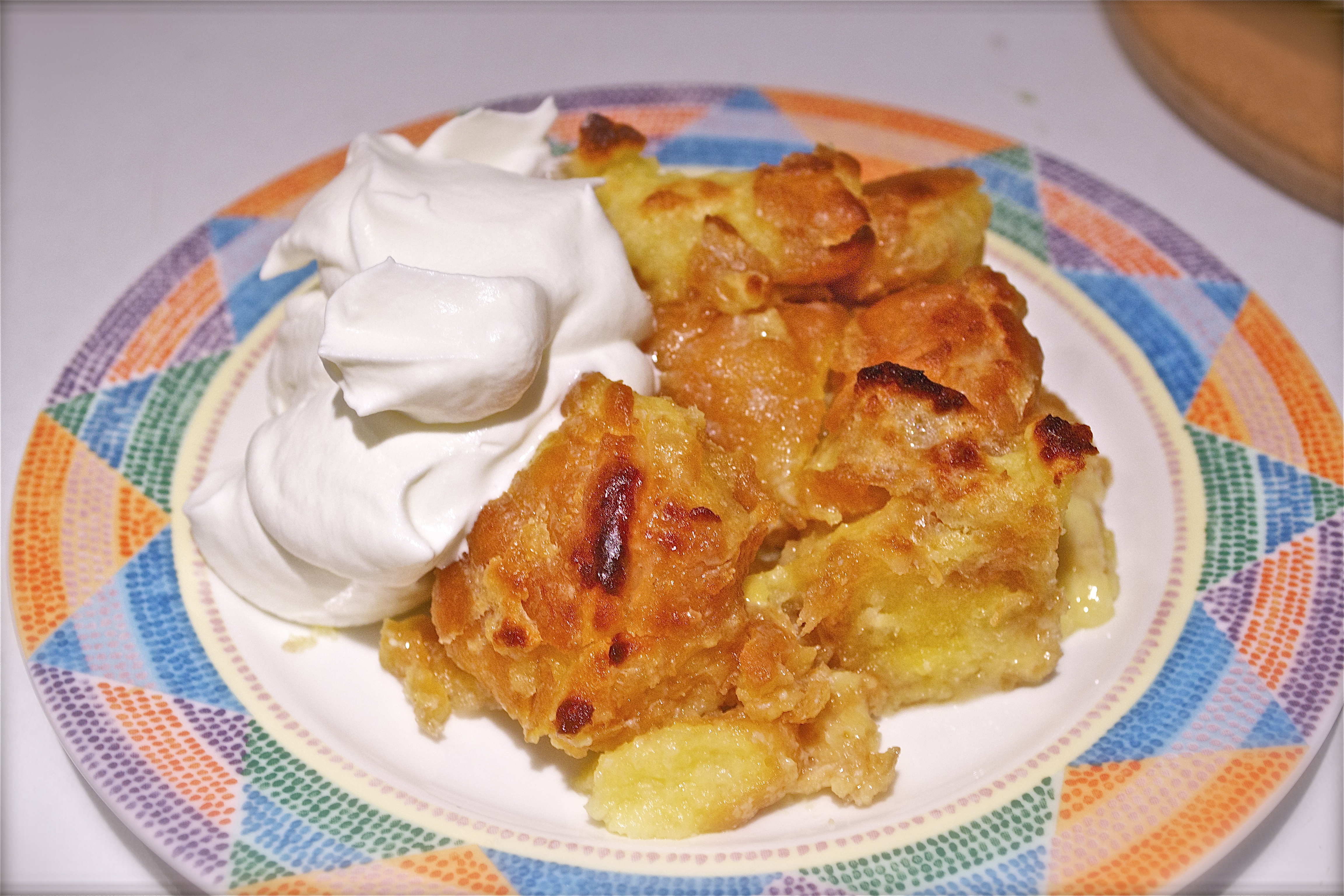
Donuts…baked in a bread pudding…forgive me arteries, for I have sinned. My sister talked me into this one, how I’m still not certain. I honestly thought she was joking…but then I had a bite, and wished I had never discovered this irresistible thing. I tried to push my plate away, but found myself going back for more against my own will. Sugary, golden goodness…save yourself while you can from this Krispy Kreme Bread Pudding.

There’s something truly American about the doughnut (or “donut” as we like to spell it here). Evocative of classic diners and incomplete without a cup of coffee, they are seen as a cultural staple of the American breakfast. Though believed to be of Dutch origin, Hanson Gregory (an American) takes the credit for the ring shape we’ve all come to know and love. It is said he disliked the doughy, uncooked center of the pastries, and started using a tin can to cut the holes. Despite their integral connection to our culture, doughnuts are enjoyed across the globe, from the German Berliner to the Moroccan Sfenji.
The custard for this dish is pretty dense, no lie – three types of cream and a dozen eggs – but crucial to turning this dessert from “just another pudding” to “you-can’t-put-the-fork-down” amazing! The trick is to toast the doughnut pieces completely, then allow them to sit at room temperature for a good 30 minutes or so before adding the custard. This helps give the pudding a sugary crunch. Regardless of the occasion, this dish will win over even the staunchest of critics (myself included): click HERE to see the recipe.
This dish is so rich and eccentric, I couldn’t help but laugh when Sarah first told me about it. That led me to consider a musical pairing with such a sense of humor: Britten’s A Simple Symphony, for string orchestra. With movements titled “Boisterous Bourrée,” “Playful Pizzicato,” “Sentimental Saraband,” and “Frolicsome Finale”, he’s made known the humorous intent. That being said, each movement does ring true to it’s name. The work opens on a lively note, giving us hints of  classical norms which are then offset with not-so-subtle antics. It then glides into a dazzling second movement simmering with a restrained energy, played entirely without bows. The third movement is the longest, taking a reflective turn into a more emotive realm. The fourth movement then  “snaps us back to reality,” giving a festive closure to this delightful “morsel” of a work that runs just under 20 minutes. The recording below is with the Orpheus Chamber Orchestra – enjoy!

http://www.youtube.com/watch?v=RH0OjuiEvwk&feature=relmfu

Sources Cited:
“Doughnut,” Wikipedia.com
“About the Piece: Simple Symphony,” LA Phil
An Inspired Trend

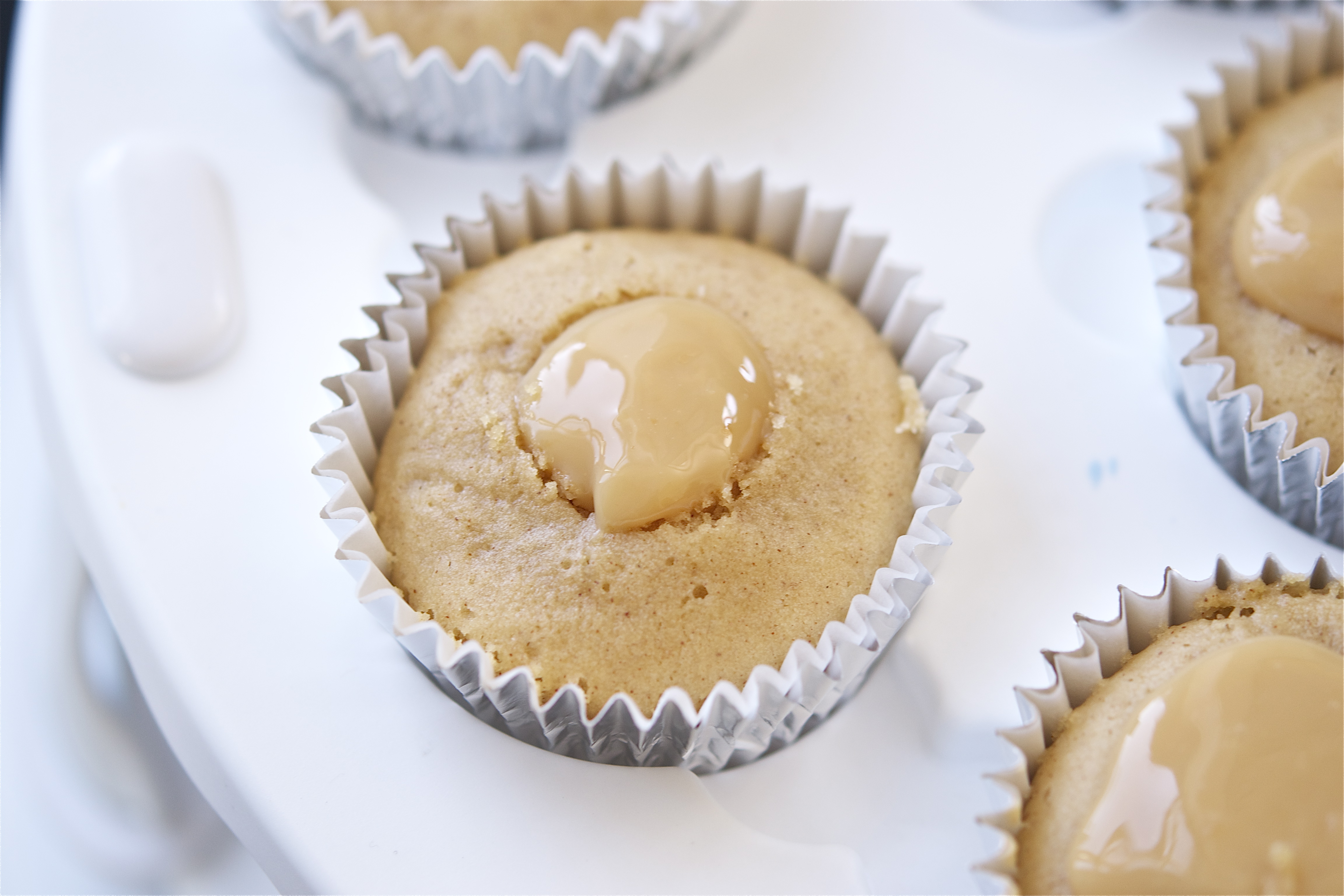
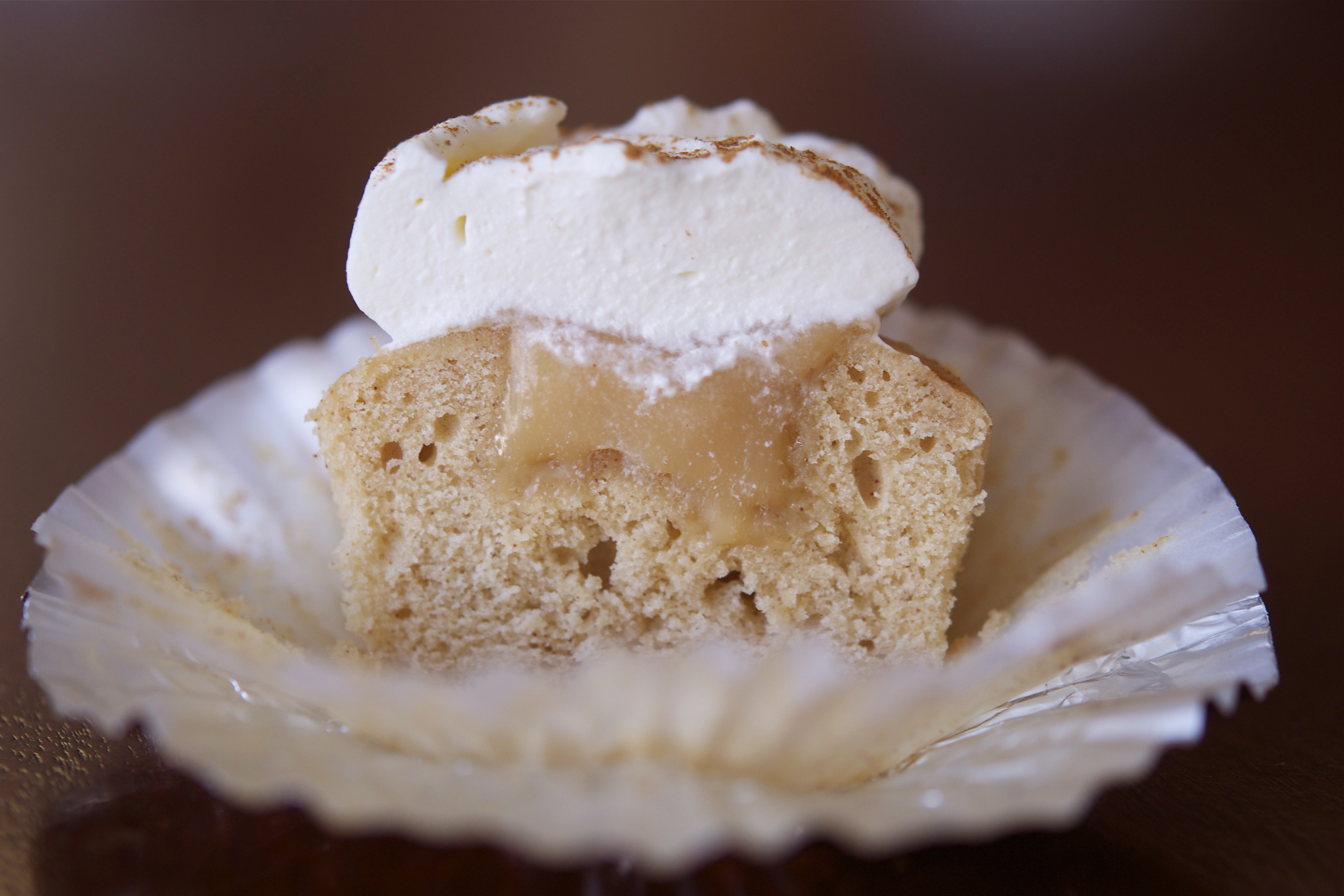
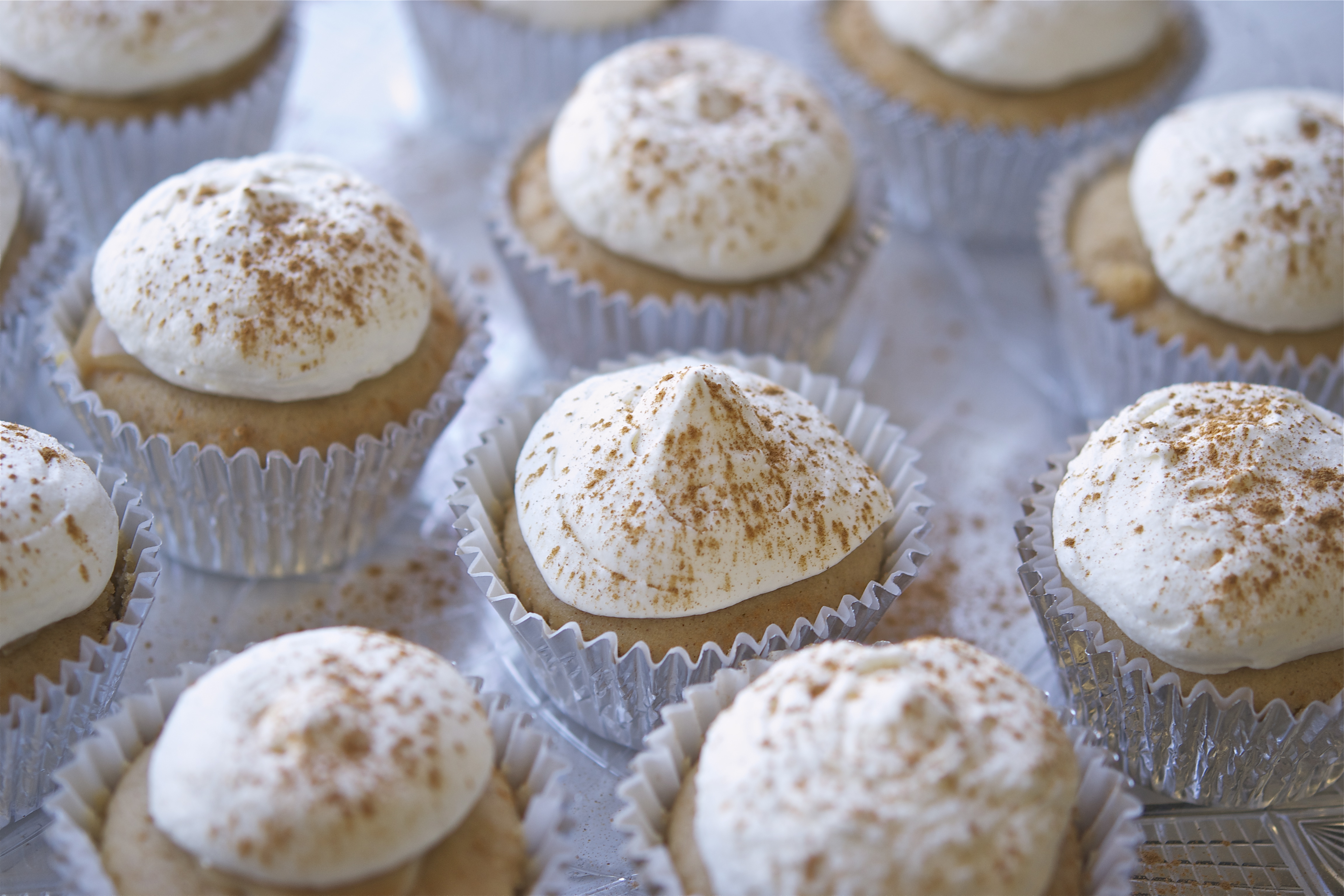
What makes the perfect cupcake? A creation that is both adorable and irresistibly delicious. Cupcakes have become the food industry’s new craze, taking the nation by storm with their portion-sized perfection. Countless bakeries have opened dedicated solely to creating these little cakes, taking their flavor and decorative potential to new heights. When I have to bake for a sizable crowd, I vie for cupcakes; a decision my coworkers wholly support. So when baking for the office’s monthly birthday party, I made a batch that I knew no one would resist: Churro Cupcakes with Dulce de Leche and Cinnamon Whipped Cream.
The term “cupcake” began to appear in publications during the early 19th century, referring to cakes baked in pottery cups and ceramic molds (muffin tins were not widely available). They were often treats enjoyed during tea parties and informal gatherings, with lavish decorations as more of an afterthought of luxury. Today, they have reached a celebrity status in the food world that is impossible to ignore. Sweet, savory, baked, fried – there is no limit to what these little cakes can achieve.
These cupcakes mimic the taste and character of churros – cinnamon fried-dough pastries popular in Spain and Latin America. Churros are often enjoyed with hot chocolate or café con leche, so I decided to fill these cakes with dulce de leche (a personal favorite). Since it was practically 70 degrees outside, I avoided a heavy frosting by topping each with a dollop of sweetened whipped cream. The result was  an extremely delicious, utterly adorable cupcake – click HERE to see my recipe for these perfect little treats.
I sought out a fellow musician’s advice for the pairing, and asked my colleague Tom Vignieri – his immediate response: “Well, they weren’t heavy and romantic, but also not too light – I’d say they remind me of Schubert.” I couldn’t have agreed more. Ernst Krenek, a twentieth-century composer, gives the perfect description on Schubert: “a thinking artist with a keen appetite for experimentation.” To say Schubert was a prolific composer is almost an understatement: he composed over 600 songs, 9 symphonies (one unfinished), and  a number of operas, sacred works, chamber music, and solo piano works. Such an outpour of music for a man who died at the young age of 31 truly speaks to his remarkable artistry. What better pairing for a dessert that embraces truly inspired styles! I chose the song “Heidenroslein,” or “Rose on the Heath.” The lyrics are from Goethe’s poem of the same name, which tells the tale of a young man whose love has been rejected. Its light character and technical finesse perfectly complement these cupcakes – the recording below is with lyric soprana Barbara Bonney. Enjoy!

http://www.youtube.com/watch?v=HFPpoU9ecZo

Sources Cited:
“Cupcake,” Wikipedia.com
“Franz Schubert,” Wikipedia.com

Easter’s Cutest Traditions

When you travel as much as I do, you tend to lose track of the various holidays. Fortunately, we’re often bombarded with constant reminders whenever making the weekly CVS/supermarket run (whose shelves are lined with seasonal frippery months in advance). When Easter rolled around, I had a different reminder: my roommate Jenn had decided to give her Artist Diploma recital on Good Friday. She asked me to bring some form of dessert, and it was all too easy to give in to Easter’s colorful traditions with these Mint-Chocolate Birds’ Nests.
I never imagined I would be placing a package of crunchy chow mein noodles into the same camera shot as a bag of Cadbury chocolate eggs…yet here they were – two food products whose chance pairing make an adorable, crunchy delight. The only time I’d ever used chow mein noodles had been as topping for a chicken stir-fry…a far fetch from chocolate. Though labeled as “noodles”, they are actually cracker-like in both taste and consistency. This otherwise bland flavor makes them an easy complement for a variety of dishes.
These are extremely simple to make, and can be assembled in a matter of minutes. The first time I made them was with butterscotch and peanut butter. Looking for a new flavor profile, I added a dash of peppermint extract…and oh my God they were good! The perfect combination of crunch and sweet, these are a quick and easy way to entertain and delight your friends – click HERE to see how to make these adorable treats.
Considering I made these for my roommate’s recital (which was a phenomenal concert!) it was only fitting that the musical pairing be a piece she performed. Her program began with two Good Friday arias, and I chose the first of these for my pairing: “Endlich wird mein Joch” from Cantata BWV 56.  Bach composed this cantata in October of 1726 during his time as Cantor at the St. Thomas Church in Leipzig. “Endlich” is one of the more uplifting arias from this otherwise somber cantata, celebrating the “end of suffering”. The translation is as follows:

Finally, finally my yoke
Must again be lifted from me.
Then I shall battle in the Lord’s power,
Then I shall be like an eagle,
Then I shall ascend from this earth,
And soar inexhaustible.
Oh, may it happen yet today!

The joyous tone of the piece perfectly complements these delicious treats, with the lyric “like an eagle” serving as the obligatory literal piece 🙂 She performed the piece with my very dear friend Tim Wilfong singing the baritone line (who did a fabulous job!) The recording below is with oboist Marc Lifschey (one of THE American oboists, according to Jenn) and baritone Mack Harrell. Enjoy!

http://www.youtube.com/watch?v=C_589br3HP8

Sources Cited:
“Cantata #56 ‘Ich will den Kreuzstab gerne tragen'”, Bellingham Festival of Music
“Helmut Rilling interprets Bach Cantatas,” www.drmm.net

Short and Sweet

There is no lack of desserts when I host an event – tell me 20 people will show, and I’ll make enough for 50. My Oscars Party was no exception. It also gave my creative edge a challenge – as you read in my last post, each dish was paired with a nominated film. Some of the  pairings were a bit of a stretch (cocktail wieners with Hugo?), though it was fun to do nonetheless! These were definitely two of the stars from the evening’s spread (as were the films with which they were paired): Mini Chocolate Pies and Black & White Cookies.
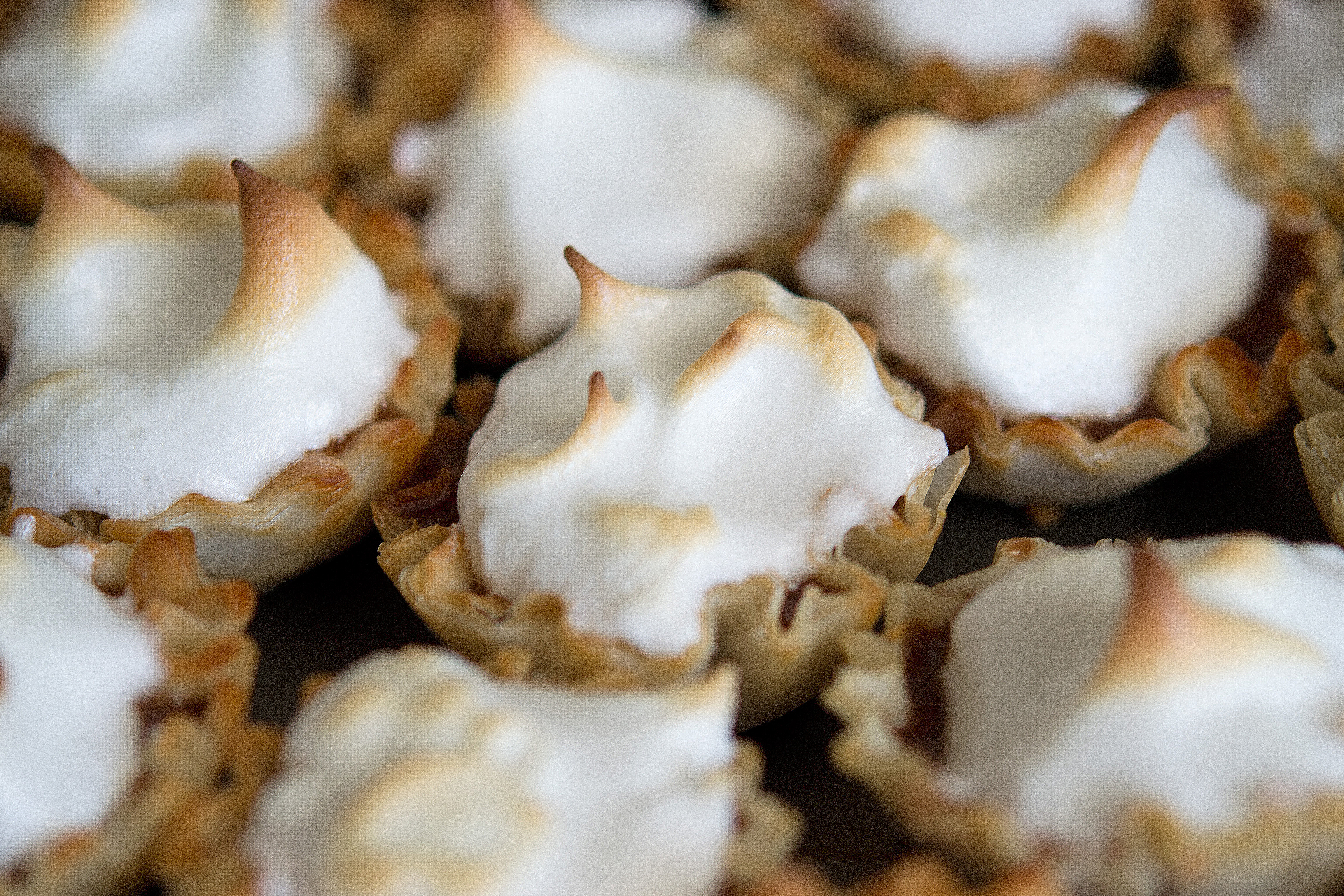
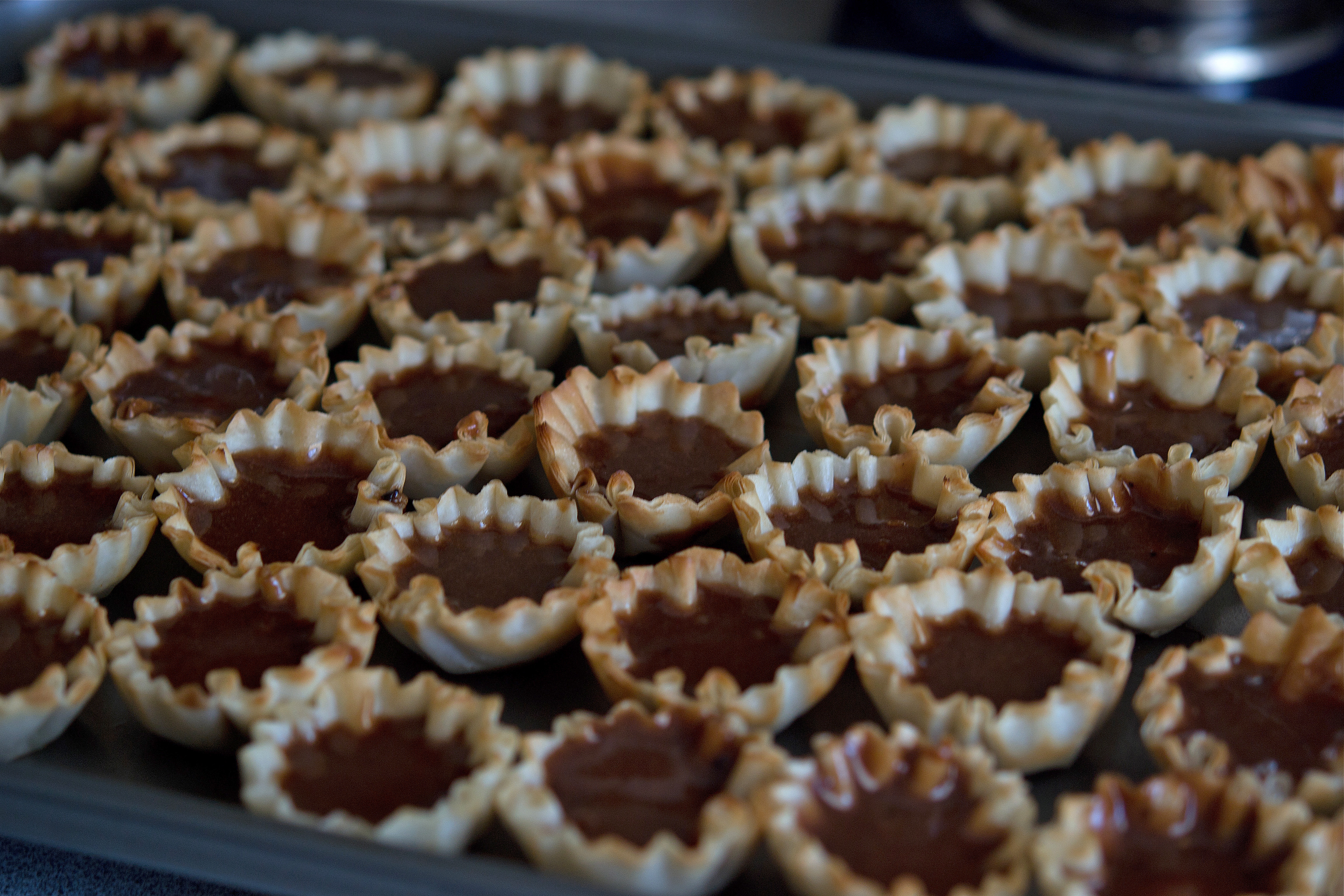
For those of you who read the book/saw the movie, it’s no mystery that I paired these Mini Chocolate Pies with The Help (definitely worth seeing if only to understand why this is the case, though it is a great movie). They’re quite simple to make – I purchased several packages of phyllo mini tarts, made a simple chocolate pudding to fill them with and topped each with a dollop of meringue. Your guests will think you put in WAY more effort. Click HERE to see how to make these adorable bite-sized treats.
Black & White cookies are classic, and I had always been curious to give them a try. They were paired with The Artist (a literal pairing, granted) which was hands downs my FAVORITE movie of the year – I practically leapt from my seat every time it won an Oscar. These are more cake-like than your average cookies (thanks to the use of cake flour), and are topped with a thick, glossy icing that takes seconds to make. They were a huge hit at the party, and I imagine they’ll be adored at your next event as well – click HERE to see how to make these sweet classics.
I wanted the musical pairing for these two desserts to acknowledge their “bite-sized” enjoyability – both also compelled my more creative edge. That led me to consider fulfilling works that can also be defined as “short and sweet”; musical novellas if you will. With this in mind what better pairing than Schumann’s Fantasiestücke, Op. 12! Inspired by a collection of novellas by E.T.A Hoffman, the eight pieces within the work capture different the moods and thoughts of Schumann’s dual identities, known as the characters “Florestan” and “Eusebius.” Seeing how both of these desserts brought out my more creative edge, I felt the dreamer in Eusebius would be the best fit and thus chose the first of the eight pieces: “Des Abends” in D-flat major. It’s gentle melody lulls the listener into an ephemeral state of serenity; refuge from the noise and chaos of reality (a similar experience to be had after trying one of the delicious treats in this post). Enjoy! 

http://www.youtube.com/watch?v=VNcavAwICR8

Sources Cited:
“Fantasiestücke,” Wikipedia.com

A Star-Worthy Spread

The Academy Awards: an evening of glamor where the “who’s who” of Hollywood gather to honor the year’s most celebrated films. For a hostess, it is the perfect excuse to throw a party – but this couldn’t be just any part, it had to be in true Hollywood form: red carpet entrance, formal attire, and of course classy hors d’oeuvres.  For this post, I though I would share three of the dishes featured in the extensive spread: Coconut-Crusted Chicken Tenders, “Eggstremely Good” Deviled Eggs, and Fiery Jalapeño-Bacon Bites.
It’s worth mentioning that I created appetizers to pair with each of the various film nominees. These chicken tenders, for example, were grouped with The Descendants: a film starring George Clooney that takes place in Hawaii. Though simple in concept, the flavor of these was extraordinary (and a wonderful twist on the standard breaded variety). They can be served with any dipping sauce, though sweet chili sauce works quite beautifully – click HERE to see how to make these tasty chicken tenders! 
I think deviled eggs have received a bad rep as the appetizers found at any and every gathering, devoid of flavor and character. In reality, they provide the perfect canvas for creativity: wasabi, curry, even smoked salmon are all flavors to try! On top of that, they are great for large parties (budget-friendly!) and such an elegant addition to any affair. I paired these with the film Extremely Loud and Incredibly Close (as their title suggests).
While deviled eggs are a classic, a solid foundation is vital to their success which, of course, starts with boiling. Too often are we plagued by hard-boiled eggs with gray, chalky yolks. Yet there is a trick to guarantee a perfectly cooked center every time – removing the eggs from the heat once the water reaches a boil. I was apprehensive of this method at first glance, though it is utterly foolproof. Click HERE to see the recipe for these “eggstremely good” bites!
These aren’t just spicy…they are downright addictive. Who would have thought the simple trio of jalapeño, cream cheese and bacon could have so much moxie? Warning: you will NOT want to stop eating these once you’ve started…a fate many of my guests fell victim to. I paired these with the film Girl with a Dragon Tattoo given their dangerous, “fiery” appeal. I guarantee these WILL be the star at your next event – click HERE to see how to make these addictive bites.
Movies are an addictive diversion: the excitement, the passion, the humor – it compels us to buy tickets or press play time and time again. With that in mind, I wanted a piece that truly captured the energy of the “movie magic”; a piece that pulls you in, and has a palpable, compelling story. Funnily enough, I was only recently introduced to this work, yet it is the ideal match: Poulenc’s Sonata for Violin and Piano. Composed during the German occupation of Paris, the piece is replete with passionate energy. It is dedicated to Federico García Lorca – a Spanish poet assassinated during the Spanish Civil War. The first and third movements are driven by a dark, potent energy that bring listeners to the edge of their seats, while the second evokes a deeper emotion for which we have no words (though Lorca does, with Poulenc attaching the following quote by the poet to said movement: “The guitar makes dreams weep”). The following recording is with violinist Josef Suk – enjoy!

http://www.youtube.com/watch?v=o41e7qcSwSw

Sources Cited:
Program Notes – WPAS: Itzhak Perlman, violin and Rohan DeSilva, piano,” Strathmore.org

When Decadence meets Elegance

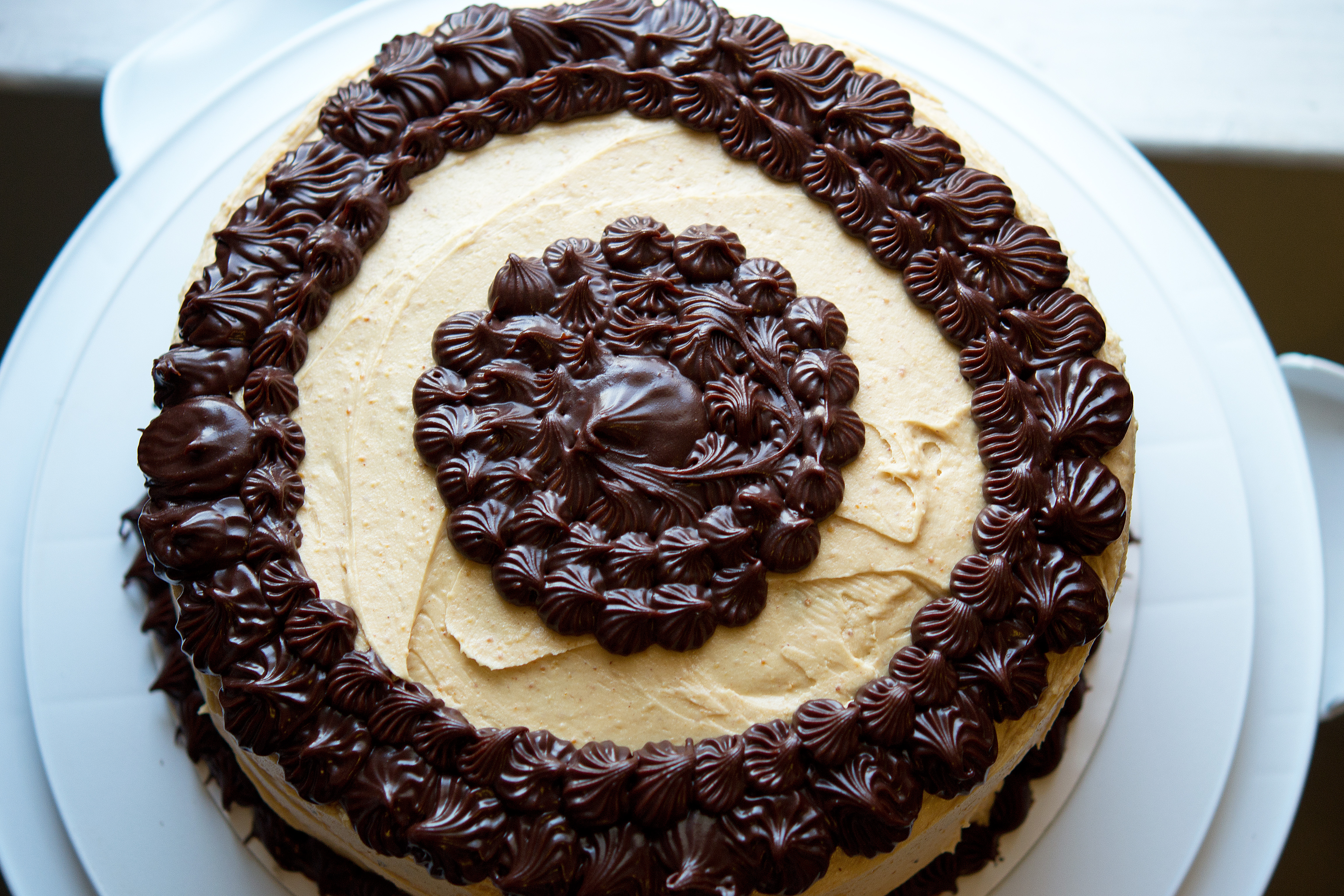
There are very few who will say no to a peanut butter/chocolate combination (I’ve stressed the draw of this “super couple” a number of times on this site). That being said, I can’t quite say there’s been a cake as dangerously addictive as this one – the perfect balance of a rich, dark chocolate cake with a light, heavenly peanut butter frosting. I had volunteered (again) to be the baker for our office’s January birthdays celebration – it’s a busy time of year, so I wanted to bring in an extra-special treat. This Dark Chocolate Cake with Peanut Butter Frosting and Chocolate-Peanut Butter Ganache DEFINITELY was just that.
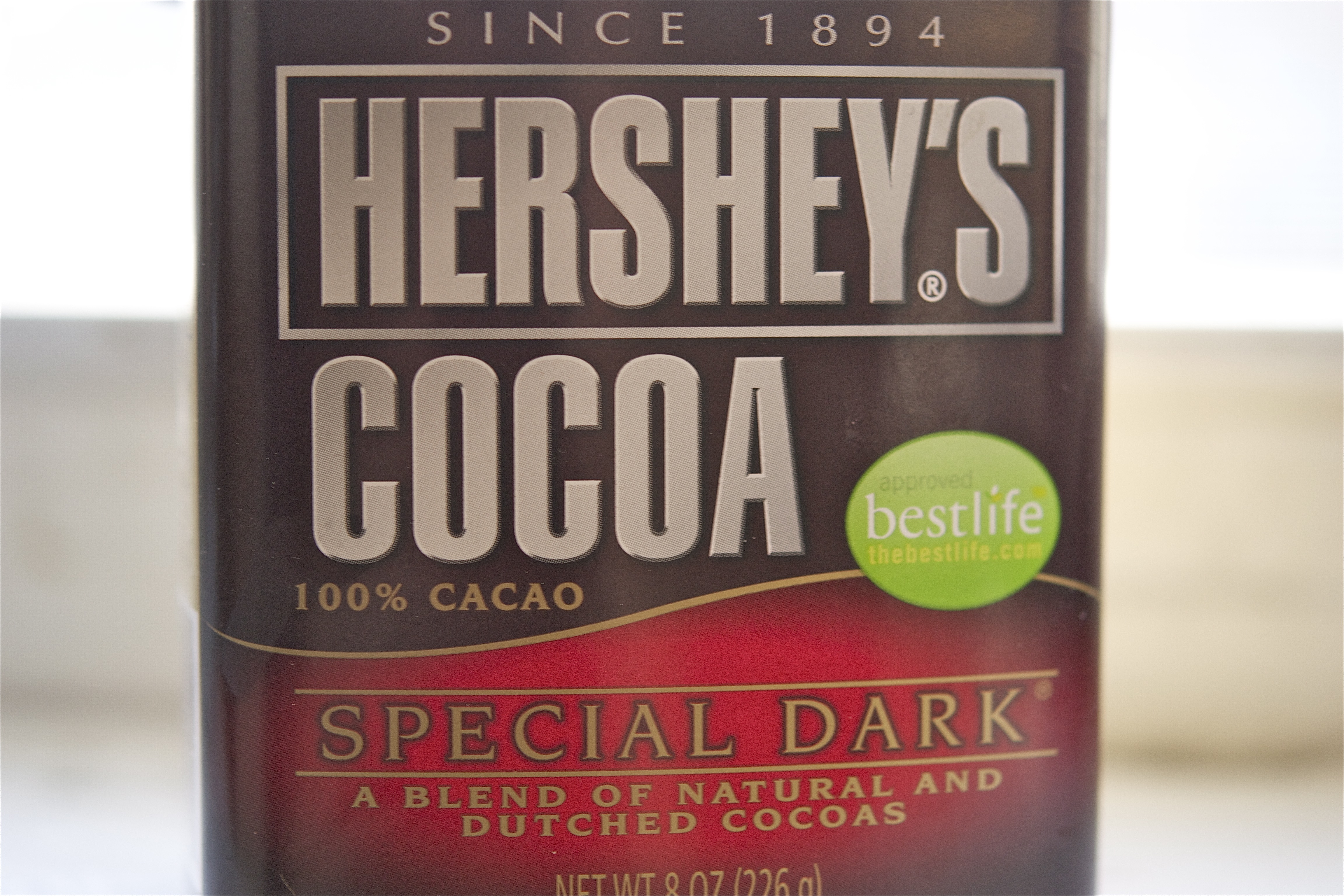
There is dark chocolate, then there is this cake – I decided to give Hershey’s Special Dark cocoa a shot for this cake. The result was a cake that was nearly black. It was a rich cake, no doubt, but my fear that the chocolate flavor would be WAY too intense was unfounded. I’ve discovered that chocolate cakes made with boiling water = amazing. Though it makes the batter appear more like chocolate soup, its function is helping dissolve the cocoa butter fats into the batter, resulting in a smooth, rich finish. It also means that the cakes will be that much more difficult to remove from your pans, so be prepared with parchment (or grease and flour the pan).
The frosting was the winner of this cake – despite having nearly 3 cups of peanut butter, the result was a “light, airy” frosting with just the right amount of sweet and salty. In fact, it might just be one of the best frostings I’ve made yet. I had originally thought about decorating it with Reese’s Peanut Butter Cups, but chose to make my own chocolate-peanut butter ganache – people were practically licking this stuff off their plates (it was also a gorgeous alternative). All-in-all, this was a fabulous cake that had all the right elements. I highly recommend making this…asap – click HERE to see the recipe for this showstopping dessert.
To complement the “darkness” of this cake, I thought a piece that has a bit of a dark side would be appropriate. At the same time, it needed to be a work with a certain elegance to mimic the balance of this beautiful cake. This led me to the Czech composer ‪Leoš Janáček‬, whose music is known for both its volatilities and subtleties. The piece I felt would be perfect for this pairing is his String Quartet No. 1. Composed when ‪Janáček‬ was 69, the piece is based on Tolstoy’s novella, “The Kreuzter Sonata” – a dramatic tale of marital distrust, fury and ultimate despair. The piece itself is highly evocative, filled with powerful harmonies that are countered by delicate refrains; a beautiful balance. The recording below is with the Alban Berg Quartet – enjoy!

http://www.youtube.com/watch?v=sc-DZWoU52E

Sources Cited:
“Janáček, String Quartet No. 1, ‘Kreutzer Sonata,’” Earsense Blog

An Unexpected, Delicious Medley

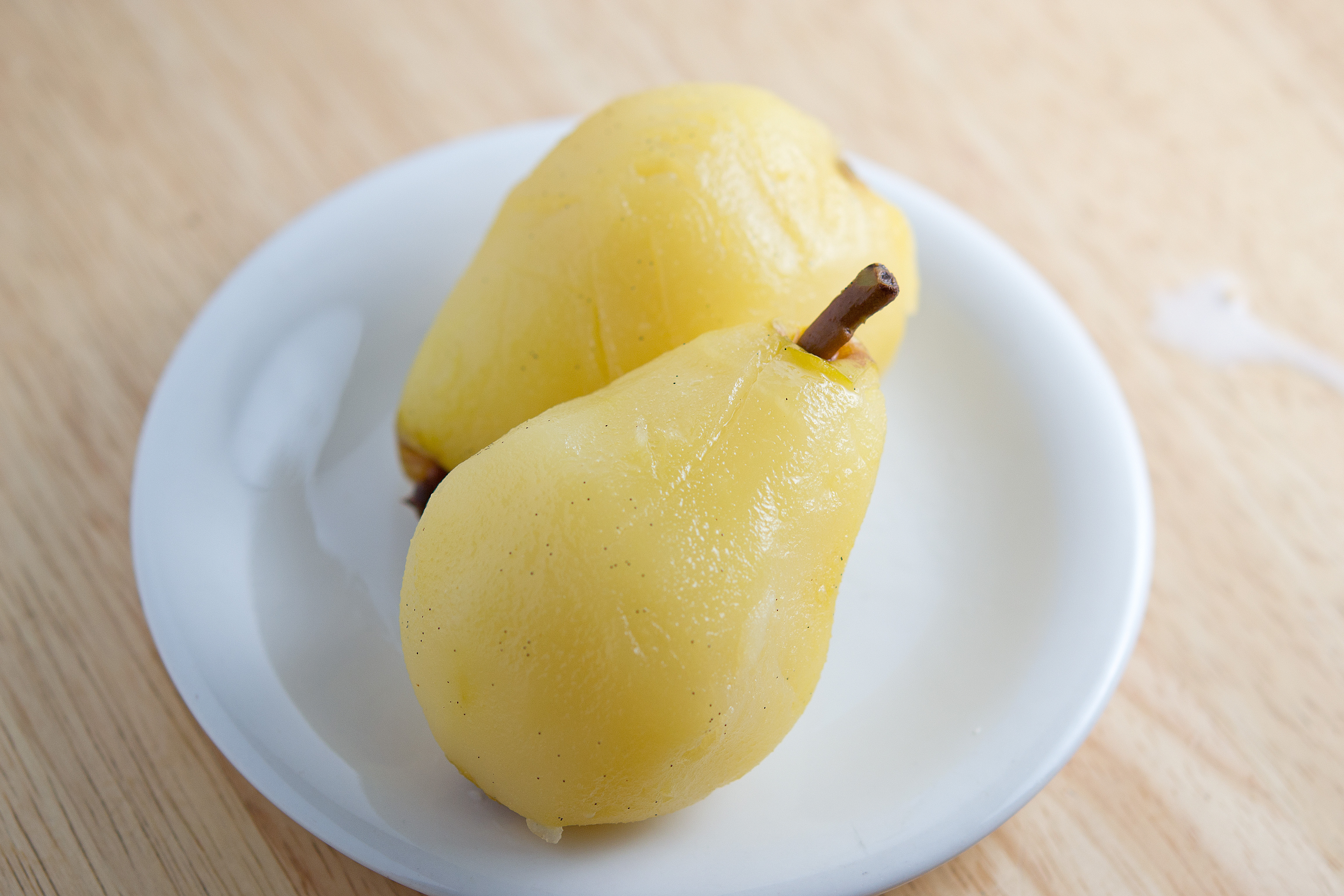
Dessert tends to be the dish that my friends have come to expect in my home, an expectation I undoubtedly fostered given my endless creation of sweet treats. From cakes to cremes, I seem to always being looking for the next-best-challenge on my dinner parties’ grand finales (it should be noted that I have never set foot in the dessert restaurant Finale given my personal standards, though I’m sure they’re fabulous). For this meal, I just happened to have a GIANT bottle of Moscato that my friend TJ had brought over. Being more of a Chardonnay gal, this was bound to become a dusty relic in my pantry, so I had to find a use for it. Best way to get rid of an excess amount of liquid? Poach or Braise. Since this was dessert, the former option was the winner, and I went with Poached Pears in Honey and Cinnamon Syrup.
Using Moscato in a dessert is quite appropriate given its characterization as a “sweet dessert wine.” It is from the family of vines Muscat, allegedly one of the oldest grape species in the world that is also cultivated for table grapes and raisins. The “dessert” varietals are either harvested once fully ripe (even overripe) or fortified with a distilled beverage (such as brandy). These two methods guarantee that the resulting wine will possess the fullest sweetness of the grape. As I mentioned above, I’m drawn to whites with an oaken or buttery taste, so finding a way to use this bottle was a huge relief.
These poached pears were undeniably gorgeous, beautifully shaped and covered with flecks of vanilla bean.  It also creates a beautiful reduced sauce that would have been a shame to waste it…so I baked a cake (surprised?) The cake was Dorie Greenspan’s favorite butter cake, which you can find the recipe for HERE (I’ll do a more in-depth post on this cake at some point – it is AMAZING!) The cake was the perfect sponge, making this already-elegant dessert even more ridiculous. I served them with a few scoops of French Vanilla ice cream – my friends were practically licking the bowl clean. Whether you’re looking to use an unwanted bottle of Moscato or can’t stand the thought of NOT making this dessert in the next 24 hours, you can find the recipe HERE.
Poaching pears and moscato is not a combination many would consider, yet the end result is stunning. That led me to a piece with instrumentation that, though unusual, has a beautiful result: Charles Ives’ The Unanswered Question. There are three layers to this piece, each represented by a separate set of instruments: a solo trumpet consistently asking “The Perennial Question,” a woodwind quartet on a quest for “The Invisible Answer,” and an offstage string quartet who represent “the Silences of the Druids—who Know, See and Hear Nothing.” The intermittent trumpet calls are like “flecks” of vanilla throughout, with the winds bringing a marked presence to an otherwise still environment (much like the moscato to the pears). The recording below is with Leonard Bernstein and the New York Philharmonic – enjoy!

http://www.youtube.com/watch?v=trkFgIMC-Ks

Sources Cited:
“Muscat (grape),” Wikipedia.com
“A Question is Better than an Answer,” CharlesIves.org

Developing Depth with Time

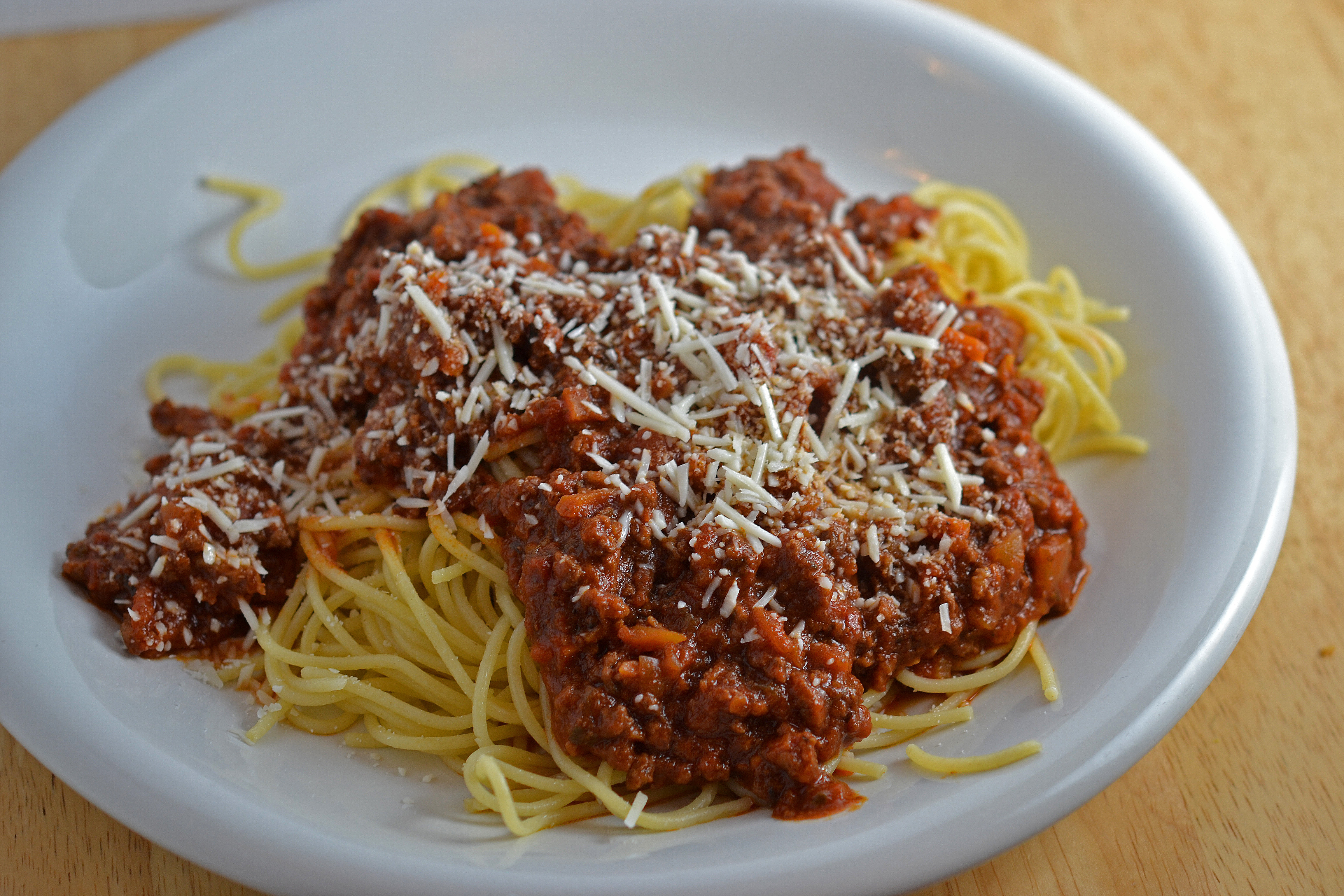
Boston and I have a love-hate relationship. There are times when I can’t get enough of this place, wanting to breathe in every ounce of its thriving energy and warmth. Then there are times like this weekend, when the temperature drops to 8 degrees F without warning.  Needless to say, I am not built for this. My beloved Le Creuset becomes a regular in my kitchen during these unbearable conditions. I had a group of friends over the other night as a belated birthday dinner for my friend Sev (featured previously on this blog for his renowned fondue), and it was yet another bone-chilling evening. With my Le Creuset fired up and ready, I made a hearty batch of Ragù alla Bolognese that fought off the chilly weather quite beautifully.
Whether using a dutch oven or a slow cooker, the key to a good bolognese is low and slow. Like a stew, the flavor deepens beautifully the longer it simmers. Authentic bolognese calls for chunks of meat, so the longer it stews the more tender the meat can become. This bolognese, on the other hand, calls for ground chuck, giving you the option to cook it as short as 30 minutes or as long as 4 hours. Thanks to the Pioneer Woman, this recipe had gone viral in the blogosphere. I made a few changes (like the addition of hot sausage) and wanted to give it an authentic edge by cooking it for hours. I also served it over spaghetti (what I had), though the traditional pairing is tagliatelle. The result was fabulous – click HERE to see how to make this beautiful, soul-warming sauce.
I thought a lighter side would be appropriate for this dish, yet wasn’t keen on the “salad” idea. With that, I made Lemon-Garlic Broccoli that, to my surprise, almost outshone the main course! It’s quite simple, with no more than a handle of pantry staples and ready to go in under 30 minutes. Trust me, TRY this side dish – you won’t regret it. Click HERE to see the recipe.
For the pairing, I wanted to emphasize the developed flavor this dish receives from cooking for a long period of time. That depth of flavor led me to Chopin’s Étude Op. 25, No. 12 “The  Ocean”. The entire work is structured on falling and rising arpeggios, hence the oceanic appellation, with modulations developing the theme throughout. The work climaxes in C Major, and ends in a massive arpeggio covering five octaves . The richness of these piece is perfect for this bolognese sauce. The recording below is with Vladimir Horowitz – enjoy!

http://www.youtube.com/watch?v=3o6v_myVAhQ

Sources Cited:
“Étude Op. 25, No. 12 (Chopin)” Wikipedia.com 

A Delicious Parting Gift

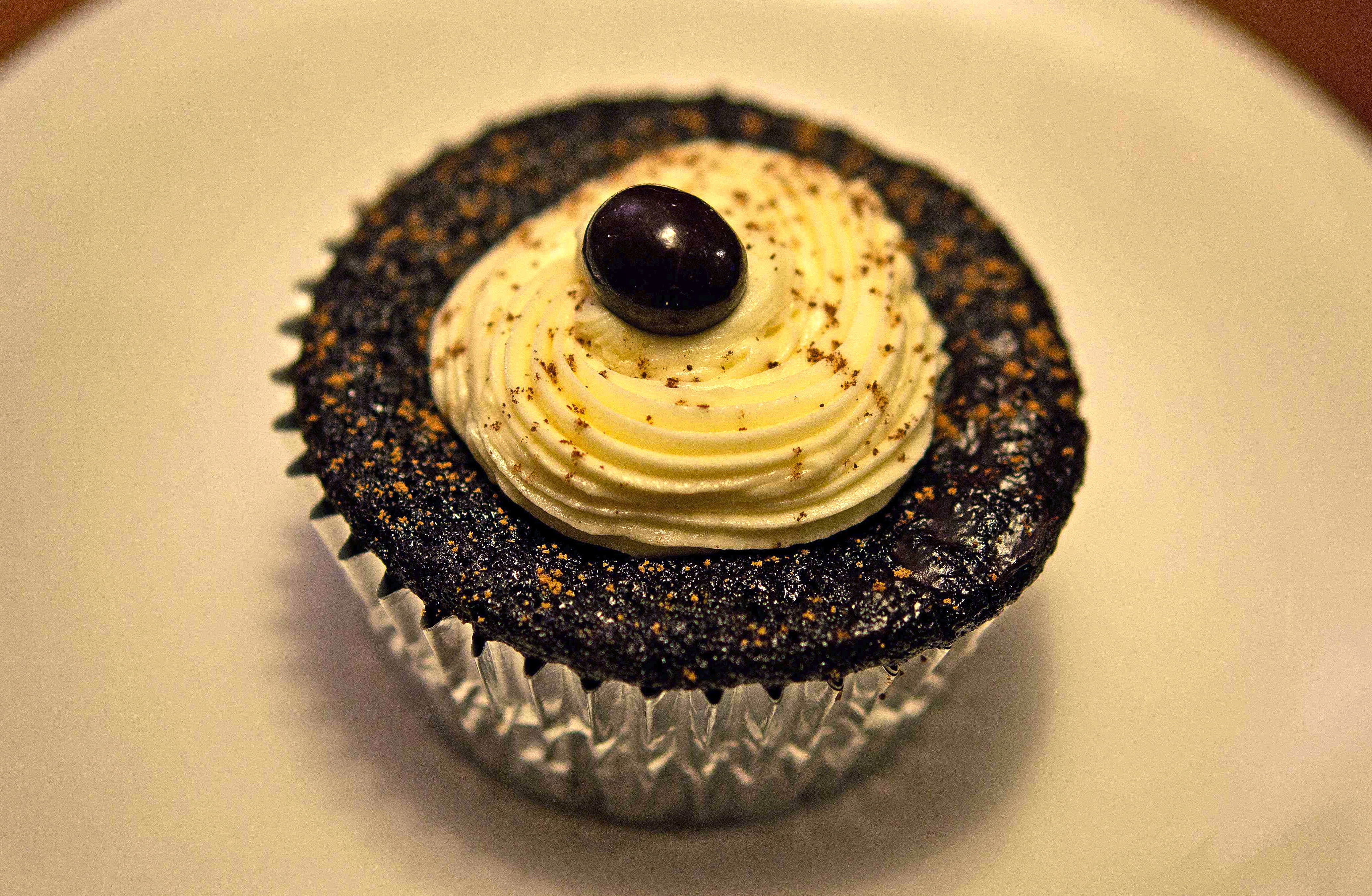
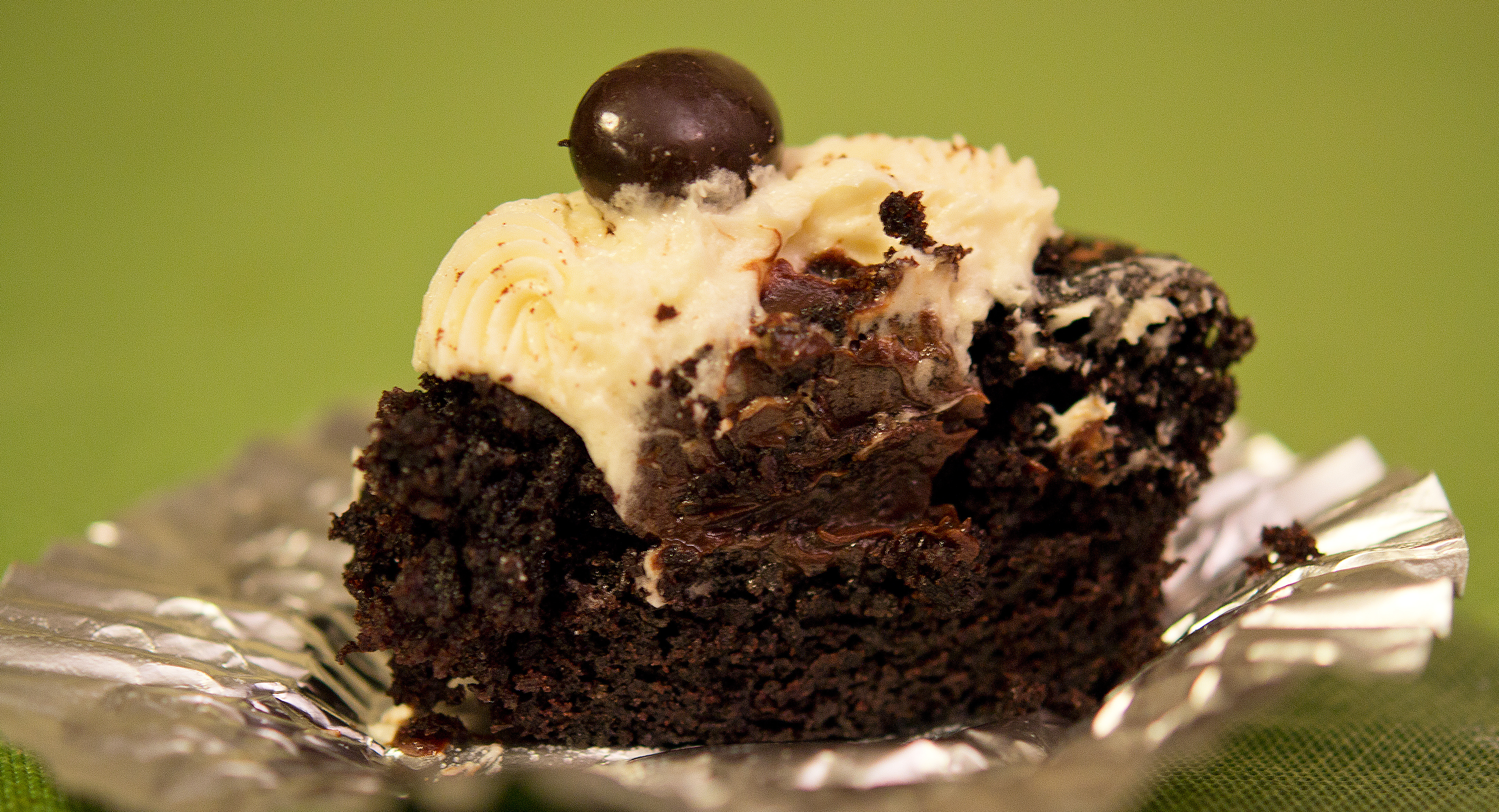
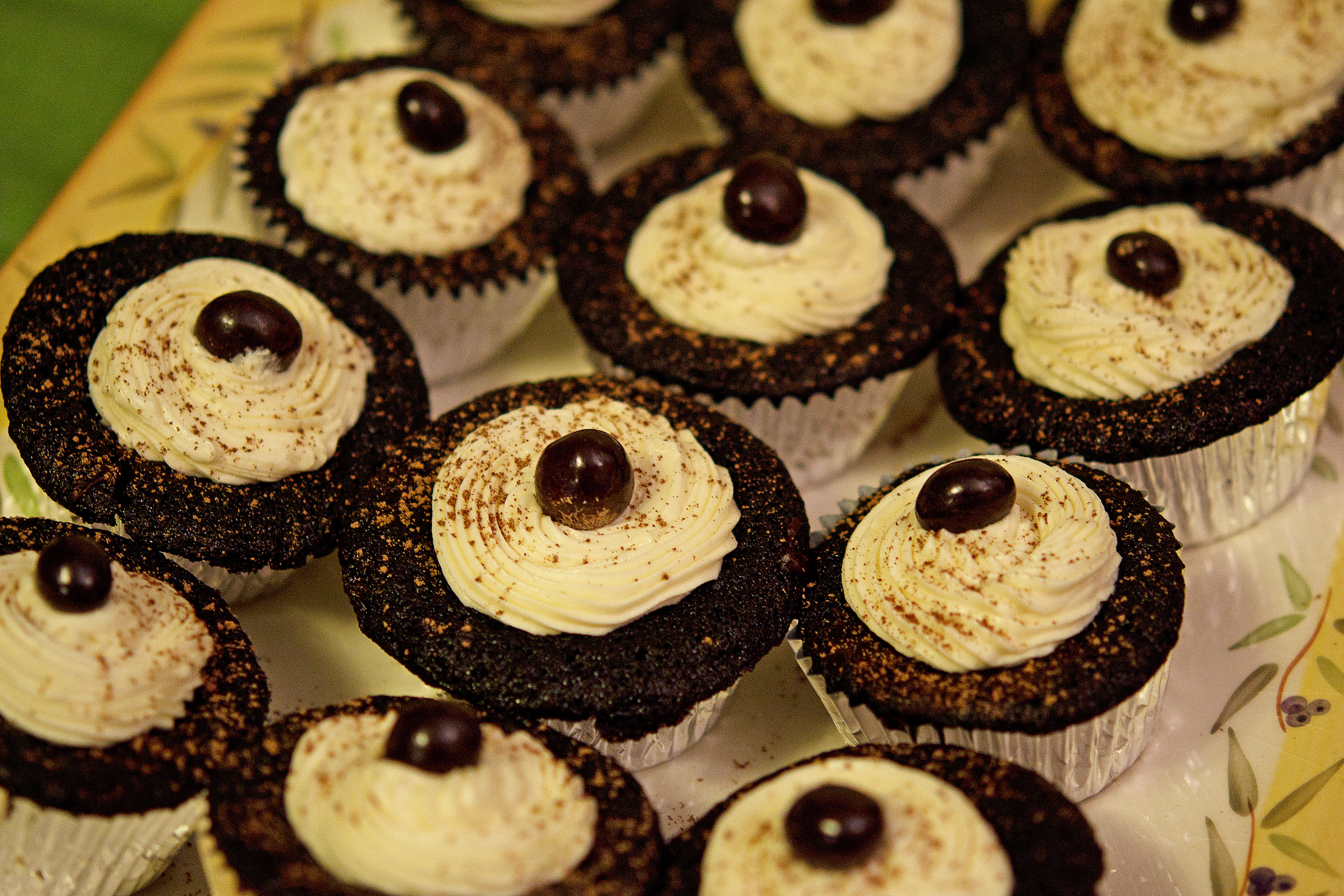
As young adults, it’s inevitable that our friends have yet to find that one permanent place to settle down. It’s never easy to say goodbye when a friend decides to move on; such is the case with my very dear friend Brian McCarthy – he’ll be leaving Boston soon to join the army band, a position he will no doubt excel with. I’ve been through a lot with Brian, and he is someone I will miss a lot. I hosted a small going-away party for him earlier this week, inviting a handful of close friends to wish him luck. Knowing my Brian, I made sure there was a wealth of cheeses, a sizable line-up of party games, and a worthy drink for an Irishman: Jameson. This latter spirit also inspired the dessert for the evening, which undoubtedly takes the “cake” in my dessert repertoire: Chocolate Stout Cupcakes with a Whiskey Ganache and Bailey’s Buttercream Frosting.
Brian stands by his Irish heritage, which compelled me to avoid the original title for these cupcakes: Irish Car Bomb Cupcakes. I have nothing against bakers who do label these cupcakes as such, it’s more the dark history behind the name itself. A drink consisting of Guinness, Irish whiskey and Bailey’s, this infamous shot garners mixed reactions, from total indifference to unmitigated outrage. The name is an allusion to the violent exploits used by the IRA against Northern Ireland during The Troubles. In other words, this shot is far from serving as a tribute to the Irish.
Name aside, these cupcakes are simply amazing! Stout and chocolate are a match made in heaven – the dark, rich brew complements the silky batter perfectly. As you saw above, I went with a Harpoon Chocolate Stout (what I had) rather than the Guinness called for – it was an unintentional stroke of genius! Filled with a spicy ganache (Jameson, no less) and topped with a buttery Bailey’s frosting, these cupcakes can’t go wrong. To push the cuteness factor up a notch (a must with cupcakes), I topped each with a chocolate-covered espresso bean – click HERE to see how to make these deliciously rich cupcakes!
If there is one thing I know about Brian, he plays an amazing Liszt – with that in mind, I chose a work I have heard Brian perform on multiple occasions (yet never grow weary of) – Liszt’s transcription of Wagner’s “Liebestod” from Tristan und Isolde. Liszt was both a benefactor to and supporter of Wagner’s music. The opera Tristan und Isolde is based on the medieval legend of two star-crossed lovers, and has become on of the more prominent works in orchestral repertoire. The “Liebestod” concludes the third and final act of the opera – it is sung by Isolde as she mourns we lover’s death, shortly before her own tragic end. Known for his virtuosic genius on the piano, Liszt had a gift for adapting the music of large scale works to the keyboard. He stays true to the voice of Wagner, effectively adapting the extensive orchestration to the piano while maintaining the rich, emotive qualities of the overall work. Similarly, each bite of these cupcakes is extremely rich and decadent. I want to dedicate this post to Brian – you will be missed dearly by all of us here in Boston, and we hope you know that you always have a home with us whenever you need it 🙂 Wishing you all the best!

http://www.youtube.com/watch?v=_UQrOIa7coc

Sources Cited:
“Franz Liszt,” Wikipedia.com
“Tristan und Isolde,” Wikipedia.com