Finding a Sweeter Sunrise

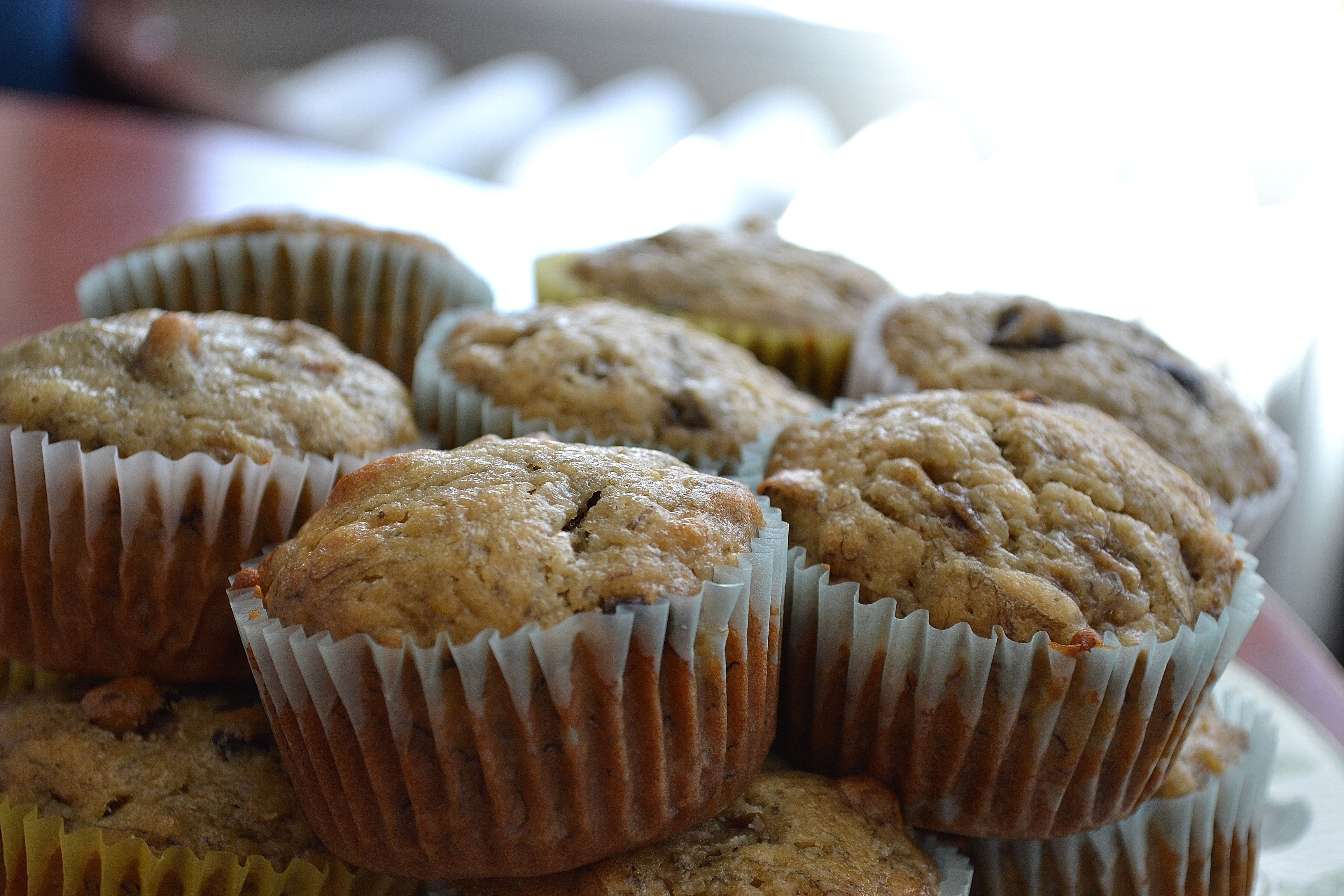
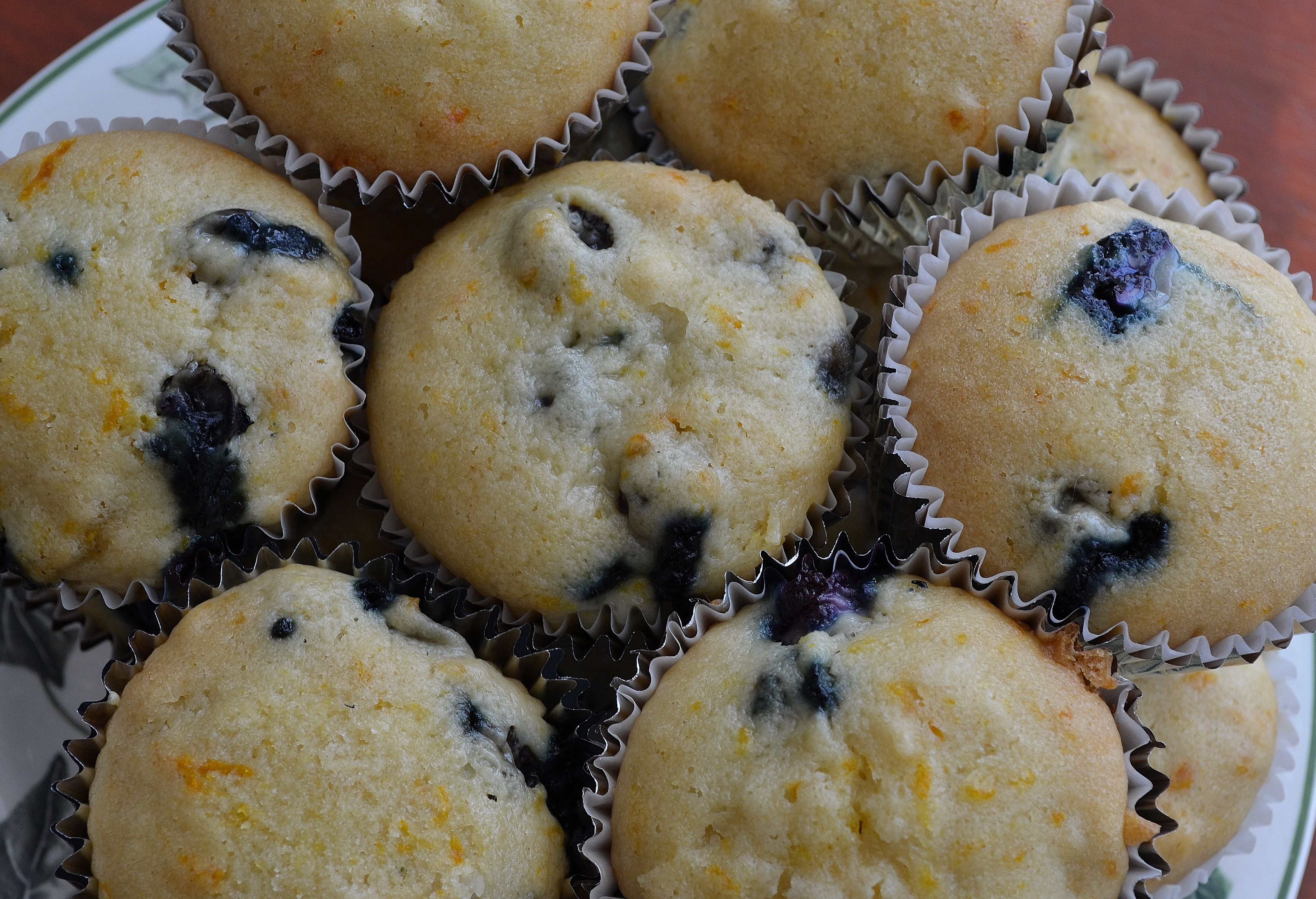
Waking up is rarely an easy task: thoughts of the day ahead and the work left to be done are little help. The cure? Freshly baked muffins. The ambrosial scent of these morning delights can rouse any sleeping beauty. While the gorgeous Boston summers are arguably what make the winters tolerable, we had a rough stretch of weather for a good part of May. To help “rouse” the spirits of my fellow coworkers, I felt that freshly baked muffins were in order and made the following: Banana Nut Muffins with Chocolate Chips and Vegan Blueberry-Orange Muffins.
The term “muffin” is believed to been derived from the French term moufflet, or “soft bread.” The original cakes were made using yeast, and tended to be round, flat, and sweetened with a touch of sugar. Today’s English muffins are much closer to this variety, only they are cooked on a griddle rather than baked. Muffins as Americans know them are substantially different: they are made without yeast, baked in small pans, and are much sweeter. The 19th century saw rise to this style of muffin, with classics such as “blueberry” and “bran” gracing a number of American cookbooks. The actual origin of muffins is extremely convoluted, and is as traceable as the origin of bread itself.*
There is only one answer for ugly, overripe bananas: muffins. Banana muffins are, in essence, miniature versions of banana bread and thus extremely simple to make! This recipe is from one of my favorite cooking blogs, SimplyRecipes, with the only difference being my addition of chocolate chips (at the request of my coworker Victor). These muffins are fantastic, and I guarantee they will be consumed within a matter of hours (as were mine). Check out how to make these breakfast delights by clicking HERE.
The term “vegan” is a scary one for a baker to hear, yet I was willing to attempt one such recipe for the sake of my vegan friend Rosena. I chose to go with THE classic: blueberry. The trick here was to get a muffin that had a velvety texture, yet wasn’t too dense. If I had chosen to label these as traditional blueberry muffins, no one would have guessed they were vegan. The apple cider vinegar is a crucial ingredient, giving these muffins a lightness akin to the regular variety. I chose orange zest over lemon, wanting a more summery taste – it was possibly one of the best decisions I could have made. Trick your taste buds and try these vegan muffins by clicking HERE.
Since muffins are best enjoyed with a cup of coffee and a golden sunrise, I paired these with one of my favorite works: Maurice Ravel’s Daphnis et Chloé, Suite No.2. This is honestly one of the most beautiful pieces, and has been a favorite of mine for years. The work in its entirety is a ballet of three parts, and stands as Ravel’s longest work at nearly at nearly one hour in length. The story is based upon the legendary romance of a goatherd named Daphnis and a shepherdess named Chloé.**
Ravel later selected excerpts from the ballet to create two orchestral suites. The second suite is perhaps the most popular, encompassing the more complex elements of the overall work. The suite opens with “daybreak,” where a sleeping Daphnis is awakened to be reunited with his beloved Chloé, who has just been rescued by the god Pan from a band of pirates.** I have included here the opening of the Suite No.2 with the Berlin Philharmonic under Herbert von Karajan. The sad thing about this video is that it ends RIGHT before one of THE solo of all flute solos in orchestral repertoire takes place…which is why I’ve included a second link with my biggest flute crush playing the solo: Emmanuel Pahud. Luckily, it’s the same orchestra (different conductor), making it the closest thing to a continued recording as YouTube can provide. This is genuinely a gorgeous work, and I hope you enjoy it!

1) http://www.youtube.com/watch?v=Fm6zNYZoHJs
2) http://www.youtube.com/watch?v=2HdpAoI8Ciw

Sources Cited:
* http://www.foodtimeline.org/foodfaq2.html#americanmuffins
** http://en.wikipedia.org/wiki/Daphnis_et_Chloé
The Compelling Lightness of Tuscany

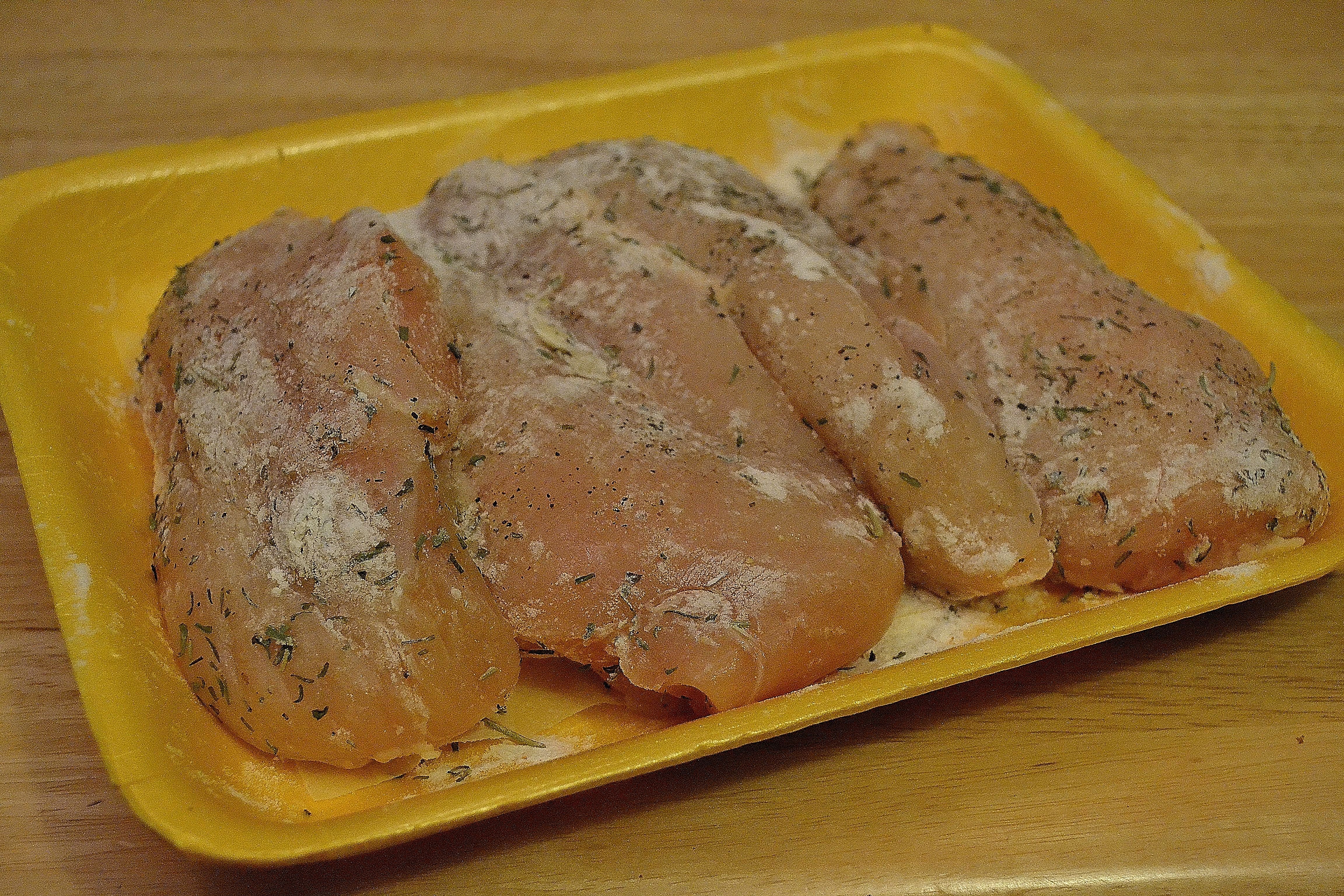
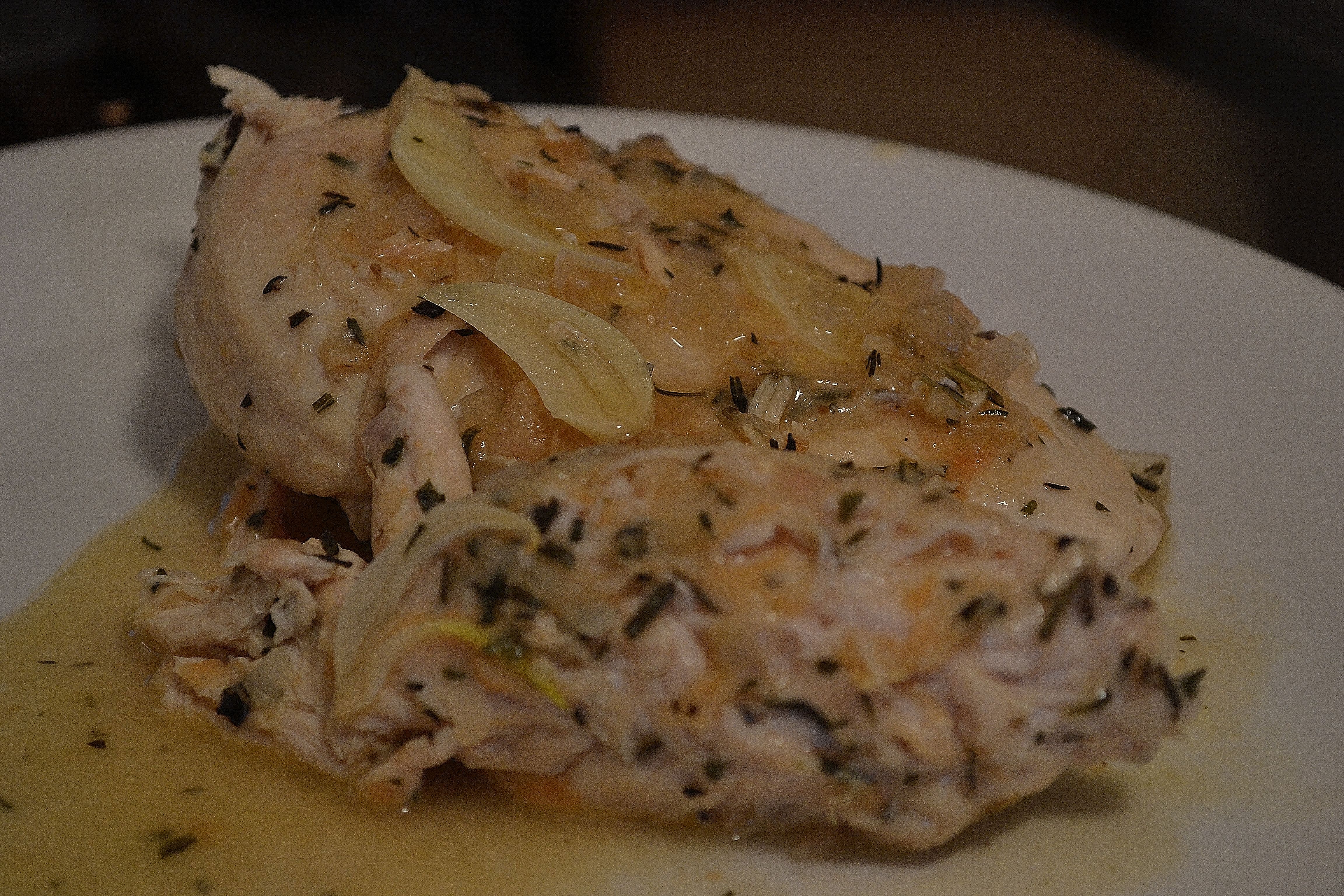
When one hears the term Monte Cristo, they think of either the classic tale by Alexandre Dumas or of the devilishly attractive James Caviezel (who starred in the 2002 rendition of the novel…I admittedly think of the latter) When placed in a culinary context, it is often in reference to a ham (or other variety of meat) and cheese sandwich that is then dipped in an egg batter and fried (a variation on the classic French sandwich Croque Monsieur). So when I found a chicken breast recipe titled “Monte Cristo Chicken,” you can imagine my surprise that it has no relation to either one of these precedents. As it turns out, this is one of my favorite chicken dishes to date, and just so happens to be extremely simple to make! Though there is no attractive count involved (unfortunately) and no deep-frying (thankfully), this Monte Cristo Chicken recipe has certainly lived up to its name.
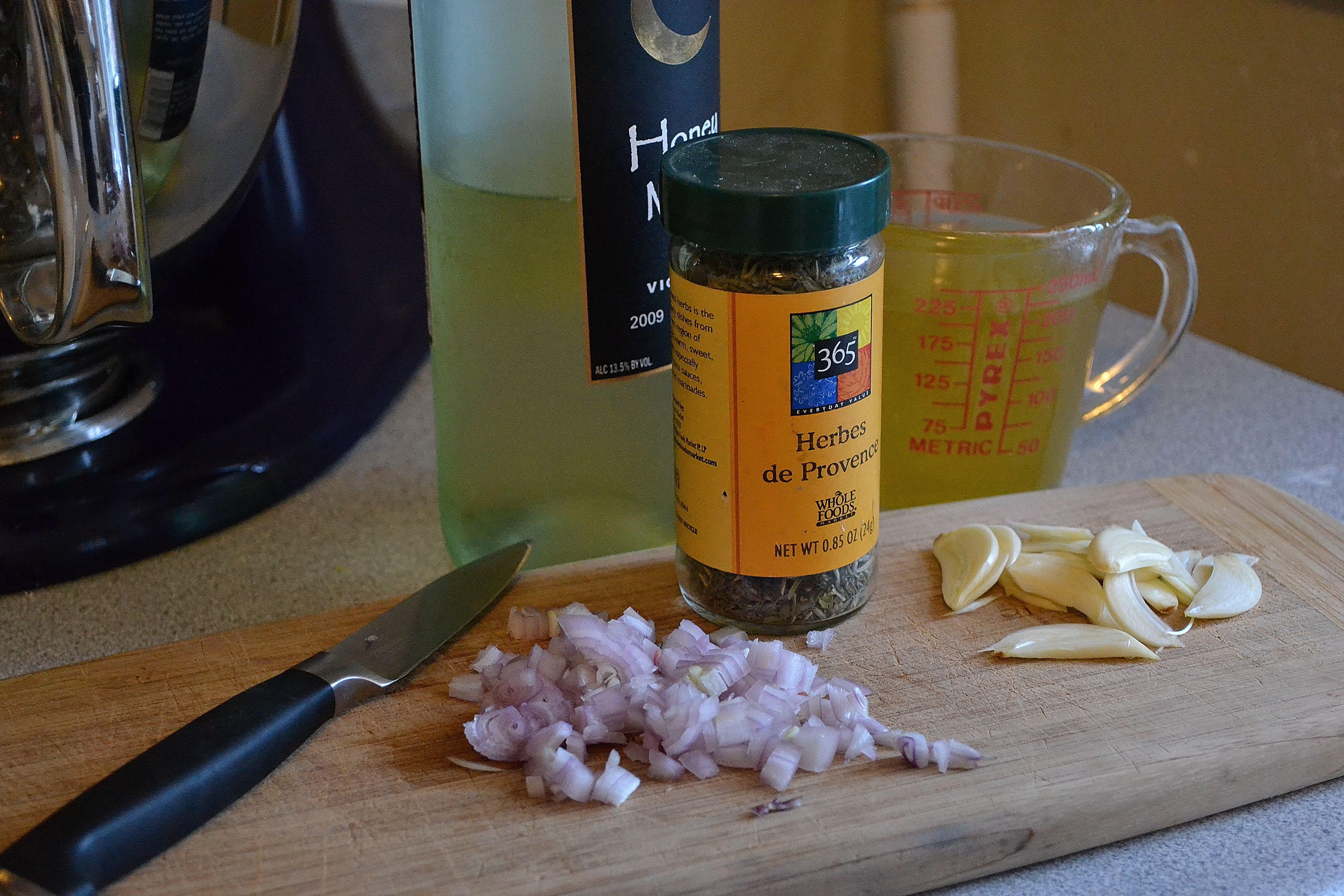
The actual “Montecristo” is a very small island off the coast of Italy, it’s literal translation being “Mountain of Christ.”* In trying to determing the connection to this dish, my best bet is its allusion to the flavors of Tuscany: Montecristo is within the Tuscan Archipelago*, and the majority of Tuscan food (I’ve experienced) has been notable for its simplicity. This dish most certainly is: lemon, wine, Herbes de Provence, shallot, garlic, and chicken stock are the flavors involved. The result is some of the most tender, flavorful chicken breasts I’ve ever tried. Herbes de Provence is a dried mixture of French herbs, including thyme, rosemary, savory, basil. etc. This is what truly puts this dish over the top. I imagine you can use any number of fresh or dried herbs its place, but it won’t have nearly the same effect.
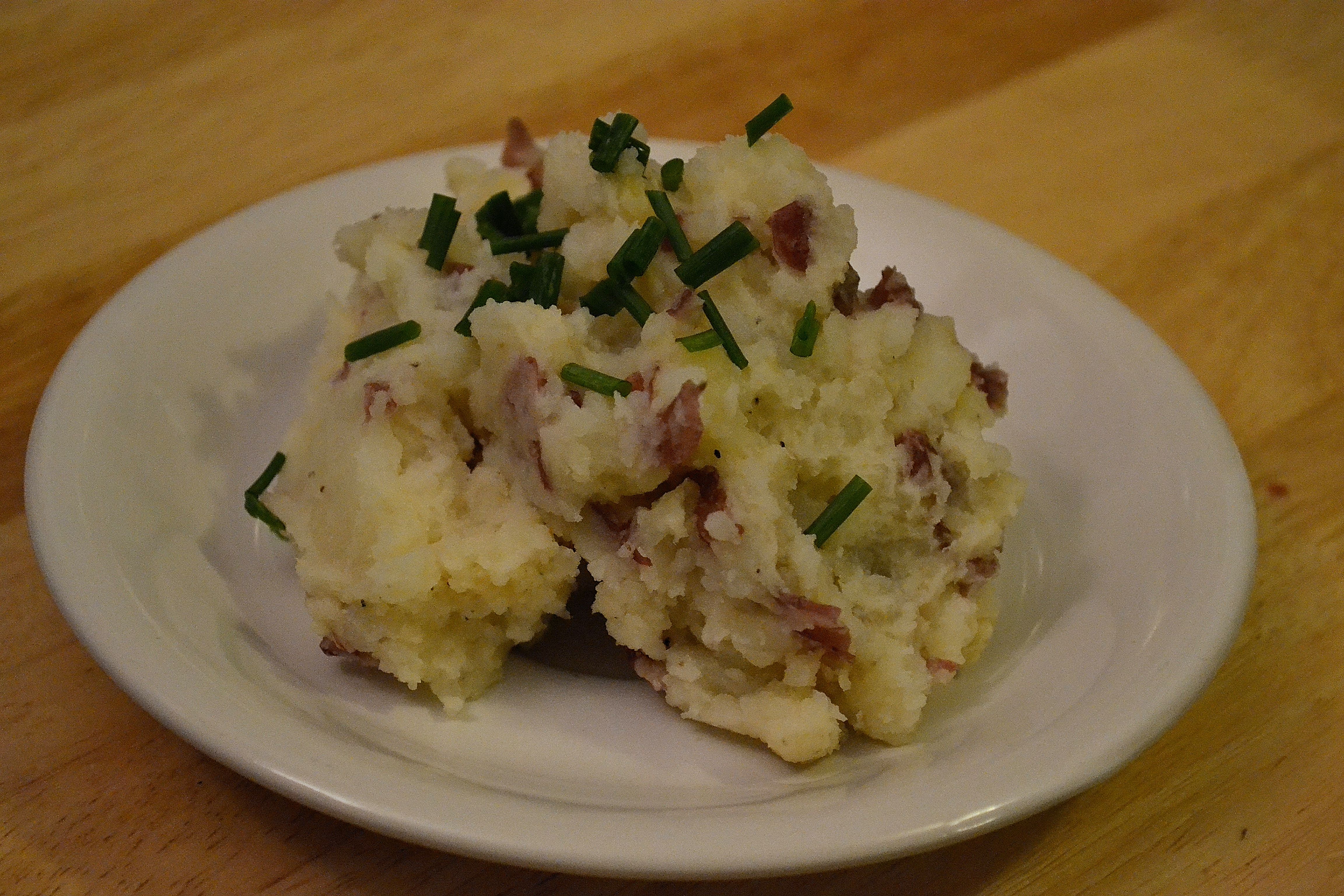
In terms of preparation, I make much more of the sauce than what the recipe creates – it’s an amazing sauce! I nearly quadruple the original recipe. Rather than sprinkling the flour and herbs, I mixed them all together on a small dish and coated the chicken accordingly. I omit the lemon zest, but it would make a pretty presentation no doubt. Click HERE to see my rendition of this delicious recipe. In addition to spinach, I also made a very simple yet delicious side of Roasted Garlic Mashed Potatoes. Click HERE to check out this recipe. 
Given the Tuscan heritage of this dish, I decided to focus on one of Tuscany’s most celebrated composers: Giacomo Puccini. His operas have become standards of performance repertoire, with classics such as La bohème, Tosca, and Turandot. While these works are true masterpieces, their breadth of emotional intensity is too overwhelming for this dish. A meal that takes under 20 minutes and has only 10 ingredients won’t do justice to a work that can bring even the strongest of men to tears. That was when I remembered another gem of Puccini’s that would be perfect: the one-act opera Gianni Schicchi. This work, based on the Dante’s Divine Comedy, is much lighter in character and shorter in length. It is the third and final installment of the series “Il Trittico.” Gianni Schicchi is the most famous of the three, and has one of the most famous soprano arias: “O mio babbino caro.” The aria is sung by Lauretta (daughter of Gianni Schicchi) imploring her father to approve of the man she loves.* Here is a great recording of the aria, with soprano Montserrat Caballé (thanks Tim Wilfong!) Enjoy!

http://www.youtube.com/watch?v=dI17VdRfCek

Sources Cited:
* “Montecristo.” Wikipeda.com 
** “Gianni Schicchi.” Wikipedia.com

A Divine Pastiche

Enjoying a cold glass of milk with a slice of cake is a beautiful thing. Given that success, who’s to say combining the two can’t be just as beautiful? I don’t mean just simply cooking a cake with a cup of milk in the batter – I mean literally drenching it in milk. Heck, why not make it THREE types of milk, just for added measure…this is precisely the method used for the beloved cake Tres Leches Cake. When I bake for a large crowd, I try to make a cake that brings the biggest “bang for the buck” – this cake was a HUGE hit: Dulce de Leche Cake with Fresh Strawberries.
The history of Tres Leches Cake relies on two of its primary ingredients: sweetened condensed milk and evaporated milk, both of which are “canned milks.” Due to spoilage and preservation difficulties, excessive health risks made fresh cow’s milk a limited commodity prior to the 20th century. Inventor Gail Borden was the first to develop the concept of canning milk. Heating the product was the primary solution to eradicating harmful bacterias, allowing for milk to be stored and distributed without refrigeration.* The dispute over the demographic history of this cake, though, is both a cultural and corporate issue. Nestlé claims a big role, having advertised the recipe on the backs of canned milks to promote the products, while Central American nations claim rights to its conception. There is little evidence on the actual origin, making the dispute a futile one.**
This cake is much easier to make than it seems, even though there are a lot ingredients (see above) – it is essentially a vanilla cake that is subsequently soaked in three types of milk (see photo below). The result is a beautifully moist cake with a lighter taste than expected. The recipe I used, originally from Saveur, is called Dulce de Leche Cake given the layer of dulce de leche spread over the top; the “traditional” tres leches cake simply uses whipped cream as a topping. I took it one step further and halved strawberries to add a decorative flair. All-in-all, it was a delectable work of art. View this recipe by clicking HERE.
Wanting to focus on the diversity of ingredients used in this cake, I went with a piece that has a number of musical “ingredients”: Charles Ives’ Three Places in New England (as per the recommendation of my dear friend Neal Markowski). This work was composed over a span of nearly three decades, and stands as one of Ives’ most iconic pieces. Considered to be one the first American composers to reach international acclaim, Ives’ works went largely unrecognized for the majority of his lifetime (having led an extremely successful career as a life insurance executive). While the literal interpretation of “three” and “tres” can be considered, my pairing takes into regard the numerous styles and layers Ives incorporates into this work. Ives is best known for his adaptation of traditional hymns and popular American songs, such as Yankee Doodle, into his compositions. These themes provide relatable substance within contexts of heavy chromaticism, polytonality, and layered melodic passages.^ Three Places is considered to be highly representative of Ive’s style, incorporating both his “avant garde” techniques as well as a number of (paraphrased) traditional themes. This work consists of three movements, each representing a different location in New England:

I. The “St. Gaudens” in Boston Common
II. Putnam’s Camp, Redding, Connecticut
III. ‘The Housatonic at Stockbridge^^

The link I’ve included below is of the first movement (slightly biased considering I’m a Boston gal), and is performed by Orchestra New England (quite fitting) with James Sinclair conducting. For those unfamiliar with Ives, he’s certainly no Beethoven; yet his works have an endearing, rich quality which is truly masterful, and stand as important emblems for our culture. Enjoy!

Sources Cited:
* http://homecooking.about.com/od/milkproducts/a/canmilkhistory.htm
** http://en.wikipedia.org/wiki/Tres_leches_cake
^ http://en.wikipedia.org/wiki/Charles_Ives
^^ http://en.wikipedia.org/wiki/Three_Places_in_New_England

Remembering Where We Came From

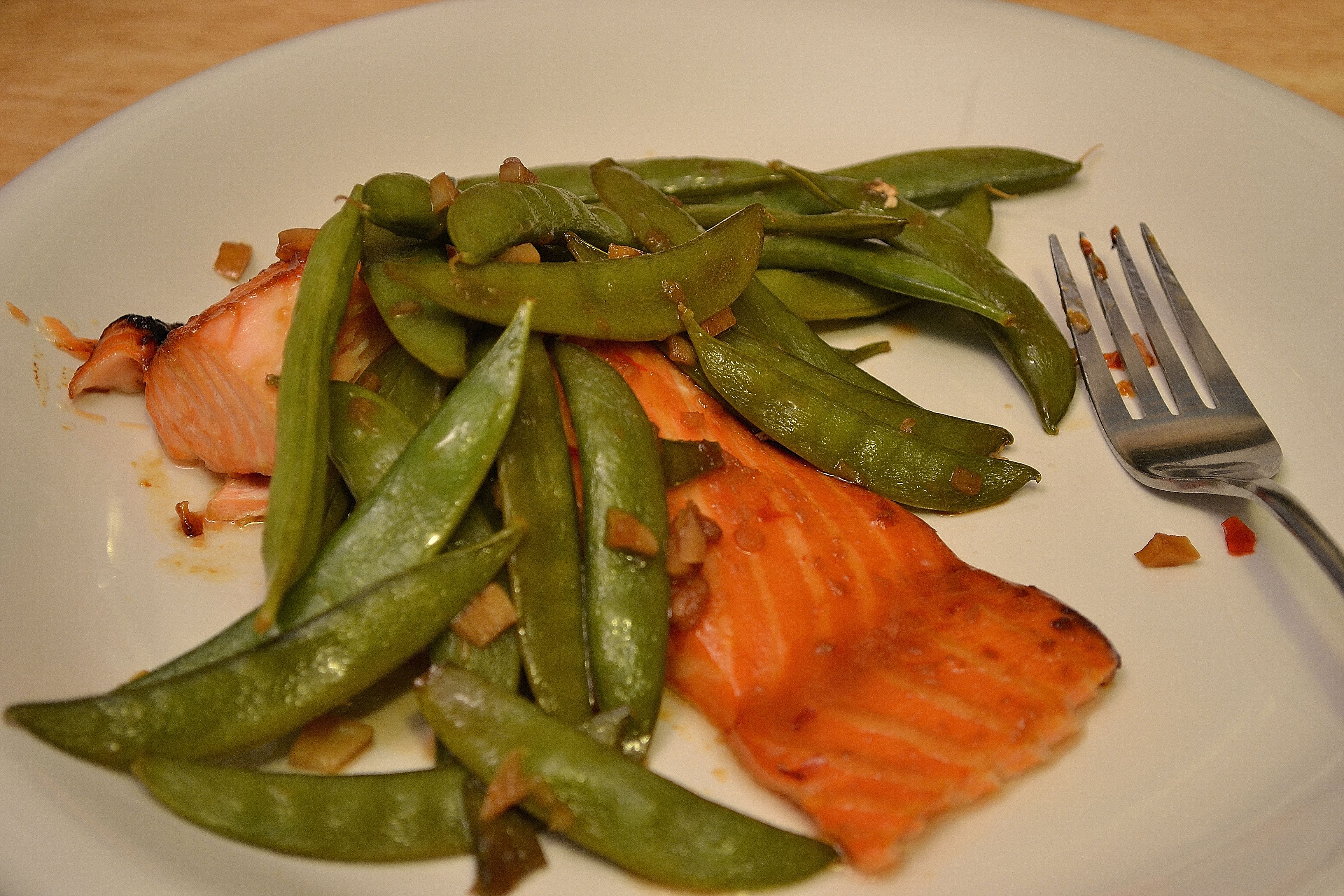
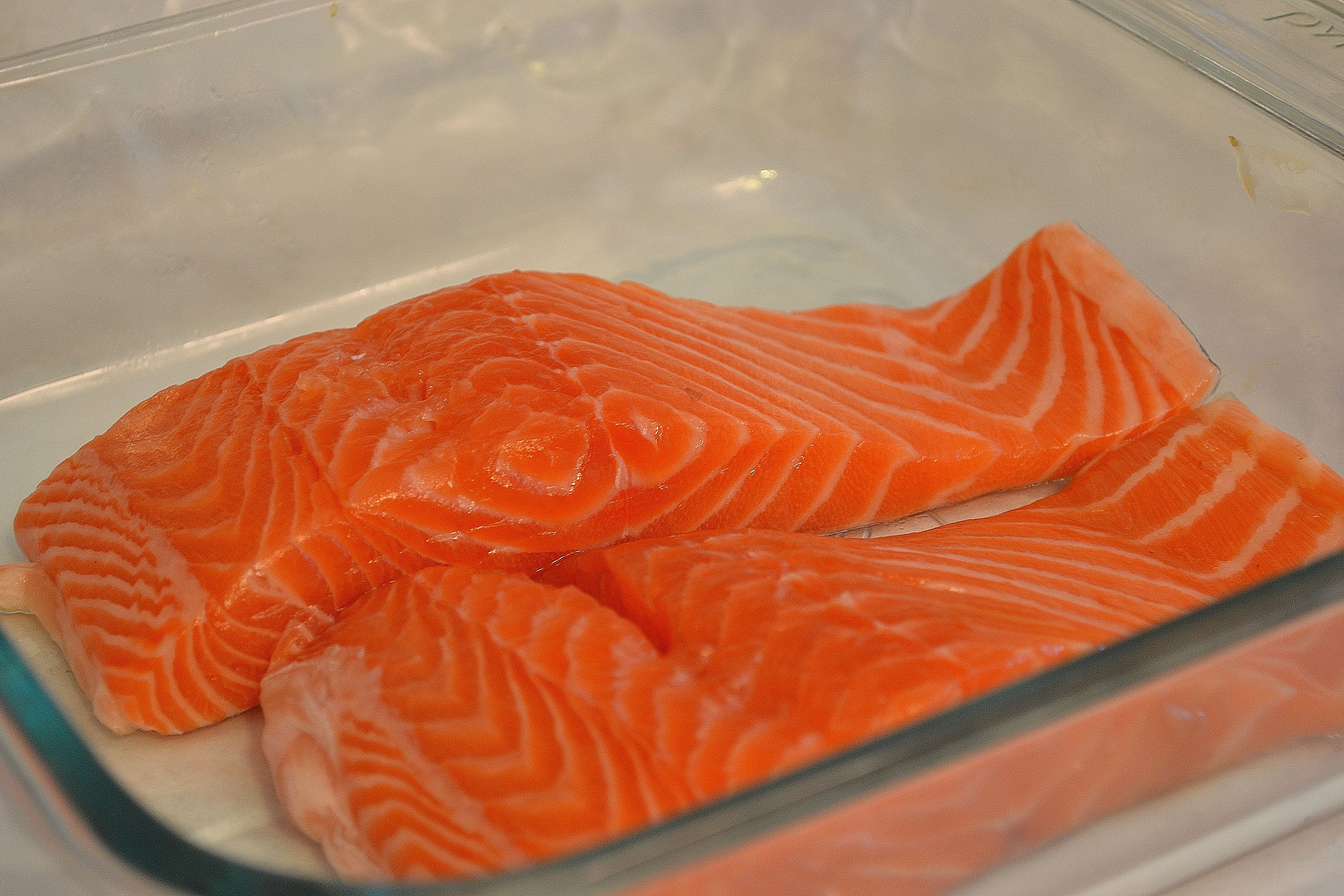
If there is one food I love without a doubt, it’s fish: grilled, poached, broiled, tartar – you name it, I’ll take it. My venture with vegetarianism was ended given this passion, with baked tilapia if I recall correctly. When it comes to smaller occasions (roomie nights, for one), I almost always vie for fish. One such occasion was this week with my dearest friend Maya. She shares an affinity for seafood, so I went with the “king” of commercial buys: Alaskan Salmon. This recipe had been on my radar for quite some time: Salmon with Sweet Chili Glaze and Sugar Snap Peas.
Alaska’s wild salmon fisheries are considered to be among the best-managed stocks in the world due to extensive monitoring and safer catching methods. The result is a fish that provides the best flavor and greatest nutritional gain of all supermarket varieties.* I wanted a simple recipe so as not to mask the excellent quality of this fish. Perusing through my stacks of cooking magazines, the cover of a Bon Appétit issue caught my eye – absolutely gorgeous! I roughly adapted the original to serve 2 (instead of 6). I removed the skins, marinated the fish for a longer period of time, and omitted the pea sprouts originally called for by doubling the amount of sugar snap peas. Make this dish – I promise you won’t regret it. Click HERE to view my version of this recipe.
The migratory lifestyles of salmon make them quite a remarkable species. They are born in freshwater, then spend the majority of their adult lives in oceans, and finally return to their natal streams and rivers for spawning. Given the simplicity of the recipe, I chose to focus on this concept, returning to where one begins, and thus pair this dish with Prokofiev’s Symphony No. 1 in D major, “Classical Symphony”. Composed in 1917, this work is identified as a neoclassical composition, in other words a work influenced by the aesthetic principles of “classicism”. This particular work loosely emulates the style of Haydn, a composer who Prokofiev studied extensively while attending the St. Petersburg Conservatory; a “return to his (classical) roots,” if you will.** I also just really like this piece, and have been wanting to showcase it here for quite some time. I’ve included a recording of Claudio Abbado (the orchestra is unlisted, unfortunately) conducting the work’s first two movements: Allegro and Larghetto. There is a part 2 which can be found in related videos for the remaining two movements. I also had to include the fourth movement as interpreted by Valery Gerviev and the Vienna Philharmonic – this is what Prokofiev sounds like on steroids, and is a tempo that is nearly impossible to execute without injury…enjoy!

1) http://www.youtube.com/watch?v=BjzbEfjQ6V8
2) http://www.youtube.com/watch?v=co-gL6pskwQ&feature=related

Sources Cited:
* http://en.wikipedia.org/wiki/Alaska_salmon_fishery
**http://en.wikipedia.org/wiki/Symphony_No._1_(Prokofiev)

Harnessing a Taste for Derby

Derby Day Celebrations are perhaps some of most ironic of all sporting affairs. In Kentucky there is a two-week long festival celebrating the race, which is all of 90 seconds. That’s right – the Kentucky Derby lasts no more than 2 minutes, yet is the state’s most prominent annual event. Nonetheless, one can’t help but be enchanted with Derby enthusiasm and its beloved traditions: mint juleps, ridiculous attire (especially hats), endless parades, garlands of roses, and every pie imaginable.* My friend Beth McDonald (having completed her Bachelor’s at the University of Kentucky) is a genuine Derby enthusiast. She hosted her second annual Derby Day Party this past weekend, and enlisted my pie expertise. So I arrived at the party donning an enormous hat with the following two pies: Kentucky Bourbon-Walnut Pie with Chocolate Ganache and Peanut Butter Silk Pie with Pretzel Crust.
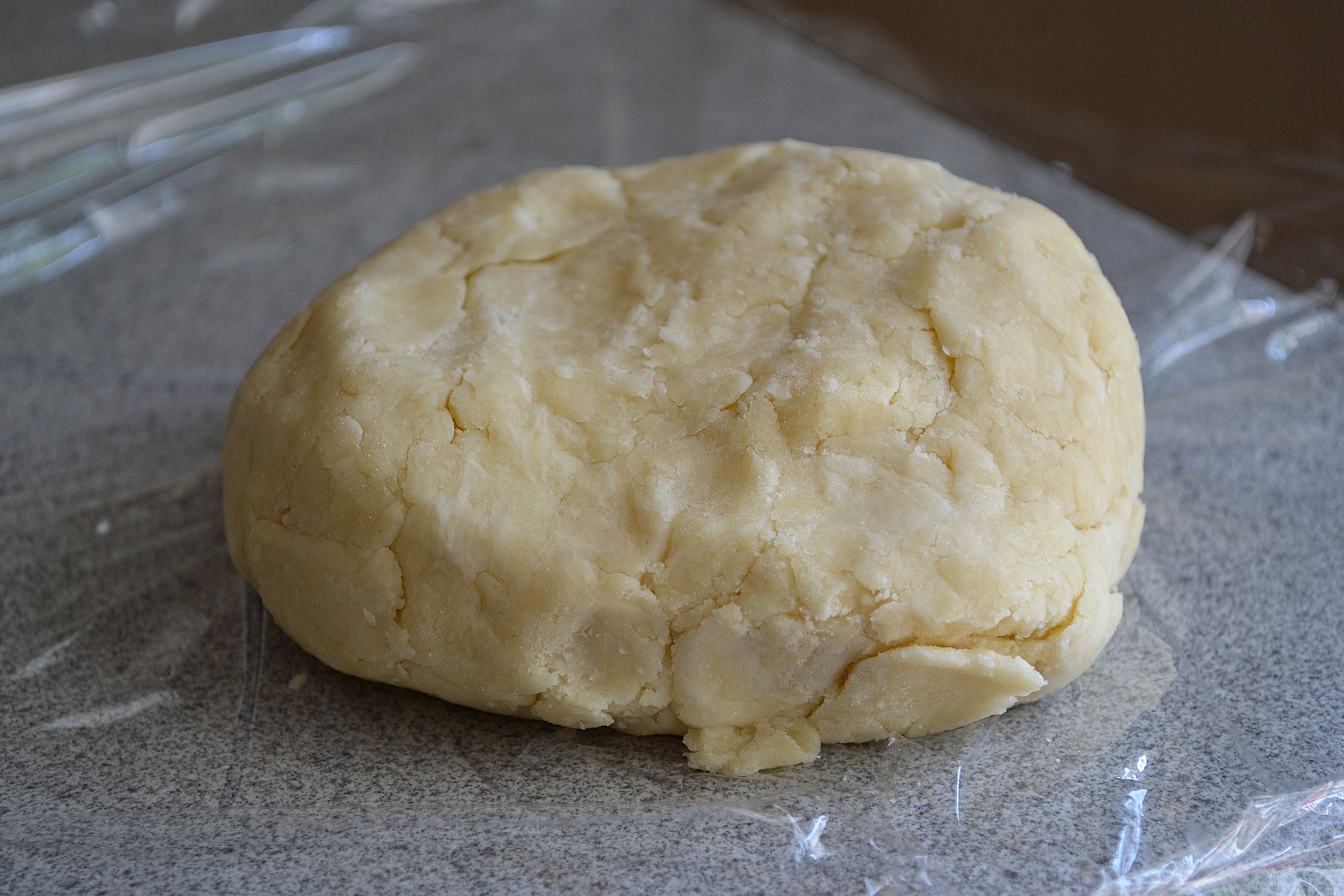
I have never been, and never intend to be, one who relies on a box – “from scratch” shall forever be my baking mantra. Pillsbury frozen pie crusts make it seem so simple to, when, in fact, pie crusts are an inherent art form to a number of culinary traditions. The creation of the perfect pie crust takes place over the course of two to three days, ideally. This includes chilling, resting, and baking. I always cube my butter and freeze it the night before I make pie dough (tip from SimplyRecipes). I then wake up early enough the next day to make the dough, and allow it to rest in the refrigerator for at least 6 hours. Patience is what makes the perfect pie crust – so if you are craving a pie last-minute, then and only then is Pillsbury your best friend.
No Derby is complete without a “Derby Pie”. A Kentucky tradition dating back to 1950, the original Derby Pie was a chocolate-walnut tart created by Walter and Leaudra Kern, owners of the Melrose Inn. A popular addition to this pie is a quarter cup of Kentucky Bourbon, as well as substituting pecans for the walnuts. I opted for the traditional walnuts, but added some of Kentucky’s finest: Woodford Reserve. The title “Derby Pie” is  a trademark strongly defended by the Kerns’ Kitchen, so any publication of the recipe, from this blog to the Bon Appétit cooking magazine, must use an alternate title.** For some reason the top of my pie was less seemly than normal (half the walnuts migrated over to one side of the pie, and the chocolate was more prominent on the other), so I covered mine in a silky layer of ganache. And besides, who doesn’t love melted chocolate? Check out my version of this classic by clicking HERE
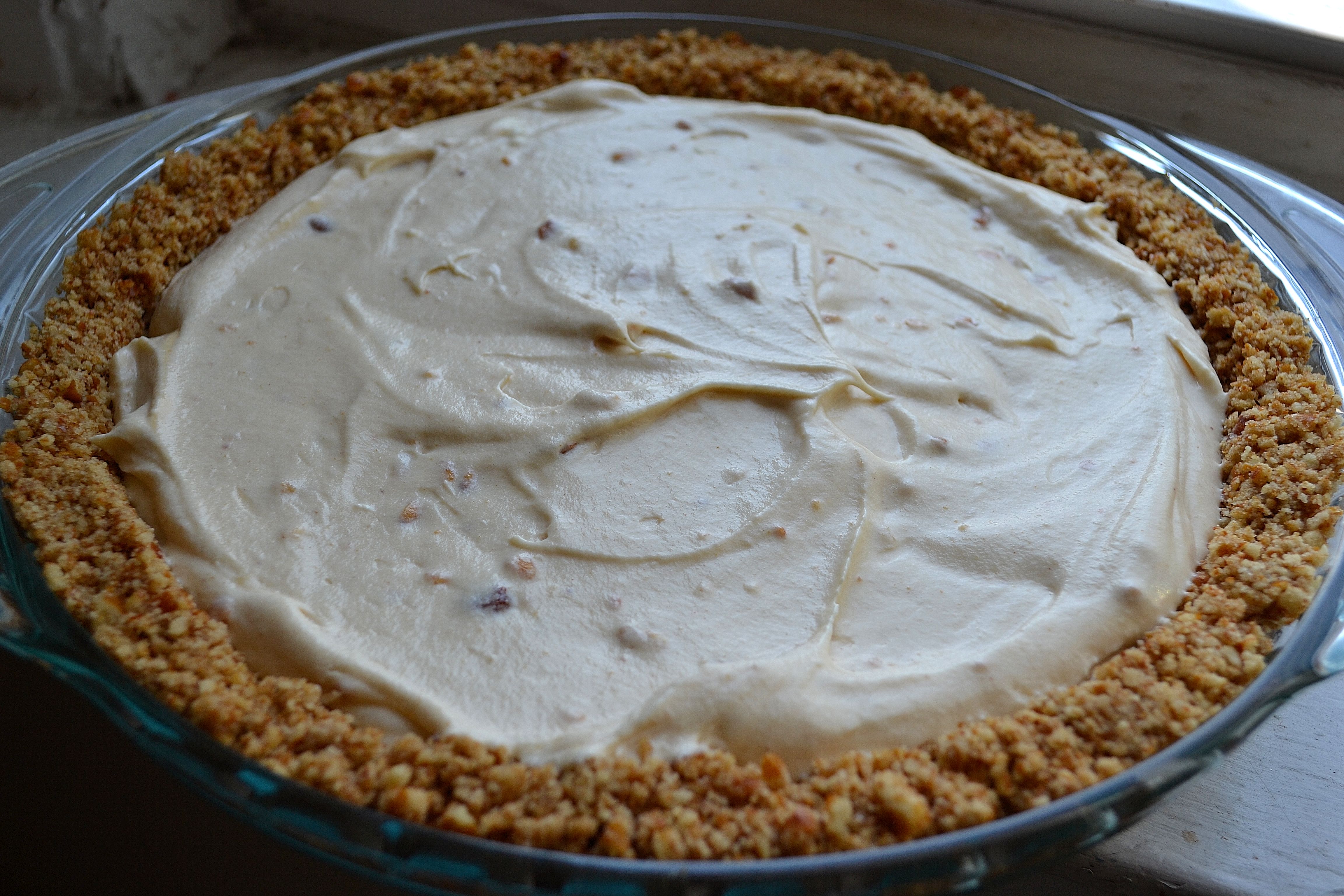
If there is such a thing as a pretzel addiction, then I am guilty as charged. I LOVE pretzels (as all my friends know). The duplicity of this pie is what makes it truly remarkable: sweet and salty, silky and crunchy, peanut and pretzel. This pretzel addict was sold.
This recipe was a combination of two recipes. It makes a very soft pie (fair warning) but with a fantastic flavor! That being said, keep this pie chilled until ready to serve.  Both the filling and crust are fairly simple (compared to the previous pie in this post), and can be made either the day of or the night before. For the sake of convenience, I almost always try to make things the day before, if possible. I made this pie with crunch peanut butter, to add some more texture to the filling. Click HERE to learn how to make this sweet and salty delight.
The musical pairing for these pies was a no-brainer: William Tell Overture. For those of you who are unfamiliar with this, think of every TV Show/cartoon with racing horses…remember that theme? Yes, this is a cliché choice for Derby Day pies, but the selection is far too fitting to ignore. This overture is (in actuality) the opening to Gioachino Rossini’s Guillame Tell – an opera that tells the story of the Swiss legend and hero William Tell. Yet the popular radio/television series The Lone Rangerhas forever displaced the context of this overture for millions of Americans. The overture is divided into four continuous sections. The known and loved excerpt comes from the Finale – the “cavalry charge” (contextually part of the battle scene in Guillame Tell) that served as the opening sequence for the classic television series.*** The video I have included here include the final two sections: the Ranz des Vaches, or “Call to the Cows”, and the Finale. The Ranz des Vaches has a pastorale quality, and features the English Horn; this section is yet another highly recognized theme. The recording features conductor Herbert von Karajan and the Berlin Philharmonic – I highly recommend taking the time to listen to the video “Part 1” as well to get a sense for the whole piece. Enjoy!

Sources cited:
* “Kentucky Derby.” Wikipedia.com
** “Derby pie.” Wikipedia.com
*** “William Tell Overture.” Wikipedia.com

Boeuf, It’s What’s for Dinner!

The famous 90’s ad campaign, voiced by Hollywood icon Robert Mitchum, was an endeavor put forth by the Beef Checkoff Program to revive the name of meat. The result: Copland’s Rodeo has become a widely-recognized classical work, and beef has regained its status amongst a health-conscious America. While I’m not your standard “meat and potatoes” kind of gal, beef has certainly made a comeback in my own culinary repertoire. My initial apprehension was by no means exclusive: multiple health trends have eschewed the food group entirely, citing high levels of saturated fats and links to obesity. Yet new research encourages (moderate) incorporation of beef into a healthy diet, commending its high levels of protein and iron.  I, on the other hand, can personally attest to its high level of friend-enticement: the phrase “dinner with steak tonight?” is a temptation very few friends of mine can resist. This meal was one that Mitchum would have been proud to endorse: Pan-Seared Steaks with a Port-Mushroom Sauce, and Roasted Asparagus with a Lemon Vinaigrette.
Can I mention how intimidating it is to pan-fry a steak? Achieving that perfect balance of sear and tenderness is almost as difficult as flying in or out Hartsfield without a delay. You know the old adage “third time’s a charm?” Well, it took me three times to reach my charming steak (hence the hiatus in my blogging duties, but I can also credit that to my busy work/travel schedule). Steak is a fickle thing, and there a number of variables to consider before attempting to prepare it. My (recently created) principles for cooking steak (indoors) are as follows:

  • Cast iron: if you want to achieve a taste comparable to the grill, this is your best bet.
  • Resting period: allowing steak to rest at room temperature for 40 to 60 minutes is imperative to the cooking process (cold steaks will immediately smoke-up if added to a scorching hot pan); additionally, allowing steaks to rest after cooking (10 to 15 minutes, depending on the cut) is crucial to both the flavor and texture of the meat.
  • Size accountability: recipes that only call for pan-seared should use thinner cuts (or be made thinner using a meat mallet) – thicker cuts should be seared on stovetop, then transferred to an oven until desired doneness is reached.
  • Pan sauce: grilling is one thing, but preparing steaks indoors (pan-searing, broiling, etc) will take you much farther if a sauce is added to the pan after the steaks are done (this can be as simple as onions and butter, with salt and pepper to taste).
  • Pacing yourself: don’t overcrowd a pan – if you can’t comfortably fit all the steaks at once with at least an inch of space between them, sear in 2 to 3 batches.

The pan sauce was an amalgam of several recipes (for the sake of citation, I’ll give the most credit to CookingLight magazine). The earthy taste of mushrooms paired with the sweeter notes of Port make for one amazing steak sauce! Though originally calling for rosemary, I have always found thyme to be a more intriguing herb. The lemony intrigue of rosemary is a great pairing with root vegetables and lighter fare (chicken especially), but thyme achieves a whole new level of flavor for dishes that are heartier and more complex. For this wonderful recipe, click HERE.

As I mentioned, I am not your typical meat eater, so the asparagus was the toast of the evening in my eyes. Roasted asparagus on its own is a great presentation, but this (extremely) simple vinaigrette made for one outstanding dish! The trick to roasting asparagus is evenly spacing the spears on one to two baking sheets, with none overlapping – this will ensure uniform roasting, making for crispy tips and tender stalks. Thyme once again finds its true colors in this dish – fresh is best, but dried can easily be substituted (I’d say 1 or 2 tsp dried, depending on how much asparagus you prepare). Check out how to make this awesome side by clicking HERE.

In pairing these two dishes, I had several considerations: the first (and most obvious) selection was Copland’s Rodeo – a work made famous by the original “Beef, It’s What’s for Dinner” ad campaign. Yet while waiting in Dulles for what evolved into a 3-hour delay, my coworker David recommended An American in Paris, by George Gershwin. Upon further consideration, I realized this was the a truly accurate context for the meal. Steak is certainly a dish that many American households enjoy, yet the preparation (pan-seared instead of grilled) and sauce (shallots and port wine) find stronger relevance within the French traditions. Additionally, the roasted asparagus is dressed in vinaigrette – a dressing derived from the French term vinaigre that is often interpreted as “French dressing.”* Voilà! But let’s talk about the music: this piece, composed in 1928, hopes to captures the spirit of Paris, replete with colorful personalities and breathtaking sights. Gershwin was inspired to write An American in Paris after having spent a short period of time there himself. The work gained its greatest renown nearly 25 years later through the 1951 film adaptation starring Gene Kelly and Leslie Caron.** The video I’ve included here is from the film – it is an excerpt from the dancing duet of Kelly and Caron, dancing through a fountain in Paris to a sultry trumpet solo (by the MGM legend Uan Ransey). For those wanting more than this musical apéritif, feel free to watch the second selection: the New York Philharmonic’s historic performance in North Korea (An American in Pyongyang?) This video is in three parts, and actually transitions into the next piece of the concert in Part 3. This is a must hear work, making the film a must-see as well. Hope you enjoy, and bon appétit!

1) http://www.youtube.com/watch?v=wlvzGT1Ta2w
2) http://www.youtube.com/watch?v=BUfI6v6SwL4&feature=related

Sources Cited:
*“Vinaigrette.” Wikipedia.com 
**“An American in Paris” Wikipedia.com  

The Darker Charms of Cocoa…

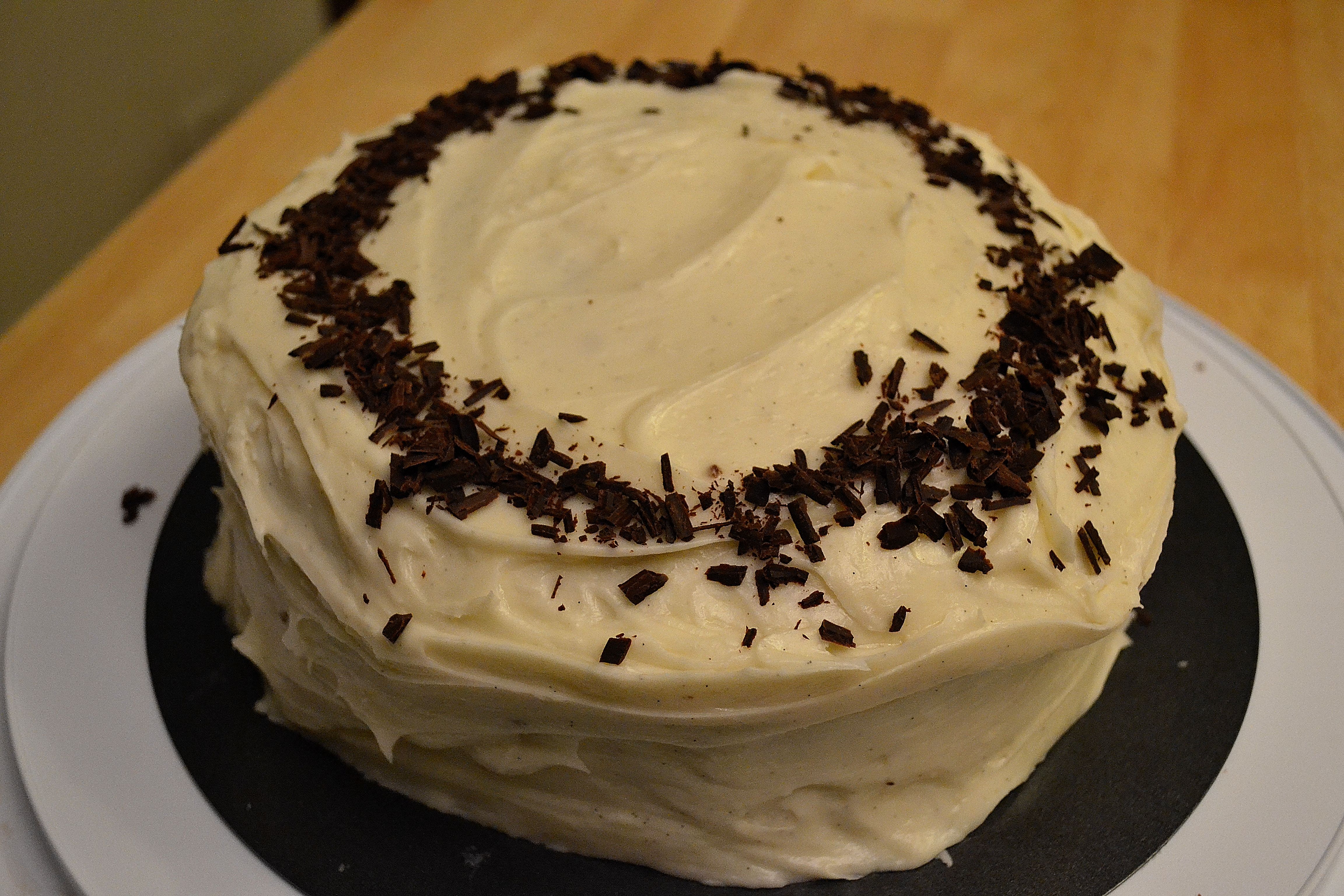
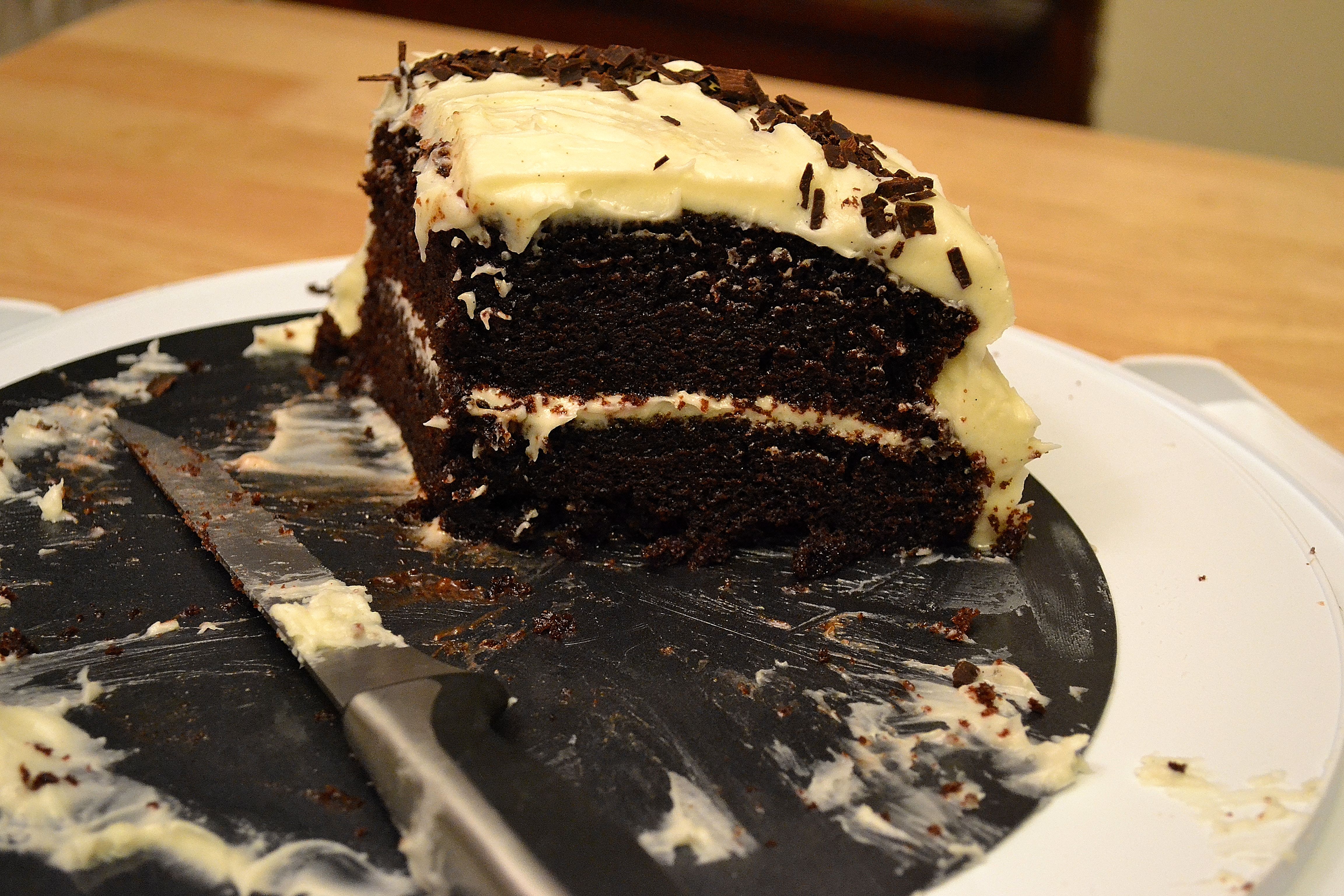
Rich, dark, and handsome – can a more perfect chocolate cake be described? 😉 While I tend to go for the less-complicated types (assembly-wise), a chocolate layer cake is the definition of baked perfection. With a velvety texture and creamy frosting, this cake can definitely turn heads. Prior to this making this version, I thought I had found my “one and only” recipe for chocolate cake – this one proved otherwise. Equally rich and twice as dark, I had found a new treasure. My go-to will probably always be my first love, but this Sour Cream-Chocolate Cake with Vanilla Bean Cream Cheese Frosting has won a special place in my recipe chronicles.
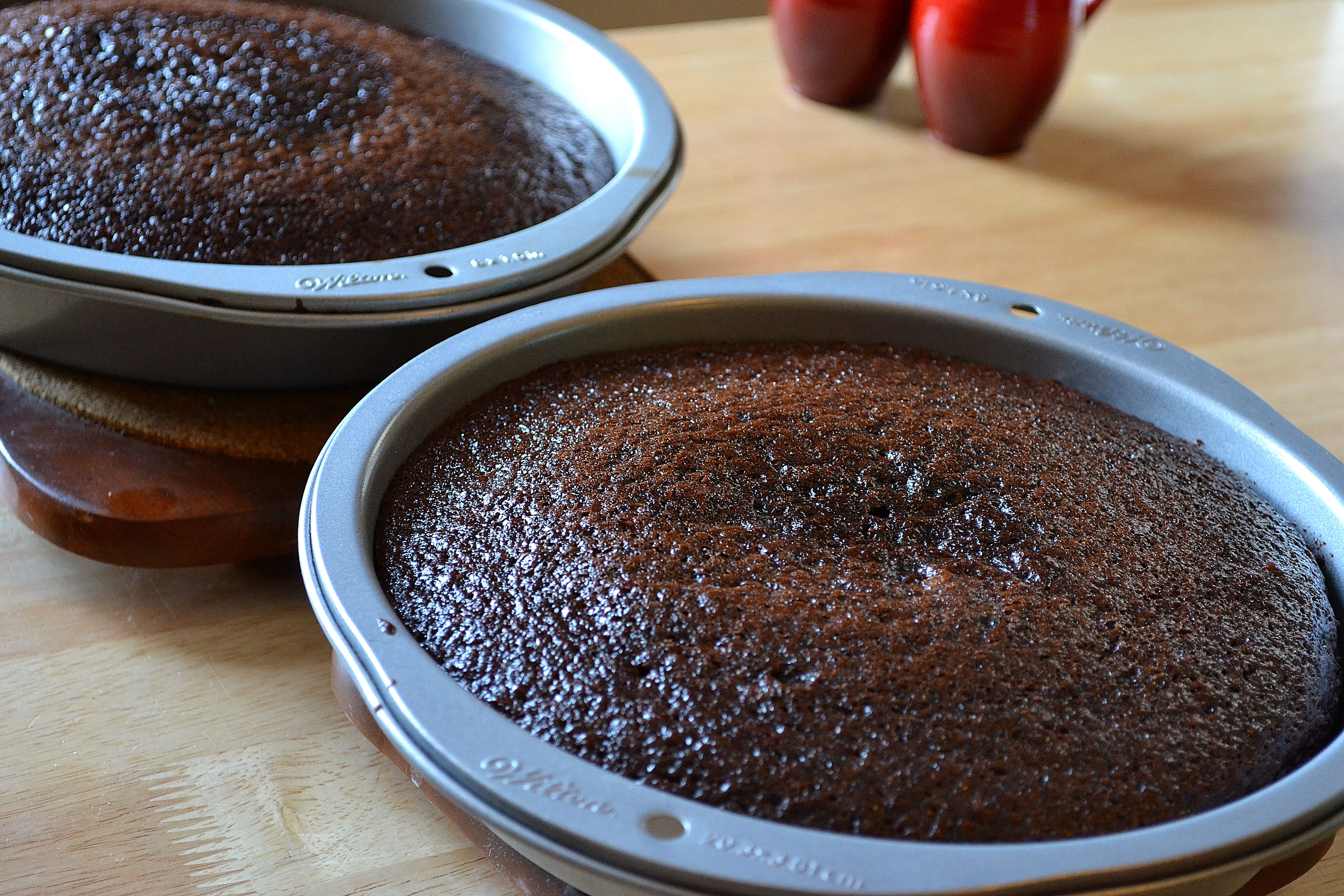
Now you’re probably dying to know my all-time favorite recipe, but that will have to wait for a later post (it’s too special for a simple shout-out). This is a RICH cake – the velvety texture comes from a cup of sour cream (making it necessary to finding a creative use for the rest of the 16 oz carton I had to buy – referred to in my previous post) and Dutch Process cocoa. Natural unsweetened cocoa powder was all I had used in baking for years, yet this recipe compelled me to do my research. Natural cocoa is untreated, ground cocoa powder – its bitter taste provides a depth of flavor that is ideal for brownies and cookies. Dutch Process, on the other hand, has a far more subtle taste as it has been treated with an alkali (often a potassium solution) to offset its acidity; this neutralization also imparts a darker hue on the powder, making it an ideal cocoa for darker cakes. Many people prefer the taste of Dutch Process, believing natural cocoa imparts a tangible acerbity on cakes. It is safe to substitute natural cocoa for Dutch Process, but not the other way around.*
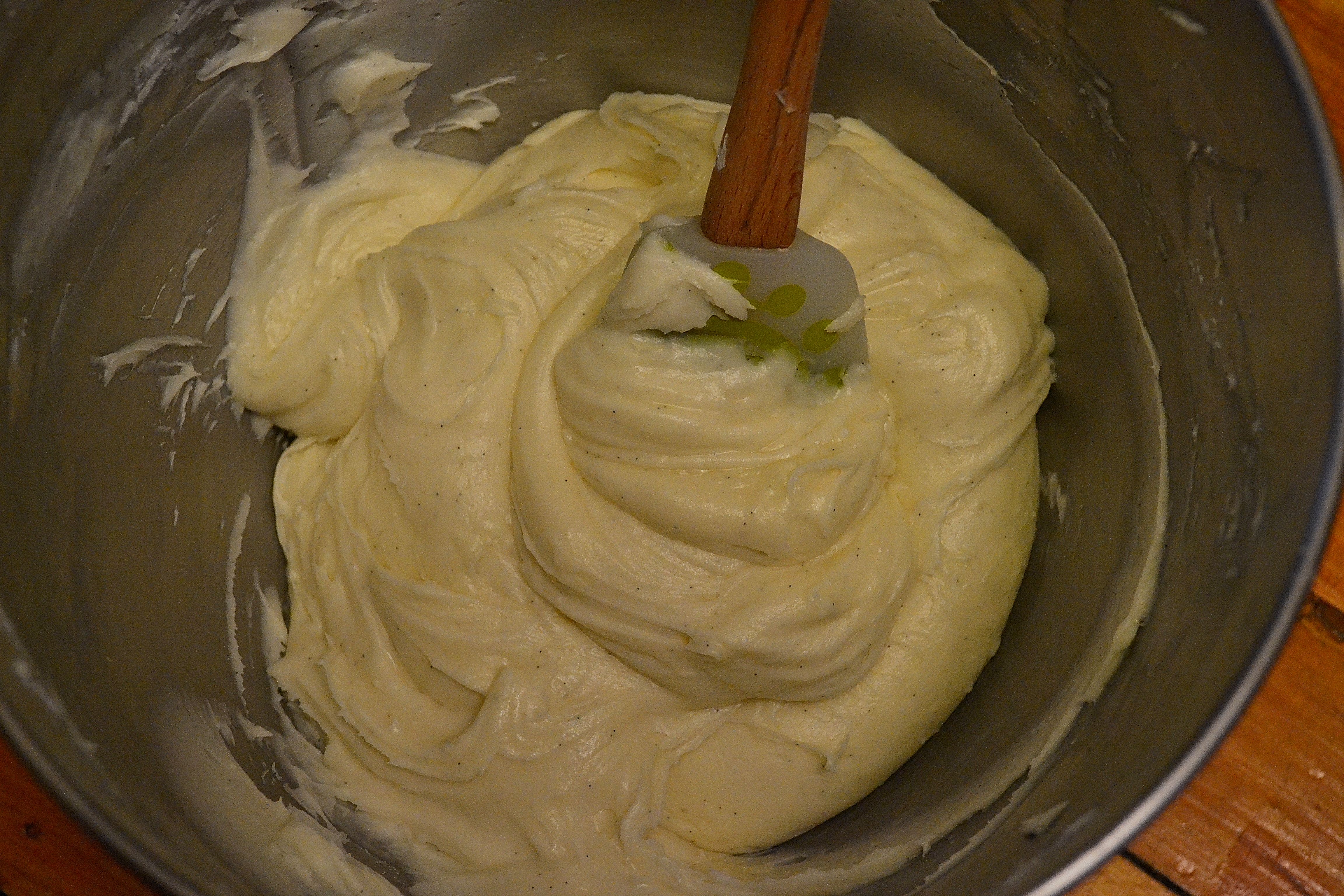
This recipe had been on my radar for some time now – the original calls for a Peanut Butter Cream Cheese Frosting with a Chocolate Ganache topping. While that looks fantastic, I was more interested in the cake itself. Additionally, while I baked all three layers, I only used two in the final assembly considering there would only be 8 guests total (the unused cake layer I topped with frosting and stored in the fridge for later). As you can tell from my post not long ago, vanilla bean has become a new obsession of mine. While I admire the convenience and affordability of extract, nothing beats the intensity and beautiful aesthetic of vanilla seeds. I adapted the cream cheese frosting from the original recipe to make this vanilla frosting. I added some lemon juice to counterbalance the sweetness of the cake. You can find out how to make this decadent dessert by clicking HERE
For this work, I wanted to reflect on the contrasts of this cake – the rich quality of the chocolate paired with the subtle beauty of fresh vanilla bean. After several considerations, my friend Audrey Wright (violinist) recommended the Strauss Violin Sonata. I had never heard the work, but was immediately convinced after finding the (below) recording with Sarah Chang. Strauss was only 24 when he composed the piece! The sonata places formidable demands on the performers, both technically and musically, revealing a devotion to the grander textures of orchestral writing (as revealed in his tone poem from that same year – Don Juan).** The sweeping phrases infused with moments of lyrical clarity pair beautifully with this cake. Additionally, the passionate quality of this work finds credence in Strauss’s recent acquaintance with his future bride. What better way to complement the charm of this recipe? It was a pleasure to become acquainted with this piece, and I can only hope you will feel the same. Enjoy!

Sources Cited:
*”Cocoa Powder FAQ: Dutch-process & natural cocoa powder.” DavidLebovitz.com
**”Richard Strauss.” Wikipedia.com

A Taste for Small Gatherings

If there is one true weakness of mine, it is hosting: dinner events, cocktail parties, game nights, the list goes on. There is something inherently gratifying in welcoming others to your place with delicious food and good drink. While these may sound like the musings of a 1930’s housewife, I can guarantee that my hosting addiction has both economic and personal benefits. For those familiar with Boston’s social scene, it is well known that affordable options tend to be an anomaly. Why spend $10 for one hamburger when I could spend that same amount to buy the ground beef it takes to make 6 or 7?? As for the personal benefits, just think of how much more you can hear, see, and experience your friends when you are NOT having to deal with extraneous ambiance (loud music, weak lighting, unruly children, etc). Top that with the hassles of splitting a three-digit bill seven ways, and your night of fun has turned into a night of panic. This isn’t to suggest that I never leave my apartment – Boston certainly has its pick of choice restaurants and bars. Yet for the aspiring cook, at-home functions are the most valuable resource. This past weekend, I had several friends over for a night of Apples to Apples (a game that never gets old). I prepared several of my “famous” hors’doevres for the occasion, with a few new experiments as well. I’ve only included two in this post, but given my weakness I expect hors’doevres to be a recurrent theme – Lemon Chicken Skewers with Satay Dip and Creamy Sage Dip with Crudités.
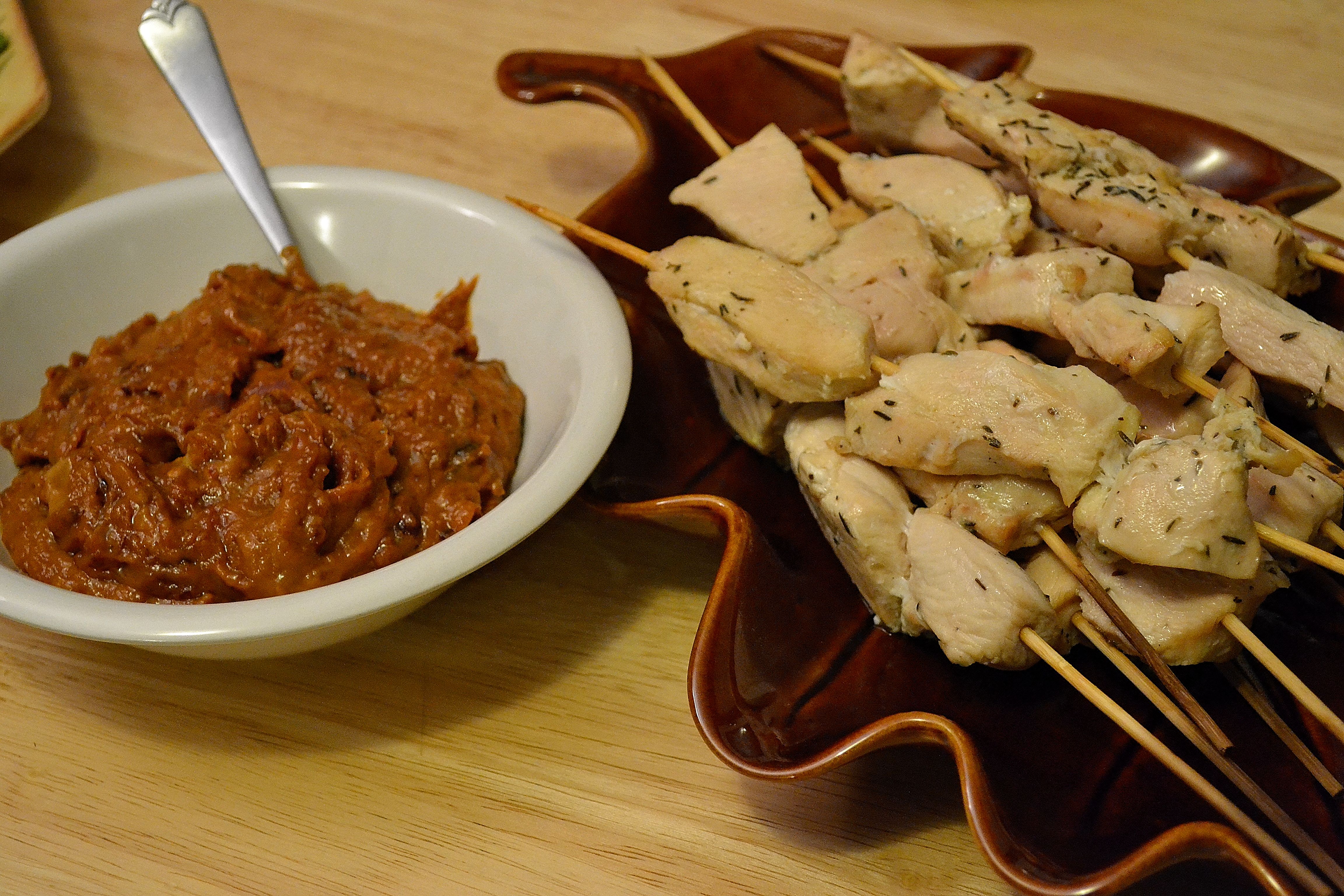
As aforementioned, the Barefoot Contessa is a huge inspiration to me, with practically all of her recipes producing flawless results. I had made this recipe of hers several times before, and it is always the first dish to go. The original recipe calls for grilling the chicken, but as is the case with city apartments, I am limited to the conventions of indoor cooking. Broiling is an effective substitute – just be sure to soak the wooden skewers for at least 30 minutes (unless you have metal) and to have a window cracked to let out the smoke that will (most likely) result from the broiling. Don’t be afraid about the whole “lemon juice cooks chicken” myth – according to the USDA*, chicken can safely be marinated for up to two days in the refrigerator. The lemon’s acidity breaks up the poultry tissue, creating a more tender meat – but too much time can create a tougher meat. So, I wouldn’t suggest marinating this chicken for more than 4 hours.
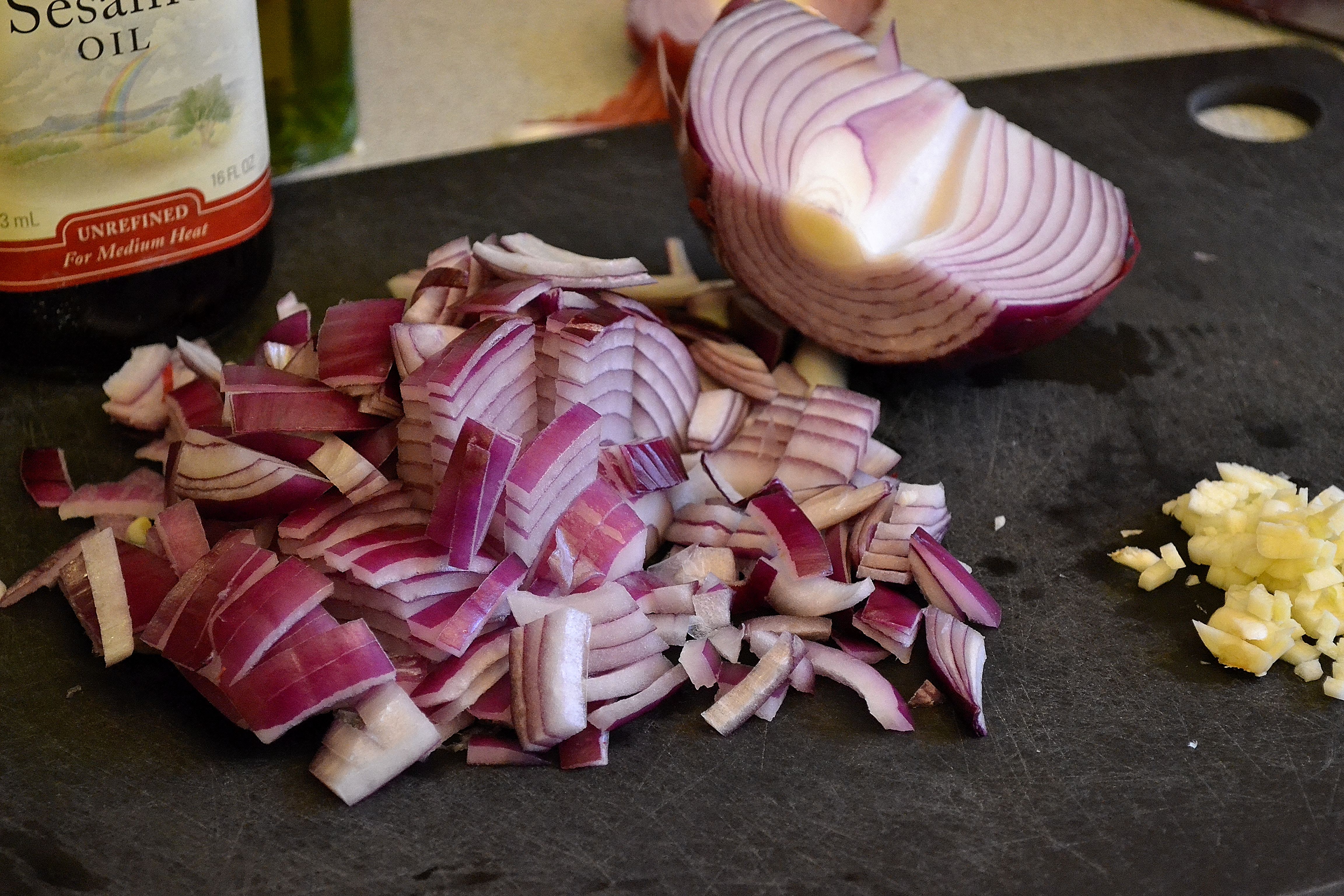
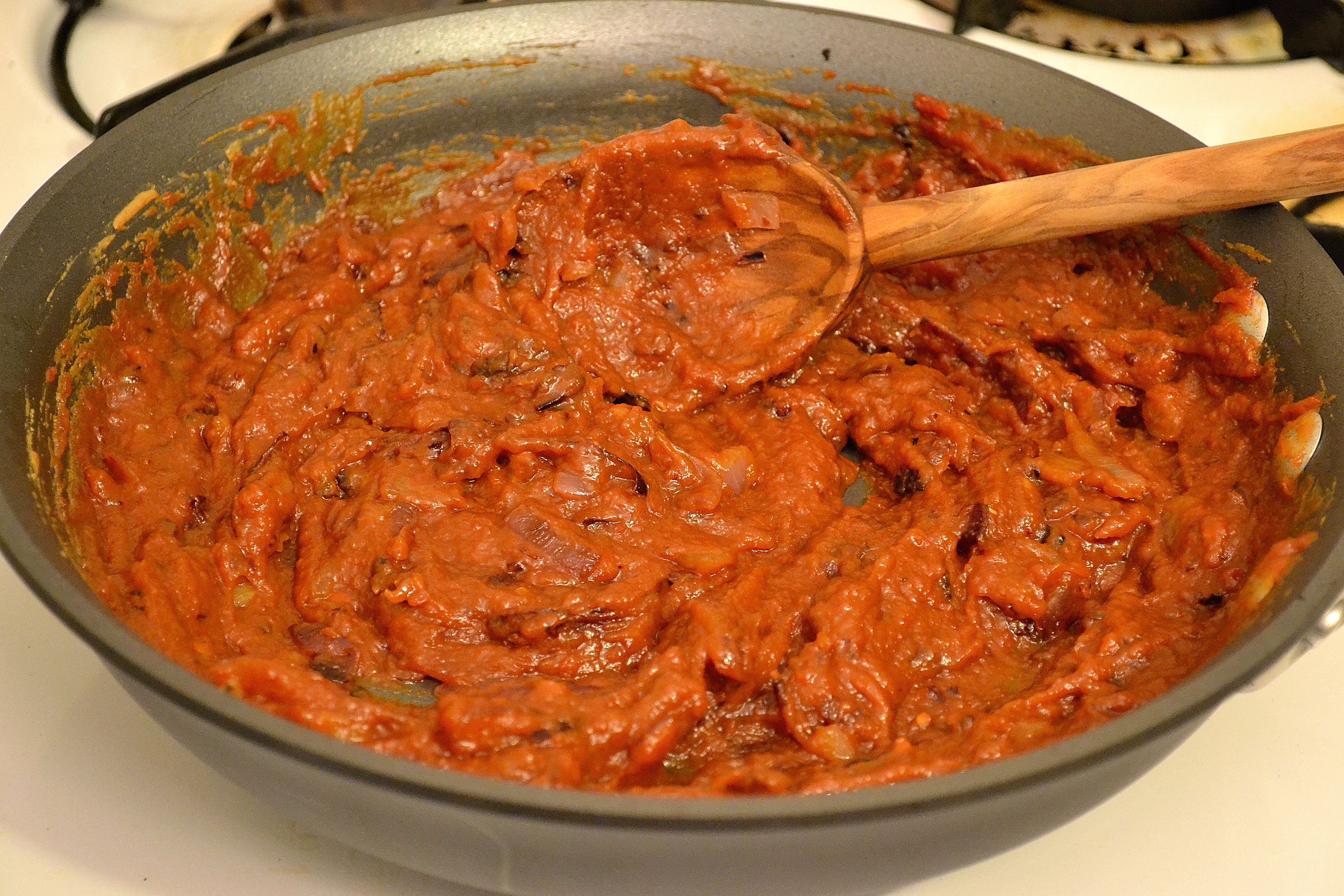
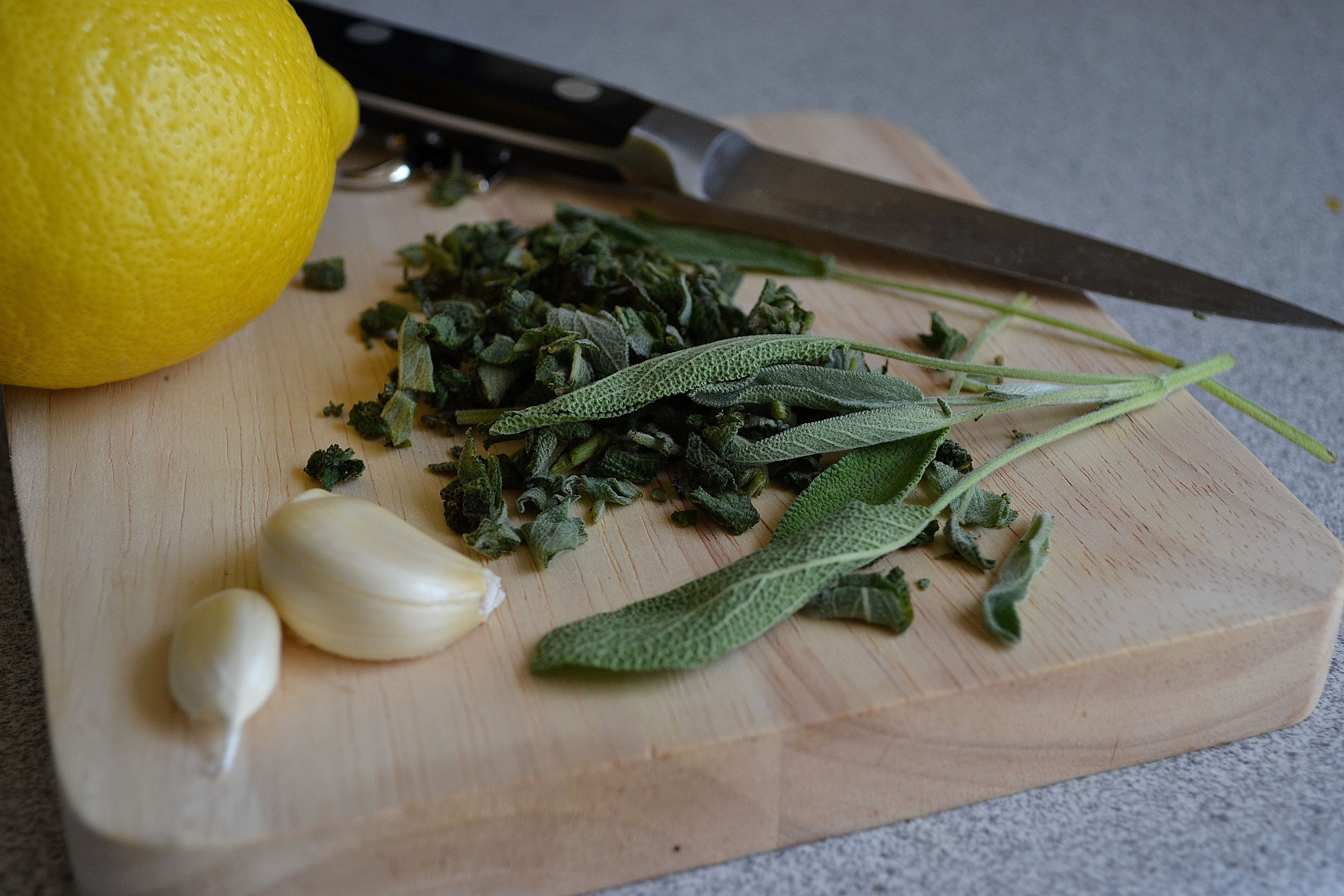
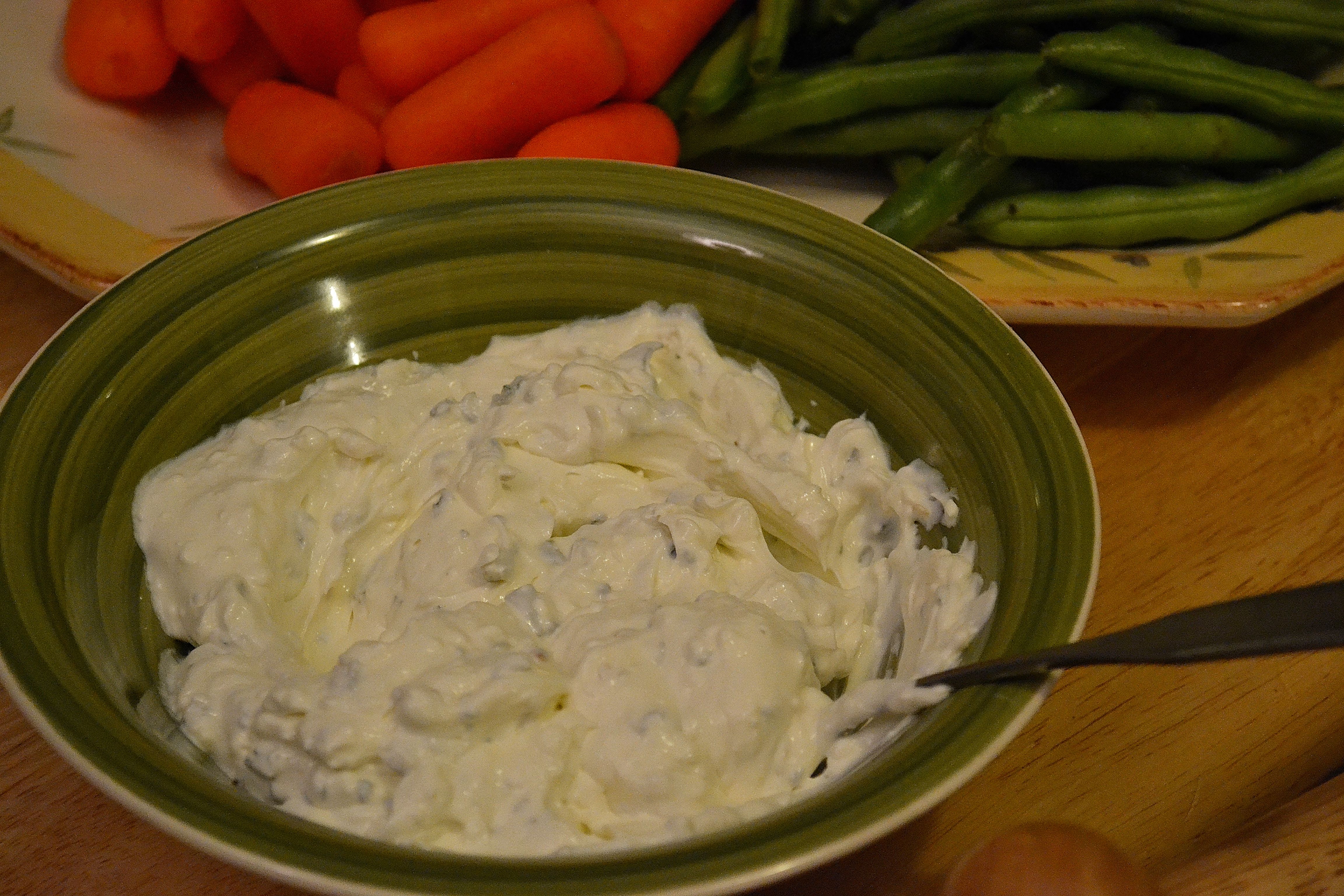
The dip, though, is what makes this dish – while its texture may not be as smooth as your standard satays, its flavor is fantastic! I still have the dark sesame oil in my pantry from when I first made this recipe (clearly not a staple in my cooking repertoire). I often omit the sherry from this recipe and substitute more liquid either through water or part oil/part lime juice; so far as I can tell, it’s never been missed. I also use an immersion blender to get a smoother consistency – this is a personal preference of mine. You can find this recipe HERE.This second recipe was one of those “what’s in the fridge?” creations. I had just baked a chocolate cake (coming soon!) that used 1 cup of sour cream, and I wanted to find a dip that could use the rest of the 16 oz. container I was forced to buy. I also still had some fresh sage leaves leftover from the Pan-Roasted Chicken with Olives and Lemon dish that I didn’t want to see go to waste. These ingredients led me to a recipe by Rachel Ray who, even though I can’t stand watching her show on Food Network, manages to provide creative ways for using leftovers. I wasn’t floored by her recipe, but it was definitely a good starting point. I also had 4 ounces of cream cheese left over from the gorgeous cream cheese icing that I paired with that chocolate cake (okay, now I’m just being cruel). All in all, I had the makings for a dip with a twist. While I wouldn’t say this was one of my all-time favorites, this dip provided a subtle, fresh flavor that paired beautifully with the crudités. Daily dose of trivia: crudité is a French term derived from the Latin crudus, meaning “raw.”** You can choose any number of crudités to pair with this dip; I highly suggest green beans, but bell peppers, broccoli florets, or even asparagus spears would be perfect. Check out this leftover creation of mine by clicking HERE. Many affiliate classical music with respectable concert venues, such as Boston’s Symphony Hall or Vienna’s Musikverein. Yet 19th century Europe saw the rise of a far more exclusive setting for classical performance – the “salon.”  While these were by no means a “new” setting, the 19th century saw an increase in households that were capable of supporting such affairs. These salons were gatherings hosted at private residencies for friends and family, and artists were invited as a way to infuse an air of prominence*** (the artists in my “salons” just so happen to be close friends, a fact with which I am blessed). Many prominent composers found support through these musical soirees, including the brilliant Johannes Brahms. A leading composer of the Romantic genre, the music of Brahms is expansive in both technique and spirit. I’ve always been a sucker for minor works, so I have included his Rhapsody in B minor Op.79 No.1 with none other than the illustrious Glenn Gould performing. The passion and precision of this performance is impeccable, a noteworthy pairing for one who loves the intimacy of small gatherings. Enjoy!

*”Chicken from Farm to Table” USDA.gov.
**”Crudités.” Wikipedia.com
***Funk, John. “Early Romantics and the Salons of 19th Century Europe.” Academy of Music Sciences International

A Portrait of the Modern Heroine

Roomie night: a quintessential occasion that has no equal. In September 2010, I moved out into this fantastic apartment with a near and dear friend, Jennifer Berg. Since then, we’ve made this our home, and have come to value these nights dearly. The formula for a successful roomie night is simple: good food, lots of laughter, and of course a great chick flick.  From Jane Austen’s Emma to Sex and the City’s Carrie Bradshaw, we’ve become enamored with these heroines of self-worth and love (regardless of how cheesy they get). I thought it would be worthwhile to share a “taste” of a roomie night on this blog by sharing one of our dinners: Baked Tilapia with Mango-Black Bean Salsa
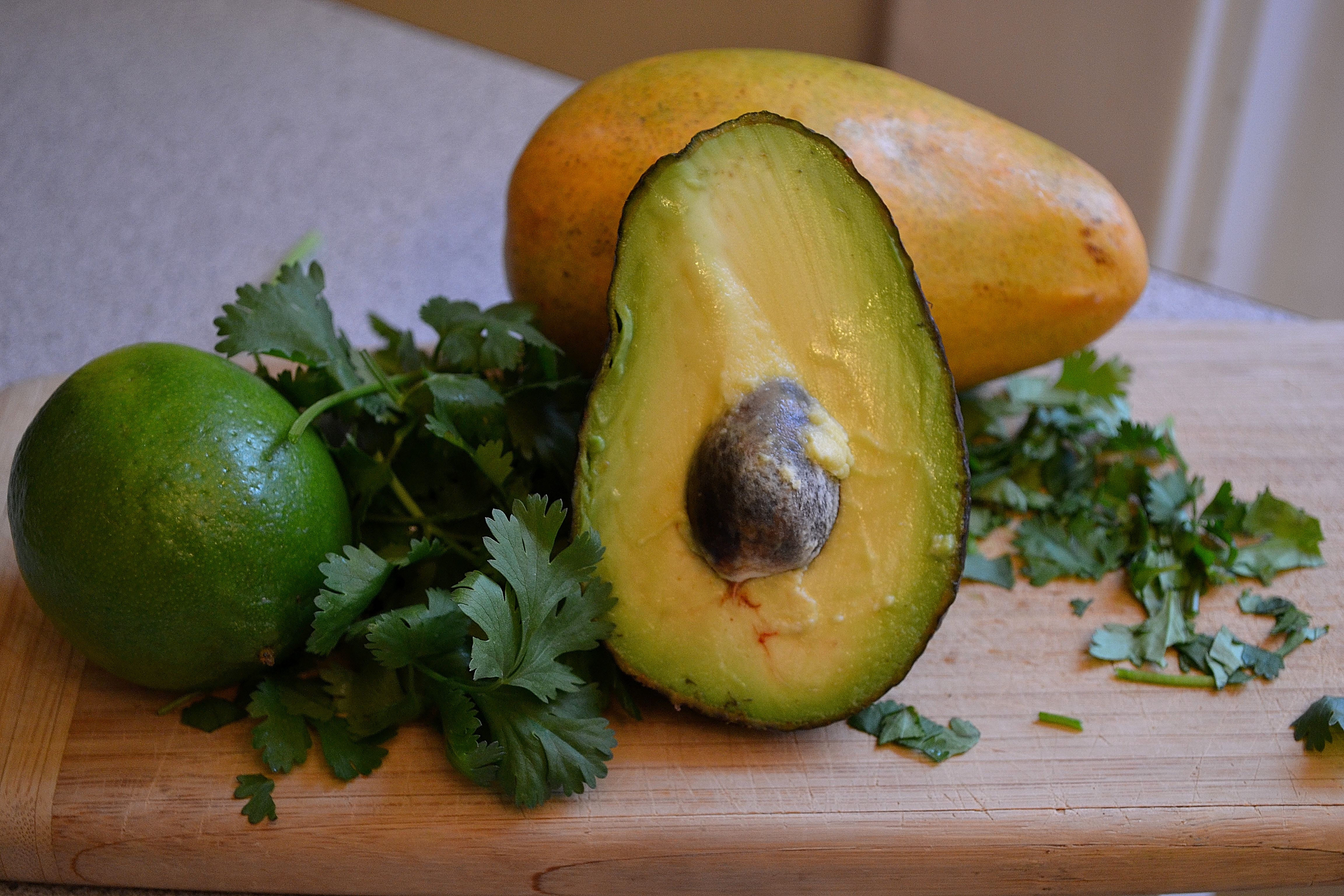
This was actually a very simple dish to make. I had poured over a number of salsa variations earlier in the day, and was unable to decide on one or the other. As such, I chose a hybrid of several recipes (a dash Martha Stewart with a taste of Southern Living). The thought of a fresh, light salsa seemed ideal for this roomie night, and what better pairing with such a colorful relish than tilapia? A light chardonnay with a side salad made for the perfect meal. Granted, our “chick flick” of choice features two ladies whose diet consists of pizza and pop tarts (and yet they STILL look great!) But I imagine the Gilmore Girls would appreciate these roomie nights, even if the food goes above their own culinary efforts. I intentionally made more salsa than needed so we could enjoy it with chips as well. Trust me – this salsa is FANTASTIC, and you’ll be wishing you made more after you’ve finished your fish. Click HERE to check out this recipe.
Now here was a tricky pairing – the “heroine” idea was a natural choice, but one glance at the classical music heroines reveals that “happily ever afters” are rare occurrences: Isolde from Wagner’s Tristan und Isolde, Mimì from Puccini’s La bohème, etc. Not quite the “roomie night” ideal, but c’est la vie. According to Dictionary.com, a heroine is “a woman of distinguished courage or ability, admired for her brave deeds…” In that sense, there is no doubt that opera is the strongest context. A “subtle” allusion to my recipe helped narrow down my choice to Georges Bizet’s Carmen – “a superstar among operatic heroines, her name forever spotlit in the general imagination.”* In this opera, Bizet paints the portrait of an alluring heroine whose unfettered love and fiery spirit have made her name a legend beyond the stage. I chose the most famous of the work’s arias, the Habanera, sometimes referred to as “L’amour est un oiseau rebelle” (“Love is a rebellious bird”)**. The following recording is of Maria Callas, arguably one of the most celebrated sopranos of our time. Enjoy!

Sources Cited:
* Alvarez, Maria. “Fatal attraction.” The Guardian
** “Habanera (aria).” Wikipedia.com