
 Winter is here again – on the heels of what has been an insanely busy few months. One constant however has been the thrill of finding new recipes, and using my sous vide whenever possible. Phil has a weak spot for a good steak, and (since it was a particularly cold evening) pairing with potatoes felt like the right move. Fresh herbs and a solid Malbec made for a memorable meal with these Sous Video Steaks and Salt-Crusted Potatoes.
 I’ve written about the magic of a sous vide prior to this, but steak is the appliance’s true pièce de résistance. A grill cooks quickly with dry heat, which creates a piece of meat with a wonderful crust and a perfectly-cooked center. It is difficult to achieve the same effect with pan-frying – and broiling just sets off the smoke alarm (at least in small NYC apartments). Sous vide maintains the perfect temperature throughout the process, and then you finish the steak right at the end over medium/high heat pan with some butter and oil for a beautiful seared crust: avoiding smoke alarms and overcooked meat with one simple fix. Click HERE to see the recipe for these easy-to-do steaks.
 There’s a restaurant near my apartment that makes these perfect little salted potatoes that Phil and I have come to love – they are simple and incredibly delicious. Yes they are covered in salt, which is probably why they are so amazing. They take just under an hour, but the result is a side dish you will be addicted to in no time. Any dipping sauce works, so choose your favorite (aioli, ranch dressing, or our favorite: the jalapeño sauce from Trader Joe’s). Click HERE to the see recipe for this simple but delicious side.
 Steak begs for a pairing that is both lush and to the point – which brought me to one of my favorite composers (if not overall favorite): Tchaikovsky. There’s nothing better than taking a bite out of his artistry, which can be both heart-wrenchingly passionate as well as colorful and honeyed. His range of styles affords for a variety of pairings, and – since steak doesn’t require lots of bells and whistles to make it great – Tchaikovsky’s Serenade for Strings in C Major, Op. 48 felt like the perfect choice.
Completed in the Fall of 1880, Tchaikovsky crafted the Serenade from (in his own words) “from inner conviction…It is a heartfelt piece and so, I dare to think, is not lacking in real qualities.” When Tchaikovsky claims a piece is heartfelt, you better believe it’s going to tug on some heart strings. The music mirrors the depth and color of his much larger symphonic orientations, while also taking the listener through a variety of narratives. Below is a performance of the piece with the Concertgebouw Kamerorkest – enjoy!
Sources Cited:
“Serenade for Strings in C Major, Op. 48”, Chicago Symphony Orchestra
 I have to say, the Pacific NW won me over this summer. Surrounded by mountainous vistas and cerulean waters, it’s a paradise for those who love the outdoors. Now that I’m back on the East Coast, I’ve been reminiscing about my travels over the last three months. Tom and I visited a lot of really cool places, and one of those getaways included a weekend stay on Hat Island. The above was the view just outside the house we stayed in – sipping hot coffee in hoodies and slippers while watching the sun rise – courtesy of some wonderful friends. It was a quick but memorable weekend, and we indulged in some fantastic dinners while there. Tom and I treated the group to a big Italian meal: a basic arugula salad and heaping plates of
 So, about that gravy: one of our favorite TV shows is The Sopranos. Many believe this series launched the genre of quality storytelling outside of the movie theater (read: paved the way for
  The recipe can be adjusted up or down to yield your desired serving size. I’d say my two key pieces of advice for this recipe are 1) don’t sacrifice on time – be prepared to invest an afternoon in making this – and 2) don’t go crazy with side dishes, since this is a
  Like I said, a small serving of this goes a long way – thanks to the rich and filling gravy. For the musical pairing, I was looking for two key qualities. The first being a piece that exudes depth in a “serving size” length, and the second being a musical excerpt that was featured on the show The Sopranos: in homage to the cookbook. Fortunately, there was an aria that fit the bill:
  It’s insane to think that Fall is nearly here. Looking back on the last 3 months, this summer has been both adventurously beautiful and extraordinarily hot. I got a taste of the West Coast for the first time in my life in Seattle, which involved a lot of time in the outdoors, and was able to enjoy a much-needed break following my time at NYU Stern. The picture above was taken at lake in the middle of Snoqualmie Pass: not pictured is me, out of breath and sunburned, very much looking forward to a big meal. Fortunately, we had a great dinner waiting for us back home of
 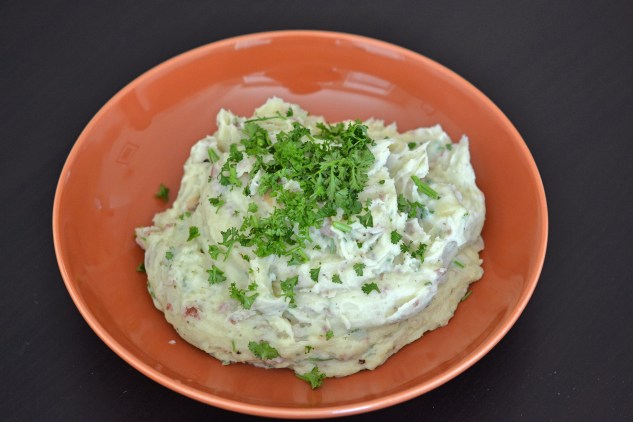 Mashed potatoes are great on their own – but add some blue cheese and roasted garlic, and you may ask yourself “How have I made it this far without these potatoes?” Ok, maybe that was just me…but trust me when I say this is a solid companion to steak. I like to use red-skinned potatoes and keep the peels, to add some character to the dish. If you want a creamier mash, opt for Yukon Gold, since you will risk overworking the mash if you try to achieve the smoother consistency with red potatoes. Can’t find blue cheese? Gorgonzola is a fantastic substitute (as I shared in my latest
  Steak au Poivre is French for “pepper steak”…which seems to leave a lot of room for interpretation. However, the traditional preparation involves peppercorns (naturally), heavy cream, and brandy. Any number of adjustments can be made from here. Some chefs insist on the traditional sauce trio, while others (including my favorite, Julia Childs) call for a more unique take with cognac, stock, and multicolor peppercorns. So as you can imagine, the various interpretations on this dish are indeed appreciable. Our recipe here will use only the basic, with a “lighter” sauce than some of the top hits on Google. But the key is to get a solid cut of meat. We found two reasonable cuts of filet mignon, but sirloin or strip will also get the job done.
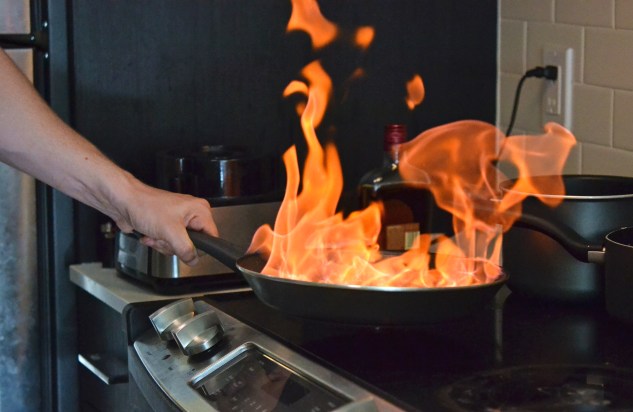 Tom learned how to make this recipe from his mom, Virgina. As to the interpretations I referenced, there are two key differences when it comes to the sauce: where the alcohol is used either to deglaze the pan or for a flambe. Virginia’s recipe calls for the latter, which makes for a very cool photo op. An important note on cooking with open flames: things can go from cool to bad very quickly if you don’t take the right precautions, so always off the heat (especially if you’re working with a gas stove) and move the pan away from any overhead materials that may be flammable. But it’s definitely a fun party trick if you’re hosting.
 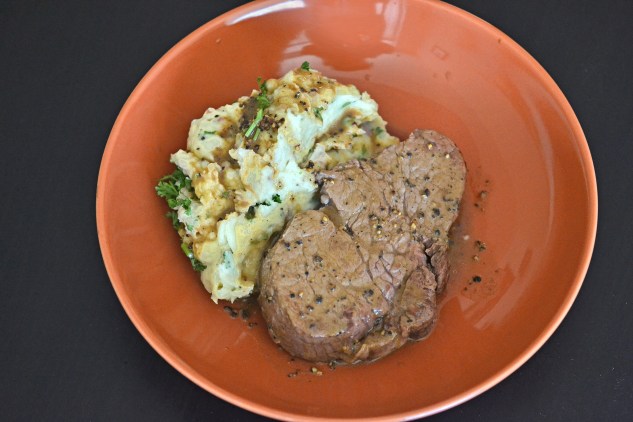 In considering a pairing for this piece, I was tempted to go with Stravinsky’ “Firebird” or a Debussy for the all-too-obvious reason. But I wanted to give more attention to the depth of the dish’s richness and flavor, and thus felt like Dmitri Shostakovich would be a great companion. I’ve never paired anything on this site with Shostakovich, so I’ll first talk about the man himself before elucidating the musical pairing. Dmitri Dmitriyevich Shostakovich was born in Saint Petersburg in 1906, and many classical musicians have
  come to recognize his musical voice as an expression of the creative struggles beneath the Stalin regime. His compositions aggregate a variety of styles, from strong Russian tones to dissonant protest to haunting melodies. To illustrate this variety: perhaps his most famous work is his fifth symphony, which was received phenomenally well by the conservative tastes of the Soviet public. Yet this followed on the heels a highly divisive fourth symphony, which premiered more than two decades after its completion due to its unorthodox nature. Today, historians debate the inspirations for and meaning behind many of Shostakovich’s works. So naturally, there are many interpretations. However, one set of German “ingredients” institute some consistency – the signature “DSCH” motif: which alludes to the German spelling of his name,















 THE CLASSICAL KITCHEN