
 Avocado – the unofficial mascot of millennial culture. It’s a pretty awesome food, with a versatility that makes it the kind of friend you always want to have around. From pasta sauces to creamy desserts to savory appetizers, this fruit has it all. So when thinking of how to feature avocado, I turned to my all-time favorite meal: breakfast. This is part six of my mini series “Rise and Shine”. So far the series has featured my adventures with brunch, and I thought it high time I chronicled the dishes that I enjoy every morning before work: Rich Fruit Smoothie and (the Instagram-famous) Avocado Toast.
 Let’s start with the toast – this is a dish that has taken the internet by storm. It’s simple, delicious and never gets old. As a spread, it’s also a healthy substitute where butter or jam are the traditional go-to’s. What’s perhaps more interesting is the many ways people interpret the increasing popularity of the dish: from it’s alleged necessity as an everyday staple in the “bourgeoisie’s diet” to being a symptom of our continued “fetishization of food.” I’m a millennial, so I’m not helping to disperse any of these myths…but it’s a great and filling breakfast. I for one think making it at home is a fantastic option, versus paying $30 at a Brooklyn brunch enclave for a few slices. Click HERE to see the recipe for this internet celebrity.
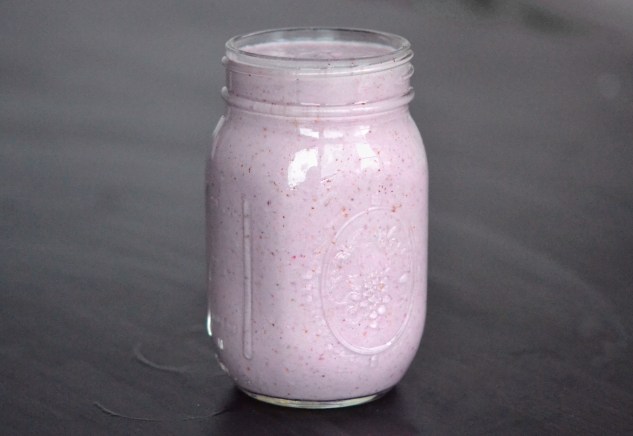
 Smoothies are a great way to start the day – you can pack in a ton of nutrients, and mix it up based on what’s in season (or on sale). When I reflect on the ingredients that are must-have’s, I’d say they are a banana, some yogurt, nuts, and of course avocado. The yogurt and nuts are the protein: which make this a really filling meal, and give you the energy to kick off your day. I always use bananas since they are delicious, but the avocado is what gives the smoothie a thick and creamy consistency. You can even add a little honey, but I find the fruits to add enough sweetness.


There is a bit of an art to packing a blender – the trick is to go from the softest ingredients to the toughest. As the above photo shows, I placed the avocado and the bananas at the bottom of the jar, followed by the kiwis, berries, almonds, and finally the ice; pouring in the milk at the very end. Organizing the jar this way facilitates the blending process, and creates a super smooth and creamy result. That being said, if you have one of those crazy-cool blenders that can crush concrete…then feel free to just dump everything in. If the mixture is too thick, just add a splash of milk and pulse until combined. I make these almost every morning, and can guarantee it becomes second nature. Click HERE to see the recipe for this healthy morning treat.
 The promise of these dishes is enough to inspire even the sleepiest to rouse on a weekday. So in considering a piece that worked well with these dishes, I came across Gustav Mahler’s “Frühlingsmorgen” (Spring Morning) from his collection of Lieder und Gesänge. Mahler was known to devote his mornings to composing: pouring himself into his scores and harmonic textures, then indulging himself in the afternoon with mountainous vistas and lakeside excursions. This makes the “Frühlingsmorgen” all the more apt – both of the dishes in this blog post are colorful, flavor-forward and bright: reminiscent of spring, if you will. This particular song falls within Volume 1 of the collection: written between 1880 and 1881. The song is labeled “Gemächlich, leicht bewegt”, which roughly translates to “with leisurely movement”. The following video features the German lyric baritone Dietrich Fischer-Dieskau and the musical icon Leonard Bernstein on piano (though there are plenty of fantastic recordings with sopranos on YouTube as well). Enjoy!!
Sources Cited:
Oyler, L. “My Fruitful Search for the Origins of Avocado Toast,” Broadly. Sep 13. 2016.
Goldfield, H. “The Trend is Toast,” The New Yorker. May 2, 2014.
“Lieder und Gesänge (Mahler)”, Wikipedia.com
 I have to say, the Pacific NW won me over this summer. Surrounded by mountainous vistas and cerulean waters, it’s a paradise for those who love the outdoors. Now that I’m back on the East Coast, I’ve been reminiscing about my travels over the last three months. Tom and I visited a lot of really cool places, and one of those getaways included a weekend stay on Hat Island. The above was the view just outside the house we stayed in – sipping hot coffee in hoodies and slippers while watching the sun rise – courtesy of some wonderful friends. It was a quick but memorable weekend, and we indulged in some fantastic dinners while there. Tom and I treated the group to a big Italian meal: a basic arugula salad and heaping plates of
 So, about that gravy: one of our favorite TV shows is The Sopranos. Many believe this series launched the genre of quality storytelling outside of the movie theater (read: paved the way for
  The recipe can be adjusted up or down to yield your desired serving size. I’d say my two key pieces of advice for this recipe are 1) don’t sacrifice on time – be prepared to invest an afternoon in making this – and 2) don’t go crazy with side dishes, since this is a
  Like I said, a small serving of this goes a long way – thanks to the rich and filling gravy. For the musical pairing, I was looking for two key qualities. The first being a piece that exudes depth in a “serving size” length, and the second being a musical excerpt that was featured on the show The Sopranos: in homage to the cookbook. Fortunately, there was an aria that fit the bill:
  August was HOT. The temps in Seattle were much higher, on average, than usual. As a consequence of these norms, the city doesn’t believe in air conditioning…so Tom and I were on the lookout for any solution to cool down. In many parts of the world, heat is met with more heat. Whether it is an Indian drinking hot chai or a Jamaican enjoying jerk chicken (seasoned with must-have Scotch bonnets), a variety of cultures turn to hot and spicy foods in the sweltering heat. The reason? It makes you sweat, and sweat cools you down. I’m no scientist, but we were desperate and willing to try anything. So we decided to indulge in our own spicy experiment with
 This recipe did not come out of a cookbook. Tom learned how to make the dish while living in Southeast Asia; in Laos, Thailand and Malaysia, primarily. He spent about a year in the region, split between a pre-college getaway and a post-college return. The above photo was taken by Tom in Tham Kong Lo: a cave that extends for 7 miles. He shares more about the adventure:
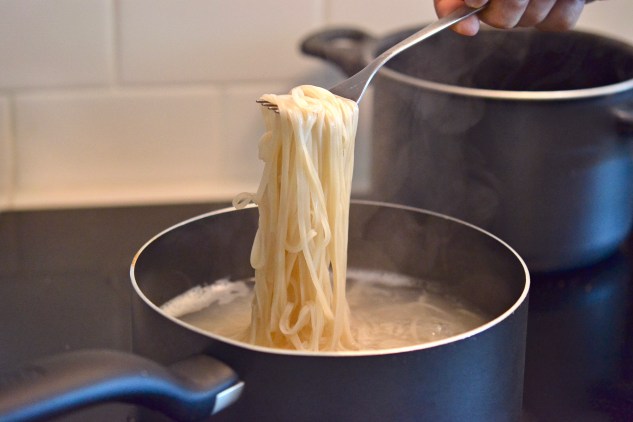 When Tom shared this story with me, I was inspired to recreate an image of those “stalactites” using our noodles…it was one of those things that sounded way cooler in my head. But the photo also illustrates perfectly al dente rice noodles, so I kept it. Moving on, many of us know Pad Kee Mao by it’s English title: Drunken Noodles. Khi mao is Thai for “drunkard”…yet the source of this appellation is a bit of a mystery. Some believe the first-ever recipe included rice wine, while others attribute the recipe to a drunken chef who concocted the dish with whatever was available in his home after a long night out. Regardless, it is now one of the cuisine’s most famous celebrities, and for good reason.
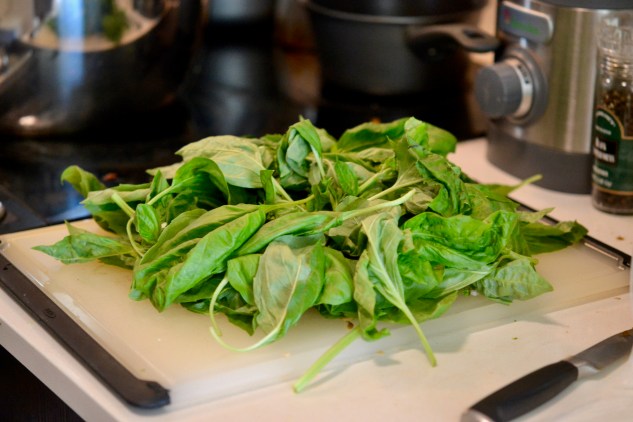 The dish is spicy, but can be moderated to your taste by de-seeding the peppers or omitting them entirely. It brings together a variety of rich flavors in a fairly quick preparation: oyster sauce, chili paste, soy sauce, fish sauce, and loads of veggies. Tom cooks the dish so that there is very little liquid left in the pan before serving – so there is some patience involved. But the end result is absolutely worth the wait. You can include one or a medley of proteins (we used both chicken and tofu in our recipe). One key ingredient, flavor-wise and aesthetically, is basil: you can use Thai or regular, just be sure to have a whole heap of it.
  When you eat something spicy, not only do you sweat – your heart rate also increases…much like my own whenever I think of playing the opening lines of Jacques Ibert’s
  It’s insane to think that Fall is nearly here. Looking back on the last 3 months, this summer has been both adventurously beautiful and extraordinarily hot. I got a taste of the West Coast for the first time in my life in Seattle, which involved a lot of time in the outdoors, and was able to enjoy a much-needed break following my time at NYU Stern. The picture above was taken at lake in the middle of Snoqualmie Pass: not pictured is me, out of breath and sunburned, very much looking forward to a big meal. Fortunately, we had a great dinner waiting for us back home of
 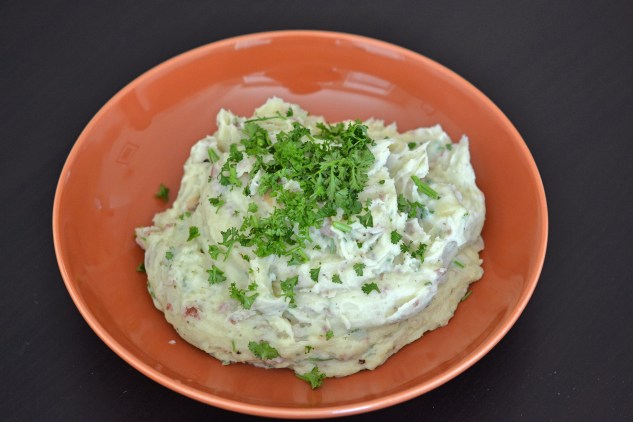 Mashed potatoes are great on their own – but add some blue cheese and roasted garlic, and you may ask yourself “How have I made it this far without these potatoes?” Ok, maybe that was just me…but trust me when I say this is a solid companion to steak. I like to use red-skinned potatoes and keep the peels, to add some character to the dish. If you want a creamier mash, opt for Yukon Gold, since you will risk overworking the mash if you try to achieve the smoother consistency with red potatoes. Can’t find blue cheese? Gorgonzola is a fantastic substitute (as I shared in my latest
  Steak au Poivre is French for “pepper steak”…which seems to leave a lot of room for interpretation. However, the traditional preparation involves peppercorns (naturally), heavy cream, and brandy. Any number of adjustments can be made from here. Some chefs insist on the traditional sauce trio, while others (including my favorite, Julia Childs) call for a more unique take with cognac, stock, and multicolor peppercorns. So as you can imagine, the various interpretations on this dish are indeed appreciable. Our recipe here will use only the basic, with a “lighter” sauce than some of the top hits on Google. But the key is to get a solid cut of meat. We found two reasonable cuts of filet mignon, but sirloin or strip will also get the job done.
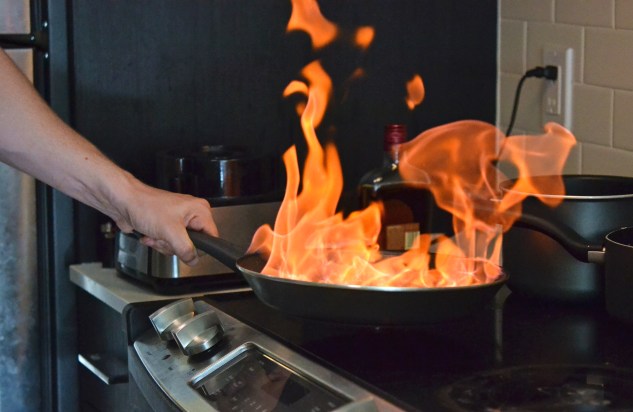 Tom learned how to make this recipe from his mom, Virgina. As to the interpretations I referenced, there are two key differences when it comes to the sauce: where the alcohol is used either to deglaze the pan or for a flambe. Virginia’s recipe calls for the latter, which makes for a very cool photo op. An important note on cooking with open flames: things can go from cool to bad very quickly if you don’t take the right precautions, so always off the heat (especially if you’re working with a gas stove) and move the pan away from any overhead materials that may be flammable. But it’s definitely a fun party trick if you’re hosting.
 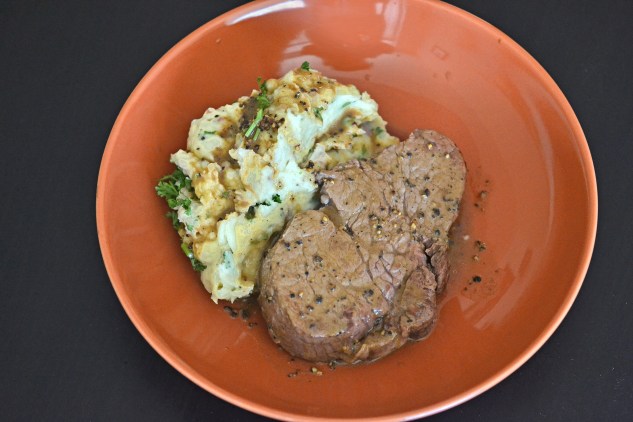 In considering a pairing for this piece, I was tempted to go with Stravinsky’ “Firebird” or a Debussy for the all-too-obvious reason. But I wanted to give more attention to the depth of the dish’s richness and flavor, and thus felt like Dmitri Shostakovich would be a great companion. I’ve never paired anything on this site with Shostakovich, so I’ll first talk about the man himself before elucidating the musical pairing. Dmitri Dmitriyevich Shostakovich was born in Saint Petersburg in 1906, and many classical musicians have
  come to recognize his musical voice as an expression of the creative struggles beneath the Stalin regime. His compositions aggregate a variety of styles, from strong Russian tones to dissonant protest to haunting melodies. To illustrate this variety: perhaps his most famous work is his fifth symphony, which was received phenomenally well by the conservative tastes of the Soviet public. Yet this followed on the heels a highly divisive fourth symphony, which premiered more than two decades after its completion due to its unorthodox nature. Today, historians debate the inspirations for and meaning behind many of Shostakovich’s works. So naturally, there are many interpretations. However, one set of German “ingredients” institute some consistency – the signature “DSCH” motif: which alludes to the German spelling of his name,
  After 2 roller coaster years, I now have an M.B.A. from the NYU Stern School of Business. It feels a bit like a 180, since I assumed a flute performance degree would be my first and final tryst with higher education. Sitting here today, however, the transition from music to marketing feels perfectly organic. My two alma-maters, NEC and NYU, have given me more opportunities than I can count: and they complemented one another in surprising ways. The “return on investment” (we M.B.A’s can’t get enough of this phrase) from NYU includes a better understanding of strategic planning, five trips around the globe, ample space to exercise leadership skills, and a wealth of talented and generous friends. What comes next will be a combination of the exciting and the unknown, and I’m looking forward to the challenge. Not surprisingly, this 2-year degree pushed me to neglect this blog – so now that I have some room to breathe, I am finally back to sharing some of my favorite recipes and music. And to show my renewed commitment, I’ll be sharing four delicious features:
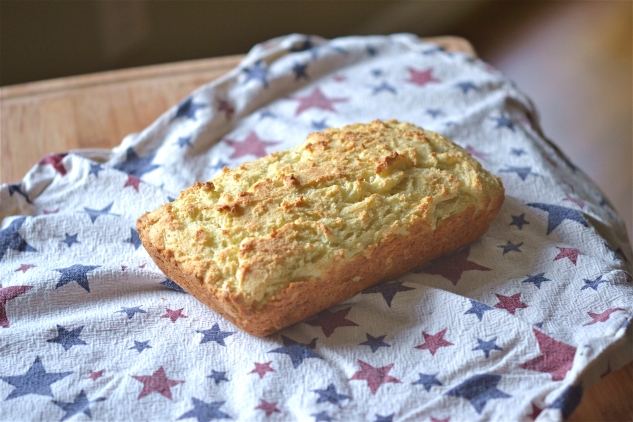 Let’s start with the cornbread: any Southern chef will insist that cast iron and cornbread and inseparable concepts…except when you don’t have one, in which case glass pans are an OK substitute. It worked for us, and was still enjoyed by all our guests (most of whom were Southern). The original recipe calls for a spice that is impossible to find in your local Kroger or Safeway, known as Aleppo. And while nutmeg is a suggested replacement, we just went ahead without – and served the bread warm with lots of butter.
 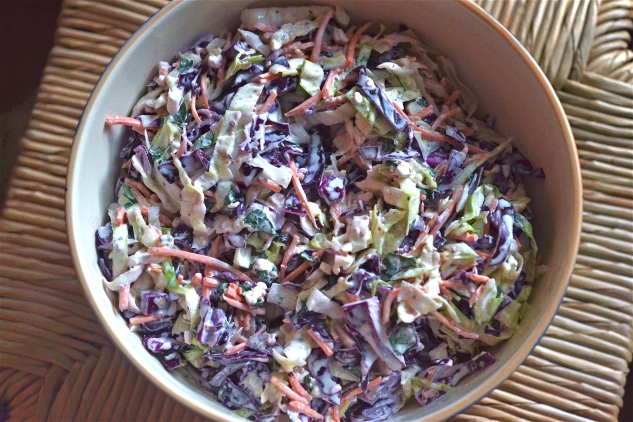 This coleslaw was awesome; like “we ate this for days after” kind of awesome. The original recipe called for Blue cheese, but we bought a tub of Gorgonzola that was on sale. (Thank you grocery gods for introducing us to this better option). We made the coleslaw the day prior, and it’s fairly simple to throw together. Feel free to adjust the dressing to your taste.
 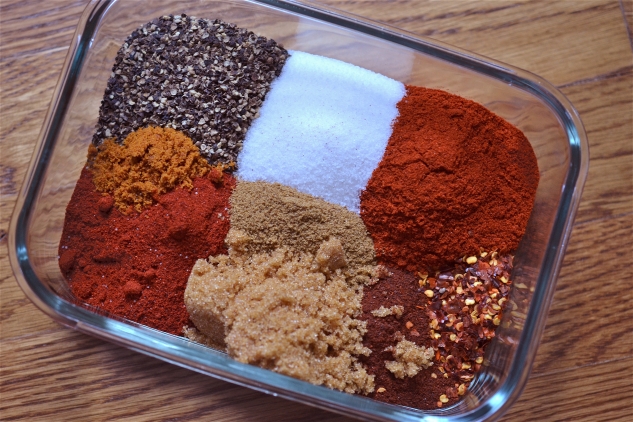 And now, les ribs. The spice rub is a medley of things that all look great on paper: paprika, different peppers, cumin, salt, and…mace. (It claims that nutmeg can replace this, but we were super curious to discover what mace would taste like). The recipe makes about 2 cups worth, which is plenty for this recipe and then some. The taste is oddly similar to Old Bay Seasoning: so if you’re not a fan, I’d recommend sticking with good ol’ fashioned BBQ sauce. Fun fact about Old Bay: it is nearly 80 years old, and is believed to have been a clever way crab restauranteurs would push patrons to purchase more beverages (due to its extra “salty” factor).
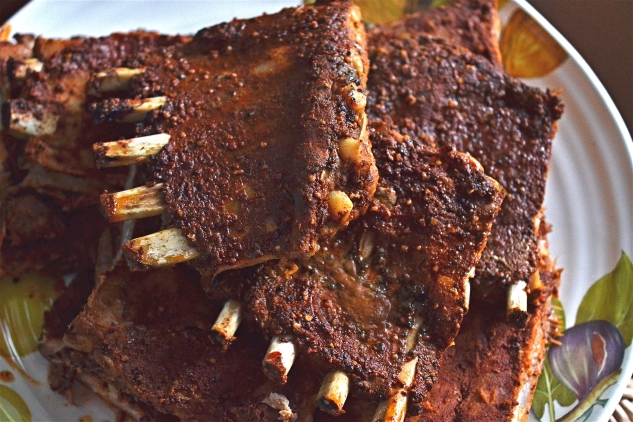 The ribs themselves were roasted in an oven, for 6 wonderful hours at the lowest possible heat. While cooking these on a grill is an option, the oven provides a lower maintenance one that still yields fantastic results. We coated the three racks with the rub, wrapped them tightly in aluminum foil, and then didn’t open the oven door once during the 6-hour haul. The result was fall-off-the-bone ribs with a smoky aroma. How tender, you ask? My stepdad carved these with a butter knife.
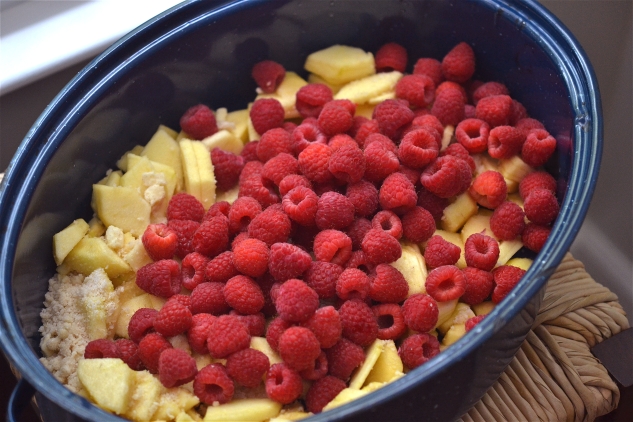
 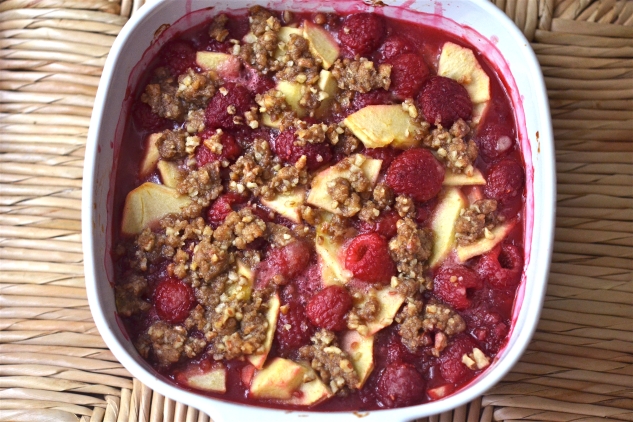 And finally, the dessert: a simple crumble that had all of the things we love about summer: fruit, butter and ice cream. The recipe is simple, and can be assembled the night before – we plopped the crumble into the oven before the guests arrived, and warmed it back up for ~15 minutes at the end of dinner for serving. You can use any combination of fruits in this crumble, just know that some may take a bit longer to cook than others (great example: rhubarb).
  It has been so long since I have paired a piece of classical music with a meal, that I had to invest considerable energy into this final section. So much so that I started drafting this blog over 1 month ago. And then the piece that came to mind was so simple and perfect: Beethoven’s
  to be the most fruitful period of his career. However, Beethoven was also battling the deterioration of his hearing faculties – a development for which he proclaimed “[I must] seize Fate by the throat; it shall not bend or crush me completely.” One of the main characters of this symphony is Fate herself, persistently “knocking” at the door with the ever-recognizable motif (“Da-da-da-dom”), as the symphony opens in an ominous C-minor. Yet Fate is held at bay, with the symphony closing in a triumphant C-Major. This structure, of man versus fate, lent itself to many a narrative, bringing the work and Beethoven to great celebrity over the years. As an example: the piece was used to dramatic effect at the end of World War II to symbolize victory for the allies. And Disney further commemorated the work in the feature film Fantasia 2000.
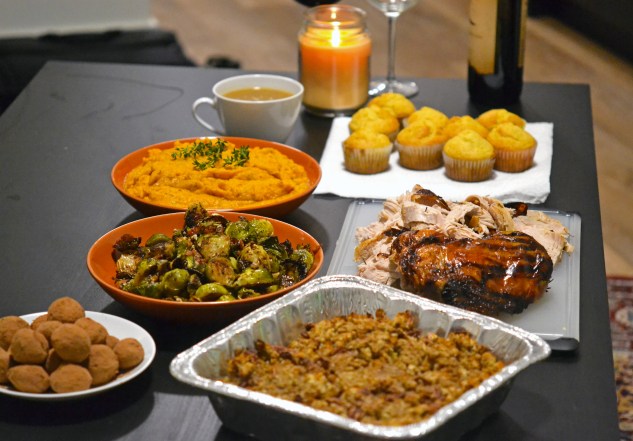 Thanksgiving – a term that connotes joy and family to most, yet strikes fear into the hearts of every turkey in this country. And for good reason, considering Thanksgiving is the one holiday where we are willing to eat more of this particular meat than deemed humanly possible. Take my Thanksgiving, for instance. It was just Tom and me this year, and we still baked a monster of a bird (weighing in at 14 lbs) plus an absurdity of sides as though two people could conquer such a thing. One lost turkey, a neighborhood-wide power outage, 2 sticks of butter, and loads of Ziploc bags/Tupperware later – we did. I imagine that last sentence really confused (or intrigued) you, so here are the details of our
 Let’s start with the bird – I normally go nuts with brining, but this year we had a little hiccup known as Safeway. Our bird was accidentally sold to another client (or it ran off to Disney World to join its pardoned brethren) so our original plan to cook a 9-pound turkey was replaced with a plan to hastily find another one. Our search yielded a heavier bird, and, given its size, I simply salted the meat and refrigerated the bird in an uncovered roasting pan. The success of this simply trick guaranteed that I will never undertake a complicated brine again (I can almost hear my mom breathing a sigh of relief).
 I also glazed this bird, but since we had limited in tools (aka no brush) our turkey took on a bit of a tiger appearance – and Tom will tell you I had a 10-minute stress session as to whether I should even blog about it. But it was love at first bite. The skin was perfectly crispy, the meat itself was ridiculously flavorful, and the glaze’s remnant made one of the most delicious gravies I had have ever created. So our tiger bird just happened to be one of the best turkeys I have ever made. I kind of credit the power outage and runaway Safeway turkey for this one, but also know to give the recipe credit where it is due.
  About that power outage: which is why our corn muffins were so delayed. The turkey was sitting out, coming to “room temperature”, and the power cut out. We were also watching Episode 8 of West World – my newest obsession – and it cut out on a terrible cliffhanger (I can hardly describe the angst that followed). So anyways, it is in moments like these that Twitter becomes extremely useful. After a few hours and a tweet to the nice fella manning the SEA City Light account, the power came back on and we were good to go. It was during this brief respite that Tom and I also enjoyed some mimosas (Instagram post above…I don’t have any other photos from the outage since it was super dark inside of the apartment).
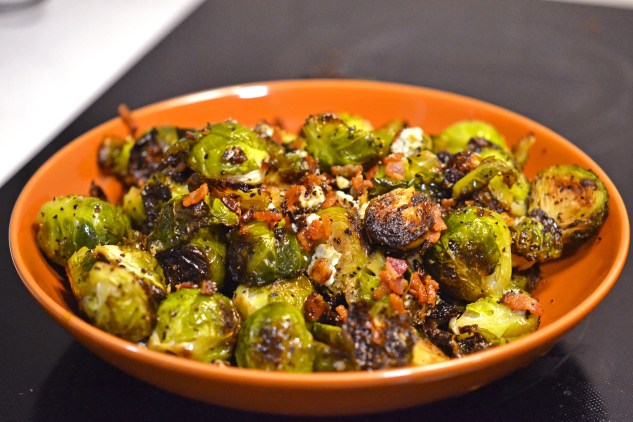 So let’s talk about those brussels sprouts – they are fairly self-explanatory as the photo suggests. I said to Tom, “Let’s make these with bacon” and he heartily added “with blue cheese too!!” It was a healthy day. One of our secrets to great sprouts is roasting at high heat until crispy and cooked through. I can guarantee this will cure any aversion you have to the veggie, as roasting gives them a slightly nutty and almost sweet taste. But if you really want to kick it up a notch, follow our lead and toss them with blue cheese and bacon.

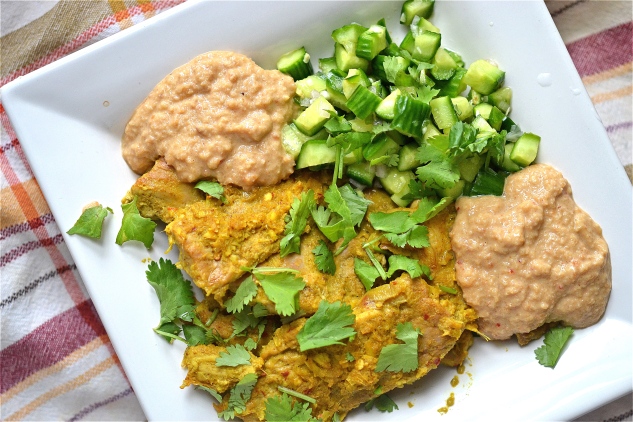 After a crazy 11 months of nonstop action and studying, my first year as an MBA student is officially done! It was an extraordinary year, and I’ve learned a great deal about both business and myself. I’ll be starting my internship at Colgate-Palmolive very soon, but in the meantime thought I could catch up on blogging about my culinary adventures in my little corner of Brooklyn. Tom and I have been cooking a great deal, but between term papers and B-school life I was hard pressed to find the energy for taking photos. We decided celebrate the end of finals by cooking Pork Tenderloin with Thai Spices and Peanut Sauce.
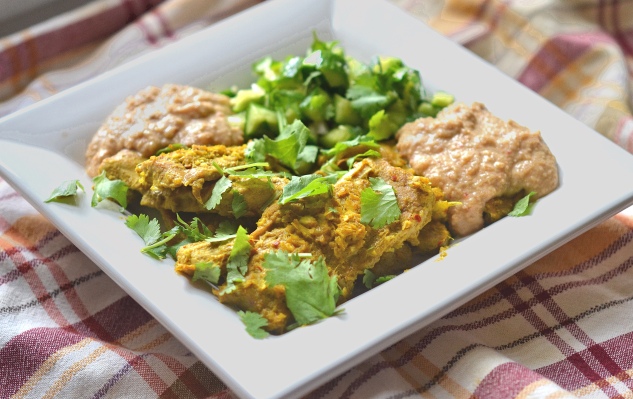
 Thanks to some Thai classics such as lemongrass, ginger and lime, the chicken could have stood on its own. The marinade is essentially a puree of aromatics that then translates to a beautiful coating in the final product. The original recipe calls for skewers (to make an actual “satay”) but I just thinly sliced the pork and arranged them on a baking tray – for ease of a quick weeknight meal. I imagine chicken could be an apt substitute, but I highly recommend the tenderloin.
 Add in the rich peanut sauce and cucumber relish, and you’ve got yourself an incredible meal. The peanut sauce was perhaps my favorite. The coconut milk and sesame pair beautifully with the chicken, and the texture can be adjusted to taste (smooth like butter, or a rougher blend for added crunch). The salsa, while simple, was a phenomenal addition. I cut back the sugar in both the peanut sauce and the salsa, but you are welcome to add more (or less!) to taste. I made the sauce the night before, which definitely enhanced the flavors, and the cucumber salsa while the pork was cooking. Overall, this was a fantastic meal and one that we’ll be making again.
 In considering a pairing for this piece, I wanted something that recognized the richness of this dish while also celebrating my first year as an MBA student. This led me to arguably one of my favorite symphonies, Sibelius
  New Yorkers are having an insanely cold weekend…which is a great excuse to stay inside, wear thick socks, and have Netflix/Hulu to keep you company. But this forced captivity means limited access to food – and considering I would feel like a terrible human in ordering Seamless (thus forcing a poor delivery guy to brave the cold himself) I had to get creative. I somehow convinced my carnivorous boyfriend Tom to go vegetarian for a day (cold weather does funny things to people) and pantry staples came to our rescue for this
  There are a ton of falafel recipes floating around on the internet (shameless plug for a recipe on this blog:
  What’s great about this recipe is that it comes together fairly quickly. The “batter” rests in the refrigerator for about 30 minutes, making it easier to roll the falafel balls…but you can skip this step if you have a cookie scooper or like the idea of “rustic” falafel. And if you’re really hungry and can’t bear the thought of going another second without food, the batter is basically hummus! No matter how you enjoy it, it’s a great quick meal –
  In considering a musical pairing for this recipe, I looked for a piece that could complement both the simplicity of the recipe and its wintry context. My choice of Faure’s

 THE CLASSICAL KITCHEN